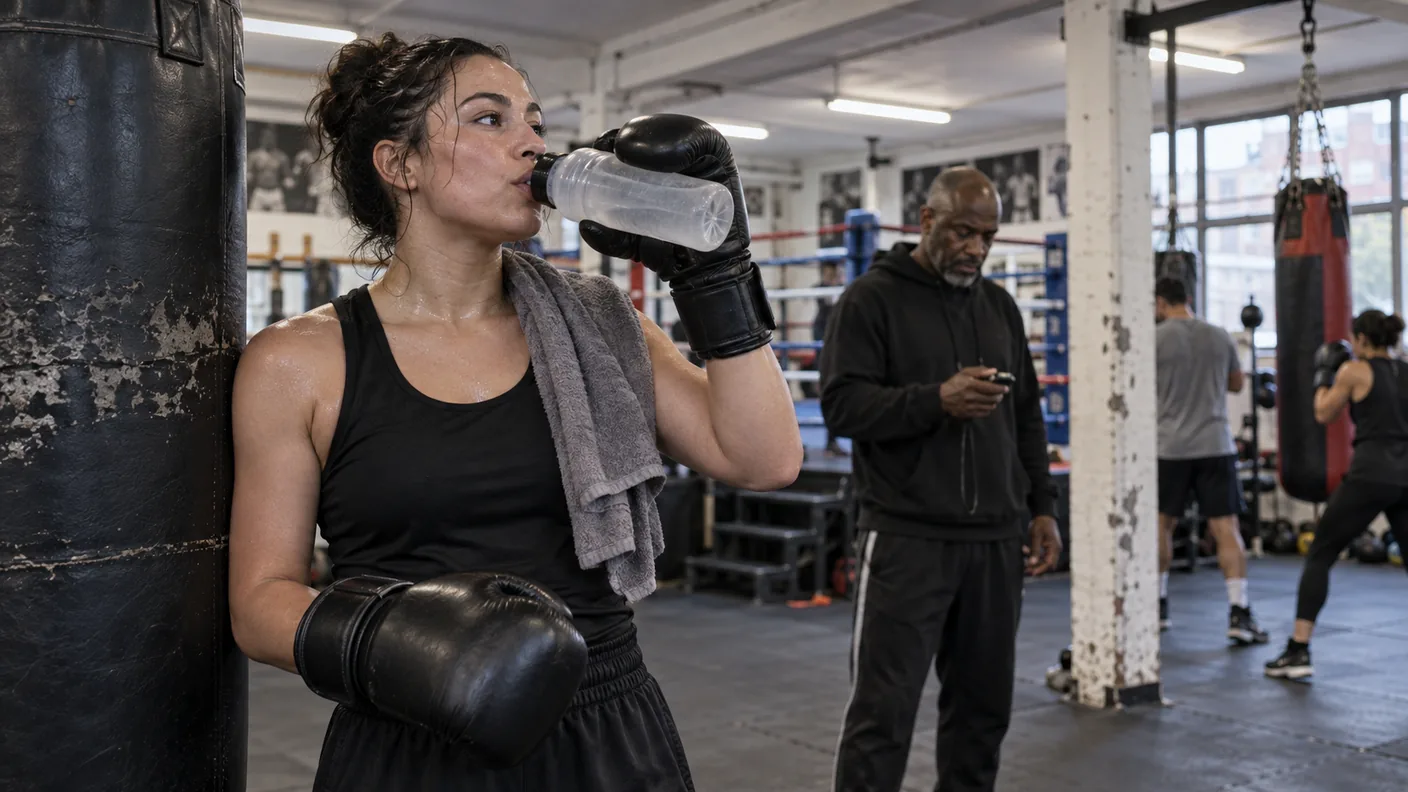
Yes. It is okay to take a break in boxing class.
A short break is not a confession that you do not belong in the room. It is often the sensible decision that lets you keep learning rather than turning the rest of the session into a messy attempt to survive. The important part is making the break early, clearly and with a plan to return to the drill when you are ready.
Beginners often wait too long because they think everyone is watching. They keep swinging when the shoulders are tight, the feet have stopped listening and the breathing has become a private emergency. That is not toughness. It is how a useful round turns into random movement.
Take the break before the round falls apart
A good break usually starts before panic. You might notice that you are holding your breath, staring at the floor, losing the instruction or throwing every punch with the same strained effort. Those are not reasons to quietly disappear to a corner. They are a prompt to lower the pace, tell the coach and reset.
The NHS advice on becoming more active is simple: start gradually and build up. That principle still applies when the activity happens to include gloves, bags and a loud timer. Your first few sessions do not need to prove that you can match the person who has trained every week for a year.
There is a useful difference between an ordinary training pause and a reason to stop. Being hot, breathing hard and feeling the legs work are normal in a boxing class. Chest pain or tightness, dizziness, nausea, faintness, unusual wheezing or breathlessness that feels wrong are not things to push through. Stop, tell the coach and seek appropriate medical advice. The Royal Brompton exercise guidance makes the same practical distinction: slow down when the effort has become too hard to manage, and stop for warning signs.
If you have a diagnosed health condition, a recent injury or a concern that has already needed medical attention, tell the coach before the warm-up. A boxing coach can scale a drill. They cannot make a clinical decision for you from across the gym.
What a useful break looks like
A break does not need to become ten minutes of apologising. Keep it plain.
Say: "I need a minute to settle my breathing." Or: "My technique is going and I need to reset." That gives the coach useful information. They may shorten the round, change the target, slow the pad sequence, give you water or ask you to shadow box for a minute instead of staying on the bag.
Use the break to do three things:
- step away safely and let your hands relax
- breathe normally until you can listen again
- take one clear instruction into the next round
Do not spend the whole pause bargaining with yourself about whether you look unfit. Nobody gets better at boxing by winning an argument in their own head. The next clean minute matters more than the previous untidy one.

You can still work hard without trying to prove something
Some people hear "take a break if you need one" and worry that it means the class will be soft. It does not. Boxing asks for effort. The point is to put that effort where it teaches you something.
A beginner who takes 30 seconds, then returns to throw a tidy jab-cross from stance, is doing more useful work than someone who stays in for another minute while folding at the waist and throwing from the shoulders. The coach can build the second person up as well, but only after they stop pretending the round is under control.
England Boxing's coaching handbook places stance, balance and controlled skill development at the base of learning. That is a good standard for a first class. If the break lets you return to stance, see the target and hear the next cue, it has done its job.
This is also why very short rounds can be valuable. In our guide to beginner boxing round length, the central point is that the timer should serve the task. One good minute of footwork, a jab and a reset can be demanding. It can also leave you able to take feedback and do the next round better.
Do not confuse a break with giving up
There is a difference between taking a short recovery and leaving every time a round becomes difficult. The first gives you a route back into the work. The second can become a habit that prevents the body and confidence from catching up.
A sensible first target is simple: make each next round slightly more organised than the last. Perhaps you complete 45 seconds, rest, then return for another 45. Perhaps you lower the power on the bag but keep moving. Perhaps you ask the coach to give you one punch at a time on pads. You are still training. You are just giving your technique a chance to survive.
The NHS physical activity guidance for adults recommends regular activity and strength work across the week, but it does not say that every session must be an all-out test. Consistency beats one heroic session followed by three weeks of avoiding the gym because you hated how it felt.
That is particularly true if you are new to exercise. Our article on starting boxing when you cannot yet do a press-up explains why the class is the place to find sensible versions of exercises, not a place to hide until you feel ready.
A three-step reset for the bag or pads
If you know you tend to overdo the first minute, try this at your next session.
Step one: name the round before it starts
Give the round one job. It might be a calm jab, a jab-cross with guard back, or moving around the bag without crossing your feet. A clear job makes it easier to notice when fatigue has taken over.
Step two: reduce the pace before you stop moving
If the breath starts to race or your shoulders climb, make the punches lighter and the movements smaller. Keep the stance. Keep the eyes up. A coach may ask you to take a full break, but often a brief change of pace is enough to keep the drill useful.
Step three: return with one cue
After water or a short rest, do not try to repair every mistake at once. Take one cue back in: breathe on the jab, bring the rear hand home, or take a step out after the cross. That is how a break becomes part of learning rather than a gap in it.
What to say if you feel embarrassed
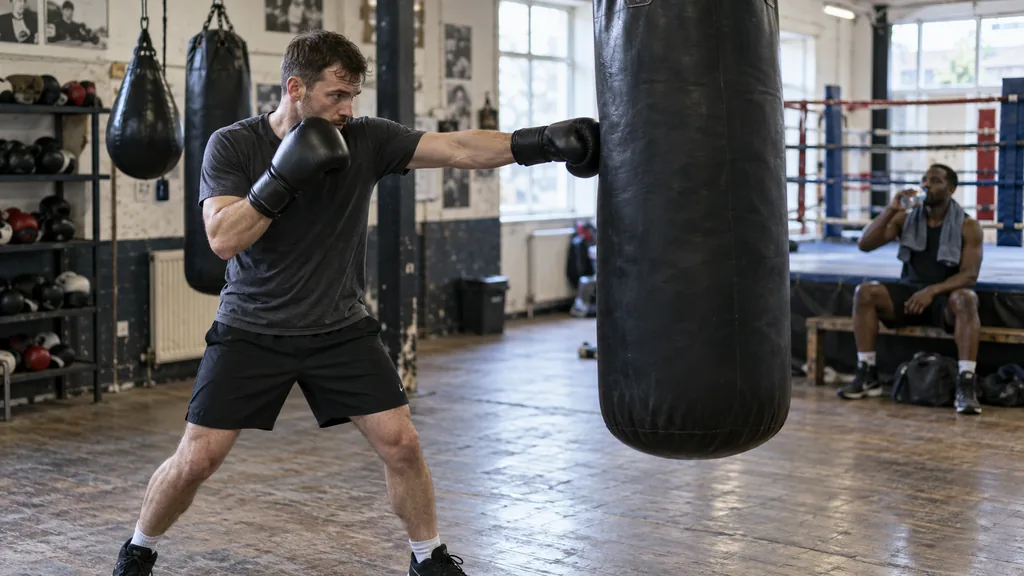
Most beginners think the regulars will notice every pause. In reality, experienced members are usually busy managing their own round, and coaches would rather hear a clear sentence than watch someone fade without saying anything.
Try one of these:
- "Can I take a minute, then come back in?"
- "I can feel my form going. Can we slow this round down?"
- "I am fine to continue, but I need a simpler version."
Those are sensible questions, not excuses. They show that you are paying attention to the work. As confidence grows, the breaks often get shorter because you learn when to relax, how to pace a round and which movements cost you too much energy.
If early rounds regularly leave you completely spent, read why beginners gas out in boxing. The answer is not always a lack of fitness. New boxers often tense too much, hold their breath and try to throw every punch at maximum effort.
The rule worth keeping
Take a break when it helps you return to boxing properly. Do not wait until you are dizzy, distressed or moving badly enough to create a new problem. Let the coach know, recover for a moment, then come back with one job.
At Adult Recreational boxing classes, beginners can learn at a sensible pace with coached pads, bags, footwork and conditioning. If you are in Kidbrooke, Greenwich or Blackheath, you do not need to arrive ready to win every round. You need to arrive ready to learn from the next one.
H&G Team
Writer at Honour & Glory Boxing Club, a community boxing gym in Kidbrooke, South East London.
KEEP READING

Can You Go to a Boxing Class Alone?
Yes. Going to boxing alone is normal. Here is how a good first class should help you settle in, train properly and come back.
Can You Start Boxing If You Are Overweight?
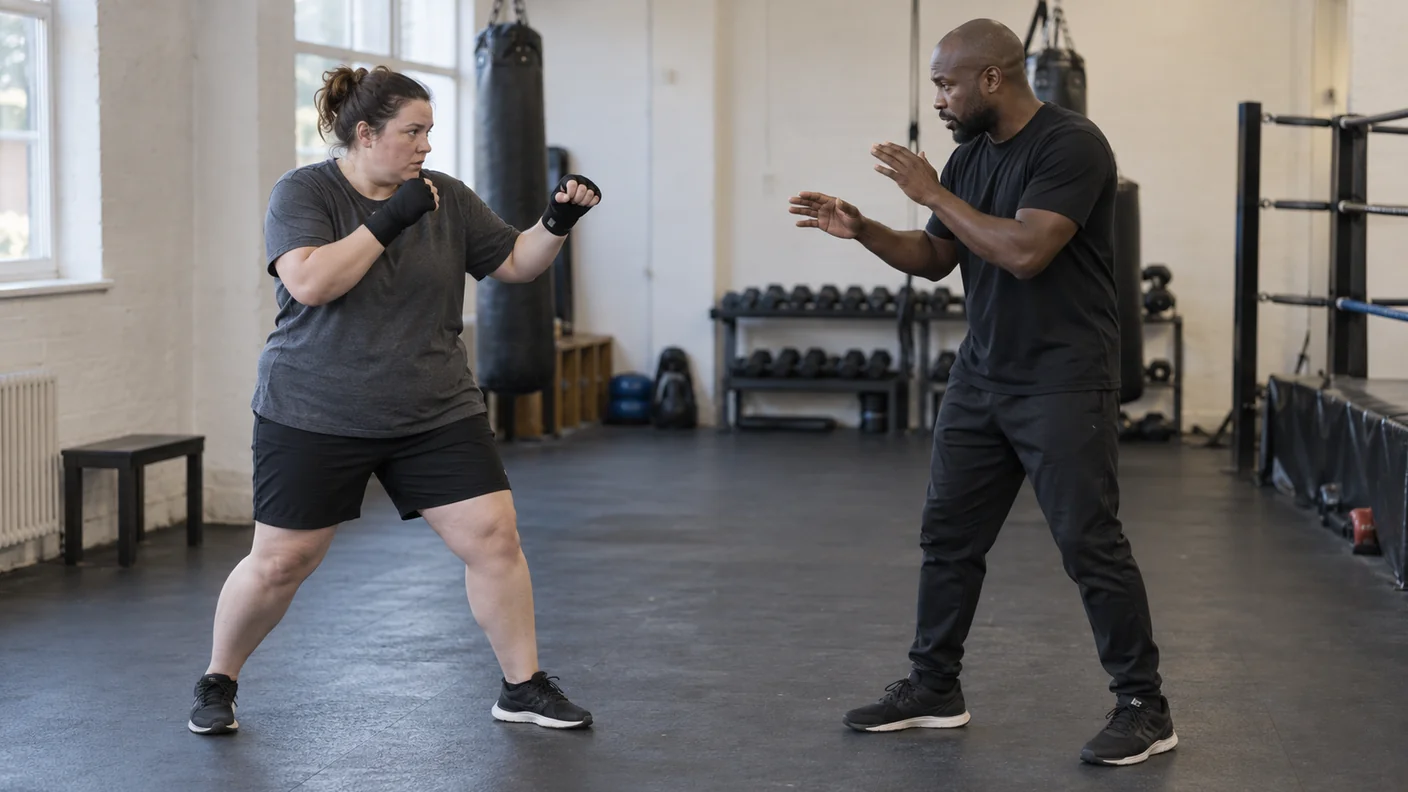
Yes. Boxing can be a sensible place to start if you are overweight, provided the class is coached, paced well and honest about your starting point.
Do You Need to Be Aggressive to Start Boxing?
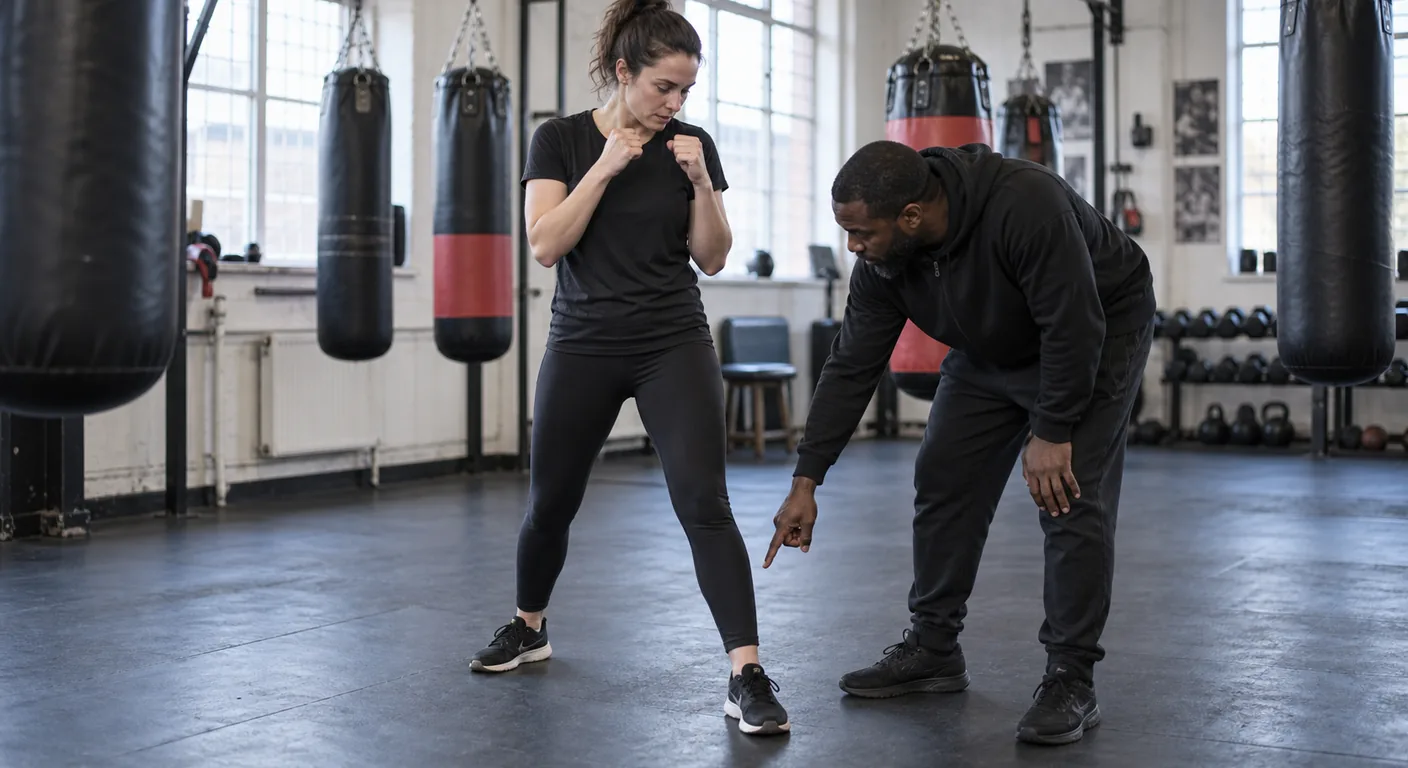
You do not need an aggressive personality to start boxing. You need patience, coachability and a class that teaches control first.
Was this page helpful?
It takes one tap, and it genuinely helps.
Choose your next step
Turn this article into the right action
Some readers are ready to book. Some need the class route first. Pick the route that matches what you actually want.