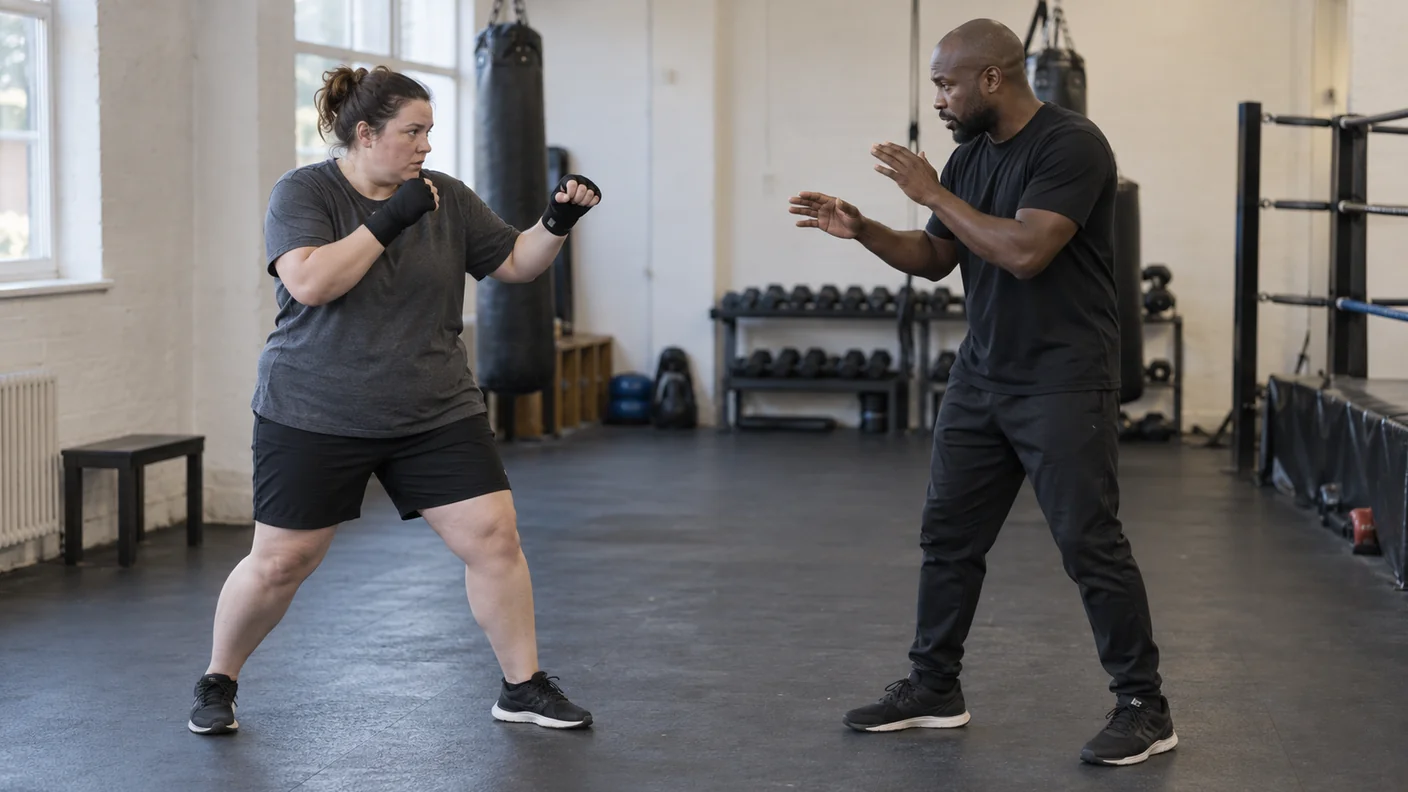
Yes. You can start boxing if you are overweight.
You do not need to lose weight before you enter a boxing gym. You do not need to prove you can run, skip, do press-ups or survive a punishing circuit before you deserve coaching. You need a sensible first session, a coach who pays attention, and enough patience to let your fitness catch up with your interest.
That does not mean pretending every session will feel easy. Boxing uses your legs, lungs, shoulders and concentration at once. The first few rounds can be demanding. The useful question is not whether you will find them hard. It is whether the class lets you work hard without turning your first visit into a test of embarrassment.
The NHS adult physical activity guidance is clear that people who have not exercised for some time, or who have medical concerns, should choose activity and intensity appropriate to their fitness and speak to a GP first where needed. That is sensible preparation, not a reason to wait until you feel ready.
A bigger body is not a reason to stay outside the gym
People often assume that boxing is only for people who already look athletic. That is backwards. A good beginner class exists because most people do not arrive with boxing fitness, boxing balance or boxing confidence.
Your body size may change what feels difficult at the start. Skipping can be more jarring. Burpees may be the wrong first choice. Holding a high guard for a full round may tire the shoulders quicker than you expect. None of that makes you a poor candidate for boxing. It gives a competent coach useful information about where to begin.
The first win is not a number on a scale. It is coming back next week with a little more control. You may stand better, breathe more calmly, keep your hands up for longer, or finish a round without needing to rush every punch. Those are real improvements, and they are the ones that make training stick.
Weight stigma can make joining any exercise setting feel harder than the session itself. A systematic review on weight stigma and physical activity found an overall negative association between the two. That is one reason a good gym should not use public weigh-ins, jokes about bodies, or punishment-style coaching as a substitute for actual instruction.
What a good first boxing session looks like
A beginner session should be adapted, not patronising.
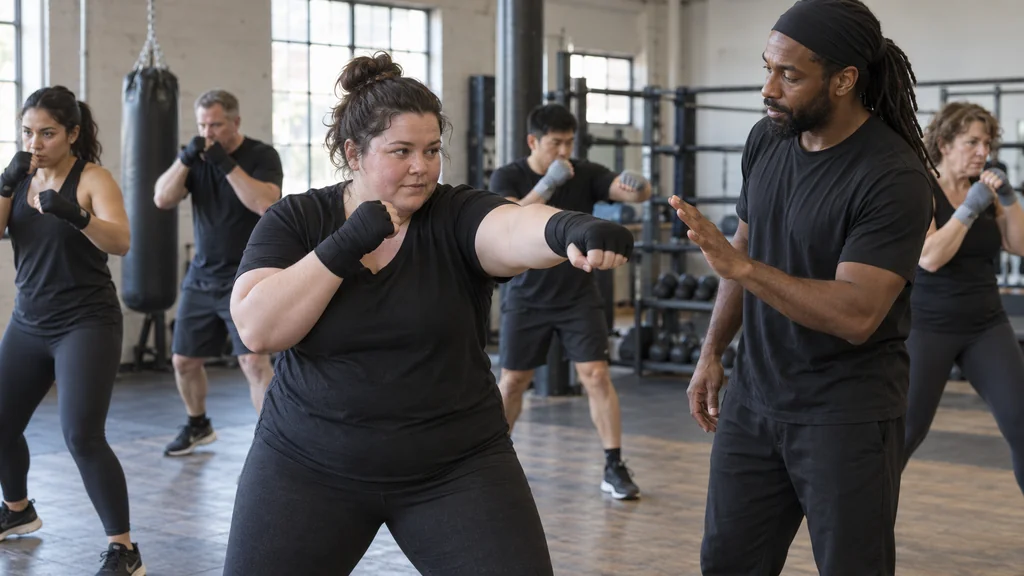
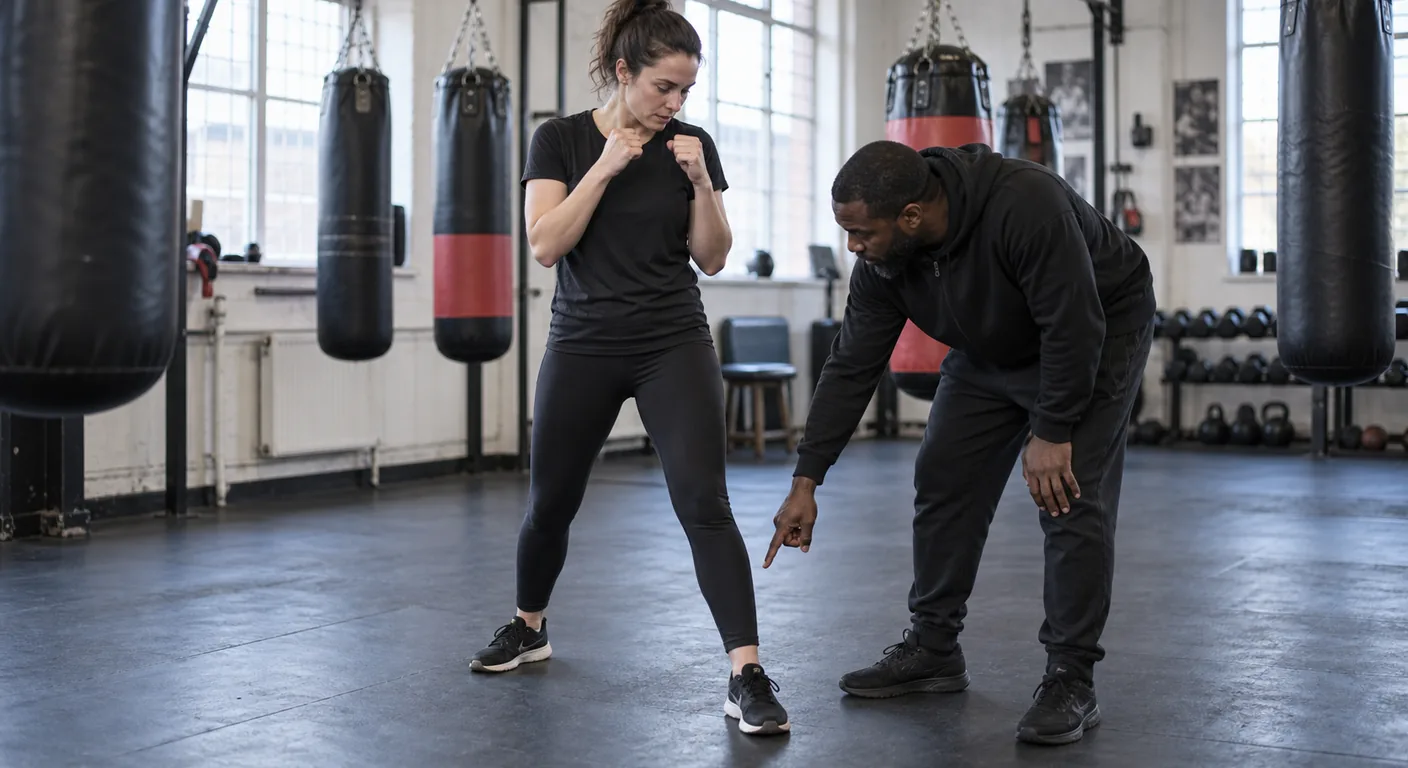
You may work on stance, basic movement, a jab, pads, bags and short conditioning blocks. You might take a few more pauses than the regulars. You might use lower-impact movement while you get used to the pace. You might do an incline press-up, a squat to a bench, marching steps or shadowboxing while someone else is skipping.
That is not being let off. It is how you build enough repeatable work to improve. Going flat out for one frightening session and disappearing for three weeks is not commitment. It is poor planning.
The World Health Organization advises inactive adults to begin with small amounts of activity and increase duration, frequency and intensity gradually over time (WHO physical activity guidance). In boxing terms, that can mean learning to complete one calm round before worrying about three, or attending once a week before adding a second session.
A coach should also be willing to explain the purpose of the drill. If you are moving more slowly, you still need to know what you are practising: feet under you, chin down, hands returning, breathing after the punch. Technical work gives you something to improve besides simply surviving the clock.
Do not use your first class as a punishment
Some people arrive wanting to make up for months or years of inactivity in one hour. That feeling is understandable. It is also where beginners tend to make poor decisions.
They throw every punch as hard as possible, ignore a sore joint, keep working after their shape has gone, then decide boxing is not for them because the whole experience felt punishing. It is a waste. Boxing is difficult enough without making it a personal reckoning.
Set a smaller target for the first month:
- attend consistently enough to learn the room and the basic movements
- tell the coach when something does not feel right
- work at an effort level that lets you keep listening
- keep a little energy in reserve for the journey home and the next session
- notice one technical improvement each week
If you are worried that you cannot do a floor press-up, that is not a blocker. Read our guide to starting boxing when you cannot do a press-up before you talk yourself out of coming. A movement can be scaled. A coach cannot help with a problem you hide until the last minute of the circuit.
Know the difference between effort and a warning sign
Normal effort is part of starting any sport. You may breathe hard. Your shoulders may feel tired. Your legs may feel heavy after footwork. The next day, you may notice muscles that ordinary daily life does not challenge.
But do not treat every signal as something to push through. Stop and tell the coach if you have sharp pain, a joint that feels unstable, dizziness, chest pain, unusual breathlessness, numbness, or anything that changes the way you move or punch. If you have an existing health condition, a recent injury or a concern about what exercise is safe for you, get the appropriate clinical advice before treating a boxing session as a test.
That is not softness. It is how you keep training available to you. Our guide to boxing soreness versus injury separates ordinary post-session stiffness from signs that need more caution.
For most beginners, the answer is far less dramatic. You take the next round down a gear, drink some water, learn the drill properly and return another day.
What to say when you arrive
You do not need a long explanation. A simple sentence is enough:
“I am new to boxing. I am carrying extra weight and I want to build up sensibly. Please tell me if I should scale anything.”
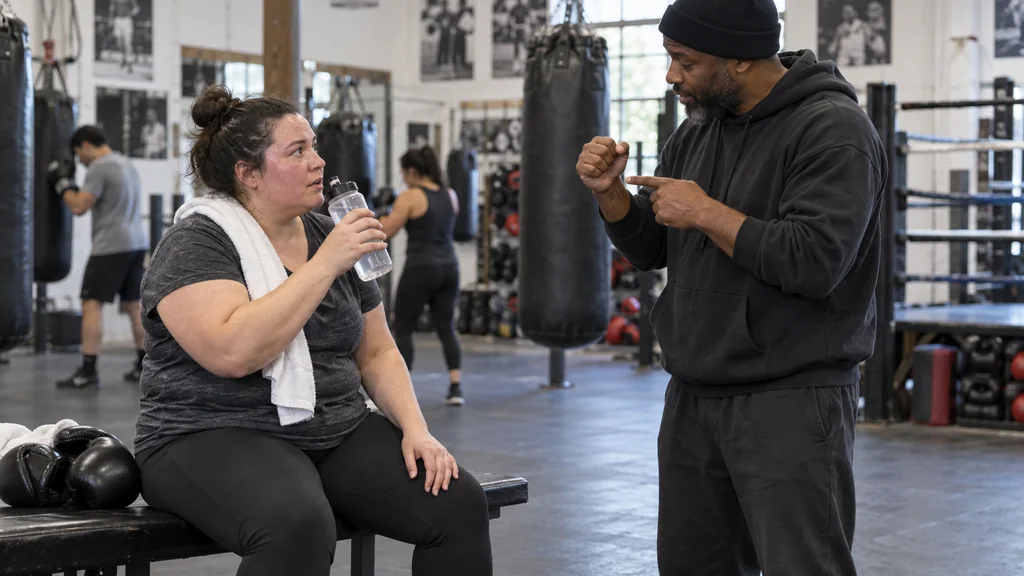
That gives the coach the information they need without making your body the subject of the whole class. You can also be specific. If knees, ankles, lower back, wrist comfort or previous fitness experiences worry you, say so before the warm-up becomes fast.
The right coach will give you a clear starting point. They will not promise a transformation, push you into sparring, or make a show of modifying a drill. They will keep you involved in the session and adjust the task where needed.
Build the habit before chasing a result
Boxing can be part of getting fitter, stronger and more confident in your body. It is not a crash plan, and it does not need to be one.
Start with attendance you can repeat. One coached session a week is a genuine beginning. Add walking, easy mobility or another session when your recovery and routine allow. As your fitness improves, you can build more rounds, more movement and more training days without making every week a battle.
If you are near Kidbrooke, our Recreational Adults boxing classes are the normal route for adults who want coached boxing without any requirement to spar or compete. Come to learn. Let the fitness improve because you keep coming back.
H&G Team
Writer at Honour & Glory Boxing Club, a community boxing gym in Kidbrooke, South East London.
KEEP READING
Is It Okay to Take Breaks in Boxing Class?
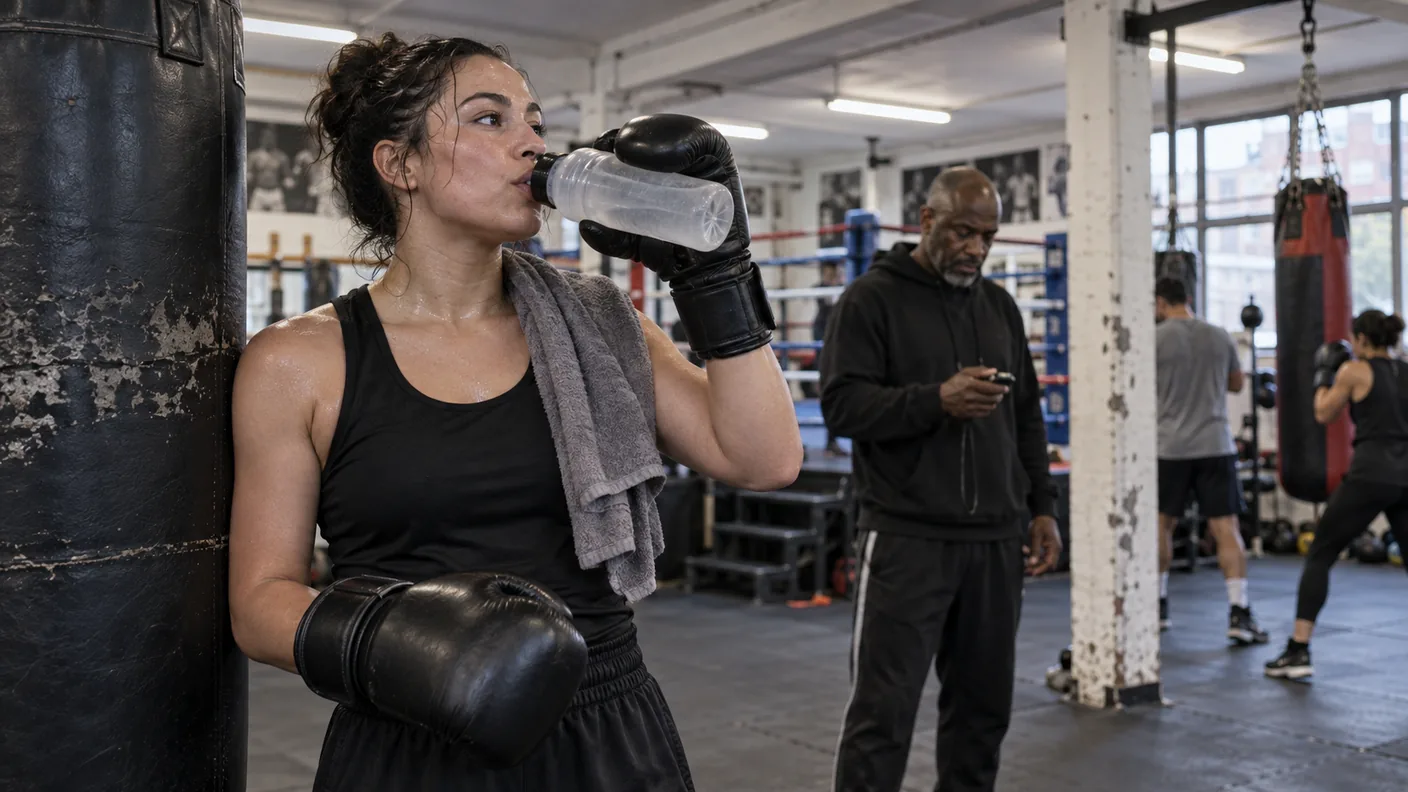
Yes. A short, honest break can keep a beginner boxing session safe, useful and worth coming back to.
Do You Need to Be Aggressive to Start Boxing?
You do not need an aggressive personality to start boxing. You need patience, coachability and a class that teaches control first.

Can You Go to a Boxing Class Alone?
Yes. Going to boxing alone is normal. Here is how a good first class should help you settle in, train properly and come back.
Was this page helpful?
It takes one tap, and it genuinely helps.
Choose your next step
Turn this article into the right action
Some readers are ready to book. Some need the class route first. Pick the route that matches what you actually want.