Boxing Soreness or Injury: What Is Normal and When to Stop
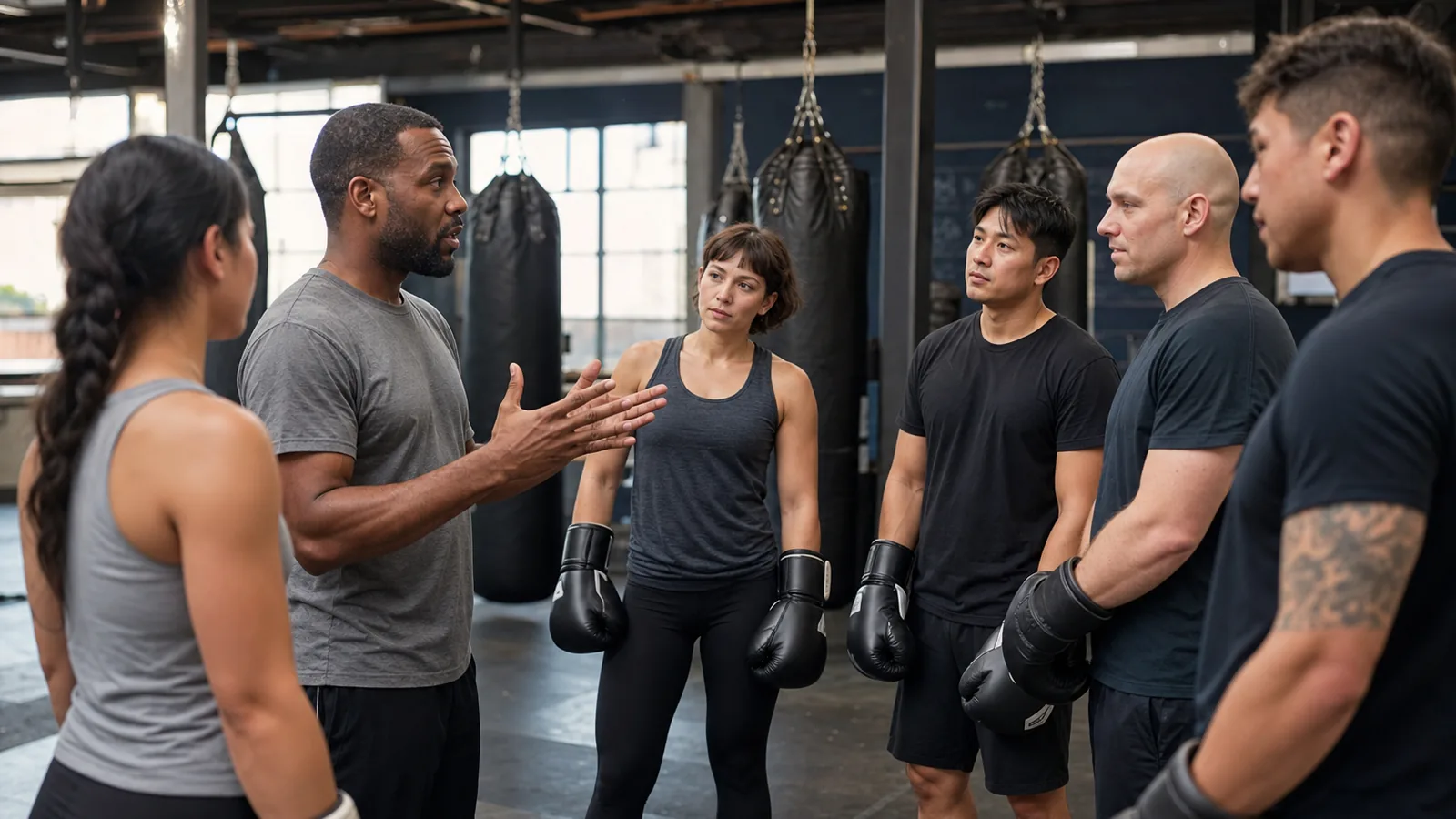
Soreness after boxing can be normal. Pain that changes how you move is different.
That distinction matters because beginners often feel both in the same first month. Your shoulders ache from holding guard. Your calves complain after skipping. Your upper back works in a way normal gym machines never asked of it. Then, mixed into that normal adaptation, there can be a wrist that folds on impact, a knee that twists, a shoulder that pinches every jab, or a headache after contact.
This is general information for boxers, not a diagnosis or medical advice. Stop training and speak to a qualified clinician if symptoms are severe, worsening, unusual, or not improving. For urgent symptoms, use NHS 111, A&E or 999 as appropriate.
This guide is part of our common boxing injuries series. It helps you separate normal post-training soreness from warning-sign pain, explains what to do in class, and gives a sensible return-to-boxing checklist for people who are healthy enough to train.
The short version: normal soreness is usually broad, predictable, improving, and does not change your technique. Warning-sign pain is sharp, local, worsening, linked with swelling or bruising, follows a pop or impact, causes numbness or weakness, affects head symptoms, or makes you change how you punch, move or guard.
The quick test: sore, or injured?
Use this as a first screen, not a diagnosis.
Normal training soreness often has this pattern:
- it appears after a new or harder session
- it is broad rather than pinpoint
- both sides may feel worked, especially shoulders, calves or upper back
- it feels stiff, achy or heavy rather than sharp
- it warms up with gentle movement
- it improves over the next few days
- it does not make you limp, drop your guard, avoid impact or change your punch
- there is no unusual swelling, deformity, numbness, tingling, dizziness or head-injury symptom
Warning-sign pain often has a different pattern:
- it starts suddenly during one punch, twist, fall, skip or body shot
- it is sharp, stabbing, catching, tearing or electric
- it is local to one joint, tendon, bone or exact spot
- it gets worse as the round continues
- it changes your technique
- it causes limping, guarding, loss of grip, loss of power or loss of confidence loading the area
- it comes with swelling, bruising, deformity, colour change, numbness, tingling or weakness
- it follows a pop, crack, snap, head impact or hard body blow
- it keeps returning in the same place each session
- it affects sleep or ordinary daily movement
A simple gym rule: if you have to bargain with the pain to keep training, stop and ask for help.
Why boxing soreness feels different
Boxing uses the body in unfamiliar ways.
Beginners expect arm tiredness. They are often more surprised by sore calves, shoulders, ribs, neck, trunk and upper back. That is because boxing asks you to hold a stance, stay light, rotate, brake punches, keep the guard up, absorb pad feedback and concentrate while tired.
The soreness is not proof that something is wrong. It is often the body adapting to a new training stress. Newcastle Hospitals NHS guidance for starting exercise says it is common to experience muscle soreness during and after exercise for up to a week, and advises starting gradually, preparing properly, recovering well and progressing slowly (source).
For boxing, the most common early soreness areas are:
- shoulders from holding guard and punching volume
- calves from stance, skipping and footwork
- upper back from scapular control and posture
- forearms from gripping inside gloves
- trunk from rotation, bracing and conditioning
- thighs and glutes from stance, squats, shuffles and pivots
The goal is not to avoid all soreness. The goal is to make soreness predictable, manageable and improving. Soreness that teaches you the session was hard is one thing. Pain that teaches you to move badly is another.
DOMS in boxing: normal, but not a medal
DOMS means delayed onset muscle soreness. In boxing, it often shows up after:
- your first few classes
- a return after time off
- extra skipping
- harder pad rounds
- more bag volume than usual
- conditioning you have not done for months
- holding a guard for longer than your shoulders are used to
DOMS can feel like stiffness, heaviness, tenderness and reduced spring. It should not feel like one exact painful point that gets sharper with each punch.
Beginners sometimes treat soreness as proof of value: if they are wrecked, the session must have worked. That is the wrong lesson. A good boxing session should be hard enough to create adaptation, not so chaotic that you cannot train properly for a week.
The Newcastle NHS exercise guidance includes a useful progression idea: increase only one training factor at a time and keep progression gradual, using the 10 percent rule as a guide (source). In a boxing club, that means you do not increase class frequency, sparring intensity, bag power, skipping volume and running volume all in the same week.
What to do if you are just sore
If the soreness is broad, expected and improving, the answer is usually not panic or complete bed rest.
A sensible response might be:
- take an easier day
- walk, move gently or do light mobility
- sleep properly
- eat enough protein and carbohydrate for recovery
- hydrate
- avoid stacking heavy bag rounds on top of sore shoulders or wrists
- reduce skipping or sprinting if calves are still heavy
- tell the coach if soreness is making your form sloppy
- return at lower intensity before returning at full intensity
This is where coaching matters. A beginner may be able to train while sore if the session is technical and controlled. They may not be ready for hard bag rounds, heavy conditioning or sparring. The issue is not whether the body feels perfect. It is whether the body can move safely and honestly.
NHS Inform knee guidance gives a useful principle that applies beyond knees: keeping the body moving is an essential part of recovery, but sports and heavy lifting should wait until there is less discomfort and good movement (source). For boxing, translate that into movement before impact, control before speed, and pads before hard rounds.
When soreness becomes a load-management problem
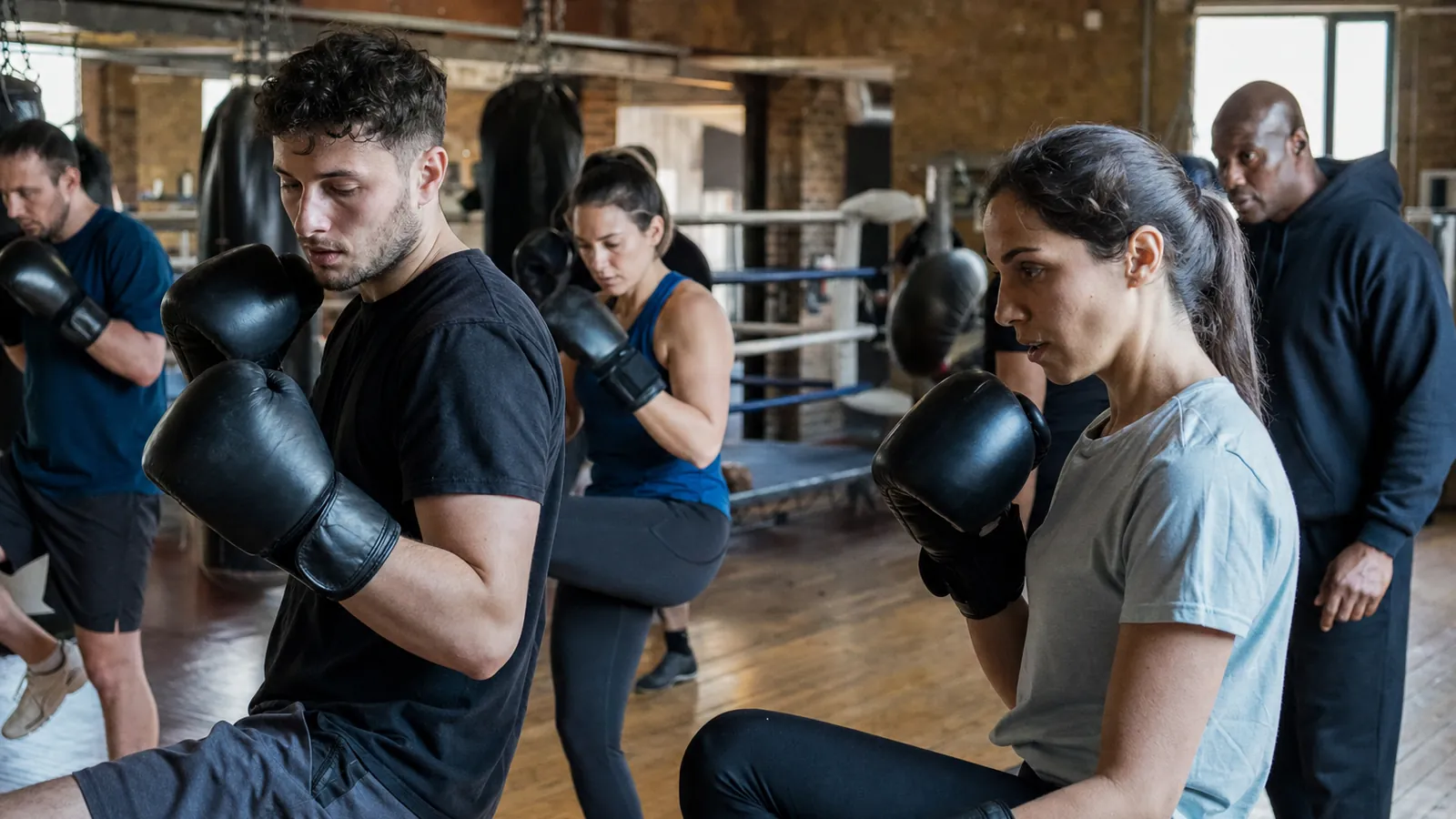
There is a middle category between ordinary soreness and obvious injury: you are not broken, but the training load is ahead of your current capacity.
That can look like:
- soreness lasting longer each week
- training quality dropping
- wrists feeling tender every bag session
- shoulders still aching before the next class
- calves feeling tight before skipping starts
- back stiffness after every conditioning block
- sleep and mood getting worse
- needing more warm-up just to feel normal
This is not a moral failure. It is a programming signal.
For a new boxer, two well-coached sessions per week may beat four chaotic sessions. For someone returning after time off, one technical week may beat trying to recover their old fitness in three days. For someone adding running, lifting and boxing together, the problem may be total weekly load rather than any single class.
If soreness keeps repeating in the same area, do not simply stretch harder and hope. Look at volume, technique, equipment, sleep, warm-up, recovery days and whether fatigue is changing your movement.
Useful H&G support articles here include boxing recovery tips, how often you should train boxing, and how to prevent boxing injuries.
Boxing-specific warning signs by area
The same principle applies everywhere: normal soreness is broad and improving. Injury-type pain is sharper, more local, more disruptive or connected to a worrying event.
Hands and wrists
Hand and wrist soreness can happen when you are new to wrapping, gripping and impact. Warning signs are different.
Stop punching and get advice if there is sharp pain on impact, swelling, bruising, a snap or popping noise, inability to grip, wrist shape or colour change, numbness, tingling, loss of feeling, or pain that returns in the same precise place every session.
NHS wrist guidance says not to self-diagnose wrist pain, and advises NHS 111 for severe wrist pain, snap or popping noise at injury, inability to move the wrist or hold things, colour or shape change, or loss of feeling in part or all of the hand (source). Our deeper guide to wrist and hand injuries in boxing covers this properly.
Shoulders
Sore shoulders after early guard work are common. A shoulder that pinches, catches, feels unstable, aches at night, loses power, or changes every punch is not just normal effort.
The NHS shoulder pain page says to get medical help if shoulder pain is getting worse, does not improve after two weeks, or it is very difficult to move the arm or shoulder. It advises urgent GP or NHS 111 help for sudden or very bad shoulder pain, inability to move the arm, shape change, bad swelling, persistent pins and needles, loss of feeling, hot or cold limb, pain after injury or accident, or feeling feverish or unwell (source).
For boxing detail, see rotator cuff pain in boxing and shoulder labrum tears in boxing.
Calves, ankles and knees
Calf heaviness after skipping can be normal. A sharp calf pop, sudden inability to push off, ankle twist, immediate knee swelling, knee giving way, or inability to put weight through the leg is different.
NHS guidance on sprains and strains says likely symptoms include pain, tenderness, weakness, swelling, bruising, difficulty using the area normally and muscle spasm or cramping. It advises NHS 111 if pain is very painful or worsening, swelling or bruising is large or worsening, you cannot put weight on it or walk more than a few steps, movement is very stiff or difficult, or it is not getting better after self-care (source).
Our guides to calf strains in boxing, ankle sprains and Achilles pain in boxing, and knee pain in boxing go deeper.
Back and ribs
A dull lower-back ache after conditioning is different from severe sudden back pain, symptoms down both legs, bladder or bowel changes, chest pain, or pain after a serious accident. Rib soreness after trunk work is different from pain that affects breathing, follows a hard body shot, or feels like chest pain.
The NHS back pain page says back pain often improves within a few weeks, but advises GP help if it does not improve after home care, stops day-to-day activity, is worrying, is worse at night, follows unexplained weight loss, or has other concerning features. It advises urgent help for severe sudden pain, rapidly worsening pain, or feeling hot, cold, shivery or generally unwell, and 999 or A&E for back pain with symptoms such as numbness or weakness in both legs, bladder or bowel changes, chest pain, or pain after a serious accident (source).
For boxing specifics, see lower back pain in boxing and rib pain and intercostal strain in boxing.
Head contact and concussion symptoms
There is no normal version of feeling dazed after head contact.
If there is headache, dizziness, nausea, confusion, memory problems, unusual behaviour, balance problems, vision change, vomiting, loss of consciousness, or symptoms that appear later after a head impact, stop the session. Do not test it with another round.
The NHS says most head injuries are not serious, but it is important to get medical help if there are symptoms after a head injury. It says symptoms can sometimes appear days or weeks later, gives A&E and 999 warning signs, and says not to play contact sports for at least three weeks after a minor head injury (source). Our boxing concussion and head injury guide explains the decision tree.
What to do during class if something hurts
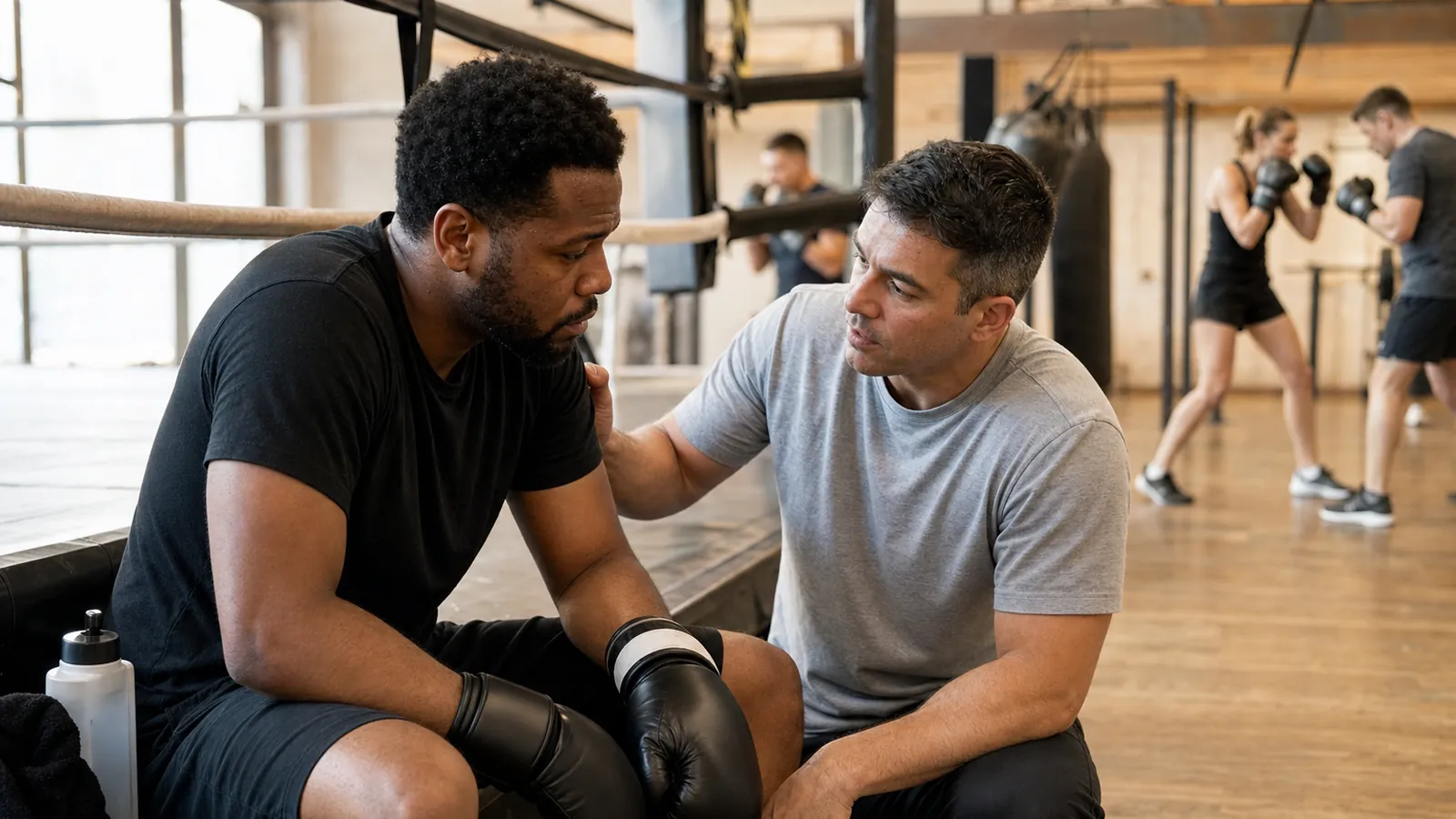
Do not keep testing pain at full speed.
Use this order:
- Stop the movement that caused it.
- Tell the coach.
- Step out of the drill if pain changes your technique.
- Check whether there is swelling, bruising, deformity, colour change, numbness, tingling, weakness, dizziness or head-injury symptoms.
- Switch to safe movement only if the problem is mild and clearly not worsening.
- End the session and seek medical advice if warning signs are present.
A coach can correct a punch angle, wrap a hand better, reduce load, change the drill or tell you to sit out. A coach cannot diagnose a fracture, concussion, tendon tear, infection or nerve symptom.
That boundary protects the boxer and the coach.
Should you train the next day?
Ask three questions.
1. Is the soreness improving?
If yes, a lighter technical session may be fine. If no, lower the load. If symptoms are worse, sharper or spreading, do not train through it.
2. Does it change movement?
If soreness makes your guard drop, wrist collapse, footwork limp, shoulder pinch or back tighten with every rotation, boxing quality will be poor. Reduce the session or stop.
3. Are there red flags?
If there is swelling, bruising, deformity, numbness, tingling, weakness, severe pain, head-injury symptoms, inability to bear weight, breathing pain, chest pain, feverish symptoms, or worsening pain after injury, training is the wrong priority.
A simple return-to-boxing checklist
If the issue was ordinary soreness, you usually return by reducing intensity for a session or two and rebuilding.
If there was an injury or suspected injury, use a staged approach and follow medical advice. A sensible boxing pathway often looks like:
- normal daily movement first
- no worsening symptoms after gentle activity
- shadowboxing before impact
- light technical pads before heavy bag work
- short rounds before long rounds
- controlled movement before speed and power
- bag work before sparring
- sparring or contact last
Do not return because pain has gone at rest. Boxing is not rest. The question is whether the area can tolerate the exact demand: impact, rotation, footwork, fatigue, guard position, reaction speed and concentration.
For a sprain or strain, NHS guidance says many feel better after about two weeks, strenuous exercise may need to be avoided for up to eight weeks because of further-damage risk, and severe sprains and strains can take months to return to normal (source). Those are broad reference points, not a personal clearance to box.
How to reduce the guessing
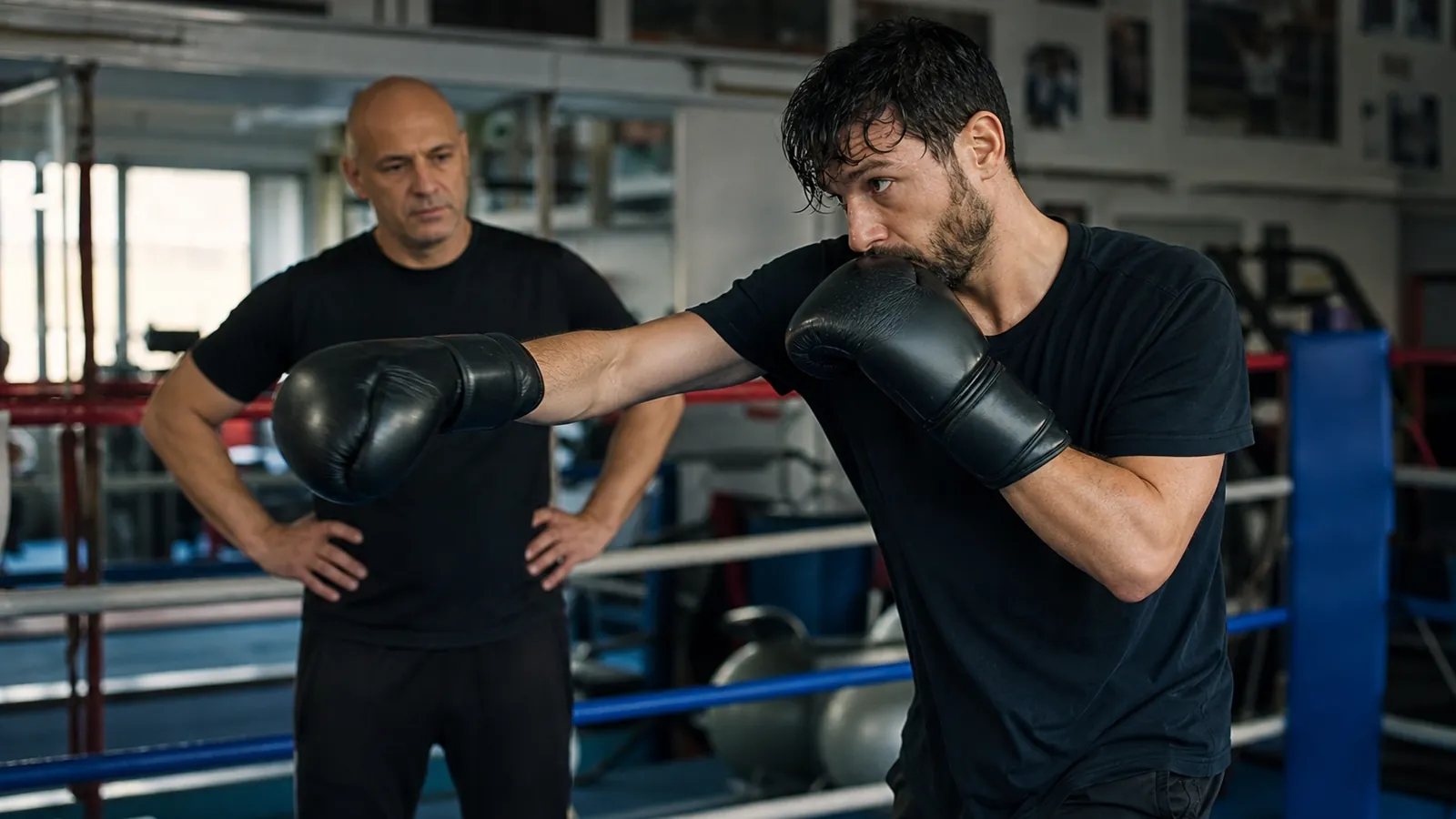
You cannot remove every ache from training. You can remove a lot of confusion.
Good habits help:
- warm up before hard rounds
- build class frequency gradually
- do not make every bag round a power test
- wrap hands properly
- use gloves that fit and support the wrist
- tell the coach early when something feels wrong
- separate technical days from hard conditioning days
- avoid sparring when tired, emotional or trying to prove a point
- sleep enough to recover
- eat properly before and after training
- do not add running, lifting, boxing and extra conditioning all at once
- keep a note if the same pain returns in the same place
The best boxers are not the people who ignore every signal. They are the people who learn which signals matter.
A 2023 systematic review of boxing injury studies found that injury patterns vary by format and exposure, with professional boxing carrying higher injury incidence than amateur boxing, and soft tissue contusion the most common injury type in the analysed studies (source). That is a useful reminder for ordinary club training: context matters. Controlled technical training, hard bag work, sparring and competition are not the same risk.
The Honour & Glory approach
At Honour & Glory, we do not expect beginners to know every difference between soreness and injury on day one.
That is part of coaching. If your shoulder is sore, we can look at guard tension and volume. If your wrist hurts on impact, we want to see the wrap, glove and punch line. If your calf is tight, we can adjust skipping and footwork. If there are warning signs, we stop and point you toward proper medical advice.
If you are healthy enough to train and want a coach-led introduction to boxing, book a free trial at Honour & Glory Boxing Club. If you are injured now, get the injury assessed first. The gym will still be here when your body is ready.
H&G Team
Writer at Honour & Glory Boxing Club, a community boxing gym in Kidbrooke, South East London.
KEEP READING

Boxing vs MMA: Key Differences
Boxing and MMA are both combat sports, but they are not really the same thing. We explain the key differences and help you decide which might be right for you.
Shakur Stevenson joins Zuffa Boxing
Shakur Stevenson signing with Zuffa Boxing tests whether Dana White can help make elite fights, not just loud announcements.
Anthony Joshua’s Prenga comeback: surviving knockdowns
A coaching-led look at what Joshua’s two knockdowns and second-round knockout reveal about composure, defensive recovery and the difference between surviving danger and solving it.
Was this page helpful?
It takes one tap, and it genuinely helps.
Choose your next step
Turn this article into the right action
Some readers are ready to book. Some need the class route first. Pick the route that matches what you actually want.