Rotator Cuff Pain in Boxing: Shoulder Warning Signs, Rehab and Return to Training

Rotator cuff pain is one of the shoulder problems boxers are most likely to ignore for too long.
A sore shoulder after your first hard class can be normal. A shoulder that pinches every time you jab, aches at night, loses power, clicks painfully, or makes you change your guard is different. Boxing shoulders do not just have to be strong. They have to accelerate, brake, hold shape under fatigue, and repeat clean movement hundreds of times.
This is general information for boxers, not a diagnosis or medical advice. Stop training and speak to a qualified clinician if symptoms are severe, worsening, unusual, or not improving. For urgent symptoms, use NHS 111, A&E or 999 as appropriate.
This guide is the next deeper article in our common boxing injuries series. It explains what the rotator cuff does, why boxing can irritate it, what shoulder warning signs matter, when to get medical help, and how a sensible return to boxing usually works.
The short version: if shoulder pain changes your punch, guard or range of movement, stop the round. If you cannot lift your arm, the shoulder has changed shape, there is sudden severe pain, pins and needles, numbness, bad swelling, or pain after a fall or heavy impact, get medical advice rather than testing it on the bag.
What the rotator cuff actually does
The rotator cuff is a group of four muscles and tendons around the shoulder. Its job is not just rotation. It helps keep the ball of the upper arm centred in the shallow shoulder socket while the arm moves.
A biomechanics review in Journal of Clinical Orthopaedics and Trauma describes the rotator cuff as central to shoulder stability, using coordinated force couples and compression of the humeral head into the socket to control movement (source). In plain English: the rotator cuff keeps the shoulder organised while bigger muscles try to move the arm quickly.
In boxing, that matters every second. The cuff helps when you:
- hold your guard without shrugging
- extend a jab without the shoulder rolling forward
- decelerate a cross after impact or a miss
- throw hooks without yanking the arm behind the body
- recover the hand to guard
- absorb light pad contact
- keep the shoulder steady as fatigue builds
The University Hospitals of Derby and Burton NHS page on rotator cuff related shoulder pain says rotator cuff problems are one of the most common causes of shoulder pain, and often hurt when lifting the arm away from the body or lying on the affected side (source). That pattern maps closely to what boxers complain about: pain lifting the arm, pain keeping the guard high, and night pain after training.
Why boxing can irritate the rotator cuff
Most recreational boxing shoulder pain is not one dramatic punch. It is usually a load, technique and fatigue problem.
Common causes include:
- too much punching volume too soon
- loading up on the heavy bag before shoulder control is ready
- reaching for the bag instead of stepping into range
- over-rotating hooks and missing into empty air
- punching while shrugged and tense
- weak upper-back and shoulder-blade control
- tight chest and front-shoulder position from desk work
- too much pressing or weights on top of boxing
- returning quickly after time off
- sparring or clinch moments that pull the arm unexpectedly
A 2023 systematic review and meta-analysis of boxing injuries found that professional boxing has higher injury risk than amateur boxing, and that injury patterns vary by format and exposure (source). For shoulder problems specifically, a systematic review of shoulder injuries in boxing reported that the available evidence is limited and inconsistent, but shoulder injuries were reported in both amateur and professional cohorts, with strains, tendonitis, dislocations and chronic impingement-type syndromes among the few specific diagnoses described (source).
That evidence does not mean ordinary boxing classes are uniquely dangerous for shoulders. It means boxing shoulder pain deserves better thinking than "push through it".
Rotator cuff pain versus general shoulder soreness
Not every shoulder ache is a rotator cuff injury. Shoulder pain can come from the rotator cuff, biceps tendon, AC joint, labrum, neck, upper back, bursae, stiffness, overload, or a direct injury.
Johns Hopkins describes rotator cuff injury symptoms as recurring pain with certain activities, pain lying on the injured side, grating or cracking sounds, limited ability to move the arm, and muscle weakness, while noting that similar symptoms can come from other conditions and need proper diagnosis (source).
For boxers, rotator cuff related pain often feels like:
- ache at the side or front of the shoulder
- pain when punching or bringing the hand back to guard
- pain lifting the elbow away from the body
- discomfort lying on that side
- weakness or dead-arm feeling late in rounds
- pinching when the arm is raised
- loss of control during hooks, uppercuts or long straight shots
General training soreness is usually broader, predictable and improving. It might be both shoulders after a first pad session. Warning-sign shoulder pain is more specific. It changes your movement, worsens with repeated punches, affects sleep, or keeps returning in the same place.
The NHS shoulder pain page says many shoulder pains can be eased with self-care, but to get medical help if it does not start feeling better after two weeks, gets worse, or it is very difficult to move the arm or shoulder (source).
Shoulder impingement, tendinopathy and tears
Boxers often use "rotator cuff" as a catch-all phrase. The actual shoulder problem may be more specific.
Rotator cuff related shoulder pain
This is a broad, useful phrase. UHDB NHS explains that rotator cuff related shoulder pain can involve a combination of factors rather than one neat label, including tendon inflammation, bursa irritation, muscle weakness or tears (source).
In boxing, that broad label often fits better than pretending every ache is a tear.
Shoulder impingement-type pain
The NHS says shoulder impingement happens when a tendon inside the shoulder swells and rubs against tissue or bone, causing pain when lifting the arm. It can start suddenly or gradually, and symptoms include pain at the top and outside of the shoulder, pain worse at night, pain lifting the arm above the head, and arm weakness (source).
A boxer may notice this when holding the guard, throwing volume, doing burpees, pressing weights, or lifting the arm after class.
Rotator cuff tears
A tear can be partial or full thickness. AAOS OrthoInfo describes rotator cuff tears as a common cause of shoulder pain and disability in adults, often caused by acute injury or gradual wear. It also warns that using the shoulder despite increasing pain may cause further damage and that tears can get larger over time (source).
That does not mean every boxer with shoulder pain has a tear. It means persistent weakness, night pain, loss of function, or pain after a fall, dislocation or heavy impact deserves proper assessment.
Labrum and instability problems
A labrum problem is not the same as a rotator cuff problem, but the symptoms can overlap. Deep shoulder pain, catching, clicking, slipping, dead-arm sensations or instability need a different level of suspicion. We will cover this separately in the labrum article. For now, the rule is simple: if the shoulder feels unstable rather than just sore, do not keep punching.
When to stop boxing immediately
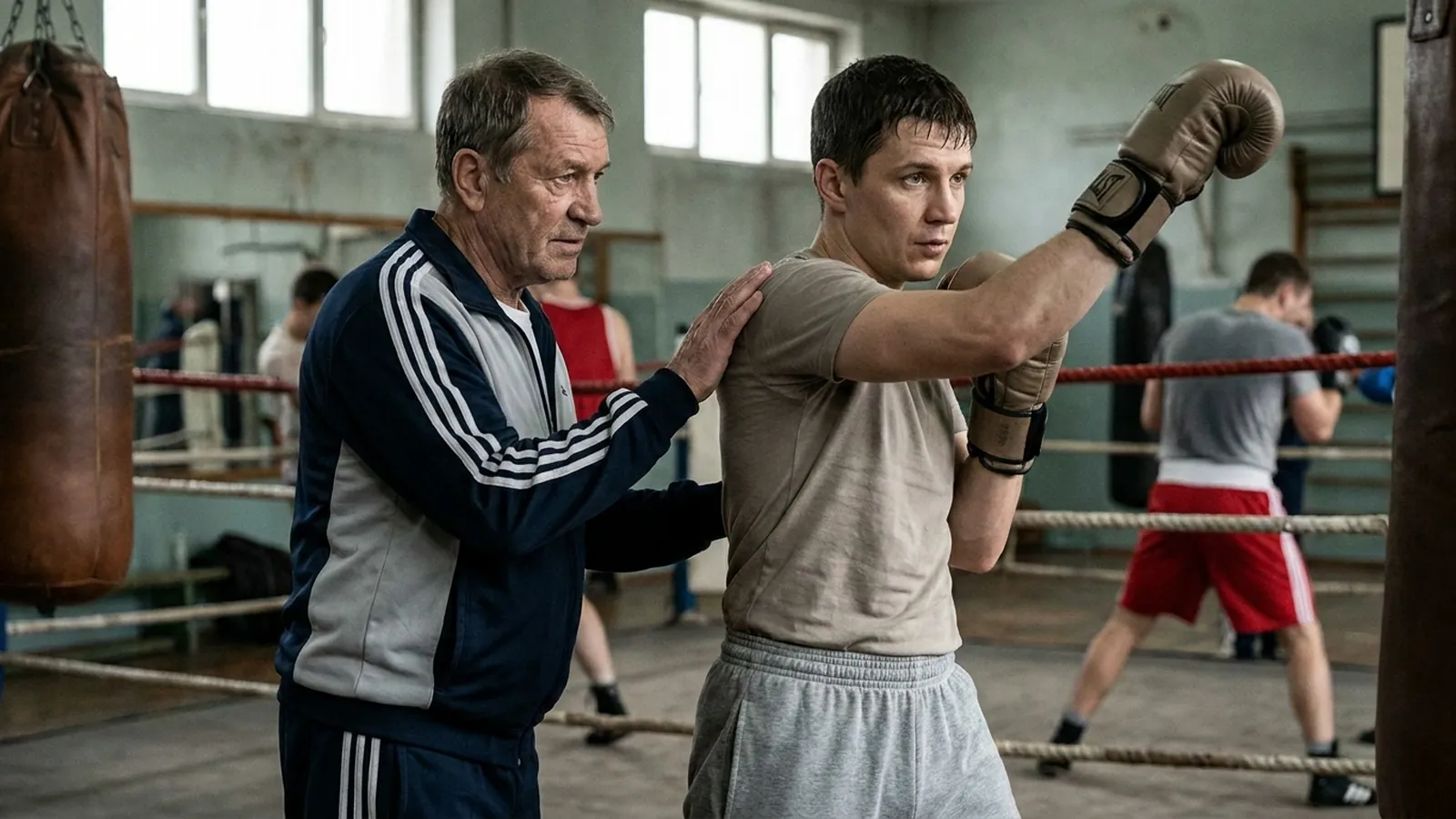
Stop the round if shoulder pain:
- is sharp rather than a dull training ache
- makes you drop or change your guard
- changes punch path or power
- appears suddenly after a missed punch, fall, pull or awkward sparring moment
- comes with weakness you did not have before
- makes it hard to lift the arm
- feels like catching, slipping or instability
- gets worse as you continue
- causes numbness, tingling or pins and needles
Do not keep throwing light punches to "see if it warms up" if the shoulder feels unstable or weak. Warm-ups help stiffness. They do not make warning signs safe.
A coach can look at technique, range, tension and load. A coach cannot diagnose a tear, dislocation, nerve issue or labral injury from the side of the bag.
When to get medical help
Use NHS guidance first.
Ask for an urgent GP appointment or get help from NHS 111 if:
- shoulder pain is sudden or very bad
- you cannot move your arm
- the arm or shoulder has changed shape or is badly swollen
- pins and needles do not go away
- there is no feeling in the arm or shoulder
- the arm or shoulder is hot or cold to touch
- pain started after an injury or accident
- you feel feverish or unwell
Those warning signs come from the NHS shoulder pain guidance, which notes they may suggest something serious such as a broken or dislocated bone, or a torn ligament or tendon (source).
NHS Inform gives similar shoulder-problem triage: phone 111 if there has been new significant trauma in the last seven days, the shoulder is misshapen after a new injury, or you cannot move the shoulder at all (source).
See a GP, NHS MSK service or physiotherapist for shoulder pain that:
- is getting worse
- has not started improving after two weeks
- stops normal activity
- makes moving the shoulder very difficult
- affects sleep repeatedly
- keeps returning whenever you box
- causes you to compensate through neck, back or elbow
If you are unsure whether symptoms are urgent, use NHS 111 rather than guessing.
What treatment often looks like
Treatment depends on the actual cause. Rotator cuff irritation, impingement-type pain, a partial tear, a full-thickness tear, shoulder instability and neck-related shoulder pain are not the same problem.
For many non-urgent shoulder problems, early management often includes:
- reducing the movements that aggravate symptoms
- keeping gentle shoulder movement rather than immobilising completely
- using pain relief, heat or cold packs where suitable
- physiotherapy exercises for range, control and strength
- changing training load and daily activities
- considering imaging or referral if symptoms do not improve or warning signs appear
The NHS shoulder page advises staying active and gently moving the shoulder, but not doing things that make the pain worse and not making up strenuous exercises or using heavy gym equipment (source). The NHS shoulder impingement page also says not to carry on with activities that caused the pain or involve repeated arm lifting, while avoiding complete immobility (source).
That is the balance for boxers: do not freeze the shoulder out of fear, but do not keep loading the exact movement that is provoking it.
For more significant rotator cuff injuries, Johns Hopkins lists treatment options that can range from rest, anti-inflammatory medication and strengthening exercises to injections or surgery for severe injuries or tears (source). AAOS notes that non-surgical treatment relieves pain and improves function for many patients, but persistent pain, weakness or larger tears can lead to surgical discussion (source).
The practical point is not to self-select the fastest pathway. It is to get the shoulder assessed if the symptoms justify it, then follow the plan for your actual shoulder.
What rehab usually looks like for a boxer
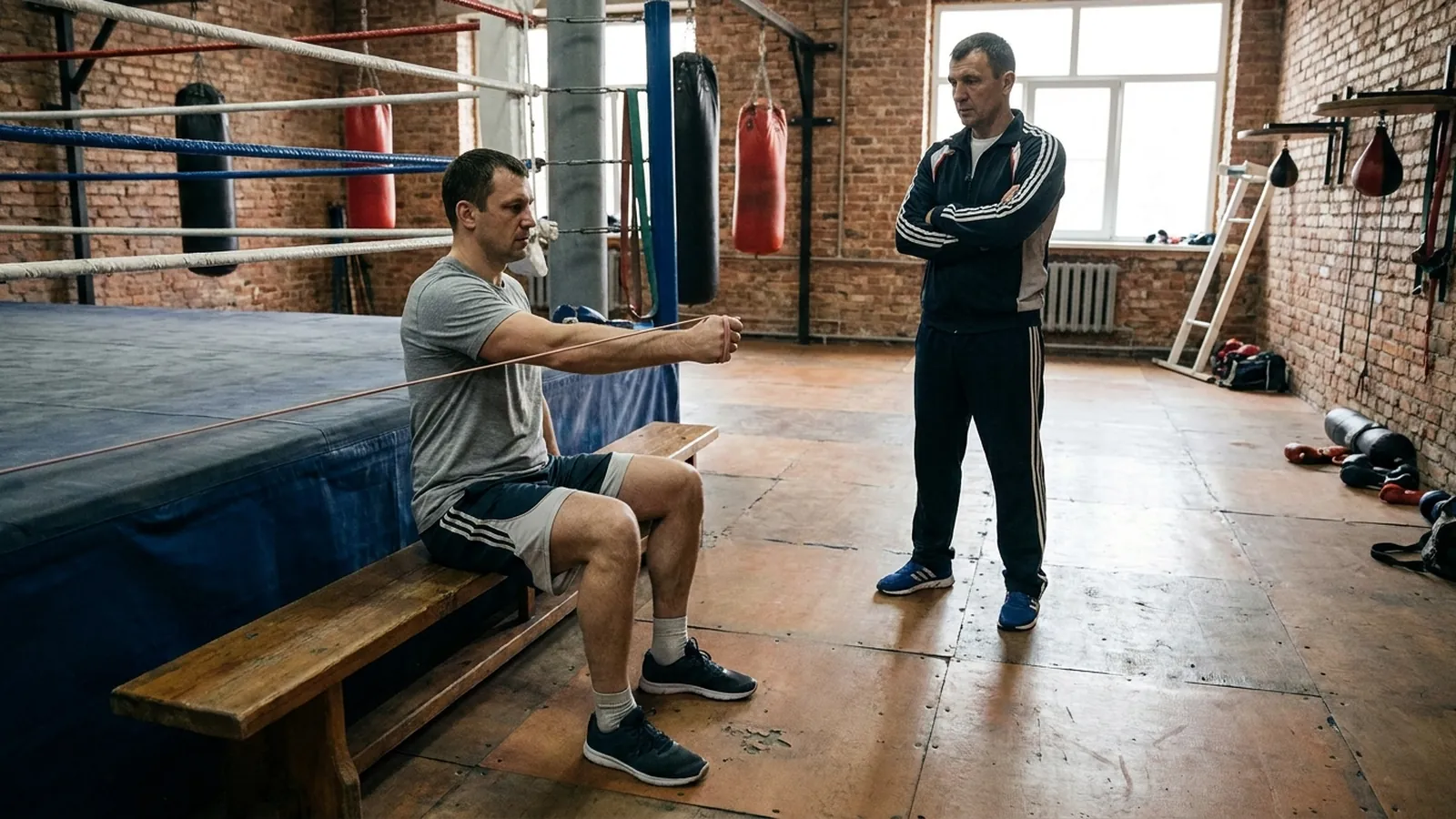
Rehab should be clinician-led when symptoms are significant. But the boxing-specific progression is usually phased.
Phase 1: calm symptoms down
The first job is to stop poking the sore spot. That may mean no bag work, no pads, no sparring, no press-ups, no overhead lifting, and no extra shoulder work for a while. You may still be able to train footwork, lower-body conditioning, gentle mobility or non-irritating skills if a clinician or coach agrees it is sensible.
This is not laziness. It is load management.
Phase 2: restore daily movement
Before boxing matters, normal life matters. Can you lift the arm for ordinary tasks? Can you sleep? Can you put a coat on? Can you reach without guarding the shoulder?
NHS Inform says many new shoulder problems should start to settle within six weeks, and that keeping active is an important part of recovery, while avoiding sports and heavy lifting until there is less discomfort and good movement (source).
Phase 3: rebuild control
This phase is often where boxers rush. Pain settles, so they hit the bag. But the shoulder may still lack control under speed and fatigue.
A physio may work on rotator cuff strength, shoulder blade movement, thoracic mobility, pressing tolerance, range of movement and progressive loading. A study of elite Korean national-team boxers found that shoulder pain, muscle tone and isokinetic function differed according to scapular position, suggesting shoulder-blade position and control matter in high-level boxing shoulders (source). That is not a direct prescription for beginners, but it supports what good coaches already see: shoulder mechanics matter.
Phase 4: reintroduce boxing without impact
Shadowboxing comes before impact. Start with relaxed shoulders, low volume, short rounds and straight punches only if they are comfortable. Avoid fast hooks, uppercuts, long reaches and hard misses at first.
The checkpoint is simple: can you move like a boxer without protecting the shoulder?
Phase 5: light pads and controlled bag work
Pads and bag work add force. Start low and technical. Straight punches usually come before hooks and uppercuts. Volume should come before power. If pain returns at 30 per cent, you have your answer.
A coach should watch the things that usually break down:
- shrugging under fatigue
- reaching instead of stepping
- dropping the hand after the punch
- over-rotating hooks
- flaring the elbow on straight shots
- loading the shoulder instead of using feet and hips
Phase 6: speed, power and sparring last
Sparring is not rehab. It is unpredictable. You miss punches, get pulled into reactions, clinch, defend, tense up, and absorb contact. It belongs at the end, after ordinary movement, strength work, shadowboxing, light pads and bag work are all tolerated.
If the shoulder needed medical care, follow the clinician's clearance process before contact training.
How to reduce rotator cuff problems in boxing
You cannot make boxing risk-free. You can remove a lot of avoidable shoulder stress.
Build punching volume gradually
A new boxer can throw hundreds of punches in one class. If the shoulder has not built that tolerance, quality falls quickly. Start with cleaner rounds, not harder rounds.
Keep the shoulder relaxed
Beginners often punch with the shoulder already shrugged. That makes the guard feel strong for ten seconds and heavy after a minute. Relaxed does not mean loose. It means organised.
Use range properly
A punch that lands at the end of a reach pulls the shoulder forward. Step into range. Let the feet solve distance before the shoulder pays for it.
Respect missed punches
Missing a hard hook can irritate a shoulder more than landing one. Control the end of the punch. Do not swing through empty air as if the bag is still there.
Train the upper back and cuff sensibly
Rotator cuff and shoulder-blade exercises are not glamorous, but they help the shoulder tolerate boxing. The goal is control, not turning every band drill into a strength test.
Do not stack all shoulder stress on the same day
Heavy bag rounds, hard pads, press-ups, bench press, overhead press and battle ropes can all load the shoulder. The body counts total stress, not exercise categories.
Tell the coach early
Early shoulder pain is much easier to manage than a shoulder that has been protected for six weeks while the boxer keeps pretending nothing is wrong.
How Honour & Glory handles shoulder pain in class
At Honour & Glory, shoulder pain is not treated as weakness.
If a boxer says their shoulder hurts, we want to see how the punch is being thrown. We will look at range, guard, tension, elbow path, rotation, footwork, fatigue and training load. Sometimes the answer is a technical correction. Sometimes it is a lighter round. Sometimes it is stopping impact and getting the shoulder checked.
Good coaching is not just demanding more. It is knowing when more is the wrong answer.

The bottom line
Rotator cuff pain in boxing is usually a signal, not a badge of toughness.
Many shoulder problems settle with sensible load reduction, movement, physiotherapy-style strengthening and cleaner mechanics. But sudden severe pain, loss of movement, weakness, deformity, swelling, numbness, persistent pins and needles, instability, night pain or symptoms that do not improve need proper medical advice.
If you are healthy enough to train and want to learn in a coach-led environment where shoulder position, range and progression are actually watched, book a free trial at Honour & Glory Boxing Club. If your shoulder is injured now, get it assessed first. The gym will still be here when you are ready.
H&G Team
Writer at Honour & Glory Boxing Club, a community boxing gym in Kidbrooke, South East London.
KEEP READING
Common Boxing Injuries: What Hurts, Why, and When to Get Help
A medically careful guide to common boxing injuries: hands, wrists, shoulders, elbows, ribs, calf strains, knees, back pain and concussion, with NHS-backed warning signs.
Shoulder Labrum Tears in Boxing: Instability, Clicking and Return to Training
A careful boxing guide to shoulder labrum tears: what the labrum does, warning signs, NHS shoulder guidance, SLAP and Bankart tears, rehab phases and return to punching.

Rib Pain in Boxing: Intercostal Strain, Body Shots and Return to Training
A careful boxing guide to rib pain: bruised ribs, intercostal strain, costochondritis, body shots, breathing warning signs and return to boxing.
Was this page helpful?
It takes one tap, and it genuinely helps.
Choose your next step
Turn this article into the right action
Some readers are ready to book. Some need the class route first. Pick the route that matches what you actually want.