Common Boxing Injuries: What Hurts, Why, and When to Get Help
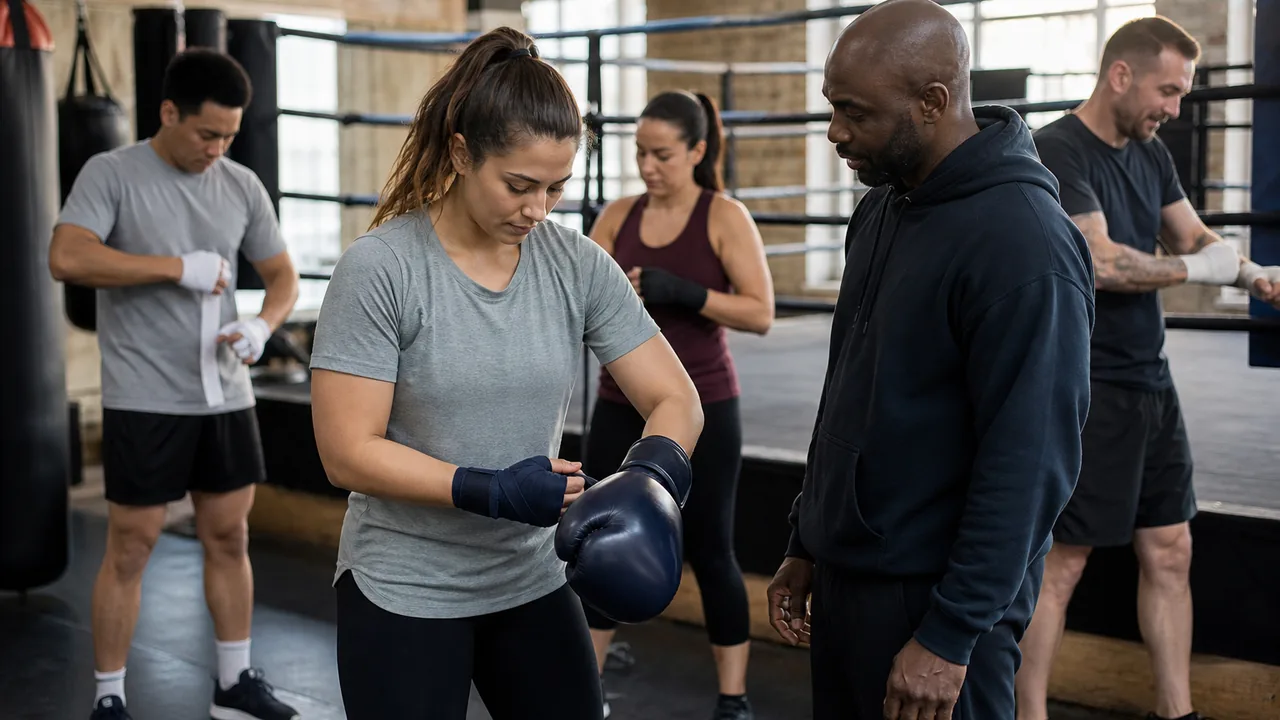
Boxing injuries are not all the same.
A sore shoulder after a hard bag session is a different problem from a shoulder that slips, catches or will not lift. A tender wrist after your first week is different from a swollen hand that cannot grip. A heavy calf after skipping is different from a sharp pop that stops you walking. And any suspected concussion belongs in its own category entirely.
This guide is not here to diagnose you. We are a boxing club, not doctors. It is here to help you make better decisions: what tends to cause common boxing injuries, what they often feel like, when to stop training, when to get medical help, and what a sensible return to boxing usually looks like.
The short version is simple: if pain changes how you move, if it is getting worse, if there is swelling, deformity, numbness, weakness, dizziness, vomiting, or any head-injury symptoms, do not try to be brave in the gym. Stop, tell the coach, and get proper advice.
What the injury research says about boxing
Research on boxing injuries is messy because studies count injuries in different ways. Some count only competition injuries. Some include training. Some count emergency department visits. Some include professional boxing, amateur boxing and recreational fitness boxing together, which can make ordinary club training look riskier than it is.
A 2023 systematic review and meta-analysis in the Orthopaedic Journal of Sports Medicine found that professional boxing has substantially higher injury incidence than amateur boxing, that soft tissue contusion is a common injury type, and that concussion made up about 12% of injuries overall in the studies analysed (source). The same review also notes that amateur boxing injury rates appear to have decreased in the past decade, likely connected to modern safety reforms, though the authors call for better exposure-based injury data.
For hands and wrists, the evidence is more specific. A prospective study of the Great Britain Olympic boxing squad recorded 172 hand and wrist injuries between 2005 and 2012. Finger carpometacarpal instability and "boxer's knuckle" were among the most common diagnoses, and the authors found the hand-and-wrist injury rate in competition was far higher than in training (source).
For a beginner or recreational boxer, the lesson is not "boxing will break you". The lesson is that body part, context and intensity matter. Bag work, pad work, technical drills, sparring and competition do not carry the same risks. Neither do a minor strain and a possible fracture.
Good boxing training is not just effort. It is load management, technique, equipment, coaching and the judgement to stop when something is no longer normal.
1. Hand and wrist injuries
Hands and wrists take repeated impact in boxing. That does not mean pain is inevitable. It means small technical mistakes can become obvious very quickly.
Common boxing-related hand and wrist problems include:
- wrist sprains
- bruised knuckles
- irritated tendons
- boxer's knuckle
- thumb injuries
- metacarpal fractures
- carpal or joint instability
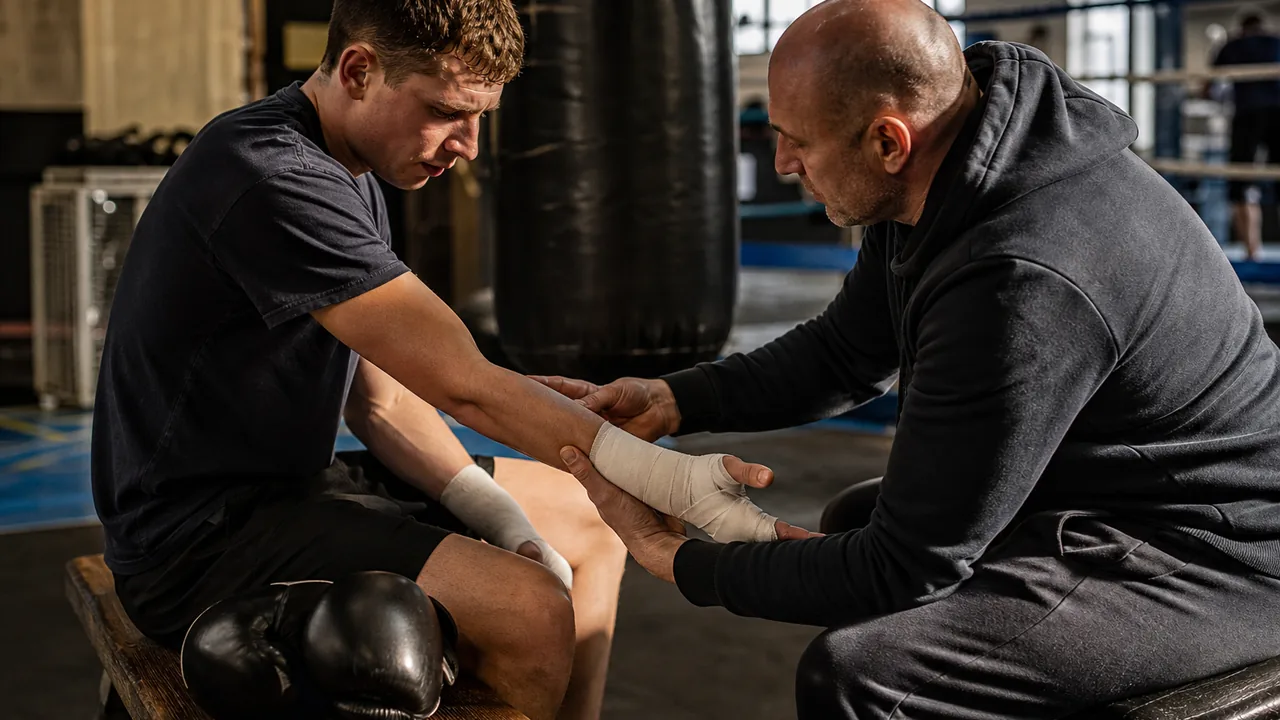
The usual causes are not mysterious. Beginners often land with a bent wrist, hit with the wrong knuckles, reach for the bag, wrap badly, use gloves with poor wrist support, or punch harder than their alignment can handle.
Our separate guide to wrist and hand injuries in boxing goes deeper on warning signs, boxer's knuckle, fractures and return to training. The practical rule is: if the wrist folds on impact, the punch is not ready to be thrown hard.
What it often feels like
Mild wrist or hand irritation can feel like a dull ache after class, tenderness over the knuckles, or discomfort when pressing through the hand. More concerning symptoms include sharp pain on impact, swelling, bruising, clicking, loss of grip, numbness, tingling, or pain that keeps returning in the same exact place.
The NHS wrist-pain guidance warns that sudden sharp wrist pain, swelling, or a popping or snapping sound can suggest a broken wrist, while pain, swelling, bruising and difficulty gripping may suggest a sprain (source). NHS Inform also flags significant trauma, deformity, inability to move the wrist, hand or fingers, and a cold, pale or blue hand as reasons to phone 111 (source).
When to stop boxing and get help
Stop the session if your hand or wrist pain changes your punch, grip or guard. Do not keep testing it on the bag.
Get urgent advice through NHS 111, an urgent treatment centre or A&E if there is severe pain, a snap or pop at injury, obvious deformity, major swelling, loss of feeling, a cold or blue hand, or you cannot move the wrist or hold objects. For less dramatic pain, the NHS advises seeing a GP if wrist pain stops normal activity, gets worse, keeps coming back, has not improved after two weeks of home care, or includes tingling or loss of sensation (source).
What treatment and rehab often look like
Simple irritation may settle with reduced impact, better wrapping, technique correction, ice in the early phase, and a temporary drop in bag intensity. A pharmacist, GP, physiotherapist or MSK service may advise on splints, pain relief, exercises or imaging depending on symptoms.
A fracture, dislocation, significant ligament injury or persistent instability is different. That needs proper assessment. In boxing terms, the rehab goal is not just "pain gone". It is being able to wrap, make a fist, grip, defend, hit lightly, then build impact gradually without symptoms returning.
2. Shoulder pain: rotator cuff, impingement and labrum issues
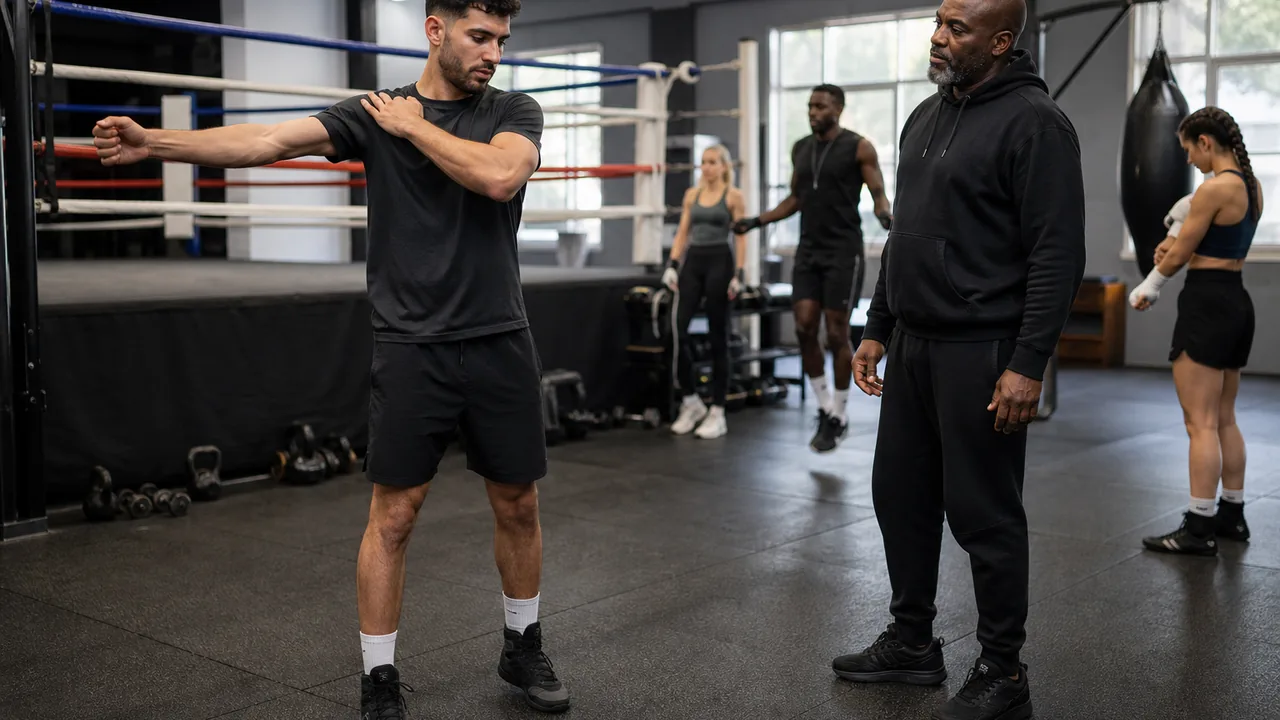
Shoulders work constantly in boxing. They accelerate punches, decelerate punches, hold the guard, absorb pad contact, control clinch positions in sparring, and cope with hundreds of repetitions in a single class.
The most common boxing shoulder problems are usually around load and control:
- rotator cuff irritation
- shoulder impingement-type pain
- biceps tendon irritation
- AC joint irritation
- labrum-related pain or instability
- general overload from too much volume too soon
The rotator cuff is a group of small muscles and tendons that help stabilise the shoulder. They can get irritated when the bigger muscles do more than the joint can currently control. Our separate guide to rotator cuff pain in boxing goes deeper on shoulder warning signs, load management and return to punching. Labrum problems are different. The labrum is the rim of cartilage around the shoulder socket that helps keep the ball of the joint in place. Johns Hopkins describes the shoulder labrum as a thick tissue attached to the rim of the socket, and notes that labral tears can be linked with instability, subluxation or dislocation (source). HSS describes common labral tear types including SLAP tears and Bankart tears, with treatment depending on the type, severity and activity demands (source). Our deeper guide to shoulder labrum tears in boxing explains instability, clicking, SLAP tears, Bankart-type problems and return to punching.
What it often feels like
Rotator cuff or overload pain often feels like an ache at the front or side of the shoulder, worse when punching, lifting the arm, sleeping on that side, or doing repeated hooks and uppercuts. You may feel weaker or less controlled, especially when tired.
Labrum-related problems can feel less simple: deep shoulder pain, catching, clicking, a dead-arm feeling, instability, or the sense that the shoulder is slipping. Do not try to self-diagnose this from a blog post. Shoulder pain is one of the places where a good physio assessment is worth it.
The NHS says shoulder pain can often be eased with self-care, but it may take about two weeks to start improving and six months or longer to fully recover. It advises medical help if shoulder pain is getting worse, does not improve after two weeks, or if moving the arm or shoulder is very difficult (source).
When to stop boxing and get help
Stop punching if pain is sharp, if your shoulder feels unstable, if your arm suddenly feels weak, if you cannot lift it normally, or if every punch makes the pain worse.
The NHS advises urgent help through an urgent GP appointment or NHS 111 if shoulder pain is sudden or very bad, you cannot move your arm, the shoulder has changed shape or is badly swollen, there are persistent pins and needles or loss of feeling, the arm is hot or cold to touch, the pain started after an injury or fall, or you feel feverish or unwell (source).
What treatment and rehab often look like
For many shoulder overload problems, treatment starts with relative rest from the aggravating movement, pain control, mobility work, and progressive strengthening. A physio may look at shoulder blade control, thoracic mobility, rotator cuff strength, pressing volume, punching mechanics and whether fatigue is changing your form.
Return to boxing normally moves from pain-free daily movement, to mobility and strength work, to shadowboxing, to light pads, to controlled bag work, then to sparring only if symptoms stay settled. Labral tears, dislocations and major tendon injuries may need imaging, specialist review and much longer rehab. Some need surgery. That is not a coaching decision.
3. Elbow pain, hyperextension and tendon overload
Elbow pain in boxing often sits between technique, distance and volume. A boxer might feel outside elbow pain after gripping or repeated straight punches, inside elbow pain after pulling or clinch-type loading, or a sharper catch after a jab or cross misses and the elbow snaps into end range.
The NHS says elbow and arm pain is not usually serious, but advises GP help if it does not go away after a few weeks. It advises urgent treatment or A&E if arm pain is severe and difficult to move, follows an injury with a snapping noise or changed arm shape, or comes with tingling or numbness (source). NHS Inform also advises phoning 111 after significant elbow trauma, a misshapen elbow, or inability to move the elbow at all, and GP or 111 help for a hot, swollen or tender elbow, especially without a clear injury (source). Our deeper guide to elbow pain in boxing explains tendon pain, hyperextension, "boxer's elbow", warning signs and return to punching.
What it often feels like
Elbow pain may feel like ache on the outside or inside of the joint, tenderness around the bony points, stiffness when fully bending or straightening, pain when gripping, swelling at the back of the elbow, or a sharp catch after a missed straight punch. Numbness, tingling or altered feeling into the hand changes the decision and should not be tested on the bag.
When to stop boxing and get help
Stop if the elbow changes your punch, guard or grip, if pain gets sharper as the round continues, if the elbow swells, if the arm tingles or feels numb, or if the elbow cannot bend or straighten normally. Do not use hard bag rounds to prove it is fine.
What treatment and rehab often look like
Treatment depends on whether the problem is tendon irritation, bursitis, a sprain, trauma, nerve-type symptoms or an impingement pattern. Boxing return usually moves from daily movement, to grip and forearm tolerance, to shadowboxing, to light pads, to controlled bag work, then sparring only when impact and fatigue are tolerated.
4. Rib pain, body shots and intercostal strain
Rib pain in boxing usually belongs in the chest-wall category, but it needs more caution than ordinary muscle soreness because breathing is involved. It can follow a body shot, a fall, a hard twist, coughing, or repeated trunk rotation on the bag.
Common rib and chest-wall problems include bruised ribs, broken ribs, intercostal muscle strain and costochondritis. The NHS says bruised or broken ribs can cause strong chest-area pain, especially when breathing in or coughing, and usually improve by themselves within 2 to 6 weeks. It also warns that worsening shortness of breath, worsening chest pain, tummy or shoulder pain, coughing blood, or a serious-accident mechanism needs 999 or A&E (source). Our deeper guide to rib pain and intercostal strain in boxing explains body shots, breathing warning signs, costochondritis and staged return to boxing.
What it often feels like
Rib or intercostal pain may feel like sharp pain when breathing deeply, tenderness over one rib or one side of the chest, pain when coughing or laughing, pain when twisting into hooks, or stiffness around the upper back and ribcage. Pain at the front of the chest needs particular care because chest pain can have causes beyond boxing.
When to stop boxing and get help
Stop if rib pain changes your breathing, follows a hard blow, gets sharper as the round continues, makes deep breathing difficult, comes with swelling or a changed rib shape, or feels like chest pain rather than local muscle soreness. Use NHS 111, an urgent GP appointment, A&E or 999 according to the warning signs.
What treatment and rehab often look like
Rib recovery usually starts with comfortable breathing, safe daily movement and avoiding sport or exercise that makes pain worse. Boxing return normally moves from normal breathing and walking, to gentle shoulder and trunk movement, to shadowboxing, to light pads, to controlled bag work, with body-contact drills and sparring last.
5. Calf strains, Achilles irritation and ankle problems
Boxing is not just punching. Footwork loads the calves constantly: bouncing, pivoting, pushing off, changing direction, skipping, moving in and out of range, and staying light under fatigue.
Calf and lower-leg problems are often caused by:
- too much skipping too soon
- sudden sprint-style footwork rounds
- hard pivots on a sticky surface
- poor warm-up
- tired calves after running or leg training
- returning to boxing after time off
- old ankle stiffness changing how the calf works
NHS Inform says calf problems can cause pain, bruising, tightness and stiffness, and are usually caused by injuries from falls, sporting activity or a direct hit to the calf area. It also notes that many new calf problems begin to settle within six weeks, but that keeping the calf moving within tolerance is important for recovery (source). Our deeper guides cover calf strains in boxing and ankle sprains and Achilles pain in boxing, including skipping, footwork, warning signs and return to training.
What it often feels like
A mild calf strain may feel like tightness, cramp or a pull during skipping or footwork. A more significant strain can feel like a sharp stab, pop, or sudden inability to push off. Achilles irritation often sits lower, around the tendon above the heel, and may be worse first thing in the morning or at the start of training.
Ankle sprains usually bring pain, swelling, bruising and reduced confidence putting weight through the joint. In boxing, ankle issues often show up during pivots and lateral movement before they show up in straight-line walking.
When to stop boxing and get help
Stop if you feel a pop, cannot push off, limp, cannot put weight through the leg, or the pain gets sharper as you continue.
NHS Inform advises phoning 111 if there has been significant trauma, the calf or lower leg is misshapen, or you have difficulty putting weight on the leg. It advises contacting a GP or 111 if trauma happened more than seven days ago, the calf is hot, swollen and tender, or the pain is worsening despite self-care (source).
What treatment and rehab often look like
For ordinary strains and sprains, the NHS recommends PRICE in the first two to three days: protection, rest, ice, compression and elevation. It says most sprains and strains feel better after about two weeks, but strenuous exercise may need to be avoided for up to eight weeks, and severe sprains and strains may take months to return to normal (source).
Boxing rehab usually means walking without pain, then calf raises, then light skipping rhythm without bounce, then shadowboxing footwork, then gentle pivots, then faster direction changes. The mistake is returning when normal walking is fine but explosive push-off is not.
6. Knee pain and lower-back pain
Knees and backs are not usually the first injuries people associate with boxing, but they matter.
Knees take repeated small loads from stance, pivots, squats, skipping, running, conditioning and sparring movement. Lower backs often complain when a boxer rotates badly, overarches under fatigue, lacks hip mobility, or tries to generate power by twisting through the spine instead of using the floor, hips and trunk together.
What knee pain often feels like
Boxing knee pain may feel like ache around the kneecap, discomfort on stairs, pain when pivoting, swelling after training, or a sense that the knee gives way. Sometimes the issue is not one dramatic injury but a workload jump: new running, more skipping, deeper squats, extra sparring, and then boxing on top.
NHS Inform says many new knee problems should begin to settle within six weeks, and that keeping the body moving is an essential part of treatment and recovery. It advises 111 for significant trauma, a misshapen knee, inability to put weight through the leg, immediate swelling after a twisting injury, or signs of infection. It advises GP or 111 if the knee locks, gives way, or is hot, swollen or tender without a clear injury (source). Our deeper guide to knee pain in boxing explains front-of-knee pain, twisting injuries, warning signs and return to footwork.
What back pain often feels like
Lower-back pain in boxing is often a dull ache after training, tightness after bag work, or pain when rotating. More serious warning signs are different.
The NHS says back pain often improves within a few weeks, but advises GP help if it does not improve after a few weeks of home care, stops daily activities, is worrying or hard to cope with, is worse at night, follows unexplained weight loss, or has other concerning features. It advises urgent help if pain is severe and sudden, getting worse quickly, or comes with feeling hot, cold, shivery or generally unwell. It says to call 999 or go to A&E if back pain comes with symptoms such as numbness or weakness in both legs, loss of feeling around the genitals or anus, bladder or bowel changes, chest pain, or pain after a serious accident (source). Our deeper guide to lower back pain in boxing explains rotation, bag work, sciatica-type symptoms, warning signs and return to training.
What treatment and rehab often look like
For knee and back problems, treatment often starts with reducing the aggravating load, keeping gentle movement where safe, addressing strength or mobility gaps, and rebuilding gradually. A coach can help adjust training, but a coach should not be your diagnosis. If a knee locks, swells, gives way, or a back problem has neurological symptoms, that is medical territory.
7. Cuts, bruises, nose injuries, eye injuries and dental issues
These injuries are more likely in sparring and competition than in ordinary non-contact fitness boxing.
Common causes include:
- accidental head clashes
- poorly controlled sparring
- punches landing through a loose guard
- elbows or shoulders in close range
- no mouthguard in contact work
- damaged or poorly fitted protective kit
A bruise on the arm from pads is one thing. A cut near the eye, nose injury, dental trauma or vision change is not something to shrug off. Our deeper guide to face injuries in boxing explains cuts, nosebleeds, broken-nose warning signs, black eyes, eye symptoms, dental trauma and return to contact work.
For contact boxing, the basics matter: good match-ups, controlled intensity, a coach watching the round, properly fitted gloves, mouthguard, sensible head contact, and no ego rounds. Sparring should build skill. It should not be a weekly injury lottery.
8. Concussion and head injury
Concussion is the injury where boxing culture has to be clearest.
You cannot tough out a brain injury. You cannot prove anything useful by finishing a round when you are dazed. You cannot use a blog, a coach or a teammate as a substitute for medical guidance if symptoms are present.
The NHS says most head injuries are not serious, but it is important to get medical help if there are symptoms after a head injury. Concussion can last a few weeks. NHS guidance says to go to A&E after a head injury with symptoms such as being knocked out and waking up, vomiting, a headache that does not go away, memory problems, behaviour change, a large bruise, swelling or cut on the head, an open wound, alcohol or drug involvement, a clotting disorder, blood-thinning medication, or previous brain surgery (source).
It says to call 999 if someone has been knocked out and has not woken up, has difficulty staying awake, has a seizure, has problems with vision or hearing, has fluid from the ears or nose, bleeding from the ears, weakness or numbness, problems walking, balancing, understanding, speaking or writing, or a head wound with something inside it or a dent to the head (source).
The same NHS page says not to play contact sports for at least three weeks after a minor head injury, and to see a GP if symptoms last more than two weeks or you are unsure if it is safe to return to work, school, driving or sport. Our deeper guide to concussion and head injury in boxing explains symptoms, red flags, first-24-hour decisions and staged return to boxing.
Boxing rule
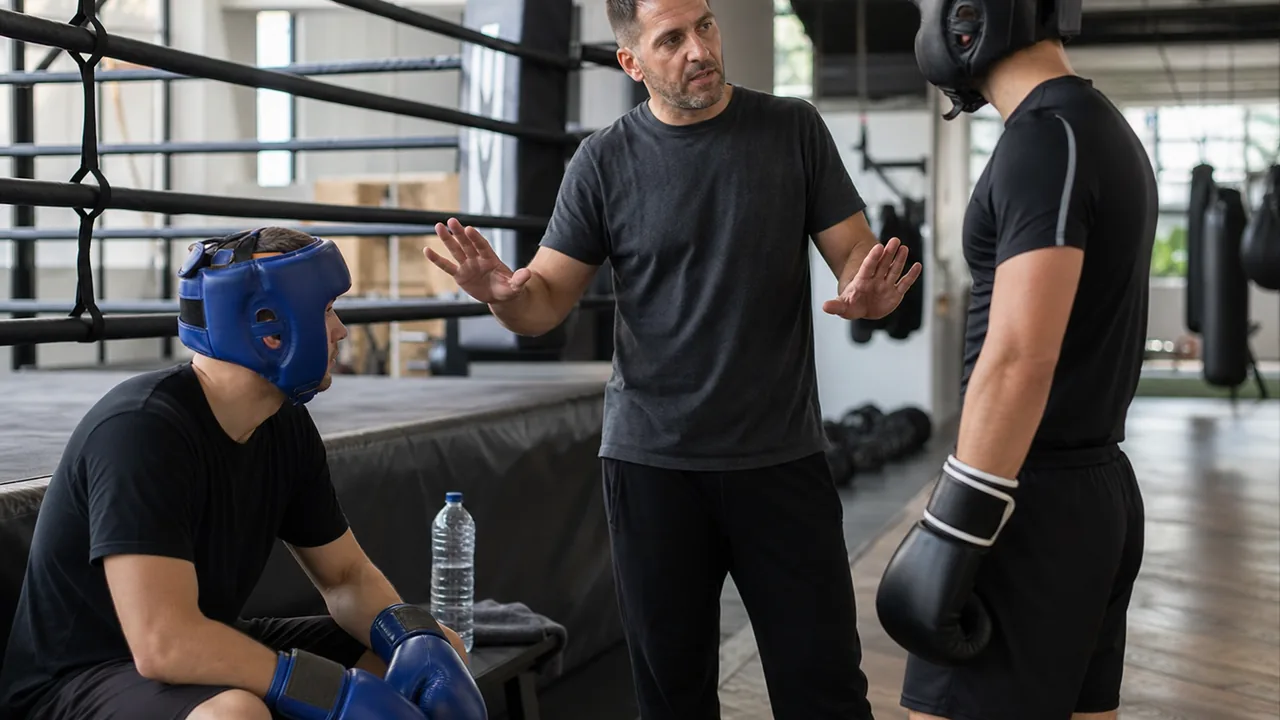
If concussion is suspected, the session is over. No debate, no "one more round", no bag work to test it. Sit out, get assessed, and follow medical return-to-sport guidance.
Normal soreness versus injury warning signs
Normal training soreness is usually broad, predictable and improving. It might be both shoulders after a first pad session, calves after skipping, or general muscle ache the day after conditioning. Our separate guide to boxing soreness versus injury explains the difference in more detail for beginners deciding whether to train, rest or get help.
Warning-sign pain behaves differently:
- it is sharp, local or worsening
- it changes your technique
- it makes you limp, guard differently or avoid a movement
- it comes with swelling, bruising, deformity, numbness or weakness
- it returns in the same place every session
- it follows a pop, crack, twist, fall or direct blow
- it affects sleep or normal daily activity
- it involves dizziness, confusion, vomiting, headache or memory problems after head contact
A useful gym rule: if you have to bargain with the pain to keep training, stop and ask for help.
What treatment often looks like
Treatment depends on the injury, but the early pattern is often similar.
For minor sprains and strains, NHS guidance uses PRICE for the first two to three days: protect, rest, ice, compression and elevation. It also warns against heat, alcohol and massage in the first couple of days because they may increase swelling (source).
After the early phase, the goal is usually not complete rest forever. It is the right movement at the right time. NHS Inform repeatedly emphasises keeping the affected area moving within tolerance for calf, knee, wrist, hand and finger problems, while avoiding sport or heavy loading until there is less discomfort and good movement.
A sensible pathway often looks like this:
- reduce or stop the aggravating boxing activity
- keep safe daily movement where appropriate
- use ice, elevation or pain relief as advised by NHS, pharmacist or clinician
- speak to a GP, NHS 111, urgent treatment centre, MSK service or physiotherapist if warning signs are present
- rebuild strength and range of motion
- reintroduce boxing movement without impact
- reintroduce light impact
- rebuild speed, power and sparring last
The big mistake is returning because pain is lower at rest. Boxing is not rest. The test is whether the injured area tolerates the specific demands of boxing: impact, rotation, fatigue, guard position, footwork and reaction speed.
What rehab often looks like for boxers
Rehab is not just a list of exercises. It is a staged return to the thing that hurt you.
For a hand or wrist, that might mean shadowboxing, then light pad contact, then controlled straight punches on the bag, then hooks, then normal power.
For a shoulder, it might mean mobility, cuff work, scapular control, light shadowboxing, then short pad rounds, then bag work, then sparring only when strength and control hold up under fatigue.
For a calf, it might mean walking, calf raises, skipping without bounce, shadowboxing footwork, pivots, then faster rounds.
For concussion, it means following medical return-to-sport advice. That is not negotiable.
Recovery time varies. NHS guidance gives useful broad ranges: many sprains and strains feel better after about two weeks, strenuous exercise may need to be avoided for up to eight weeks, and severe sprains and strains can take months. Shoulder pain may take two weeks to start improving and six months or longer to fully recover. Many calf and knee problems begin to settle within six weeks. These are not guarantees. They are reference points.
How to reduce your injury risk in boxing
The best injury strategy is boring in the best possible way.
- Warm up properly before hard rounds.
- Learn to wrap your hands properly.
- Use gloves that actually fit and support the wrist.
- Build bag power slowly.
- Keep sparring controlled and coach-led.
- Do not spar tired just to prove a point.
- Tell the coach early if something hurts.
- Treat recurring pain as information, not weakness.
- Strengthen the boring bits: calves, hips, trunk, upper back and rotator cuff.
- Sleep, eat and recover like training matters.
If you are new, the safest answer is not to train timidly. It is to train accurately. Clean punches, sane volume, good kit, honest feedback and no heroics through warning signs.
The Honour & Glory approach
At Honour & Glory, beginners are not expected to know the difference between normal soreness and a warning sign on day one. That is part of coaching.
If your wrist hurts when you hit the bag, we want to see the punch. If your shoulder keeps pinching, we want you to say so before it becomes a bigger problem. If you are worried about a head impact, the round stops. That is not softness. That is how people keep training for years.
This article is the starting point for a deeper injury series. The deeper guides now cover wrist and hand injuries in boxing, rotator cuff pain in boxing, shoulder labrum tears in boxing, calf strains in boxing, ankle sprains and Achilles pain in boxing, knee pain in boxing, lower back pain in boxing, elbow pain in boxing, rib pain and intercostal strain in boxing, face injuries in boxing, concussion and head injury in boxing, and boxing soreness versus injury.
If you want to start boxing in a coach-led environment that takes technique and safety seriously, book a free trial at Honour & Glory Boxing Club. If you are injured now, get the injury assessed first. Boxing will still be here when your body is ready.
H&G Team
Writer at Honour & Glory Boxing Club, a community boxing gym in Kidbrooke, South East London.
KEEP READING
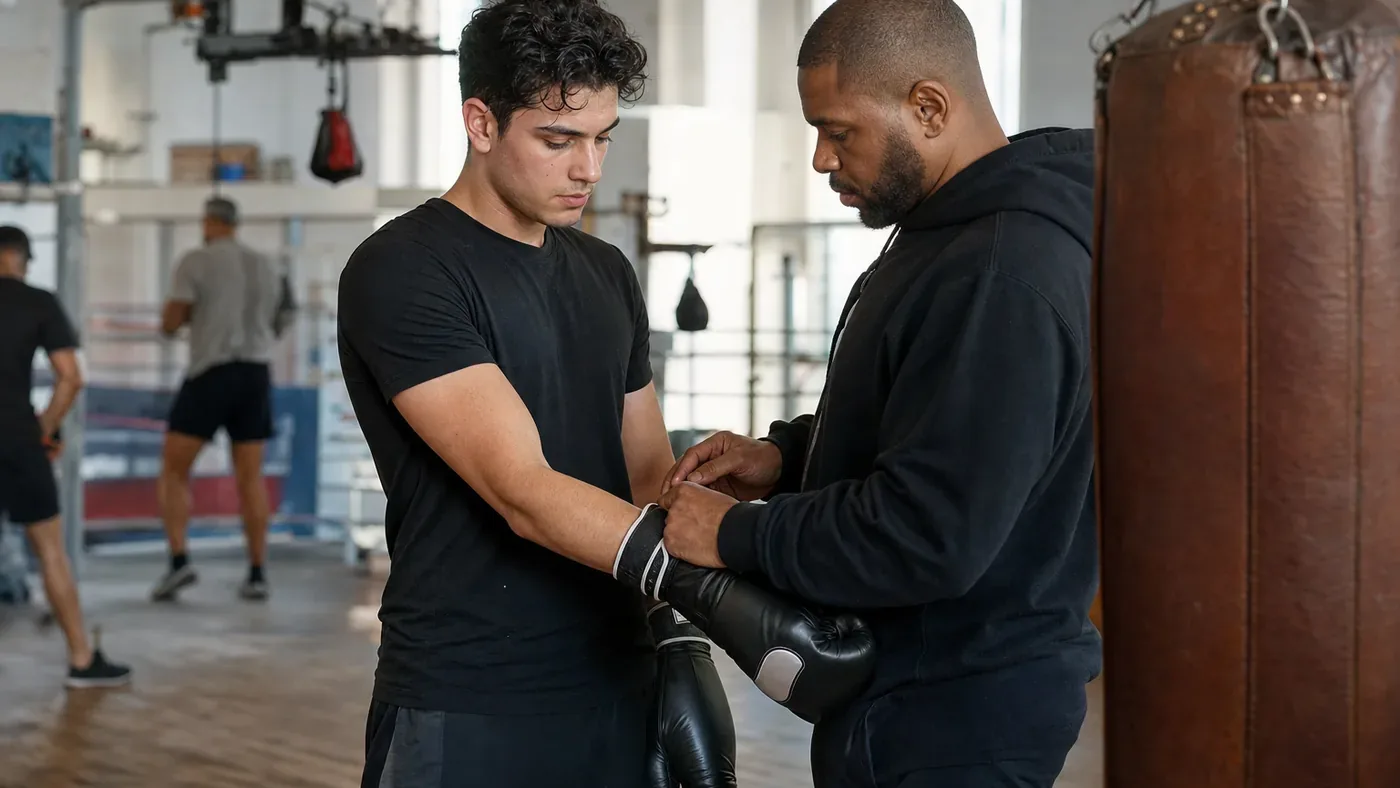
Wrist and Hand Injuries in Boxing: Pain, Knuckles, Fractures and When to Stop
A careful, coach-led guide to wrist and hand pain in boxing: common causes, warning signs, boxer's knuckle, fractures, wrapping, rehab and return to training.
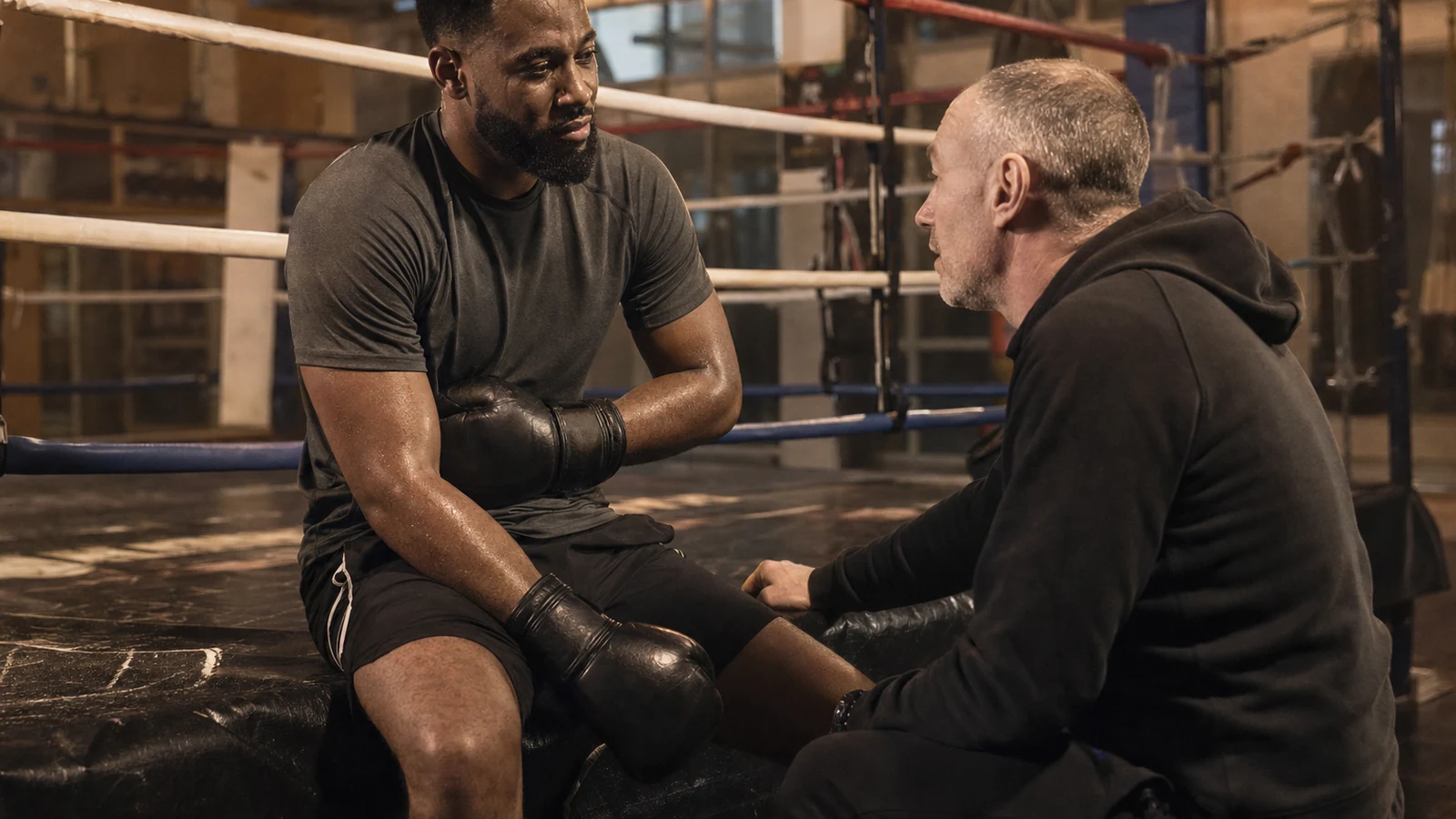
Rib Pain in Boxing: Intercostal Strain, Body Shots and Return to Training
A careful boxing guide to rib pain: bruised ribs, intercostal strain, costochondritis, body shots, breathing warning signs and return to boxing.
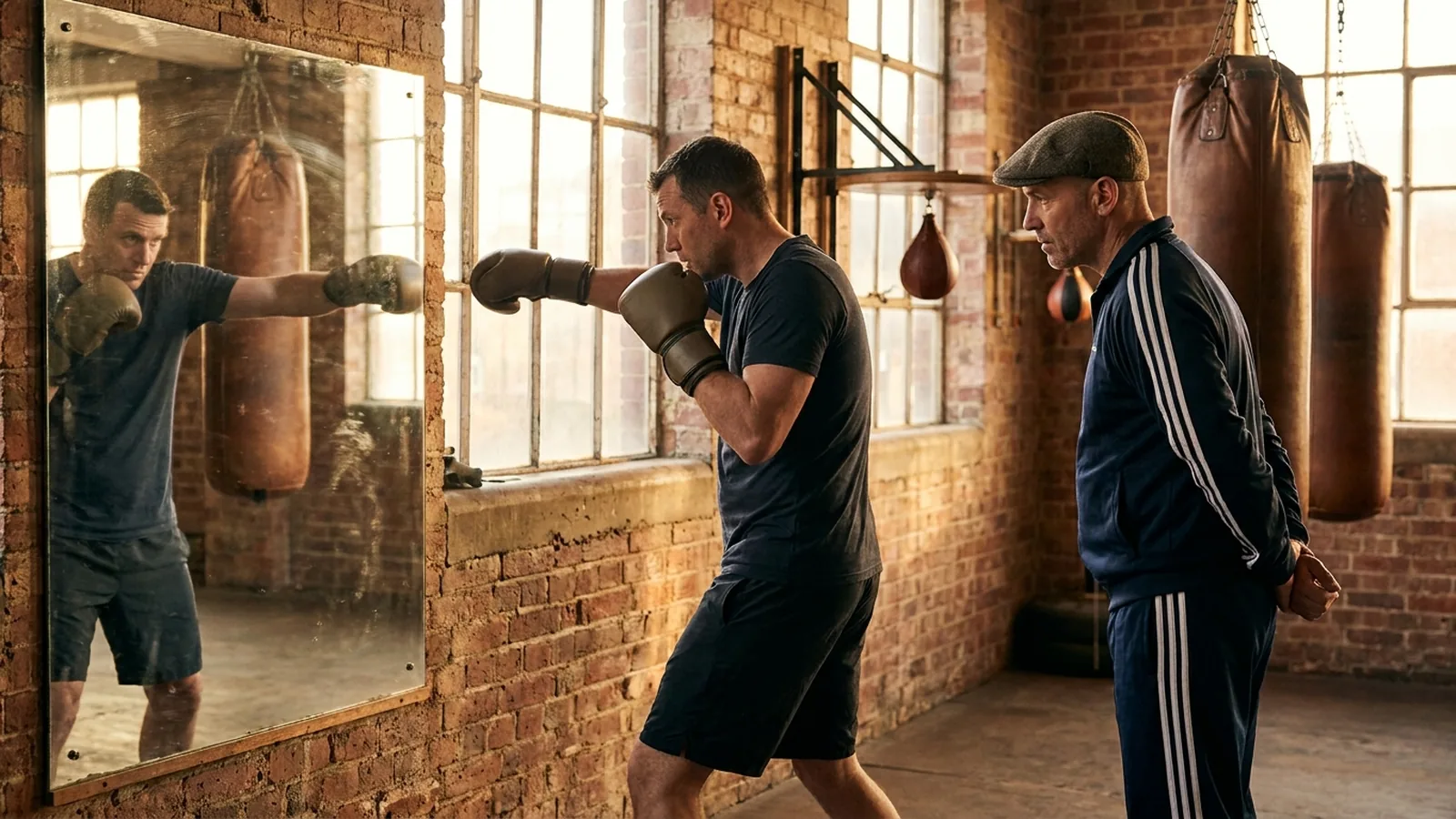
Rotator Cuff Pain in Boxing: Shoulder Warning Signs, Rehab and Return to Training
A careful, coach-led guide to rotator cuff pain in boxing: common causes, warning signs, NHS-backed shoulder guidance, rehab phases and return to punching.
Was this page helpful?
It takes one tap, and it genuinely helps.
Choose your next step
Turn this article into the right action
Some readers are ready to book. Some need the class route first. Pick the route that matches what you actually want.