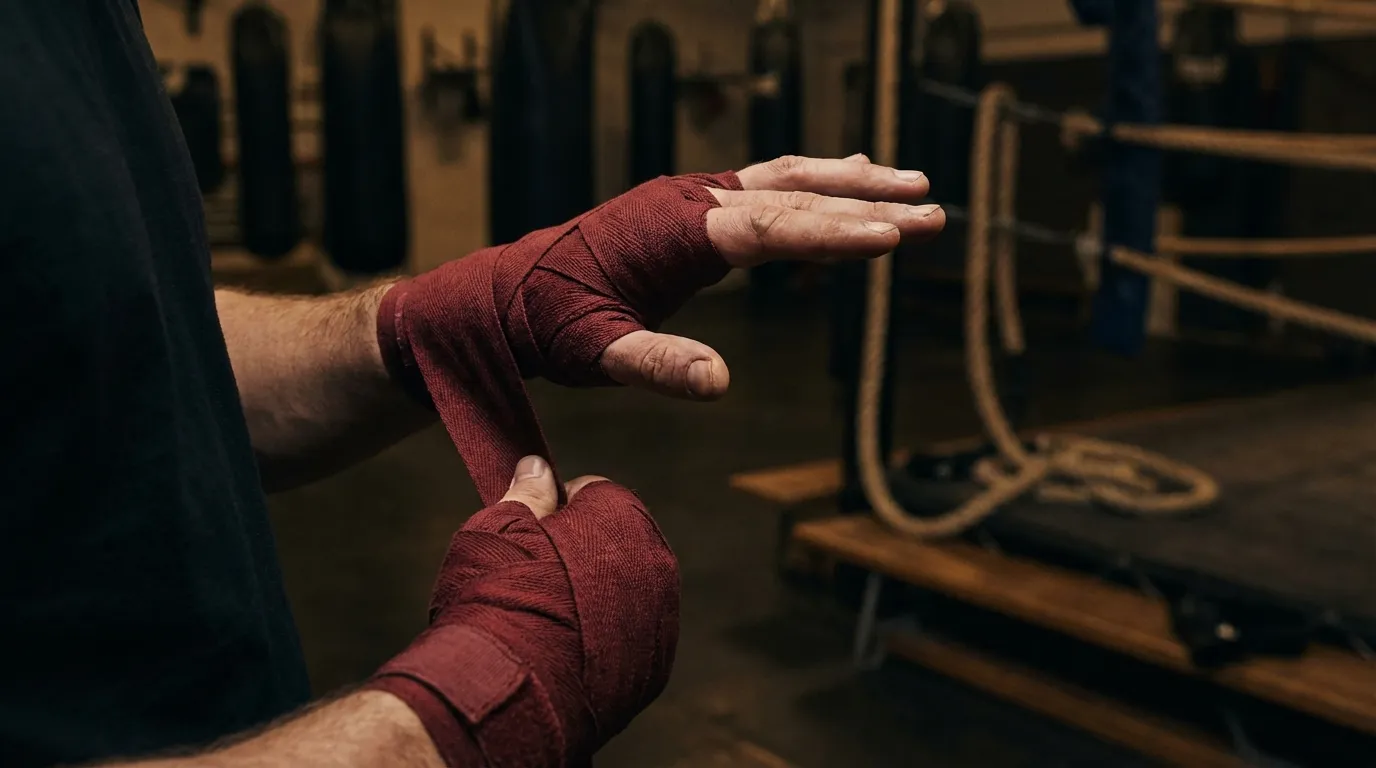
Proper hand wrapping protects the 27 bones and 29 joints in each hand. England Boxing's equipment standards require hand wraps for all sparring and competition, while RDX Sports' hand wrap guide demonstrates multiple wrap styles for different hand shapes.
The quick answer for how to wrap hands for boxing properly: start at the thumb loop, wrap the wrist three times, cover the knuckles three times, pass between each finger, secure the thumb, then finish with an X over the back of the hand and close at the wrist.
That is the method we teach beginners in our Adult Recreational class. If you are starting boxing near Kidbrooke or Greenwich, learn this before you worry about expensive gloves. If you still need kit, pair this with our best boxing hand wraps guide and beginner boxing gloves guide.
Learning how to wrap your hands for boxing is one of those things that seems complicated until it clicks. Then you will do it without thinking, like tying shoelaces.
Proper hand wrapping protects the small bones in your hands and stabilises your wrists. Skip it or do it badly, and you are asking for injuries that could sideline you for weeks.
Let me walk you through the method we teach at the gym. It is not the only way, but it works.
Why do you need hand wraps for boxing?
Your hands contain 27 small bones each. When you punch something hard, like a heavy bag or pads, those bones absorb significant impact. Without proper support, they shift around and can fracture or develop stress injuries.
The wrist is equally vulnerable. A bent wrist on impact can cause sprains or worse.
Hand wraps solve both problems. They:
- Compress the bones of your hand so they move as a unit
- Support the wrist joint
- Add cushioning across the knuckles
- Absorb sweat before it reaches your gloves
Every training session, every time. No exceptions.
What do you need to wrap your hands for boxing?
Standard cotton hand wraps, 4 to 4.5 metres long. Some wraps have a slight stretch (Mexican style), which many people find easier to work with.
Make sure your wraps have:
- A thumb loop at one end
- Velcro closure at the other end
- Enough length (short wraps do not provide adequate protection)
If you are borrowing gym wraps as a beginner, just work with what they have. Once you buy your own, you will find a style you prefer.
Types of Boxing Hand Wraps
Not all hand wraps are the same. Each type suits different needs, and knowing the differences helps you pick the right wraps for your training.
Cotton Wraps
Traditional cotton wraps are the most common type of boxing wrap. They are non-stretch, which gives rigid wrist support and a firm wrapping for boxing. Cotton wraps tend to be more durable and hold their shape wash after wash. The downside is they are less forgiving if you wrap unevenly, and they can feel bulky inside gloves.
Mexican Style Wraps (Semi-Elastic)
Mexican wraps contain elastic fibres woven into the cotton, giving them a slight stretch. This makes them easier to bandage your hands with, especially for beginners. They mould to the contours of your hand better than pure cotton, creating a snug fit between the fingers and across the knuckles. Most boxers at our gym prefer these.
Gel Wraps and Inner Gloves
Gel wraps are padded slip-on gloves with built-in knuckle protection. They are quick to put on, making them popular with boxers who want convenience. However, they provide less wrist wrapping support than traditional hand wraps and do not protect the small bones between your fingers in the same way. Best for light pad work and fitness boxing, not heavy sparring.
Gauze and Tape (Competition Wraps)
Professional and competitive boxers use surgical gauze and medical tape to wrap their hands before fights. This method creates a custom-moulded protective layer that sits perfectly under the glove. Gauze and tape wrapping is a skill in itself, typically done by a cornerman or coach. For training, standard wraps are more practical and reusable.
Which Should You Choose?
For most people starting boxing, semi-elastic Mexican wraps in 4.5 metre length are the best option. They are forgiving enough to learn with, provide solid protection, and work well under any type of boxing glove. Once you are wrapping confidently, experiment with cotton wraps for comparison.
The Basic Hand Wrap Method
Before you start, this video gives a clear visual version of the method. The useful shorthand is 3-3-Fingers-V: three wraps around the wrist, three around the knuckles, one pass between each finger, then a V shape across the back of the hand to finish.
Roll your wrap up tightly before starting. This makes it much easier to apply smoothly.
Step 1: Thumb Loop
Start with your fingers spread wide. Slide your thumb through the loop with the wrap going across the back of your hand (not the palm).
This anchors everything. The thumb loop should sit comfortably without pulling.
Step 2: Wrap the Wrist
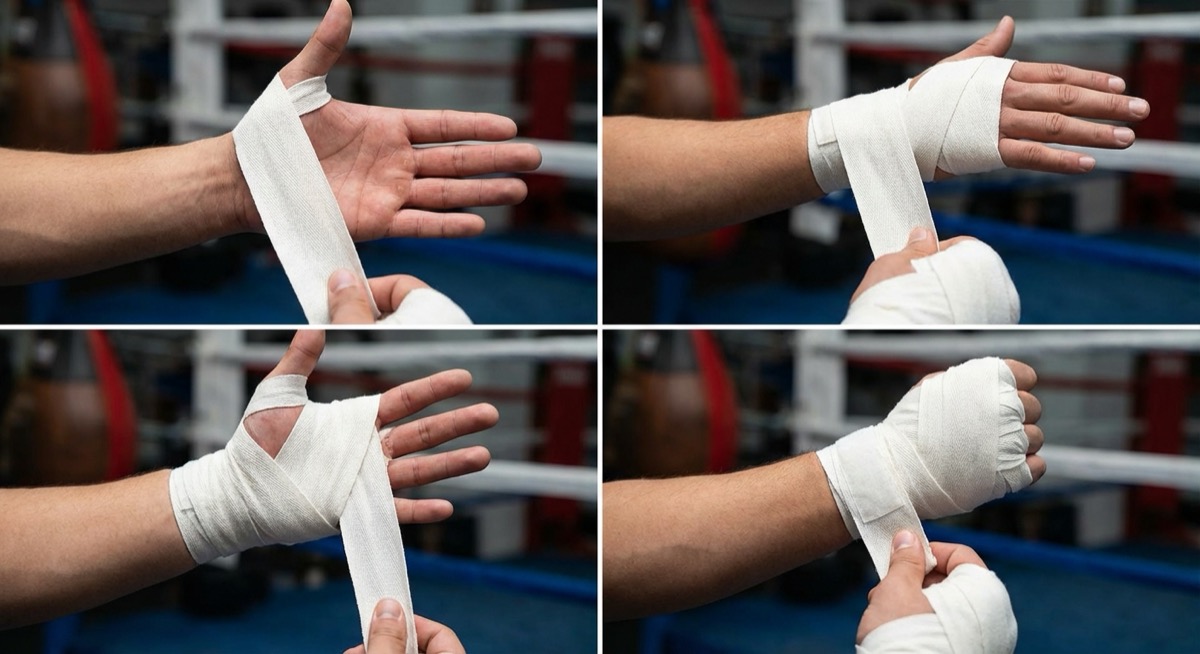
Bring the wrap around your wrist three times. Keep it firm but not tight enough to cut off circulation.
The goal is support, not a tourniquet. You should be able to flex your wrist slightly.
Step 3: Across the Palm
From your wrist, bring the wrap diagonally across your palm and around the knuckles. Do this three times, covering the base of your fingers.
Keep your fingers spread while wrapping so the wrap does not get too tight when you make a fist.
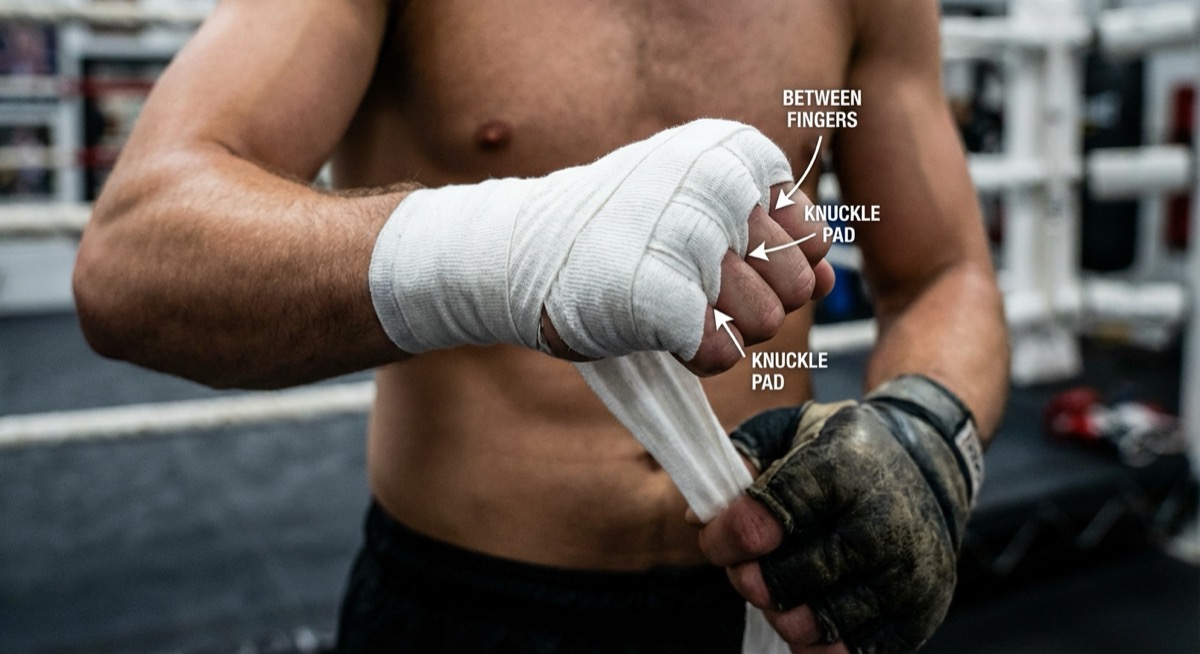
Step 4: Between the Fingers
This part separates good wrapping from average wrapping.
From your knuckles, bring the wrap down through the gap between your pinky and ring finger. Wrap around the back of your hand, then back to the knuckles.
Repeat for the gap between ring finger and middle finger.
Then again for middle finger to index finger.
Each loop should go: knuckles, down through gap, around back of hand, back to knuckles.
This separates and cushions each knuckle individually. It makes a noticeable difference in protection.
Step 5: Secure the Thumb
Wrap once around your thumb, then back across the palm to the wrist.
The thumb needs some support but should not be immobilised. One wrap is enough.
Step 6: Final Wraps
You should have wrap material left over. Use it to:
- Make an X across the back of your hand (wrist to knuckles, knuckles to wrist)
- Add more layers across the knuckles if possible
- Finish at the wrist
Secure with the velcro closure.
Checking Your Work
A good wrap job should:
- Feel snug but not painful
- Allow you to make a comfortable fist
- Not have any loose or bunched sections
- Cover all knuckles with padding
- Support your wrist without restricting all movement
Open and close your fist a few times. If anything feels wrong, unwrap and start again. It is better to redo it than train with bad wraps.
Common Mistakes to Avoid
- Wrapping too tight. If your fingers tingle or turn white, it is too tight. You want support, not strangulation.
- Wrapping too loose. Equally problematic. Loose wraps bunch up inside your glove and provide no protection.
- Skipping the finger loops. The wraps between each finger are tedious but they properly cushion your knuckles. Do not skip them.
- Rushing. Take your time, especially when learning. A two-minute wrap job protects you for the whole session.
- Not spreading fingers while wrapping. If you wrap with a closed fist, the wraps will be too tight when you open your hand, cutting circulation.
Alternative Methods
The method above is what we teach, but there are other approaches:
- Simple wrist and knuckle method. Faster but less protection between the fingers. Acceptable for light bag work but not ideal for heavy sessions.
- Figure-eight method. Wraps cross repeatedly in a figure-eight pattern between wrist and knuckles. Some people find it more comfortable.
- Competition wrap. Used in amateur bouts with specific rules about wrap length and tape. Irrelevant for training.
Find what works for your hands. The method matters less than the result: secure wrists and protected knuckles.
How tight should hand wraps be?
This takes practice to judge. Some guidelines:
- You should be able to slide one finger under the wrap at your wrist
- Your fingertips should stay pink and warm
- Making a fist should feel natural, not restricted
- After five minutes of hitting the bag, nothing should be uncomfortable
If your hands go numb during training, you have wrapped too tight. Stop and rewrap immediately.
Caring for Your Wraps
Hand wraps get sweaty and gross. Basic hygiene:
- Let them air dry after every session
- Wash them weekly at minimum
- Use a mesh laundry bag to prevent tangling in the machine
- Replace them when they lose elasticity or develop permanent odours
Some people buy multiple pairs and rotate them. This makes the washing situation easier and means you are never stuck with wet wraps.
Are gel wraps better than traditional hand wraps?
You will see gel inner gloves marketed as an alternative to traditional wraps. They slip on quickly and seem convenient.
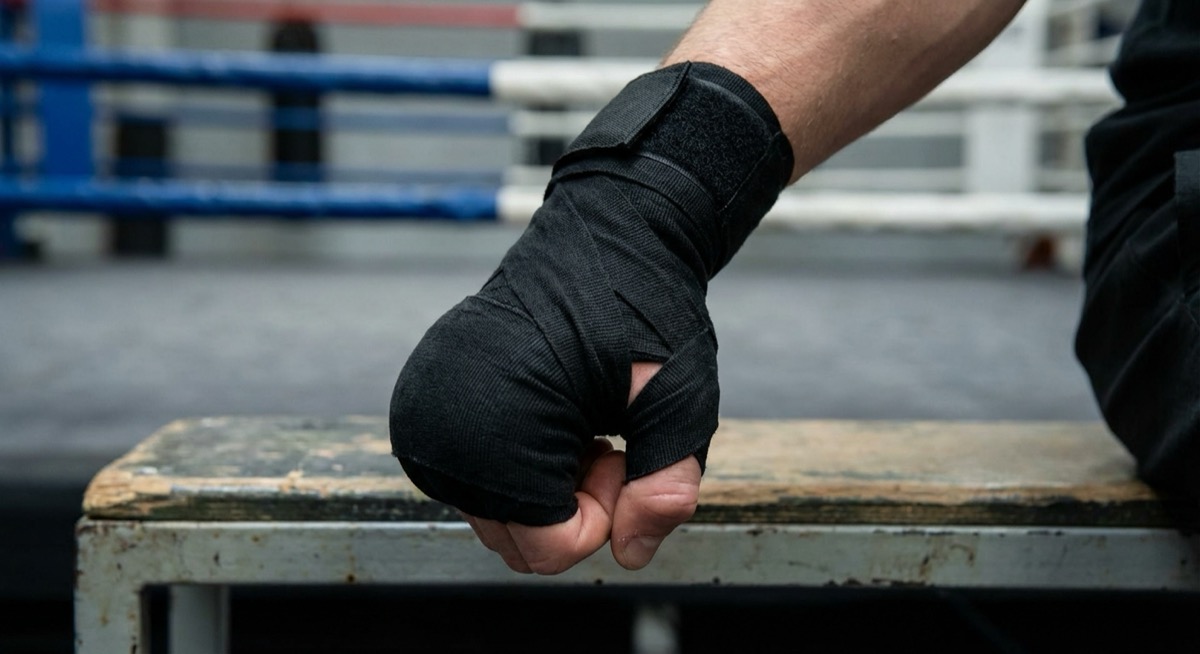
I do not recommend them for most people.
The problems:
- They do not wrap the wrist properly
- The padding compresses over time
- They cannot be adjusted for different hand shapes
- They create a false sense of security
Traditional wraps take longer but they work better. Learn to use them properly.
Practice Makes Perfect
Your first few attempts at wrapping will be slow and awkward. That is fine. Everyone goes through this phase.
Practice at home while watching TV. After a dozen attempts, it becomes automatic. After a hundred, you will not even think about it.
Some tips for learning:
- Watch your coach wrap their hands and copy them
- Ask for feedback on your wrapping
- Rewrap if something feels off rather than pushing through
- Be patient with yourself
Within a few weeks, you will wrap your hands in under two minutes without any thought.
Wrapping for Different Activities
The same basic method works for everything, but you might adjust intensity:
- Bag work. Full wrapping with good knuckle padding. The bag does not give much.
- Pad work. Same as bag work. Pads absorb some impact but your hands still need protection.
- Sparring. Firm wrapping but ensure you can still make a comfortable fist. Too tight restricts your technique.
- Light shadow boxing. Some people skip wraps for pure shadow boxing without contact. Your choice, but it takes no time to wrap up.
When Wrapping Is not Enough
Wraps protect against normal training wear and tear. They will not save you from:
- Punching with bad technique (bent wrist, thumb inside fist)
- Hitting the bag at weird angles
- Using worn-out gloves with collapsed padding
- Pre-existing hand injuries that need rest
If you are getting hand or wrist pain despite proper wrapping, talk to your coach. Something else might be wrong with your technique.
Ready to Learn Properly?
Reading about hand wrapping only gets you so far. The best way to learn is having a coach show you in person, correct your mistakes, and give feedback.
At Honour and Glory, we teach all beginners proper wrapping technique from day one. It is part of learning to box safely, especially if you are new to gloves, pads and bag work.
Claim a free trial session at Honour and Glory Boxing Club.
Related Guides
- Best Boxing Boots UK 2026: For Men, Women, and Training - the right footwear makes a difference
- Best Boxing Gloves for Beginners - choosing your first pair
- Boxing Classes for Beginners - how to start training without wasting money on kit
- How Many Calories Does Boxing Burn? - the real numbers behind boxing fitness
- Boxing Circuit Training: Fitness Workouts - what a typical session looks like
- Boxing gym Greenwich - 4 minutes from our Kidbrooke gym
- Boxing gym Woolwich - 9 minutes by car
- Boxing gym Eltham - 12 minutes by car
- Boxing gym Bromley - 17 minutes by car
H&G Team
Writer at Honour & Glory Boxing Club, a community boxing gym in Kidbrooke, South East London.
KEEP READING
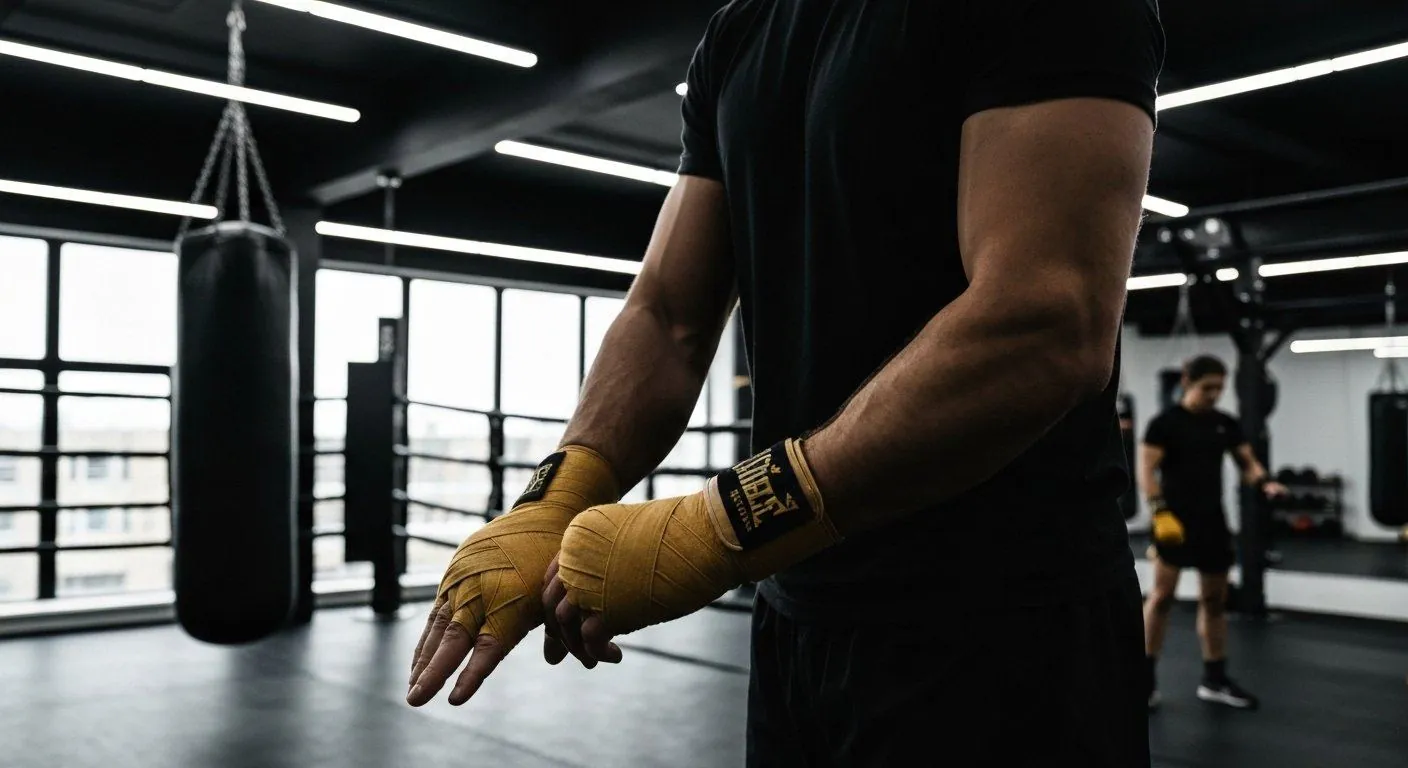
How to Wash Boxing Hand Wraps
A practical guide to washing boxing hand wraps properly, drying them faster, and stopping glove smell before it starts.

Why Your Wrists Hurt After Boxing
Wrist pain after boxing is usually a technique or equipment problem, not a toughness test. Here is what causes it and what to fix first.
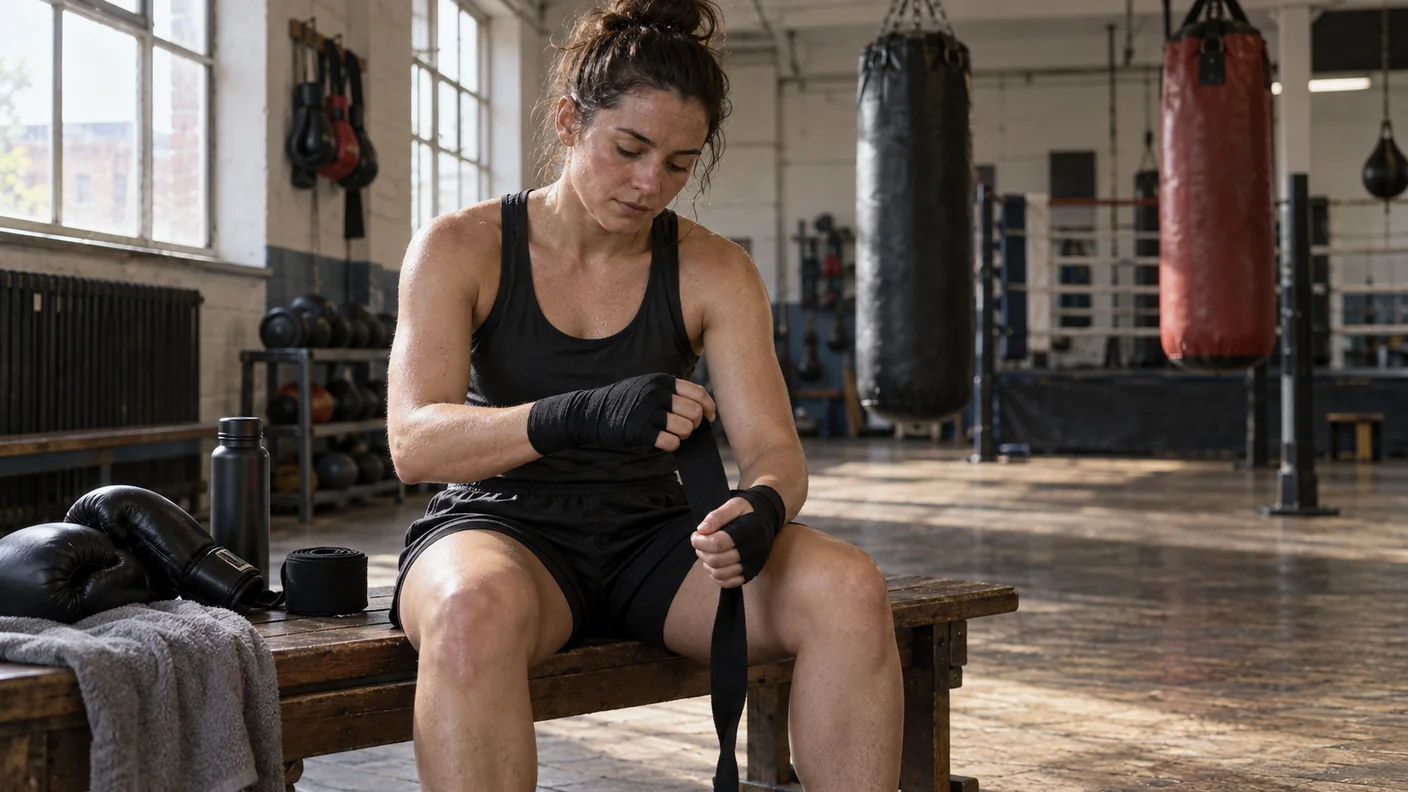
Boxing Blisters: Why Your Hands and Feet Rub
Boxing blisters usually come from friction, damp kit or rushed training. Here is how to prevent them and when to stop.
Was this page helpful?
It takes one tap, and it genuinely helps.
Choose your next step
Turn this article into the right action
Some readers are ready to book. Some need the class route first. Pick the route that matches what you actually want.