Your First Month of Boxing: A Week-by-Week Guide

England Boxing structured beginner pathway sets out progression from first trial through to first graded bout. Boxing Science data on beginner progression shows most technical fundamentals can be established within 8-12 weeks of consistent training.
The first month of boxing follows a predictable pattern. Different people experience it differently, but the general arc is consistent enough to describe in useful terms.
Week One: Shock and Adjustment
The first session is harder than you expected. The warm-up alone demonstrates a gap between your current fitness and the demands of boxing training.
The jab is introduced. It sounds simple. The execution involves simultaneous coordination of foot position, hip rotation, shoulder rotation, arm extension, fist position at contact, and return. You will throw it incorrectly in the first session and receive correction. This is normal.
Your arms will ache the next day in ways that previous exercise did not produce. The deltoids, triceps, and lats are being used in new ways. The soreness is the adaptation signal.
Sleep on training nights will be noticeably better than on non-training nights from session one.
By the end of week one (two to three sessions), the stance feels slightly more natural. The jab is cleaner than it was.
Week Two: Establishing the Pattern
The cross is introduced alongside the jab. The one-two combination begins.
The cardiovascular demand is still significant. You are still breathing harder than comfortable. This is appropriate - the fitness adaptation has not happened yet.
You begin to recognise other members. Faces become familiar. The coach calls you by name. The gym stops feeling alien.
The soreness from training days has become familiar rather than alarming. You have a sense of which muscles are working.
Week Three: The First Signs of Progress
Something changes around week three. Exactly when varies between people but it tends to happen here.
The combination that was three separate thoughts executed sequentially begins to flow as one thing. The coach says something you have heard before and this time it clicks differently. You feel the hip rotation creating force rather than just knowing intellectually that it should.
This is the beginning of what coaches call "the boxing body" - the physical learning that produces movement more naturally.
Your cardiovascular fitness has improved enough that the warm-up is less of a shock. You can go through the first round of bag work without needing to stop.
Week Four: Commitment and Community
By week four, you have attended eight to twelve sessions. The gym is no longer a strange place. It is your gym.
You know names. You know approximately who is at what stage of their training. You have developed opinions about what works and what does not.
The physical challenge has not disappeared. Boxing training does not become easy. But the challenge is now within a known framework. You know you can get through a hard round. You have done it before.
The question that week four answers: is this something you want to continue? The novelty has worn off. The early-session enthusiasm has settled into routine. What remains is either genuine engagement or the absence of it.
Most people who reach week four want to continue.
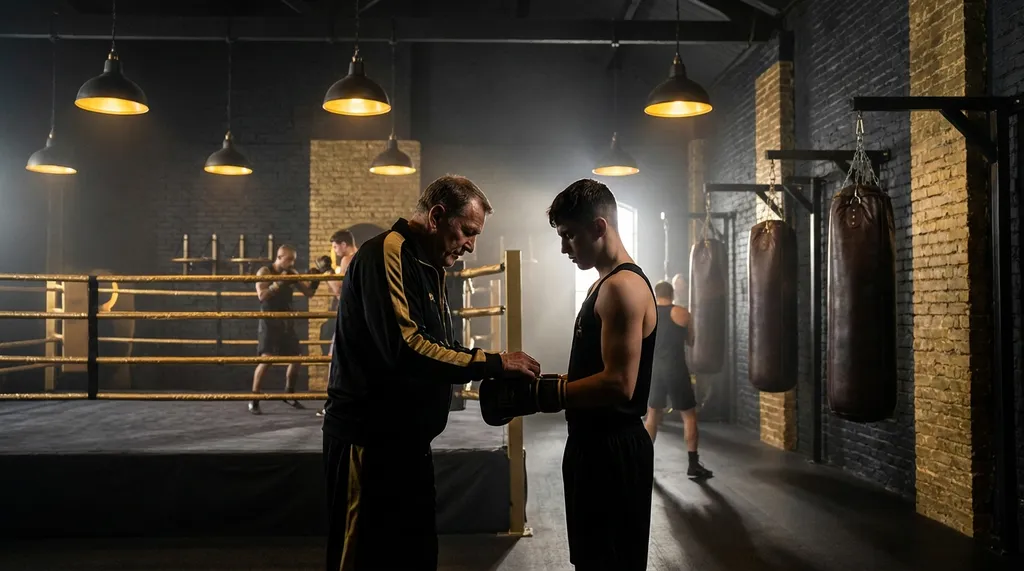
What to Focus on in Month One
Attend consistently. Two to three sessions per week. This is the primary goal.
Do not worry about power. In month one, the goal is technique. You are establishing movement patterns that everything else will build on. Power comes later.
Ask questions. There are no stupid questions in the first month. Everything is new and the coaches expect to explain.
Accept soreness. It reduces as your body adapts. It does not disappear, but it becomes manageable.
Sleep and eat adequately. The training demands recovery resources. This is not the time to restrict calories or sleep less than you need.
The End of Month One
At the end of month one, you are not a boxer. You are a person who has started boxing.
You have a foundation: a stance, a jab, a cross, the beginning of a hook. You have a coach who knows your name and your specific learning challenges. You have a gym that is no longer unfamiliar.
Month two is where the development accelerates. But it requires getting through month one first.
At Honour and Glory, the free trial session starts the month one clock.
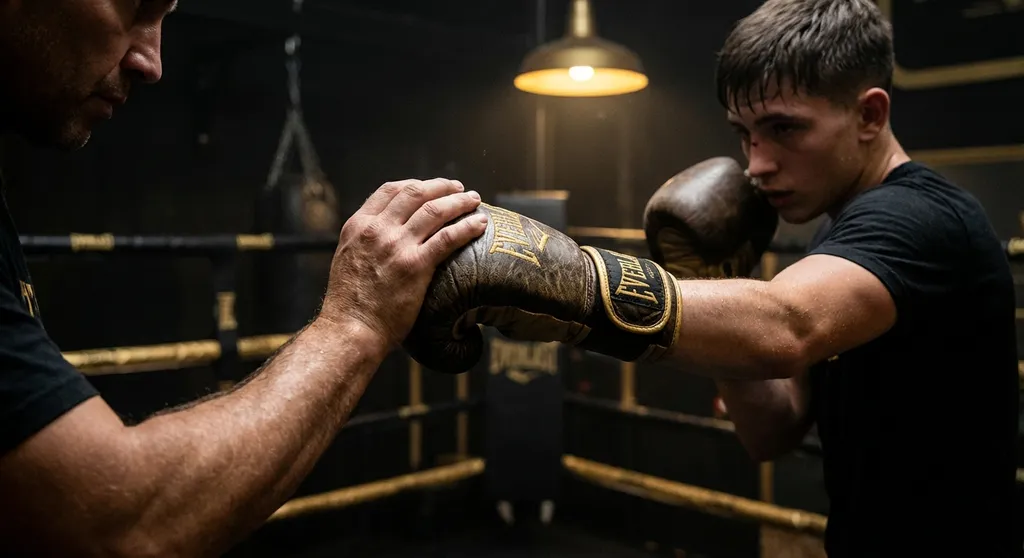
H&G Team
Writer at Honour & Glory Boxing Club, a community boxing gym in Kidbrooke, South East London.
KEEP READING

How to Stick With Boxing Past the First Month
Most people who try boxing drop out in the first month. The people who stick past it consistently report that month two is where everything changes. Here is what gets you there.

What to Expect at Your First Boxing Class
Nervous about your first boxing class? Here is exactly what happens when you walk through those doors, so you can focus on learning instead of worrying.
How to Start Boxing as a Complete Beginner
Ready to learn boxing for beginners? This no-nonsense guide covers everything you need to know before throwing your first punch.
Was this page helpful?
It takes one tap, and it genuinely helps.
Choose your next step
Turn this article into the right action
Some readers are ready to book. Some need the class route first. Pick the route that matches what you actually want.