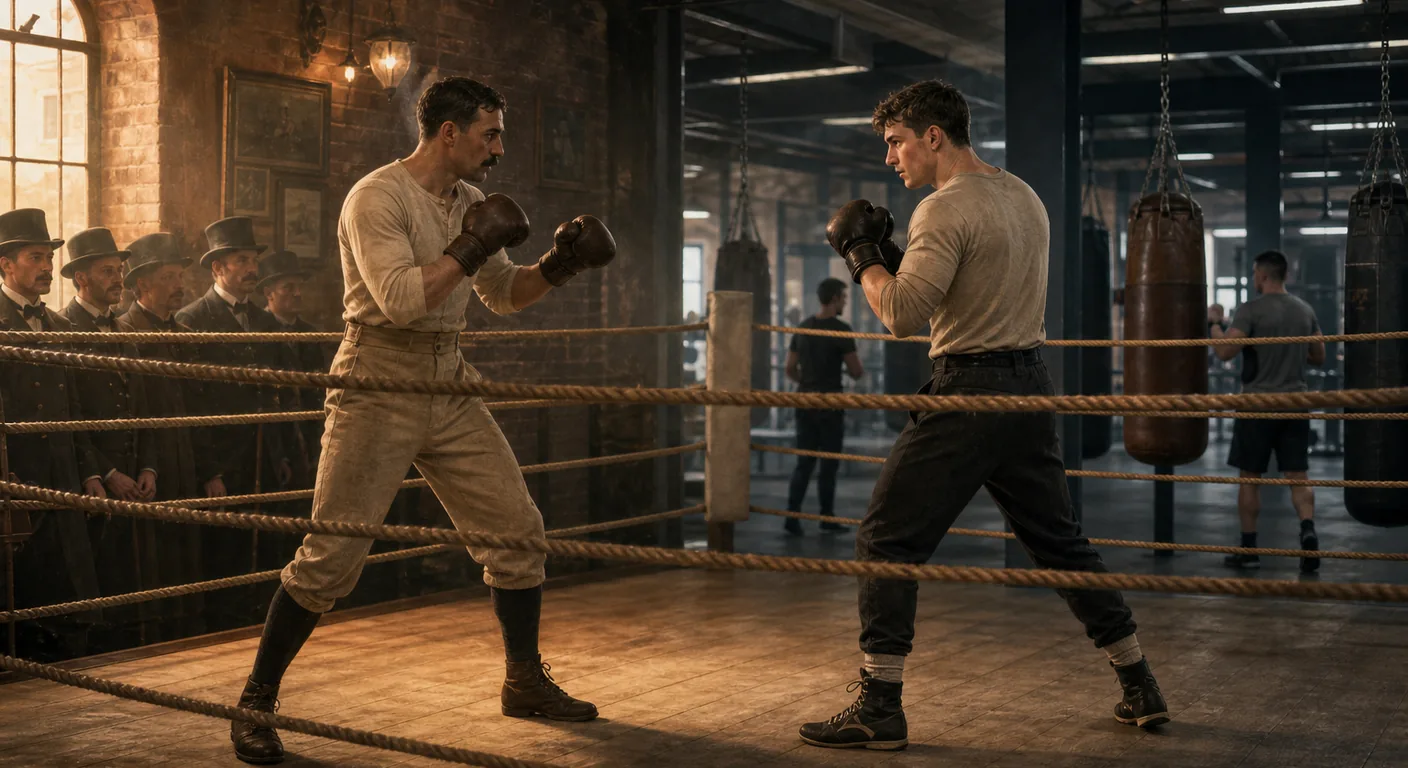
The Queensberry Rules are the reason modern boxing looks like boxing rather than a long, bare-knuckle prize fight with occasional wrestling.
They gave the sport padded gloves, three-minute rounds, one-minute rests, the ten-count, and the basic idea that a boxing match should be a stand-up contest decided under rules. They did not create every modern rule. They did not make boxing harmless. But they changed the sport from a loosely controlled prize fight into something recognisable as boxing today.
The short version: the Queensberry Rules were a twelve-rule boxing code written by John Graham Chambers and first published under the backing of John Sholto Douglas, the ninth Marquess of Queensberry, in 1867 (source).
That last sentence matters. The Marquess of Queensberry did not write the rules. His name helped sell them.
What the Queensberry Rules actually were
The original code had twelve rules. In plain English, they said this:
- The fight should be a fair stand-up boxing match in a ring about 24 feet square.
- Wrestling and hugging were not allowed.
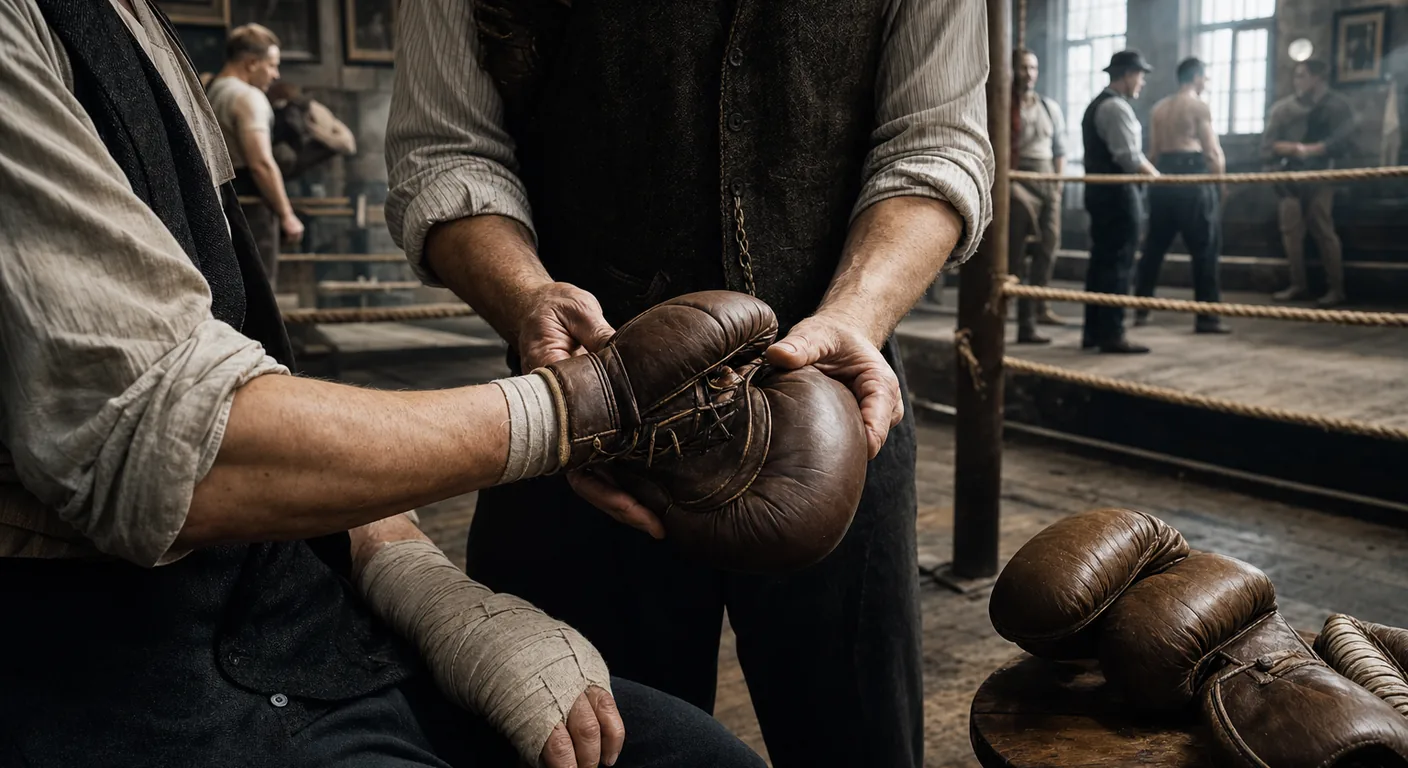
- Rounds should last three minutes, with one minute between rounds.
- A fallen boxer had ten seconds to get up without help.
- A boxer hanging helplessly on the ropes counted as down.
- Seconds and other people could not enter the ring during rounds.
- If outside interference stopped the contest, the referee would set a time and place to finish it.
- Gloves had to be new, fair-sized and good quality.
- A broken or missing glove had to be replaced to the referee's satisfaction.
- A boxer on one knee counted as down and could not be hit.
- Shoes or boots with springs were banned.
- Anything not covered would fall back to the revised London Prize Ring rules.
The original text is short enough to read in a few minutes. Wikisource preserves the public-domain wording, including the 24-foot ring, the ban on wrestling or hugging, the three-minute rounds, the ten-second count and the glove requirement (source). Britannica also lists the full twelve-rule code and identifies Chambers as the writer, with the ninth Marquess as sponsor (source).
The rules look simple now because their ideas won. That is the point. A three-minute round feels obvious only because this code helped make it normal.
Why boxing needed different rules
Before Queensberry, prize fighting was governed mainly by earlier codes, especially the London Prize Ring rules. Those rules were already a step away from chaos. They were adopted in 1838, revised in 1853, and replaced Jack Broughton's earlier 1743 rules. Under London rules, fights happened in a 24-foot roped ring, a knockdown ended the round, and a fallen fighter had a rest before returning to the centre. But the sport was still bare-knuckle and could last a long time (source).
That older form produced tough, skilful fighters. It also produced contests that could run far beyond what most people now understand as sport.
The last major heavyweight championship bout under London Prize Ring rules came in 1889, when John L. Sullivan beat Jake Kilrain after 75 rounds (source). That single fact explains why reform mattered. Boxing needed rules that reduced grappling, forced a clearer rhythm, and made the contest easier to control.
The Queensberry Rules did that by narrowing the sport. Less wrestling. More punching. Timed rounds. Gloves. A clearer knockdown rule. More power for the referee.
Who wrote them?
John Graham Chambers wrote the code. He was a Welsh sportsman, journalist and administrator, born in Carmarthenshire in 1843. Britannica credits him with devising the Marquess of Queensberry rules in 1867 and notes his role in founding the Amateur Athletic Club in 1866 (source).
The International Boxing Hall of Fame says Chambers created twelve rules in 1867 that established the mandatory use of gloves, the ten-count and three-minute rounds. John Sholto Douglas agreed to sponsor the rules, which is how the Queensberry name became attached to them (source).
So the name is slightly misleading. Queensberry was the public backer. Chambers was the author.
That does not make the name useless. In Victorian sport, class, patronage and publicity mattered. The Marquess gave the code status. Chambers gave it substance.
The four changes that mattered most
Britannica's boxing history section puts the difference from London Prize Ring rules into four main changes: padded gloves, three-minute rounds with one-minute rests, no wrestling, and the ten-second rule for a fallen fighter (source).
Those four changes altered the sport more than any ornate rulebook could have done.
Gloves changed punching
Gloves were not just a safety item. They changed tactics.
Bare-knuckle fighters had to protect their hands carefully. Broken hands were common, and the head was a risky target. Gloves allowed fighters to throw more punches at higher volume, especially to the head. That did not remove danger. It changed the type of danger and the type of skill required.
Modern defence, combination punching, guard position and round-by-round pressure all make more sense in a gloved sport than in a bare-knuckle endurance fight.
Timed rounds changed pace
Three-minute rounds and one-minute rests created a rhythm. Fighters could plan work. Corners could give advice. Spectators could follow the contest. Officials could manage the action more cleanly.
If you train in a modern boxing gym, you feel this legacy every time the timer goes. Three minutes on. One minute off. That rhythm comes straight from Queensberry.
The ban on wrestling changed identity
Old prize fighting included grappling and wrestling habits. Queensberry pushed boxing towards a cleaner stand-up striking sport.
That is why boxing is not kickboxing, MMA or wrestling. It is a narrower sport, but that narrowness is its strength. The rules restrict the tools so the skill becomes sharper. If you want a fuller comparison of boxing as a separate sport, our guide to boxing and kickboxing differences explains the practical split.
The ten-count changed endings
A fallen boxer had ten seconds to get up unaided. If he could not, the referee could award the fight to the opponent.
That sounds familiar because it is still part of boxing's public language. People who have never boxed know what a ten-count means. It is one of the rare sporting rules that escaped the sport and became a phrase people use in ordinary life.

Did the Queensberry Rules make boxing safer?
They made boxing more controlled. That is not the same as safe.
Gloves protected hands but also enabled more repeated punching. Timed rounds gave fighters rest but also allowed a bout to be organised as a sequence of high-output bursts. The ten-count gave an obvious finish, but fighters still took heavy punishment before that point.
The fair answer is this: Queensberry made boxing more governable. Later medical rules, licensing, ringside doctors, weight classes, suspensions, stoppage standards and coaching practice added layers that Queensberry did not cover.
You can see that in the modern professional rulebook. The British Boxing Board of Control now sets detailed rules around appointed officials, ring requirements, medical presence, weigh-ins, rounds and referee authority. Its public rules still use three-minute rounds with a one-minute interval as the standard professional structure, with no contest exceeding twelve rounds (source).
Amateur boxing has its own rules, medical processes and competition structures. England Boxing publishes an updated rule book for competitive amateur boxing in this country, separate from professional boxing rules (source).
So no, modern boxing is not simply Queensberry rules copied out forever. It is Queensberry plus more than 150 years of regulation.
What still survives today?
The exact Victorian wording does not run modern boxing on its own. But the skeleton survives.
Still recognisable today:
- timed rounds
- rest intervals
- gloves
- no wrestling as a boxing tactic
- a knockdown count
- no extra people in the ring during rounds
- referee authority
- equipment checks
- the idea that a boxer on a knee is down and should not be hit
Changed or expanded today:
- ring sizes are governed by modern bodies, not simply the old 24-foot line
- glove weights vary by division and contest type
- judging and scoring systems are much more developed
- medical requirements are far more detailed
- amateur and professional rules are separate
- women's boxing, youth boxing and recreational boxing all operate under additional safeguarding and suitability standards
The Queensberry Rules were not a complete modern rulebook. They were the hinge.
Why beginners should care
Most beginners do not need to memorise Victorian boxing history. But understanding the rules helps you understand the shape of the sport.
Boxing is not just "punching". It is punching under restriction. You cannot wrestle. You cannot kick. You cannot hit when someone is down. You work inside rounds. You listen to the referee. You learn to defend yourself within a narrow rule set.
That narrowness is why boxing teaches discipline so quickly. The sport removes options. Then it asks you to get good with what remains: stance, guard, jab, distance, timing, footwork, defence, composure.
This is also why a good beginner class should teach rules early, not as trivia, but as safety and culture. New boxers should understand why a coach stops a drill, why clinching is managed, why sparring is not a brawl, and why the bell matters.
At Honour and Glory in Kidbrooke, most adults start in recreational boxing classes. The aim is not to turn every beginner into a competitor. It is to teach real boxing properly, with the rules and habits that make the sport trainable.
If you want to compete later, the rule detail becomes more serious. Our guide to getting your boxing licence in the UK explains the difference between amateur registration and professional licensing.
The simple answer
The Queensberry Rules are the Victorian boxing code that gave modern boxing its basic shape: gloves, timed rounds, one-minute rests, the ten-count, no wrestling, and stronger referee control.
They were written by John Graham Chambers, not by the Marquess himself. The Marquess of Queensberry sponsored them, and his name stuck.
They did not solve every safety problem. They did not create the full modern amateur or professional rulebooks. But they moved boxing away from bare-knuckle prize fighting and towards the organised sport people train in today.
That is why the Queensberry Rules still matter. Every time you put gloves on, work a three-minute round, hear the bell, or watch a referee count over a fallen boxer, you are seeing their influence.
Want to learn boxing properly rather than just hit pads at random? Claim a free trial session at Honour and Glory Boxing Club.
H&G Team
Writer at Honour & Glory Boxing Club, a community boxing gym in Kidbrooke, South East London.
KEEP READING

Misfits Boxing Rules: Rounds, Scoring and Fouls
How Misfits Boxing rounds, scorecards and stoppages work, why formats differ between bouts, and what to check before the opening bell.
British Boxing History: From Bare-Knuckle Fights to Olympic
British boxing did not begin with the Marquess of Queensberry. It began much earlier and stranger. Here is the full arc from prize fighting to Olympic champions.

What a Boxing Referee Actually Does and Why It Matters
The referee is the most important person in the ring but the least discussed. Here is what they are actually doing and why their decisions are harder than they look.
Was this page helpful?
It takes one tap, and it genuinely helps.
Choose your next step
Turn this article into the right action
Some readers are ready to book. Some need the class route first. Pick the route that matches what you actually want.