
You have decided you want to compete. Now you need to make it official. Here is how to get your boxing licence in the UK, covering both the amateur and professional routes (source).
The processes are completely separate, so we will cover each in detail.
Amateur Boxing: Amateur Boxing Alliance Registration
For amateur boxing at Honour and Glory, you go through the Amateur Boxing Alliance pathway. England Boxing clubs use a separate pathway, and Scotland, Wales, and Northern Ireland have their own organisations with similar processes.
Step 1: Join an Affiliated Club
You cannot register as an individual. You must be a member of an Amateur Boxing Alliance affiliated club.
Find a club through the Amateur Boxing Alliance website's club finder, or simply check whether your current gym is affiliated. Not all boxing gyms are - many commercial fitness boxing gyms are not registered.
Your club pays annual affiliation fees to Amateur Boxing Alliance. You will pay membership to the club itself.
Step 2: Register Online
Create an account on the Amateur Boxing Alliance membership portal. You will enter your personal details, select your club, and choose your membership type.
The main membership types are:
- Boxing Member - For anyone training at a club (non-competitive)
- Competitive Boxer - Required if you want to compete
- Coach - For qualified coaches
Annual fees apply. Competitive boxer registration costs more than standard membership because it includes competition insurance and access to the matchmaking system.
Step 3: Complete Your Medical
Before competing, you need a medical examination recorded in your Medical Record Book (MRB).
Your club will guide you through obtaining your MRB. You will need a medical examination by a doctor who confirms you are fit to box. This includes:
- Blood pressure check
- Heart examination
- Eye examination
- General physical examination
- Blood tests (HIV, Hepatitis B and C)
The medical must be updated annually to maintain your competition status. Some clubs have relationships with doctors familiar with boxing medicals, which makes the process smoother.
Step 4: Skills Assessment
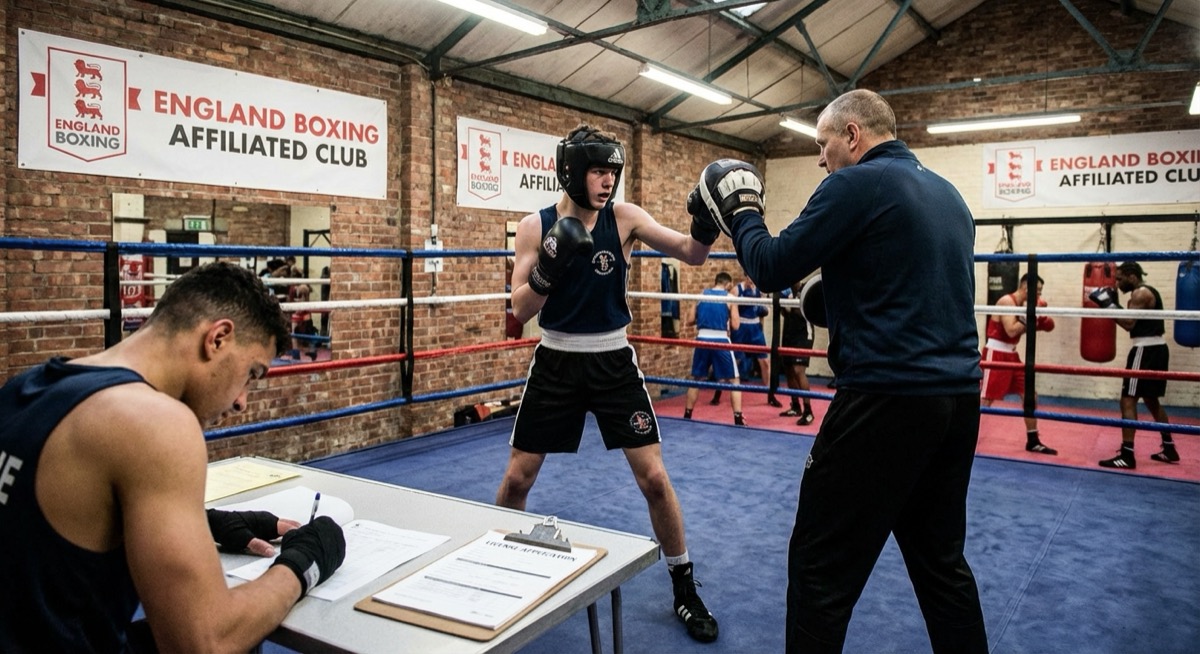
Amateur Boxing Alliance requires coaches to verify that competitive boxers have sufficient skill to compete safely.
This is not a formal exam you sit somewhere. Your coach assesses your:
- Basic technique (stance, guard, fundamental punches)
- Defensive ability (can you protect yourself?)
- Fitness level (can you last three rounds?)
- Ring awareness (do you understand distance and timing?)
Your coach will not put you forward for competition until they believe you are ready. This protects both you and your opponent.
Step 5: Enter Competition
Once registered and medically cleared, your coach can enter you into boxing shows through the matchmaking system.
Matchmakers work to find suitable opponents based on experience, weight, and record. Your first fight will be against someone with similar experience, not a seasoned amateur with twenty bouts.
Your record tracks every fight. Wins, losses, and stoppages all get recorded officially.
Professional Boxing: BBBofC Licence
Professional boxing in the UK is governed by the British Boxing Board of Control (BBBofC). Getting a professional licence is a more involved process.
The Requirements
To apply for a professional boxer's licence, you typically need:
- To be at least 18 years old
- Amateur boxing experience (usually recommended, sometimes required)
- A professional boxing manager
- A promoter willing to use you
- To pass extensive medical examinations
- To pass the BBBofC's assessment
Finding a Manager
You cannot apply directly to the BBBofC as an unattached boxer. You need a licensed manager to submit your application.
Managers are licensed by the BBBofC and take responsibility for your career development. They find you fights, negotiate terms, and handle administrative matters.
Some gyms have manager relationships in place. Others will connect you with managers when you are ready. This is part of why amateur experience matters - it gives you a track record that managers can assess.
Medical Requirements
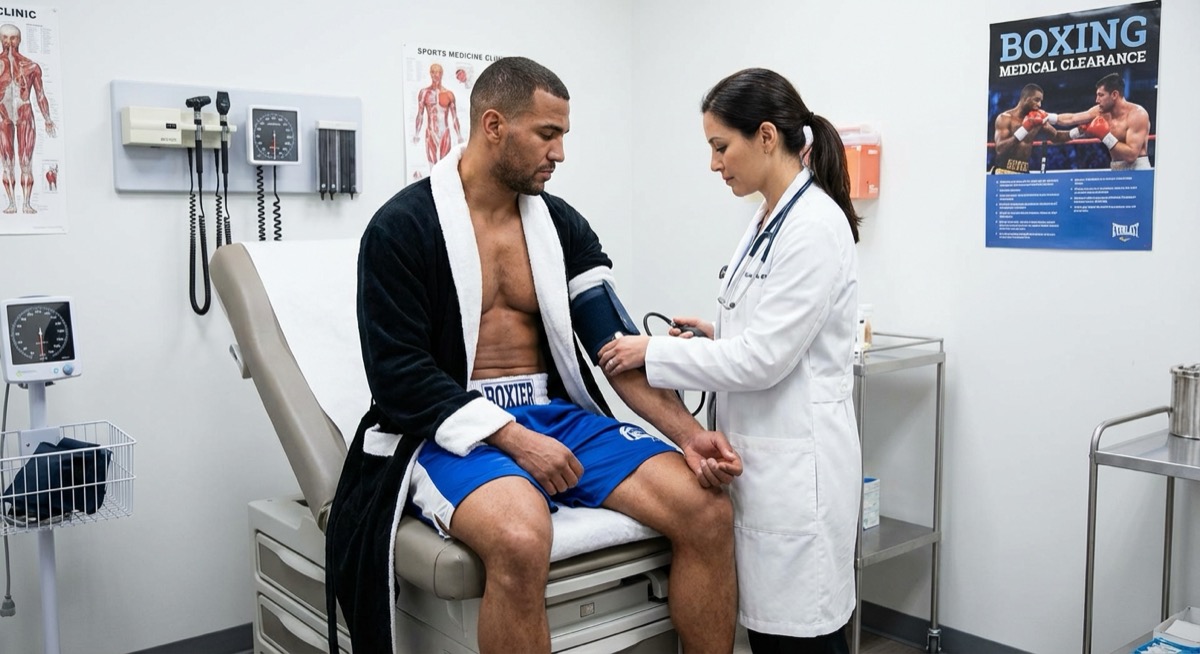
Professional boxing medicals are more extensive than amateur requirements.
You will need:
- Complete physical examination
- Neurological examination
- Eye examination (including retinal examination)
- Blood tests (HIV, Hepatitis B and C)
- MRI brain scan
- MRA scan of blood vessels
- ECG (heart trace)
These tests must be conducted by BBBofC approved doctors. The costs are significant - expect to pay several hundred pounds for the full medical suite.
Annual medical renewals are required to maintain your licence.
The Interview
After your manager submits your application and medicals are cleared, you will attend an interview with the BBBofC.
This assesses your:
- Understanding of professional boxing rules
- Knowledge of your responsibilities as a licensed boxer
- Awareness of health and safety requirements
- General readiness for professional competition
The Board can decline applications if they believe a boxer is not ready or suitable for professional competition.
Licence Costs
Professional boxing licences cost money. The BBBofC publishes current fee schedules on their website.
Initial application fees, annual renewal fees, and show-by-show contributions all apply. Your manager and promoter handle most of the administrative side, but the costs ultimately come from your earnings.
Insurance and Welfare
The BBBofC provides insurance for licensed boxers at sanctioned shows. This covers injuries sustained during competition.
Training injuries are not covered by BBBofC insurance. Many professional boxers carry additional personal insurance.
Which Route Should You Take?
For most people reading this, the amateur route is the right starting point.
Amateur boxing teaches you to compete in a structured, relatively protected environment. You build experience against matched opponents. The risk level is lower than professional boxing while still providing genuine competitive experience.
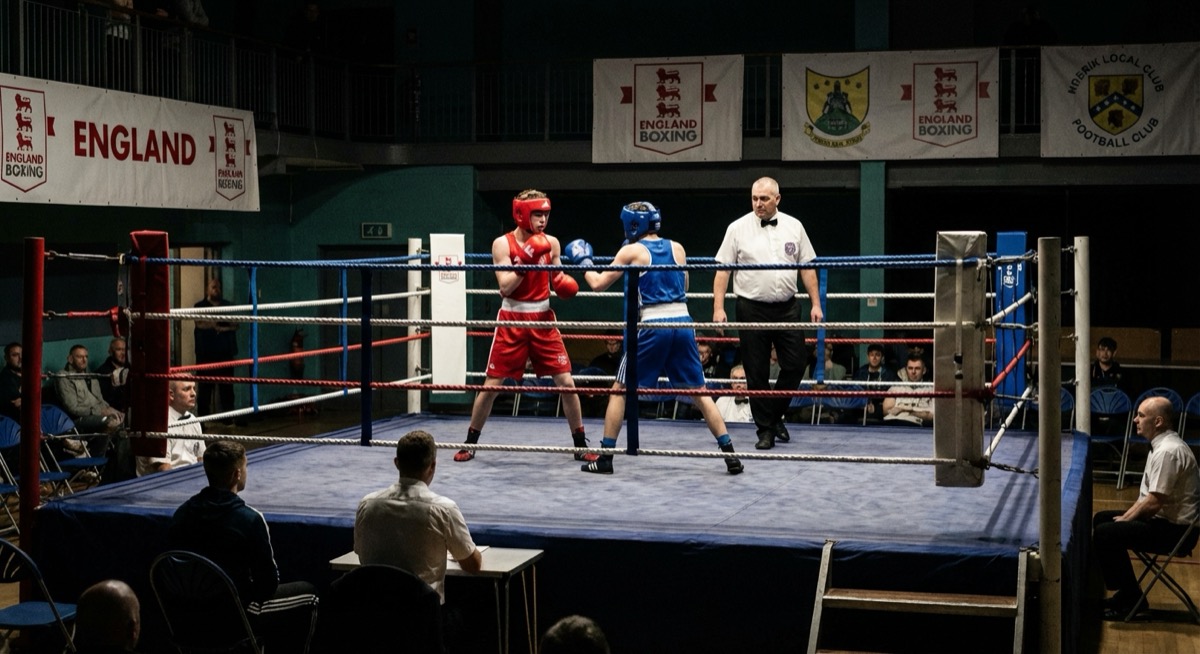
Many professional boxers had extensive amateur careers first. They learned to deal with pressure, developed ring craft, and built records before transitioning.
Turning professional too early, without adequate amateur experience, often leads to struggles. The professional game is unforgiving, and learning on the job means learning from losses.
What About White Collar Boxing?
White collar boxing exists as an alternative to both amateur and professional boxing. These are usually charity events where beginners train for a few months then compete on a one-off show.
White collar events are not governed by Amateur Boxing Alliance or the BBBofC. Standards vary significantly depending on the organiser. Some are well-run with proper matchmaking and medical oversight. Others are less careful.
If you are considering white collar boxing, research the organiser carefully. Ask about: (source)
- How they match fighters
- What medical checks they require
- What experience their coaches have
- What insurance covers participants
White collar can be fun for a one-off experience. But if you want to compete seriously, the proper amateur system is a better path.
Timeline Expectations
Getting competition-ready takes time. Here is a realistic timeline:
Complete beginner to first amateur fight: 12-18 months minimum (source)
This includes learning fundamentals, getting fit enough to compete, developing sufficient skill for your coach to approve competition, and completing all registration requirements.
Amateur to professional transition: Varies widely
Some fighters turn pro after 10-20 amateur fights. Others have 50+ before transitioning. There is no set number - it depends on development and opportunity.
Rushing this process helps nobody. Take the time to develop properly.
Start the Journey Right
Whether you want to compete eventually or just train seriously, proper coaching matters from day one.
At H&G, we are an Amateur Boxing Alliance affiliated club. We train competitive boxers and help members through the registration process when they are ready.
Claim a free trial with us and start learning properly. We will help you develop the skills that could eventually take you into the ring.
H&G Team
Writer at Honour & Glory Boxing Club, a community boxing gym in Kidbrooke, South East London.
KEEP READING

The Three Phases of a Boxing Exchange
Advanced amateur boxing is not just attack, defend, reset. Learn how entries, counters and counter-counters turn separate exchanges into one connected fight.

Dirty Fighting in Boxing: What Boxers Get Away With in Real Fights
A pragmatic coach's guide to boxing's dark arts: clinching, leaning, rabbit punches, backhanded jabs, low blows and the line between veteran craft and being labelled a dirty fighter.

Why Every Boxer Needs a Go-To Combination
Advanced amateurs need more than reactions. A reliable go-to, whether it is the jab, the double jab or jab-cross-jab, gives you a base when the round gets messy.
Was this page helpful?
It takes one tap, and it genuinely helps.
Choose your next step
Turn this article into the right action
Some readers are ready to book. Some need the class route first. Pick the route that matches what you actually want.