Face Injuries in Boxing: Cuts, Nose Injuries, Black Eyes and Dental Trauma
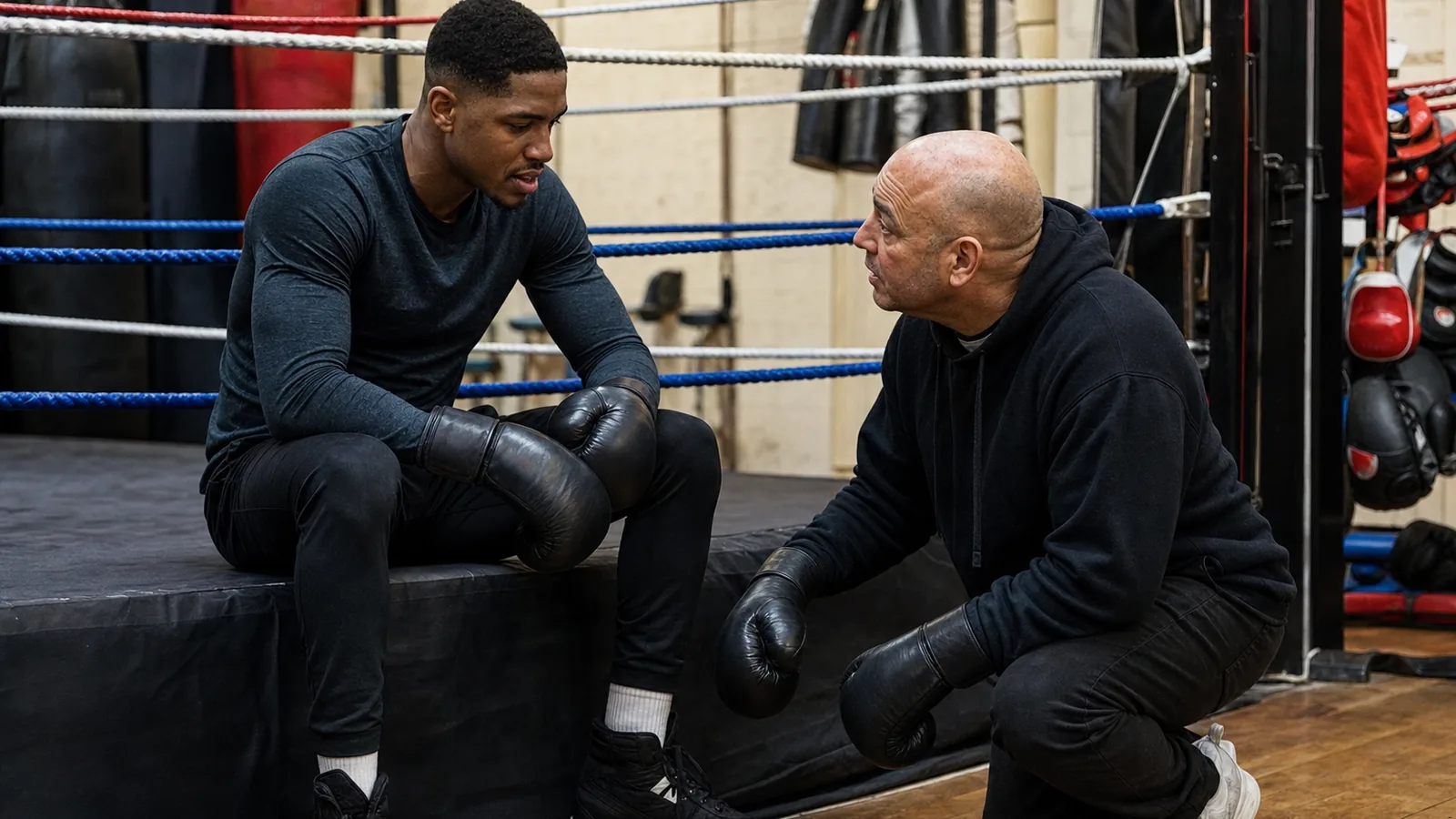
Face injuries in boxing need calm decisions, not panic and not bravado.
A small bruise from pad work is usually not the same thing as a cut near the eye, a nose that has changed shape, a tooth knocked loose, or blurred vision after a sparring round. The problem is that face injuries often look dramatic, and sometimes the serious ones look ordinary at first. That makes the first few minutes important.
This is general information for boxers, not a diagnosis or medical advice. Stop training and speak to a qualified clinician if symptoms are severe, worsening, unusual, or not improving. For urgent symptoms, use NHS 111, A&E or 999 as appropriate.
This guide is part of our common boxing injuries series. It covers cuts, nose injuries, black eyes, eye warning signs, dental trauma, basic first-aid decisions, and why return to sparring should be handled more carefully than return to shadowboxing or pads.
The short version: stop contact work immediately for any cut near the eye, heavy bleeding, nose shape change, vision change, eye pain, dental injury, suspected concussion, or facial injury that follows a hard head impact. Do not let a boxer keep sparring to prove they are fine.
Why facial injuries are different in boxing
A sore shoulder can usually be unloaded. A strained calf can usually be protected by stopping footwork. A facial injury is different because it can involve bleeding, vision, breathing through the nose, teeth, the eye socket, and possible head injury symptoms.
That does not mean every facial mark is an emergency. Boxing is a contact sport, and bruises can happen in sparring and competition. But the face is not a place for casual diagnosis by committee.
In boxing, facial injuries are more likely when the session includes:
- sparring or competition
- accidental head clashes
- poorly matched rounds
- loose guard under fatigue
- shots landing around the eye or nose
- elbows, shoulders or forearms in close range
- missing or poor-quality mouthguards
- damaged gloves or loose headgear where headgear is used
- contact work without a coach actively watching
A 2023 systematic review of boxing injuries found that soft tissue contusion was the most common injury type in the studies analysed, while lacerations and abrasions also made up a real share of reported injuries (source). That fits what boxing coaches see: many contact injuries are surface-level, but the surface is still attached to important structures.
A newer combat-sports study from Texas found that ocular injuries made up nearly one-third of all reported combat-sport injuries in its dataset, and that eyebrow laceration was the most common ocular injury in boxing (source). That is competition data, not a prediction for a beginner fitness class, but it explains why cuts and eye-area injuries get taken seriously in supervised boxing.
The main facial-injury buckets
The labels below help with decision-making. They are not a way to diagnose yourself from a blog post.
Cuts and lacerations
Cuts in boxing often come from contact around the eyebrows, cheekbones, nose or lips. In sparring, they can happen from punches, head clashes, rough inside work, or accidental contact with elbows and shoulders.
NHS guidance says most cuts and grazes can be treated at home, but some wounds need medical treatment if there is infection risk or the cut is serious. It advises urgent GP or NHS 111 help if a wound is still dirty after cleaning, has soil, pus or body fluids in it, is swollen, red and getting more painful, has pus coming out, is larger than around 5cm, or the person feels generally unwell or has a high temperature (source).
For boxing, the important gym rule is simple: a facial cut ends contact work. Even if the boxer feels fine, the wound needs cleaning, bleeding control and a sensible decision about whether medical help is needed.
Nosebleeds and possible broken nose
Nose injuries can look messy fast. A nosebleed after a light bump is different from a crooked nose, blocked breathing, heavy bleeding, or a nose injury that came with a hard head impact.
The NHS says symptoms of a broken nose can include pain, swelling and bruising, a crunching or crackling sound when touching the nose, difficulty breathing through the nose, and the nose changing shape. It says a broken nose usually heals on its own within three weeks, but to get medical help if it is not getting better or the nose has changed shape (source).
The same NHS guidance says not to try to straighten the nose yourself if it has changed shape, and not to play sports for at least six weeks if there is a chance the face might be hit (source). In boxing terms, that means no sparring, no body-to-head drills, and no contact rounds until medically appropriate.
Black eye and eye-area trauma
A black eye can be just bruising around the eye after a blow, but eye-area injuries need caution because vision matters.
The NHS says a black eye is bruising and swelling around the eye, usually from a blow or fall, and should get better within two to three weeks. It advises urgent GP or NHS 111 help if a black eye comes with a headache that does not go away, blurry vision, warmth or pus around the eye, feverish symptoms, blood-thinning medication, or a bleeding disorder. It says to go to A&E if there is blood in the eye, an irregular pupil, bruising around both eyes after a head blow, loss of consciousness or vomiting after a head blow, vision problems such as double vision or loss of vision, pain when looking at bright light, or inability to move the eye (source).
NHS eye-pain guidance also warns against self-diagnosing eye pain. It advises urgent GP, optician or NHS 111 help for severe eye pain, light sensitivity, vision changes, or a very red eye, and immediate A&E or 999 help for sudden symptoms, loss of vision, an injured or pierced eye, or something stuck in the eye (source).
For boxing, that means a simple rule: vision change, eye pain, double vision, blood in the eye, or difficulty moving the eye is not a coaching problem. It is medical territory.
Dental trauma
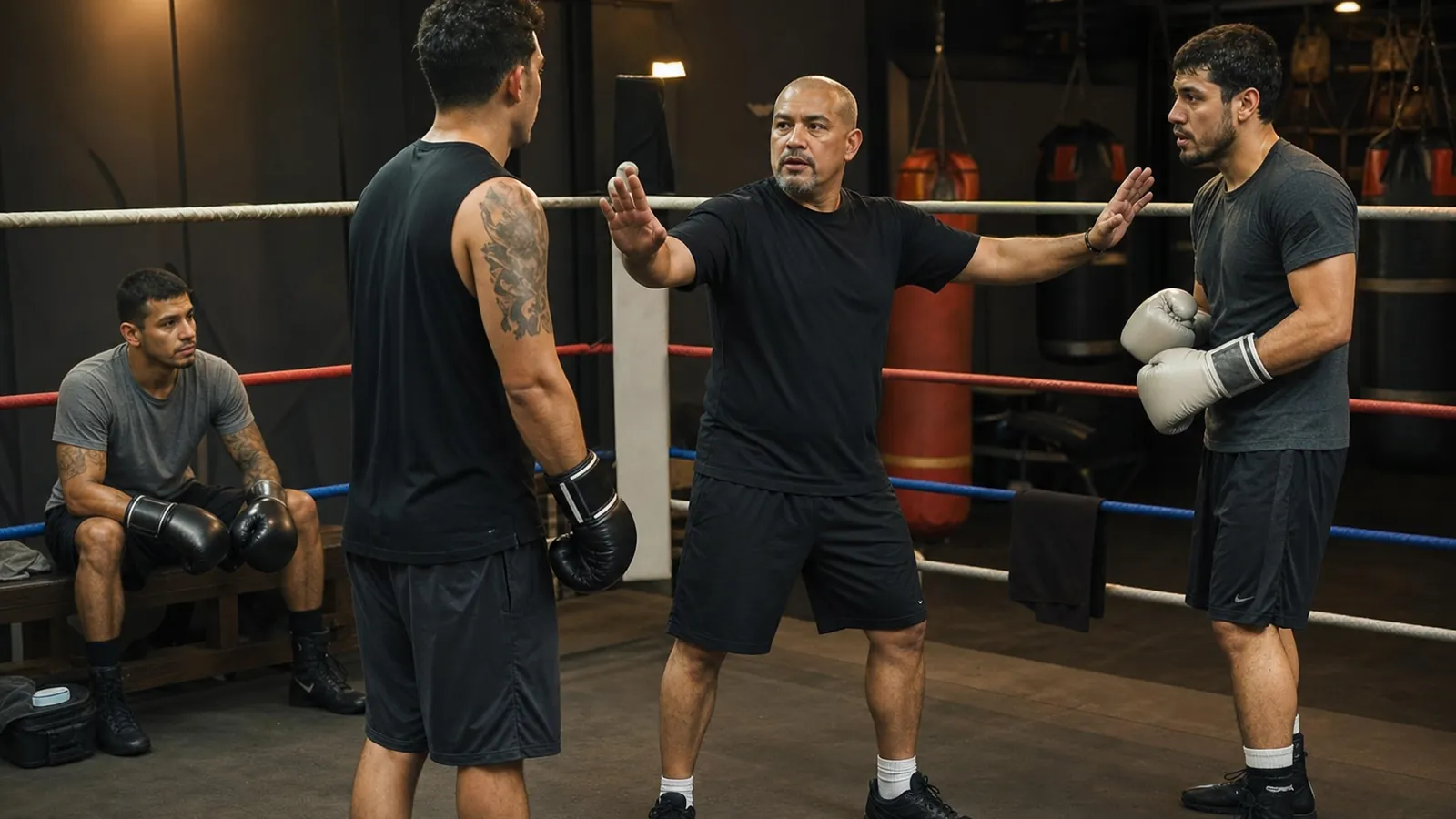
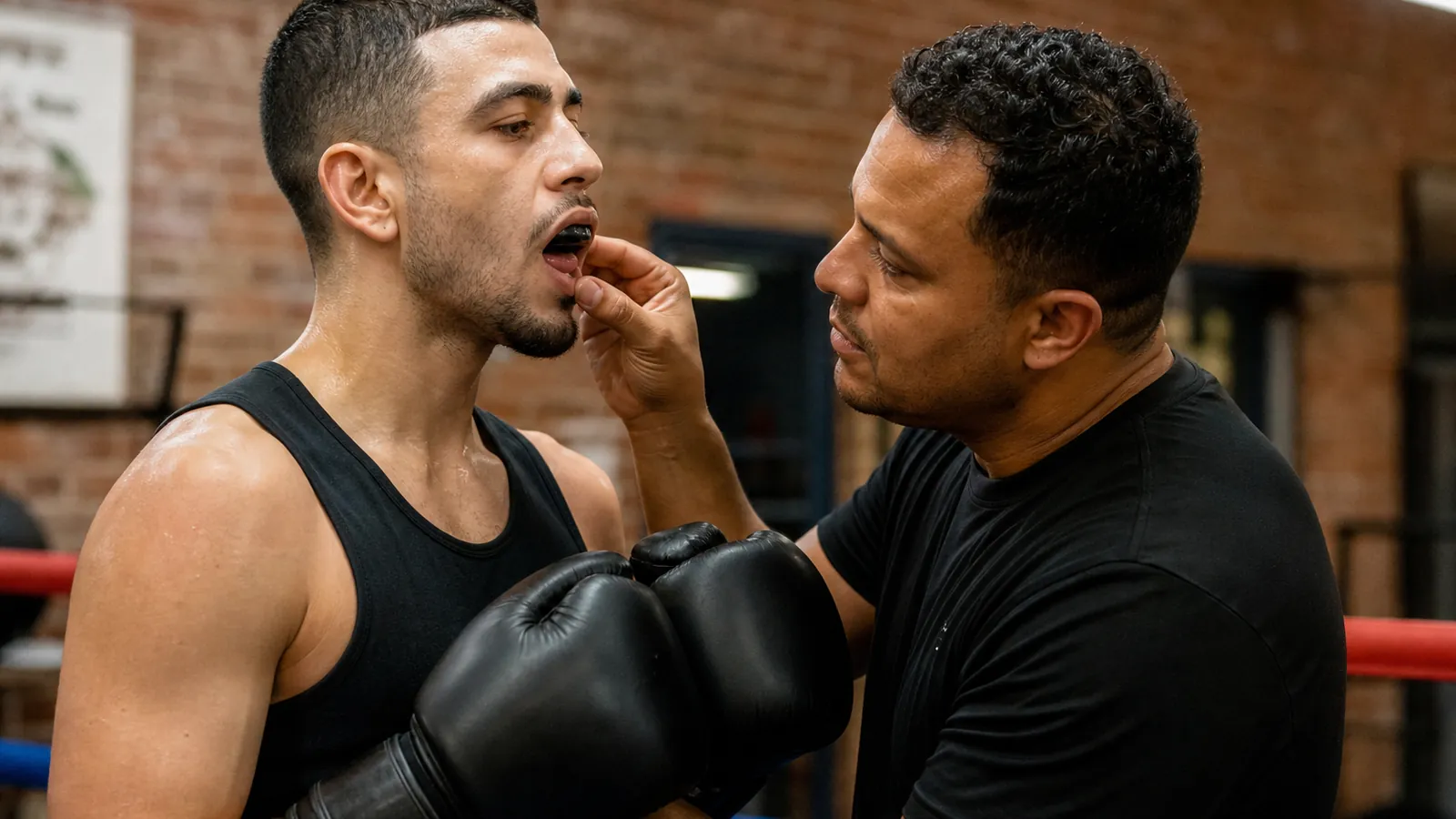
Teeth and jaw injuries are one reason mouthguards are non-negotiable in contact boxing.
NHS guidance on knocked-out teeth says an adult tooth may be saved by putting it back in place or in milk as soon as possible before seeing a dentist. It says to hold the tooth by the crown, not the root, rinse gently if dirty, try to put it back in the gum if possible, bite down gently on a clean cloth to hold it in place, and see a dentist as soon as possible. If the tooth cannot be put back in, it can be placed in milk or saliva. It also says to ask for an emergency dentist appointment if a tooth has been knocked out, even if you cannot find it (source).
For a boxing club, the practical message is not complicated: if a tooth is knocked out, loose, displaced, cracked, or the bite feels wrong after contact, the round is over and the boxer needs dental advice. Do not put them back on pads.
Our mouthguard guide explains what to look for before sparring and why a cheap, badly fitted guard is not the place to save money.
Head injury overlap
Facial injuries can happen without concussion. They can also happen at the same time as head injury symptoms.
That overlap matters. A boxer with a cut eyebrow may also have taken a clean head shot. A boxer with a black eye may also have a headache, dizziness, memory gap, nausea or vision disturbance. A boxer with a broken nose may also have clear fluid from the nose or severe headache after impact.
Our concussion and head injury in boxing guide covers the head-injury decision in detail. The safe coaching rule is: if there is any suspicion of concussion, the session is over and medical guidance takes priority.
What to do in the gym first
For a facial injury during boxing, the first response should be boring and controlled.
- Stop the round.
- Move the boxer away from contact.
- Sit or stand them somewhere safe.
- Check whether there was head impact, loss of consciousness, confusion, vision change, vomiting, severe headache, neck pain, dental trauma, or heavy bleeding.
- Control bleeding using clean material and pressure where appropriate.
- Do not remove anything stuck in a wound or eye.
- Do not try to straighten a nose.
- Do not restart contact work.
- Use NHS 111, urgent dental care, A&E or 999 when warning signs are present.
The NHS cuts guidance says that if a wound is bleeding a lot, you should check for anything stuck in it. If nothing is stuck, put pressure on it using a bandage or clean folded cloth. If something is stuck in the wound, do not try to take it out and do not press down on the object. Press firmly either side of it instead (source).
For nosebleeds, NHS broken-nose guidance advises sitting or standing upright and leaning forward, and if possible pinching the nose above the nostrils for up to 15 minutes (source). Leaning forward matters because swallowing blood can make someone feel sick.
When to stop boxing immediately
Stop the session if any of these happen:
- a cut opens on the face, especially near the eye
- bleeding is heavy, pulsing, or difficult to control
- the nose looks crooked or breathing through it is difficult
- there is eye pain, double vision, blurred vision or loss of vision
- there is blood in the eye or an irregular pupil
- the boxer cannot move the eye normally
- a tooth is knocked out, loose, displaced or cracked
- the bite feels wrong after contact
- the boxer has headache, dizziness, confusion, vomiting or memory problems after head contact
- neck pain, numbness, tingling, weakness or balance problems appear
- the boxer is on blood-thinning medication or has a bleeding disorder
This is not about being soft. It is about not turning a manageable injury into a worse one.
When to get medical help
Use the source guidance rather than gym opinion.
Use NHS 111 or urgent clinical advice when
NHS broken-nose guidance says to get NHS 111 help if you think your nose is broken and the nose is crooked after injury, swelling has not started to go down after three days, painkillers are not helping, breathing through the nose is still difficult after swelling has gone, nosebleeds are regular, or you have a very high temperature or feel hot, cold or shivery (source).
For cuts, NHS guidance says to ask for an urgent GP appointment or get NHS 111 help if the wound is dirty after cleaning, has pus or body fluids in it, is swollen, red and getting more painful, has pus coming out, is larger than around 5cm, or the person feels generally unwell or has a high temperature (source).
For black eyes, NHS guidance says to ask for urgent GP help or NHS 111 if there is a persistent headache, blurry vision, warmth or pus around the eye, feverish symptoms, blood-thinning medication, or a bleeding disorder (source).
Go to A&E or call 999 when
NHS broken-nose guidance says to call 999 or go to A&E for a nose injury with a nosebleed that will not stop, a large cut or open wound on the nose or face, something in the wound, clear watery fluid from the nose, severe headache with blurred or double vision, eye pain and double vision, neck pain or stiff neck with numbness or tingling in the arms, purple swelling inside the nose, or other severe head injury symptoms such as vomiting, collapsing or difficulty speaking (source).
NHS cuts guidance says to call 999 or go to A&E if a cut will not stop bleeding, the blood spurts and is bright red and hard to control, there is loss of feeling near the wound or trouble moving it, there is a bad cut on the face or palm, the wound is very large or deep, or something is stuck in the cut (source).
NHS black-eye guidance says to go to A&E if there is blood in the eye, an irregular pupil, bruising around both eyes after a head blow, loss of consciousness or vomiting after a head blow, vision problems, pain when looking at bright light, or inability to move the eye (source).
NHS eye-pain guidance says to call 999 or go straight to A&E if eye symptoms start suddenly, there is loss of vision, the eye has been injured or pierced, or something is stuck in the eye (source).
What treatment often looks like
Treatment depends on the injury.
A small cut may only need cleaning, dressing and monitoring. A larger facial cut may need medical cleaning and closure with stitches, strips, staples or glue. NHS cuts guidance says treatment depends on the severity and infection risk, and that a wound may need tetanus protection or antibiotics if infection risk is present (source).
A suspected broken nose may settle without major treatment, but a nose that has changed shape may need specialist assessment. NHS guidance says hospital manipulation to make the nose straighter may be possible, but it should be done within three weeks of the break before the bones start to set (source).
A black eye may be managed with careful self-care if there are no warning signs, but eye pain or vision symptoms change the decision. Eye injuries are not a place to guess.
A knocked-out adult tooth is time-sensitive. NHS guidance says to try to put the tooth back or keep it in milk or saliva, then see a dentist as soon as possible (source).
Returning to boxing after a facial injury
Return depends on the injury and any medical advice. The principle is staged exposure.
For many minor facial injuries, a boxer might be able to keep general fitness going while avoiding contact. But that does not mean the face is ready for punches.
A cautious progression often looks like:
- normal daily activity without worsening symptoms
- light general movement
- shadowboxing without contact
- non-contact footwork and technical drills
- light pads if symptoms stay settled
- bag work if there is no pain, bleeding or symptom return
- partner drills with no head contact
- controlled sparring only when medically appropriate and coach-approved
- competition only after the injury is fully resolved and rules allow it
NHS broken-nose guidance specifically says not to play sports for at least six weeks if there is a chance the face might be hit (source). For boxing, that is a direct warning about sparring and contact drills.
If the injury involved concussion symptoms, follow concussion guidance instead. Do not use the facial injury as the only decision point. Head injury changes everything.
Reducing the risk of facial injuries
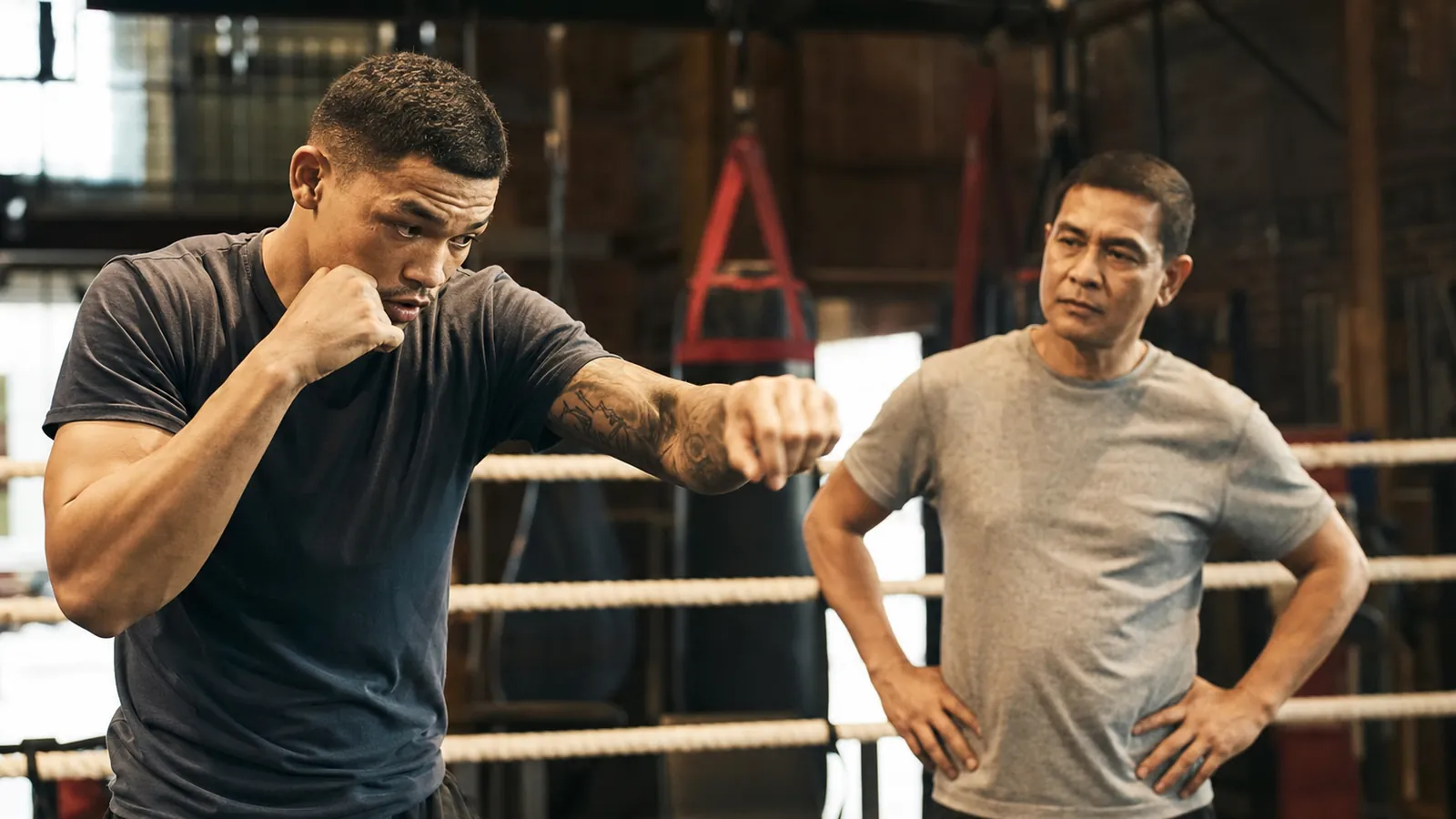
You cannot remove all risk from contact boxing. You can reduce avoidable risk.
Good boxing practice includes:
- sparring only under coach supervision
- matching size, level and temperament sensibly
- using controlled intensity rather than ego rounds
- wearing a well-fitted mouthguard for all sparring
- checking gloves, wraps and protective kit
- stopping rounds when fatigue ruins control
- avoiding sparring when already injured or unwell
- keeping nails short for clinch and close-range drills
- using technical constraints, not gym wars, for learning
- building defensive skill before increasing contact intensity
The American Academy of Ophthalmology notes that boxing and full-contact martial arts pose a very high risk of serious eye injuries and that there is no satisfactory eye protection for boxing, although thumbless gloves may reduce the number of boxing eye injuries (source). That is one reason coaching culture matters. In boxing, you cannot solve every eye-risk problem with equipment.
The better answer is structured sparring: appropriate partners, controlled rounds, clear aims, and a coach willing to stop the action early.
Coach and boxer responsibilities
A good coach does not wait for a boxer to admit they are hurt. They watch the round, the guard, the reaction after impact, the eyes, the balance, and the decision-making.
A good boxer tells the truth early. That means saying:
- "My vision is blurry."
- "My tooth feels loose."
- "My nose feels blocked."
- "I feel dizzy."
- "I have a headache."
- "The cut has opened again."
That honesty protects training time in the long run. Hiding symptoms usually costs more.
Return-to-contact checklist
Before returning to sparring after a facial injury, the answer should be yes to every relevant item:
- bleeding has stopped and the wound is closed or medically cleared
- there is no vision change, eye pain or light sensitivity
- the nose is not newly crooked, blocked or repeatedly bleeding
- teeth feel normal and any dental injury has been checked
- there are no concussion symptoms
- daily activity is normal
- shadowboxing and non-contact drills do not bring symptoms back
- the coach knows what happened
- contact intensity can be controlled
- the boxer is not trying to rush because of pride, grading, selection or competition pressure
If there is doubt, do not spar.
Training at H&G after an injury
If you are healthy enough to train but returning after a facial injury, tell the coach before class. We can usually adapt the session around non-contact skill work, pads, footwork or conditioning where that is appropriate.
If you have warning signs, active symptoms, an open wound, vision change, dental trauma, a suspected broken nose or a suspected concussion, get medical advice first. Boxing will still be here when the decision is safer.
For people ready to start or return to structured training, our adult boxing classes keep contact controlled and coach-led. You can also book a free trial when you are fit to train.
H&G Team
Writer at Honour & Glory Boxing Club, a community boxing gym in Kidbrooke, South East London.
KEEP READING
Concussion in Boxing: Head Injury Symptoms, Red Flags and Return to Sport
A careful boxing guide to concussion and head injury: warning signs, NHS red flags, what coaches should do, and why return to sparring must be medically cautious.
Ankle Sprains and Achilles Pain in Boxing: Footwork, Warning Signs and Return to Training
A careful boxing guide to ankle sprains and Achilles pain: why footwork, pivots and skipping can overload the lower leg, NHS-backed warning signs, rehab phases and return to boxing.
Why You Close Your Eyes in Boxing
Closing your eyes when punches come near is common for beginners. Here is how calm, coached drills help you keep seeing the work.
Was this page helpful?
It takes one tap, and it genuinely helps.
Choose your next step
Turn this article into the right action
Some readers are ready to book. Some need the class route first. Pick the route that matches what you actually want.