Elbow Pain in Boxing: Hyperextension, Bag Work and Return to Punching
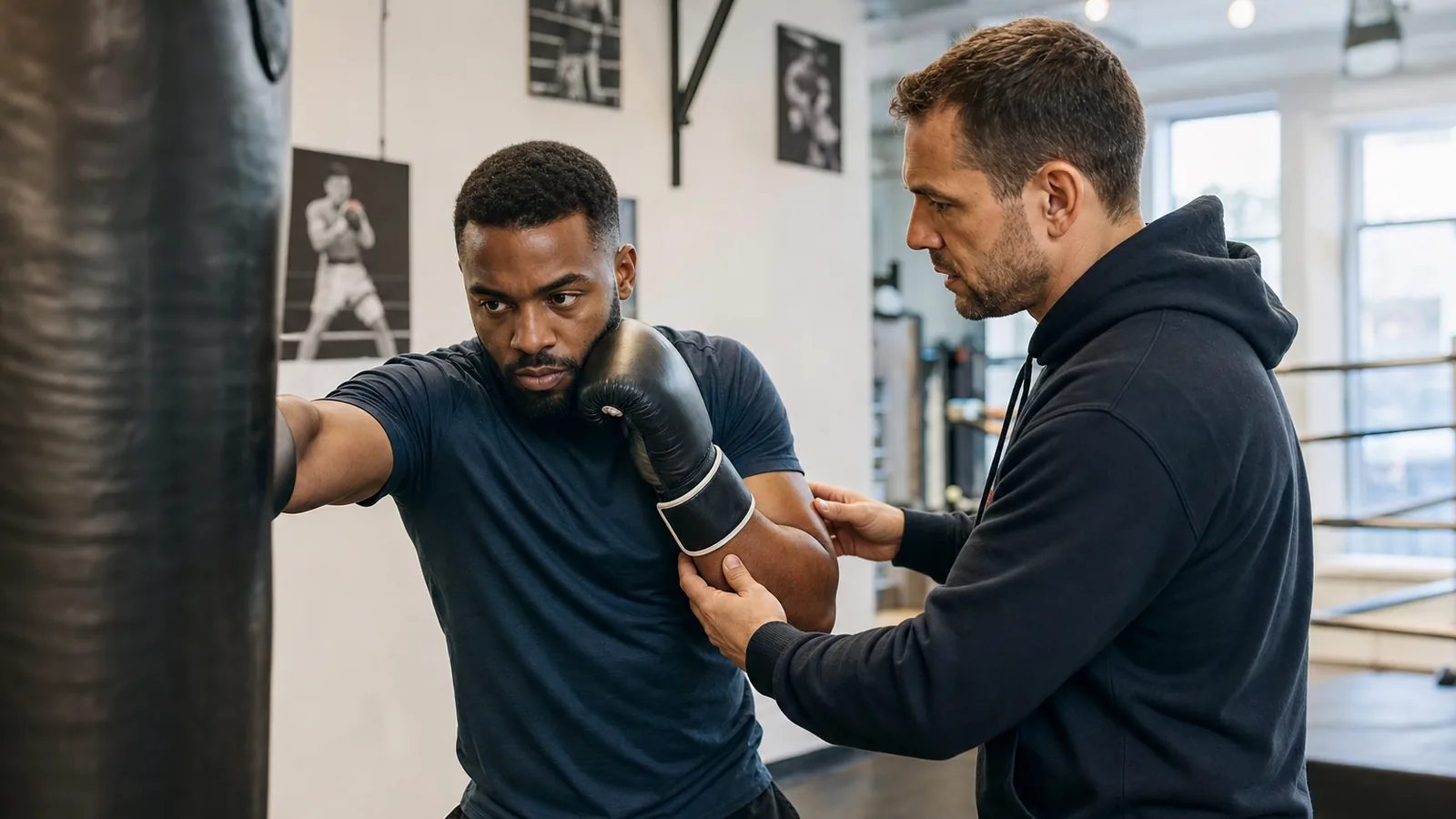
Elbow pain in boxing can appear in a few different ways.
Some boxers feel it after heavy bag rounds. Some feel it after missing hard straight punches and snapping into end range. Some notice a dull ache on the outside or inside of the elbow after gripping, wrapping, pad work or strength training. Others get a sharper pain after the elbow is forced, jarred or hit.
This is general information for boxers, not a diagnosis or medical advice. Stop training and speak to a qualified clinician if symptoms are severe, worsening, unusual, or not improving. For urgent symptoms, use NHS 111, A&E or 999 as appropriate.
This guide is part of our common boxing injuries series. It explains why elbow pain can happen in boxing, how tendon pain differs from hyperextension or trauma, what warning signs matter, and why return to punching normally needs to rebuild daily movement, grip, shadowboxing, light contact and impact before hard rounds.
The short version: if elbow pain is severe, follows a snap, leaves the arm changed in shape, causes numbness or tingling, stops you moving the elbow, comes with heat, swelling or feverish symptoms, or keeps returning every time you punch, stop training and get proper advice. Do not test a painful elbow by hitting the bag harder.
Why the elbow matters in boxing
The elbow is not just a hinge between the shoulder and the glove.
In boxing, it helps you:
- extend straight punches without locking out violently
- bend and recover the guard after punching
- hold the forearm position for blocks and parries
- absorb controlled contact from pads and bag work
- keep the wrist, hand and shoulder connected
- grip wraps, gloves, weights, ropes and conditioning equipment
- tolerate repeated punching volume under fatigue
The NHS says elbow and arm pain is not usually a sign of anything serious, but advises seeing a GP if elbow or arm pain does not go away after a few weeks. It also warns that severe arm pain with difficulty moving, injury with a snapping noise or a changed arm shape, tingling or numbness, and infection-type symptoms need more urgent help (source).
That matters in a boxing gym because a sore elbow can be a simple load problem, but it can also be a sign that the arm is not tolerating impact, extension, gripping or trauma well enough to keep training normally.
Why boxing can expose elbow pain
Most recreational boxing elbow pain is not from one clean punch landing correctly. It is more often from repetition, fatigue, poor distance, poor control at the end of the punch, or extra gym work layered on top of boxing.
Common boxing scenarios include:
- missing hard jabs or crosses and snapping the elbow straight
- locking the elbow at the end of punches instead of keeping a soft finish
- overreaching for the bag or pads
- hitting when the shoulder is tired and the elbow takes more load
- heavy bag rounds done before technique is stable
- too much volume on straight punches after time off
- tight gripping inside the glove or during strength work
- wrist position changing the load through the forearm
- elbow knocks in sparring, clinch work or crowded drills
- push-ups, burpees, dips, ropes or weights aggravating the same area
NHS Inform says elbow problems can be caused by sports injuries, repetitive elbow movements and normal age-related changes. It notes that many new elbow problems should begin to improve within six weeks, and that keeping the elbow gently moving is an essential part of recovery while avoiding sports and heavy lifting until discomfort has reduced and movement has improved (source).
A small professional boxing case series described "boxer's elbow" as an extension and hyperextension-related problem with anterior and posterior elbow impingement. In that series of seven professional boxers, the lead arm was most often the affected side, and the authors concluded that boxers can be prone to anterior and posterior elbow impingement related to stance and repeated use (source).
That does not mean every recreational boxer with elbow pain has the same condition. It does mean boxing has a believable elbow-specific pattern: repeated straight punches, missed shots, lead-hand volume and end-range extension can matter.
What elbow pain often feels like in a boxer
Symptoms overlap, so this section cannot diagnose you. Tendon irritation, bursitis, a sprain, a nerve problem, referred pain from the neck or shoulder, elbow impingement and fracture-like injuries can all be described as "my elbow hurts".
In boxing, elbow pain often shows up as:
- ache on the outside of the elbow after gripping or punching
- pain on the inside of the elbow after clinch, grip or pulling work
- sharp pain when a jab or cross misses
- stiffness when fully bending or straightening the arm
- tenderness around the bony points of the elbow
- pain when making a fist or gripping inside the glove
- discomfort with push-ups, burpees or pressing work
- swelling around the back of the elbow
- tingling or altered feeling down the forearm or into the fingers
The key coaching question is not just where it hurts. It is whether the pain changes your punch, guard, grip, range of motion or confidence using the arm.
Not all elbow pain is the same
Boxers often use one phrase for several different problems. The safe next step changes depending on the pattern.
Outside elbow pain
Pain on the outside of the elbow is often described as tennis elbow, even when tennis had nothing to do with it.
The NHS says tennis elbow causes pain around the outside of the elbow. It may be worse when lifting or bending the arm, gripping objects or moving the wrist. Other symptoms can include tenderness or swelling, forearm pain and difficulty fully straightening the arm. The NHS says it usually goes away with rest but can sometimes last over a year, and advises GP help if pain remains after resting the elbow and trying self-care for at least two weeks (source).
For boxing, outside elbow pain may be exposed by tight gripping, poor wrist position, repeated straight punches, missed punches, pad work, rope work or strength training around the same time as boxing.
Inside elbow pain
Pain on the inside of the elbow is often described as golfer's elbow or medial epicondyle tendinopathy.
NHS Inform says golfer's elbow causes pain around the inside bony part of the elbow and down into the forearm. It is often an overuse injury linked with repetitive gripping and hand movement. Symptoms can include difficulty gripping, difficulty twisting, restricted elbow movement and tenderness. NHS Inform says it can improve on its own over time in up to 80% of people with the condition, but if it has not improved or has got worse within six weeks, it is sensible to speak to a healthcare professional (source).
For boxers, inside elbow pain may be aggravated by gripping hard inside the glove, pulling movements, clinch pressure, heavy rows, curls, rope climbs or pad work where the wrist and forearm are working harder than the technique can currently support.
Hyperextension and "boxer's elbow"
A different pattern is pain after the arm snaps straight, especially when a straight punch misses or lands badly.
This can feel like a sharp catch, block or deep pain around the front or back of the elbow. It may be worse when fully straightening the arm, punching long, posting on the arm, or doing press-up-style conditioning.
Professional boxing research has described internal impingement involving the coronoid and olecranon processes in boxers. The practical gym translation is simple: repeatedly forcing the elbow into hard end-range extension is not a harmless habit. If straight punches keep jarring the elbow, the answer is not more toughness. It is distance, timing, shoulder control, punch finish and medical advice if symptoms persist.
Swelling at the back of the elbow
Swelling over the point of the elbow can be bursitis or another injury pattern.
The NHS says bursitis is when the fluid-filled sacs that cushion joints become painful and swollen. It can affect the elbow. Symptoms can include a painful, tender, warm or swollen joint, and the area may be more painful when moved or pressed. The NHS advises seeing a GP if symptoms have not improved or are getting worse after one to two weeks, if there is a high temperature or feeling hot, cold or shivery, if the joint cannot move, or if there are very severe, sharp or shooting pains (source).
For boxing, swelling at the point of the elbow might follow a knock, repeated pressure, falling onto the arm, or irritation outside boxing. Do not ignore heat, redness, feverish symptoms or rapid worsening.
Numbness, tingling or symptoms into the hand
NHS Inform notes that elbow problems may cause pain down to the wrist or altered feeling in the fingers, and that sometimes elbow pain can come from a neck problem even without neck pain (source).
For a boxer, numbness, tingling, pins and needles, burning pain or weakness into the hand changes the decision. Do not keep punching to see whether it disappears.
When to stop boxing immediately
Stop the session if elbow pain changes how you use the arm.
That includes:
- sharp pain when punching
- pain after a missed punch snaps the elbow straight
- swelling during or after training
- inability to fully bend or straighten the elbow
- guarding the arm or dropping the hand because of pain
- pain that gets worse as the round continues
- numbness, tingling or altered feeling into the hand
- weakness gripping, making a fist or holding guard
- a snap, pop or changed arm shape after injury
- heat, redness, swelling or feverish symptoms
A useful coaching rule: if the elbow changes the punch, the round is over. You can modify a session early. You cannot punch your way out of a warning sign.
When to get medical help
Use NHS guidance, not gym folklore.
See a GP, physio or MSK service if
The NHS advises seeing a GP if elbow or arm pain does not go away after a few weeks (source). For tennis elbow, it advises GP help if elbow pain remains after resting the elbow and trying self-care for at least two weeks (source). NHS Inform advises speaking to a healthcare professional if an elbow problem has not improved after six weeks of following its advice (source).
Many adults in England can also refer themselves to community musculoskeletal services, such as physiotherapy, for back, joint, muscle and ligament problems without needing a GP referral in some areas (source).
For a boxer, recurring elbow pain is worth acting on before it becomes normal. If the same elbow hurts every time you jab, cross, press, grip or hit the bag, it deserves more than a new wrap style.
Use NHS 111 or urgent care if
The NHS elbow and arm pain page advises NHS 111 if arm pain happens during exercise but goes away with rest, or if the arm is swollen and you have a very high temperature or feel hot, cold or shivery (source).
NHS Inform advises phoning 111 if there has been new significant trauma within the last seven days, such as a fall from height or direct blow to the elbow, if the elbow is misshapen after a new injury, or if you cannot move the elbow at all. It also advises contacting a GP or 111 if the elbow is hot, swollen or tender, especially without a clear injury (source).
Go to A&E or call 999 if
The NHS says to go to an urgent treatment centre or A&E if there is severe arm pain and it is difficult to move, if you injured the arm and heard a snapping noise or the arm has changed shape, or if the arm tingles or feels numb. It says to call 999 if arm pain comes on suddenly with pressure, heaviness or squeezing across the chest, because this could be a sign of a heart attack (source).
If you are unsure, use NHS 111.
What treatment often looks like
Treatment depends on the cause.
For general elbow and arm pain, the NHS suggests heat or a cold pack, painkillers such as paracetamol or ibuprofen, and raising the arm if swollen, while seeking help if pain does not settle or urgent warning signs appear (source).
For tendonitis, the NHS says mild tendon injury can often be treated at home and should feel better within two to three weeks. It advises avoiding movement of the affected tendon for the first two to three days, using ice, support, pain relief where suitable, and then keeping the area moving once pain is not stopping you. It also advises avoiding heavy lifting, strong gripping, twisting actions that worsen symptoms, and sport until the tendon has recovered (source).
For sprains and strains, the NHS recommends PRICE for the first two to three days: protection, rest, ice, compression and elevation. It says most sprains and strains feel better after about two weeks, but strenuous exercise such as running may need to be avoided for up to eight weeks because of the risk of further damage, and severe sprains and strains can take months to return to normal (source).
For a boxer, the practical point is that treatment is not one-size-fits-all. Outside elbow tendon pain, inside elbow tendon pain, a swollen bursa, a traumatic sprain and an elbow that snapped into painful hyperextension are different situations.
What rehab often looks like for boxing
Rehab should be led by an appropriate clinician when symptoms are significant, persistent, traumatic or uncertain. The boxing side is about respecting stages.
A 2022 review on elbow injury rehabilitation and return to sport in athletes argues that return-to-sport is often ignored or cut short, increasing reinjury risk, and that athletes should move through sport-specific return based on objective criteria rather than time alone (source).
For boxing, a sensible return usually moves through phases like this:
- Normal daily use without symptoms escalating.
- Comfortable bending and straightening of the elbow within clinical guidance.
- Grip, wrist and forearm loading that does not flare the elbow.
- Shadowboxing with no impact and no hard lockout.
- Light straight punches in the air with relaxed recovery to guard.
- Very light pads, short rounds, no power chasing.
- Controlled bag contact, starting with low volume and clean distance.
- Hooks and uppercuts only if gripping and elbow position stay settled.
- Conditioning movements such as push-ups, burpees, rows or pressing reintroduced carefully if they were triggers.
- Sparring or contact only after the elbow tolerates movement, grip, impact, fatigue and reaction speed reliably.
The mistake is returning because the elbow feels fine while doing ordinary daily tasks. Boxing asks the elbow to extend, brake, grip, absorb and repeat. That needs more proof than one pain-free morning.
Boxing modifications while the elbow settles
If symptoms are mild and you have no red flags, a coach may be able to modify training while you get the right advice.
Useful modifications can include:
- no sparring
- no heavy bag power rounds
- no missed-punch extension drills
- no press-ups, dips, burpees or rope pulls for now
- no high-volume straight punching
- shorter rounds
- shadowboxing with a soft elbow finish
- technical footwork and defence without impact
- pad work at low intensity and sensible distance
- more rest between rounds
- checking wrap, glove fit and wrist position
- focusing on shoulder relaxation and quick recovery to guard
This is not a workaround for serious symptoms. It is a way to keep suitable people training safely while removing the movements that are irritating the elbow.
How to reduce the chance of elbow pain coming back
You cannot remove every injury risk from boxing, but you can reduce avoidable elbow load.
Start with these basics:
- learn distance before adding power
- do not lock the elbow hard at the end of straight punches
- avoid chasing pads or the bag with an overreached arm
- keep the shoulder, elbow, wrist and fist aligned
- build bag volume gradually after time off
- do not add heavy pressing, curls, rows and hard boxing all at once
- avoid gripping the glove as if every punch is maximal
- improve wraps and glove fit if the hand or wrist is changing the punch
- stop when fatigue makes punches long and loose
- tell the coach early if the elbow keeps catching, swelling or tingling
Our broader guide to how to prevent boxing injuries covers warm-ups, equipment, sparring control and technique habits. Our guide to boxing and injury prevention long term goes deeper on how to train consistently without stacking too much load too quickly.
Return-to-boxing checklist
Before returning to harder boxing after elbow pain, you should be able to answer yes to the right questions for your situation.
A conservative checklist:
- Can you bend and straighten the elbow without symptoms stopping you?
- Can you grip, make a fist and hold guard normally?
- Is there no severe swelling, heat, redness, deformity, numbness or tingling?
- Can you shadowbox without snapping into painful lockout?
- Can you throw straight punches lightly without the elbow catching?
- Can you recover your guard without guarding the elbow?
- Can you do short light pad rounds before bag work?
- Can you manage light bag contact before power shots?
- Have conditioning movements that used to irritate it been reintroduced gradually?
- Have you had medical or physio clearance if symptoms were traumatic, neurological, severe, persistent or recurring?
Only then should harder bag rounds, high-volume straight punches, conditioning and sparring come back into the conversation.
What a good boxing coach should do
A coach does not diagnose elbow pain, but a good coach should notice when the punch changes.
They should be willing to:
- stop a round when the elbow changes the punch
- remove bag power, sparring or conditioning when appropriate
- check distance, shoulder control, wrist position and punch finish
- reduce volume and intensity before the boxer forces the issue
- encourage medical advice when symptoms are not normal
- keep ego out of injury decisions
They should not tell you to hit through a jarring elbow, test tingling on the bag, or treat every missed-punch snap as harmless.
At Honour & Glory, beginners and recreational adults can train in a coached environment where technique, pacing and sensible progression matter. If you are healthy enough to train and want to build boxing skill without guessing your way through every session, our adult recreational boxing classes are a good place to start. You can also book a free trial and speak to a coach before class about any training limitations.
If your elbow pain is severe, traumatic, neurological, swollen, hot, worsening or not improving, deal with that first. The gym will still be here when the elbow is ready.
H&G Team
Writer at Honour & Glory Boxing Club, a community boxing gym in Kidbrooke, South East London.
KEEP READING
Elbow Parry: A Compact Jab Counter Drill
Use a compact elbow parry to close the jab line without reaching, then return to a balanced boxing stance before choosing a counter.
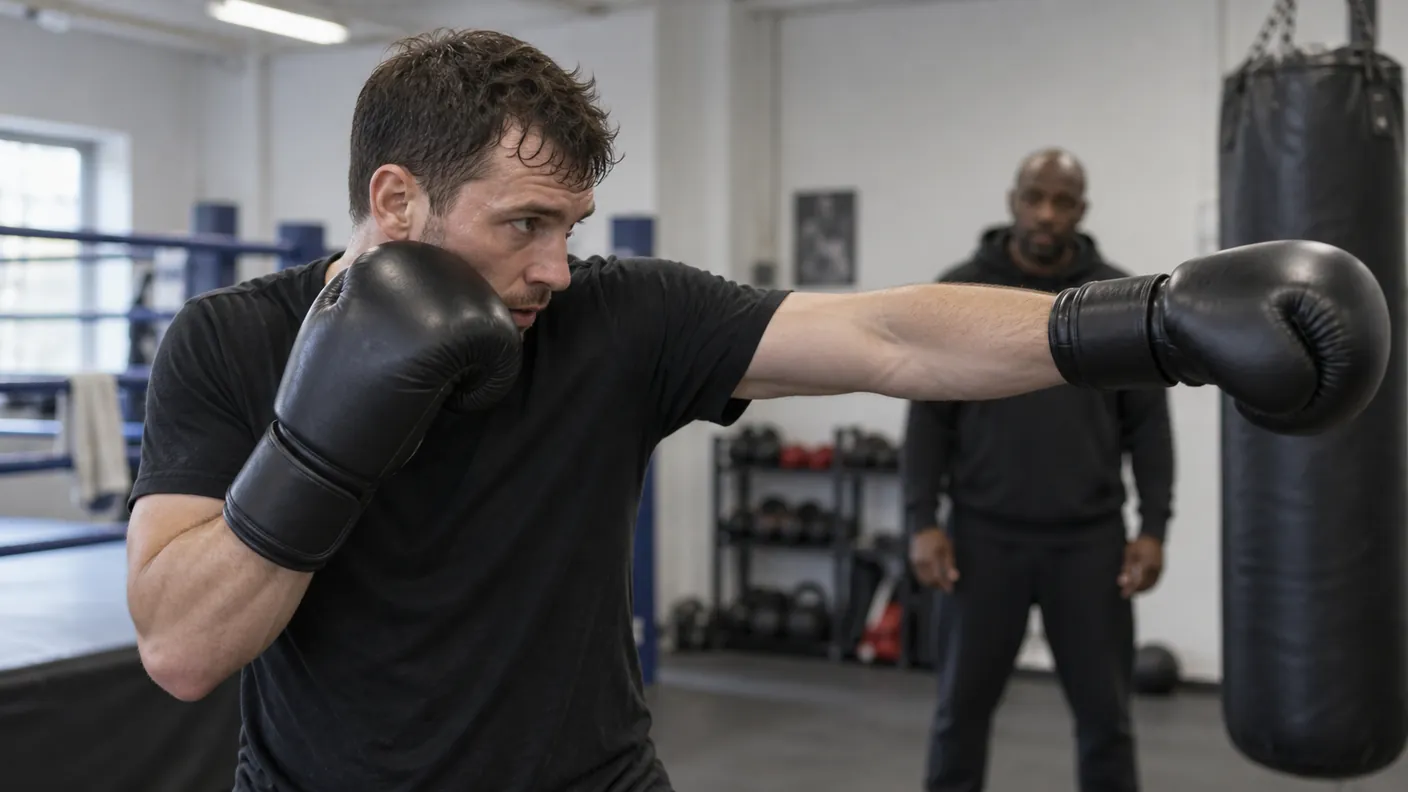
Keep Your Jab Straight: Stop the Elbow Flare
A simple boxing drill to keep your jab on line, protect the rear hand and replace a slow paw with a clean return.
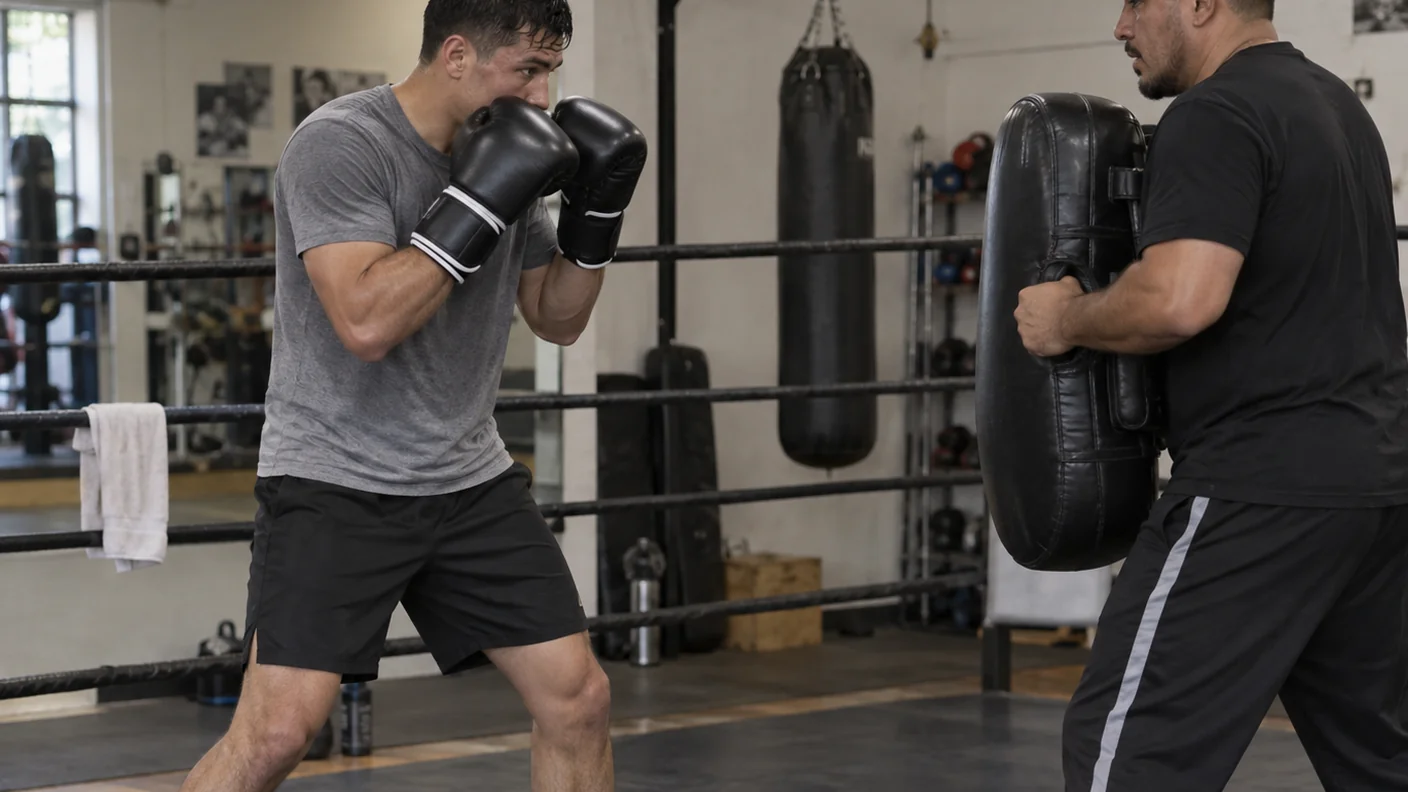
How to Defend a Body Jab in Boxing
Use a compact elbow line, steady eyes and a balanced reset to defend body jabs without dropping your hands or folding forward.
Was this page helpful?
It takes one tap, and it genuinely helps.
Choose your next step
Turn this article into the right action
Some readers are ready to book. Some need the class route first. Pick the route that matches what you actually want.