Rib Pain in Boxing: Intercostal Strain, Body Shots and Return to Training
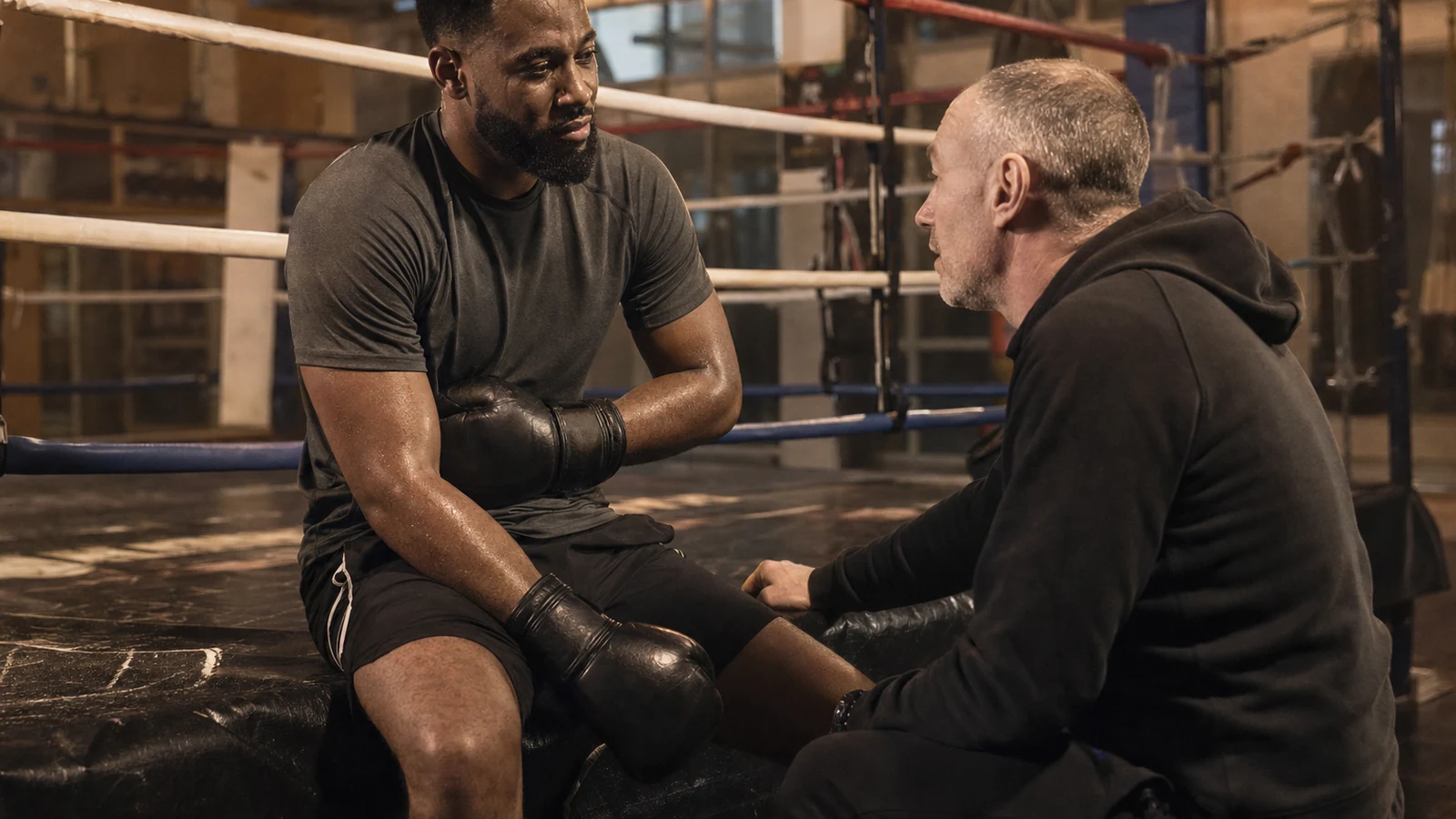
Rib pain in boxing can be awkward because it sits in the place you need for almost everything: breathing, bracing, rotating, slipping, punching, clinching, coughing, laughing and sleeping.
A boxer might feel it after a body shot, a fall, hard sparring, a missed hook that twists the trunk, too much bag work, or a cough that has already irritated the chest wall. Sometimes it is a bruised rib. Sometimes it is an intercostal muscle strain. Sometimes pain at the front of the chest is costochondritis. Sometimes chest pain or breathlessness needs urgent medical help and should not be treated as a gym niggle.
This is general information for boxers, not a diagnosis or medical advice. Stop training and speak to a qualified clinician if symptoms are severe, worsening, unusual, or not improving. For urgent symptoms, use NHS 111, A&E or 999 as appropriate.
This guide is part of our common boxing injuries series. It explains why rib and intercostal pain can happen in boxing, what warning signs matter, how recovery is usually paced, and why return to body shots and sparring should come late.
The short version: if rib pain makes breathing difficult, follows a hard blow, comes with coughing blood, worsening shortness of breath, worsening chest pain, tummy or shoulder pain, feverish symptoms, or a changed rib shape, stop training and get medical advice. Do not let anyone test a painful rib with one more round.
Why the ribs matter in boxing
Your ribs are not just a frame around the lungs. They move every time you breathe, help the trunk rotate, and protect important structures in the chest and upper abdomen.
That makes rib pain different from a sore bicep or tired calves. If every deep breath hurts, the problem can affect both training and basic recovery. If a boxer avoids breathing deeply because it hurts, they may also cough less effectively. NHS rib guidance specifically tells people with broken or bruised ribs to breathe normally, cough when needed, walk around, move the shoulders, and take slow deep breaths to help clear the lungs and reduce chest infection risk (source).
In boxing, the ribs and intercostal muscles help you:
- rotate for hooks, crosses and body shots
- brace when taking body contact
- breathe between punches
- slip, roll and pivot without collapsing posture
- keep the guard connected to the trunk
- absorb pad and bag impact through the whole body
- recover between rounds
The mistake is treating rib pain like a simple bruise until it proves otherwise. Rib pain can be minor, but the chest is not a place for ego decisions.
Why boxing can expose rib and intercostal pain
Most ordinary rib pain in a boxing gym comes from one of two patterns: impact or load.
Impact can mean a body shot, an elbow or shoulder in close-range sparring, a fall, a clash in partner drills, or a hard collision with the bag or ring edge. Load can mean repeated rotation, coughing, strength work, new conditioning, or tense breathing under fatigue.
Common boxing scenarios include:
- taking a clean body shot in sparring
- getting clipped during partner body-shot drills
- twisting hard on a missed hook or cross
- over-rotating during heavy bag rounds
- bracing too rigidly while punching
- returning to hard training after coughing illness
- doing heavy trunk or pressing work on top of boxing
- sparring when already sore from bag work
- wearing a guard too tight and breathing shallowly
- ignoring early pain because it is not in the head or hands
The 2023 boxing injury systematic review found that soft tissue contusion was the most common injury type in the studies analysed, and that boxing injury patterns vary heavily by exposure type, level and rules (source). For a club boxer, that matters because body contact in sparring and competition is not the same risk as non-contact technical training.
The main rib-pain buckets
Rib and chest-wall pain can overlap. The labels below are useful for understanding the decision, not for self-diagnosis.
Bruised or broken ribs
The NHS says bruised or broken ribs are usually caused by a fall, blow to the chest or severe coughing. Symptoms can include strong chest-area pain, especially when breathing in or coughing, swelling or tenderness around the ribs, bruising, and sometimes feeling or hearing a crack with a broken rib. It says broken or bruised ribs usually get better by themselves within 2 to 6 weeks, and there is often no need for an X-ray (source).
That does not mean a boxer should guess. A hard body shot plus worsening breathing, worsening chest pain, coughing blood, tummy pain or shoulder pain changes the decision.
Intercostal muscle strain
The intercostal muscles sit between the ribs and help the ribcage expand and shrink during breathing. Cleveland Clinic explains that these muscles are key to inhaling and exhaling, and that intercostal muscle problems can cause musculoskeletal chest pain, swelling, bruising or weakness (source).
An intercostal strain can happen when those muscles are stretched too far or torn. Cleveland Clinic notes that common causes include coughing, repetitive movements, twisting, lifting, stretching, exercise and chest injuries, and that pain may worsen with deep breaths, coughing, sneezing, twisting or bending (source).
For boxers, that often shows up when rotating, bracing or breathing under load.
Costochondritis
Costochondritis is inflammation where the ribs join the breastbone. NHS guidance says it can cause sharp chest pain, especially when moving or breathing, and usually gets better over time. Pain may be worse when moving the upper body, lying down, breathing deeply, or pressing the middle of the chest (source).
NHS guidance also says to get help from NHS 111 if you think you have costochondritis because chest pain needs checking to rule out more serious conditions. That is important. Pain at the front of the chest is not something a boxing coach should casually label.
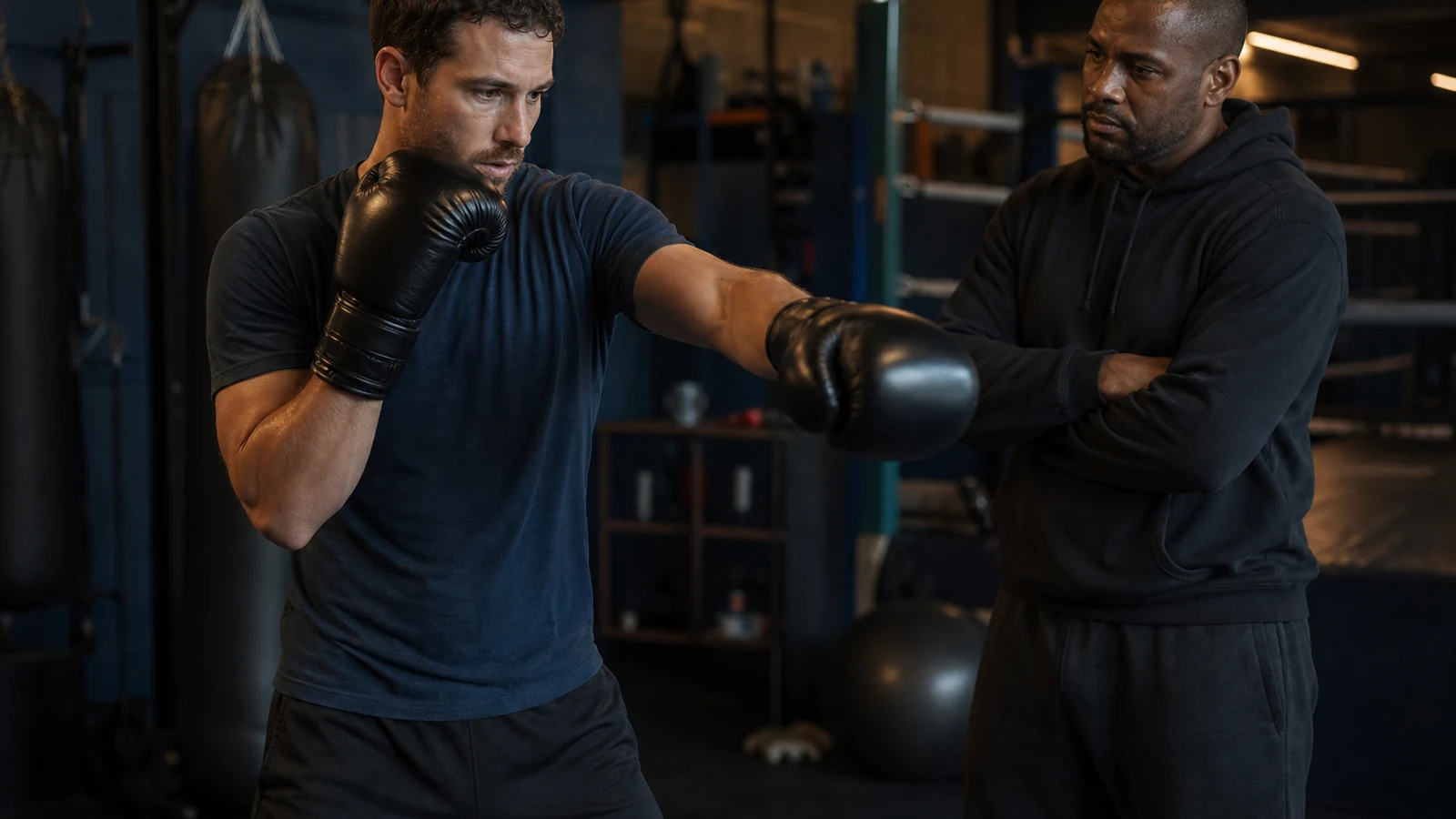
What rib pain in boxing often feels like
Rib or intercostal pain may feel like:
- a sharp pain when breathing deeply
- tenderness over one rib or one side of the chest
- pain when coughing, sneezing or laughing
- pain when twisting, rolling or throwing hooks
- pain when lying on one side
- a catch when bracing or rotating
- bruising or swelling after a blow
- stiffness around the upper back and ribcage
- fear of breathing fully because it hurts
Symptoms overlap. A tender spot after a body shot might be a bruise, a strain, irritation around the rib joints, or something that needs assessment. If pain is severe, chest-related, breathing-related, or not behaving like normal training soreness, get it checked.
When to stop boxing immediately
Stop the session if rib pain:
- changes your breathing
- makes you guard, twist or punch differently
- gets sharper as the round continues
- follows a hard blow, fall or clash
- comes with swelling, bruising or a changed rib shape
- makes coughing, laughing or deep breathing difficult
- stops you sleeping normally
- returns every time you hit or get hit
- comes with feeling faint, sweaty, feverish, sick or unusually short of breath
Do not spar with rib pain. Do not do body-shot drills with rib pain. Do not keep hitting the bag if rotation hurts. The body will find a workaround, and that workaround often creates another problem.
When rib pain needs medical help
Use NHS guidance rather than gym judgement.
NHS 111 or urgent GP help
The NHS says to ask for an urgent GP appointment or get help from NHS 111 if you have a broken or bruised rib and pain has not improved within a few weeks, you are coughing up yellow or green mucus, or you have a very high temperature or feel hot, cold or shivery (source).
NHS Inform says to phone 111 after a new chest or rib injury if there is increased shortness of breath or new breathing difficulty, a change in rib shape such as lumps or dents, pain preventing deep breathing, pain in the abdomen or shoulder, a new cough, yellow or green phlegm, feeling generally unwell, blood-thinning medication, or a condition affecting bone health such as osteoporosis (source).
For possible costochondritis, NHS guidance says to get help from NHS 111 because chest pain needs checking to rule out more serious causes (source).
Call 999 or go to A&E
The NHS says to call 999 or go to A&E if a broken or bruised rib was caused by a serious accident, shortness of breath is getting worse, chest pain is getting worse, there is tummy or shoulder pain, or you are coughing up blood. It warns that this could mean a broken rib has damaged something else, such as the lung, liver or spleen (source).
NHS shortness-of-breath guidance also says to call 999 or go to A&E immediately for severe difficulty breathing, chest tightness or heaviness, pain spreading to the arms, back, neck or jaw, pale, blue or grey lips or skin, or sudden confusion (source).
NHS costochondritis guidance says to call 999 for sudden chest pain that spreads to the arms, back, neck or jaw, makes the chest feel tight or heavy, starts with shortness of breath, sweating, feeling sick or being sick, or lasts more than 15 minutes (source).
That is the line. If symptoms suggest something more than local rib soreness, boxing stops and medical help wins.
What treatment often looks like
Treatment depends on what the rib pain actually is.
For broken or bruised ribs, NHS guidance says ribs are usually left to heal naturally, and that they often get better within 2 to 6 weeks. It suggests pain relief such as paracetamol, ibuprofen gel, or ibuprofen tablets if suitable, ice wrapped in a towel during the first few days, rest, normal breathing and coughing when needed, walking around, moving the shoulders, slow deep breaths, and sleeping more upright for the first few nights. It also says not to lie down or stay still for a long time, not to strain or lift heavy objects, and not to play sport or exercise that makes pain worse (source).
NHS Inform says most healing from chest or rib injury happens within 6 to 8 weeks, but aches and sensitivity can continue beyond this. It also recommends staying active, pacing activity, keeping pain within manageable limits, and doing breathing exercises regularly while awake until breathing feels comfortable again (source).
For costochondritis, NHS says it usually gets better by itself over time, but can last a few weeks to several months. Treatment may include painkillers that help with inflammation if suitable, and in some cases stronger treatment from a clinician if very bad pain does not improve (source).
For a boxer, the important point is that pain relief is not a green light to spar. Pain control may help you breathe and move. It does not prove the ribs can tolerate body shots.
What rehab often looks like for boxing
Rib rehab is not usually about one magic exercise. It is about restoring breathing, daily movement, trunk rotation and impact tolerance in the right order.
A sensible boxing return often looks like this:
- Comfortable breathing, coughing and sleeping.
- Walking and normal daily movement without symptoms escalating.
- Gentle shoulder and upper-back movement within tolerance.
- Pain-free or low-pain trunk rotation.
- Shadowboxing with no hard twisting and no breath holding.
- Light technical pad work with no body impact.
- Controlled bag work at low power.
- Harder punching only if breathing and rotation remain settled.
- Partner drills with no body contact.
- Body-contact drills and sparring last, only when medically and practically appropriate.
The order matters. A boxer may feel fine standing still but not fine breathing hard after three rounds. They may be fine throwing straight punches but not hooks. They may be fine shadowboxing but not absorbing a body shot. Build the test in stages.
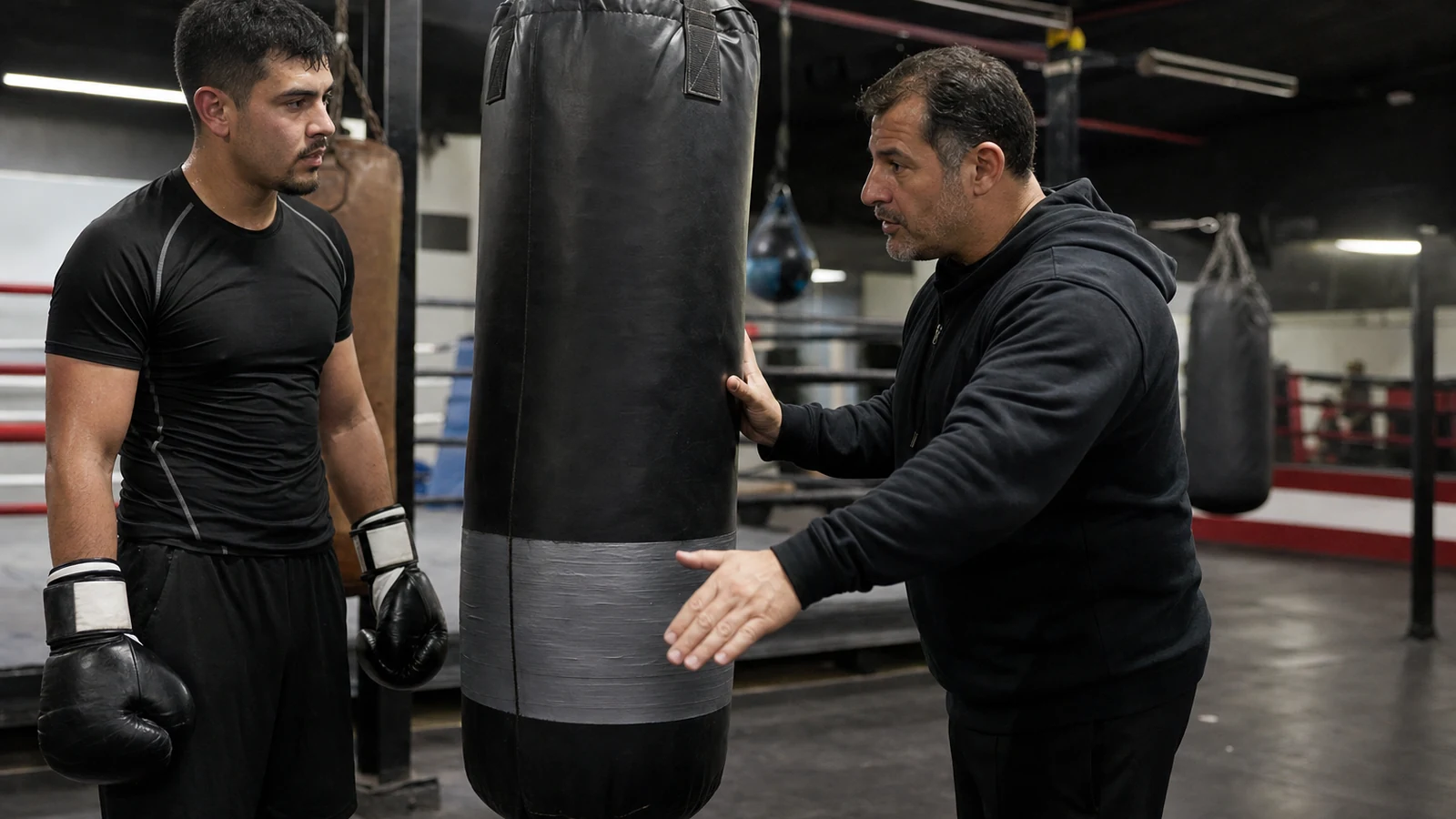
Boxing modifications while ribs settle
If a clinician has ruled out anything serious and you are allowed to keep some training, the coach can usually modify the session.
Possible options include:
- footwork drills without twisting hard
- light shadowboxing with relaxed breathing
- defensive head movement without deep rolls
- stance and guard work
- technical pad work at low power
- conditioning that does not spike symptoms
- watching and learning during sparring rounds
- no body-shot drills
- no hard bag rounds
- no clinch wrestling
- no sparring until impact is clearly tolerated
The best modification is not always doing a watered-down version of the same thing that hurt you. Sometimes the useful session is footwork, timing, tactics or observation.
Return-to-boxing checklist
Before moving back toward normal boxing, ask:
- Can I breathe deeply without sharp pain?
- Can I cough or laugh without severe pain?
- Can I sleep and move normally?
- Has pain stopped getting worse week to week?
- Can I rotate both ways without guarding?
- Can I shadowbox without breath holding?
- Can I do light pads without symptoms rising afterwards?
- Can I hit the bag lightly without pain during or later that day?
- Have I had medical advice if the injury followed a hard blow or the symptoms were unusual?
- Am I leaving sparring and body shots until last?
If the answer is no, you are not behind. You are still rebuilding the thing boxing actually needs.
How to reduce rib and intercostal problems in boxing
You cannot remove all rib risk from a combat sport, but you can reduce avoidable risk.
- Build bag power gradually.
- Learn to rotate from the floor and hips, not just the ribs.
- Keep breathing during combinations.
- Do not turn body-shot drills into punishment rounds.
- Keep sparring controlled and coach-led.
- Match partners sensibly by size, experience and intent.
- Do not spar when already sore from body shots.
- Let coaches know early if breathing or trunk rotation feels wrong.
- Avoid sudden spikes in coughing, strength work, bag volume and sparring at the same time.
- Keep trunk and upper-back strength in the programme, but do not use pain as proof of effort.
Good boxing is not just toughness. It is control. Rib pain is one of the clearest places where that matters.
What a good boxing coach should do
A good coach should not diagnose your rib pain. They should notice that it changes the session.
If a boxer is protecting one side, breathing shallowly, flinching on rotation, or hiding pain after a body shot, the coach should stop and ask. If there are warning signs, the answer is medical help, not another round. If symptoms are mild and already assessed, the answer is modified training and a staged return, not pretending ribs are irrelevant because the hands still work.
At Honour & Glory, we want people to train for years. That means treating warning signs early, keeping sparring sensible, and making the session fit the boxer in front of us.
If you are healthy enough to train and want a coach-led environment, book a free trial at Honour & Glory Boxing Club. If rib or chest pain is active now, get it checked first. The gym will still be here when breathing, rotation and impact are ready.
H&G Team
Writer at Honour & Glory Boxing Club, a community boxing gym in Kidbrooke, South East London.
KEEP READING
Common Boxing Injuries: What Hurts, Why, and When to Get Help
A medically careful guide to common boxing injuries: hands, wrists, shoulders, elbows, ribs, calf strains, knees, back pain and concussion, with NHS-backed warning signs.
Rotator Cuff Pain in Boxing: Shoulder Warning Signs, Rehab and Return to Training
A careful, coach-led guide to rotator cuff pain in boxing: common causes, warning signs, NHS-backed shoulder guidance, rehab phases and return to punching.
Wrist and Hand Injuries in Boxing: Pain, Knuckles, Fractures and When to Stop
A careful, coach-led guide to wrist and hand pain in boxing: common causes, warning signs, boxer's knuckle, fractures, wrapping, rehab and return to training.
Was this page helpful?
It takes one tap, and it genuinely helps.
Choose your next step
Turn this article into the right action
Some readers are ready to book. Some need the class route first. Pick the route that matches what you actually want.