
How often should you train boxing? It is one of the most common questions we get at H&G, and there is no single right answer (source).
The ideal training frequency depends on your goals, your current fitness level, your recovery capacity, and your life outside the gym. What works for a competitive amateur will not work for a parent with a demanding job who is training for fitness.
Let us break down what actually makes sense for different people.
The Short Answer by Goal
Complete beginner (first 3 months): 2-3 sessions per week (source)
Fitness and weight loss: 3-4 sessions per week
Getting genuinely skilled: 4-5 sessions per week
Competitive amateur: 5-6 sessions per week
Professional boxer: 6+ sessions per week (often twice daily)
Now let us dig into the reasoning behind these recommendations.
For Complete Beginners
If you are just starting out, 2-3 sessions per week is ideal.
Why not more? Because everything is new to your body. Your muscles are not adapted to the movements. Your nervous system is learning patterns it is never done before. Recovery takes longer when you are doing something unfamiliar.
Training more frequently as a beginner often leads to:
- Excessive soreness that makes training miserable
- Poor technique as fatigue accumulates
- Overuse injuries before your body adapts
- Burnout and quitting before habits form
At 2-3 sessions per week, you have time to recover between sessions. You show up relatively fresh, which means you can actually learn rather than just survive. The quality of your training matters more than the quantity in these early months.
This phase typically lasts about 3 months. After that, your body has adapted and can handle more frequency.
For Fitness and Weight Loss
If your primary goals are getting in shape and losing weight, 3-4 sessions per week hits the sweet spot.
This frequency provides:
- Enough stimulus to create real physical change
- Adequate recovery time between sessions
- Realistic sustainability with work and life
- Room for improvement if you want to add more later
Three sessions per week is the minimum for noticeable progress. Four is often optimal for most people with full-time jobs and other responsibilities.
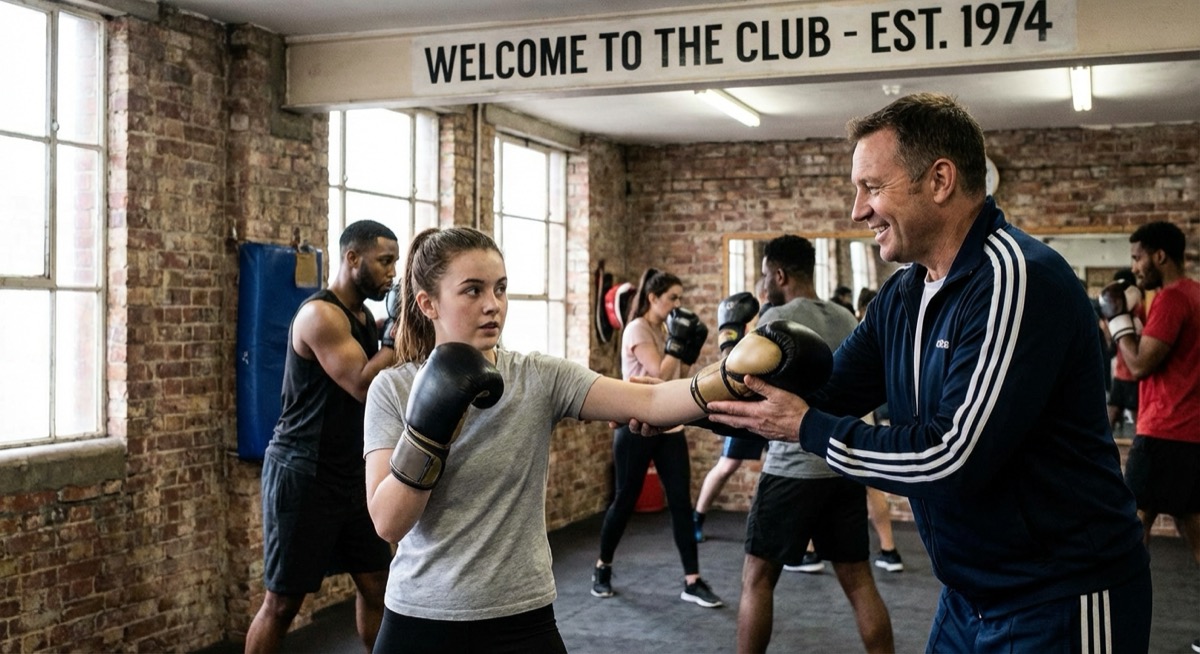
At H&G, we see the best transformations in members who train consistently 3-4 times per week for months on end - not those who train intensely for a few weeks and then disappear.
Consistency beats intensity. Always.
For Skill Development
If you genuinely want to become good at boxing - not just fit, but skilled - you will need to train more frequently.
4-5 sessions per week allows for real technical development. At this frequency, the movements become automatic rather than conscious. Your muscle memory develops. You start seeing things in sparring that you could not see before.
There is a concept in skill acquisition called "massed practice" - the idea that concentrated practice within a short timeframe produces faster learning than the same total hours spread over a longer period. If you train 3 hours per week in one session versus three 1-hour sessions, the three sessions produce better results.
More frequent training keeps patterns fresh in your nervous system. You are building on yesterday's work rather than re-learning what you have forgotten.
The trade-off is that this frequency requires more commitment - both time and energy. You need to sleep well, eat properly, and manage other life stresses. It is doable for most people but requires prioritisation.
For Competitive Boxers
If you are preparing for competition, 5-6 sessions per week is standard.
This includes a mix of:
- Technical work (pads, bags, shadow boxing)
- Sparring
- Strength and conditioning
- Roadwork (running)
- Recovery sessions
At this level, training becomes your main hobby - or your job. There is little room for other demanding activities. Life is structured around training and recovery.
Most people reading this article will not reach this level, and that is perfectly fine. You do not need to train like a professional to get 90% of the benefits boxing offers.
Rest Days Matter
Whatever frequency you choose, understand that rest is part of training.
Your body does not get stronger during training - it gets stronger during recovery. Training creates the stimulus; rest creates the adaptation. Without adequate recovery, you just accumulate fatigue without improvement.
Signs you are not recovering enough:
- Performance getting worse rather than better
- Persistent fatigue that sleep does not fix
- Elevated resting heart rate
- Mood changes (irritability, low motivation)
- Getting sick more frequently
- Nagging injuries that will not heal
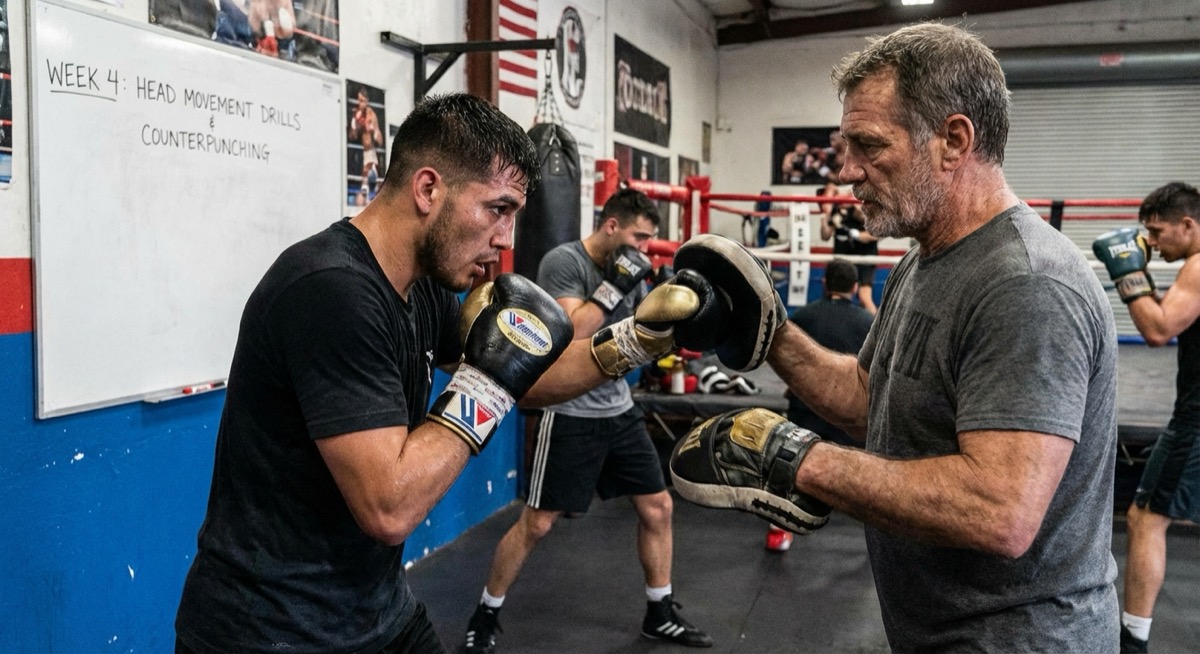
If you are experiencing these, you probably need to train less, not more. Sometimes taking a week off makes you come back stronger than grinding through another week of subpar training.
What About Daily Training?
Some people ask if they can train every day. The answer depends on what you are doing.
Light technical work - shadow boxing, visualisation, mobility - can be done daily without issues. This kind of low-intensity practice does not create significant recovery demands.
High-intensity bag work, sparring, or conditioning creates stress that requires recovery. Doing this daily without breaks will eventually lead to overtraining, injury, or both.
Professional boxers who train twice daily are extremely careful about managing intensity. They are not going all-out in every session. They might do technical work in the morning and conditioning in the afternoon, or spar one day and do pad work the next.
If you are training daily, at least half your sessions should be lower intensity. But honestly, most non-professionals do not need to train daily. It is not a badge of honour - it is just a tool that makes sense for specific goals.
Building Your Weekly Schedule
Here is what a balanced weekly schedule might look like at different frequencies:
3 sessions per week: Monday boxing class, Wednesday boxing class, Saturday boxing class. Rest days between each session allow for recovery.
4 sessions per week: Monday boxing class, Tuesday rest or light cardio, Wednesday boxing class, Thursday rest, Friday boxing class, Saturday boxing class or strength training, Sunday rest.
5 sessions per week: Monday boxing class, Tuesday boxing class or strength training, Wednesday rest or light work, Thursday boxing class, Friday boxing class, Saturday boxing class or conditioning, Sunday complete rest.
At higher frequencies, consider mixing in non-boxing activities (strength training, running, mobility work) to avoid overloading the same movement patterns.
Quality vs Quantity
A harder question than "how often" is "how hard."
Two people can both train four times per week and have completely different experiences. One shows up, goes through the motions, checks the box. The other pushes themselves appropriately, focuses on improvement, and gets maximum value from every session.
Three high-quality sessions beat five mediocre ones.
If training more frequently means you are showing up exhausted and half-assing your workouts, you'd be better off training less with more intensity. On the other hand, if you are training three times per week and never pushing yourself because you are always fresh, you might benefit from more volume.
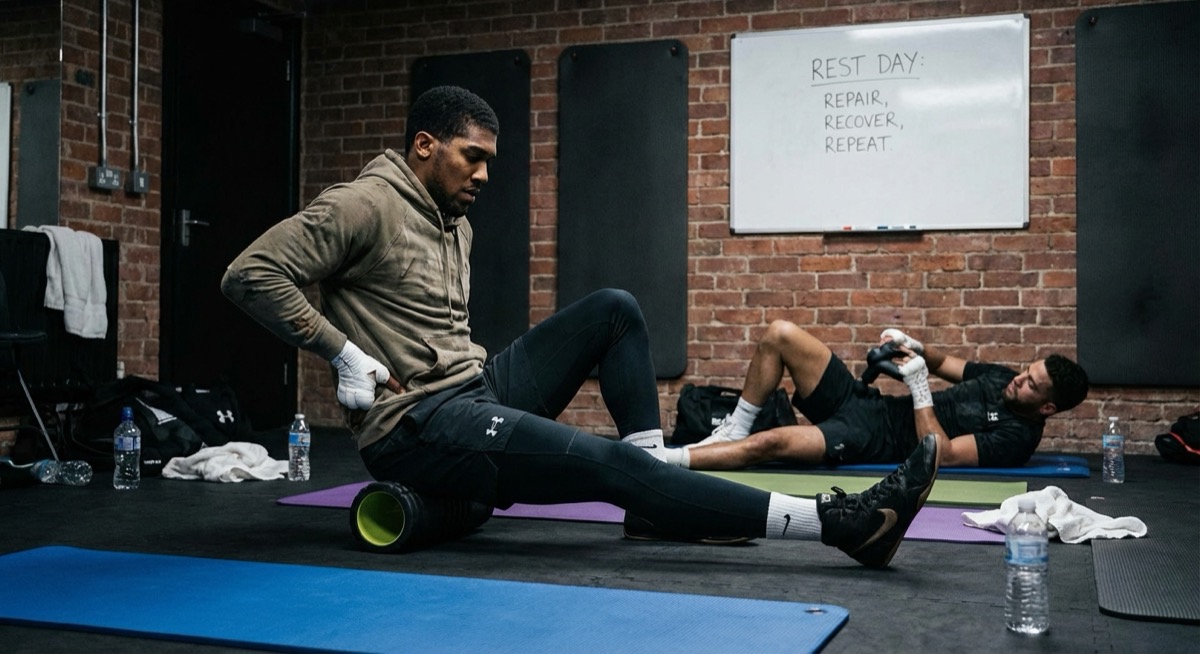
Find the sweet spot where you are training often enough to progress but not so often that quality suffers.
Adjusting Over Time
Your optimal training frequency will change over time.
As a beginner, you need more recovery. As you get fitter, you can handle more. But then life circumstances change - new job, new baby, injury, holiday - and you need to adjust again.
The right approach is to be flexible. Have a default schedule that works for normal life, but be willing to pull back when needed and push forward when possible.
Some periods you will train five times per week and make rapid progress. Other periods you will manage two sessions and just maintain what you have. Both are fine as long as you keep showing up over the long term.
The Most Important Factor
Here is the truth: the exact number of sessions matters less than consistency over time.
Someone who trains twice per week for ten years will be far better than someone who trains six times per week for three months and then quits.
Pick a frequency you can sustain. Not what sounds impressive or what Instagram influencers claim to do - what you can actually maintain given your job, your family, your other interests, and your energy levels.
Start conservative and add more if you want to. It is easier to increase frequency when you are enjoying yourself than to cut back after burning out.
Our Recommendation
For most people reading this, 3 sessions per week is the right starting point.
It is achievable with a busy life. It provides enough stimulus for real progress. It allows for proper recovery. And it is sustainable long-term.
Once you have established that habit - trained 3 times per week for 3-6 months without missing many sessions - then consider whether you want more. You might. You might not. Both are valid.
The goal is to still be training in 5 years, not to maximise training in the next 5 weeks.
Ready to Start?
Whatever frequency you choose, the first step is the same: show up.
At H&G Boxing, we have classes throughout the week so you can find a schedule that works for your life. Start with our free trial, see how you feel, and go from there.
H&G Team
Writer at Honour & Glory Boxing Club, a community boxing gym in Kidbrooke, South East London.
KEEP READING

Boxing for People Who Hate the Gym: Why This Is Different
The conventional gym is not for everyone. Boxing clubs offer something that commercial gyms do not - a reason to be there beyond the treadmill. Here is why gym-avoiders often love boxing.

Feeling Sick During Boxing: When to Rest and Stop
Feeling sick in a boxing class can have several ordinary causes. Learn when to take a break, when to go home and when to get medical advice.

Your First Month of Boxing: A Week-by-Week Guide
The first month of boxing has a predictable arc. Knowing what to expect in each week makes the difficult early period manageable and the breakthrough moments recognisable.
Was this page helpful?
It takes one tap, and it genuinely helps.
Choose your next step
Turn this article into the right action
Some readers are ready to book. Some need the class route first. Pick the route that matches what you actually want.