Calf Strains in Boxing: Skipping, Footwork and Return to Training
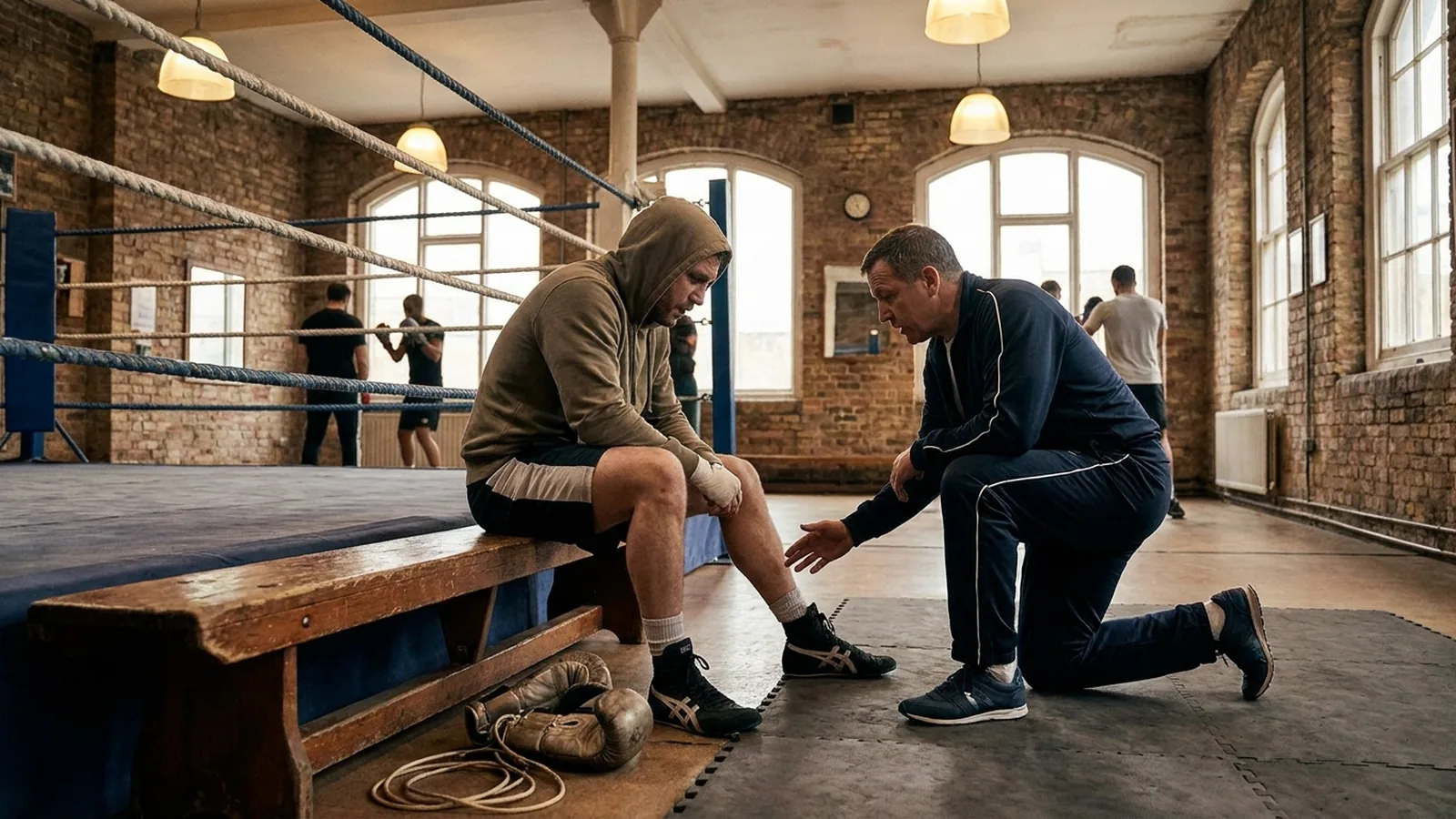
A calf strain can make a boxer feel old very quickly.
One minute you are skipping, bouncing in stance or pushing out of range. The next, the back of the lower leg grabs, stabs, pops or tightens so sharply that the whole session changes. Calf problems are easy to dismiss as ordinary tightness, but the calf is not a small detail in boxing. It is part of your engine, your brakes and your footwork.
This is general information for boxers, not a diagnosis or medical advice. Stop training and speak to a qualified clinician if symptoms are severe, worsening, unusual, or not improving. For urgent symptoms, use NHS 111, A&E or 999 as appropriate.
This guide is part of our common boxing injuries series. It explains why calf strains happen in boxing, what warning signs matter, when calf pain may be something other than a simple pull, and how return to boxing normally needs to move from walking to footwork before hard rounds.
The short version: if you feel a sudden pop, sharp tear, cannot push off, start limping, cannot put weight through the leg, or the calf becomes hot, swollen and tender, stop training and get medical advice. Do not try to prove a calf strain is minor by skipping on it.
What the calf does in boxing
The calf is not just for running.
In boxing, the calf helps you:
- stay light in stance without collapsing through the ankle
- push off when you step in or out
- brake when you stop suddenly
- pivot without losing balance
- skip, bounce and reset rhythm
- hold distance while the upper body punches
- absorb repeated small loads through rounds
- recover position after throwing or defending
The main calf muscle most people see is the gastrocnemius. It sits higher and more superficially at the back of the lower leg. The soleus sits deeper and works heavily when the knee is bent. Both connect into the Achilles tendon, so calf loading and Achilles loading are closely related.
University Hospitals Plymouth NHS Trust describes a calf strain as a tear in one or more muscles at the back of the lower leg, usually involving the gastrocnemius or soleus, which both join onto the Achilles tendon (source). StatPearls explains that gastrocnemius strains often happen when the knee is extended and the ankle is pulled upward, placing the muscle under high stretch and load (source).
In boxing terms, that means calf strain risk can appear when the foot is planted, the leg is relatively straight, and the boxer suddenly pushes, brakes, pivots or changes direction.
Why boxing can expose calf strains
Most boxing calf strains are not from one heroic movement. They often come from a normal session done on a calf that was already underprepared, tired or overloaded.
Common boxing scenarios include:
- too much skipping too soon
- long bouncing warm-ups after time off
- hard footwork rounds on tired calves
- sudden in-and-out movements after standing still
- pivots on sticky flooring
- trying to box light on the toes for every second of every round
- adding sprints, running or hill work on top of boxing
- returning after illness, holiday or a week off and training at old volume
- new shoes, stiff ankles or old ankle sprains changing how the calf loads
- sparring rounds where movement intensity jumps without warning
NHS Inform says calf problems are usually caused by injuries, including falls, sporting activity or a direct hit to the area, and can cause pain, bruising, tightness and stiffness (source). The NHS sprains and strains page also lists not warming up, tired muscles and playing sport as common causes of sprains and strains (source).
That maps neatly to boxing. Calves complain when the warm-up is rushed, the rhythm work is too long, the boxer is tired, or the session asks for more spring than the tissue is ready to give.
A 2022 systematic review of amateur boxing injuries found that training injuries were much less frequent than competition injuries overall, but that training injuries were often sprains and strains (source). A calf strain is not the headline injury in boxing, but it is very believable in the training room.
Calf tightness, cramp, strain and Achilles pain
Boxers use the same words for very different problems: tight, pulled, cramped, pinged, sore, tweaked.
The distinction matters because the safest next step changes.
Ordinary calf tightness
This is often broad, dull and predictable. You may feel it after skipping, hill running, a first session back or a hard conditioning block. It usually eases with gentle movement and does not make you limp or change footwork dramatically.
Ordinary tightness is still information. It tells you the calf has worked hard. It does not automatically mean injury, but it does mean you should be careful about stacking more jumping, sprinting or hard footwork on top.
Cramp
Cramp can feel sudden and gripping. It may happen late in a session, especially when someone is tired, dehydrated, nervous, under-fuelled or holding tension. But cramp and strain can feel similar in the moment.
If the calf continues to feel sore, weak, bruised, swollen or painful when walking after the cramp has passed, treat it more cautiously.
Calf strain
A strain is an overstretched or torn muscle. The NHS describes strains as overstretched or torn muscles, most common in the feet, legs and back, with symptoms such as pain, tenderness, weakness, swelling, bruising, difficulty using the area normally and muscle spasm or cramping (source).
A calf strain in boxing often feels more local and sharper than ordinary tightness. Plymouth's NHS calf leaflet says a calf strain may feel like sudden tearing or stabbing pain, with tightness, difficulty continuing activity, and in severe cases pain so bad that the person cannot stand on the leg (source).
Achilles tendon pain
Achilles pain usually sits lower, around the tendon above the heel. It may be stiff first thing in the morning or at the start of activity, then warm up, then complain later. It is not the same as a calf muscle strain, but the two are connected because the calf loads through the Achilles tendon.
If pain is low, tendon-like, repeated and worse with bouncing or push-off, do not just stretch it harder. Get it assessed if it persists or worsens.
DVT and other non-boxing causes
Not every calf pain is a sports strain.
NHS Inform notes that calf pain can sometimes come from back problems or circulatory issues, not just local muscle injury (source). The NHS DVT page says deep vein thrombosis is a blood clot in a vein, usually in the leg, and can cause throbbing pain in one leg, swelling in one leg, warm skin, red or darkened skin and swollen veins that are hard or sore when touched (source).
That does not mean every sore calf is a clot. It means a hot, swollen, tender calf is not something to explain away as boxing tightness.
What a calf strain can feel like in a boxer
Symptoms overlap, so this section cannot diagnose you. But boxers often report a few recognisable patterns.
A mild calf strain may feel like:
- a sudden pull during skipping or footwork
- a local tight spot that does not ease as normal
- pain when pushing off the ball of the foot
- discomfort when walking upstairs
- calf tenderness after training
- reduced confidence bouncing or changing direction
A more significant strain may feel like:
- a sharp stab or tearing feeling
- a pop or snap sensation
- pain that stops the round immediately
- difficulty walking normally
- limping
- swelling or bruising
- pain when rising onto the toes
- inability to accelerate, pivot or brake
StatPearls notes that people with gastrocnemius strain may describe feeling as if something struck them on the calf, sometimes with a snap or pop (source). Cleveland Clinic similarly lists symptoms such as sudden calf pain, swelling, bruising, difficulty standing on the toes, trouble tensing the calf and a snapping or popping sensation (source).
In boxing, the clue is often not only pain. It is the change in movement. If the calf makes you shorten your stance, avoid the rear leg, stop pivoting, step flat-footed, or protect one side, the session has changed. That is the point to stop.
When to stop boxing immediately
Stop the round if calf pain:
- arrives suddenly during skipping, footwork or sparring movement
- feels sharp, tearing or stabbing
- comes with a pop, snap or struck-in-the-leg sensation
- makes you limp
- stops you putting weight through the leg
- stops you pushing off or rising onto the toes
- gets worse with each movement
- makes pivots or direction changes feel unsafe
- comes with visible swelling or bruising
- makes the calf hot, swollen and tender
Do not keep bouncing to see if it loosens. That is still loading the injured tissue. If the calf is strained, the next few minutes are not a character test. They are a chance to avoid making a small injury bigger.
A coach can change the session, move you to upper-body-only drills if that is safe, or tell you to sit out. A coach cannot diagnose the grade of a tear, rule out DVT, or clear you for sport from the side of the ring.
When to get medical help
Use NHS guidance first.
Phone 111 as soon as possible if:
- there has been significant trauma, such as a fall from height or a direct blow to the calf, ankle or leg
- the calf or lower leg is misshapen
- you have difficulty putting weight on the leg
Those points come from NHS Inform's calf guidance (source).
Contact a GP, or phone 111 if the GP practice is closed, if:
- trauma affecting the calf or ankle happened more than seven days ago
- the calf is hot, swollen and tender
- pain is worsening despite self-care
- symptoms are not settling as expected
- calf pain is associated with pins and needles, burning pain or possible back-related symptoms
The NHS sprains and strains page advises getting help from NHS 111 if an injury is very painful or getting worse, swelling or bruising is large or worsening, you cannot put weight on it or walk more than a few steps, it feels very stiff or difficult to move, it is not improving after self-care, or you feel hot, cold, shivery or have a very high temperature (source).
Call 999 or go to A&E if calf symptoms suggest DVT and you also have chest pain or breathlessness. The NHS warns that a clot can travel to the lungs and cause a pulmonary embolism, which needs treatment straight away (source).
What treatment often looks like
Treatment depends on what the calf problem actually is: mild strain, larger tear, Achilles involvement, referred pain, vascular issue, ankle problem or something else.
For ordinary sprains and strains, the NHS recommends PRICE for the first two to three days:
- protect the injury
- rest from exercise and avoid putting weight through it if needed
- ice for up to 20 minutes every two to three hours, wrapped in a towel
- compression with a bandage for support
- elevation on a pillow as much as possible
The NHS also advises avoiding heat, alcohol and massage in the first couple of days because they can increase swelling (source). Plymouth's NHS calf leaflet gives similar early advice and also uses PRICE, while warning against heat, alcohol, running and massage for the first 72 hours after injury (source).
That does not mean complete rest forever. NHS Inform says keeping the calf moving is an essential part of treatment and recovery, starting with reducing activities but moving as much as symptoms allow in the first 24 to 48 hours, then trying to use the leg more after 48 hours where possible (source).
The balance is important: protect it early, then rebuild gradually. Boxers often get one side wrong. Some freeze completely for too long. Others feel slightly better and test skipping before walking is normal.
What rehab usually looks like for a boxer
Rehab should be clinician-led if symptoms are significant, persistent, unusual or severe. The outline below is not a personalised plan. It is a boxing-specific way to think about progression.
Phase 1: calm the calf down
The first job is to stop the aggravating load. That usually means no skipping, no running, no bouncing footwork, no fast pivots, no sparring movement and no explosive push-off.
Depending on symptoms, you may still be able to work on upper-body skills while seated or standing still, watch rounds, do breathing work, study technique, or do non-irritating training. But if walking is painful, boxing footwork is not the test you need.
Phase 2: restore normal walking
Before boxing matters, walking matters. Can you walk without limping? Can you go upstairs and downstairs without protecting the leg? Can you stand in a basic boxing stance without shifting away from the sore side?
NHS Inform's calf advice includes gentle ankle and knee movement early, reducing long periods on your feet at first, and building activity as symptoms allow (source).
If ordinary walking is still altered, boxing footwork will usually be altered too.
Phase 3: rebuild calf strength and ankle movement
This is where many boxers rush.
The NHS Inform exercise page for calf and ankle problems says restoring movement and strength is important, return to normal activity should be gradual, pain should be monitored, and exercises should not make existing calf or ankle pain worse overall or worse the next morning (source).
A clinician may use movements such as ankle bends, heel raises, calf stretches and progressive loading. The detail depends on the injury. For a boxer, the goal is not just a calf raise in the clinic. It is being able to control stance, push-off, brake and pivot without compensation.
Phase 4: reintroduce boxing movement without bounce
Shadowboxing usually returns before skipping.
Start with short rounds, flat and controlled. No springy bounce. No hard pivots. No sudden exits. Work on stance width, weight transfer, relaxed guard, stepping in and out softly, and recovering position without snapping through the calf.
If the calf tightens during slow shadowboxing, skipping is not next.
Phase 5: add light rhythm and controlled footwork
When walking, calf strength and slow footwork are comfortable, rhythm can return gradually.
This might mean:
- short low-bounce footwork rounds
- gentle step-and-slide drills
- controlled pivots at low speed
- light shadowboxing with planned movement
- very small amounts of rope rhythm without aggressive bouncing
The mistake is treating skipping as a warm-up rather than a calf-load exercise. For a recovering calf, skipping is training. Dose it like training.
Phase 6: return to pads, bag work and sparring movement
Pads and bag work add reaction, impact and fatigue. Sparring adds unpredictability.
Return in layers:
- technical pads with minimal foot bounce
- controlled bag work with planted, honest stance
- short rounds before long rounds
- volume before speed
- speed before power
- planned pivots before reactive pivots
- sparring movement last
If the calf reacts the next morning, reduce the load. A calf can pass one session and fail recovery.
How long calf strains take to recover
Recovery varies by severity, age, training history, previous injury, strength, sleep, nutrition, job demands and whether the boxer keeps testing the calf too early.
The NHS says most sprains and strains feel better after about two weeks, but strenuous exercise such as running may need to be avoided for up to eight weeks, and severe sprains and strains can take months to return to normal (source). NHS Inform says many new calf problems should begin to settle within six weeks (source). Plymouth's NHS calf leaflet says a severe calf tear can take up to three months to fully recover (source).
Those are reference points, not promises. A boxer with a desk job, a mild strain and good load control may progress differently from someone on their feet all day with a bigger tear and old ankle stiffness.
The better question is not "how many days until I can box?" It is:
- Can I walk normally?
- Can I rise onto my toes without pain or compensation?
- Can I hold stance without shifting away?
- Can I shadowbox slowly without symptoms during or after?
- Can I add rhythm without next-day reaction?
- Can I push off, brake and pivot under control?
- Can I handle fatigue without limping or protecting the side?
If the answer is no, the calendar is less important than the calf.
How to reduce recurrence
Calf strains often return when the original reason was never fixed.
Useful prevention habits include:
- build skipping volume slowly
- treat rope work as calf loading, not just warm-up noise
- warm up before hard footwork rounds
- avoid sudden sprint-style movement when cold
- keep calf strength work in the programme if appropriate
- rebuild ankle movement after old sprains
- change direction with the whole body, not just a violent ankle twist
- avoid stacking hard running, hills, skipping and sparring movement on the same tired calves
- use shoes that let you move safely on the gym surface
- tell the coach early when a calf feels wrong
NHS Inform also emphasises keeping active to maintain fitness, keep muscles and joints strong and flexible, and help prevent recurrence, while avoiding sports and heavy lifting until there is less discomfort and good movement (source).
For boxing, the biggest lesson is load honesty. A boxer may think they only did three rounds, but the calf may have done skipping, warm-up footwork, stance holds, pad movement, pivots, defensive exits and conditioning. That is a lot of repetitions.
Return-to-boxing checklist
Do not use this as medical clearance. Use it as a conversation with your clinician or coach.
Before returning to full boxing, you should usually be able to say:
- I can walk without limping.
- I can use stairs without protecting the calf.
- I can stand in stance without shifting away from one leg.
- I can rise onto the toes comfortably or follow the clinician's strength targets.
- I can shadowbox slowly without symptoms.
- I can do light footwork without next-day flare-up.
- I can pivot under control.
- I can skip only if it has been deliberately reintroduced and tolerated.
- I can do pads or bag work without changing stance or punch mechanics.
- I am not relying on painkillers to hide symptoms.
- Sparring movement is last, not first.
If you have to bargain with any of those points, the calf is still part of the training plan.
How we handle calf pain at H&G
Good coaching is not just shouting through fatigue.
If someone at H&G feels sharp calf pain, starts limping or cannot push off, the session changes. We would rather pause a round and keep someone training long-term than watch them turn a manageable calf strain into weeks away from the gym.
For healthy beginners, calf issues are also a reminder to build rhythm gradually. You do not need to bounce like a pro for every second of your first month. You need to learn stance, balance, breathing, clean steps and relaxed movement. The spring can come later.
If you are currently injured, get the right medical advice first. If you are healthy enough to train and want a coach-led route back into boxing, our adult boxing classes and free trial are built around sensible progress, not ego rounds.
Related injury guides
H&G Team
Writer at Honour & Glory Boxing Club, a community boxing gym in Kidbrooke, South East London.
KEEP READING
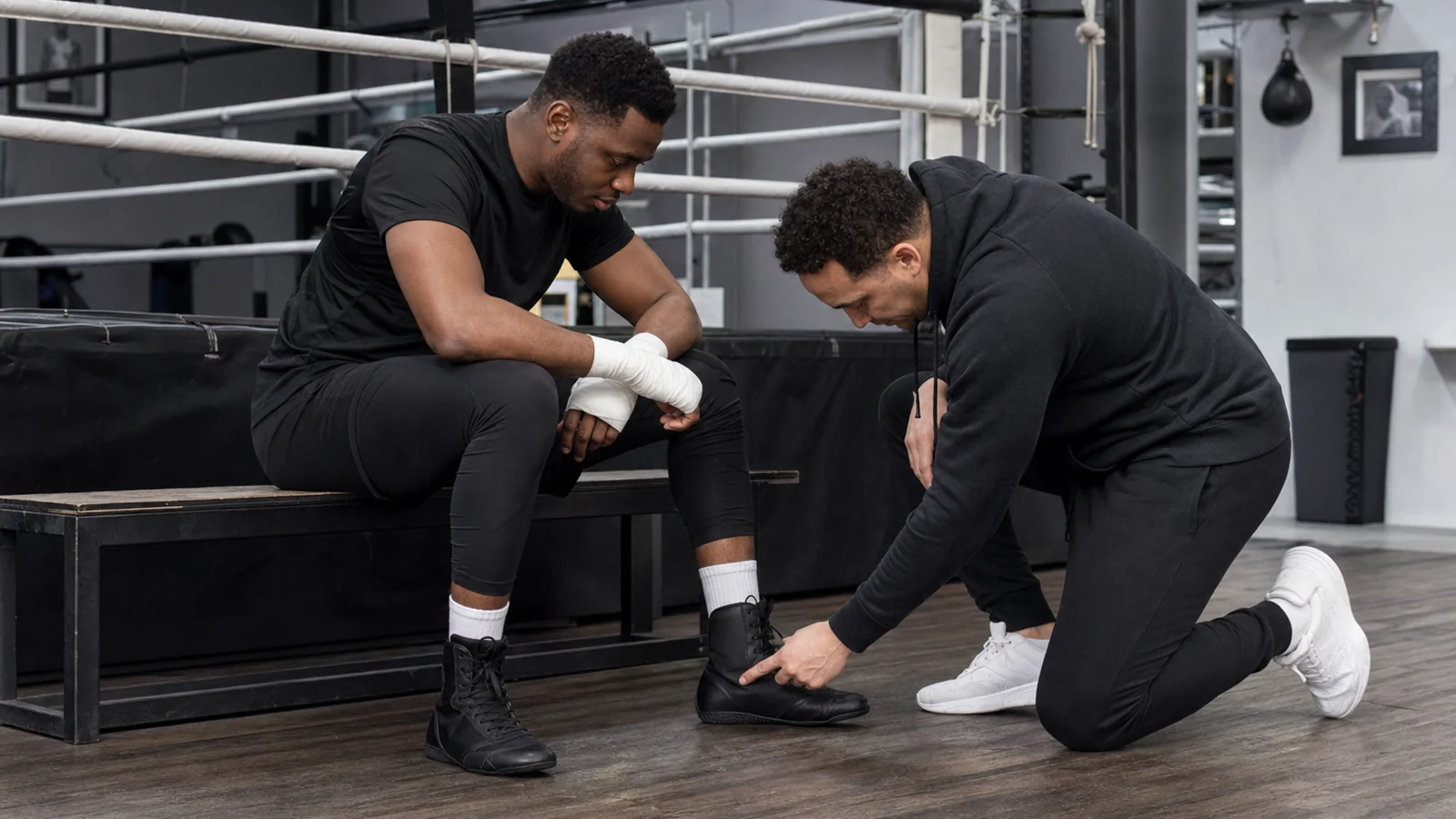
Ankle Sprains and Achilles Pain in Boxing: Footwork, Warning Signs and Return to Training
A careful boxing guide to ankle sprains and Achilles pain: why footwork, pivots and skipping can overload the lower leg, NHS-backed warning signs, rehab phases and return to boxing.
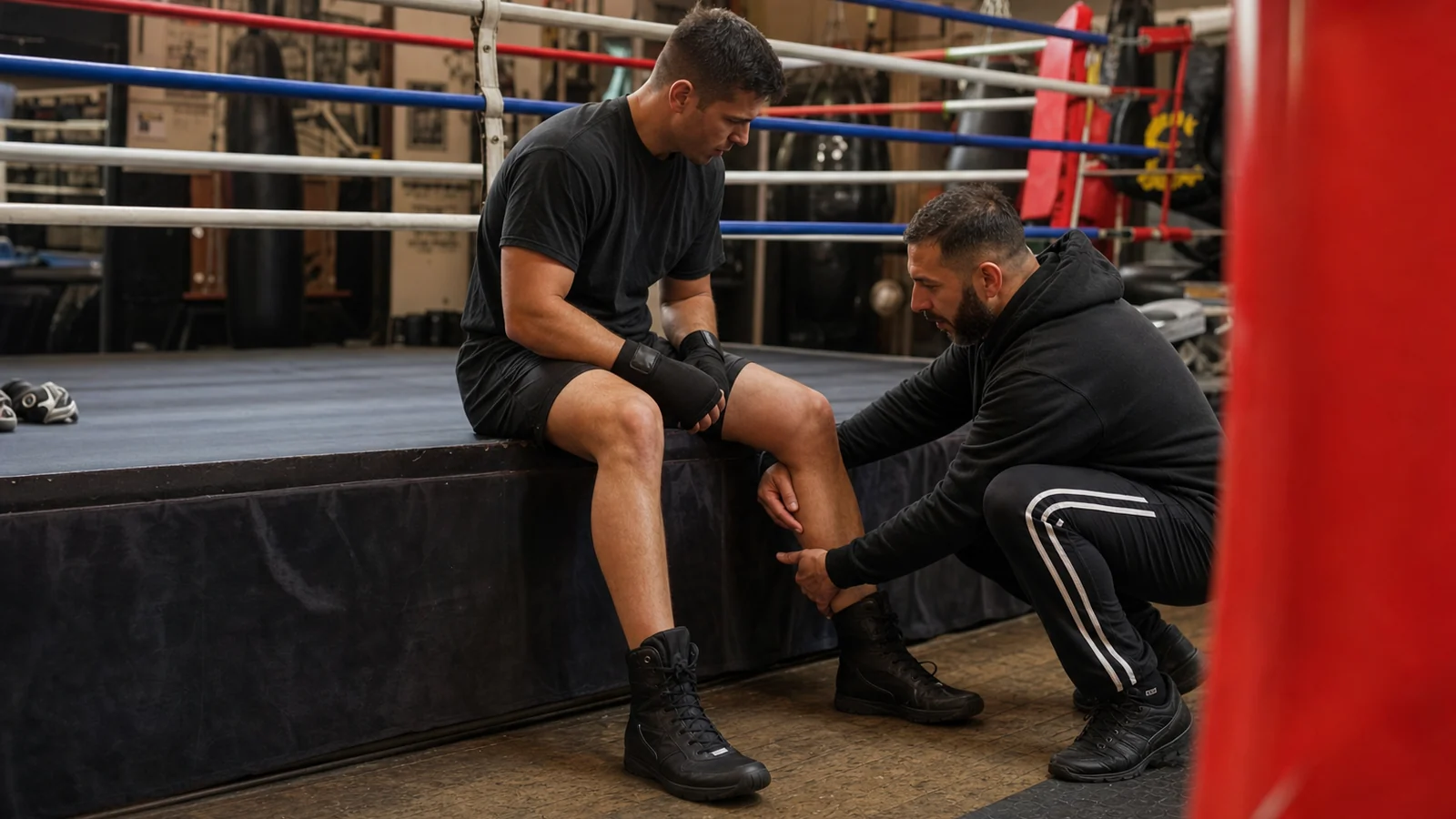
Knee Pain in Boxing: Footwork, Squats, Pivots and Return to Training
A careful boxing guide to knee pain: why stance, pivots, skipping, running and conditioning can overload the knee, NHS-backed warning signs, rehab phases and return to boxing.
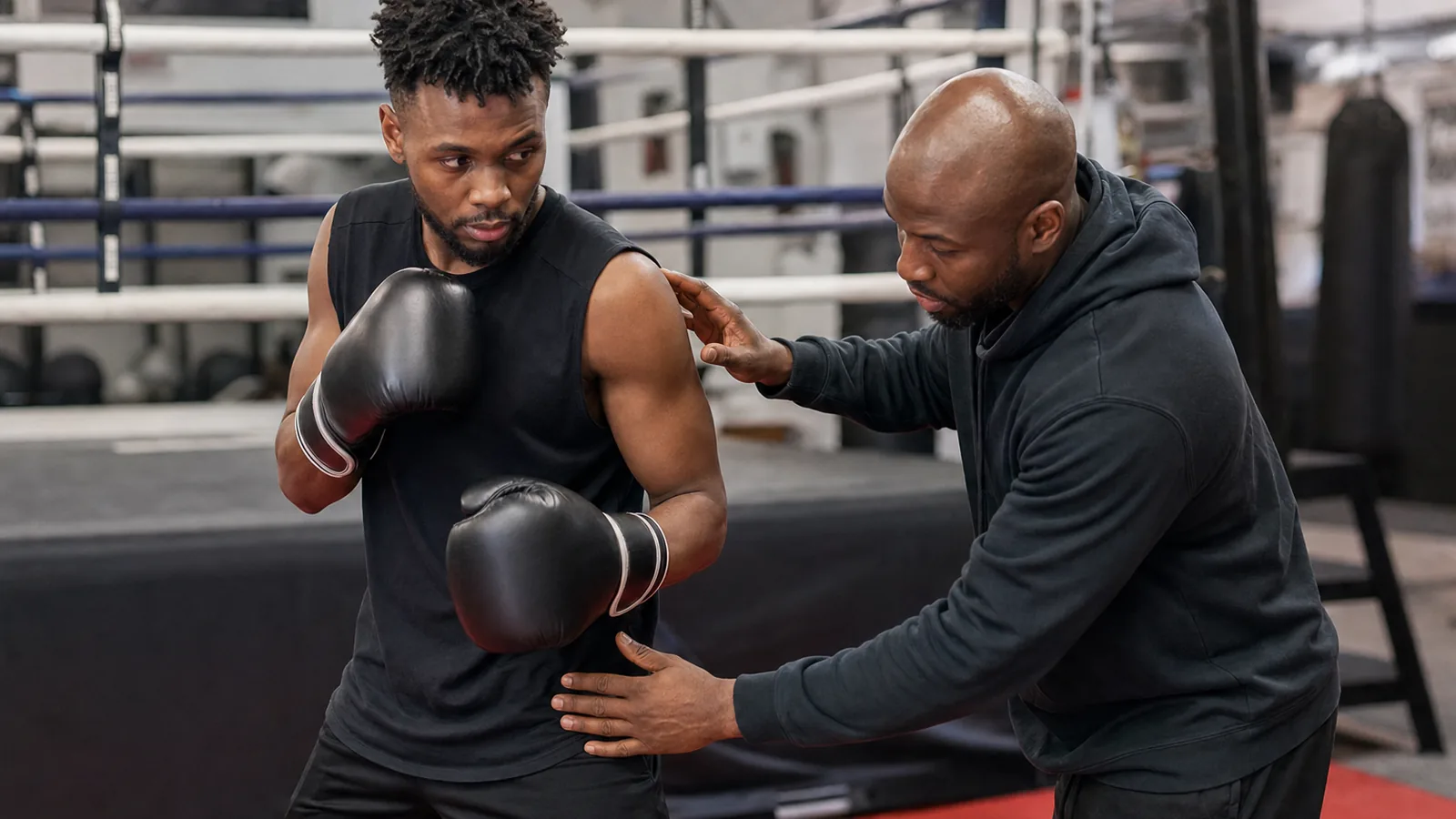
Lower Back Pain in Boxing: Rotation, Bag Work and Return to Training
A careful boxing guide to lower back pain: why rotation, fatigue, hip stiffness and load spikes can irritate the back, NHS red flags, rehab phases and return to boxing.
Was this page helpful?
It takes one tap, and it genuinely helps.
Choose your next step
Turn this article into the right action
Some readers are ready to book. Some need the class route first. Pick the route that matches what you actually want.