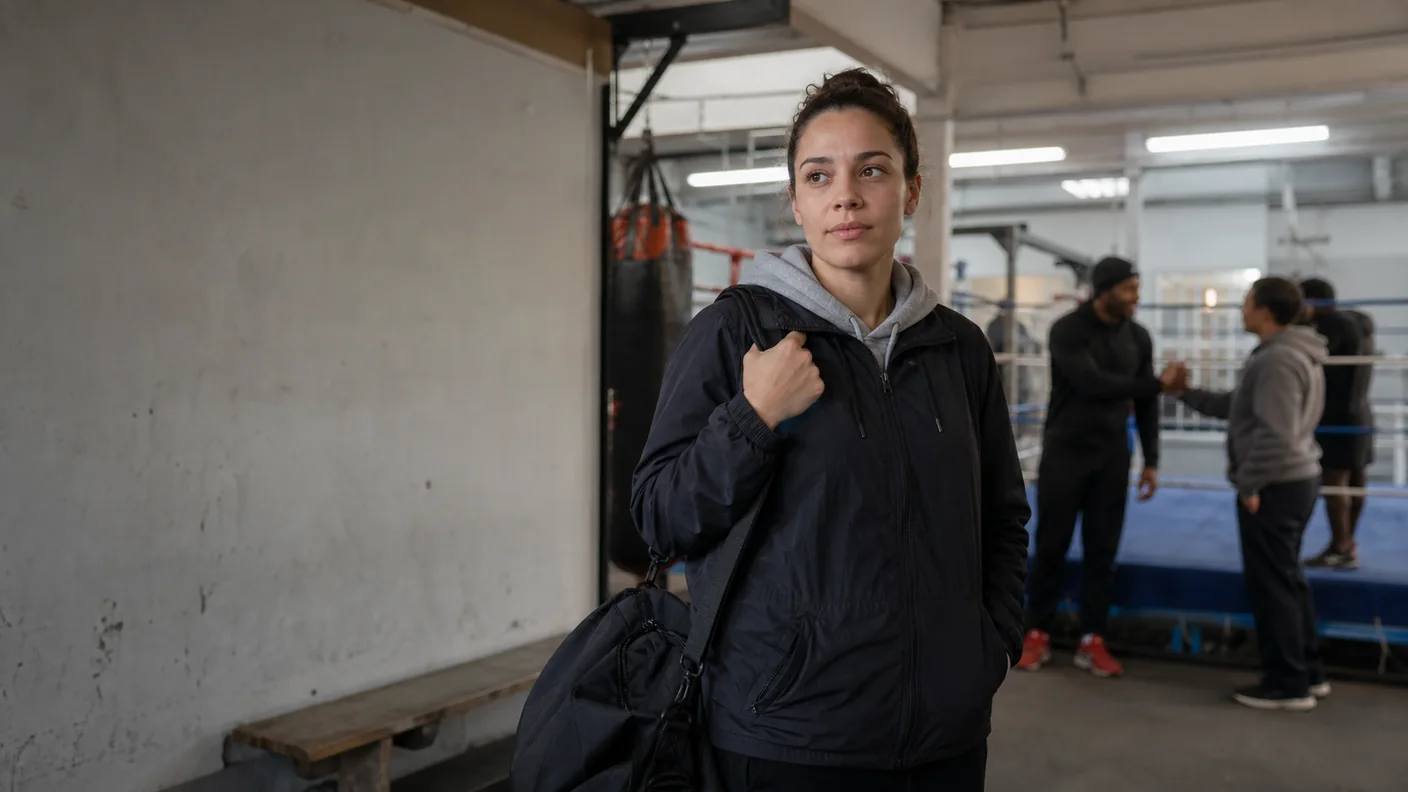
Yes. You can go to a boxing class alone, and for plenty of adults that is exactly how they start.
The thought can still feel bigger than it is. You picture a room full of friends who already know the warm-up, already own the right kit, already have somebody to hold pads with. Then you decide it would be easier to wait until a mate is free.
Do not wait on that. A good beginner class should be able to receive one new person without making it a social test. You arrive, tell the coach it is your first time, get shown where to put your things, and start with the same basic work as everybody else.
England Boxing tells new people to find a local club where they can learn in a safe, controlled setting, whether they want non-contact fitness or a route towards the ring (England Boxing beginner guide). That is the standard worth looking for. You are there to learn, not to arrive with an entourage.
What actually feels awkward about arriving alone
The awkward bit is rarely the training. It is the two minutes before it starts.
You are standing near the door, looking for the person who seems in charge, wondering whether you should stretch, take your coat off, or pretend to be busy on your phone. That is normal. It is also brief if the coach is paying attention.
The useful move is simple: introduce yourself early. Say that you have booked a first session and you have come on your own. You do not need a speech. You do not need to explain why you are nervous.
A coach can then point you towards the changing area, lend you what you need for a trial, explain how the session begins, and pair you appropriately if there is partner work. That is ordinary coaching, not special treatment.
A good first class gives you something to do straight away
The easiest way to feel out of place is to be left standing around while everybody else gets on with it.
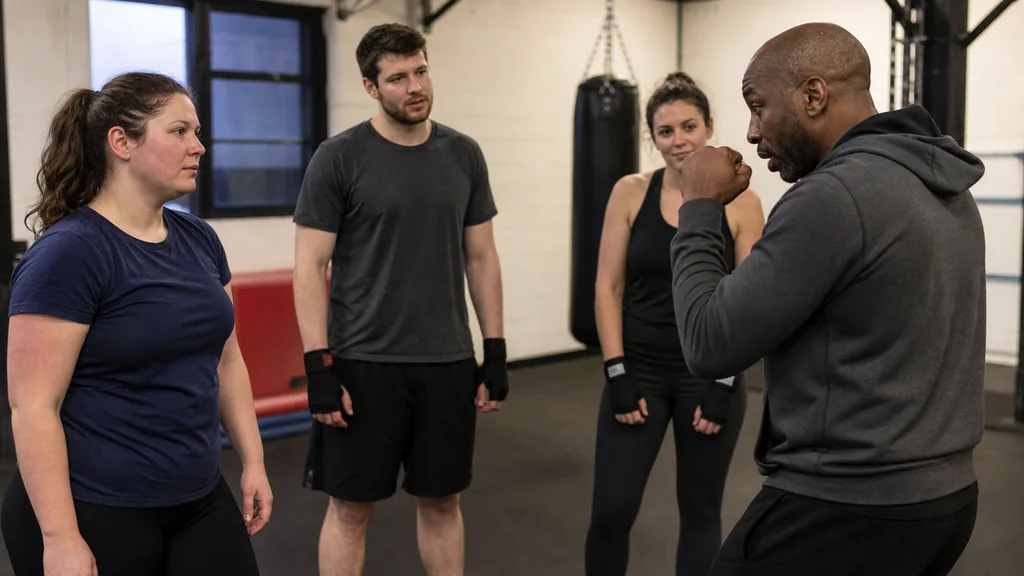
A well-run class avoids that. You should have a clear first job: warm up, learn your stance, practise a basic step, work through a jab or start a simple conditioning block. The work gives you a place in the room before you have learnt anybody's name.
Boxing is useful for people who arrive alone because the session has a structure. You are not expected to make conversation for an hour. You listen, move, try a drill, rest, and repeat. Most talk happens naturally around that work.
If you are deciding between a boxing club and a big general gym, it helps to understand what a boxing club actually offers. In a good class, correction is part of the point. A coach notices whether your feet are crossed, whether your guard is too low, or whether you are trying too hard with the bag. You are not expected to teach yourself in public.
You do not need to bring a training partner
Some boxing drills use pairs. That does not mean you need to arrive as a pair.
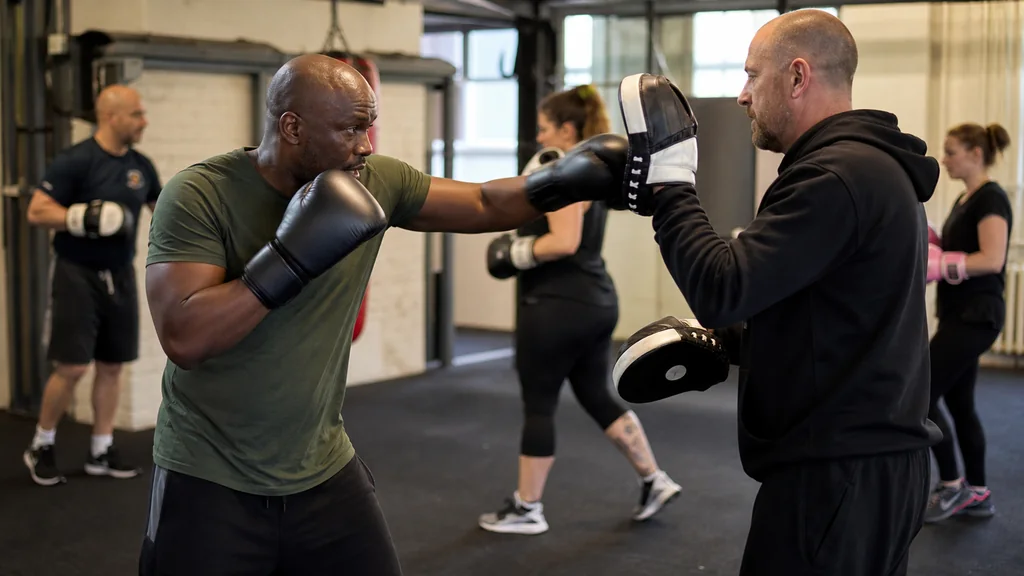
Pads, light partner drills and simple movement work are normally organised by the coach. Sometimes you may work with somebody who has trained for years. Sometimes you will work with another beginner. Neither is a problem if the drill is clear and the coach is watching.
The best first partner is not necessarily the friend who came with you. It is the person who can listen, work at the right pace and help you follow the task. In a normal beginner session, nobody needs to prove anything. You do not need to hit hard, know combinations, or pretend you have watched enough boxing clips to understand the rhythm.
That also means you do not need to spar. Recreational boxing can include footwork, bag rounds, pads, defence drills and conditioning without head contact. If sparring ever becomes something you want to explore, it should be a later conversation with a coach, not a surprise on a first visit.
What to say when you arrive
Being direct makes the start easier. These are useful lines because they give the coach the information that matters:
- "It is my first boxing class and I have come on my own."
- "I have not boxed before, so I may need the basics explained slowly."
- "I am here for fitness and to learn the skill. I am not looking to spar."
- "My wrist, knee or shoulder can be a bit sensitive, so please tell me if I should change a drill."
- "I have brought trainers and water. Do I need anything else today?"
That last question is more useful than guessing. Beginner sessions have different equipment arrangements, and the coach can tell you what is supplied and what is worth buying later. There is no prize for turning up with expensive gloves before you know whether you enjoy the class.
If you are worried about the social rules, our guide to boxing gym etiquette for beginners covers the simple stuff: listen when the round starts, return equipment, respect training partners, and do not try to coach strangers. You will pick up the rest quickly.
The social side comes after the work
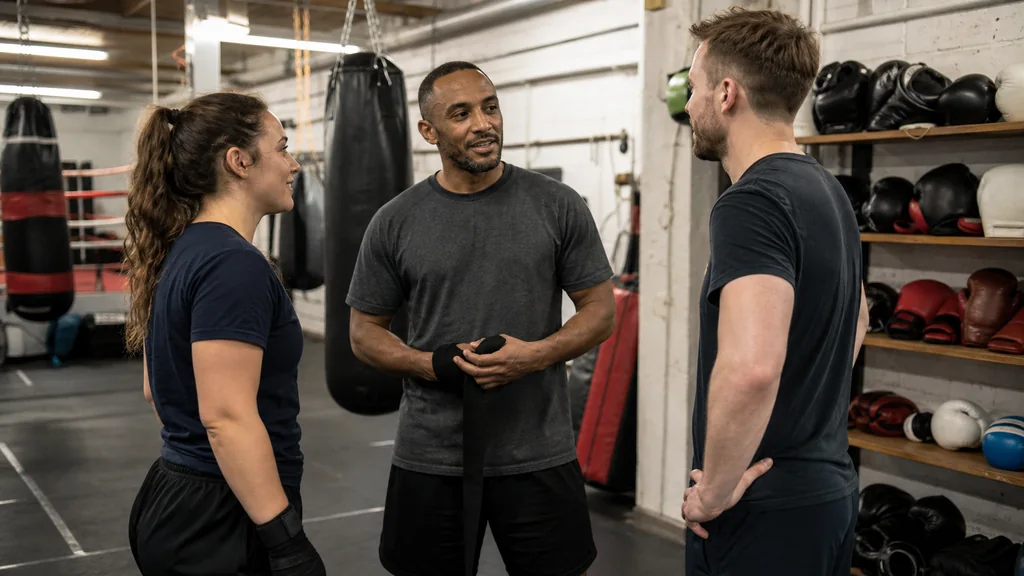
You do not need to walk in and make friends on the first night. Give yourself a smaller target: learn one name, ask one practical question, and say goodbye to the coach before you leave.
That is enough. Return the following week and the room will already feel less anonymous. You will recognise the bags, know where the water is, remember a couple of faces, and have a better idea of which part of the warm-up you find hardest.
Sport England's research on the value of community sport links regular activity with wider health and wellbeing benefits (Sport England social value research). The point for a nervous first-timer is less grand: a regular class gives you a reason to show up somewhere, move properly, and be around people without having to perform socially.
That is why boxing friendships tend to grow through routine. You see the same person struggle with skipping, hold their pads, swap a quick word while wrapping your hands, and notice that they are still turning up three months later. Nobody needs to force it.
When going alone is the better choice
Taking a friend can be helpful, especially if you are both genuinely keen. It can also become a reason neither of you starts.
Going alone has a few advantages:
- you can choose the class time that works for you
- you focus on your own pace instead of comparing every drill
- you are more likely to speak to the coach directly
- you do not have to manage somebody else deciding they are tired or want to leave early
- you build a habit that belongs to you
That last point matters. The NHS recommends adults build regular aerobic activity and muscle-strengthening work into the week (NHS activity guidance for adults). The best activity is not the one that looks good in a plan. It is the one you can keep attending when your friend has a late meeting, a cold, a holiday or a change of mind.
Go because you want to see what boxing feels like. If a friend joins later, good. If they do not, you have not lost the month waiting.
A realistic first-session plan
Make the first visit easy on yourself.
Arrive ten minutes early. Wear comfortable clothes and clean trainers. Bring water. Tell the coach it is your first time. Keep your first goal small: stay for the whole session, listen properly, and leave knowing whether you want to come back.
Do not judge the experience by whether you looked smooth. Nobody looks smooth in a new sport. Boxing asks your feet, hands, shoulders and breathing to work together before your body has learnt the pattern. Feeling clumsy is part of starting, not evidence that you do not belong there.
For adults around Kidbrooke, the Recreational Adults boxing class is built for that first step: coach-led work, proper boxing foundations, and room to learn without needing to arrive with a partner or a fighter's background.
Go alone if that is what gets you through the door. The first class is not an audition. It is one hour to find out whether you like the work.
H&G Team
Writer at Honour & Glory Boxing Club, a community boxing gym in Kidbrooke, South East London.
KEEP READING
Is It Okay to Take Breaks in Boxing Class?
Yes. A short, honest break can keep a beginner boxing session safe, useful and worth coming back to.
What to Expect at Your First Boxing Class
Nervous about your first boxing class? Here is exactly what happens when you walk through those doors, so you can focus on learning instead of worrying.
How to Get Fit Before Your First Boxing Class
People put off trying boxing because they think they need to get fitter first. This is the wrong order of operations. Here is why and what to do instead.
Was this page helpful?
It takes one tap, and it genuinely helps.
Choose your next step
Turn this article into the right action
Some readers are ready to book. Some need the class route first. Pick the route that matches what you actually want.