
A boxing club is usually built around coaching, classes, members and a shared training culture. A boxing gym can mean the same thing, but it can also mean a room with bags, mirrors and equipment where you are mostly left to get on with it. The difference matters if you are new, nervous, short on time, or trying to choose where to train.
The honest answer is not that one is always better. A good boxing club beats a poor boxing gym. A good boxing gym beats a sloppy club. What matters is whether the place gives you coaching, structure and a reason to keep coming back.
England Boxing describes boxing clubs as places with coaches, club standards and pathways for people who want to take part in the sport, from recreational training through to competition (England Boxing). That does not mean every useful boxing session has to be competitive. It means a club should feel like more than rented floor space.
The quick answer
Choose a boxing club if you want coaching, progression and a community. Choose a boxing gym if you mainly want access to equipment, flexible solo sessions, or a fitness-style boxing workout without much interest in the sport itself.
For most beginners, the club route is the safer bet. You need someone to correct your stance, stop you loading every punch through your shoulder, and explain why your feet feel like they belong to someone else. A bag cannot do that.
That is why most new adults at Honour and Glory start in our Adult Recreational boxing class, not in open-ended solo bag work. The class gives you the equipment, the coaching and the pace control in the same hour.
What a boxing club should feel like
A proper boxing club should feel active, coached and purposeful. You should see people warming up, being corrected, holding pads properly, moving around the room and working at different levels without the place becoming chaotic.
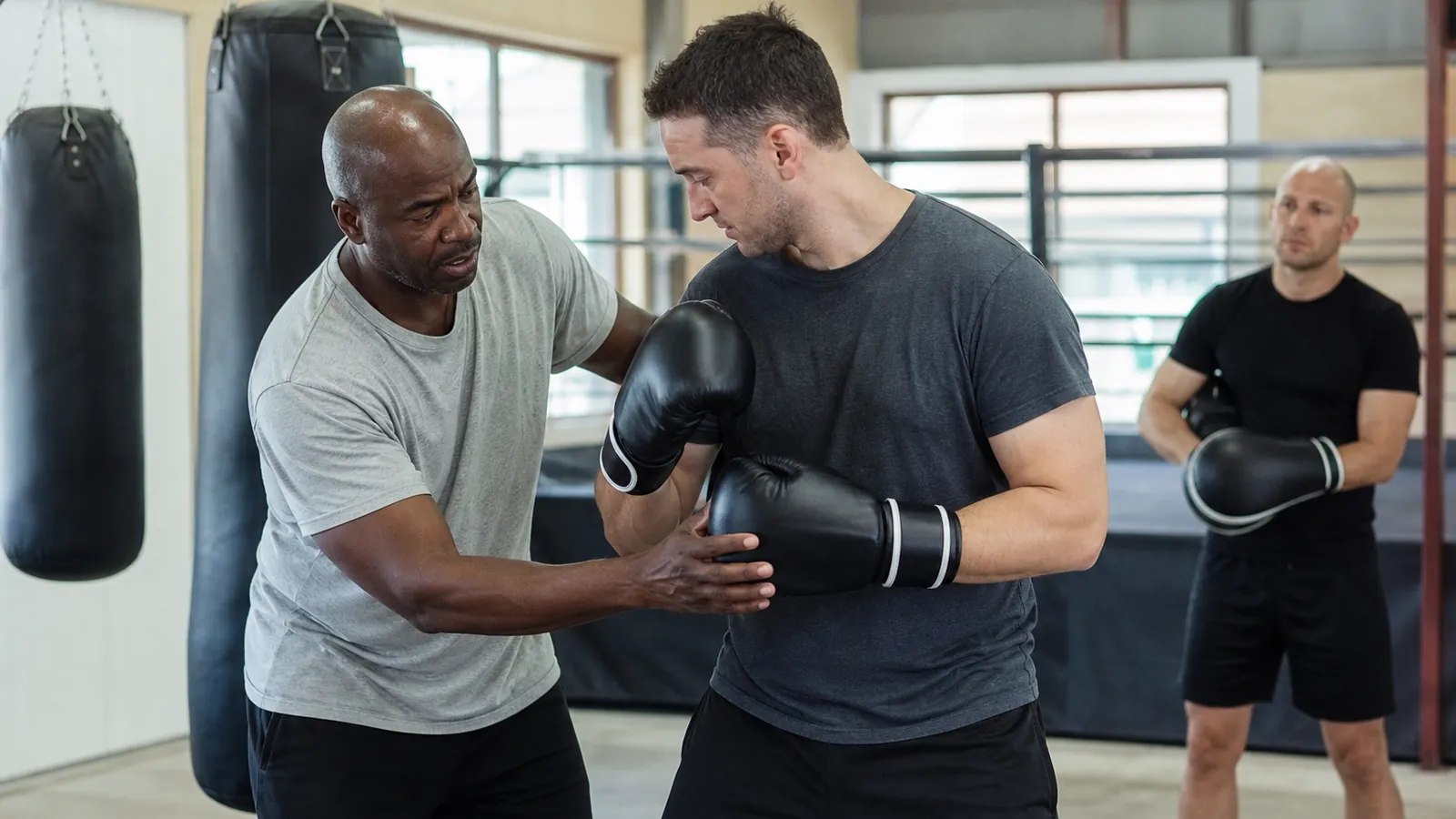
The coach should notice you. Not every second, and not with a speech after every jab, but enough that your mistakes are not allowed to become permanent. If your guard drops, your feet square up, or your shoulders creep to your ears, someone should catch it.
A club should also have a tone. That tone matters. Good boxing clubs are disciplined without being hostile. People work hard, but nobody needs to perform toughness for strangers. Beginners can ask basic questions without being made to feel stupid.

If you want a local example, our Greenwich boxing club page explains how H&G fits the area: close enough for regular training from Greenwich, Blackheath, Kidbrooke and Woolwich, but still club-led rather than faceless gym-floor access.
What a boxing gym usually offers
A boxing gym can be excellent, especially if it has serious coaches and proper class structure. The problem is that the phrase is loose. Some boxing gyms are real clubs in all but name. Others are fitness venues with punch bags, loud music and very little technical correction.
That second version can still be useful. If you want to sweat, hit a bag and build a routine, a fitness boxing gym can do the job. The NHS recommends adults do strengthening activity on at least two days a week and either 150 minutes of moderate activity or 75 minutes of vigorous activity across the week (NHS). A bag circuit can help with that if it gets you training regularly.
The risk is that you mistake exercise for boxing development. You can throw hundreds of punches in a class and still leave with the same technical faults you arrived with. If nobody is teaching you how to stand, breathe, move and recover, you are getting activity rather than coaching.
Coaching is the main difference
The clearest test is simple: who is responsible for your improvement?
In a club, the coach should take some responsibility for the group. They will not turn you into a boxer in one session, but they should give you a route: stance first, then guard, then basic punches, then footwork, then pad work, then controlled pressure if and when it is suitable.
In a gym-only setup, the responsibility often sits almost entirely with you. You pick the bag, pick the drill, decide when to stop, and hope your form is close enough. That can work for experienced boxers. It is a poor plan for someone who has never been taught how to punch without hurting their wrists or elbows.
This is why our guide to what to expect at your first boxing class focuses so much on being corrected. Correction is not criticism. It is the product you are paying for.
The UK Chief Medical Officers put strength work, balance and aerobic activity together in their adult activity guidance, which is a useful reminder that fitness is not only about burning calories (GOV.UK). Boxing training can cover a lot of that ground, but only when it is coached well enough to build movement rather than just fatigue.
Beginners should look for structure, not hype
If you are new, do not judge the place by who looks the hardest. Judge it by how beginners are treated.
A good beginner session has clear starts and stops. You know what the drill is, who you are working with, how hard to go, and what the coach wants to see. The room may be noisy, but the instructions should not be vague.
Look for these signs:
- Warm-ups that prepare you for boxing rather than random punishment
- Coaches correcting stance, guard and footwork early
- Pad holders being taught how to hold pads safely
- Beginners being scaled, not shamed
- Clear separation between recreational training and competitive sparring
- Equipment advice that is practical rather than sales-led
If the first answer to every beginner question is "just hit harder", leave. That is not coaching. That is noise.
Our longer guide to the best boxing gyms in London uses the same logic. The best place is not always the flashiest. It is the place that fits your goal and keeps the standard high.
Cost is only useful when you compare what is included
A cheap boxing gym can be expensive if you learn nothing. A slightly dearer club can be better value if the coaching keeps you training safely and consistently.
Ask what the price actually includes. Is it a coached class, open gym access, personal feedback, equipment borrowing, competition pathway, or just a slot on the floor? Is there a joining fee? Are you locked into a contract? Can you try the place before committing?
At Honour and Glory, our normal group sessions sit in the £5-£10 range with no joining fee and no long contract. That makes the decision simpler. You can try the club, feel the room and decide whether the coaching style suits you.
Which should you choose?
Choose a boxing club if you want to learn the sport properly, even if your goal is fitness rather than competition. Choose a boxing gym if your main need is equipment access or a high-energy workout and you are comfortable with less individual correction.
For a complete beginner, I would usually start with a club. You can always add solo bag work later. The first job is to learn how to move, punch and recover without building bad habits.
For someone with experience, the answer can change. If you already know how to train, an open gym can be useful. If you want sharper pad work, better footwork, sparring suitability checks, or a route into amateur boxing, a club makes more sense.

The H&G view
A boxing place should make you better, not just tired. Tired is easy. Better takes coaching.
That is the difference we care about at Honour and Glory. You can come for fitness, confidence, stress relief, or because you are sick of training alone. You do not have to want to fight. But if you are going to put the gloves on, you deserve to be taught properly.
If you are choosing between a boxing club and a boxing gym near South East London, try the room before you decide. Pay attention to the coach, the tone and how beginners are handled. The right place will make the hard work feel clear.
H&G Team
Writer at Honour & Glory Boxing Club, a community boxing gym in Kidbrooke, South East London.
KEEP READING

Boxing vs Gym: The True Cost Over a Year
The true cost of boxing vs a conventional gym membership when you include all factors: sessions, kit, travel, and what you actually get for the money.

Boxing vs Hyrox: Which Suits You?
Comparing boxing and Hyrox training. Find out which fitness programme delivers better cardio, strength, and overall conditioning for your goals.

Boxing vs Barry's Bootcamp: Cost, Results and Value
Barry's Bootcamp is the premium end of the fitness class market. Boxing is older and cheaper. Here is the honest comparison of what each delivers.
Was this page helpful?
It takes one tap, and it genuinely helps.
Choose your next step
Turn this article into the right action
Some readers are ready to book. Some need the class route first. Pick the route that matches what you actually want.