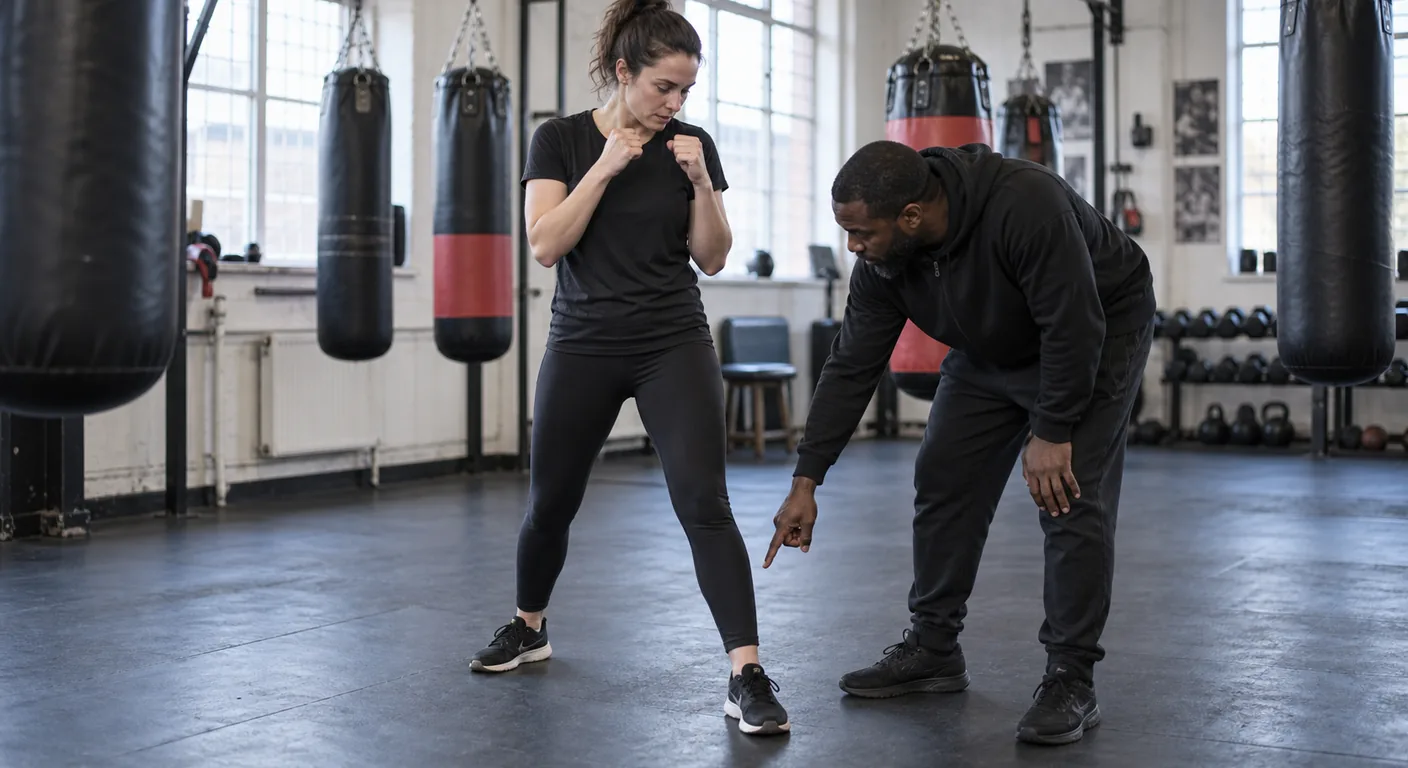
No. You do not need to be aggressive to start boxing.
You need enough curiosity to come through the door, enough patience to listen when a coach corrects you, and enough honesty to work at a pace you can control. The loudest person in a boxing gym is not automatically the best boxer. Very often, the person who improves quickest is calm, observant and willing to repeat a basic drill without trying to turn it into a fight.
A lot of adults avoid boxing because they think the sport belongs to naturally confrontational people. They see professional fight promotion, hard sparring clips and people shouting over pads, then assume they would have to become someone else to fit in. That is not what a good beginner class asks of you.
Boxing asks for control, not a performance
Good boxing is not a licence to lose your temper. It is a way of learning what to do with your body when the pace rises.
A beginner learns to stand without crossing their feet, keep their hands in a useful position, breathe when they punch and stop when the round ends. Those are controlled actions. Throwing wild punches because you feel awkward is not bravery. It is usually the quickest way to tire yourself out and make the coach step in.
England Boxing tells beginners to look for a club that can teach the basics in a safe, controlled setting, whether the aim is non-contact fitness or eventually stepping into the ring (England Boxing beginner guide). That distinction matters. A recreational class should be a place to learn the skill, not a test of who can look toughest.
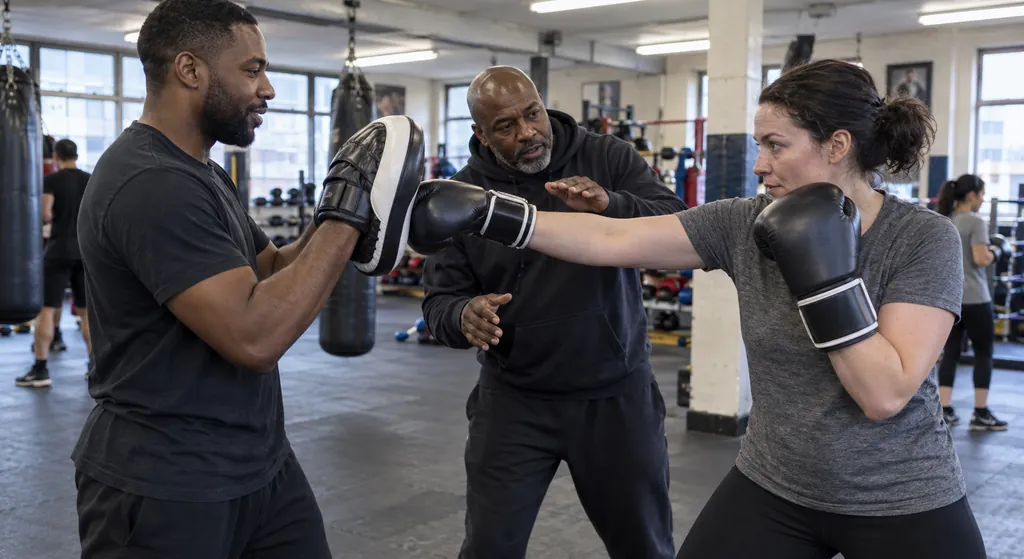
Being calm gives you useful information. You can hear the correction about your feet. You can feel when your shoulders rise. You can notice that you are holding your breath. If you are trying to win every second, you miss all of that.
The coachable person has an advantage. They do not have to pretend that the first jab is good. They can throw it slowly, take the correction and throw the next one better. That is how boxing starts to look like boxing.
Quiet people often settle into boxing well
A quiet personality is not a weakness in a gym. It can make you easier to coach.
Some people arrive with plenty of energy but no brakes. They hit hard before they can aim, rush their partner, and treat every bag round as proof that they are serious. The work looks busy, but it does not build much. Boxing is full of people who had to learn that effort and control are not the same thing.
Someone more reserved may take longer to relax in a new room, but they often watch closely. They ask a practical question. They notice how an experienced member wraps their hands or waits for the coach to set the drill. Once they understand the rhythm, they can make steady progress without needing an audience.
That does not mean you must be silent or timid. Boxing rooms should have energy. You will hear pads, bags, skipping ropes and people encouraging each other. The point is that you do not have to copy anybody else's volume. You only need to work safely and take the task seriously.
If arriving in a room full of strangers is the worry, read our guide to going to a boxing class alone. It explains the first few awkward minutes without pretending they do not exist.
You do not need to spar to learn boxing
For many nervous beginners, the word aggression is really standing in for a different fear: getting hit.
You do not need to spar in a first class, and you do not need to spar to get a strong workout or learn useful boxing skills. Stance, footwork, pad work, bags, defensive movement and conditioning all have a place before controlled sparring is even a conversation.
That matters because sparring is not a personality test. It is a specific training activity that needs the right coaching, matching, equipment and consent. Nobody becomes more credible by being thrown into a hard round before they have the basics.
England Boxing's coaching handbook says activity should suit a participant's age, physical and emotional maturity, experience and ability (England Boxing coaching handbook). That is good coaching in plain English. A beginner who wants non-contact training should get non-contact training. A person who later wants to explore sparring should do it in stages, with a coach who knows where they are in their development.
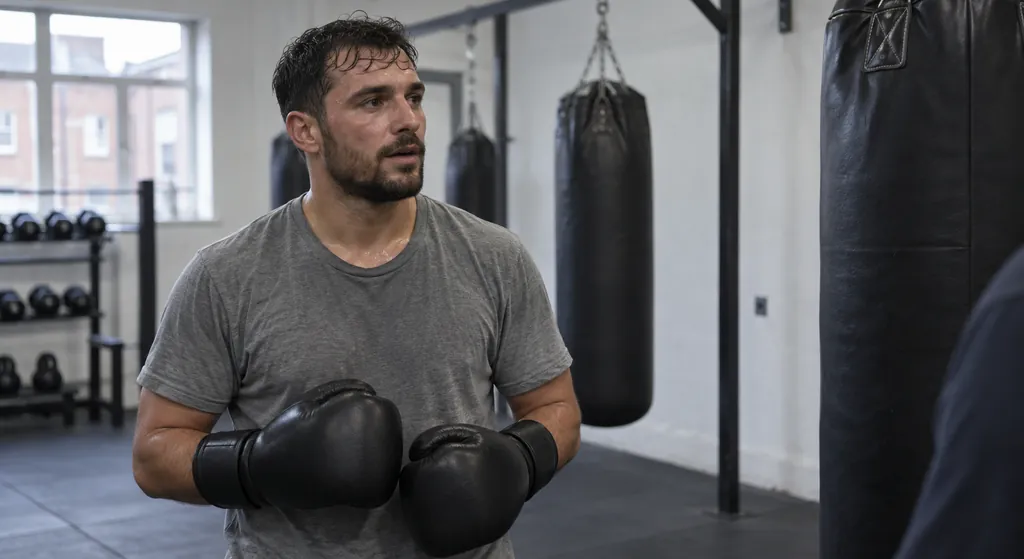
A controlled person is usually a safer partner. They can touch a target without swinging at it. They can stop when asked. They can match the drill rather than trying to make it harder for somebody else. Those are proper boxing qualities, and they matter more than acting fearless.
Confidence comes from evidence
You do not need to arrive confident either. Confidence is usually the result of doing a few difficult things properly, then realising you can do them again.
The first proof might be small: finishing a round without panicking, remembering a three-punch combination, or coming back after a session that made your legs ache. A few weeks later, you can see the jab land cleaner and the guard return without being reminded. That is more solid than telling yourself you are tough.
The NHS notes that being physically active can support self-esteem and gives people a chance to set challenges and achieve them (NHS five steps to mental wellbeing). Boxing has a useful version of that process because the targets are visible. You cannot fake a better stance or a more relaxed breathing pattern. You practise, get corrected and feel the difference.
There is a careful line here. Boxing is not therapy and it does not fix every confidence problem. It can, however, give you a regular setting where effort has a direct result. You become less startled by hard work. You learn that looking inexperienced for an hour is survivable. You get better at taking feedback without taking it personally.
That is a calmer kind of confidence than aggression. It tends to last longer too.
What a good beginner class should feel like
A beginner class should have standards, but it should not make you feel hunted.
You should expect to work. You may be out of breath. You may find the coordination frustrating at first. You may need to ask what a jab-cross means more than once. None of that is evidence that you are in the wrong place.
You should not expect to be shouted at for being new, pressured into sparring, left with a partner who ignores the drill, or made to prove how hard you can hit. Those are not signs of serious boxing. They are signs that somebody has confused pressure with coaching.
At Honour and Glory, the Recreational Adults boxing class is for people who want to learn without pretending they are already fighters. If you are coming from Greenwich, Kidbrooke or nearby, start by telling the coach what you want from the session. Fitness, technique, stress relief and a new challenge are all sensible answers.
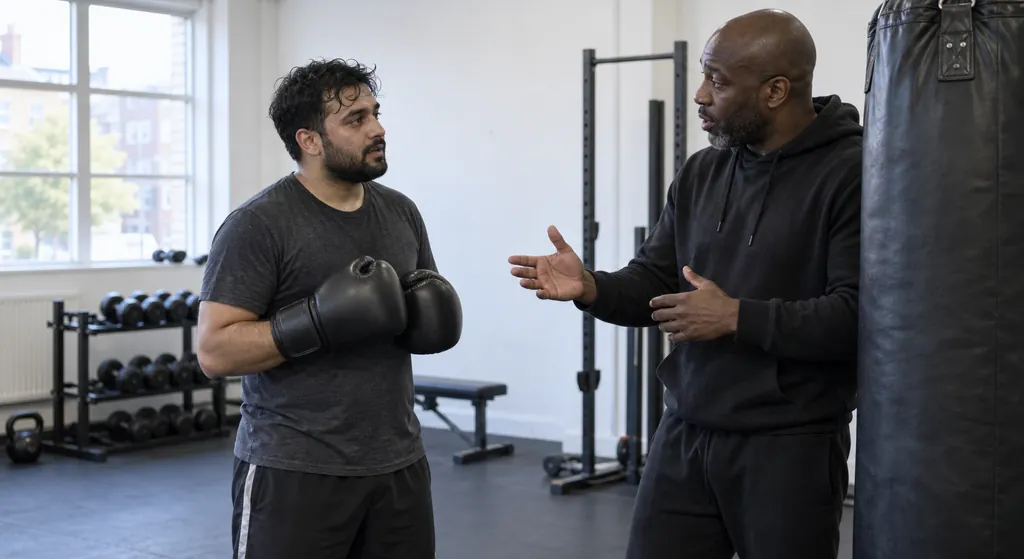
The useful goal for a first session is not to become aggressive. It is to leave having learned one thing, worked honestly and decided whether you want to return.
You do not need a fighter's personality to start boxing. You need a willingness to learn the sport as it is actually taught: with control, respect and plenty of repetition.
H&G Team
Writer at Honour & Glory Boxing Club, a community boxing gym in Kidbrooke, South East London.
KEEP READING
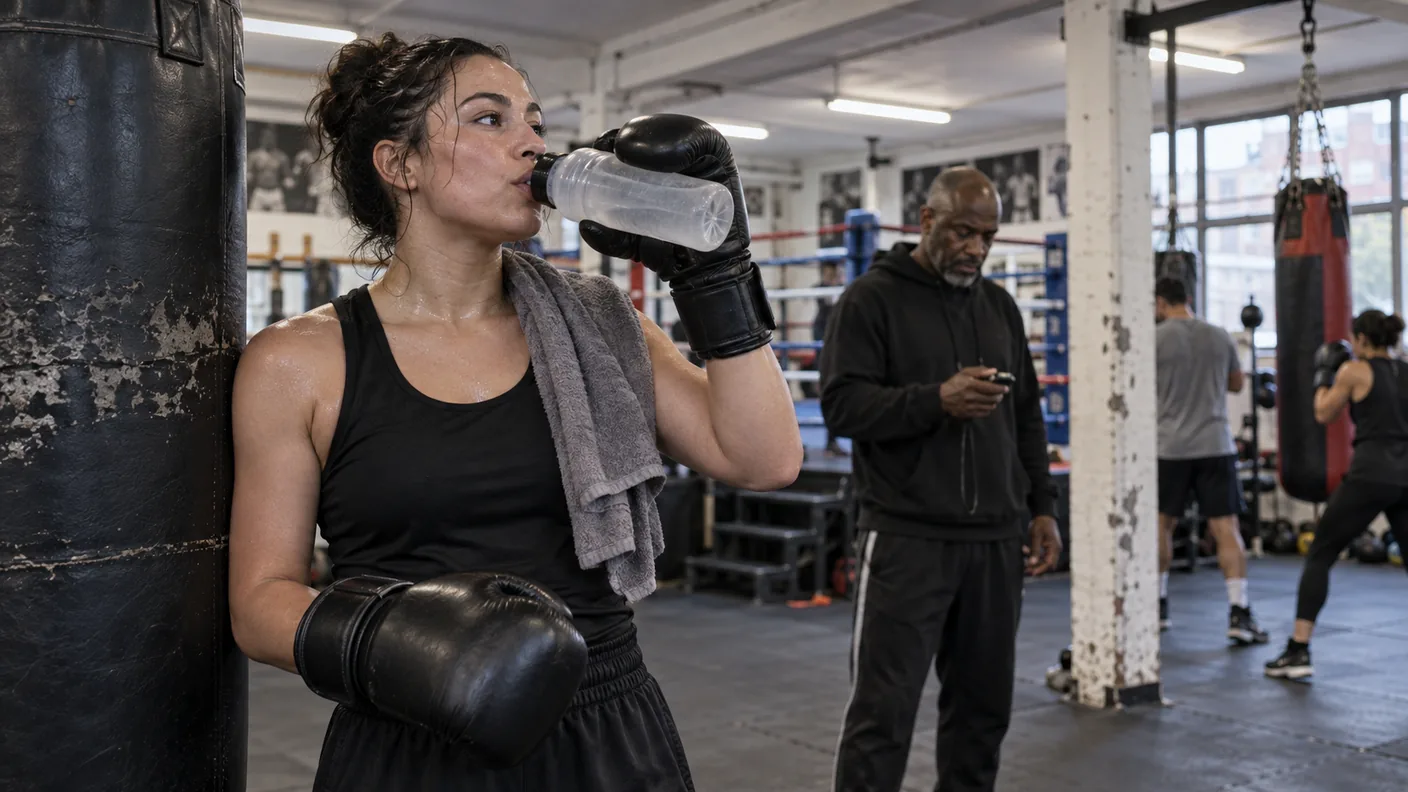
Is It Okay to Take Breaks in Boxing Class?
Yes. A short, honest break can keep a beginner boxing session safe, useful and worth coming back to.
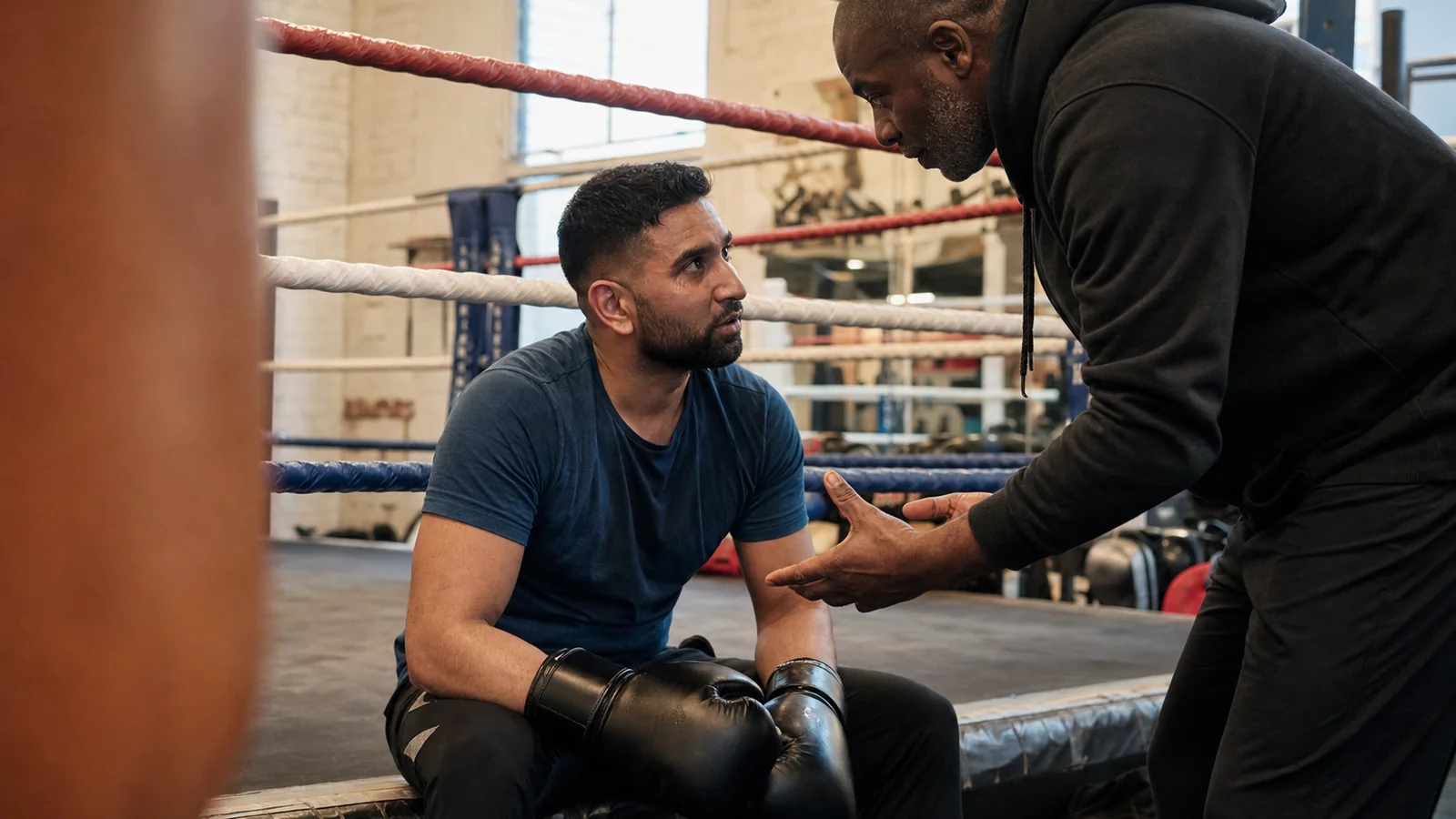
Boxing Lessons Beginners Learn the Hard Way
Most beginners chase power, big combinations and toughness. Better boxing usually comes from calmer breathing, cleaner feet, a sharper jab and fewer thoughts at once.

Can You Go to a Boxing Class Alone?
Yes. Going to boxing alone is normal. Here is how a good first class should help you settle in, train properly and come back.
Was this page helpful?
It takes one tap, and it genuinely helps.
Choose your next step
Turn this article into the right action
Some readers are ready to book. Some need the class route first. Pick the route that matches what you actually want.