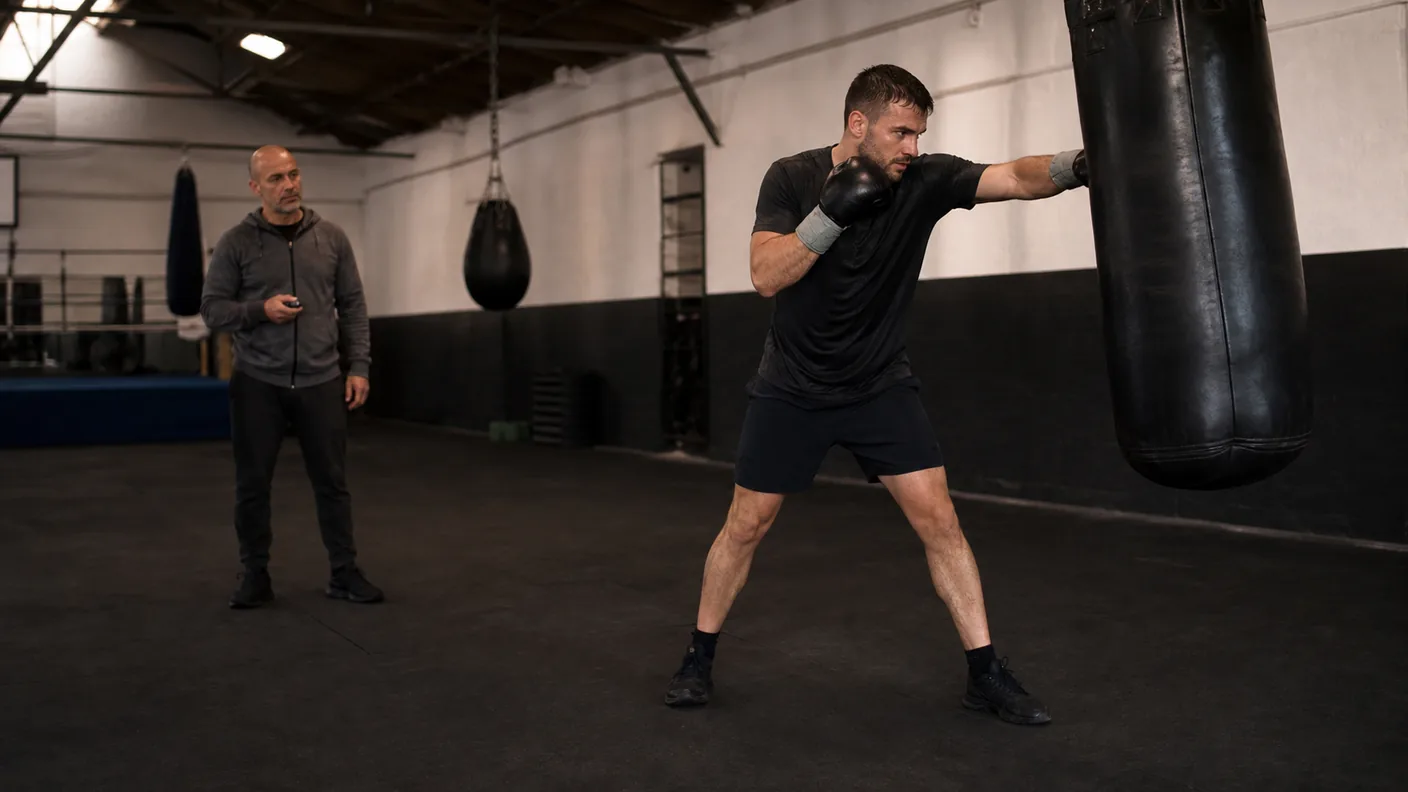
A beginner boxing round should last long enough to teach one useful thing, not so long that your stance, breathing and punch choice disappear. For many new boxers, that means starting at one minute or 90 seconds, not copying a three-minute professional round because it looks more serious.
Three minutes is a format, not a badge of honour. The British Boxing Board of Control uses three-minute rounds with one-minute intervals for professional contests (BBBofC rules). That does not make three minutes the automatic answer for a first bag round, a new pad drill or somebody returning to exercise after time away.
The better question is simple: can you still do the job at the bell? If you can keep your stance, breathe, hit the target cleanly and listen to a cue, the round is useful. If you are windmilling, staring at the floor and trying to survive the last 30 seconds, the timer is winning the session.
Start with the job, then choose the clock
A round for learning a jab is not the same as a round for hard conditioning. A round for first-time pad work is not the same as a round for an experienced boxer preparing to compete. The clock should serve the task.
For a complete beginner, one minute can be plenty when the task is specific. Try a steady stance, one clean jab, bring the hand home and take a small step out. That is already a lot to organise. If the first minute stays calm, add another. If the technique goes loose after 35 seconds, the answer is not to shout louder. Shorten the work, reset and give the next round one clear purpose.
This is not taking it easy. It is using effort properly. A short round with good foot position, clean punches and enough attention to take feedback teaches more than three minutes of random punches. Our guide to technical boxing rounds with one clear job explains why a narrow target usually produces better learning than trying to do everything at once.
One minute is a real round
Some people hear "one-minute rounds" and think they are being treated like a child. They are confusing duration with difficulty.
A minute of sharp jab-and-step work can be hard. A minute of controlled footwork around a bag can expose every bad habit in your stance. A minute where you have to breathe on each punch and bring the guard home can feel much longer than it sounds.
The difference is that a short round gives you a clean review point. You can ask: did I keep my eyes up? Did my rear hand come back? Did my feet cross? Could I have repeated the same work for another minute without losing shape? Those are useful answers. A round that finishes in a blur gives you almost none.
A beginner-friendly routine from the Cleveland Clinic makes the same practical point from a fitness angle: begin at a manageable level, then progress the round length as coordination and conditioning improve (beginner boxing workout advice). The clock can grow. It does not need to win on day one.
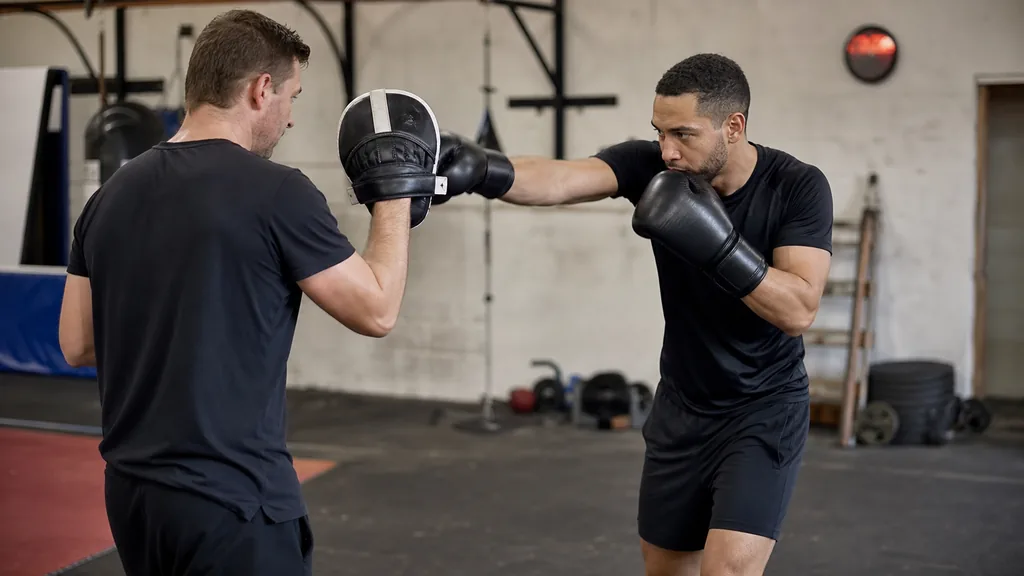
A simple progression for new boxers
There is no universal timetable because people arrive with different fitness, experience and confidence. Still, this is a sensible way to build useful rounds without rushing the process.
First sessions: three one-minute rounds
Use the first round for stance and movement. Use the second for a jab or jab-cross. Use the third for light bag work or simple pads. Take a proper rest between them. The goal is to finish each minute looking like you could start the next one, not to prove that you can empty the tank.
If you need a breather during the round, take it. Make it deliberate. Reset the stance, lower the shoulders, breathe, then start again with the same task. That is more honest than throwing untidy punches while pretending the round is fine.
When one minute feels calm: three 90-second rounds
Ninety seconds is a useful middle step. It is long enough for the legs and shoulders to start talking back, but short enough that a coach can still see the original lesson.
Keep the task simple. Do not turn a longer round into permission for six-punch combinations. A good 90-second round might be jab, cross, step out, reset. Or it might be three slow punches on the bag, move around it, then repeat. You are building repeatable shape, not collecting noise.
Later: two-minute rounds with a clear target
Two-minute rounds make sense once you can keep your posture and attention while tired. They work well for pads, bag rounds, skipping and basic conditioning. The key is that the round still has a purpose.
If the aim is defence, do not decide halfway through that it has become a power round. If the aim is footwork, do not stop moving to hammer the bag. A timer can tempt people to chase effort for its own sake. Good boxing makes you choose what the round is for.
If your breathing is the first thing to fall apart, read how to breathe properly in boxing. The solution is often less dramatic than another fitness circuit. Relax the shoulders, breathe during the punch and recover between exchanges.
Rest is part of the round
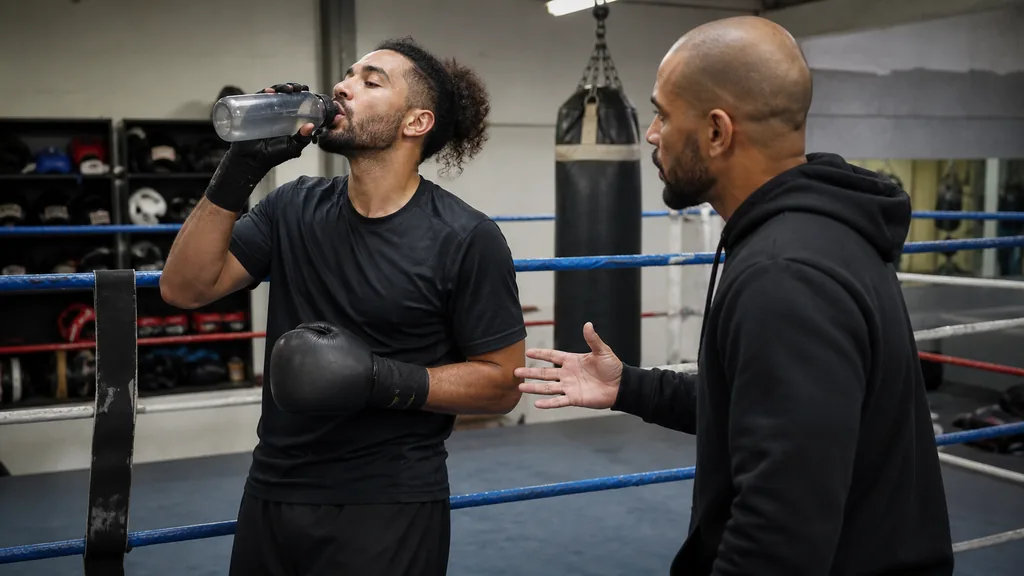
Beginners often treat the rest minute as dead time. It is not. It is where you learn whether the round was the right level.
Use the first few seconds to settle your breath. Take water if you need it. Then listen for one piece of feedback. Maybe the coach wants the rear hand higher. Maybe the feet are too square. Maybe you are rushing the last punch because you are tired. Take one correction into the next round rather than carrying five vague thoughts back to the bag.
The rest also stops the session becoming a toughness contest. You do not get extra points for starting the next round dizzy, panicked or unable to make a fist properly. Tell the coach if you feel unwell, have unusual pain or need the work changed. A good training session has room for that conversation.
When three-minute rounds become useful
Three-minute rounds are useful when your basics stay available under fatigue. That does not mean they have to look perfect. It means you can still stand properly, see the target, breathe, hear a cue and make a sensible choice when the final minute gets uncomfortable.
That could happen after a few weeks for one person and take longer for another. It is not a test you pass because the calendar says so. Fitness matters, but efficient boxing matters too. A runner can still gas out if they tense every shoulder muscle and throw every punch as hard as possible. Our article on why beginners gas out in boxing explains why that happens.
For people moving towards contact or competition, the stakes rise further. England Boxing's 2026 rule update requires a full medical before a first sparring session and a minimum of 30 days of safe sparring before a first bout (England Boxing's 2026 rule update). That is not a timer prescription for every gym, but it makes the right point: progress in boxing is built through controlled stages, not by treating a hard three-minute round as proof that someone is ready for everything else.
The practical answer
Start with one-minute rounds when you are new, especially for technical work. Move to 90 seconds when you can stay organised. Use two minutes when the skill survives the added fatigue. Build towards three minutes when the round stays recognisably boxing rather than turning into a scramble.
If you are in Kidbrooke, Greenwich or nearby, our Adult Recreational boxing classes give beginners a coached place to build rounds at a sensible pace. You do not need to arrive able to last three minutes. You need to arrive willing to learn what makes the minute useful.
H&G Team
Writer at Honour & Glory Boxing Club, a community boxing gym in Kidbrooke, South East London.
KEEP READING
How to Use an Open Boxing Session Well
A simple plan for using open boxing sessions to improve one useful skill instead of drifting through bags, pads and conditioning.
How Long Does It Take to Get Good at Boxing?
How long to learn boxing? Here is an honest timeline from complete beginner to confident boxer, based on real training experience.
Is It Okay to Take Breaks in Boxing Class?
Yes. A short, honest break can keep a beginner boxing session safe, useful and worth coming back to.
Was this page helpful?
It takes one tap, and it genuinely helps.
Choose your next step
Turn this article into the right action
Some readers are ready to book. Some need the class route first. Pick the route that matches what you actually want.