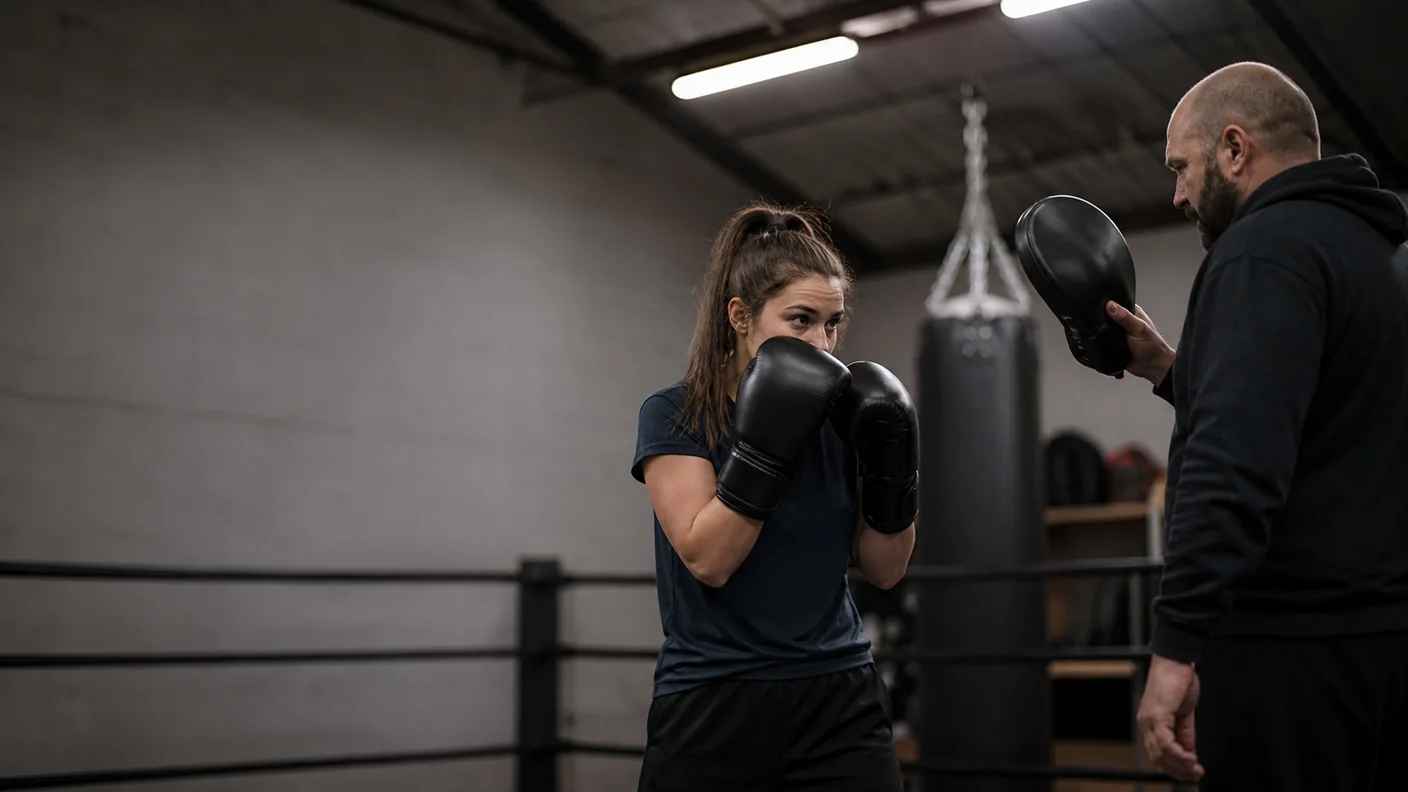
A technical boxing round should have one job.
That sounds almost too simple. Then the bell goes, someone starts throwing jab-cross-hook, slipping, rolling, circling, changing stance and trying to look quick. Three minutes later they are tired, pleased with the effort and no clearer about whether their jab came back to guard or their feet stayed underneath them.
Busy is not the same as useful.
The short demonstration below makes the point well: basic movements need repeated attention before you pile on the clever parts. That does not mean hitting the same pattern mindlessly for an hour. It means choosing one part of your boxing that is worth improving, then making each rep honest enough to teach you something.
What makes a round technical
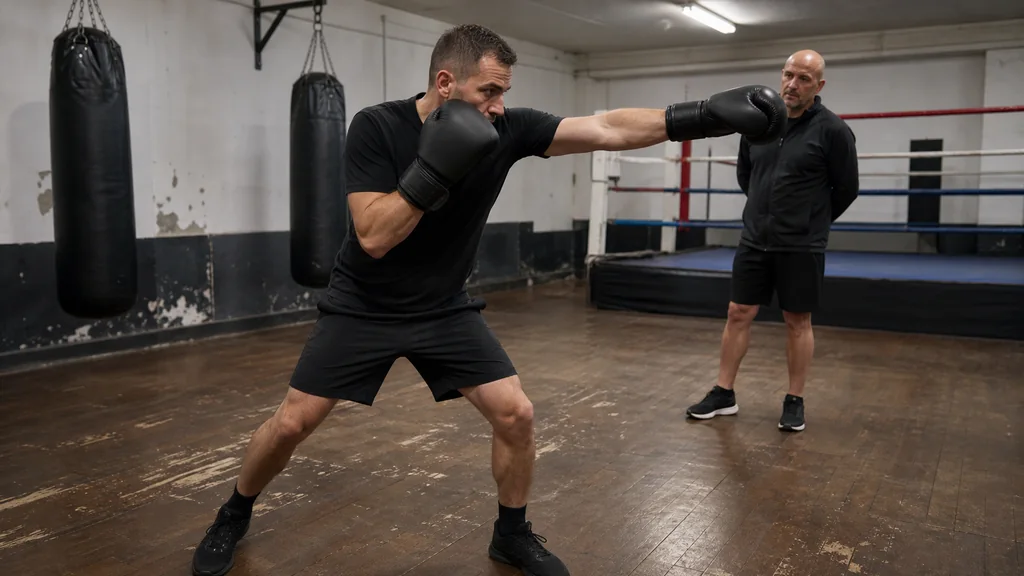
A technical round has a narrow target. You are not trying to win the round, empty the tank or imitate a highlights reel. You are trying to make one action cleaner and more repeatable.
That action might be a jab returning to the cheek. It might be keeping the rear hand home during the cross. It might be stepping out after every combination. It might be a compact roll with the eyes up. The point is that you can tell, rep by rep, whether you actually did it.
A useful round has three parts:
- One clear action to practise.
- One condition that keeps it honest.
- One reset when the shape goes wrong.
For example, a jab round could be: jab only, rear glove stays at the cheek, and every reach means you step back into range before the next rep. That is enough. You do not need six more punches to make it serious.
Pick a job that exposes a real mistake
The best technical job is usually the mistake your coach keeps seeing.
If you drop the rear hand on every jab, do not spend the round adding double jabs and pivots. Throw a single jab, return it, and check the rear hand. If you finish combinations square, do not add a fourth punch. Use jab-cross, then one step out. If you pull your head forward to reach the bag, work only at a distance where the jab can land without your chin travelling first.
This is not a soft option. It is a more demanding kind of honesty. A heavy bag will let you hide a poor return, a long reach or a lazy exit because it does not answer back. A narrow rule makes the mistake visible.
A review of motor skill learning describes acquisition, consolidation and retention as different parts of learning a movement. In gym language, you need a clear version of the movement before you can expect it to hold when the pace rises. Repeating a mistake faster does not move you through those stages.
Start with a clean version, then make it harder
There is a right order for a technical round.
First, make the action clean in the easiest setting. That might be shadow boxing in front of a mirror, a coach holding one mitt, or a bag round at half pace. Keep the target and rhythm predictable. You are looking for the shape, not trying to prove you can do it under stress on the first rep.
Then add one difficulty at a time. A jab round can become jab-and-step. Then jab after a feint. Then jab while a pad holder changes the distance. Then jab after a small defensive movement. The basic job stays the same, but the setting asks more of it.
That progression matters. A systematic review and meta-analysis of contextual interference found that more varied practice can help retention, although the study authors also note that applied sport evidence is less tidy than laboratory research. The practical coaching answer is sensible: begin with enough repetition to learn the shape, then change the picture before the habit becomes useful only on one bag, in one corner, at one speed.
Four technical rounds that earn their place
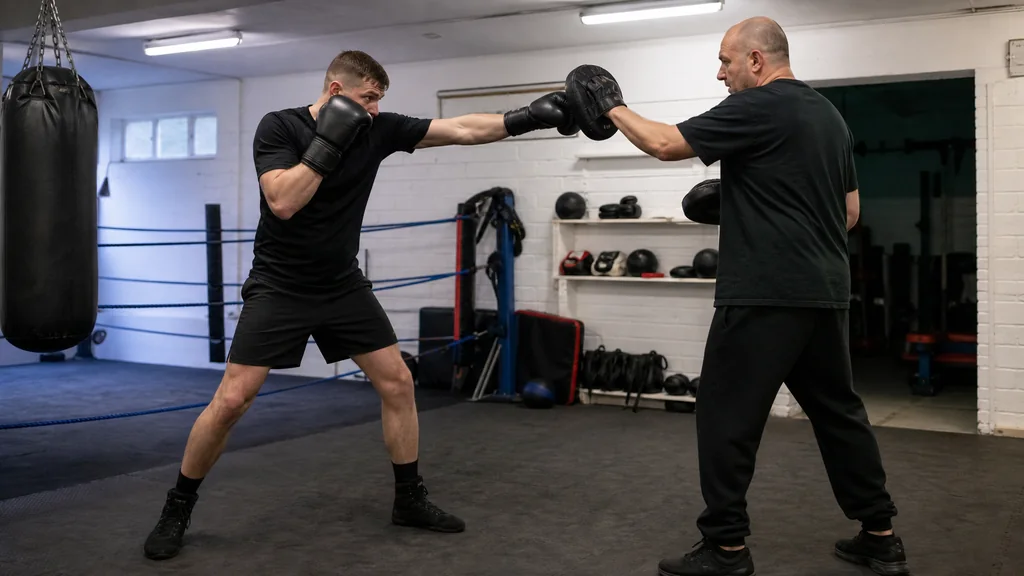
Here are four rounds that work because each has one clear purpose.
1. Jab home round
Throw single jabs at 50 to 60 percent. The only rule is that the rear glove remains at the cheek and the jab returns along its own line.
Use a mirror, bag or one mitt. Freeze after every fifth jab. If the rear hand has drifted, slow down. If your shoulder rises before the hand moves, reset. Our guide to throwing a jab without giving it away helps with the details, but this round is about the return and the guard.
2. Punch-and-leave round
Throw jab-cross, then take one small step out and rebuild your stance. No extra hook. No standing to admire the combination.
The rule is that you must be able to throw another jab immediately after the exit. If the feet have crossed, the stance has narrowed or you are leaning over the front knee, the exit was not good enough. This is a practical version of the lesson in what to do after you punch in boxing: contact is not the end of the exchange.
3. Range-honesty round
Use the bag or pads. Before every punch, ask whether the target is actually at the correct range. If it is too far, step first. If you are too close, step out before punching.
Keep the combinations simple: jab, jab-cross, or one compact hook at the right distance. The rule is no leaning to make the glove land. If the head travels farther forward than the feet, you have tried to borrow range from your face.
4. Defence-to-reset round
A partner or coach gives one slow, agreed cue. You catch, parry, slip or roll, then return to stance without a counter at first.
The temptation is to add a dramatic answer immediately. Resist it. The first job is to see whether the defence leaves your feet, guard and eyes useful. When that holds, add one calm return shot. A defence that only works when you know the next movement is not yet a dependable defensive habit.
Use the coach, mirror and bag for different jobs
A mirror is good for seeing the line of a straight punch, the height of the guard and whether your head is creeping forward. It is not good for learning range or reading a live person. Do not stare at your own reflection for a whole round. Look forward, check between reps, then carry on.
The heavy bag is useful for timing the turn of a hook, hearing whether the punch lands cleanly and practising a reset after impact. It is poor at telling you whether your guard is open. The bag does not counter. Give it a rule that replaces the missing opponent: every combination finishes with a step, cover, roll or reset.
Pads are where the technical round becomes more demanding. A coach can move the target, call the exit or stop a rep when the punch looks right but the stance is wrong. That immediate correction is why pad work is more than someone holding gloves for you.
Do not turn the technical round into punishment
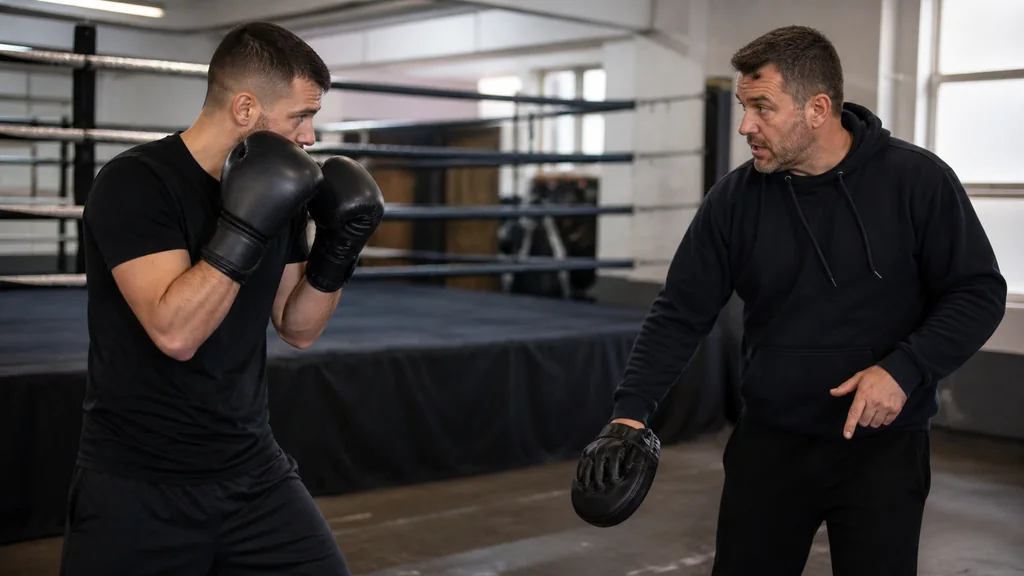
Technical rounds should be hard enough to demand attention, not so hard that fatigue makes the movement meaningless.
If the goal is a clean rear hand, three minutes at full pace may be the wrong dose. You might get ten useful seconds followed by two minutes and fifty seconds of the same old habit. Shorter blocks work better: thirty seconds on, fifteen seconds to reset, repeated four times. Or one minute of focused work, then a minute of ordinary bag movement before you return to the job.
This is not an excuse to avoid conditioning. It is a way to put conditioning in the right place. Do your hard bag rounds when the job is volume, pace or stamina. Do technical rounds when the job is learning. Mixing both without a plan often produces neither.
Know when the job has changed
A technical round should eventually grow up.
If you can keep the rear hand home on a single jab for a whole round, make the target move. If you can step out cleanly after jab-cross on the bag, ask a pad holder to show a return jab. If you can roll under a slow cue with your eyes up, add two possible cues and make yourself choose.
That is how a basic pattern becomes boxing rather than choreography. The original job stays visible, but the situation begins to ask a question. You have to recognise it and keep the technique while answering.
Our article on boxing muscle memory and skill learning explains why that change matters. First you build the corrected action. Then you vary it enough that it can survive movement, fatigue and another person in front of you.
The coaching cue
One round. One job. One honest reset.
That is enough to make progress. Pick the mistake that keeps returning, make the easiest clean version of the correction, then add pressure only when the shape holds. You will get more from three focused technical rounds than from ten rounds of fast movement with no idea what you were trying to improve.
If you are in Kidbrooke, Greenwich or nearby, our Recreational Adults boxing classes use pads, bags and controlled partner work to give those rounds a purpose. A coach can spot the one thing worth fixing, then help you keep it when the drill becomes less predictable.
H&G Team
Writer at Honour & Glory Boxing Club, a community boxing gym in Kidbrooke, South East London.
KEEP READING
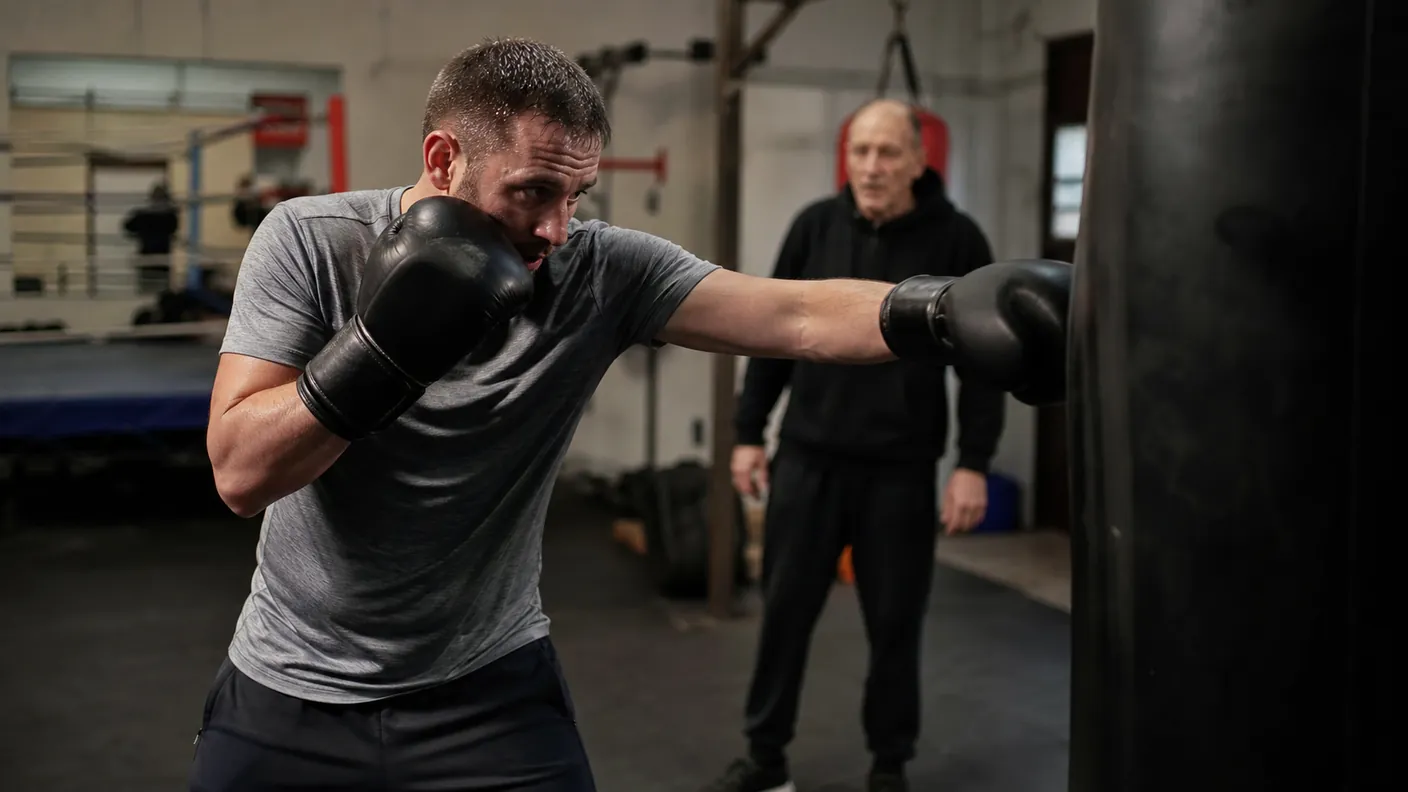
Single-Punch Boxing Rounds: Choose Better Shots
Use single-punch boxing rounds to improve range, punch choice and recovery before long combinations hide the mistakes.
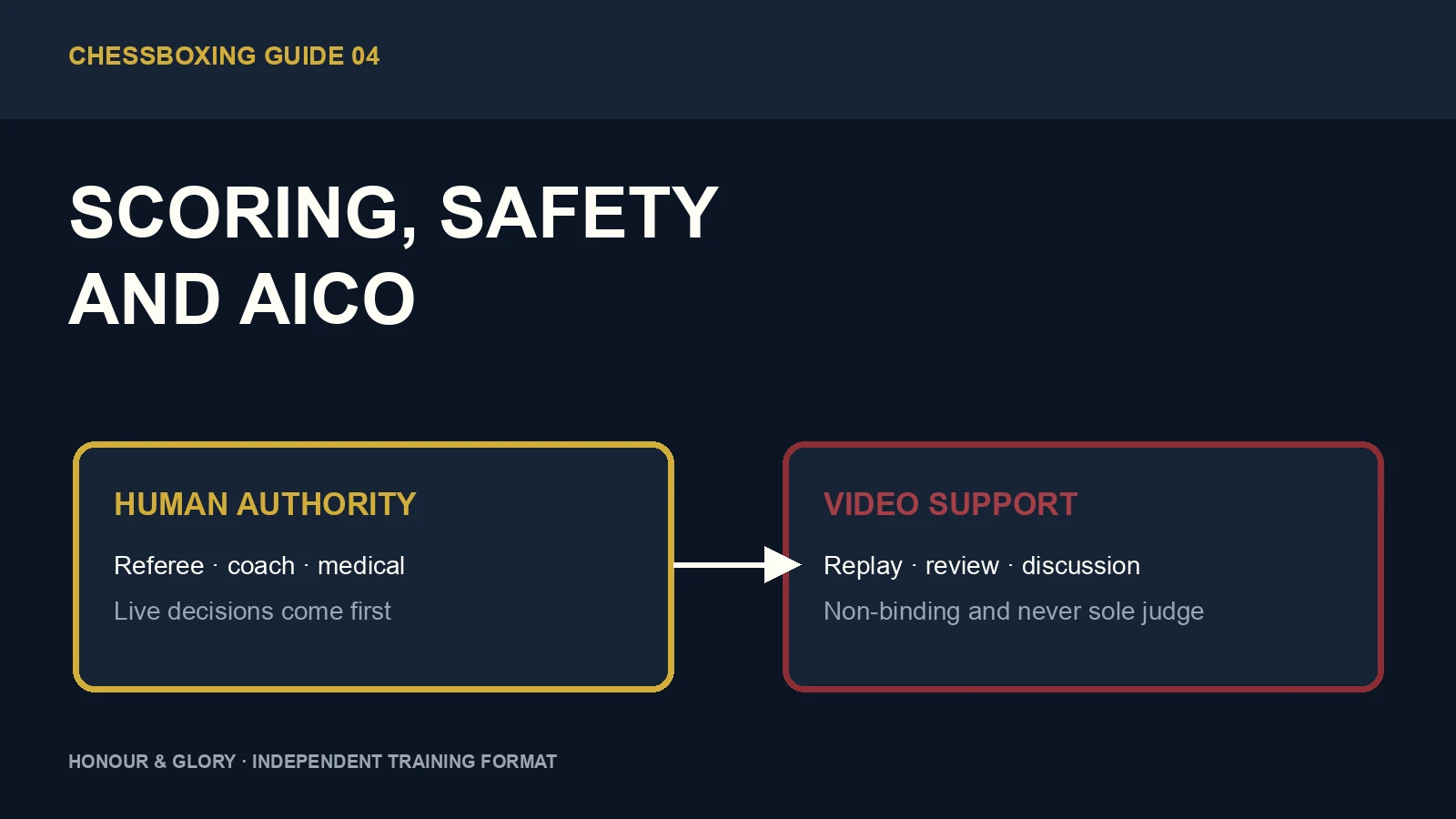
Chessboxing Scoring and Video Review
How formal chessboxing scoring can vary, and how H&G keeps weekly chess results separate from unscored technical boxing rounds.
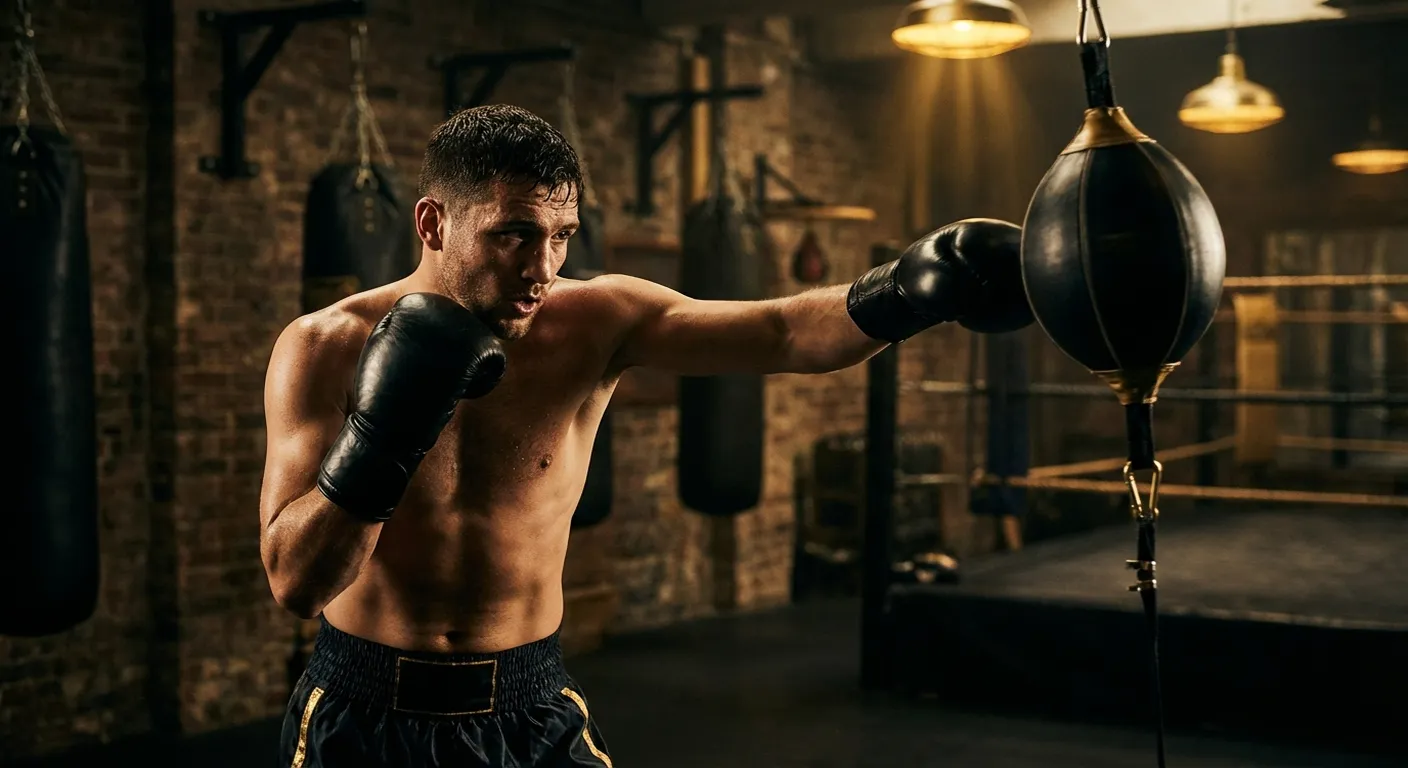
How to Improve Your Boxing Timing: Drills That Actually Work
Timing separates a boxer who looks good on the bag from one who performs under pressure. Here is how to build it properly.
Was this page helpful?
It takes one tap, and it genuinely helps.
Choose your next step
Turn this article into the right action
Some readers are ready to book. Some need the class route first. Pick the route that matches what you actually want.