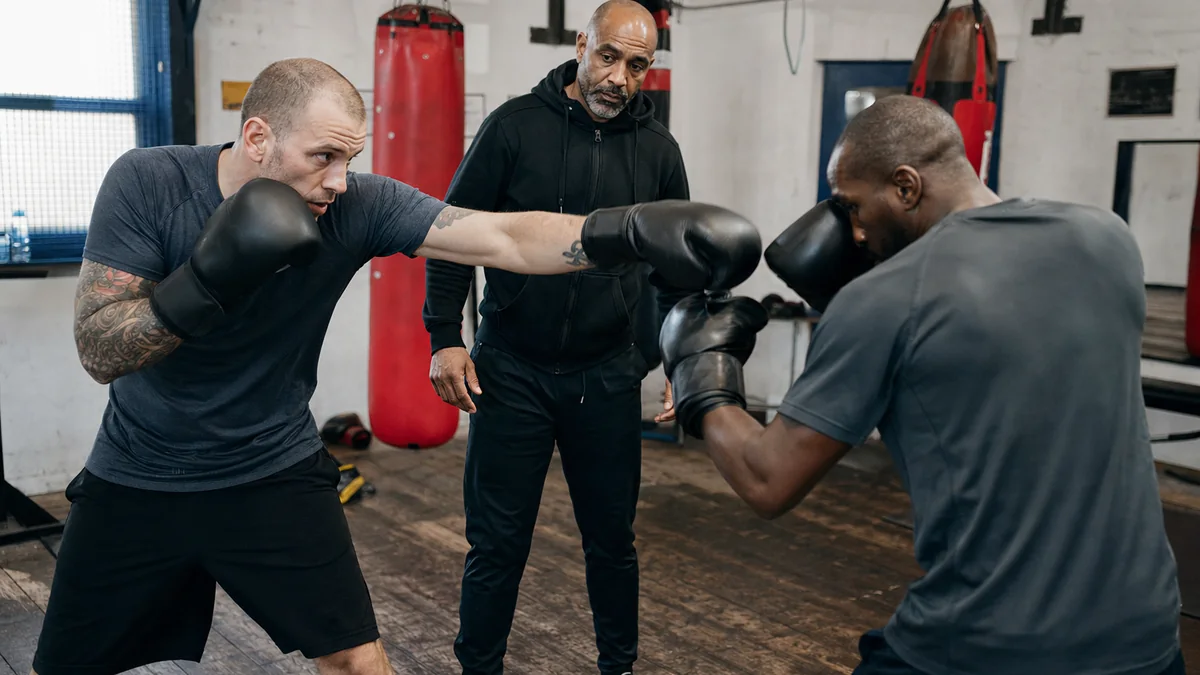
Most beginners think the punch is the end of the action.
They jab, admire it for half a second, and get countered. They land a right hand, stay tall on the centre line, and give the other person a free reply. They finish a combination, drop their hands, and wonder why sparring suddenly feels chaotic.
That is one of the first tactical lessons in boxing: the punch is not the end. It is the middle.
What you do after you punch decides whether the exchange was useful. Good boxers land and leave, land and turn, land and defend, or land and build the next phase. Less experienced boxers land and wait.
That waiting habit is expensive. Boxing research on technical and tactical profiles keeps returning to the same broad idea: the result of an exchange is shaped by punch selection, movement, distance, and defensive behaviour together. In normal gym language, that means your feet and guard matter after the shot just as much as the shot itself.
Here is the coach-led version.
The beginner mistake: finishing in front of them
The most common mistake is simple: you punch and stay where the opponent last saw you.
That makes their answer easy.
If you jab and leave your head in the same place, their right hand has a target. If you throw a right hand and do not recover your shoulder and guard, their left hook has a lane. If you finish a three-punch combination with both feet planted, they do not need to find you. You are still there.
This is why coaches keep saying things like:
- "Do not admire your work."
- "Bring it back."
- "Move after you punch."
- "Finish in shape."
Those phrases all point to the same issue. A punch should leave you in a useful position, not in a photograph.
Useful position does not always mean far away. Sometimes it means just off the centre line. Sometimes it means close enough to smother the reply. Sometimes it means balanced enough to punch again. The point is that the next beat must belong to you, or at least not be freely handed to them.
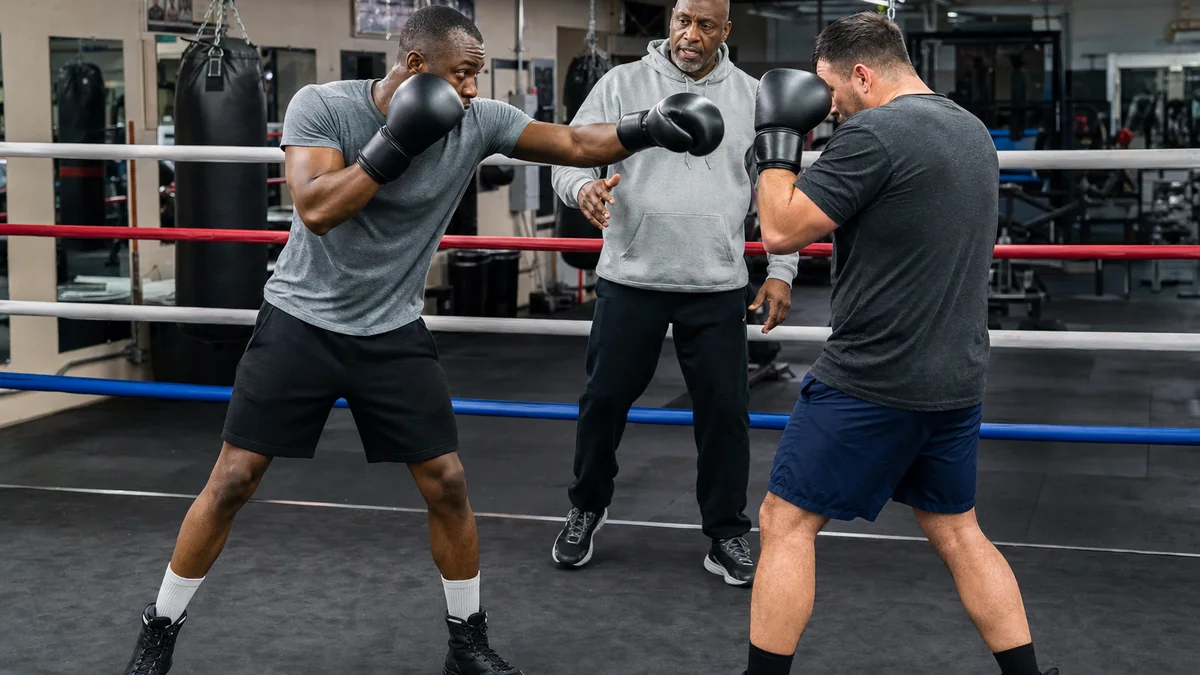
Option 1: reset your guard and feet
The first answer after punching is the least glamorous and probably the most important: get your shape back.
That means your hands return, your chin is tucked, your shoulders are relaxed, and your feet are still under you. You are not falling in. You are not standing square. You are not finishing with your rear hand by your hip because the punch felt good.
For beginners, this is often the best default.
A clean reset gives you choices. From shape, you can defend, move, punch again, or listen to the coach. From bad shape, you are usually guessing.
Try this on the bag or pads:
- Throw a jab.
- Bring the hand straight back to guard.
- Check that your rear heel, chin, and lead shoulder are still organised.
- Only then throw the next shot.
It will feel slower at first. That is fine. You are not trying to win the bag round. You are teaching your body that every punch has a return journey.
This is where a lot of beginners confuse speed with rushing. A rushed jab goes out quickly but comes back lazily. A good jab goes out and returns as one action. That difference matters more in sparring than it does on pads, because someone is allowed to answer.
For the hand-position detail, our guide to punching without dropping your guard breaks down how the non-punching hand and shoulder protect you while you attack.
If your balance keeps breaking after combinations, our boxing footwork drills at home guide gives you the basic step, pivot and in-and-out patterns to practise without needing equipment.
Option 2: exit on a small angle
The second answer is to leave the line.
Not always by a huge movement. In fact, beginners often make exits too big. They throw, then leap away like the floor is on fire. That wastes energy and pulls them out of position for the next exchange.
A good exit is usually small:
- jab, half-step back
- jab-cross, step right
- hook, pivot out
- body shot, rise back with the guard tight
- combination, small turn instead of straight retreat
The important part is not distance. It is line.
If you finish in exactly the same lane, your opponent can punch down that lane. If you move a little outside it, they have to reset their feet or reach. That small delay is enough to change the exchange.
The worst habit is backing straight up after every punch. It feels safe because you are moving away, but it gives pressure fighters a clear road. They can follow your chest, build momentum, and time the moment your feet come together.
A better cue is this: step away from the answer, not just away from the person.
If their right hand is the danger, do not finish your attack with your head sitting in front of their right shoulder. If their left hook is the danger, do not admire your right hand with your own left hand low. If they keep rushing after you punch, do not keep backing up on train tracks. Touch, turn, make them restart.
That is the difference between running and boxing.
Option 3: defend before you punch again
Sometimes the right answer after punching is not movement. It is defence.
This is especially true if you are in range and both boxers are committed. You land, they answer, and the exchange becomes a conversation. If your only plan is to throw again immediately, you will eventually walk into something.
A simple defensive beat can keep you safe and set up your next shot:
- jab, catch their jab, jab again
- cross, roll under the hook, return with your own hook
- jab-cross, high guard, step out
- body shot, elbow back in, head off the line
- hook, bring the hand home, block the return hook
Beginners often think defence is separate from attacking. It is not. In real boxing, offence and defence overlap.
The moment after you punch is when you are often most open. Your weight has moved. One hand is away from your face. Your attention is on whether you landed. That is exactly when a calm opponent will answer.
So build a defensive habit into the end of combinations. Do not only drill jab-cross-hook. Drill jab-cross-hook, roll. Drill jab, step, guard. Drill right hand, left hand back, chin down.
Our guide to boxing defence techniques for beginners breaks down the main tools: guard, slip, parry, roll and footwork. The key here is using one of them immediately after your work, not waiting until the counter has already started.
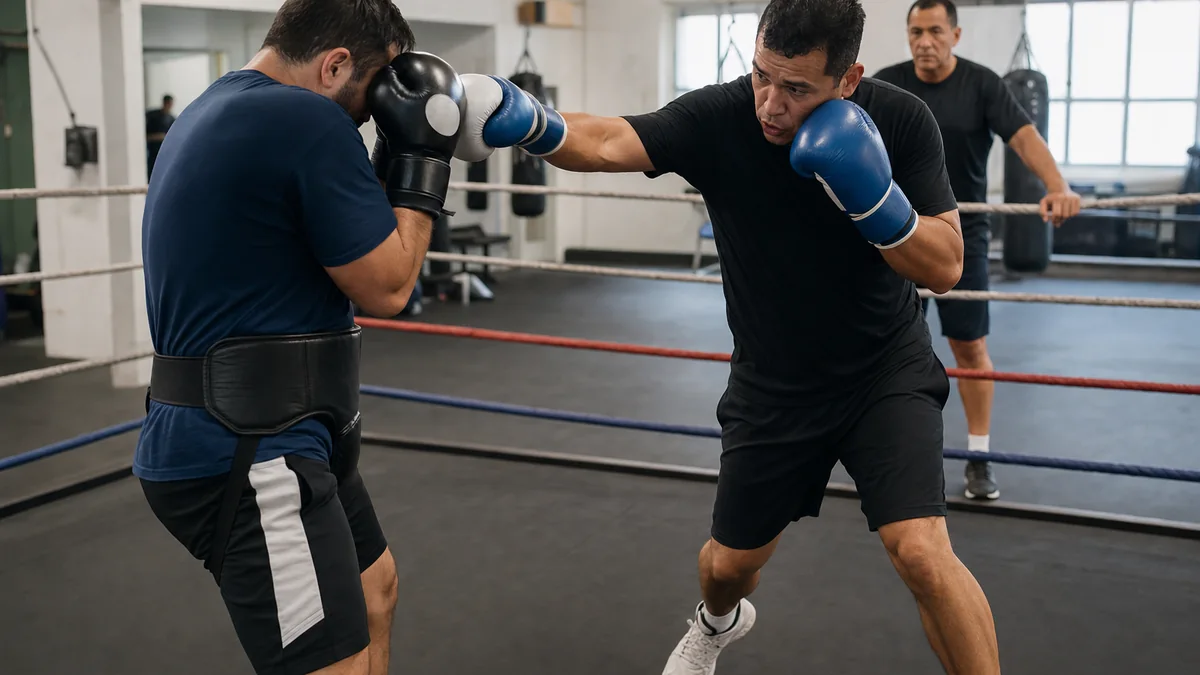
Option 4: build the second phase
Not every punch needs an exit. Sometimes the right answer is to keep the attack going.
But that does not mean flailing. There is a difference between building a second phase and throwing extra punches because you got excited.
A second phase works because your first action changed something.
Maybe the jab made them lift their guard. Now the body is open. Maybe the right hand made them shell up. Now you can step around. Maybe the body shot made them drop the elbow. Now the hook upstairs is there. Maybe your feint made them counter early. Now you can punish the recovery.
That is very different from landing one punch and immediately emptying the tank.
Use this question: what did the first punch make them do?
If the answer is "I have no idea", reset or exit. If the answer is clear, build.
For example:
Jab makes them cover
Touch the jab to head or chest. If they cover high, step in behind the next jab and touch the body. Do not swing. Score, see, continue.
Right hand makes them shell up
If they freeze behind the guard, do not stand square and admire it. Step slightly left, bring your right hand back, and look for a safer angle.
Body shot makes them drop the elbow
Come back upstairs, but keep your head off the centre line. Body-to-head only works cleanly when your own shape is still organised.
They counter every single jab
Use the jab as bait. Feint it, draw the counter, then answer the counter. This is where boxing becomes less about combinations and more about timing.
The second phase should feel deliberate. If it feels like panic, you are probably just exchanging.
The best default for your first 10 rounds
For newer boxers, the first 10 controlled sparring rounds are not about winning exchanges. They are about collecting information.
What happens when you jab? Do you get countered over the top? Do you fall in? Do you back straight up? Do you stop breathing after a combination? Do you freeze when someone answers?
Your coach can usually see the pattern before you can feel it.
A useful rule for those early rounds is this:
After every combination, finish with one clear decision.
That decision can be:
- reset
- step out
- pivot
- high guard
- roll
- jab again
- body touch
- clinch safely if you are crowded and the coach allows it
One decision is enough. Do not try to become a tactical genius in round one. Just stop ending every exchange in the same place.
This is why controlled sparring matters. You need enough pressure to test the habit, but not so much that you abandon all technique. Our first time sparring tips explain why good early sparring should feel more like a hard conversation than a fight for survival.
What to practise on the bag
Bag work is useful if you give it rules.
Most beginners use the bag to prove effort. They stand in front of it, throw combinations, breathe hard, and call it a good round. There is nothing wrong with hard work, but the bag will not counter you. That means you have to add the missing lesson yourself.
Try these rounds:
Round 1: punch and reset
Every combination ends with your hands back, stance organised, eyes up. No extra shots until the reset is clean.
Round 2: punch and exit
Every combination ends with a half-step, pivot, or small angle. Do not jump out of range. Move just enough that you would not be in the same lane.
Round 3: punch, defend, answer
After every combination, add a defensive beat before the next attack. High guard, slip, roll, parry motion, then answer.
Round 4: second phase only when earned
Throw a short first attack. If the bag has "covered", build the second phase. If the first attack would have left you exposed, reset instead. You are training judgement, not just output.
That kind of bag round looks less dramatic from the outside. It builds better boxing.
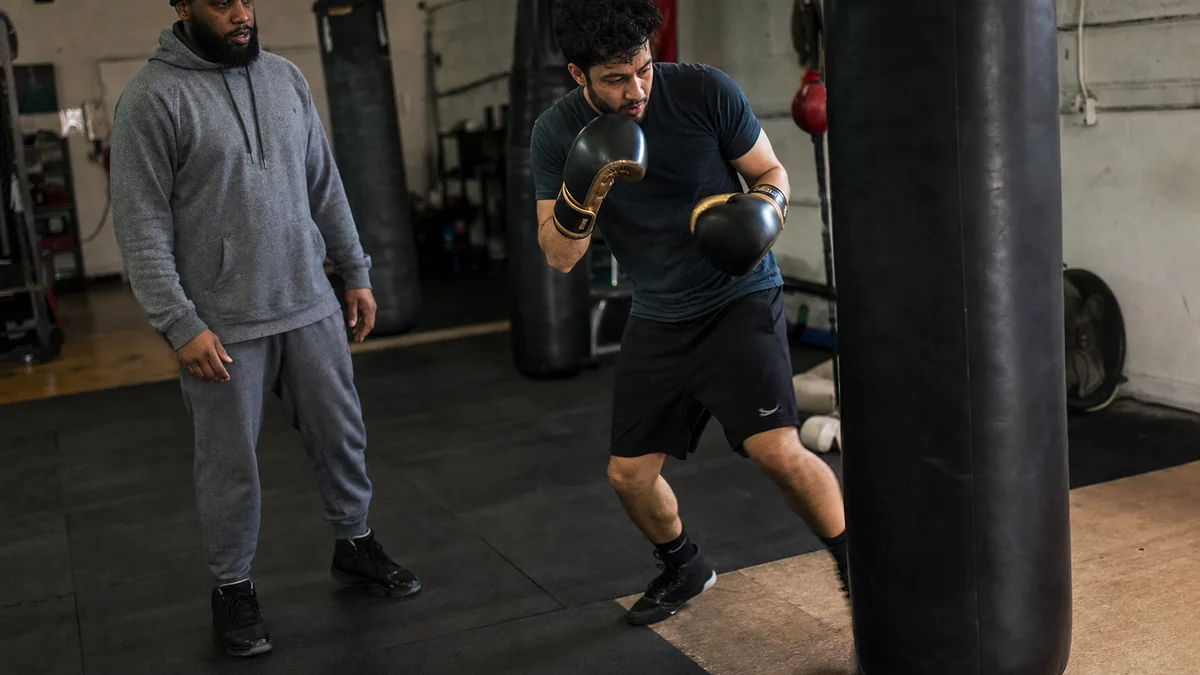
The simple rule
Every punch needs an after-plan.
Not a complicated one. Just a clear one.
If you are off balance, reset. If you are in danger, defend or exit. If they are open and you are in shape, build the next phase. If you are not sure, move your feet and get your guard back.
That habit changes everything. Sparring feels calmer because you are no longer waiting to be answered. Pad work becomes cleaner because your combinations have shape. Bag work becomes more realistic because you stop treating impact as the finish line.
Good boxing is not just hitting. It is hitting without giving away the next moment.
If you are in Greenwich, Kidbrooke, or nearby, our Recreational Adults boxing classes are built around this kind of coached detail: pads, bag work, movement, partner drills and controlled rounds that teach you what to do after the punch lands.
H&G Team
Writer at Honour & Glory Boxing Club, a community boxing gym in Kidbrooke, South East London.
KEEP READING
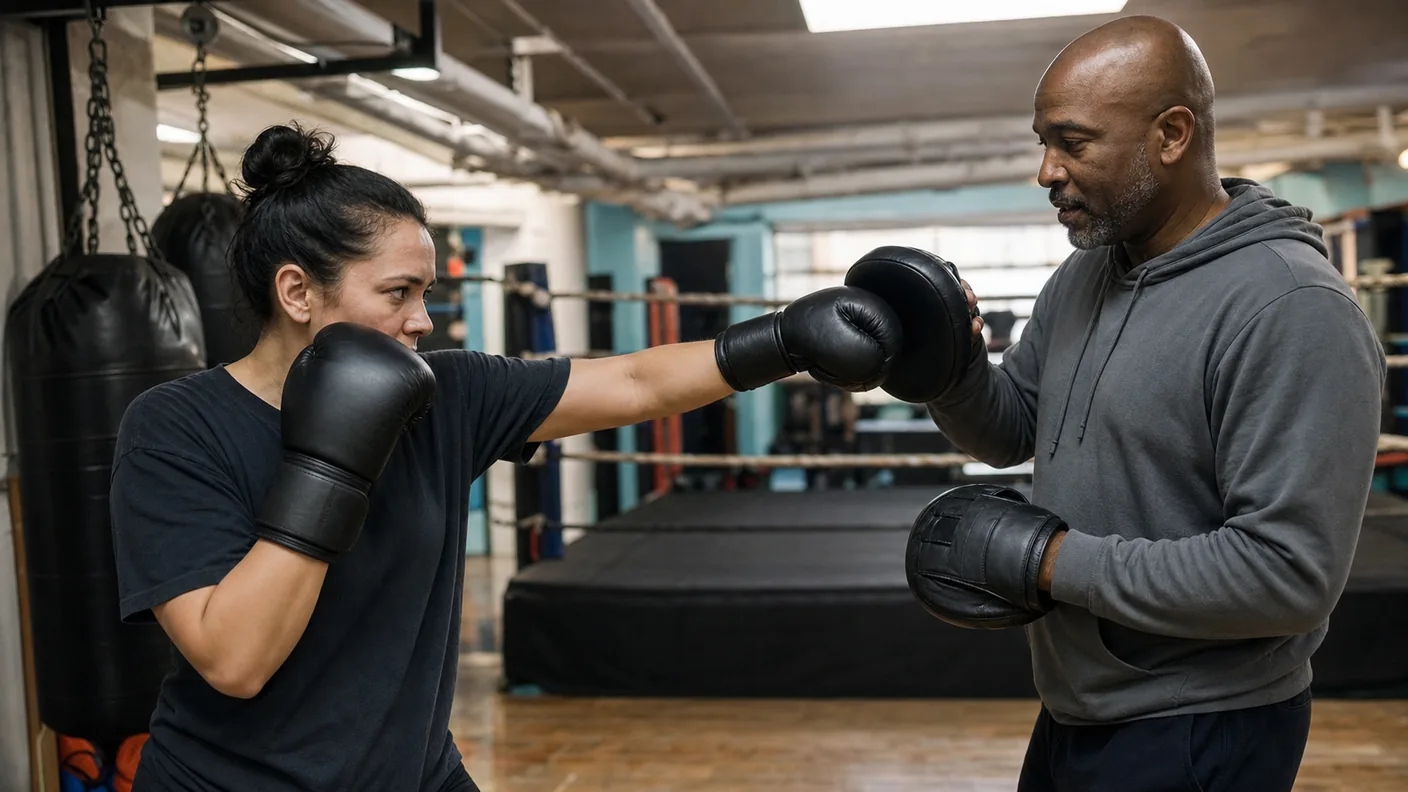
Why You Fall Forward When You Punch
Falling forward after a punch is a common boxing mistake. Learn why it happens and how to keep your balance, guard and next move.
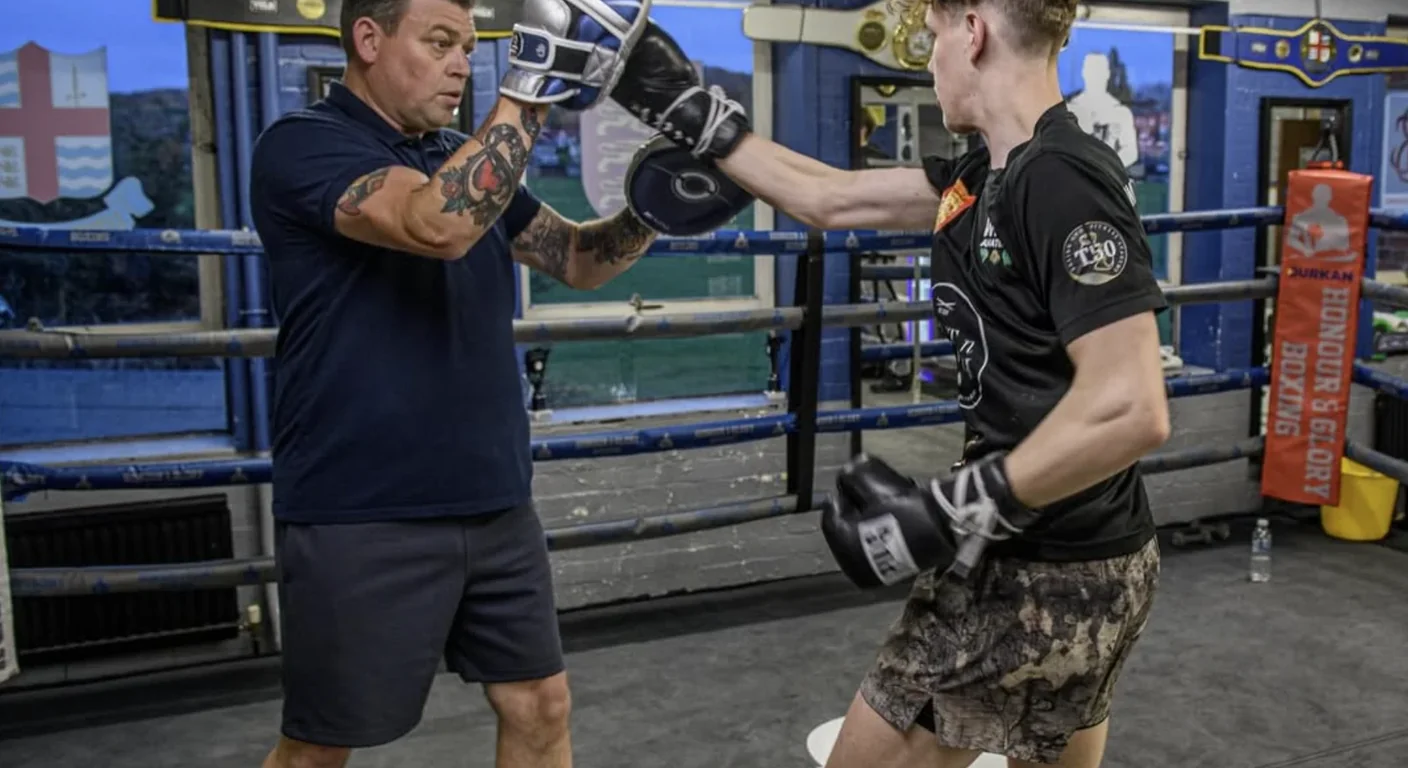
Stop Crossing Your Feet in Boxing
Crossed feet wreck balance, defence and punch recovery. Here is how beginners can fix the habit with simple boxing footwork drills.

Boxing Footwork Drills at Home
Good footwork separates decent boxers from great ones. Here are practical boxing footwork drills you can practice at home with no equipment needed.
Was this page helpful?
It takes one tap, and it genuinely helps.
Choose your next step
Turn this article into the right action
Some readers are ready to book. Some need the class route first. Pick the route that matches what you actually want.