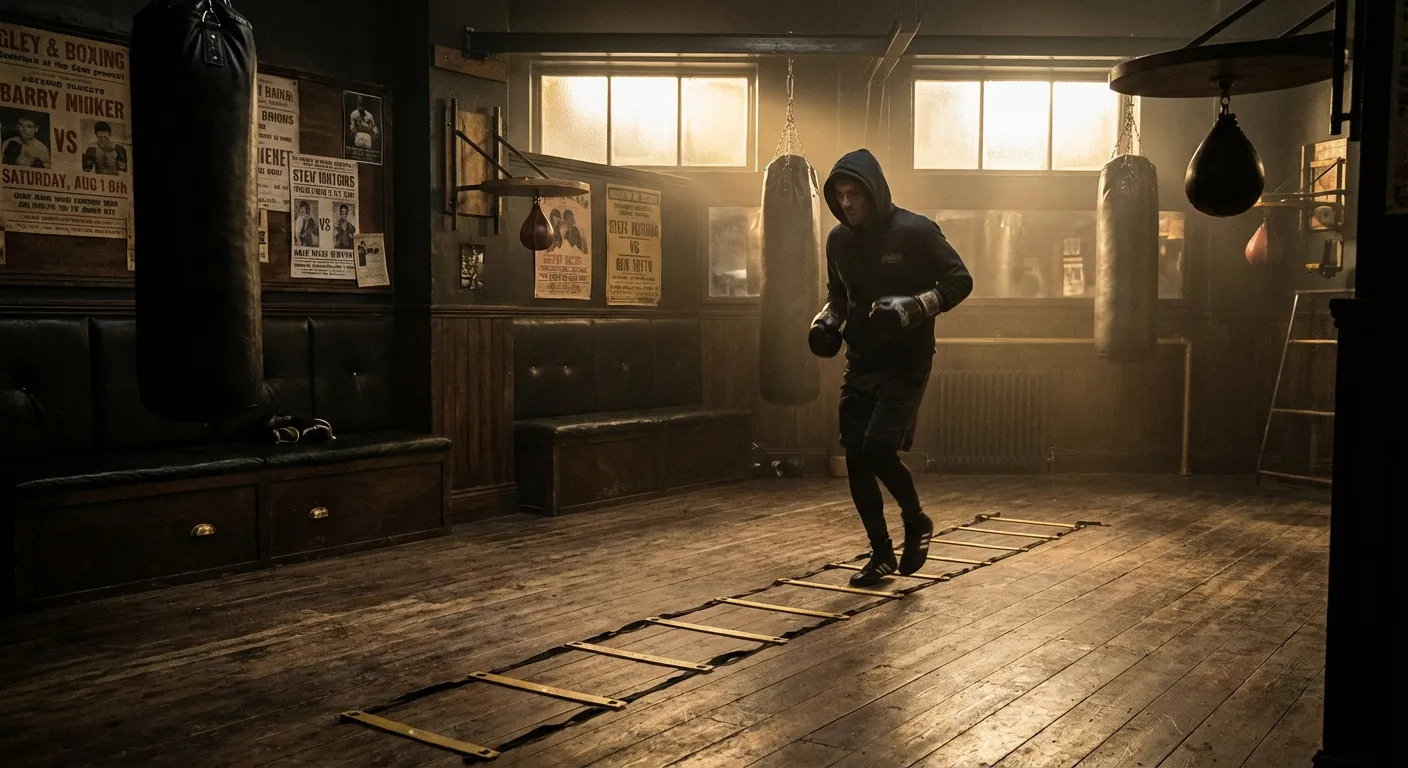
boxing biomechanics research confirms footwork accounts for a measurable percentage of elite performance difference between amateur and professional boxers. Boxing Science advanced conditioning programmes centre on reactive footwork as the primary platform for effective punching.
Basic boxing footwork is stepping forward, stepping back, and stepping to the side. Any beginner learns this in their first few sessions. Advanced footwork is something different - it is about using movement to control range, to set angles, and to make your own punches land while making your opponent's punches miss without dramatic defensive movements.
The best technical boxers make movement look effortless because they are almost never in the wrong position. They are not reacting to danger - they are preventing it through pre-emptive positioning.
The Pivot
The pivot is the single most important advanced footwork tool. You step the lead foot to the side and pivot on it, turning your body so your new position is at an angle to where you were.
The pivot accomplishes several things simultaneously. It takes you off the line of attack - if someone is throwing a straight punch at where you were, you are no longer there. It puts you at an angle to your opponent where they have to reset to face you. It creates an opening for a rear hand shot to a position they are not defending.
The pivot drill: stand in front of a heavy bag. Throw a jab and immediately pivot to your left. Your body should now be perpendicular to where it was. From there, throw a cross to the bag's side. This is the pivot into the cross - a high-value combination that requires the footwork to make it land correctly.
The Drop Step
The drop step is a way of entering range quickly from a neutral position without presenting yourself as a moving target for a longer period than necessary. Instead of walking into range in multiple steps, the drop step is a single explosive movement of the lead foot that closes distance quickly.
It is distinct from lunging. A lunge extends the body forward and leaves you off balance. A drop step moves the feet without overextending the body.
Practice the drop step by marking a line on the floor and practising stepping over it with the lead foot in a single compact movement, immediately followed by the rear foot catching up. The goal is to be in your stance, balanced and ready to punch, immediately after the step.
Lateral Movement as Pressure
Most beginners think of lateral movement as defensive - you move to the side to avoid being hit. Advanced boxers use lateral movement offensively - they move to create angles that force opponents to turn or step, which disrupts their position and creates openings.
The drill: with a training partner who stands still, practice circling around them while maintaining your guard, using your lead foot to lead the direction and your rear foot to follow. Circle left for two full revolutions, then right. Notice how your position relative to their guard changes. From some angles, the left side of their face is exposed. From others, the body is open. The movement is creating the target.
The Pendulum Step
The pendulum step is a rhythm tool. Instead of standing still between actions, a good boxer has a continuous subtle weight shift from foot to foot - forward, back, forward, back. This has two purposes: it makes your movement timing less predictable (opponents time their shots from your rhythm), and it means you always have weight loading one leg, from which you can either step forward or push backward.
Practise shadowboxing with a conscious emphasis on continuous subtle weight transfer. If you look at footage of elite amateur boxers between exchanges, you will see this clearly - they are always in slight motion, never flat-footed.
Footwork and Angles Together
The real value of advanced footwork comes when movement and angles are combined. The jab-pivot-cross is a sequence where the footwork creates the punch opportunity. The lead foot step - drop step in - jab - pivot to an angle - cross is a four-beat sequence where every element enables the next.
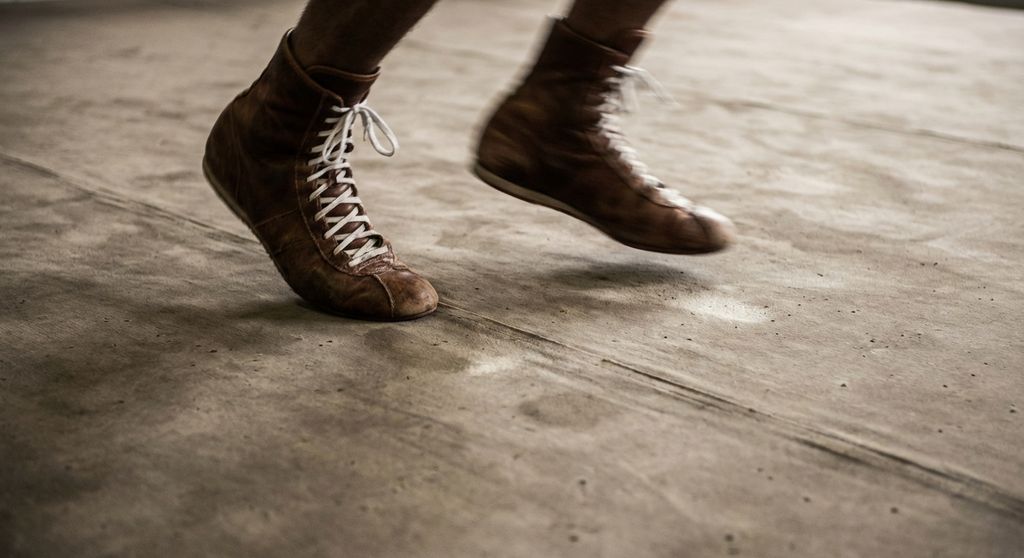
Drills like this are worth developing slowly - the footwork first without punches, then the punches without footwork, then the combination. Rushing to do all of it at full speed before the pieces are automatic produces bad habits that are hard to correct later.
The Adult Competitive and recreational boxing sessions at Honour and Glory Boxing Club work on footwork as a dedicated technical element. If you want coaching on developing your movement beyond the basics, book a free trial session and discuss with the coaches what stage your footwork is at.
H&G Team
Writer at Honour & Glory Boxing Club, a community boxing gym in Kidbrooke, South East London.
KEEP READING
Why Every Boxer Needs a Go-To Combination
Advanced amateurs need more than reactions. A reliable go-to, whether it is the jab, the double jab or jab-cross-jab, gives you a base when the round gets messy.
Boxing Footwork Drills at Home
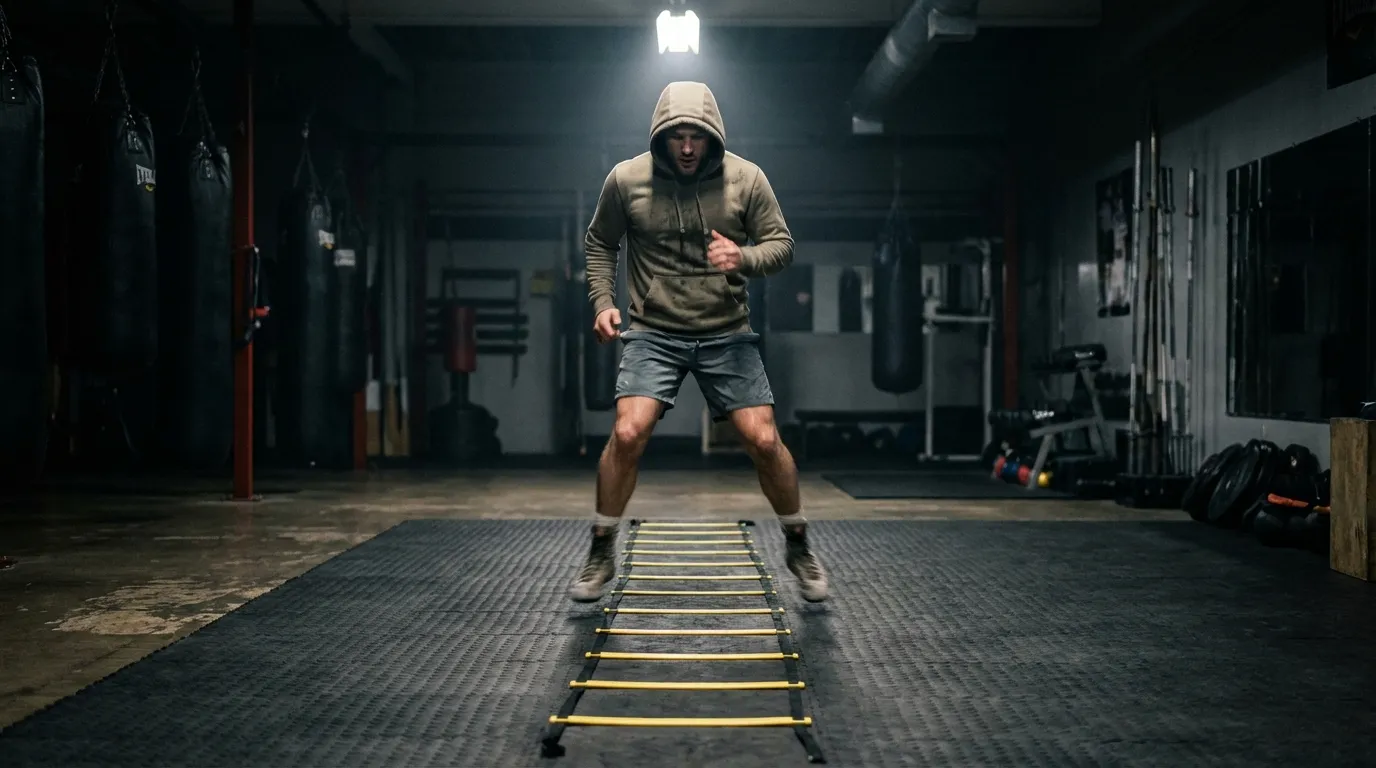
Good footwork separates decent boxers from great ones. Here are practical boxing footwork drills you can practice at home with no equipment needed.
The Three Phases of a Boxing Exchange
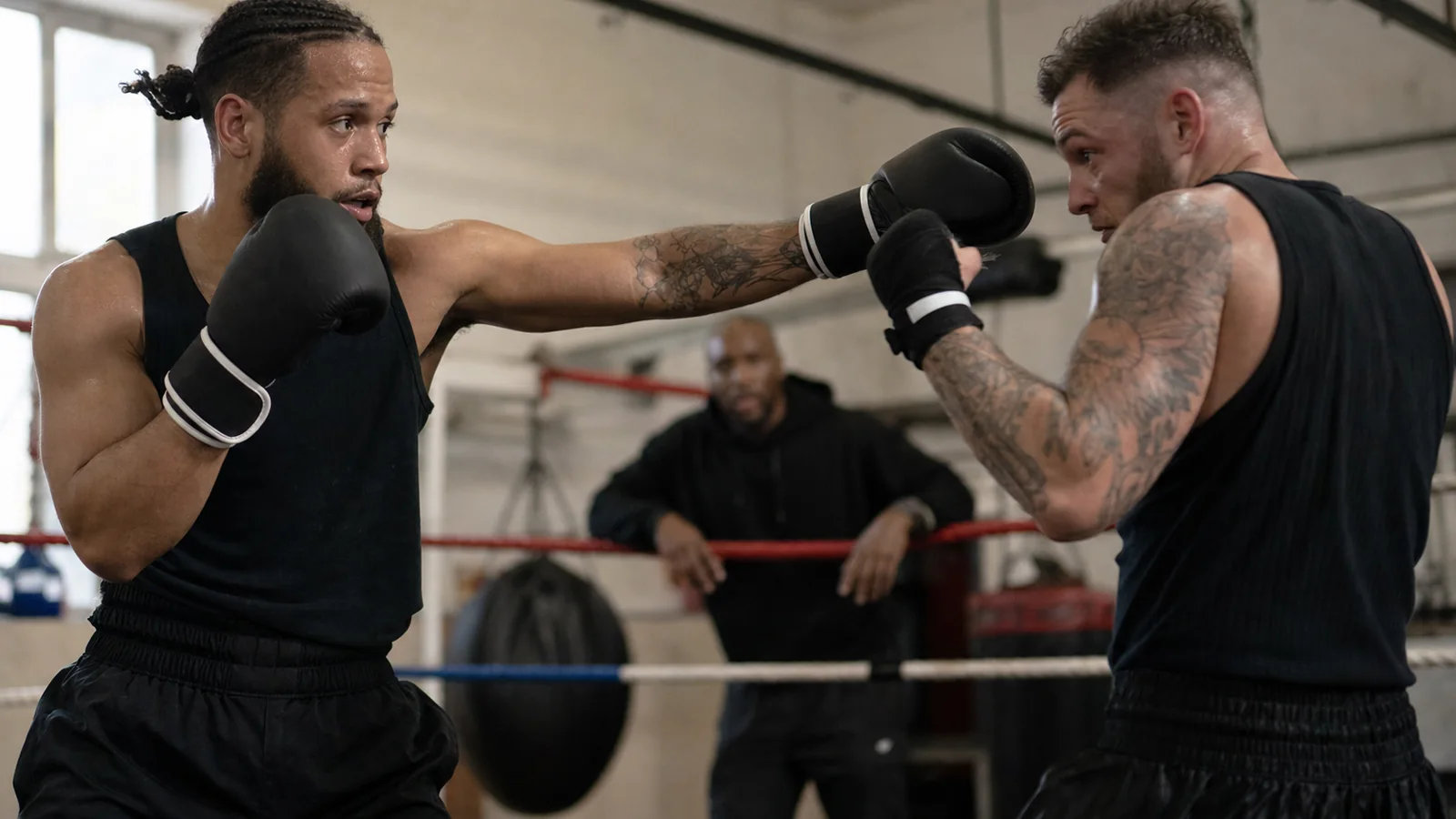
Advanced amateur boxing is not just attack, defend, reset. Learn how entries, counters and counter-counters turn separate exchanges into one connected fight.
Was this page helpful?
It takes one tap, and it genuinely helps.
Choose your next step
Turn this article into the right action
Some readers are ready to book. Some need the class route first. Pick the route that matches what you actually want.