
A go-to is not a comfort blanket.
It is a fighting tool.
Every boxer needs something they can trust when the round gets untidy. For one boxer it is the jab. For another it is double jab, cross. For another it is jab-cross-jab, with the last jab used to leave safely. The exact choice matters less than the role it plays.
Your go-to gives you a default action under pressure. It stops you waiting. It stops you reacting to every twitch. It gives your coach a base to build around. It gives the opponent a problem they must solve before they are allowed to run their own fight.
That matters because boxing is too fast and too stressful to invent everything live. Research on sport expertise shows that experts tend to use better visual search strategies and make earlier use of relevant cues than novices (systematic review on expert visual search). In plain boxing terms: better fighters are not just seeing more. They know what they are looking for.
A go-to helps create that order.
Why reacting all the time is not boxing
Reaction is useful. Living only on reaction is not.
If you spend a whole round waiting to see what the opponent does, you have given them the steering wheel. Even if you are fast, you are always second in the conversation. You might win moments, but you rarely control rounds.
A go-to changes that. It gives you a way to put the first piece on the board.
The jab is the cleanest example. A good jab measures range, scores, interrupts, blinds, draws counters and buys time. It is not just a punch. It is a control tool.
That is why counter-punchers still need jabs. They are not just waiting like traps. They are making things happen, touching, feinting, moving the opponent's guard, then reading what comes back.
Watch this counter-punching lesson and notice how often the jab or feint starts the work rather than appearing as an afterthought. If the feint itself is the missing piece, our guide to using feints in boxing without overcommitting breaks down the eyes, feet and shoulder cues.
The lesson for advanced amateurs is simple: do not confuse patience with passivity. You can be patient and still initiate.
What makes a good go-to
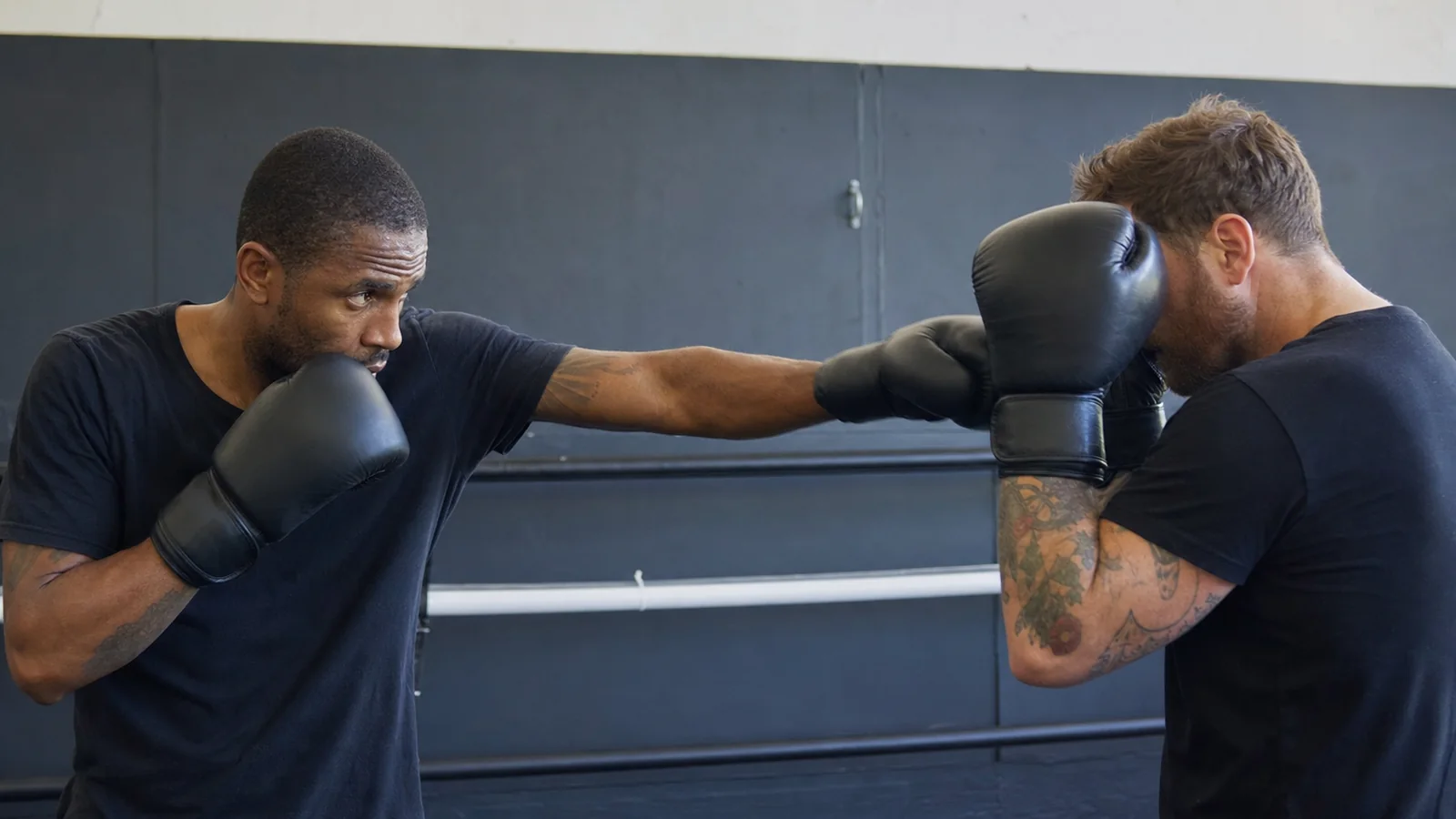
A good go-to is not your flashiest combination.
It must be reliable when you are tired, under pressure, slightly out of rhythm and being watched by judges. If the combination only works on the bag when you feel perfect, it is not a go-to. It is decoration.
A strong go-to usually has five features:
- It starts from your normal stance.
- It gets you into range or keeps you at range.
- It gives you a read on the opponent.
- It has a built-in defensive ending.
- It can be varied without becoming a new technique.
The jab qualifies. So does double jab. So does jab-cross-jab. So does jab to the body, jab to the head, step out. A shorter boxer might prefer jab to chest, right hand to body, left hook. A taller boxer might prefer double jab, half-step back, jab again.
The point is not to copy someone else's favourite. The point is to know what your first good answer is when the round goes noisy.
The jab as the simplest go-to
The jab is the obvious go-to because it does so many jobs.
It gives you range without overcommitting. It can score without needing a big load. It keeps the opponent honest. It lets you touch the guard and feel their reaction. It can draw the right hand, the parry, the slip, the rush or the freeze.
A boxer with a serious jab is never completely out of ideas.
That does not mean flicking it randomly. A go-to jab needs intent:
- Jab to score.
- Jab to blind.
- Jab to make them block.
- Jab to make them jab back.
- Jab to hold centre.
- Jab to leave.
Those are different jobs. The punch looks similar, but the purpose changes.
If you want to build a go-to around the jab, start with two versions. One scoring jab and one drawing jab. The scoring jab tries to land clean. The drawing jab is lighter and asks the opponent to answer. Once they answer, your next layer begins.
Jab-cross-jab: the underrated advanced default
Jab-cross-jab looks basic. It is not basic when it is done properly.
The first jab sets range. The cross tests commitment. The final jab gives you a way out, checks the opponent's return and keeps your shape from collapsing after the right hand.
Many amateurs throw jab-cross and then stay there. They land the right hand, lean forward, and wait for the receipt. The final jab fixes that habit. It puts the lead hand back in the opponent's face while your feet recover.
It also creates options:
- Jab-cross-jab, step out.
- Jab-cross-jab, draw their right hand, slip outside.
- Jab-cross-jab, pause, jab again.
- Jab-cross-jab, pivot left if they shell.
- Jab-cross-jab, feint the final jab and hook.
This is why a go-to is not limiting. A good go-to becomes a stem. Branches come off it.
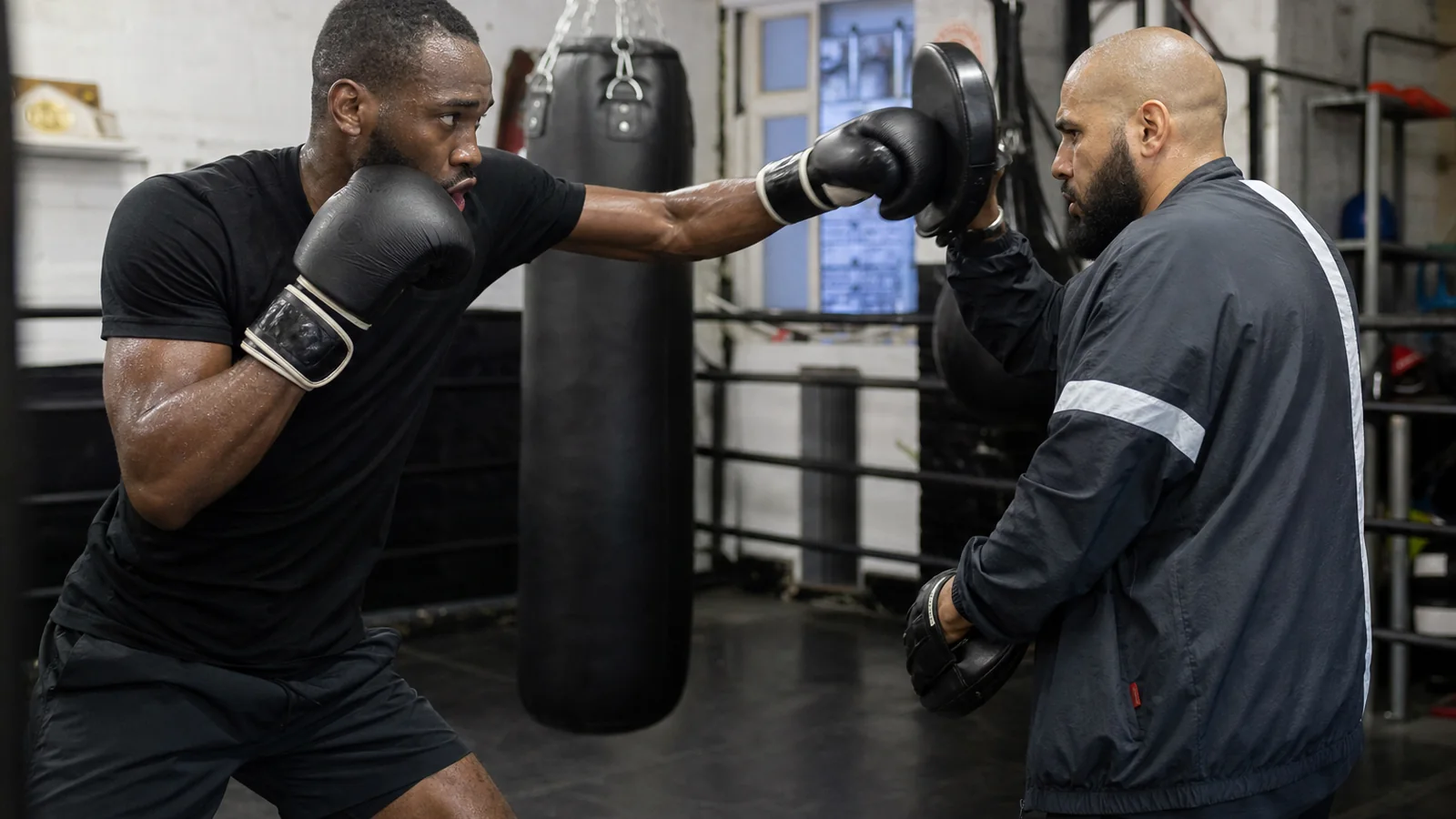
Watch this combinations video with that idea in mind. Do not try to collect every pattern. Notice how larger combinations can be built from smaller reliable pieces.
Your go-to should create reads
A go-to is not only for scoring. It is for information.
If you jab three times in the first minute and the opponent parries the same way each time, you have something. If they slip outside every jab, you have something. If they step back in a straight line, you have something. If they rush after the second jab, you have something.
The mistake is seeing the go-to as a fixed answer. It is better to see it as a question you ask repeatedly until the opponent gives you a pattern.
For example:
- If they parry the jab low, hook round it.
- If they pull straight back, double the jab and step with the second one.
- If they fire the right hand over your jab, feint, slip and counter.
- If they shell after jab-cross, touch the body before going back upstairs.
- If they rush after the final jab, step back and meet them.
Now your go-to has become round intelligence. You are not guessing. You are testing.
The danger of having no default
A boxer with no go-to often looks busy in sparring but unclear in bouts.
They try something different every exchange. They react to the opponent's feints. They switch plans after one missed punch. They throw combinations because the coach called them on pads, not because the round is asking for them.
This creates a subtle problem: the opponent never has to solve a main threat.
If your jab is not persistent, they can ignore it. If your right hand appears once every minute, they can forget it. If your body attack is occasional, they can protect the head without paying a price.
A go-to forces respect. It says: this is the thing you must answer first.
That is especially important in amateur boxing because rounds are short. You need to establish order quickly. Waiting two rounds to discover your rhythm is often too late.
Build it in layers
Choose one go-to and build it across four layers.
Layer one is clean execution. Can you throw it properly on the bag, pads and shadow boxing without losing stance?
Layer two is the defensive ending. After it, can you catch, roll, pivot, step out or re-jab without freezing?
Layer three is the first variation. If your go-to is jab-cross-jab, variation might be jab-cross-feint jab-hook. If your go-to is double jab, variation might be double jab to head, jab to body.
Layer four is the counter-counter. What happens when they answer it? That is where the go-to becomes advanced rather than repetitive.
This connects directly to the exchange work in the three phases of a boxing exchange. Your default starts phase one. The opponent's answer gives you phase two. Your prepared adjustment creates phase three.
For the combination mechanics, advanced boxing combinations is the starting point. But do not just collect combinations. Choose the one that can hold up when someone is trying to take it away.
A drill for finding your go-to
Run three rounds.
Round one: jab only. You can change speed, target and step, but you only score with the jab. Notice when it works and when it fails.
Round two: add one second punch. For many boxers this is the cross. For some it is the body jab, lead hook or rear hand to the body. Keep it simple.
Round three: add the exit. The combination does not count unless you finish balanced and unavailable for the obvious return.
Then ask three questions:
- Did it help me enter range?
- Did it tell me something about the opponent?
- Could I still do it when tired?
If the answer is yes, you may have the beginning of a go-to.
This favourite-combination video is useful because it shows the right attitude: a favourite combination should be personal, repeatable and connected to real fighting positions.
The standard to chase
A good go-to does not make you predictable. A lazy go-to makes you predictable.
The difference is whether you can vary timing, target, rhythm, exit and follow-up. If every jab-cross-jab looks identical, a decent opponent will time it. If the same structure can be fast, slow, hard, soft, head, body, entry, exit or trap, it becomes a problem.
That is the aim.
Do not be the boxer with twenty ideas and no base. Be the boxer with one reliable base and ten intelligent ways to build from it.
Honour and Glory coaches this kind of technical decision-making in competitive amateur boxing sessions and adult technical classes in Kidbrooke. If you want to stop reacting and start imposing your own order, that is the work.
H&G Team
Writer at Honour & Glory Boxing Club, a community boxing gym in Kidbrooke, South East London.
KEEP READING

The Three Phases of a Boxing Exchange
Advanced amateur boxing is not just attack, defend, reset. Learn how entries, counters and counter-counters turn separate exchanges into one connected fight.
Switch Hitting in Boxing: Useful Skill or Bad Idea?
Switch hitting can make a boxer awkward, creative and dangerous. It can also ruin a beginner's basics. Here is the honest guide to switching stance in boxing.
How to Get Your Boxing Licence in the UK
Want to compete in boxing? Here is the complete process for getting your boxing licence in the UK, whether amateur through Amateur Boxing Alliance or professional through the BBBofC.
Was this page helpful?
It takes one tap, and it genuinely helps.
Choose your next step
Turn this article into the right action
Some readers are ready to book. Some need the class route first. Pick the route that matches what you actually want.