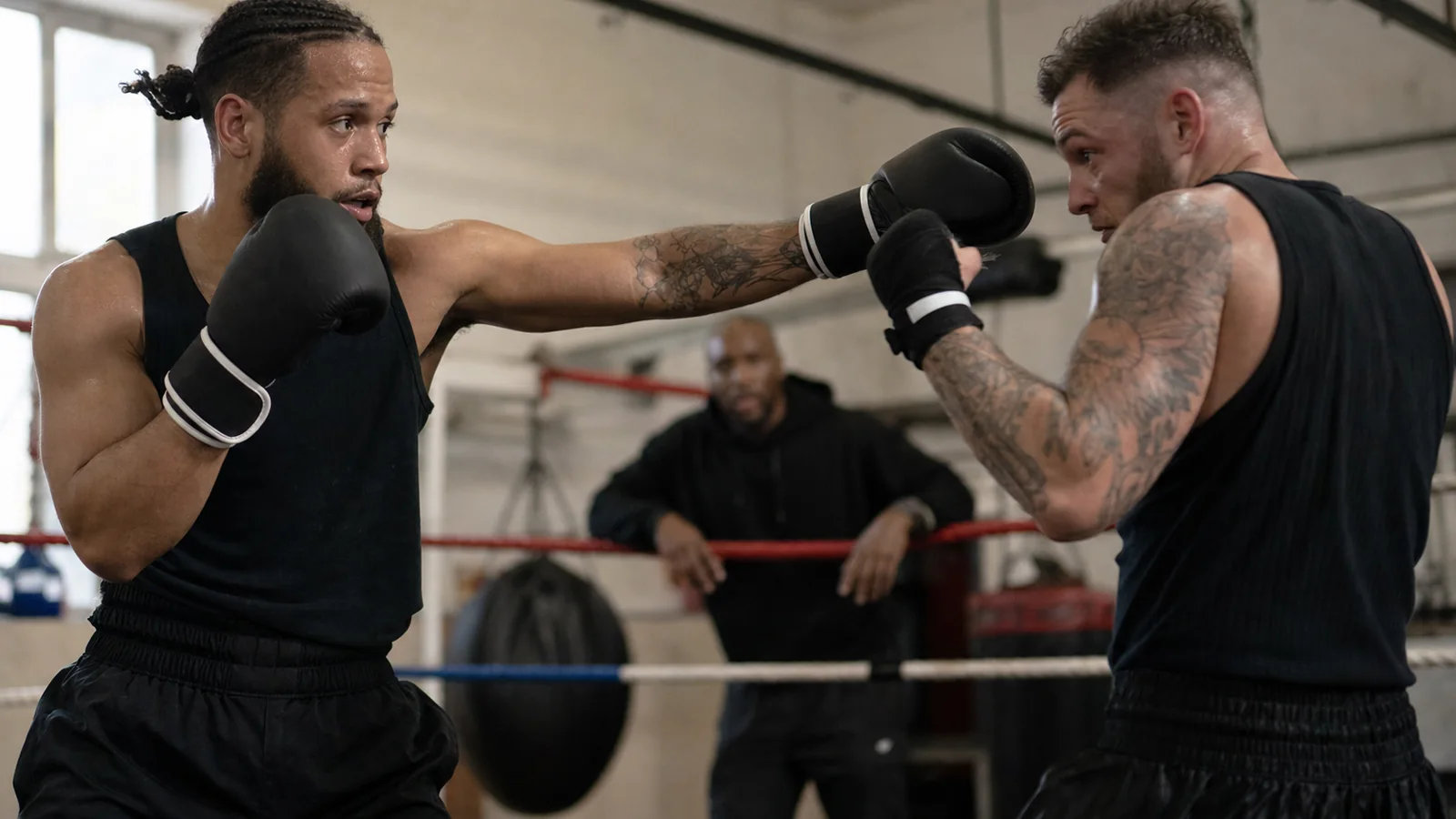
Most beginners think of a boxing exchange as a small burst of violence: I punch, you punch, we reset.
That is not wrong. It is just too small.
At a higher amateur level, an exchange has three phases. The first phase is the entry: the jab, feint, step, half-shot or pressure cue that starts the conversation. The second phase is the answer: the opponent blocks, slips, catches, punches back, pivots or clinches. The third phase is the counter-counter: what you do because you expected that answer.
That third phase is where boxing starts to look different. Less like separate combinations. More like one long argument.
Research on visual search in sport repeatedly finds that expert athletes do not simply react faster after an event happens. They pick up earlier information and organise their attention better than novices (Frontiers in Psychology review). That matters in boxing because the exchange is too fast to solve one punch at a time. You need a prepared next move.
Phase one: start the exchange on your terms
The first phase is not always a punch.
It can be a jab to the head, a jab to the chest, a shoulder feint, a small step in, a step out to draw the opponent forward, or a touch to the glove. The purpose is not only to score. The purpose is to make the other boxer show you something.
A good amateur does not enter range hoping. They enter range with a question.
Will the opponent catch the jab? Will they pull back? Will they fire the right hand over it? Will they freeze behind a high guard? Will they drop their lead hand when you show the body jab?
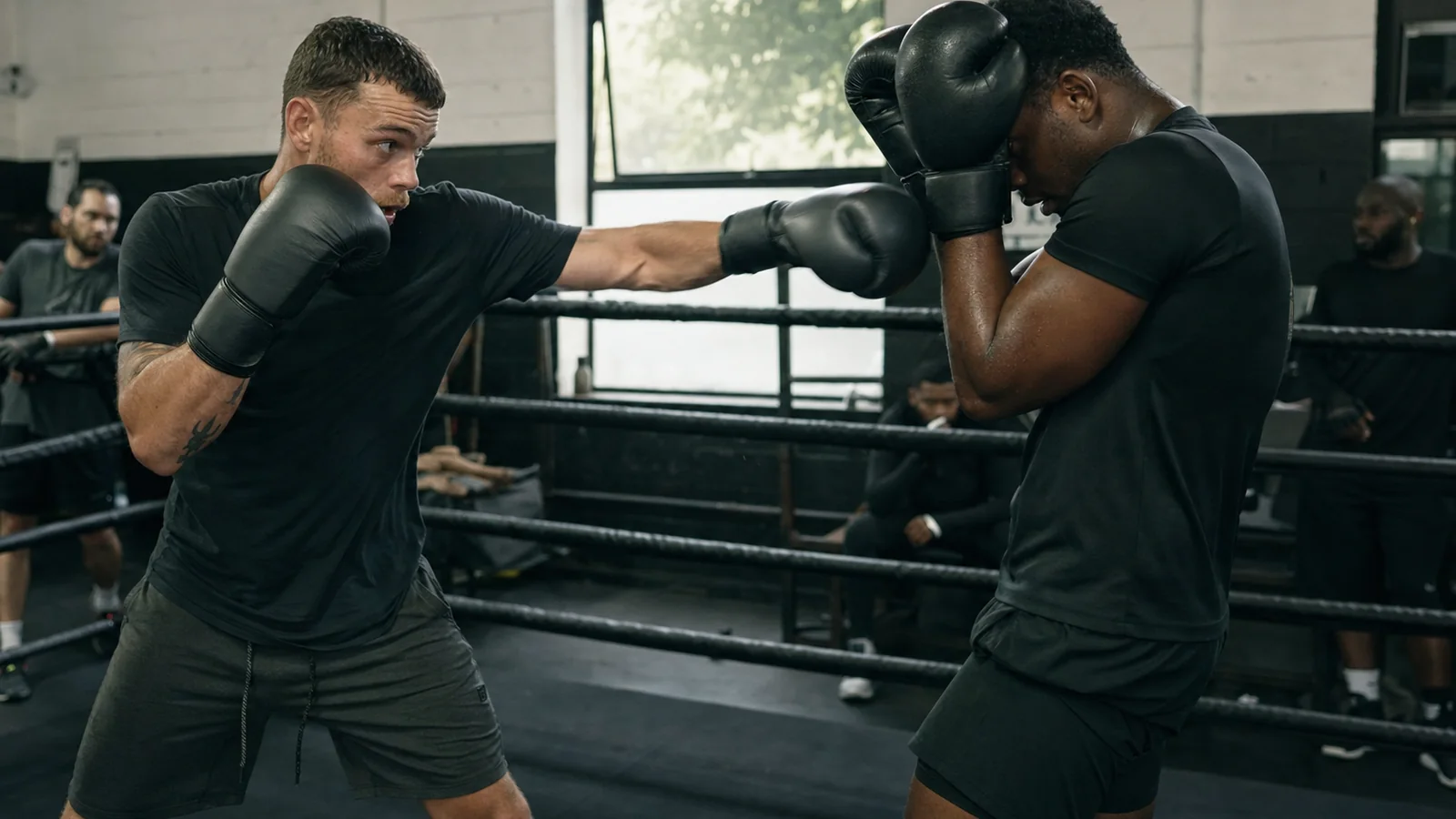
The simple version is jab first. The better version is jab with a read attached.
If you throw a lazy jab and admire it, you are available. If you throw a jab while already watching for their answer, you are in the fight. That distinction separates someone who knows combinations from someone who can box.
Watch this counter-punching guide with one question in mind: what is being used to trigger the first reaction?
The useful lesson is not to copy every counter. The useful lesson is that counters need invitations. If you wait passively, better opponents will not give you clean chances. You make them answer.
Phase two: respect the answer
The second phase is where many amateurs get caught.
They throw their prepared combination, then mentally finish. The opponent has not finished. A jab-cross-hook may be clean, but the exchange is still alive if the other boxer is slipping, catching, stepping round, rolling underneath or firing straight back.
This is why coaches keep saying, "Do not stand there after you punch." It is not a throwaway line. It is the whole sport.
Your attack changes your shape. A cross loads your lead hook but also exposes you to their left hook if you fall in. A body jab lowers your level but can invite the uppercut if you stay there. A long combination may win the eye but leave your feet too narrow for the return.
In amateur boxing, the judges reward clean scoring shots, but they also see who finishes the exchange looking in control. If you land one clean jab and then eat two obvious counters, you have given the round back.
A practical way to train the second phase is to attach a defensive ending to every combination:
- Jab-cross, then catch the return jab.
- Jab-cross-hook, then roll under the hook.
- Double jab, then step out on the lead foot.
- Body jab, then bring the rear hand home and pivot.
- Cross-hook-cross, then clinch, turn or leave on an angle.
These are not decorative endings. They are the bridge to the third phase.
Phase three: counter the counter
Counter-counters are a large part of advanced boxing because good opponents do not politely let your first idea work.
If your jab is sharp, they will start slipping outside it. If your right hand is heavy, they will draw it and make you miss. If your left hook is scoring, they will roll underneath or step away. The answer is not to abandon the weapon. The answer is to punish the adjustment.
This is where the fight starts to become one long combination.
You jab because you know they slip. You know they slip because they showed you last round. You know their slip loads their right hand. So your jab is really the beginning of jab, read the slip, shift the head, right hand down the middle, left hook as they recover.
On paper that looks like a combination. In the ring it feels like a chain of answers.
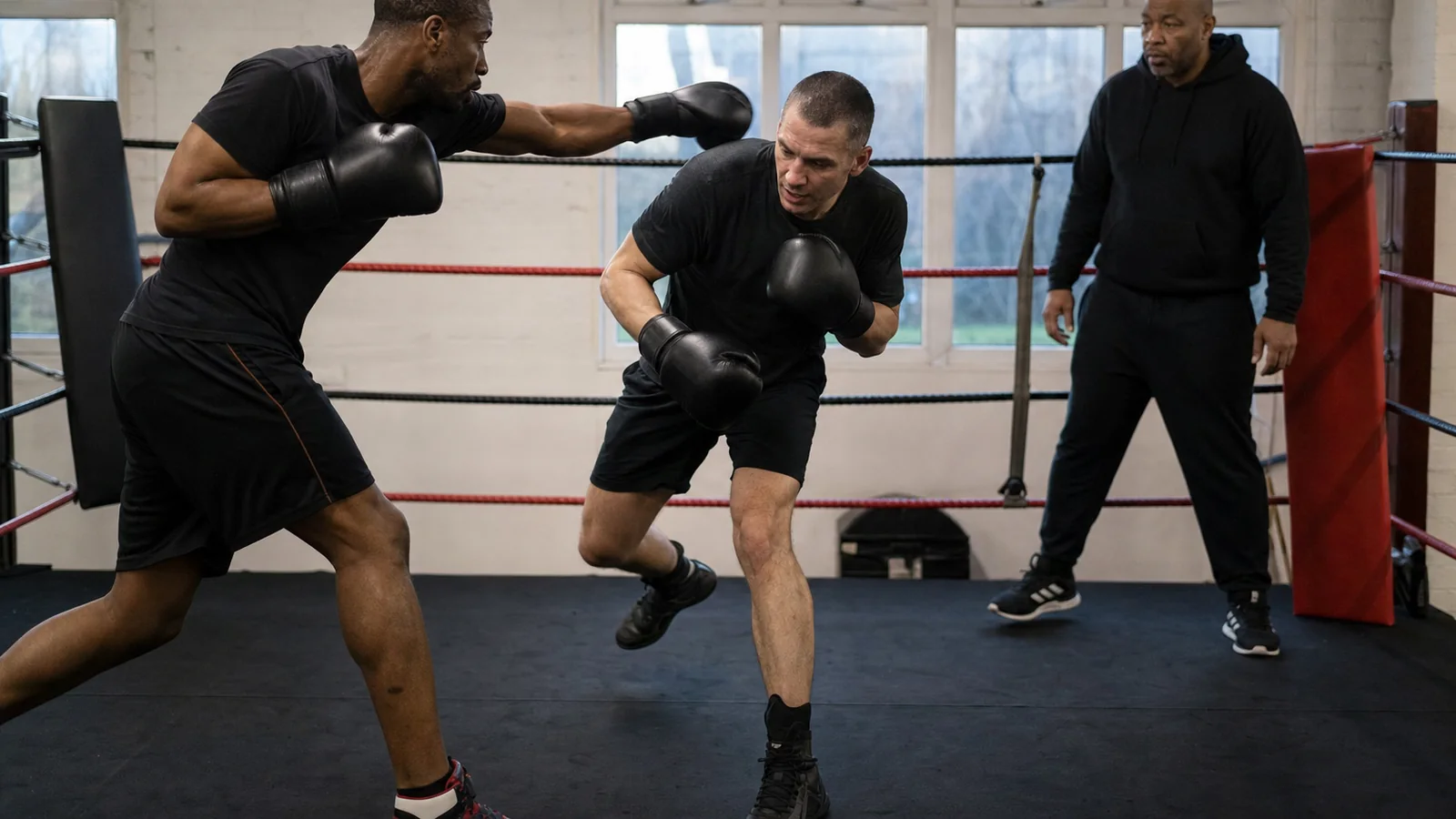
The counter-counter does not need to be spectacular. Often it is small:
- Feint the jab, draw their parry, hook round the glove.
- Jab to make them jab back, slip outside, right hand.
- Touch the body, make them drop the elbow, come upstairs.
- Throw the right hand light, expect their hook, roll and answer.
- Step back to draw the rush, meet them with the jab as they reset their feet.
If you can only attack when everything is clean, you are not ready for better sparring. Better sparring is messy. The good work happens because you planned for the mess.
Why elite boxing looks continuous
When people say elite fighters are "always thinking ahead", it can sound mystical. It is not.
They have rehearsed enough common exchanges that their body recognises the route before the conscious mind has to write a plan. The first punch carries the second idea. The defence carries the return. The return carries the exit.
That is why an elite fighter can look calm in a fast exchange. They are not solving ten new problems from scratch. They are moving through patterns they have already earned in training.
The amateur version is smaller, but the principle is the same. You do not need twenty advanced patterns. You need a handful of reliable exchange maps.
For example:
- My jab draws a catch, so I jab, hook round the catch, exit left.
- My body jab draws the right uppercut, so I body jab, rear hand home, left hook over the top.
- My double jab draws the rush, so I double jab, step back, right hand as they reach.
- My right hand draws their left hook, so I right hand, roll, left hook to the body.
Those maps are how separate moments become round control.
The training drill: three-phase sparring
Set a three-minute round with a simple rule. Every exchange must include all three phases.
One boxer starts. The other must answer. The first boxer must finish with a counter-counter or a disciplined exit. Keep the speed moderate. This is not a war round. It is a recognition round.
Start with the jab only:
- Boxer A jabs.
- Boxer B gives one chosen answer: catch, slip, parry, jab back or step out.
- Boxer A gives the prepared third phase: hook, right hand, re-jab, pivot or leave.
Then widen it:
- Boxer A can use jab or feint.
- Boxer B can answer freely.
- Boxer A must not freeze after the answer.
The aim is not to win every exchange. The aim is to stop treating the first attack as the end of your job.
This defensive combination video is useful here because it reminds you that defending one punch is rarely enough. Exchanges have rhythm.
The common mistakes
The first mistake is admiring your work. You land, pause, and wait to see whether it counted. Better boxers punish that pause.
The second mistake is pre-writing too much. If you decide before the round that you are throwing six punches no matter what, you are not boxing. You are reciting.
The third mistake is only drilling attack. Bag rounds create false confidence if every combination ends with the bag politely absorbing the shot. Add a defensive ending. Add a counter-counter. Add an exit.
The fourth mistake is trying to counter-counter from bad feet. You cannot build the third phase if your second phase leaves you square, crossed, leaning or too close to punch.
If your combinations themselves still need work, start with advanced boxing combinations. If your issue is competition awareness, read how boxing judging works and notice how many rounds are won by finishing exchanges cleanly.
The standard to chase
Advanced amateur boxing is not about throwing more punches. It is about knowing why the next punch is there.
The first phase asks the question. The second phase respects the answer. The third phase punishes the answer.
When you can do that repeatedly, the fight stops feeling like isolated clashes. It becomes one connected piece of work: entry, answer, counter-counter, exit, new entry.
That is the level worth chasing.
If you are serious about building that kind of round control, train in a room where coaches can see the whole exchange, not just the first punch. Honour and Glory runs competitive amateur boxing sessions in Kidbrooke for boxers who want proper technical development.
H&G Team
Writer at Honour & Glory Boxing Club, a community boxing gym in Kidbrooke, South East London.
KEEP READING
Why Every Boxer Needs a Go-To Combination
Advanced amateurs need more than reactions. A reliable go-to, whether it is the jab, the double jab or jab-cross-jab, gives you a base when the round gets messy.
Counter Punching Basics for Boxers
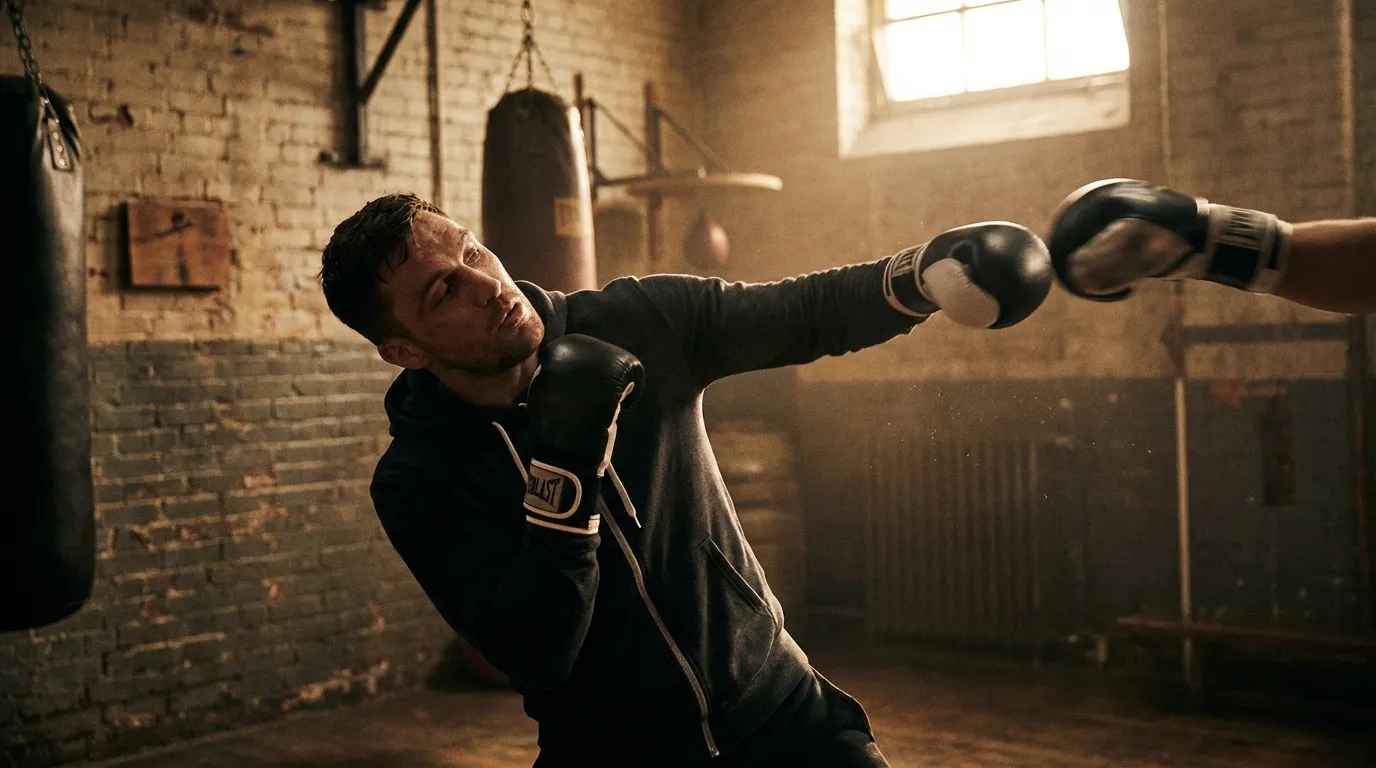
Counter punching turns defence into attack. Learn the fundamentals of countering - from basic techniques to the mindset that makes counter punchers dangerous.
How to Get Your Boxing Licence in the UK
Want to compete in boxing? Here is the complete process for getting your boxing licence in the UK, whether amateur through Amateur Boxing Alliance or professional through the BBBofC.
Was this page helpful?
It takes one tap, and it genuinely helps.
Choose your next step
Turn this article into the right action
Some readers are ready to book. Some need the class route first. Pick the route that matches what you actually want.