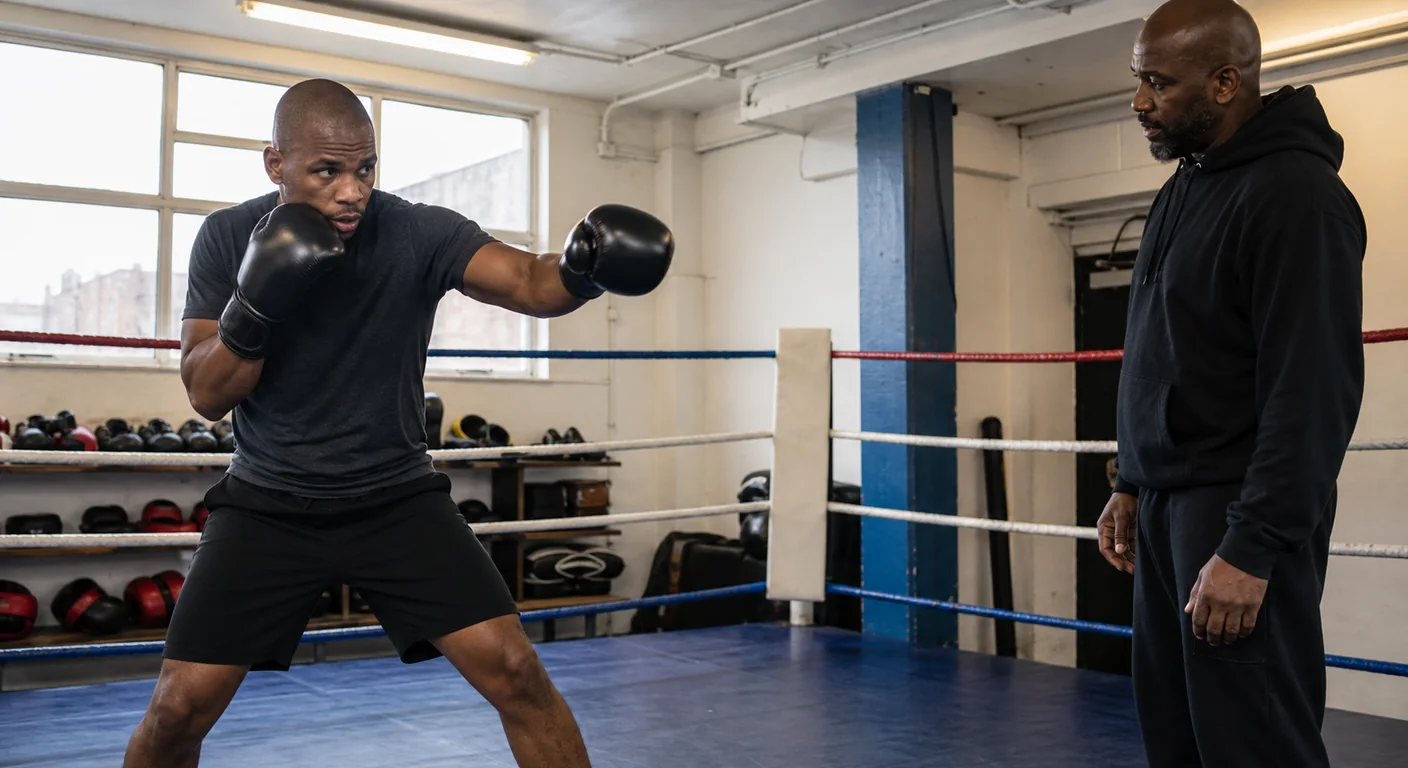
A good boxing feint is not a little twitch you throw because you have run out of ideas. It is a lie with enough truth in it to make the other boxer answer.
That is why beginners often struggle with feints. They wave the lead hand, dip the head, or bounce the feet, but nothing about the movement looks like a real punch. The opponent does not bite because there is nothing to respect. A feint only works when it looks close enough to your real attack that the other person has to make a decision.
The short demonstration below is useful because it shows the important point clearly: the hand is only one part of the feint. The eyes, feet, shoulder, weight and rhythm all have to sell the same story.
Combat sports research backs up what coaches see in the gym. A systematic review on anticipation in combat sports explains that fighters do not simply wait for the attack to finish before responding. They read early movement cues and act from them. A convincing feint attacks that reading process. It makes the other boxer react to the wrong cue.
Here is how to build feints that actually make someone move.
What a feint is really for
A feint is there to get information, create hesitation, or open a punch that was not open a second earlier.
That is the first thing to understand. You are not feinting to look clever. You are feinting because you want a reaction you can use. If the other boxer lifts the guard, you might go to the body. If they drop the elbow, you might go upstairs. If they step back, you might take the ground. If they fire a counter too early, you might make them miss and answer.
That means every feint needs a purpose.
Bad feinting looks busy. Good feinting asks a question. Do they flinch? Do they reach? Do they freeze? Do they show you where their right hand goes when they think the jab is coming?
Our article on the three phases of a boxing exchange uses the same idea. The entry is not always the punch that scores. Sometimes the entry is the move that makes the other boxer reveal their answer.
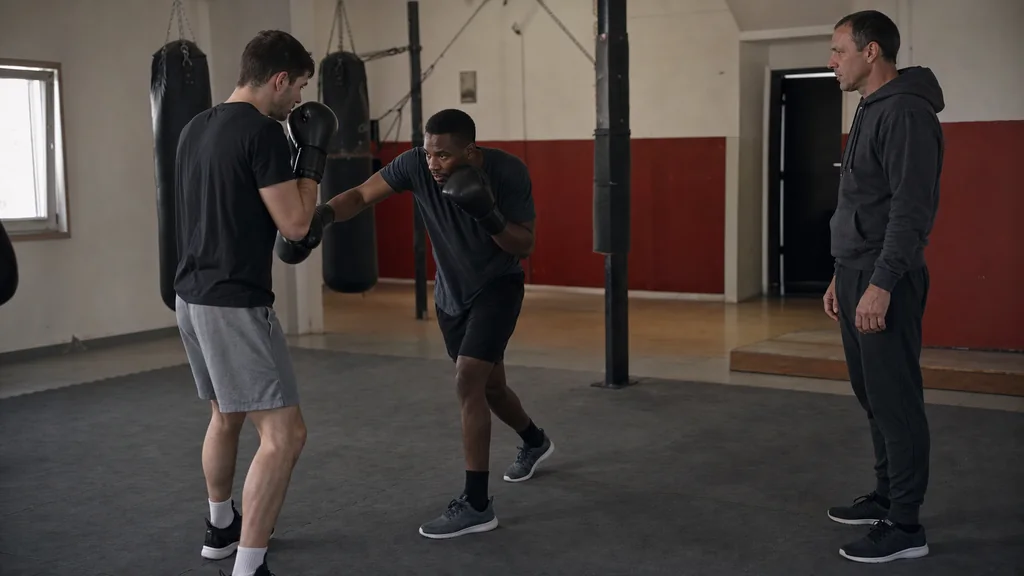
Make the fake look like the real punch
The main reason feints fail is that they do not resemble the punch they are pretending to be.
If your jab starts with a small push from the lead foot, a slight shoulder lift, and your eyes on the target, your jab feint should carry those same clues. If your body jab starts with a level change and a step into range, your body feint needs the same early shape. If the fake has no foot pressure, no shoulder, no eye line and no threat, a decent boxer will ignore it.
Start with the jab feint because it is the easiest to coach.
Take your stance. Show the first inch of the jab. Let the lead shoulder twitch forward, but keep the hand ready to return. Put a tiny bit of weight into the lead foot without falling over it. Keep the rear hand home. Then watch what happens.
If the other boxer reaches to parry, you have learned something. If they shell up, you have learned something. If they do nothing, either they are calm or your feint is not believable enough yet.
Do not turn the feint into a giant movement. A big fake often pulls you out of position. The movement should be small enough to recover from, but honest enough to look like the beginning of a real shot.
Use your eyes without making it theatrical
Eyes matter, but not in the over-acted way beginners imagine.
A body feint works better when your eyes and level change agree with the story. You do not need to stare at the body like an actor in a silent film. You need a natural glance, a small drop in level, and the same early rhythm you would use if the body jab were real.
The mistake is pretending with the face while the rest of the body tells the truth. If your eyes look down but your feet stay dead, your shoulder stays square, and your hand never starts, the opponent reads the body, not the face.
Try this on pads:
- Throw a real jab to the body three times.
- Notice what your eyes, knees, lead shoulder and front foot do.
- On the fourth rep, start the same movement but do not finish the punch.
- Come back to stance immediately.
- On the fifth rep, feint the body and jab to the head.
That drill teaches the right lesson. The feint borrows from a real punch. It is not invented on its own.
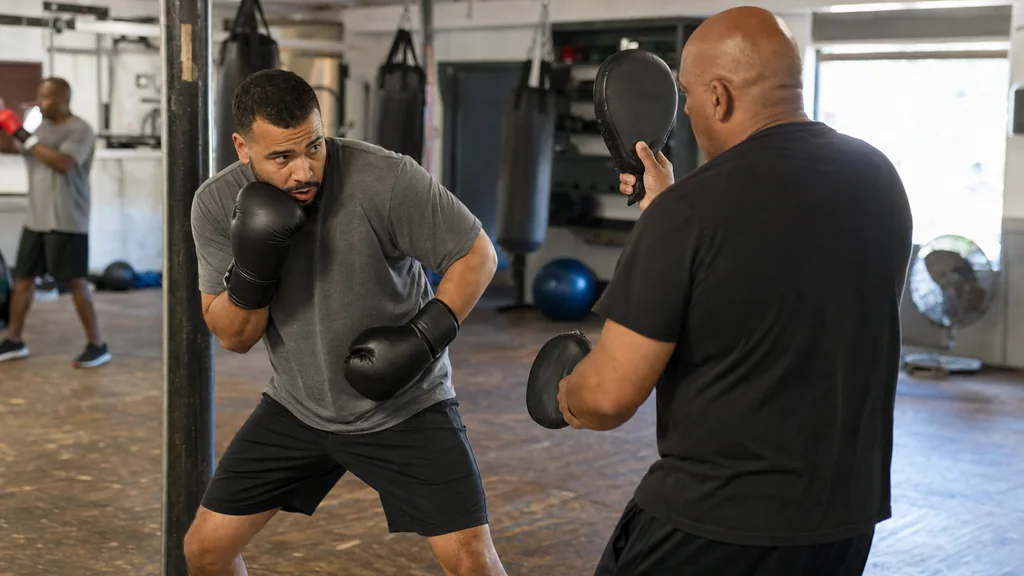
Keep your feet underneath you
Feints become dangerous when they pull your feet apart.
A beginner will often feint by lunging. The front foot shoots forward, the head follows, and the boxer ends up stretched between two positions. If the opponent does not react, the beginner is now in range with bad balance. That is not a feint. That is a gift.
The front foot can be involved, but it must stay small. Think of loading the floor, not diving at the target. The foot gives the opponent a cue and gives you a base for the next punch. It should not leave you stranded.
A useful rule: after every feint, freeze for half a second in stance. If you cannot punch, defend, or step again from that freeze, the feint was too big.
You can practise this with a tape line on the floor. Stand just outside punching range. Feint the jab with a tiny lead-foot pressure. Freeze. Check your stance. Then either jab, step out, or feint again. The line tells the truth. If your head and knee have drifted miles past the front foot, slow down.
Pair the feint with a real next punch
A feint without a next punch is only a habit. It may make the other boxer blink, but it does not punish the reaction.
Build simple pairs first:
- jab feint, jab
- jab feint, cross
- body jab feint, jab to head
- shoulder feint, step back
- jab feint, lead hook
- level-change feint, right hand to the body
Do not collect twenty patterns. Pick two that fit your stance and practise them until they feel calm. The best beginner pair is usually body jab feint to head jab. It teaches level change, eye discipline, balance and restraint without needing a wild combination.
When that is clean, connect it to your go-to boxing combination. For example, if your safe combination is jab-cross-jab, add one feint before it. Feint the first jab, then throw the real jab-cross-jab. The feint makes the familiar combination less predictable without making your boxing messy.
Do not feint at random
Random feints become background noise.
If you twitch every second, the opponent stops caring. Worse, you start spending energy on movements that do not lead anywhere. Your shoulders burn, your feet get loose, and your attacks become slower because every punch has three false starts before it.
Use feints in specific moments:
- when you are just outside range and want to enter
- after your jab has already landed a few times
- when the opponent is parrying too early
- when the opponent is backing up in a straight line
- when you want to draw a counter before stepping off
- when you need a safer way to start an exchange
That last point matters. A feint can make the first move safer because you are not fully committed yet. But it is still boxing. Keep the chin tucked, hands ready, feet underneath you and eyes on the answer.
A technical and tactical review of boxing performance describes boxing performance through punching, movement, defence, distance and tactical behaviour together. Feinting sits in that middle space. It is not just hand speed. It is distance, threat, reaction and choice.
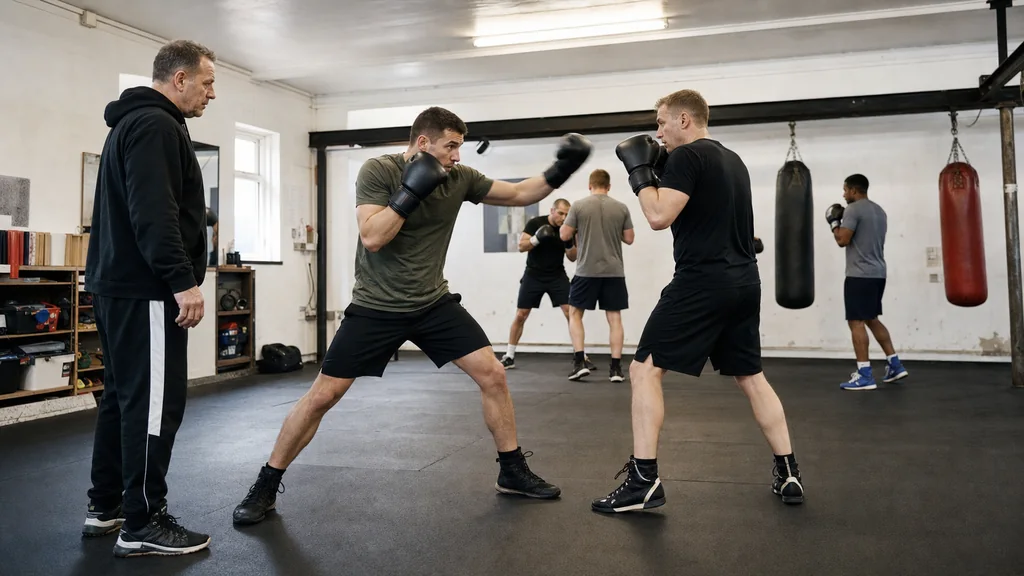
A simple feint drill for class or home practice
Use this as a three-round drill. Keep it controlled. The point is to make better decisions, not to look flashy.
Round 1: real punch, fake punch
Throw a single jab on the bag or pads. Then throw a jab feint. Alternate for two minutes.
The coach or partner should watch whether the first inch of both movements looks similar. If the feint has a different rhythm from the real jab, fix that before adding anything else.
Round 2: feint and answer
With a partner, work at low speed. Boxer A feints the jab. Boxer B gives one agreed reaction: catch, parry, high guard or step back. Boxer A then throws the correct simple answer.
Do not make it competitive yet. You are teaching the eyes to read the reaction.
Round 3: controlled choice
Now Boxer B can choose between two reactions. Boxer A has to read it. If B parries, A goes around or to the body. If B steps back, A steps in behind the jab. Low speed, clean shape, no swinging.
This is where feinting becomes a skill instead of a gesture.
The common mistakes
The first mistake is making every feint too big. You should not have to rebuild your stance after pretending to punch.
The second is feinting before you have earned respect. If your jab has never landed, the opponent may not care about your jab feint. Land the real punch enough times that the fake has a reason to work.
The third is watching your own feint instead of watching their reaction. The value is not the movement you made. The value is the information they gave back.
The fourth is admiring the reaction. If the opponent bites, go. Do not stand there pleased with yourself. Use the opening or reset safely.
The coaching cue
A feint should look like the start of something real.
That is the whole lesson. Use the same eyes, feet, shoulder, rhythm and balance that your real punch uses. Keep it small enough to defend from. Watch the answer. Then make the next punch simple.
If you are in Greenwich, Kidbrooke or nearby, our Recreational Adults boxing classes teach this through coached pad work, partner drills and controlled rounds. You learn when to feint, what to look for, and how to stay safe while doing it.
H&G Team
Writer at Honour & Glory Boxing Club, a community boxing gym in Kidbrooke, South East London.
KEEP READING
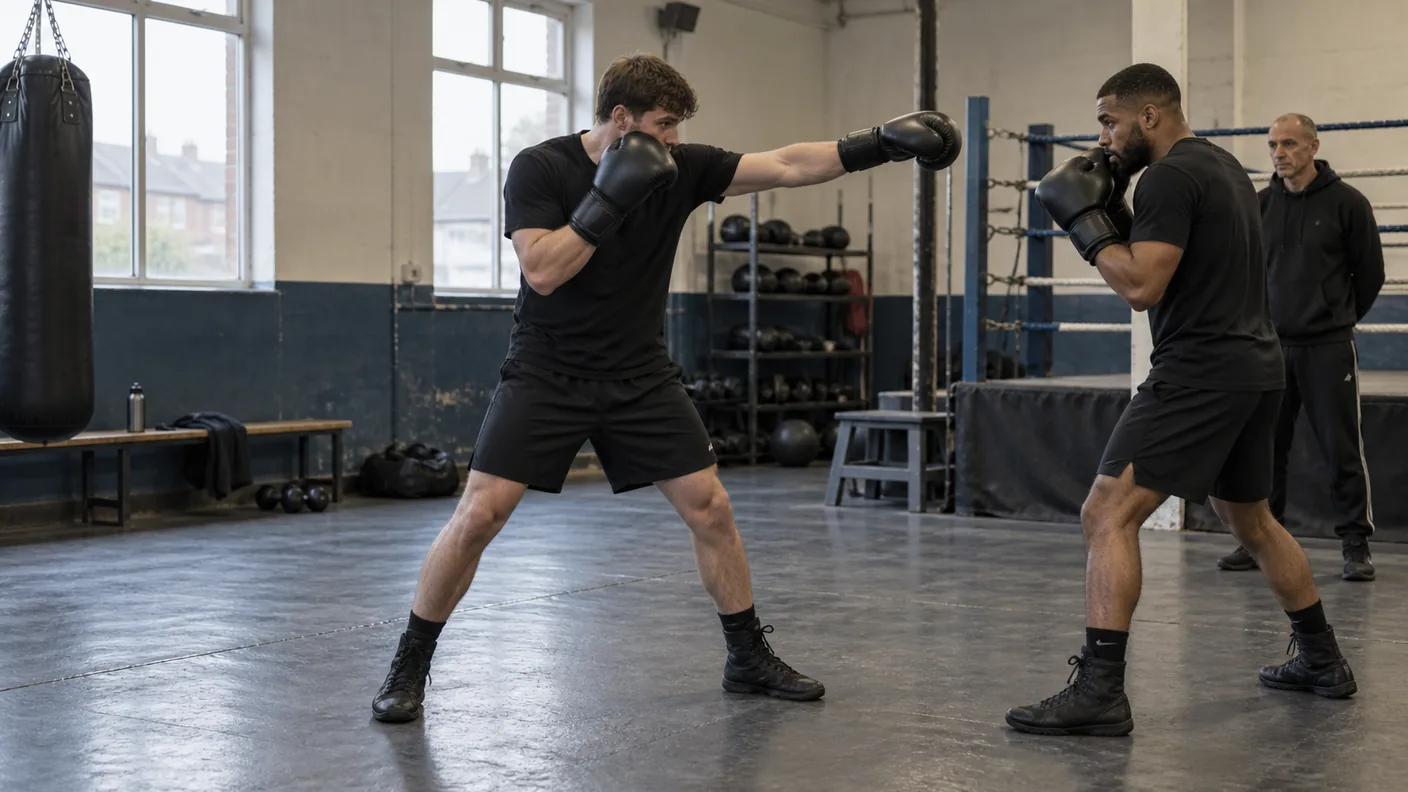
How to Counter a Long Guard in Boxing
Use feints, body-line touches and patient footwork to answer a long guard without chasing the lead hand or reaching.
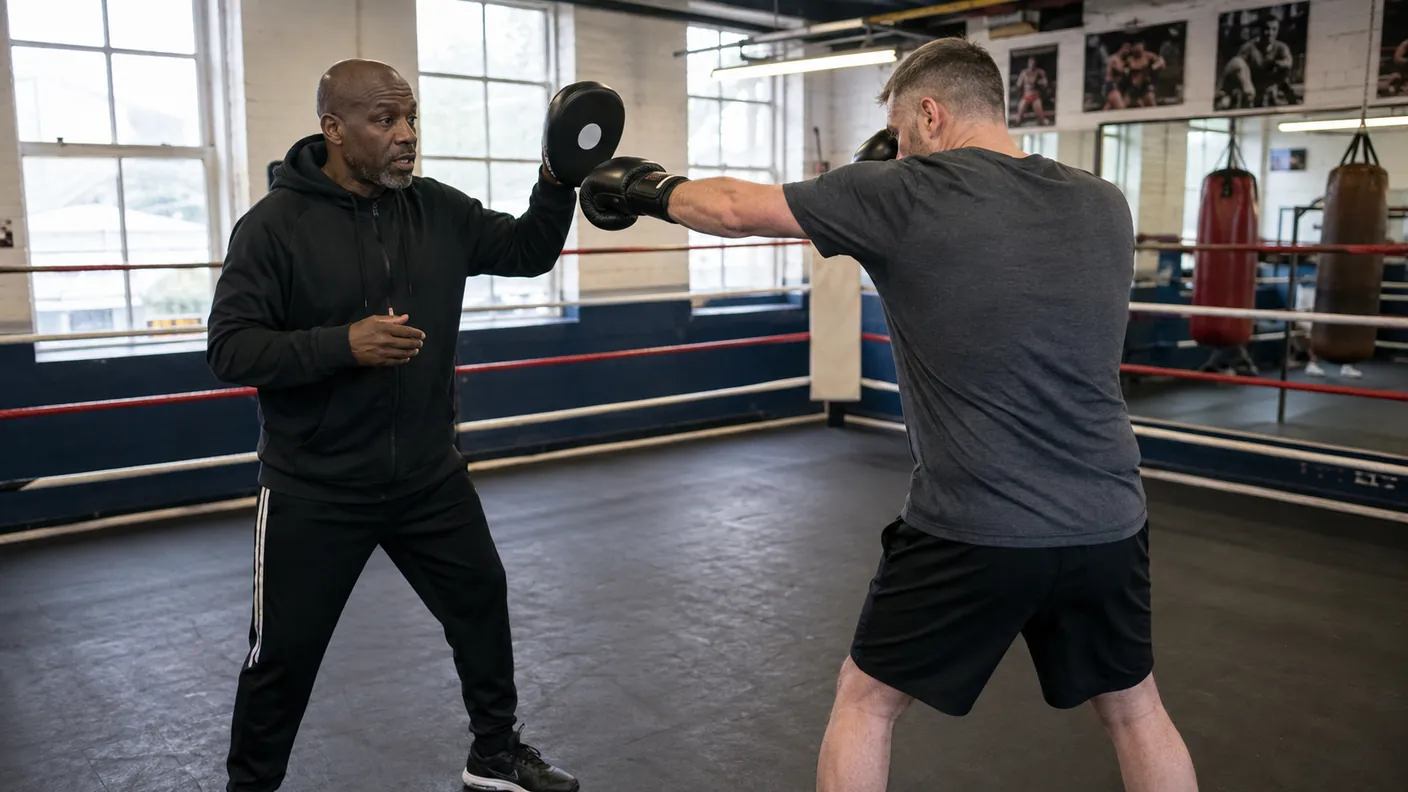
The Delayed Jab: A Simple Boxing Timing Drill
Use a small shoulder cue before the jab to change the rhythm, draw a reaction and keep your stance ready for the next decision.
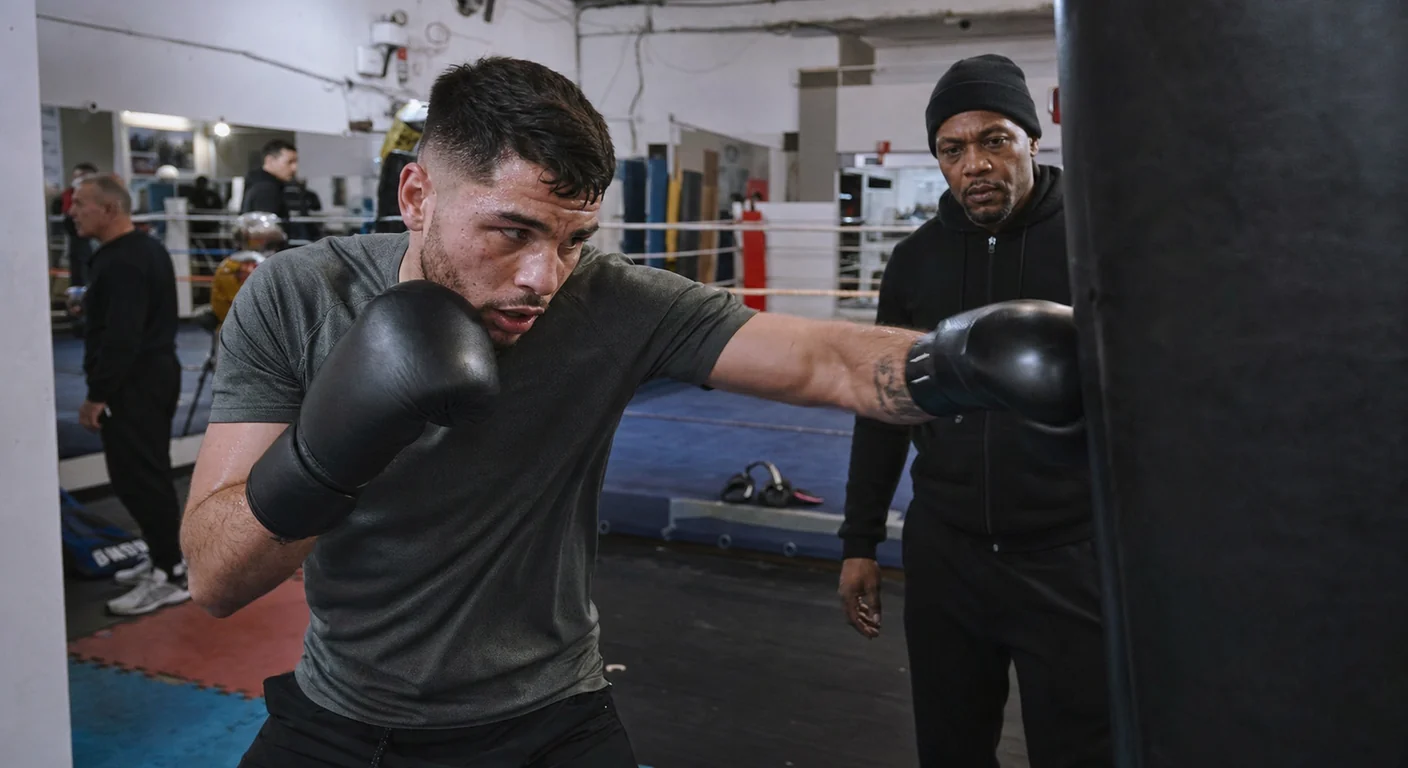
Heavy Bag Work That Transfers to Sparring
The heavy bag builds power, but only if you add defence, feints, distance and clean technique instead of treating it like furniture.
Was this page helpful?
It takes one tap, and it genuinely helps.
Choose your next step
Turn this article into the right action
Some readers are ready to book. Some need the class route first. Pick the route that matches what you actually want.