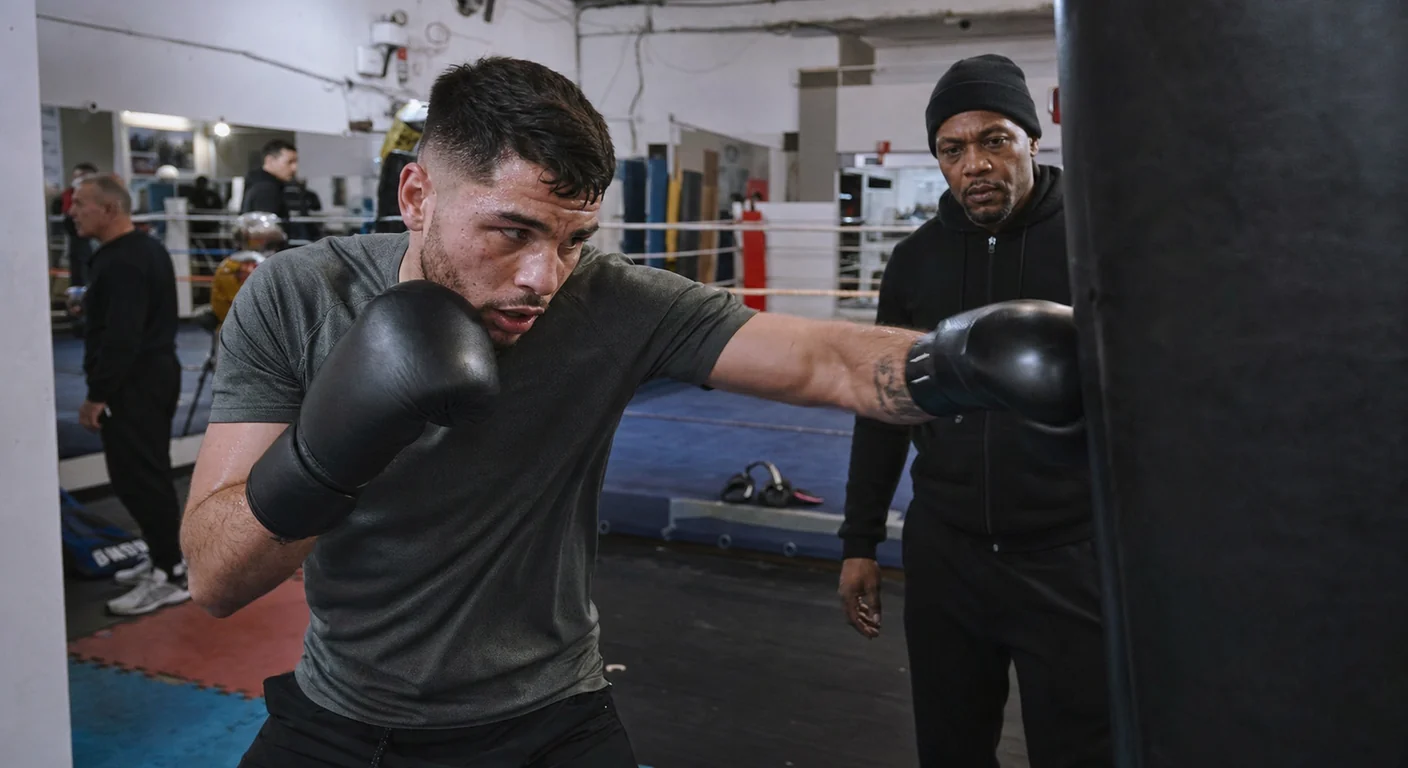
A heavy bag is honest about impact and dishonest about almost everything else.
It will tell you whether you can rotate through a shot, keep punching when tired and hold enough shape to finish a round. It will not jab you back, step away, catch your right hand, punish your lazy exit or make you pay for staring at the target.
That is why bag work can either make a boxer sharper or make a boxer worse. The difference is not the bag. The difference is what you are asking from it.
The video below gives a simple prompt for better bag rounds: do not just hit. Add defence, feints and clean technique every time you work.
That sounds basic. It is also the reason many beginners look strong on the bag and lost when a partner stands in front of them.
The bag is a tool, not an opponent
The bag is brilliant for repetition. You can hit it hundreds of times without someone needing to hold pads, you can feel whether a punch lands cleanly, and you can build the physical habit of turning the body rather than arm-punching.
A biomechanical analysis of boxing punches describes punching performance as a whole-body action, not a glove-only event. Good shots use the floor, legs, hips, trunk, shoulder and arm in sequence. The bag helps you feel that chain.
But the bag does not give you information back. It does not read your shoulder before the right hand. It does not step off after your jab. It does not throw while you admire your work. That missing feedback matters.
If every bag round is just bigger punches and louder noise, you are training one part of boxing while ignoring the part that makes it land.
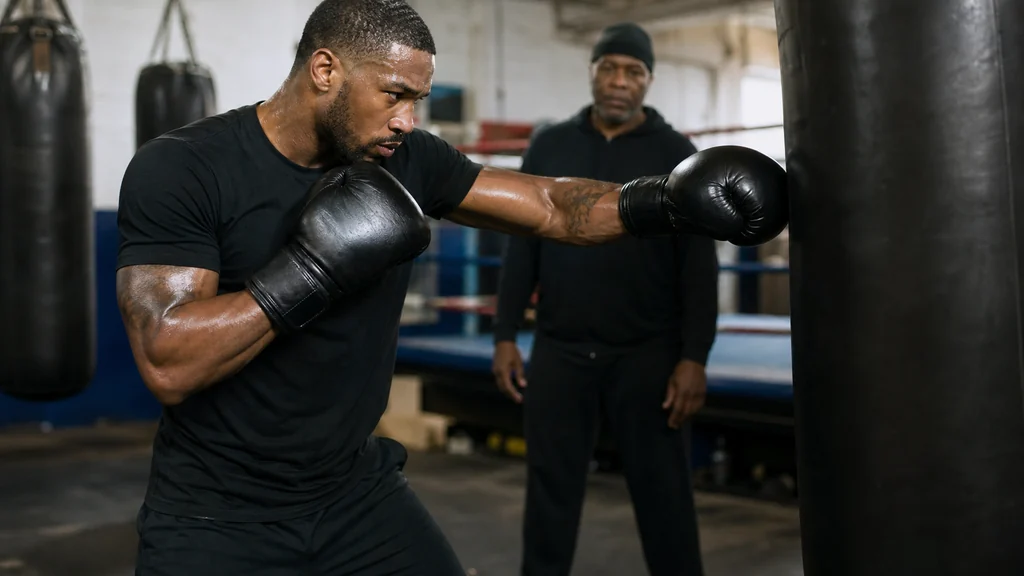
Add defence before and after the punch
Most bad bag work has the same rhythm: hit, pause, look, hit again.
That rhythm does not exist in sparring. After you punch, the other boxer has an answer. They might jab, hook, step around, smother you or make you reset. If your hands drop after every combination on the bag, you are rehearsing the exact moment you get caught.
The fix is simple. Put a defensive action before or after every combination.
For beginners, that can be small:
- Jab-cross, then step back with the hands high.
- Jab-cross-hook, then roll under an imaginary hook.
- Jab to the body, bring the head back over the feet, then guard.
- Cross-hook, then pivot out instead of standing square.
- Touch the bag, slip, then punch again.
You are not trying to turn the bag into a sparring partner. You are trying to stop your body believing the exchange ends when your glove lands.
This is one reason our heavy bag workout for beginners should not be treated as a mindless fitness circuit. The rounds are better when the boxer has a technical job, not just a timer and a target.
Feints make bag work less predictable
The bag does not need to be fooled, but you do.
If you never feint on the bag, you will probably forget to feint under pressure. Then every attack starts the same way: you get set, you show the punch, and you hope the other boxer waits politely.
They will not.
A feint is not theatre. It is a small question. Will the other boxer blink? Raise the guard? Step back? Reach to parry? Freeze for half a beat? Even before sparring, you can practise making your attacks less obvious.
Try this round:
- 30 seconds: jab only, clean and relaxed
- 30 seconds: jab feint, then jab
- 30 seconds: jab feint, then right hand
- 30 seconds: shoulder feint, then left hook
- 30 seconds: level change, then jab to the body
- 30 seconds: freestyle, but every attack starts with a feint or a touch
Keep the feints small. A giant twitch is just another tell. The best feints look close enough to the real action that they steal a reaction without wrecking your stance.
Our guide to using feints in boxing goes deeper on this, but the bag is where the habit can start. Feint, punch, defend, reset. Not pose, blast, admire.
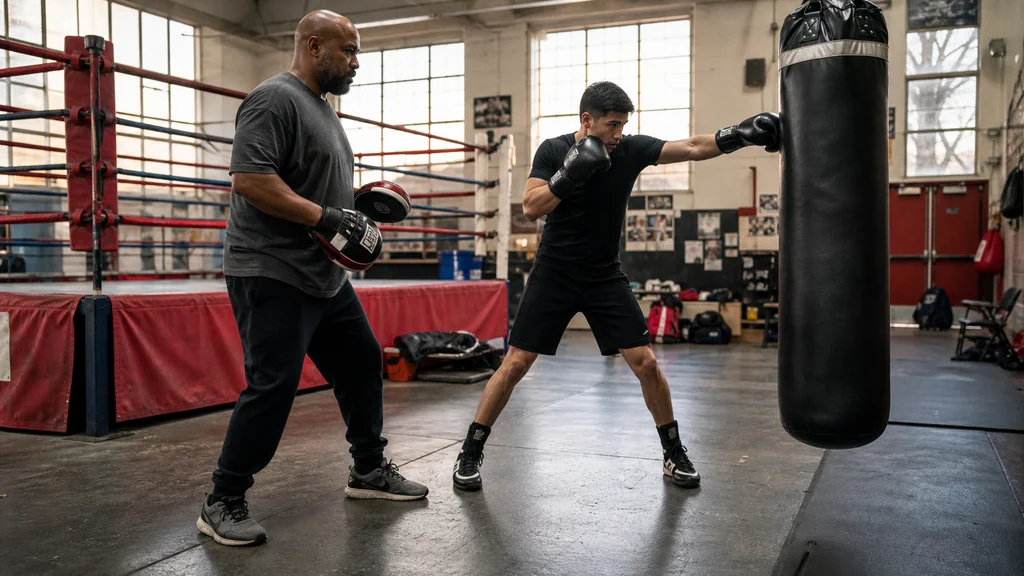
Technique matters most when the bag cannot punish you
The most dangerous thing about the bag is that it lets sloppy work feel successful.
You can lean too far forward and still hit hard. You can cross your feet and still land. You can drop the rear hand after the hook and nothing happens. You can turn every punch into a shoulder swing and convince yourself the thud means progress.
That is why technique has to be the main rule, especially when you are tired.
Look for these checks:
- Does the punch come back to guard?
- Are your feet still under you after the shot?
- Is your chin protected when you change levels?
- Are you punching from range, or reaching because the bag moved?
- Are you breathing on the punch, or holding tension?
- Can you defend immediately after the combination?
A boxer who keeps shape on the bag is easier to coach into partner work. A boxer who only chases noise has to be untaught first.
This is not about being pretty. It is about keeping the punch useful. A technically ugly shot can still shake the bag. It is less likely to survive a moving target.
Range is where bag habits usually fail
A static bag tempts you to choose your perfect distance and stay there.
Real boxing does not give you that luxury. The target moves. You move. Sometimes the bag swings away and you chase it with your chin. Sometimes it swings back and you smother your own work. Those are not small details. They are the difference between punching from balance and falling into the other boxer.
Use the bag movement instead of fighting it.
Let it swing. Step with it. Jab as it comes back. Step slightly off the line before the hook. If it moves away, do not throw your biggest shot into empty space. Reset your feet, touch it with the jab, then punch when the distance is real.
That is where heavy bag work starts to connect with sparring. You learn that power is not just effort. It is effort delivered at the right distance, with your body in position and your defence still available.
A four-round heavy bag structure that teaches boxing
Use this when you want a bag session that carries into class, partner drills and controlled sparring.
Round one: clean shape
Box at 60 percent. Every punch must come back to guard. Every combination finishes with a step, pivot, slip or roll. If your feet finish crossed or your chin finishes in front of your lead knee, slow down.
The goal is not to win the bag round. The goal is to look like you could defend yourself after every attack.
Round two: feint first
No combination starts naked. Use a jab feint, shoulder feint, small level change or lead-hand touch before you punch. Do not make the feint bigger than the punch.
If you keep forgetting, that tells you something useful. You have not trained the habit enough.
Round three: moving bag
Let the bag swing and work with its movement. Step around it. Jab as it comes back. Punch only when you have range. If you reach, reset. If you smother yourself, step out and start again.
This round teaches patience. It also teaches you not to panic when the target is not exactly where you wanted it.
Round four: pressure finish
Raise the pace, but keep the rules. Defence after every combination. Feints before attacks. Feet under you. Hands back. If the last minute becomes wild arm-swinging, you have stopped training boxing and started training tiredness.
Tiredness matters, but it should not get to rewrite the technique.
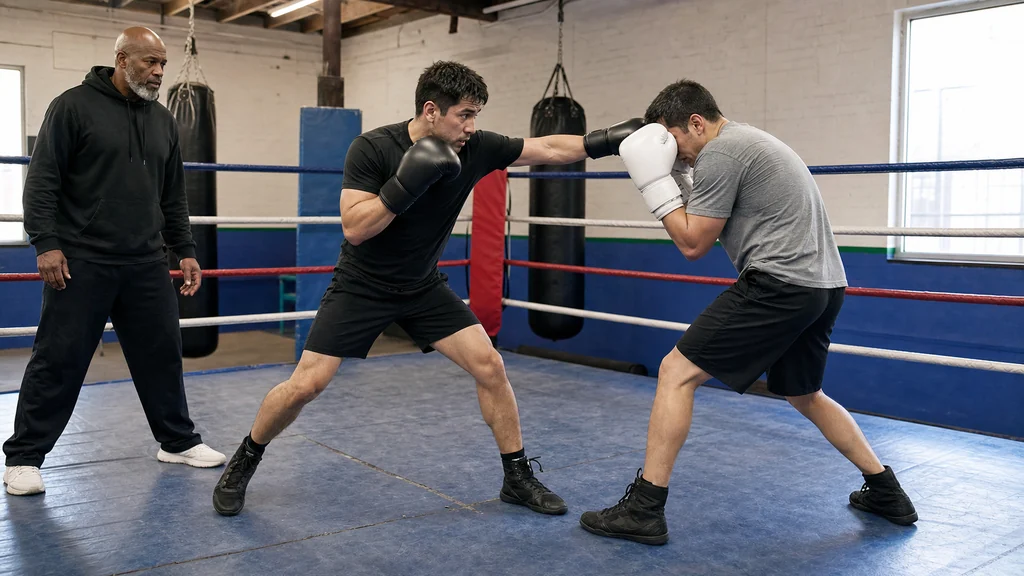
What a coach should correct first
Do not correct everything at once. Pick the error that would cost the boxer first in sparring.
If the hand drops after the jab, fix that before adding longer combinations. If the boxer reaches every time the bag moves away, fix range before asking for more power. If they freeze after punching, add the defensive finish before increasing pace.
Research on anticipation in combat sports backs up what coaches see in the gym: better fighters read early information more effectively. If your bag work teaches you to announce the punch with a shoulder dip, a planted foot or a long pause, you are giving away information before the punch starts.
Good coaching makes the bag less forgiving. Not unsafe. Not chaotic. Just closer to the demands of boxing.
The standard to chase
A useful bag round should look like boxing, not furniture abuse.
You punch, defend, feint, move, reset, change range and keep shape. You still hit hard. You still work. You still get tired. The difference is that the tiredness is sitting on top of proper habits rather than replacing them.
That is what transfers.
If you are in Kidbrooke, Greenwich or nearby, our Recreational Adults boxing classes teach bag work as part of boxing: stance, range, defence, feints, pad work, partner drills and controlled progression, not just hitting as hard as possible for three minutes.
H&G Team
Writer at Honour & Glory Boxing Club, a community boxing gym in Kidbrooke, South East London.
KEEP READING
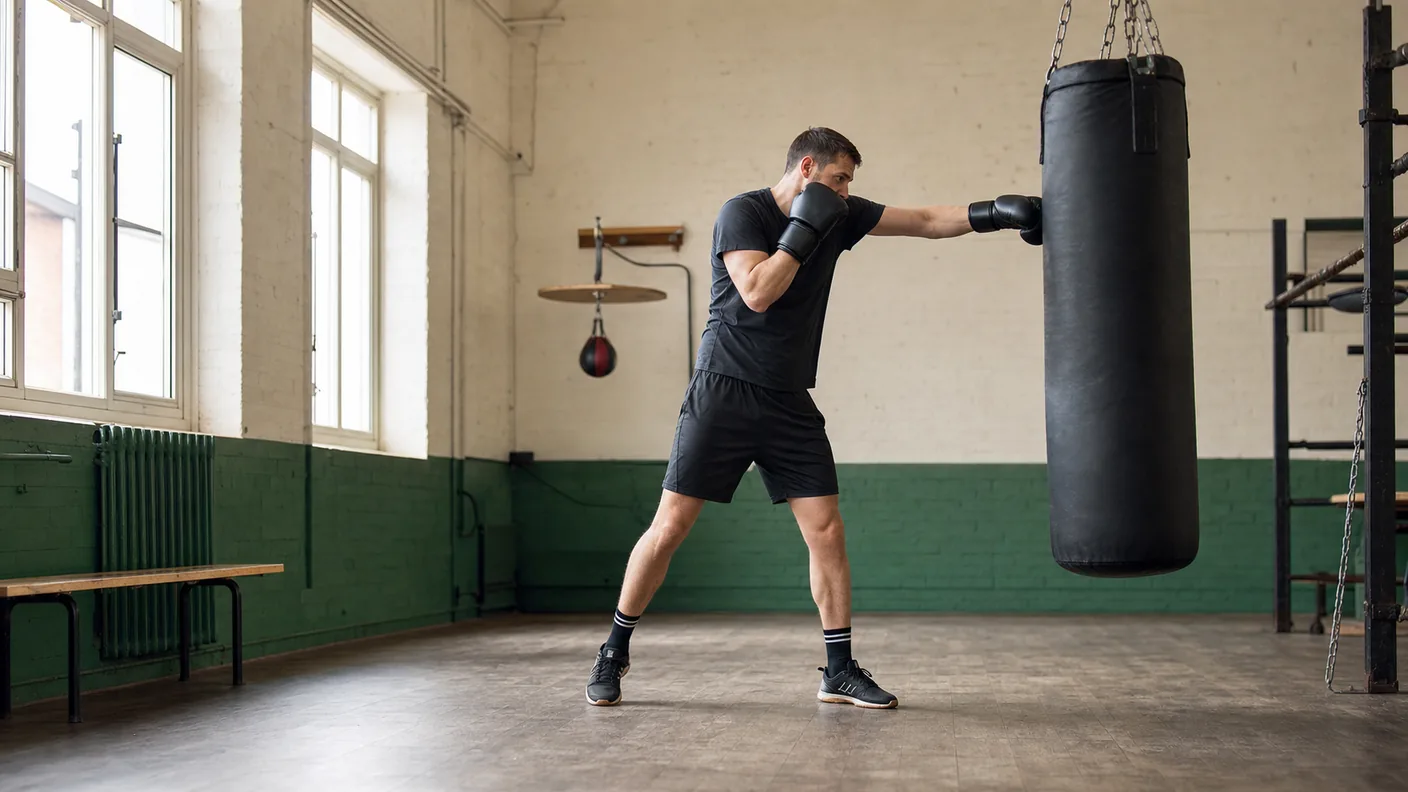
How Hard Should You Hit a Heavy Bag?
Most bag rounds do not need maximum force. Learn when to hit hard, when to stay light and how to keep boxing technique intact.
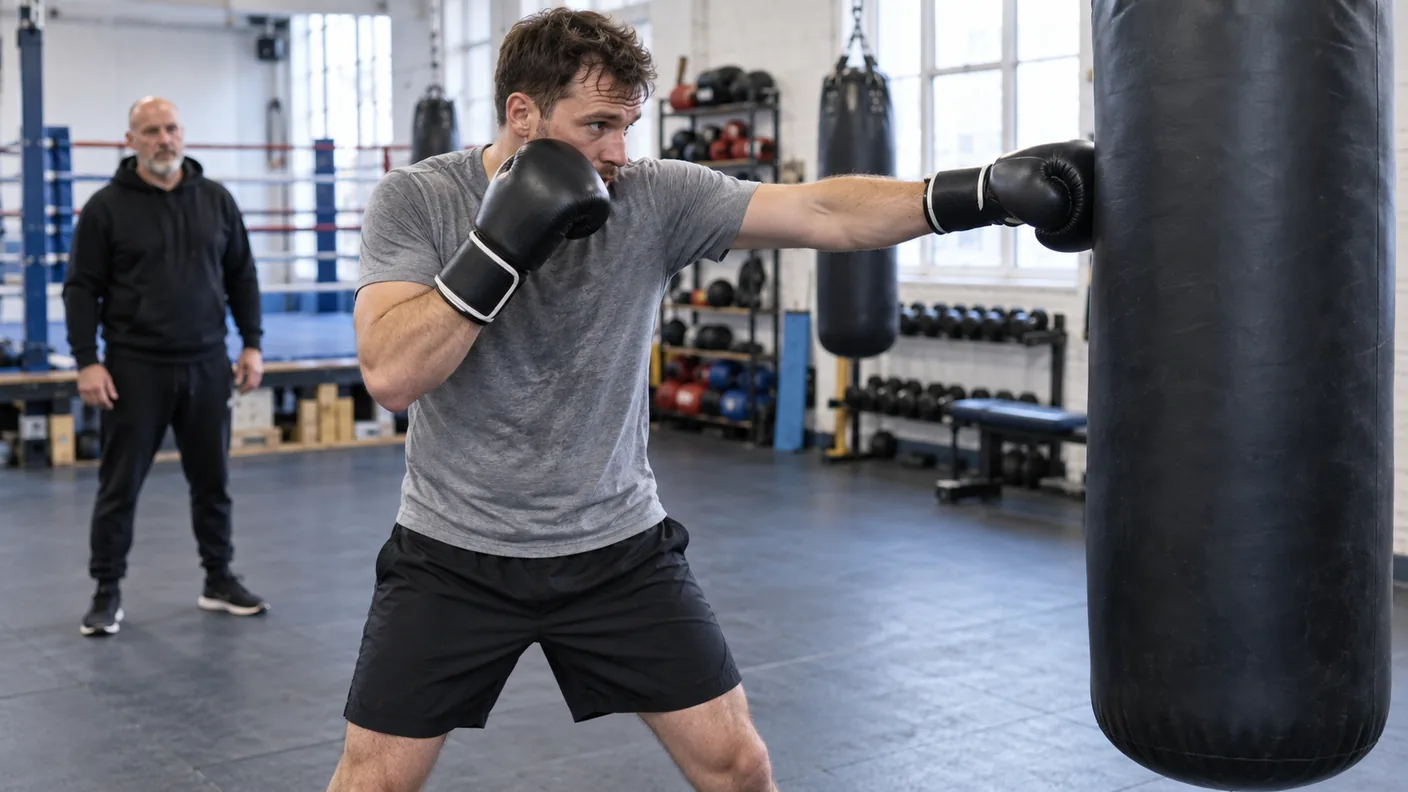
Three-Line Jab Drill for Better Heavy Bag Range
Use three simple floor markers to build a cleaner lead hand, steadier range and a more useful exit from the heavy bag.
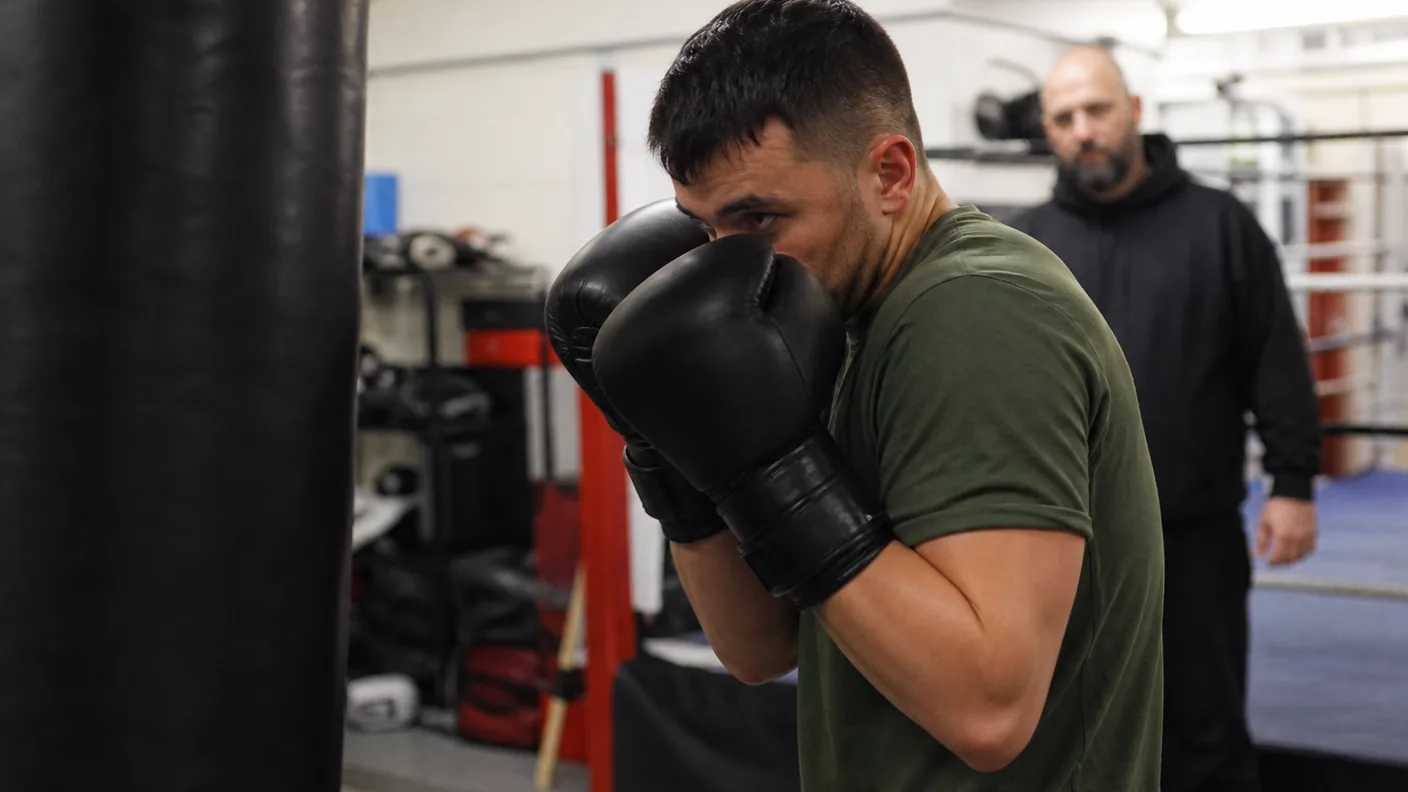
Stop Smothering Your Punches on the Heavy Bag
A close-range heavy bag drill for finding punching room, keeping your guard useful and building compact power without pushing.
Was this page helpful?
It takes one tap, and it genuinely helps.
Choose your next step
Turn this article into the right action
Some readers are ready to book. Some need the class route first. Pick the route that matches what you actually want.