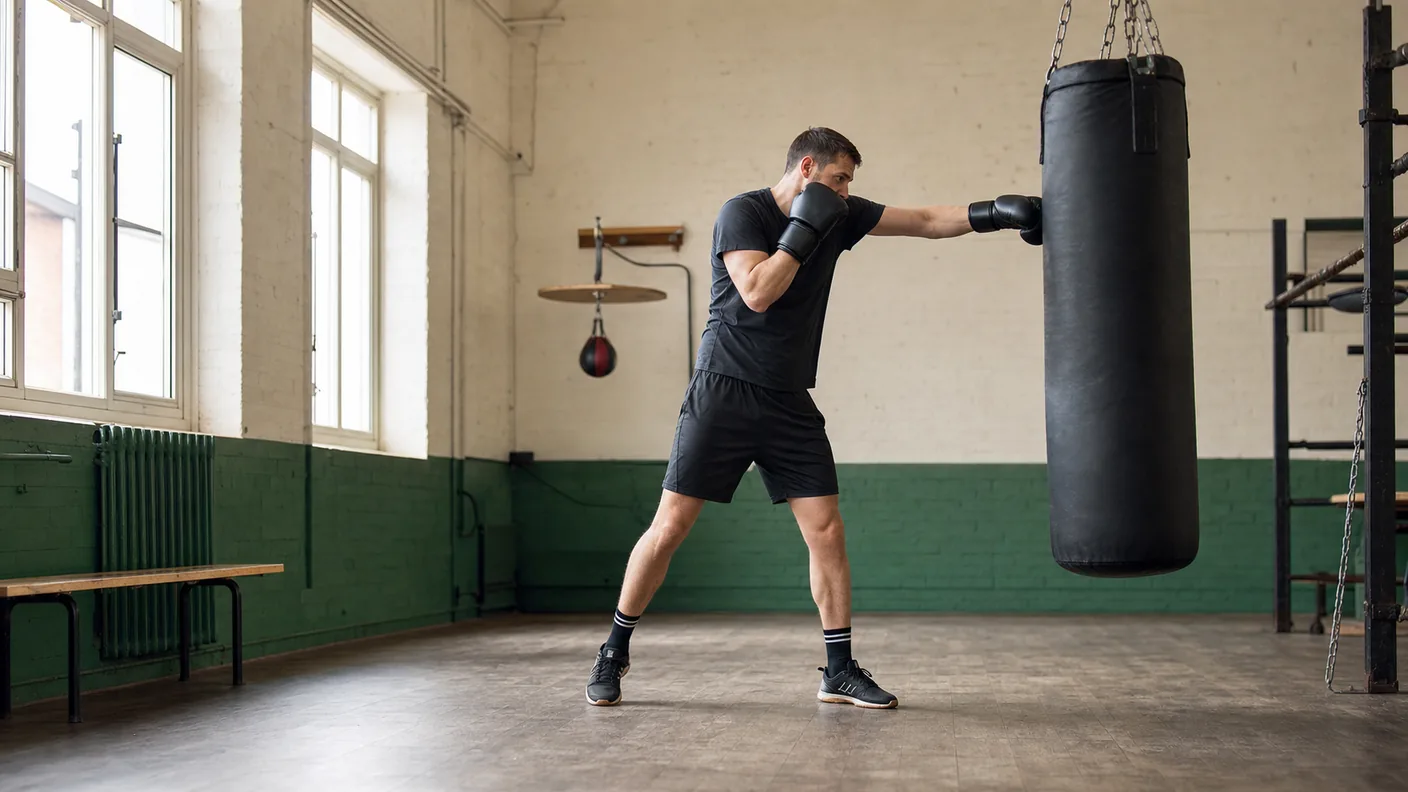
Most people hit a heavy bag too hard, too soon and for too long.
A heavy bag is where you learn to put weight into a punch. But if every round is an attempt to make the loudest possible noise, it starts teaching poor habits: reaching, pushing, holding your breath and falling over the front foot.
The useful answer is simple: most bag work should sit below maximum force. Save your hardest punches for short, planned bursts after you are warm, balanced and technically organised. The rest of the time, hit with enough intent to get honest feedback while still being able to move, defend and repeat the work cleanly.
The bag is not a strength test
A heavy bag absorbs impact. It does not care whether your rear hand returns to guard or whether your feet cross after a hook. It will let a messy punch feel successful because the bag moved and your glove made a good sound.
Boxing research describes a straight punch as a whole-body sequence: force starts at the floor, moves through the legs and trunk, then reaches the arm and fist (boxing punch biomechanics research). The hand is the last part of the chain, not the whole chain. When you try to force every shot, the arm often takes over and the rest of the body loses its timing.
A good bag round should leave you able to answer three questions honestly:
- Did I stay balanced after the punch?
- Did my hand return to guard without being dragged back?
- Could I have moved or defended straight away?
If the answer is no, the punch was harder than your technique could currently support.
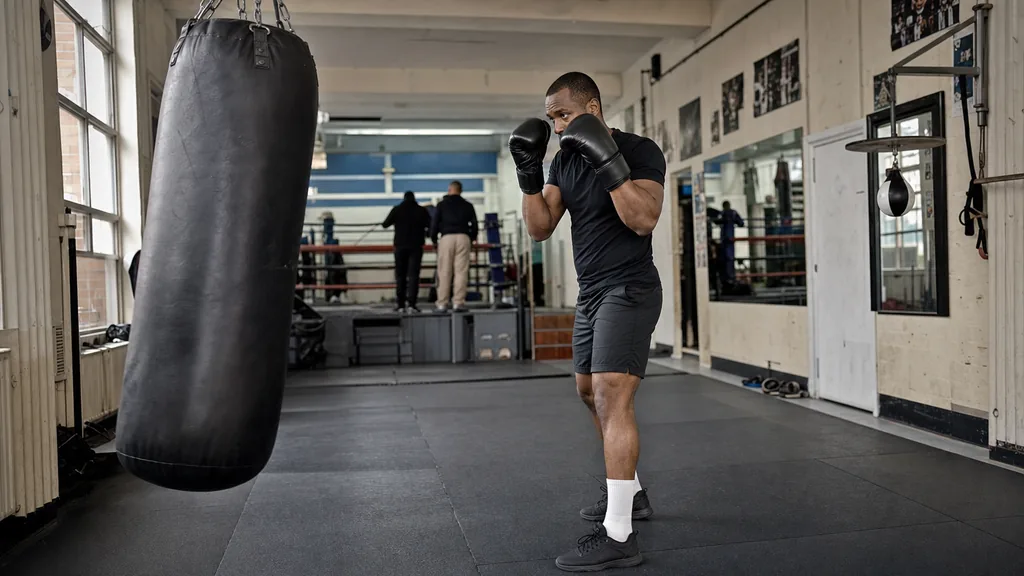
Use three effort levels, not one
You do not need a precise gadget reading to manage bag intensity. Think in three useful lanes instead.
Light technical work: about 40 to 60 per cent
This is where beginners should spend most of their early bag time. The punches are not taps, but you can stop, hold your stance and explain what went wrong.
Use it for warming up, learning combinations, practising footwork and defensive exits. Light technical work is where useful repetitions live. If the jab returns to guard 100 times at this intensity, you are building a habit.
Working rounds: about 60 to 75 per cent
This is the middle ground for two or three-minute rounds. Work hard enough to get tired, but not so hard that every punch is a wager on your wrist, shoulder or balance.
Aim for rhythm: jab, move, reset; combination, exit; body shot, guard, step out. A clean shot lands, transfers force and comes back. A pushed shot leaves you trying to catch yourself.
Power bursts: about 80 to 90 per cent
Hard punches have a place. Use them in short sets after the technique is settled. Put three sharp jab-crosses into the final ten seconds of a round, then reset fully. You are practising commitment, not trying to empty your tank with twenty wild swings.
There is a reason the England Boxing coaching handbook treats balance, controlled movement and the return to guard as part of a complete punch. A shot is not finished when it lands. It is finished when you are safe and ready to act again.
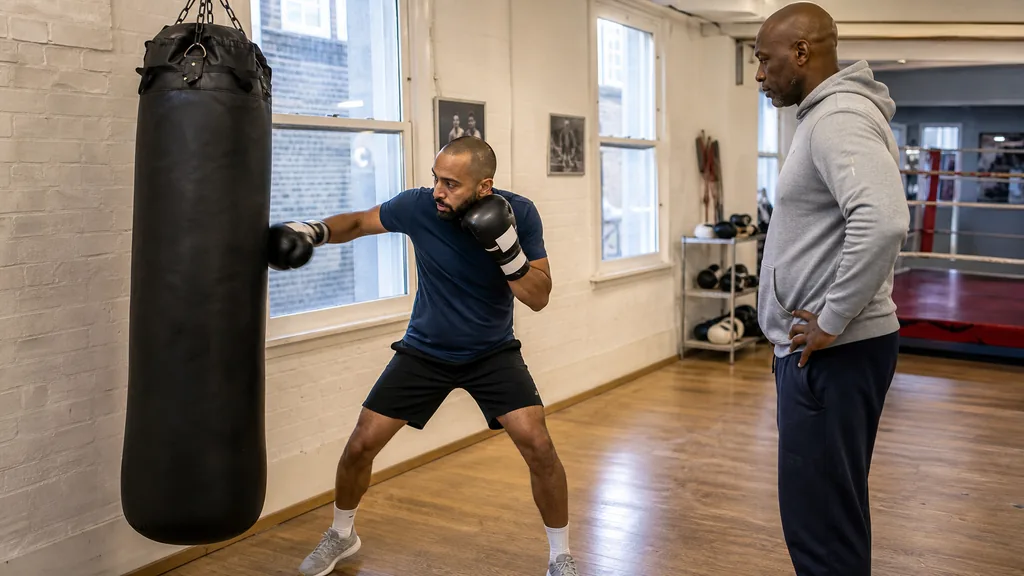
Signs that you are forcing the bag
You are probably going too hard if your shoulders creep up, you hold your breath or your feet stop moving. The same applies if you need a huge wind-up for every hook or the rear hand stays out after the cross.
Watch the bag. A heavy bag should move after a committed punch, but a massive swing often means you pushed through the target instead of snapping the punch and recovering. Throw a moderate cross, freeze for one second, then check your balance. That tells the truth better than the noise of the shot.
Do not try to solve a technical error by hitting harder. More force magnifies the mistake. It does not correct it.
A better way to structure a bag round
Give each round a job. A round without a job usually becomes a tired person throwing the same favourite shot until their guard drops.
Try this four-round session after a proper warm-up.
Round one: shape and distance
Work at 50 per cent. Use the jab to find range, add a cross only when your feet are under you, then take a small step out. Do not chase the bag if it swings away.
Round two: body and head changes
Work at 60 to 70 per cent. Throw short combinations with a change of level, such as jab to the head, cross to the body, then move. Keep the knees soft. If the guard drops or you lose balance, shorten the combination.
Round three: controlled power
Work at 70 per cent for most of the round. Every 20 to 30 seconds, choose one power burst: two or three straight shots, one body hook or a short combination. Return to the middle pace immediately afterwards.
This teaches a better use of power. You are not trying to be hard for three minutes. You are learning when to sit down on a punch without abandoning the rest of your boxing.
Round four: finish with discipline
Start at 60 per cent. In the final 20 seconds, raise the pace only if the stance and guard are still there. If your shape falls apart, finish with clean jabs and movement. A tired, organised boxer is learning. A tired, swinging boxer is rehearsing a problem.
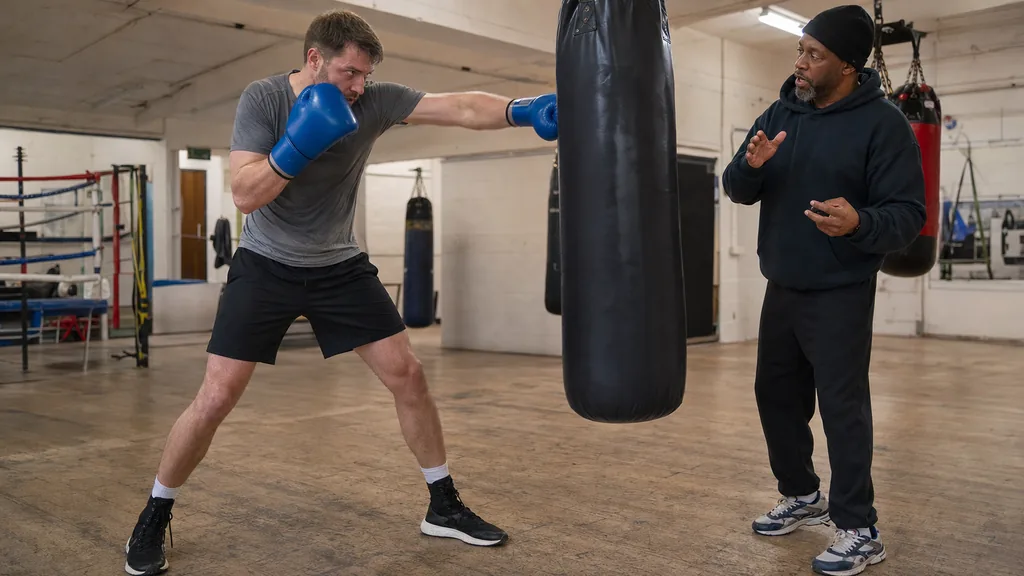
Your hands and joints get a vote
Bag work asks your hands, wrists, elbows and shoulders to absorb repeated impact. Wraps and suitable gloves matter, but they do not make pain irrelevant.
If pain changes your punch, grip or guard, stop. Swelling, numbness, tingling, a snap or pop, or an inability to move the hand or wrist normally need medical advice, not another hard shot. The NHS advises avoiding forceful activity while a wrist injury is painful and returning gradually only when it is pain-free, supple and strong (NHS wrist injury guidance).
For ordinary fatigue, reduce power, shorten the round, work on the jab or move to shadow boxing. You do not need to earn every session by smashing the bag.
What good power feels like
Good power feels connected, not desperate. Your feet are under you. The hip turns without the shoulders flying forward. The punch lands in range, your balance stays intact and the hand returns before you have time to admire it.
The bag moves because the punch travelled through your body cleanly, not because you shoved it with your chest behind it.
If you want a structured starting point, our heavy bag workout for beginners gives you simple round-by-round work. Once the basics feel reliable, use our guide to building punching power without losing form to refine the rear straight and your base.
At Honour and Glory in Kidbrooke, the Recreational Adults boxing classes use bags alongside pads, footwork and coach feedback. The aim is not to turn every member into a hard puncher overnight. It is to help you hit cleanly, work hard and leave with better habits than you arrived with.
H&G Team
Writer at Honour & Glory Boxing Club, a community boxing gym in Kidbrooke, South East London.
KEEP READING
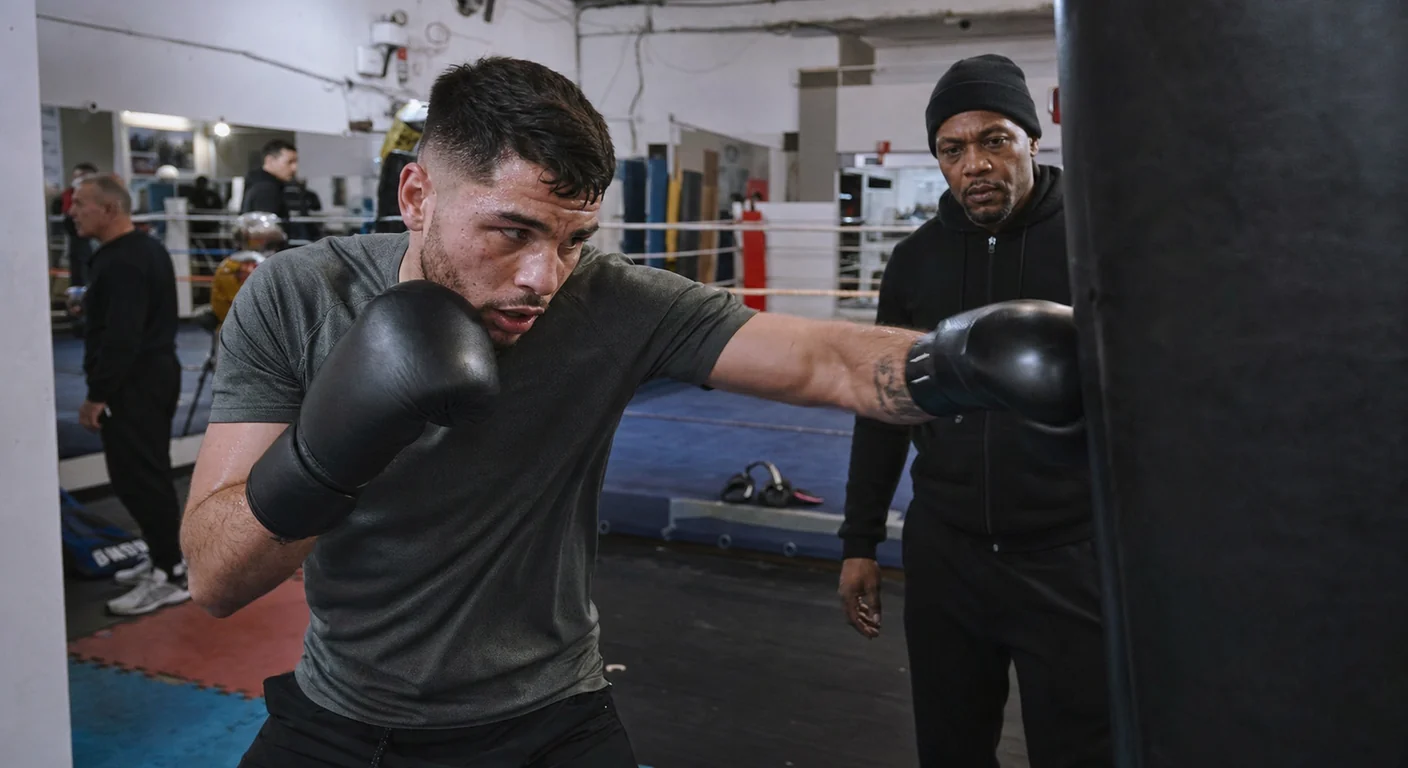
Heavy Bag Work That Transfers to Sparring
The heavy bag builds power, but only if you add defence, feints, distance and clean technique instead of treating it like furniture.
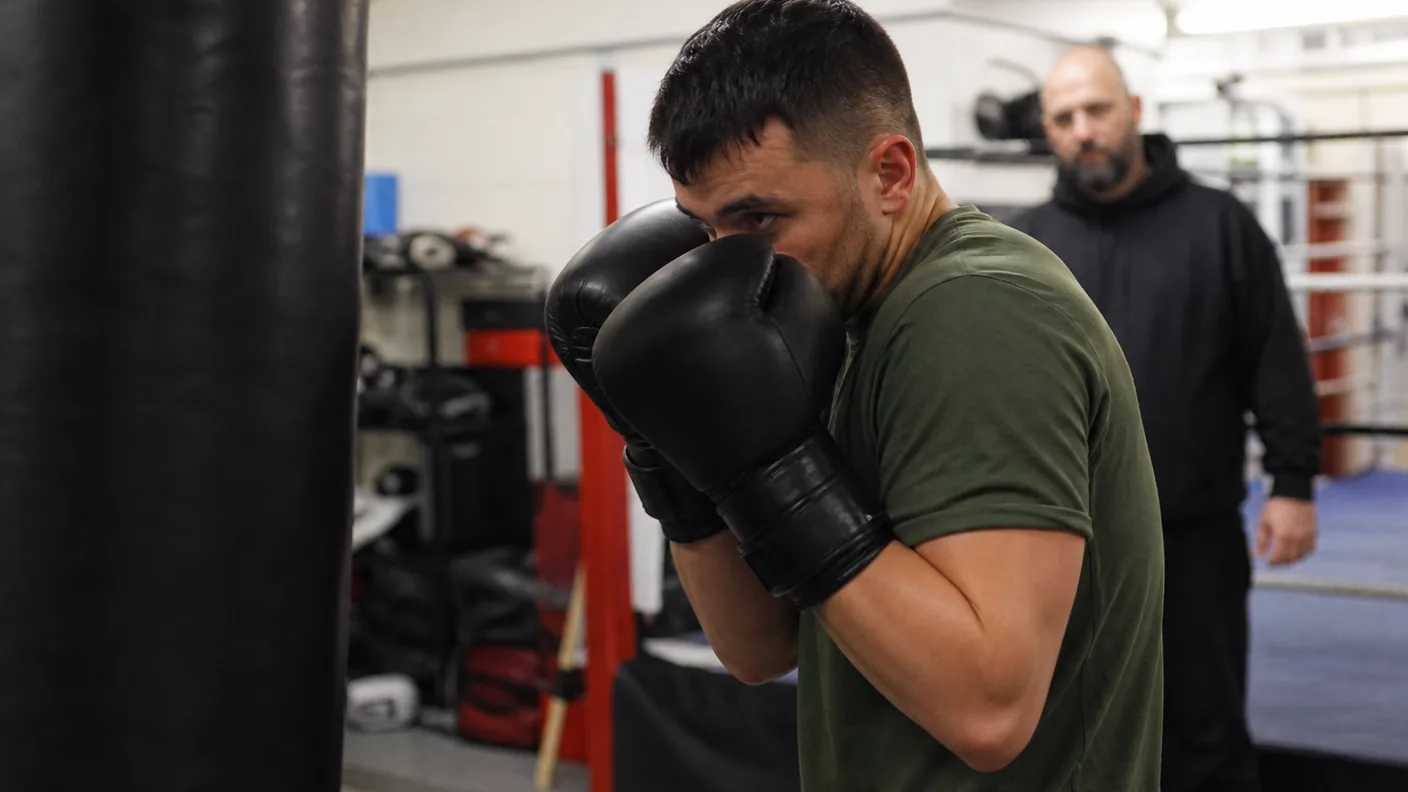
Stop Smothering Your Punches on the Heavy Bag
A close-range heavy bag drill for finding punching room, keeping your guard useful and building compact power without pushing.
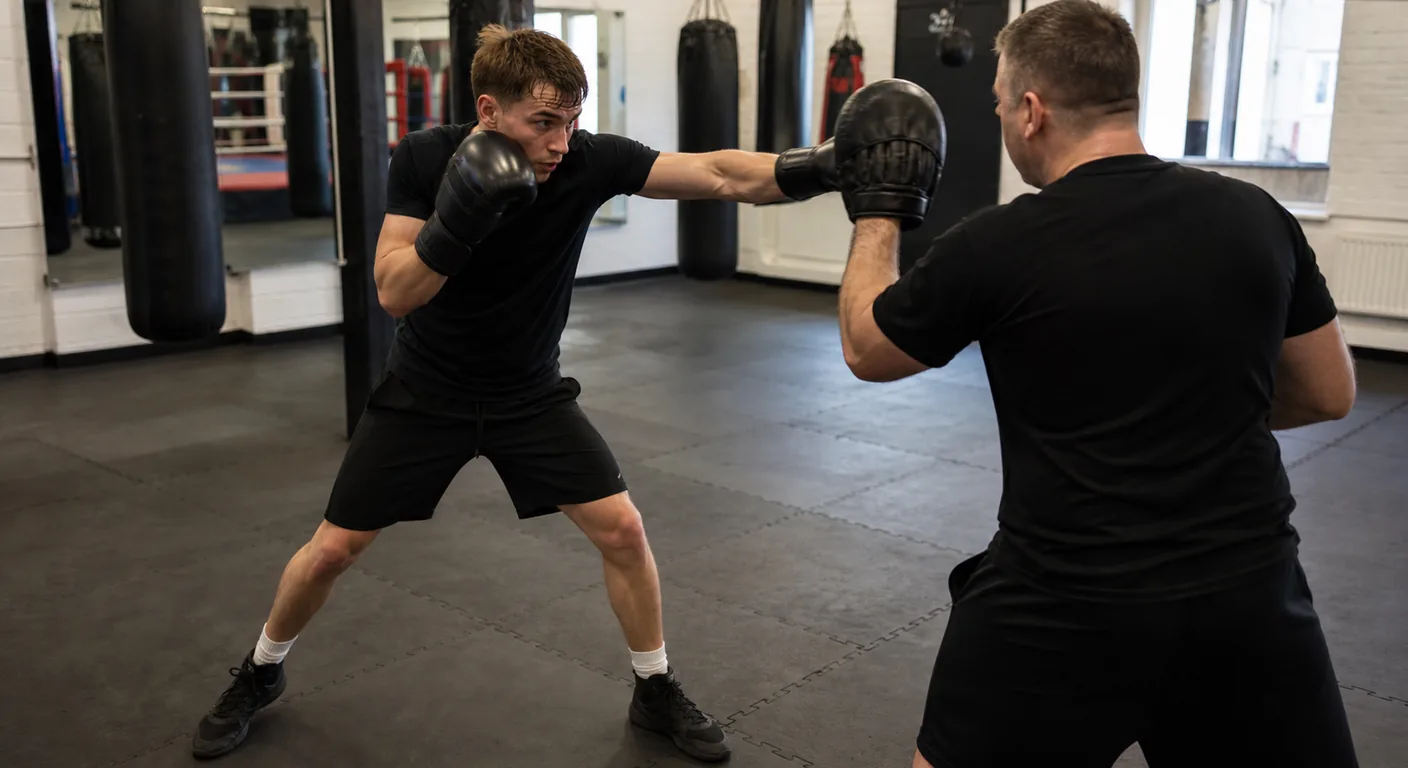
How Hard Should You Hit Boxing Pads?
New to pad work and unsure how much power to use? Learn how to hit with intent without turning every round into a balance and injury test.
Was this page helpful?
It takes one tap, and it genuinely helps.
Choose your next step
Turn this article into the right action
Some readers are ready to book. Some need the class route first. Pick the route that matches what you actually want.