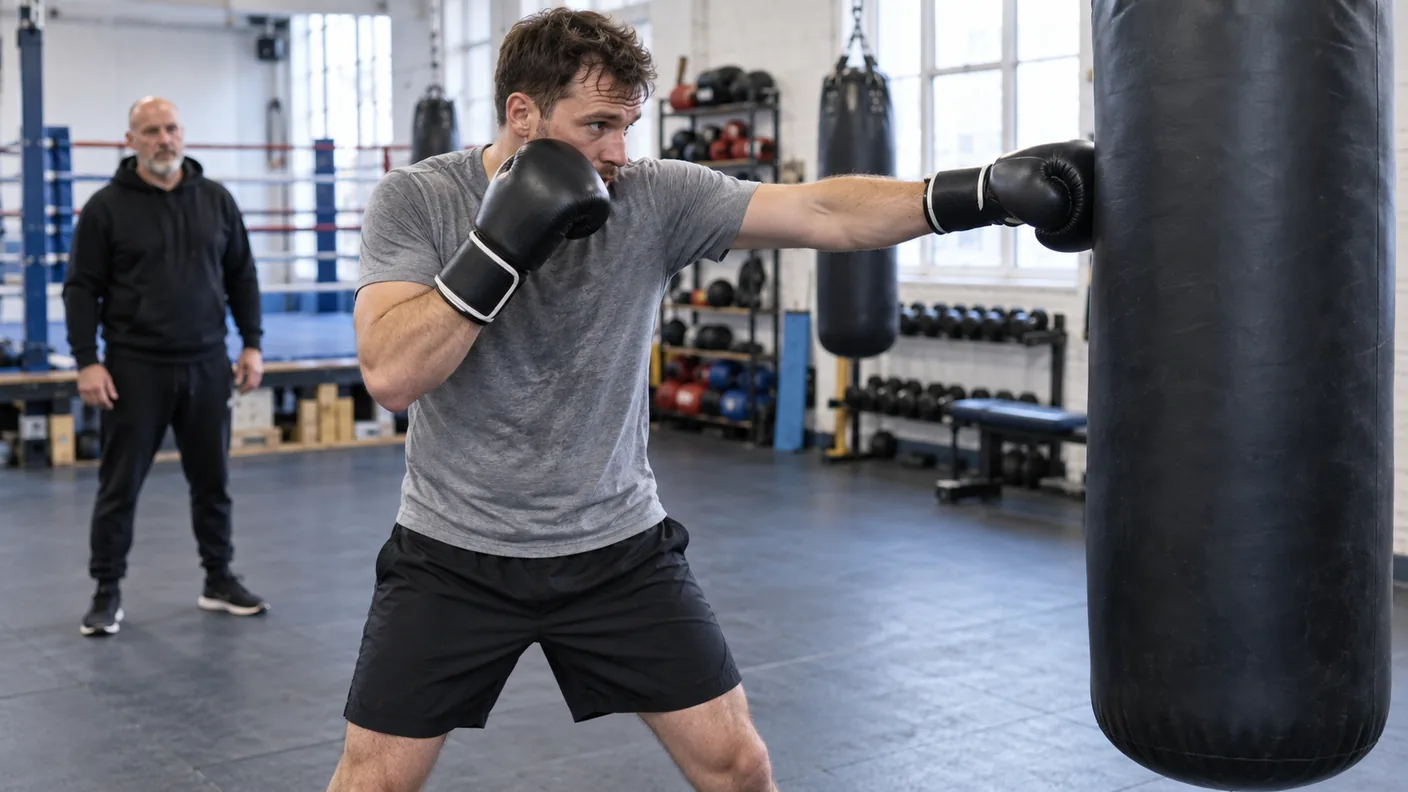
Most people use a heavy bag as if it has only one place to stand: directly in front of it, throwing until the shoulders burn.
That is fine for a hard conditioning round. It is a poor way to improve a lead hand. The bag will let you reach, lean and stay in range after every jab because it never asks a question back.
The three-line jab drill gives the feet and lead hand a smaller, more useful job. Mark three short lanes on the floor, touch the bag from each position with a clean jab, then leave with enough shape to do it again.
Watch the demonstration below first. Then use the version here at a controlled pace, where the point is clean position rather than noise or fatigue.
Why three lines make a jab round more honest
A jab is not only an arm moving forwards. It starts from a stance, travels on a short route and should leave you able to see, cover or move after it lands.
That is why a floor marker can be useful. Three small lanes give you three places to arrive from without turning the round into a dance routine. The middle lane asks whether you can jab without leaning. The two outside lanes ask whether you can change the angle of your lead foot while your shoulders and guard remain organised.
England Boxing's coaching handbook puts a well-balanced stance and fluent movement at the base of effective punching and defence. It also flags overcommitting across the centre line as a mistake that costs balance and the next shot. That is exactly what this drill exposes.
The marker is not magic. It simply makes a bad habit harder to hide. If you have to stretch your head past the front knee to touch the bag from one lane, you are too far away. If the rear foot trails behind the body, the lane is too ambitious. Move the marker closer and make the jab look like boxing again.
Set the three lines where they help
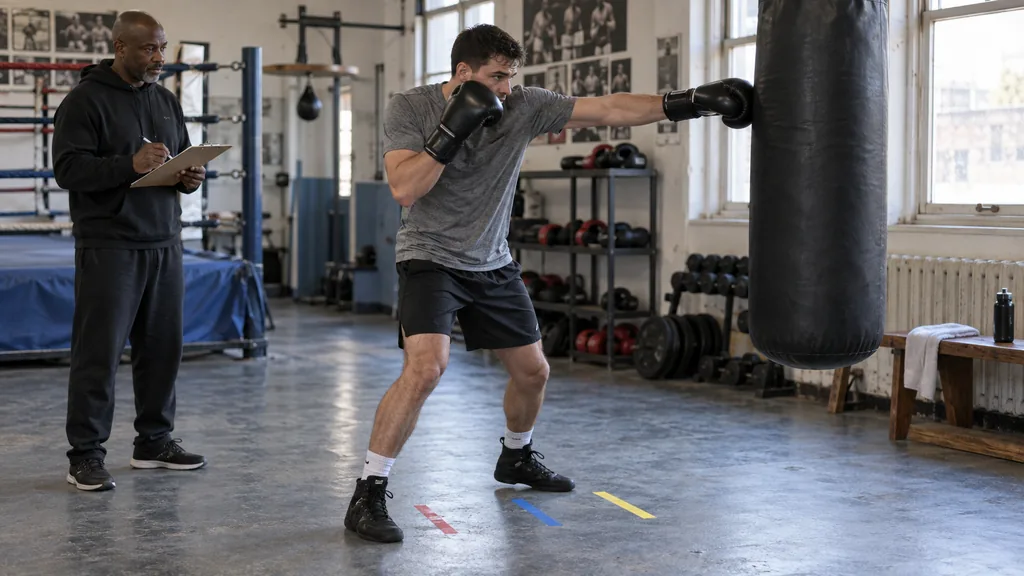
Use three short strips of tape, three flat cones or three chalk marks on a clear floor. Place them parallel to the bag, roughly one small step apart. They do not need exact measurements. They need to be close enough that you can move between them without crossing your feet.
Stand at normal jab range in the centre lane. For an orthodox boxer, the lead foot is slightly nearer the bag and the rear foot stays behind its own track. Southpaws use the same principle on the other side.
The outer markers should not pull you far around the bag. They are a reminder that the bag has more than one usable line, not an invitation to circle wildly. If you cannot keep the bag in front of your shoulders, bring the markers closer together.
Look at the bag, not your shoes. Check the markers between repetitions if needed, but keep the eyes up while you move. Our guide to why boxers look at the floor explains why that habit matters when a coach or partner is in front of you.
The lead hand moves while the rear hand protects
Start with the simplest version: the lead hand does the work and the rear glove stays close to the cheek.
That sounds obvious until the bag begins to move. A common error is letting the rear hand float down as the jab goes out, then bringing both gloves back late. The first punch may land, but the stance has stopped giving you a useful guard.
Another error is trying to add power before the route is settled. A biomechanics study of the lead straight punch found important links between lead-leg force and the coordination of the lower body, torso and upper body. In practical terms, a cleaner jab begins with feet and balance, not a harder arm swing.
Touch the bag at about half power. The glove should travel out, land and return with no big loop. If the bag flies away, you have made the next repetition harder for no gain. Let it move a little, read the return and use your feet to find a clean line again.
For a closer look at the arm path, read how to stop the elbow flaring on a jab. The floor markers do not replace that work. They give you a way to keep the same jab when the feet change position.
A three-round lead-hand drill
Work in short, technical rounds. One minute each is enough when the goal is foot placement and return to guard. Rest for thirty seconds between rounds and reset the markers if they have moved.
Round one: centre line and return
Stay on the centre marker. Throw one light jab, bring it home, then take a small step back so you are no longer crowding the bag. Repeat without adding combinations.
Freeze after every fifth jab. Check whether the rear glove is still near the cheek, whether the feet are staggered and whether you could throw another jab without first rearranging yourself. If not, slow the round down.
Round two: left marker, centre marker, right marker
Start in the centre. Take one compact step to an outer marker, jab once, recover to the centre, then work to the other side. The lead foot arrives first in the direction you are travelling. The other foot follows only enough to rebuild your stance.
Do not throw while your feet are crossing. Move, settle, jab, leave. The pause is not wasted time. It is where you check that the punch came from a position you could actually use.
If the bag starts to swing, wait until it returns to a sensible range. Reaching sideways at a moving bag turns a useful range drill into a messy shoulder exercise.
Round three: one jab, one exit
Use the three markers again, but give every jab an exit. After the touch, take a short step away from the bag or make a small angle step before you return to the centre lane.
You are not trying to run away. The exit should leave you at a distance where the bag would need to travel towards you before it could touch your gloves. Finish with both hands home and enough width in the stance to jab again.
Four errors to stop early
The first is making the markers too wide. If the outside lane makes you twist square to the bag or reach across your own body, it is not teaching an angle. It is teaching you to lose position. Tighten the space.
The second is punching on the move before the feet are ready. There are times to step with a jab, but learn the landing position first. A clean pause is better than a rushed punch that pulls the chin forward.
The third is treating every touch as a hard shot. The heavy bag is already there. You do not need to prove you can move it. Give the round enough control that you can notice the route of the hand and the place of the feet.
The fourth is ending in front of the bag. A jab that leaves you close enough to lean on the bag has not solved the range problem. Take your small exit and make the next jab earn its own distance.
Our article on heavy bag work that transfers to sparring explains the wider point. The bag is useful when it reinforces a rule you could keep with a real person in front of you. It is less useful when it lets you repeat a shortcut unchecked.
Where this drill fits in a class
Use the three-line jab drill after a warm-up and before a harder bag round. It works well for beginners who are learning not to reach, and for more experienced boxers who need their jab to stay organised when they shift position.
Do not use it as a replacement for pads or controlled partner work. A bag cannot show you whether someone else is reading your lead hand. It can help you arrive in a better stance before that more demanding work begins.
For adults in Kidbrooke, Greenwich and nearby, our Recreational Adults boxing classes use bags, pads and coached drills to connect stance, range and defence. You do not need sparring experience to learn how a cleaner jab starts with the feet.
The cue is simple: find the line, touch the bag, leave in stance.
H&G Team
Writer at Honour & Glory Boxing Club, a community boxing gym in Kidbrooke, South East London.
KEEP READING
Stop Smothering Your Punches on the Heavy Bag
A close-range heavy bag drill for finding punching room, keeping your guard useful and building compact power without pushing.
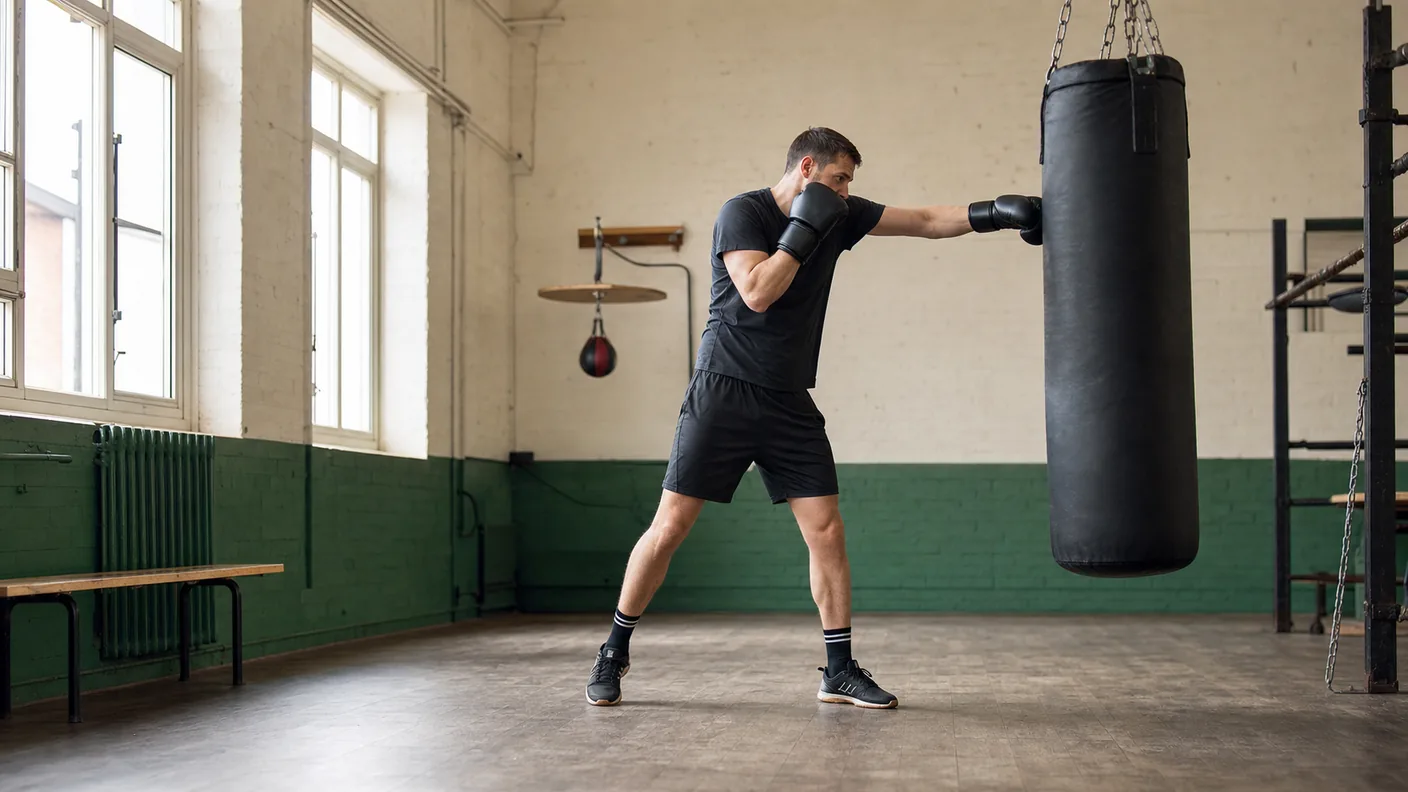
How Hard Should You Hit a Heavy Bag?
Most bag rounds do not need maximum force. Learn when to hit hard, when to stay light and how to keep boxing technique intact.
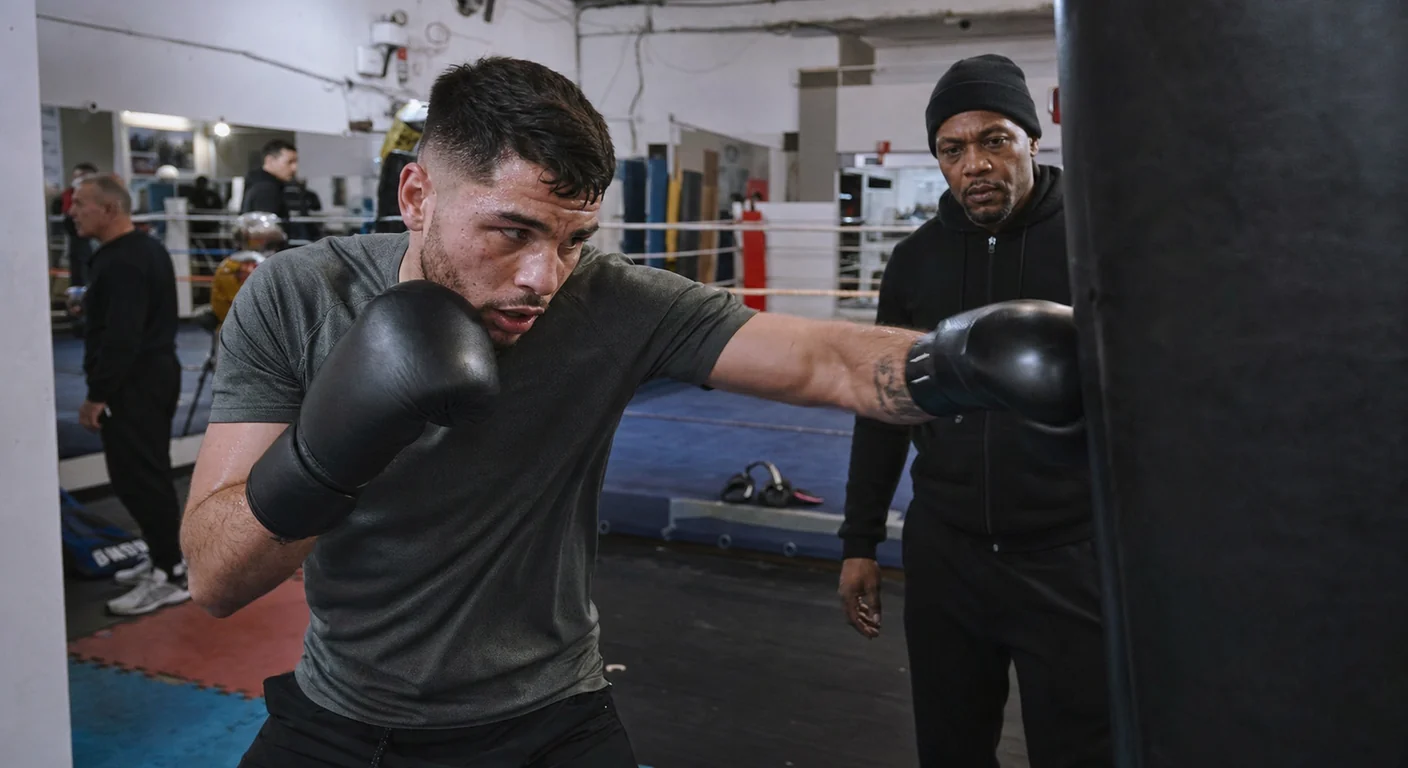
Heavy Bag Work That Transfers to Sparring
The heavy bag builds power, but only if you add defence, feints, distance and clean technique instead of treating it like furniture.
Was this page helpful?
It takes one tap, and it genuinely helps.
Choose your next step
Turn this article into the right action
Some readers are ready to book. Some need the class route first. Pick the route that matches what you actually want.