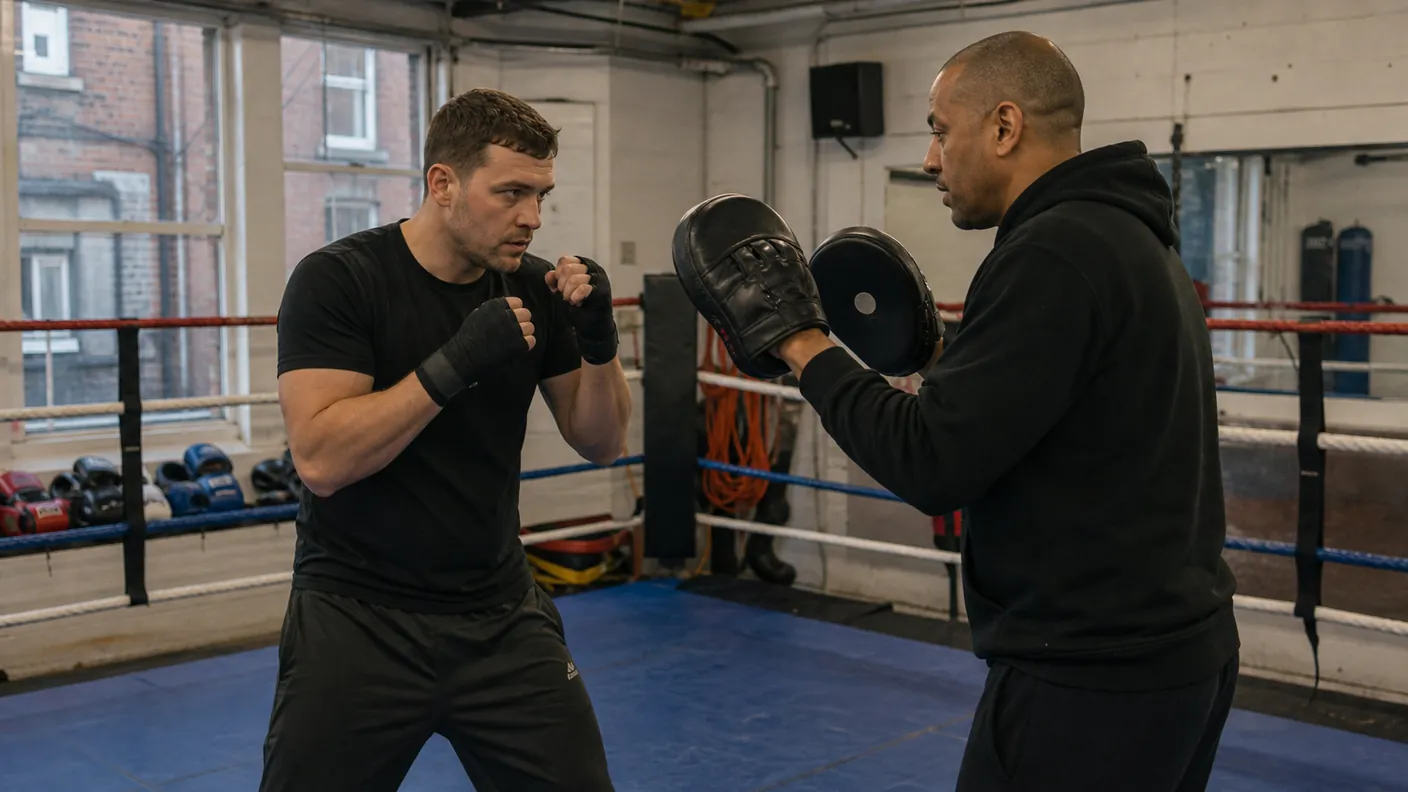
Looking at the floor is one of the quickest ways to make a boxing round feel frantic. Your feet become a problem, the pads seem to arrive from nowhere, and every instruction from the coach lands half a second late. You are trying to check your stance, but you lose the person in front of you.
It is a normal beginner habit. Boxing asks you to manage your feet, hands, balance, breathing and a moving target at the same time. Looking down feels like a sensible way to regain control. In practice, it usually removes the information you need most.
The fix is not to stare into somebody's eyes or pretend that your feet do not matter. It is to give your gaze a better job, then make the rest of the movement simple enough that you can keep your head level.
Looking down breaks the connection between your feet and hands
Your feet set the range, but you do not need to watch them every second to use them. If you look down after each punch, the guard softens, the chin drops too far and your body starts folding over the front knee. The next shot becomes a reach rather than a punch from a balanced stance.
That is why a coach will often say "eyes up" when the real issue is balance. They can see the chain starting. Your eyes go to the floor, your shoulders round, your rear hand drifts, then you try to find the pad with an arm instead of moving your feet.
Keep your head level and use the floor through your feet. You should feel whether your stance is too narrow, too square or too stretched. If you cannot feel it yet, pause after a combination, reset your feet, then look forward again. Do not try to monitor every inch of movement while it is happening.
Give your eyes one useful place to rest
The answer is not to fixate on a glove. A glove moves quickly, and following it makes your head move with it. Nor is it to stare at the floor in case your feet cross.
For most beginner drills, look at the other person's upper chest and shoulders. That gives you a broad picture: their stance, their lead shoulder, their hands and whether they are stepping in. You still notice the pads or gloves in your peripheral vision, but your head stays still enough to make a decision.
A systematic review of anticipation in combat sports found that experienced performers made better use of early movement information than novices. That does not mean a new boxer should expect to read everything immediately. It explains why the coach keeps asking you to look at the whole person rather than chasing the last thing that moved.
On pads, keep your eyes on the coach's upper body. Let the mitt appear in your wider view, hit the target, then bring the hand home. On a bag, pick a small mark at head height and keep your gaze there while your feet move underneath you. On partner drills, look through the chest and shoulders, not at the ground between you.
Do not use your eyes to solve a footwork problem
Most people look down when they are unsure where to step. The real solution is to make the step smaller.
If you throw a jab and need to close distance, take one short step with the jab. If the partner moves away, take another small step rather than a long lunge. When you throw a cross, let the rear foot turn naturally, then recover the stance before looking for the next target.
A long step makes you want to check your feet. Small steps let you feel them. That is the useful difference.
Try this short drill with a coach or a trusted partner:
- Start in a comfortable stance, hands near your cheeks.
- Look at your partner's upper chest.
- Take one small step forward without punching, then stop.
- Check that your stance has kept its width without looking down.
- Repeat with one step back and one step to either side.
- Add a light jab only when the feet stay underneath you.
Slow is not a failure here. You are teaching the body that moving the feet does not require losing sight of the job in front of you.
Keep the task small when pads start moving
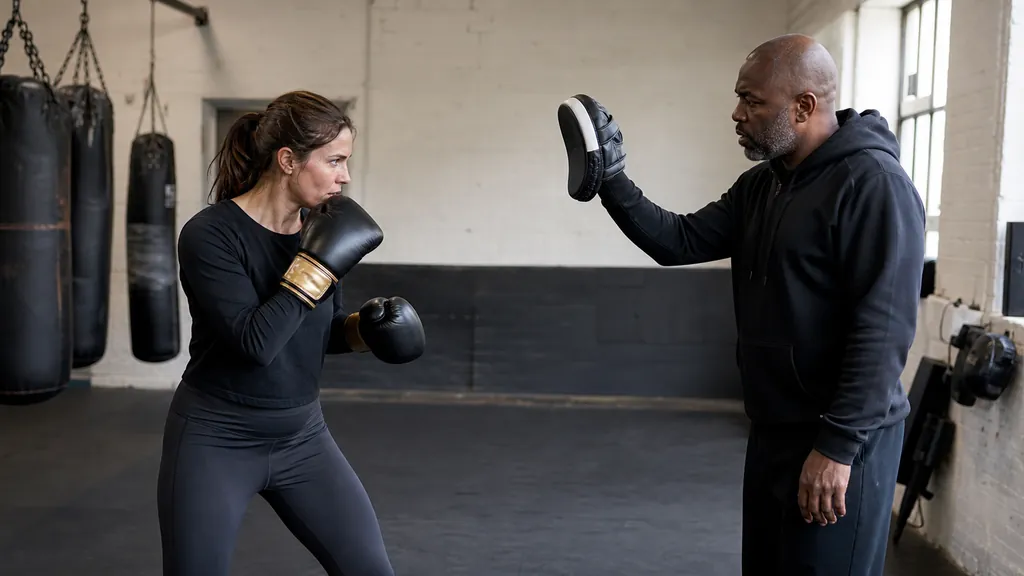
Pad work exposes the habit because it asks you to listen, punch and move at once. A coach calls a one-two, you worry about the numbers, the feet get lost, and the eyes drop as the second punch lands.
Start with a lower demand. For one round, ask for a jab only. The pad stays at one clear height. You see it, step if you need to, land the jab and bring the hand back. Once that is tidy, add the cross. Once the one-two is tidy, add a small exit.
There is no prize for calling a six-punch combination before you can finish a two-punch sequence in balance. England Boxing's coaching handbook stresses that learning tasks should match the boxer's experience and leave them able to think. A beginner who is only surviving the pace is not learning to see the round.
Tell the coach if you notice yourself staring at the floor. It is a useful correction because it is specific. "I keep looking down after the cross" gives them something they can watch and adjust. Saying only that boxing feels confusing does not.
The usual reasons your gaze drops
You are trying to hit too hard
Big effort pulls the shoulders up and sends the body forward. The eyes follow the punch towards the floor. Reduce the power until the feet, hands and head can all return to their places.
You are rushing the combination
If you cannot see the pad before you throw, you are ahead of yourself. Take a beat. A clean jab-cross with your eyes level is better boxing than a fast combination that leaves you bent over.
Your stance is too narrow or too square
An unstable stance makes the eyes search for reassurance. Widen the base a little, soften the knees and keep the feet in a position where either leg can move. Our guide to boxing stance and guard basics gives a straightforward starting point.
You are worried about what is coming back
This can happen even in a light drill. If you are waiting for contact, your body may fold and look away before your mind has chosen anything. That is a pressure problem, not a character flaw. Our article on why beginners close their eyes in boxing explains how controlled drills can make that reaction calmer over time.
Use a reset you can repeat
When you catch yourself looking down, do not try to correct five things at once. Use the same reset every time:
- bring the hands back to guard
- lift your gaze to the other person's upper chest
- bend the knees a little
- take one small step to regain range
- breathe out, then start again
This takes a second. It is much quicker than carrying a broken stance through another ten punches.
The reset also makes a useful divide between drills and sparring. In a non-contact or light partner drill, you can stop and organise yourself whenever the coach says. You do not need to prove you can work through confusion. Learn the shape first. More pressure can come later, if that is your goal.
Learn to keep the whole picture
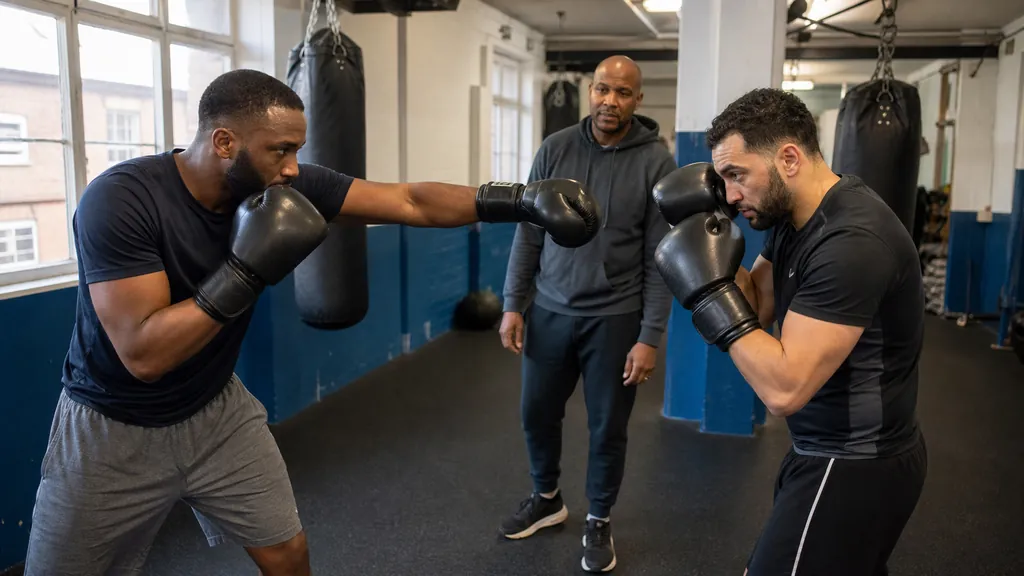
Good boxing is not about having perfect posture for a photograph. It is about keeping enough of the picture to choose the next sensible action. Eyes level helps because you can see the coach, the target, the distance and your partner's movement without abandoning your own balance.
If you are in Greenwich, Kidbrooke or nearby, our Recreational Adults boxing classes teach stance, bags, pads and partner drills at a pace where you can learn the details. No sparring is required.
H&G Team
Writer at Honour & Glory Boxing Club, a community boxing gym in Kidbrooke, South East London.
KEEP READING
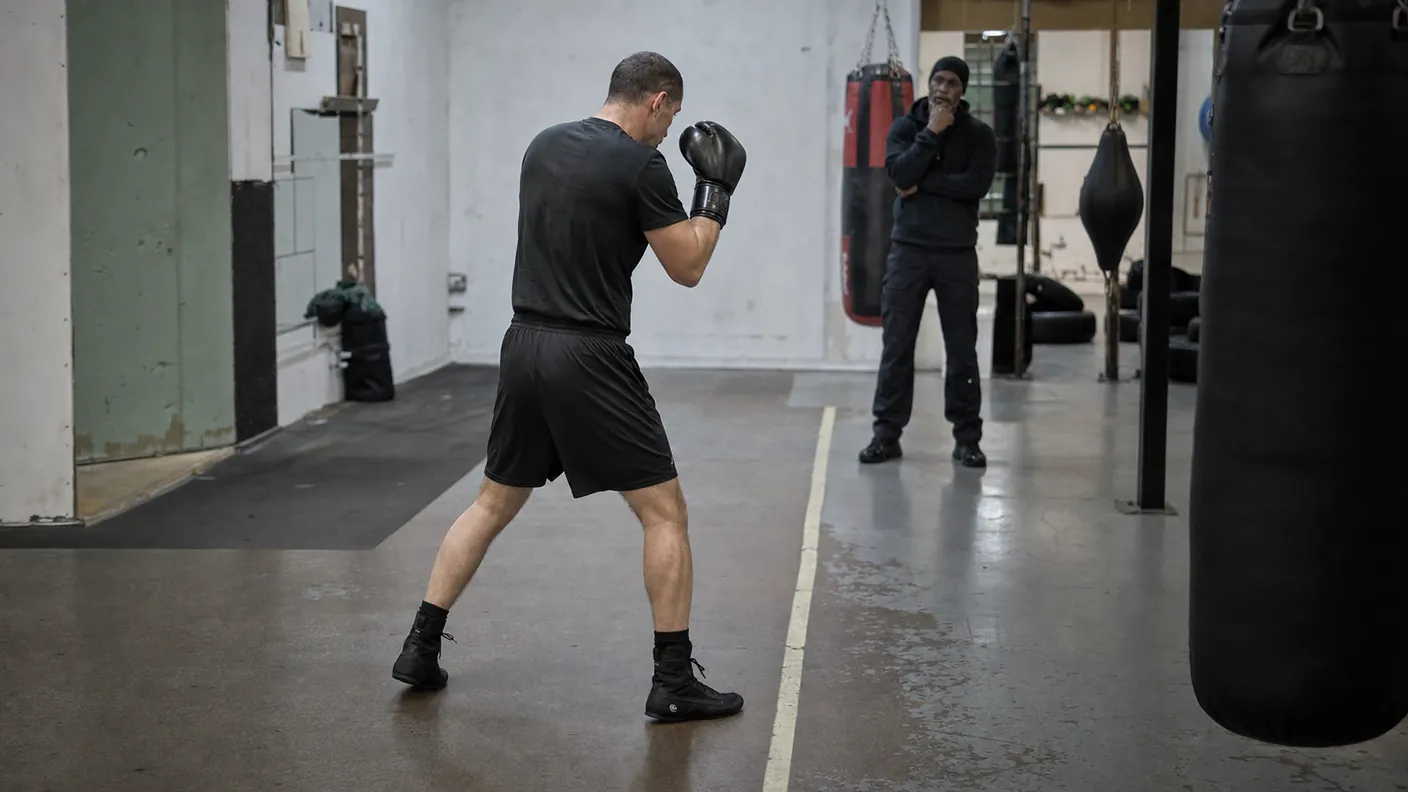
The Floor-Line Drill for a Better Boxing Stance
Use one line on the floor to build a boxing stance that stays balanced, mobile and ready to punch without standing square.
Why You Rush Boxing Combinations
Rushing makes combinations fall apart. Learn how to slow the first punch, keep your stance and build speed that still looks like boxing.
How Hard Should You Hit Boxing Pads?
New to pad work and unsure how much power to use? Learn how to hit with intent without turning every round into a balance and injury test.
Was this page helpful?
It takes one tap, and it genuinely helps.
Choose your next step
Turn this article into the right action
Some readers are ready to book. Some need the class route first. Pick the route that matches what you actually want.