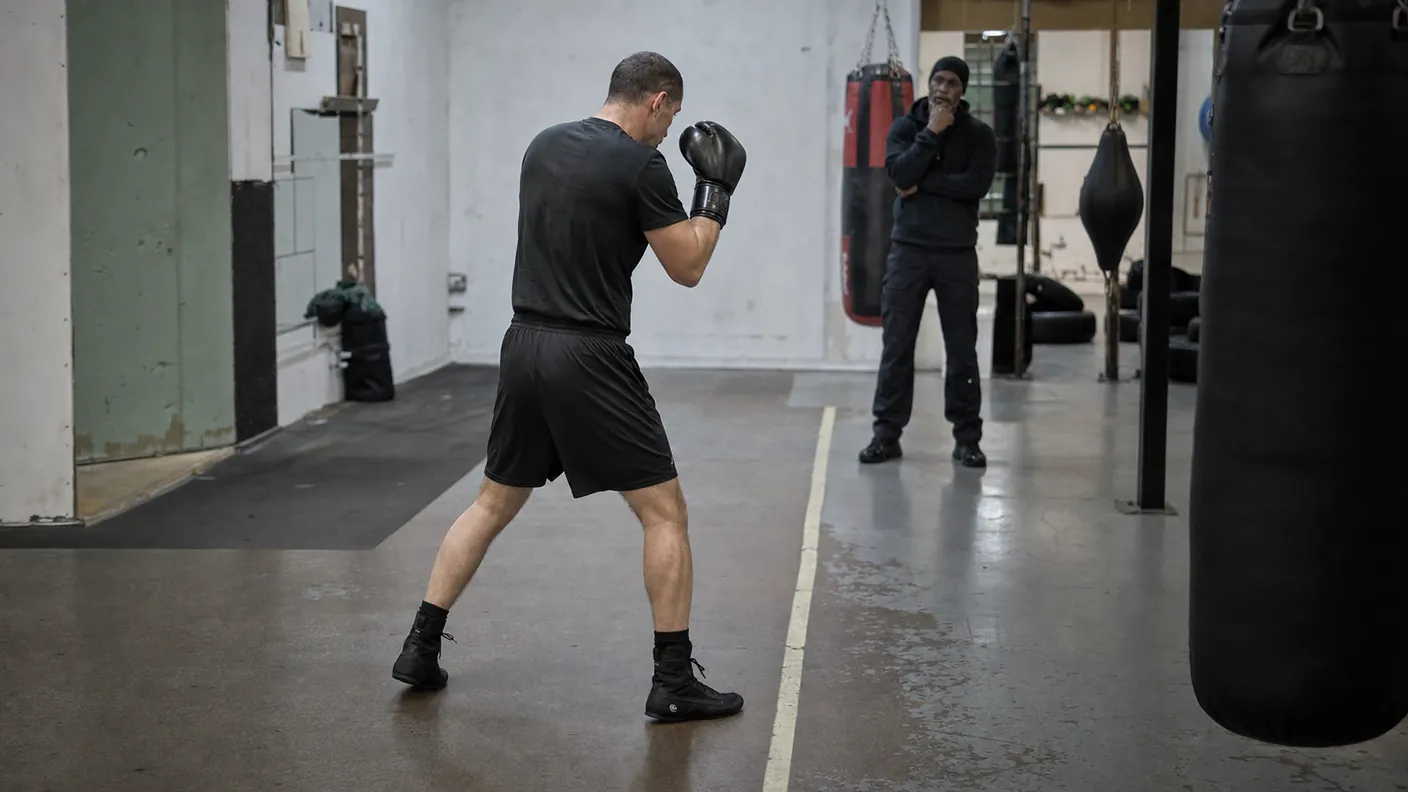
A bad boxing stance usually looks busy before it looks wrong.
The feet wander too close together. The back foot drifts directly behind the front. The hips turn square when the first punch comes out. Then the boxer wonders why the jab feels short, the cross has no base and every defensive movement feels like an emergency.
A line on the floor can expose all of that in about thirty seconds.
Watch the short demonstration below, then use the drill to give your feet a repeatable starting position. The line is not a magical formula. It is a simple reference point that stops you guessing where your stance has gone.
Why a floor line helps
A boxing stance needs two things that seem to fight each other: enough width to stay balanced and enough freedom to move.
Stand with both feet on the same straight line and you become too narrow. A small nudge or a missed punch can pull you off balance. Stand too wide and your feet become heavy, your step takes too long and the hips struggle to turn. Stand square and both sides of your body become available while your own punches lose their clean lanes.
The floor-line drill gives the feet a simple relationship. Your rear foot uses the line as a reference. Your lead foot sits slightly to one side of it, creating a natural offset rather than a tightrope stance. For an orthodox boxer, the right foot is back and the left foot is forward. For a southpaw, reverse the picture.
The point is not to plant your feet on exact marks forever. The point is to feel what an organised base is before you start moving.
Start with the rear foot
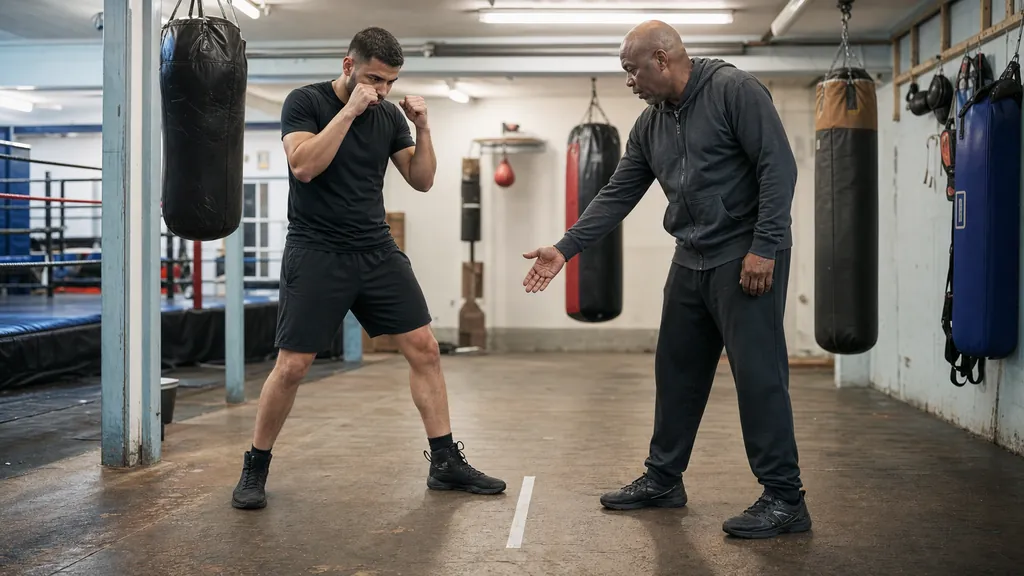
Put down a strip of tape, use a court line, or imagine a line running away from you on the floor. Start with the rear foot near that line. Do not put the whole foot directly in front of the other one. The line is there to stop the back foot wandering across the body, not to make you stand like a fencer.
Now place the lead foot forward and slightly to the side. You should feel a small sideways gap between the feet. That gap gives you a base when you jab, turn the rear hip for a cross, or move the head off the centre line.
A useful first check is whether you could take a small step in any direction without crossing your feet. If the answer is no, change the position before you throw a punch.
Your feet do not need to be painfully wide. They need to be wide enough that the knees can soften and the body can turn without falling onto the front foot. If you feel as if you are doing the splits, bring the lead foot in. If you feel as if both shoes are standing on one rail, create more offset.
Our guide to boxing stance and guard basics covers the whole position. This drill is the quicker diagnostic: use the floor line to see whether your feet have become too narrow or too square.
Point the feet where they can move
Once the feet are in the right lanes, check the angles.
The lead foot should point mostly forward with a small turn inwards if that feels natural. The rear foot should turn out enough that the rear hip can rotate through a cross and the heel can turn when it needs to. Do not force a dramatic angle. If the back foot points sideways, you will feel stuck. If it points directly forward, the hip can feel trapped.
Keep the knees soft. A boxing stance is not a squat and it is not a stiff-legged pose. You want enough bend to move the head by a few inches, sit down slightly into a body shot, or push away from the floor without needing a big reset first.
The balance should feel quiet. If you have to keep shuffling to avoid tipping over, the stance is not ready. If you are leaning hard onto the front leg, the jab will pull your head forward and the back foot will arrive late whenever you try to leave.
Try this test. From the stance, lift the lead heel for a second, then the rear heel. You should be able to do both without the whole body falling sideways. That does not prove the stance is perfect, but it quickly shows whether all your weight has drifted onto one foot.
Add the guard only after the feet make sense
Beginners often try to fix everything at once. Feet, elbows, chin, gloves, shoulders, breathing, punch numbers. That is too much information for one minute in front of a mirror.
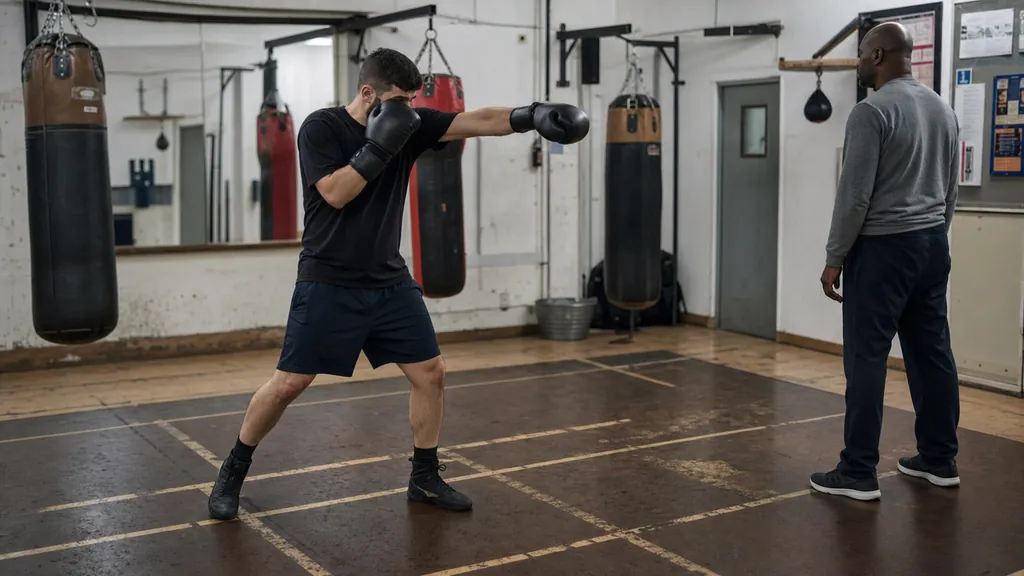
Start with the base. Once the feet are in a workable position, bring the gloves near the cheeks, keep the elbows close enough to look after the body, and tuck the chin without staring at the floor. The hands should make sense because the feet do. If the base is narrow or square, no hand position will make the stance feel secure.
Keep the weight centred enough that either hand can work. If you are orthodox, the jab should leave without you having to drag the left shoulder forward. The right hand should turn through without the rear foot sliding across the line. Southpaws use the same test on the opposite side.
This is why setting your feet in boxing matters before longer combinations. A punch can look fine in isolation while the feet underneath it are already setting up the next mistake.
The three-minute floor-line drill
Use this before pads, a bag round or shadow boxing. It is not a fitness challenge. Slow, accurate repetitions are more useful than racing through it.
Minute one: build and hold
Step into the stance using the line as your reference. Check the rear foot, lead-foot offset, knee bend and guard. Hold the position for five seconds, step out, then rebuild it.
Do not adjust ten times while holding the stance. Step out and start again. That teaches you to find the position deliberately instead of making a messy stance slightly less messy.
Minute two: jab without losing the line
From the same stance, throw one light jab. Bring it straight back to guard, then check whether the rear foot has crossed behind you or the lead foot has drifted onto the line.
The jab should not pull the whole body forwards. If your head goes past the front knee, do not stretch harder. Shorten the range or take a small step with the jab. A useful jab arrives from balance and returns to balance.
Minute three: cross and reset
Throw a light jab-cross, then freeze. The rear foot should turn enough for the hip to join the cross, but it should not step across the line or end up beside the lead foot. Both hands should return to a useful guard.
Finish by taking one small step back and rebuilding the original stance. This matters because good footwork is not only about entering range. It is about being able to leave it without your feet arguing with each other.
Do not turn the line into a cage
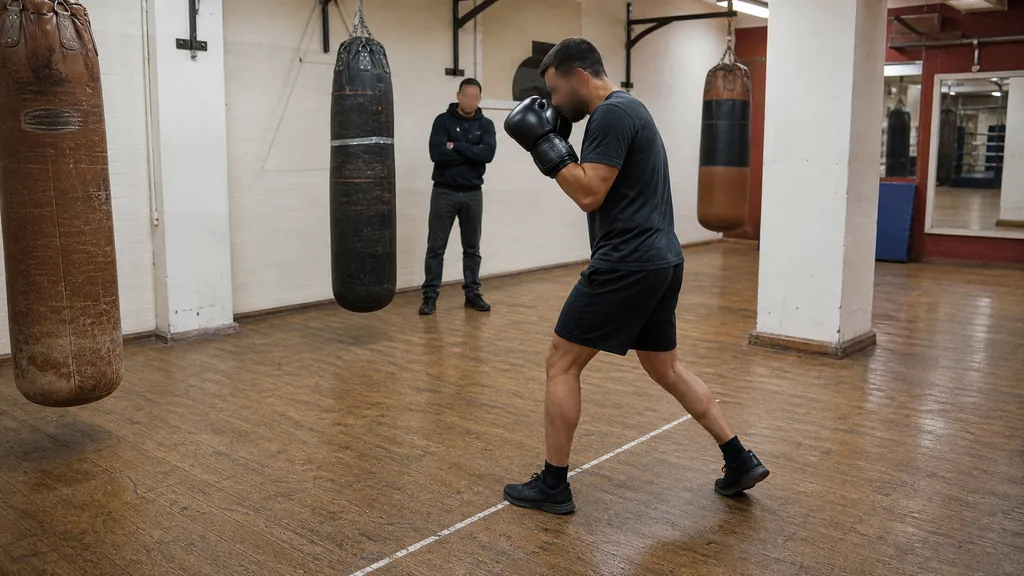
The line is a teaching tool, not where your feet must live during a round.
Once you start moving, the feet will change position. You will step, pivot, angle out, close distance and reset. The value of the drill is that you know what you are trying to return to after those actions. If the feet become too square after a hook, the line has taught you what is missing. If a step back leaves you crossed, the line makes the mistake visible.
Do not shadow box while staring at the tape. Look ahead as if another boxer is in front of you. The feet should learn the relationship through repetition, not through watching them every second.
A coach can help here. Ask them one clear question: after my jab-cross, am I returning to an offset stance or ending square? That is a more useful question than asking whether the combination looked powerful.
Common mistakes the drill catches
The first mistake is standing on one line. When the feet are too close together, a boxer can look neat until they try to move or take a punch. Create the small offset.
The second is over-widening. A huge base may feel safe, but it slows the first step and makes a simple pivot awkward. Find a width that lets you bend the knees and move without straining.
The third is placing the rear foot directly behind the lead foot. That is a tightrope, not a boxing stance. The body may turn, but it will not have a dependable base underneath it.
The fourth is letting the lead knee collapse inward. Keep the knee tracking in the same general direction as the lead foot. You do not need a rigid pose, but you do need a leg that can support the step and the punch.
The fifth is forgetting the exit. A stance is only useful if you can leave it, then find it again. Step out, circle, return to the line and rebuild. That habit will serve you better than standing perfectly still for a photograph.
The coaching cue
Use the line to find your base, then learn to come back to it.
The rear foot has a lane. The lead foot has a small offset. The knees stay soft. The guard stays organised. From there, you can jab, cross, step, defend and reset without inventing a new stance after every punch.
If you are close to Kidbrooke, our Recreational Adults boxing classes give beginners a coached place to work on stance, footwork and punching in the right order. The aim is not to copy a pose. It is to build a base that still works when the round becomes busy.
H&G Team
Writer at Honour & Glory Boxing Club, a community boxing gym in Kidbrooke, South East London.
KEEP READING
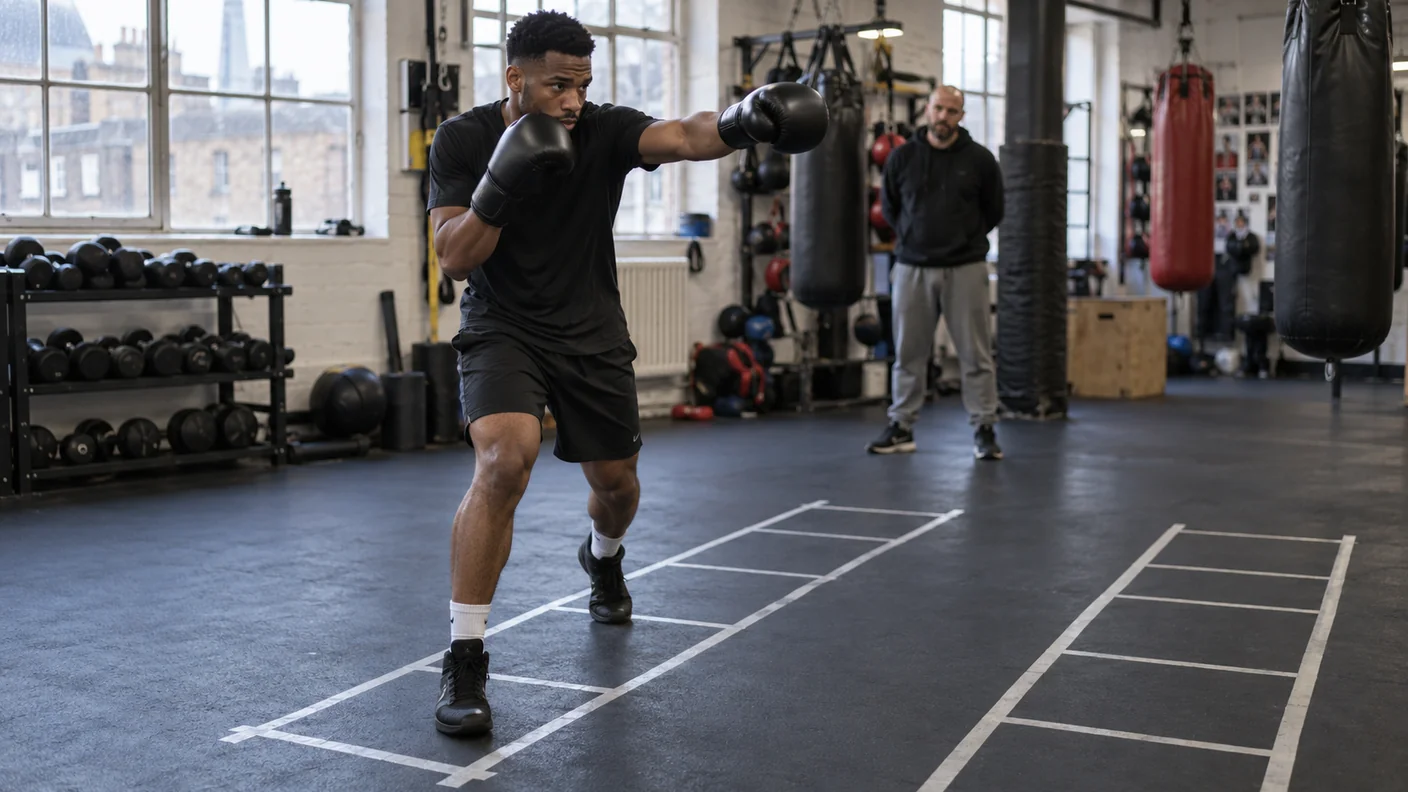
In, Out, Across: Boxing Footwork Drill
A three-direction boxing footwork drill for entering range, leaving safely and changing the line without losing your stance.
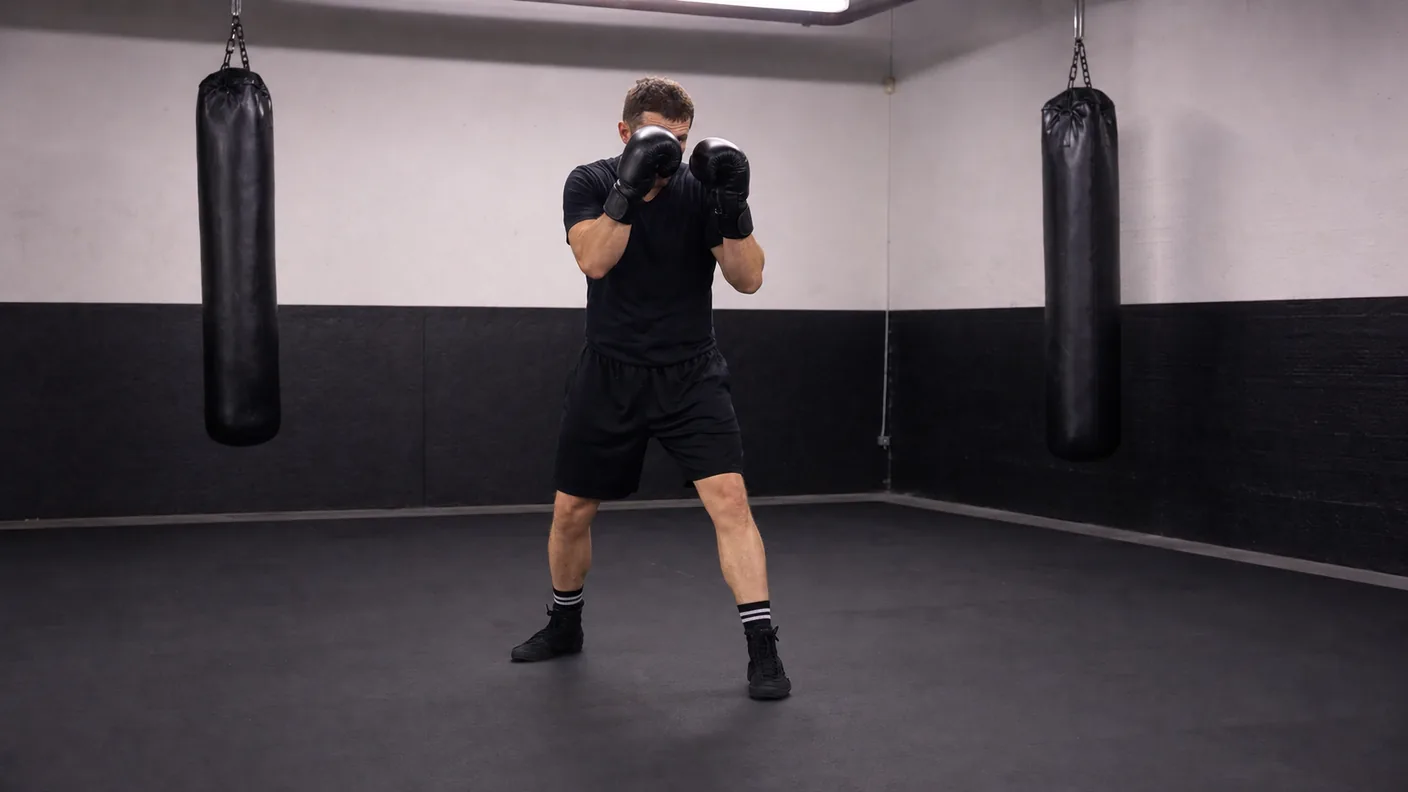
How Floor Grip Changes Your Boxing Footwork
A sticky or slippery surface can expose poor boxing footwork. Learn how to adjust steps, pivots and balance without forcing movement.
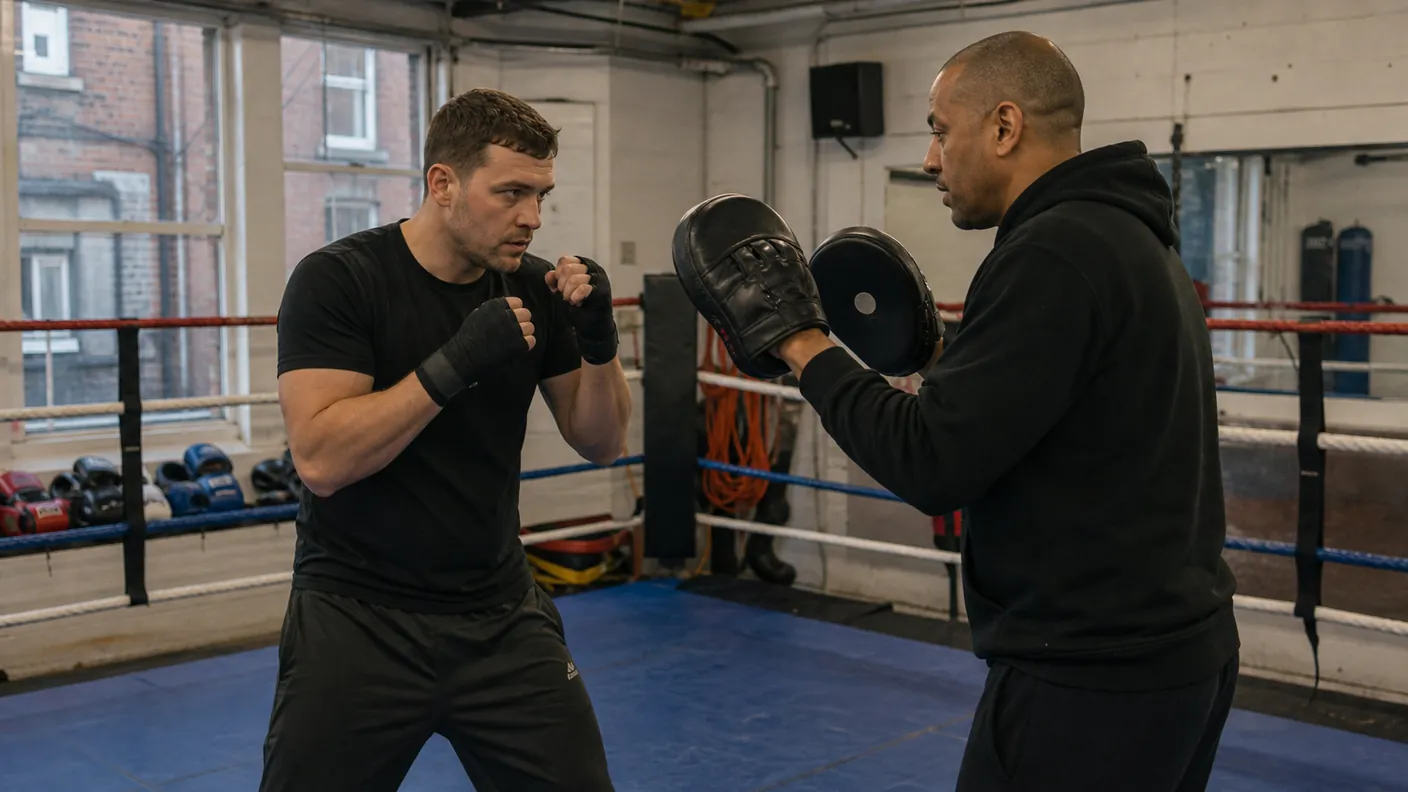
Why You Look at the Floor When Boxing
Looking down makes boxing feel faster and less controlled. Learn the simple visual habits that keep your stance, guard and decisions organised.
Was this page helpful?
It takes one tap, and it genuinely helps.
Choose your next step
Turn this article into the right action
Some readers are ready to book. Some need the class route first. Pick the route that matches what you actually want.