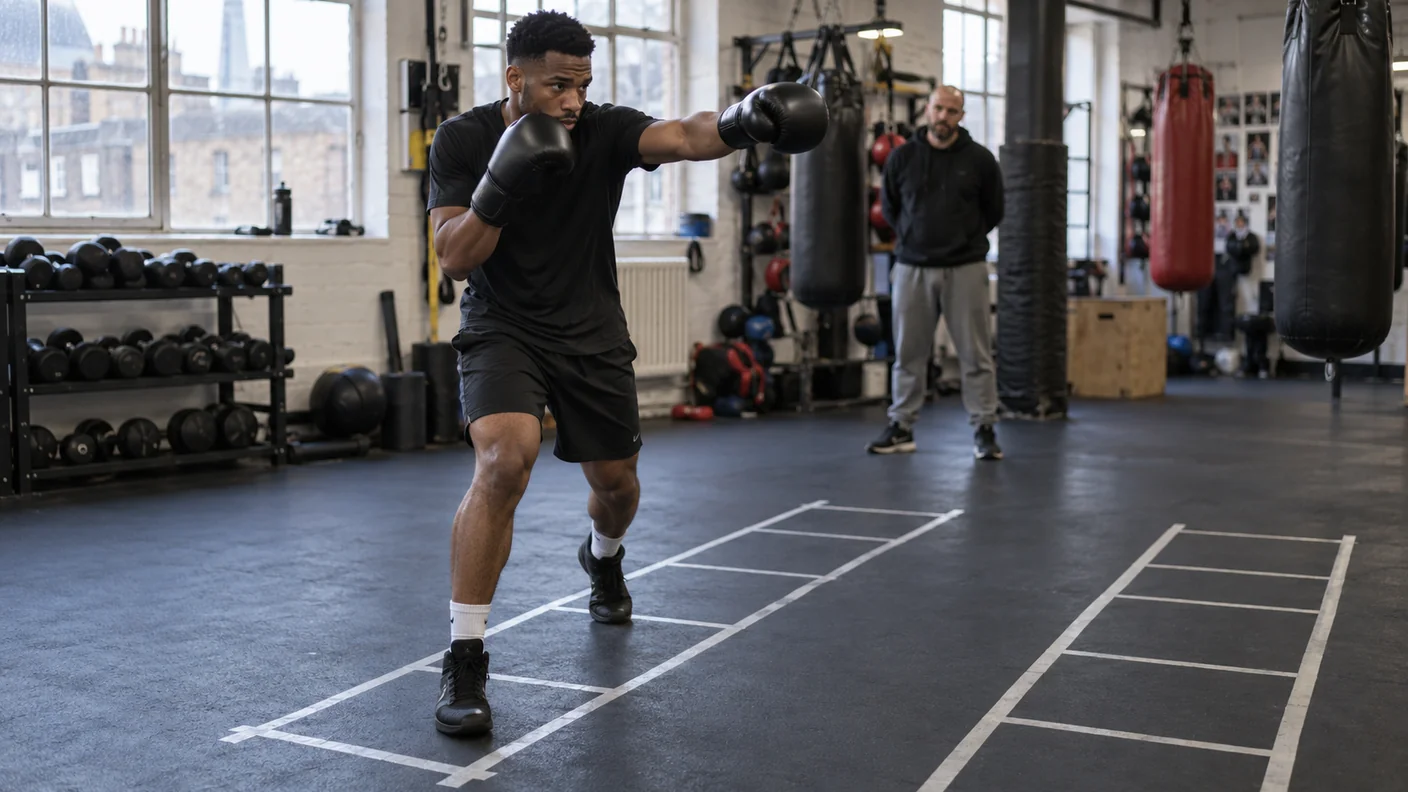
Good footwork is not a long list of fancy moves. It is being able to get into range, get back out and change the line without your feet meeting, crossing or leaving your hands behind.
That sounds basic. It is also where many beginners lose their shape. They step in to punch, step back with only one foot, then try to move sideways from a narrow stance. The next punch feels slow because the base has already gone.
The in, out, across drill gives those three jobs a clear order. You enter with purpose, leave with your whole body, then take a small lateral step while keeping a usable boxing stance. It is simple enough for shadow boxing and useful enough to expose untidy movement on pads.
Watch the short demonstration below once for the feet, then again for the distance. The important point is not speed. It is whether every movement leaves you ready to punch, cover or move again.
The three directions have different jobs
The first movement is in. A small step forward can put you at honest jab range or allow a measured one-two to land without the head travelling ahead of the feet. The lead foot and lead hand can arrive together, with the rear foot following quickly enough to restore your normal stance.
The second movement is out. This is not merely pulling the front foot backwards and hoping the rest of the body follows. Take the whole stance back. If your head, chest and rear foot remain near the old range, you have not actually left the target line.
The final movement is across. Once you have created room, take a small side step to stop yourself returning on the same line. Move the foot nearest the direction of travel first, then bring the other foot with it. The stance should stay wide enough that you could jab or cover at once.
A review of boxing performance and biomechanics describes effective boxing as a connected job of punch mechanics, movement, defence and distance. This drill makes that connection visible. A clean jab is less useful if the step back leaves you too square to cover the answer.
Stay in stance between every movement
The rule that makes the drill work is plain: do not let the feet come together.
When the feet meet, the body has to choose a side again before it can punch, defend or move. That delay is small in a quiet gym and obvious against someone who is stepping towards you. A narrow stance also makes it easier to tip forward after a jab or cross.
Do not solve the problem by taking huge steps. The feet should keep their usual relationship, not stretch into a split. Your head remains roughly between them, your knees stay soft and both gloves stay in useful lanes.
This is the same foundation behind setting your feet in boxing. You do not need to plant for a long time, but you do need enough shape for the floor to support the next action. The aim is to arrive, act and recover rather than bouncing through range without a decision.
Build the drill without punches first
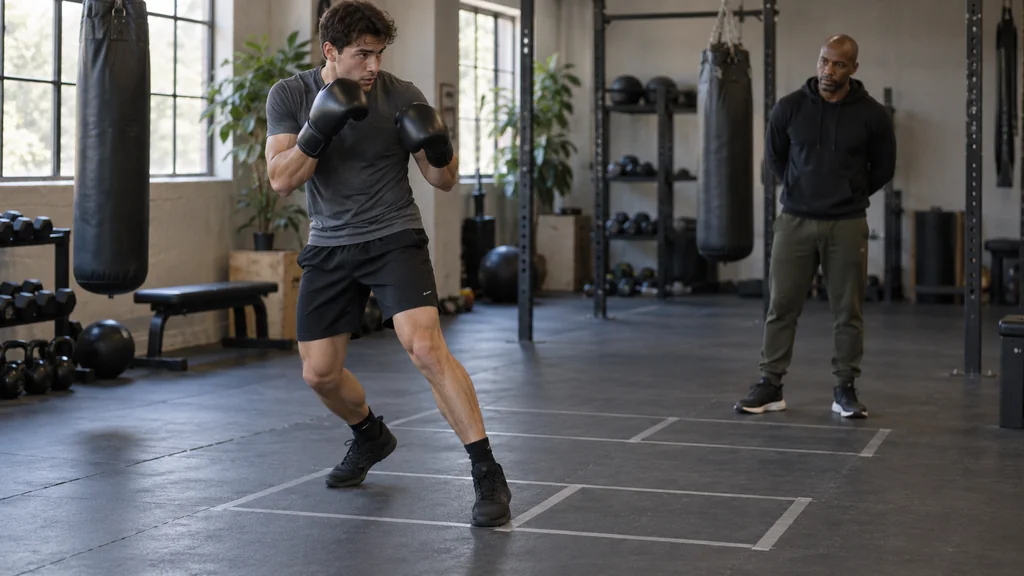
Use floor tape, a ladder or two parallel lines. The markings are there to give you a reference, not to make you stare at the floor.
Start in a normal boxing stance at one end. Move in one small step, move out one small step, then move left one small step. Repeat until you reach the end of the line. On the way back, use the same pattern but move right for the final step.
Freeze for one count after each across step. Check that the feet have not crossed, the lead shoulder is still in front and you could throw a light jab without shuffling first. If you need an extra adjustment before you can punch, make every movement smaller.
The England Boxing coaching handbook puts balance, stance and controlled progressions before more complicated work. That is a useful order here. Do not add pace until the stance remains recognisable at the end of each three-step pattern.
Add the jab only when the exit is honest
Once the feet are tidy, add a jab as you move in. The front foot and jab land together. The rear foot restores the stance. Then move fully out and step across.
The jab should not pull you over the front knee. If it does, the backward movement turns into a scramble because you are trying to retrieve the upper body before the feet can leave. Shorten the entry and let the lead hand return to guard before the exit begins.
A one-two can be added later, but it should not make the drill louder or wilder. The back hand only belongs if the feet have reached range and the second punch can return without the shoulders being left open.
This is a useful companion to moving in and out without crossing your feet. The extra lateral step matters because boxing is not simply a straight corridor. After you leave range, a small angle can stop the other boxer walking straight back into the same target line.
Turn it into a coached decision drill
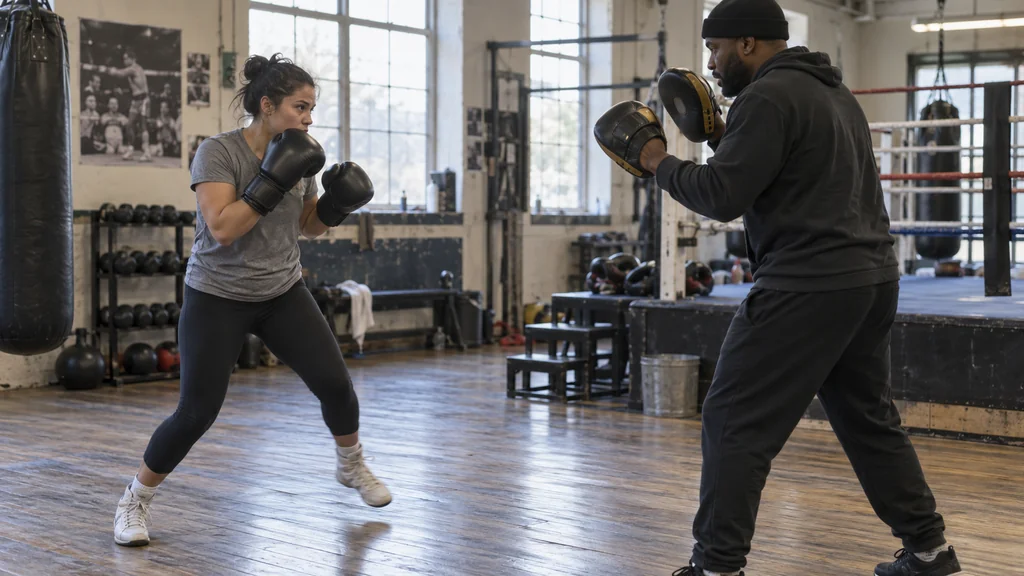
The basic pattern becomes more useful when a coach controls the final cue.
Start with one minute of in, out, across. In the second minute, add a jab on the entry. In the third minute, the coach can show one of three options after the across step: a mitt for a light jab, a glove line asking for a compact cover, or no target at all.
Do not decide the answer before you move. If the mitt appears at a sensible range, touch it with a clean jab and bring the hand home. If the glove line appears, cover without overreaching. If nothing is there, reset and begin again.
That last option is important. A good exit has already done its job if it has taken you out of range with your stance intact. Throwing at empty space merely because the drill includes punches teaches the wrong lesson.
For a focused version of the lateral movement, work through boxing side steps without drifting. The across step in this drill is deliberately modest. It should leave you off the original line, not turn you into someone chasing a moving target with crossed feet.
Four mistakes that ruin the pattern
The first is moving only the front foot on the way out. That leaves the body close enough to be hit and usually creates a narrow stance. Move the whole body back, not just one shoe.
The second is taking the side step with the wrong foot. If you move left by throwing the right foot across first, you are likely to cross the stance. Take the near foot into the space, then let the other foot restore the distance between them.
The third is making the jab the main event. The jab is a useful way to enter, but it is not worth falling in for. If the punch needs a long reach, the feet have not solved the range yet.
The fourth is adding a counter before the exit is dependable. A return right hand or hook might be there in a coached drill, but it only belongs when you have truly left the line, regained your base and can see the target. Resetting is often the better choice.
Where this fits in training
Use the in, out, across drill after a warm-up and before fast bag rounds. It works in shadow boxing, with floor tape, on pads or in a slow partner drill where both people agree on the pace.
Beginners should own the feet-only version first. More experienced boxers can add a jab, a one-two and a visual defensive cue. Neither version needs hard sparring. The point is to make a better habit when the feet are calm enough to learn.
If you train in Kidbrooke, Greenwich or nearby, our Recreational Adults boxing classes use pads, bag work and controlled partner drills to connect your stance to every punch and exit.
The coaching cue is simple: enter with shape, leave with your whole body, change the line without losing your feet.
H&G Team
Writer at Honour & Glory Boxing Club, a community boxing gym in Kidbrooke, South East London.
KEEP READING
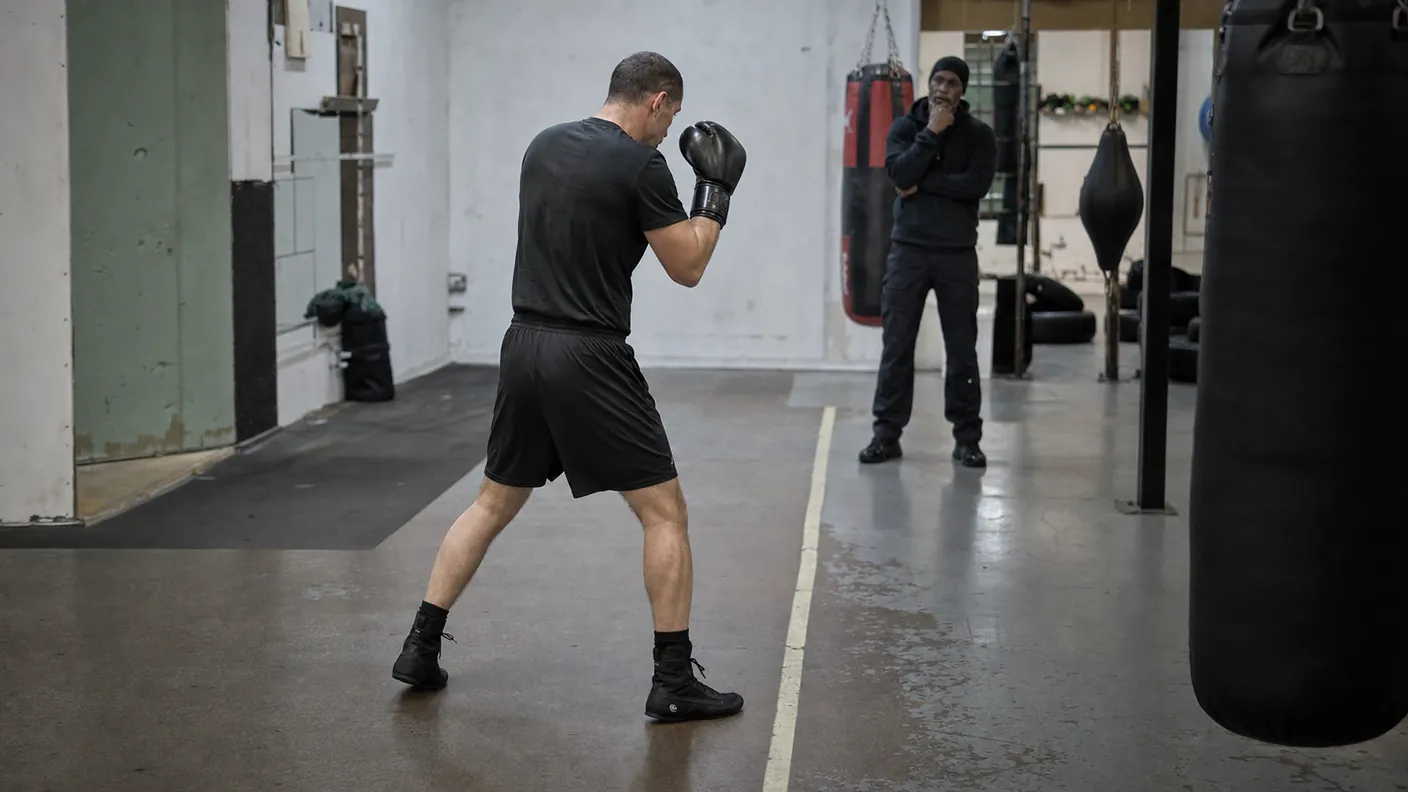
The Floor-Line Drill for a Better Boxing Stance
Use one line on the floor to build a boxing stance that stays balanced, mobile and ready to punch without standing square.
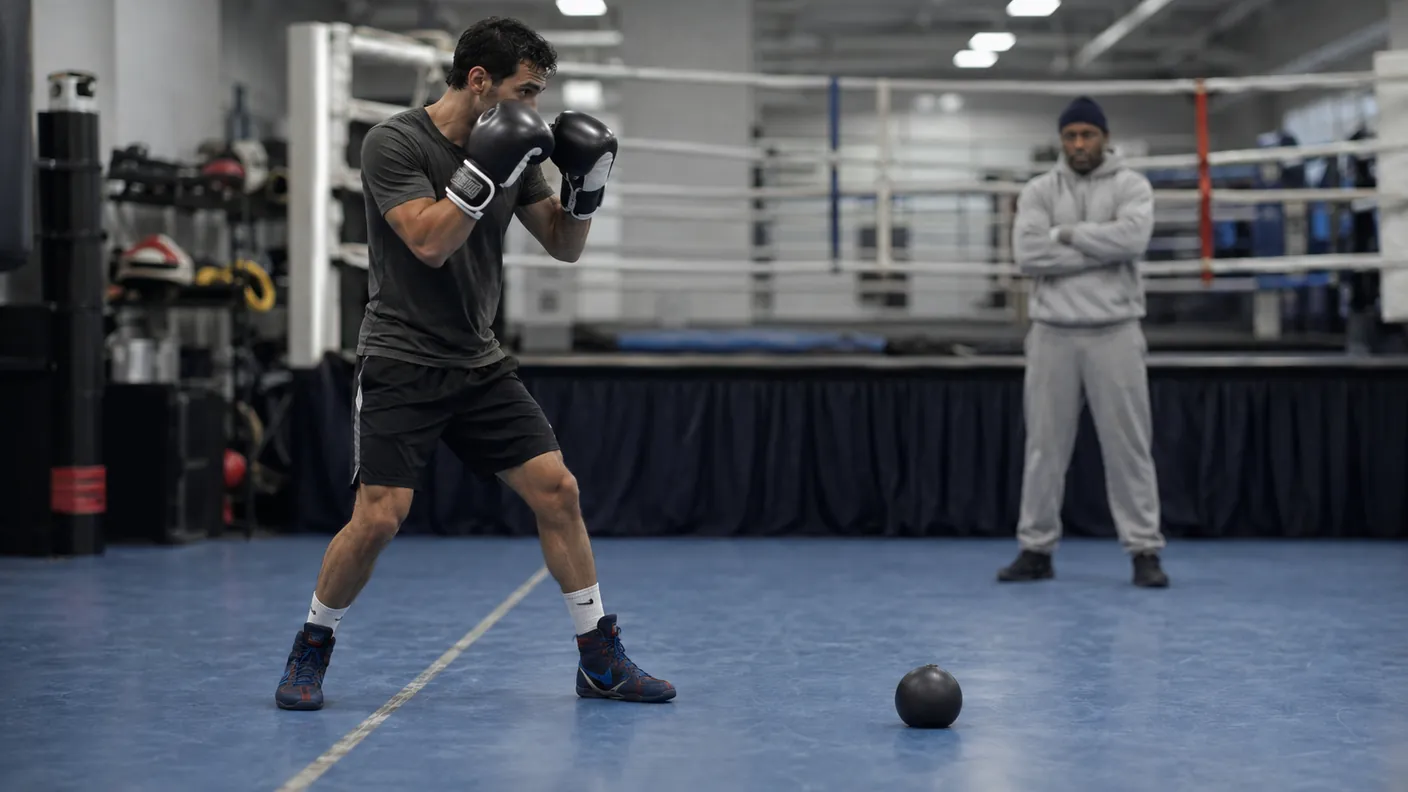
Boxing Footwork Ball Drill for Better Range
Use one small ball to practise stepping into range, seeing the distance and leaving without crossing your feet or reaching.
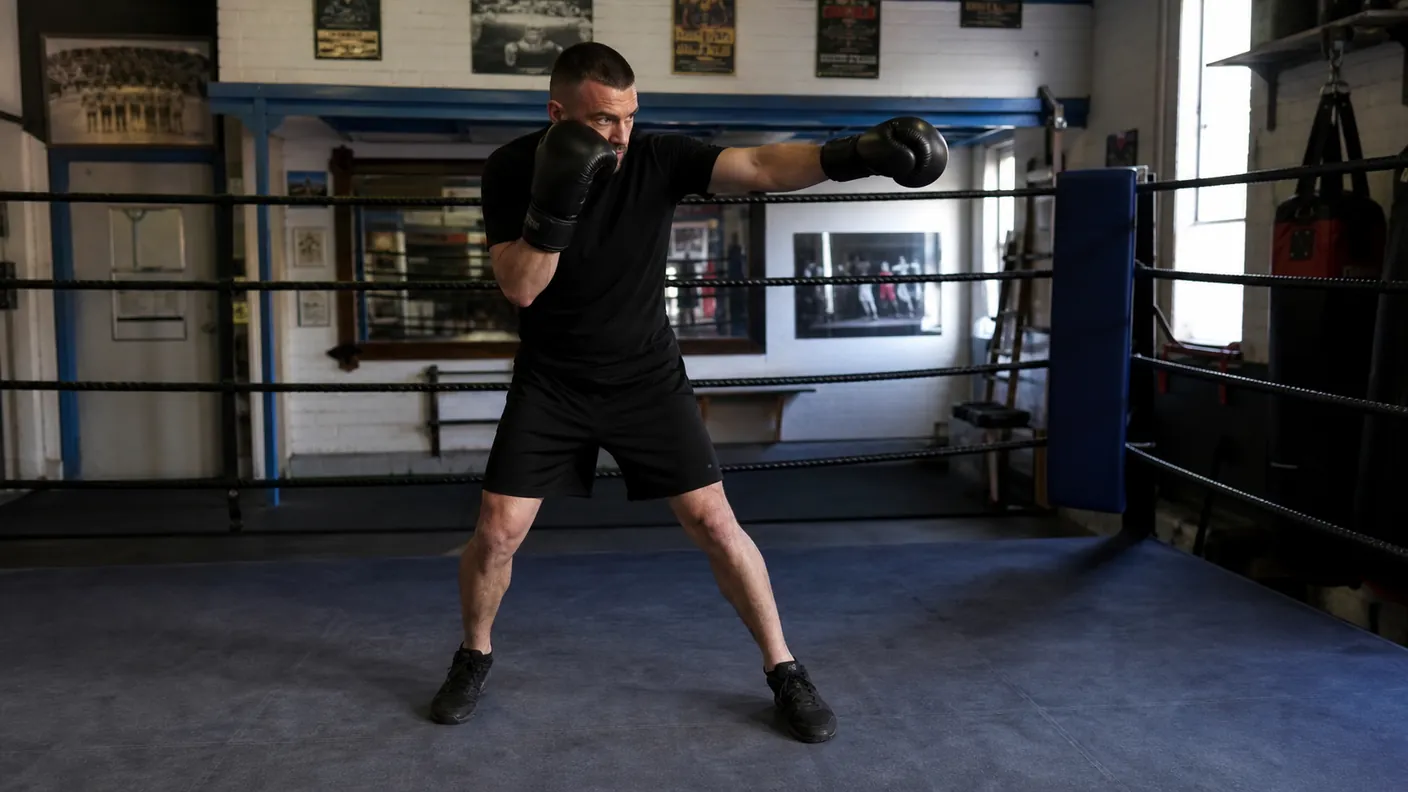
Boxing Side-Step Drill: Keep Your Stance While Moving
Use this boxing side-step drill to move across the floor, keep your stance and make the jab work without crossing your feet.
Was this page helpful?
It takes one tap, and it genuinely helps.
Choose your next step
Turn this article into the right action
Some readers are ready to book. Some need the class route first. Pick the route that matches what you actually want.