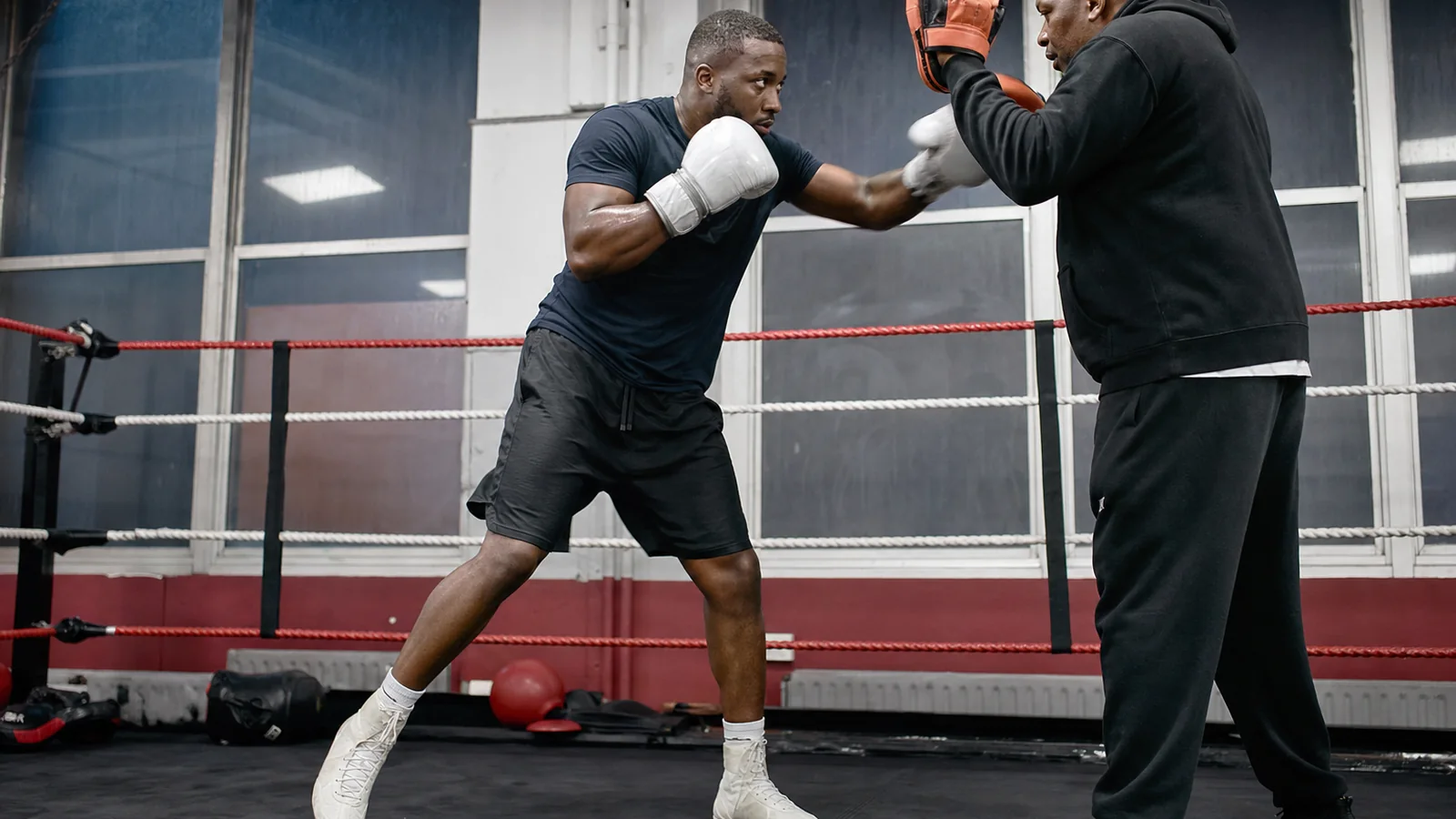
Boxers are told two things that sound like opposites.
Stay on your toes. Set your feet.
Both are true. The problem is that many amateurs hear only one of them.
If you are always bouncing, you look active but you cannot punch with authority. If you are always planted, you feel strong but you become easy to read, easy to turn and easy to hit. The skill is not choosing movement or power. The skill is moving lightly, then setting quickly enough to score without getting stuck.
A 2025 study on amateur boxers found that lower-limb force and rate of force development contribute directly to punching performance, and that fatigue affects the way those forces are expressed (Bioengineering study on lower-limb kinetics in boxing). That is the science version of something coaches see every week: tired feet ruin good hands.
Being on your toes is for readiness
Moving on the balls of your feet keeps you available.
You can step in. You can step out. You can pivot. You can adjust distance when the opponent moves half a step. You can avoid being caught with weight buried in the wrong place.
That does not mean bouncing for no reason.
The amateur who bounces constantly often thinks they are showing footwork. Sometimes they are only leaking energy and blurring their own timing. Their head rises and falls. Their stance narrows. Their jab lands while their weight is floating. Their right hand arrives without the floor underneath it.
Good footwork is quieter than that. It keeps the feet alive without making the body unstable.
Watch this moving-and-punching lesson and pay attention to one thing: the feet arrive with the punches.
That timing is the bridge. You move on your toes so you can arrive. You set your feet so the punch has somewhere to come from.
Setting your feet is for commitment
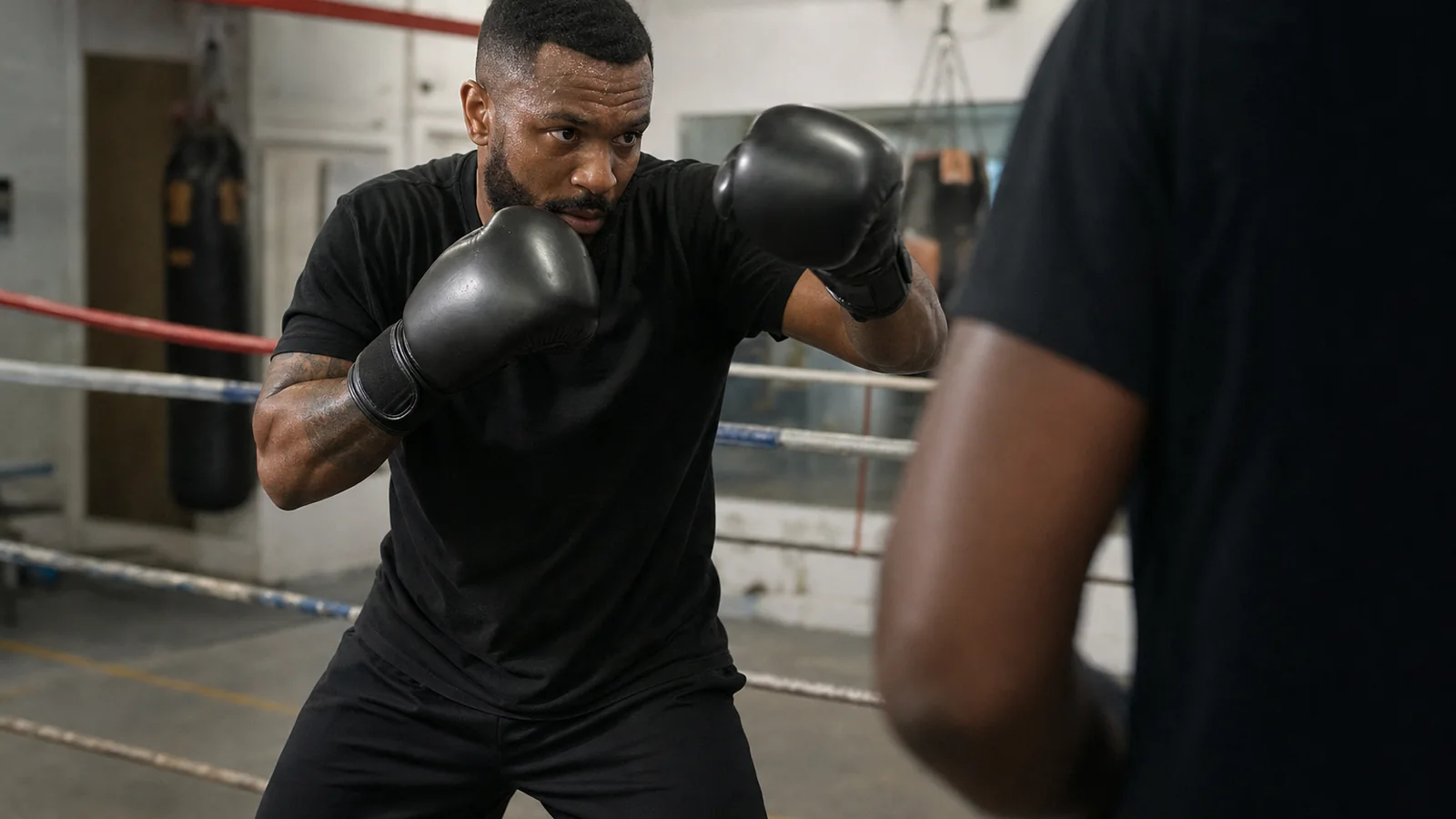
A punch needs commitment. Not recklessness. Commitment.
When you set your feet, you are giving the punch a base. The floor pushes back. The leg drives. The hip turns. The shoulder follows. The hand lands as part of the body, not as a detached limb.
Research on the straight punch describes it as an open kinetic chain movement, with force passing through connected segments rather than appearing only in the arm (Frontiers in Physiology biomechanics study). That is why a weak stance makes a technically correct punch feel empty.
The right kind of setting is brief. You are not parking. You are loading.
Think of three beats:
- Move to position.
- Set enough to punch.
- Leave before the return becomes easy.
Most mistakes happen because one of those beats is missing.
If you move and never set, you reach. If you set without moving, you punch from too far away. If you punch and never leave, you become a target.
What setting your feet actually feels like
Setting your feet is not stamping.
It is a short moment where your stance has width, your knees have a small bend, your weight is controlled, and your head is not falling past your lead knee. Your rear foot can drive. Your lead foot can receive. Your hips can turn without dragging the rest of you off balance.
For an orthodox boxer, a useful checklist is simple:
- Lead foot points enough towards the target that the jab can travel cleanly.
- Rear heel is light enough to rotate but not so loose that the leg skates.
- Feet are not on one line.
- Knees are soft.
- Head stays between the feet as the punch lands.
- The non-punching hand returns home.
For southpaws, the same principles apply. The feet, hip and hand must agree on the line of attack.
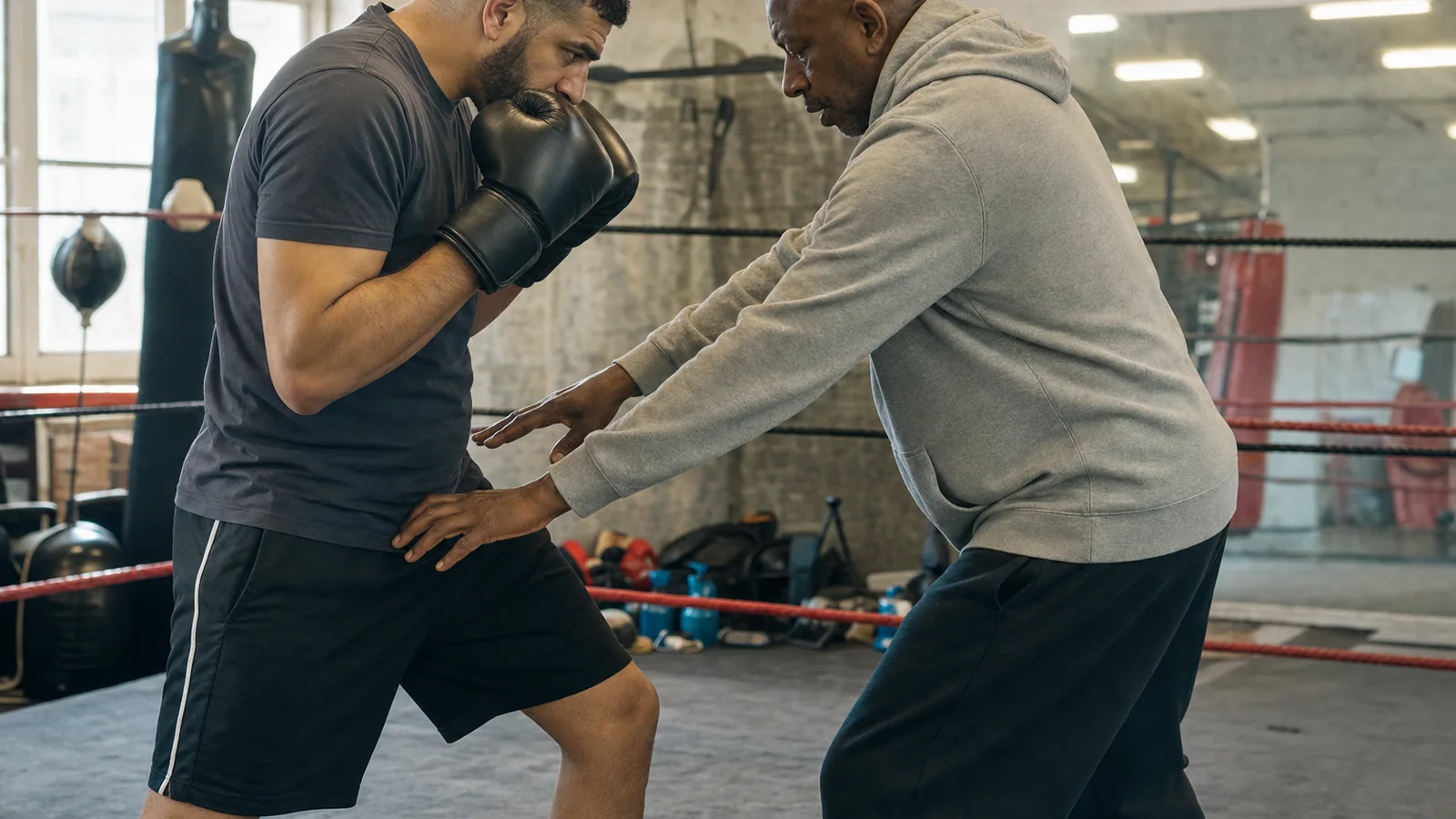
The phrase "sit down on your punches" can be useful, but it is often misunderstood. It does not mean squat deeply and stop moving. It means stop throwing from a floating, tall, disconnected position. Put enough of your body into the shot that the opponent feels it and you can still recover.
The danger of being too planted
Setting your feet is not permission to become heavy.
A planted boxer is easy to work around if they cannot reset. They may hit hard in front of them, but they struggle when the opponent shifts the line. They follow with their upper body. They reach. They turn late. They get beaten to the next position.
In amateur boxing, this is especially costly because rounds are short. You do not have ten rounds to slowly cut the ring down. You need to score, defend and show control now.
That is why the best amateurs set in flashes. They settle the feet for the punch, then recover the stance immediately.
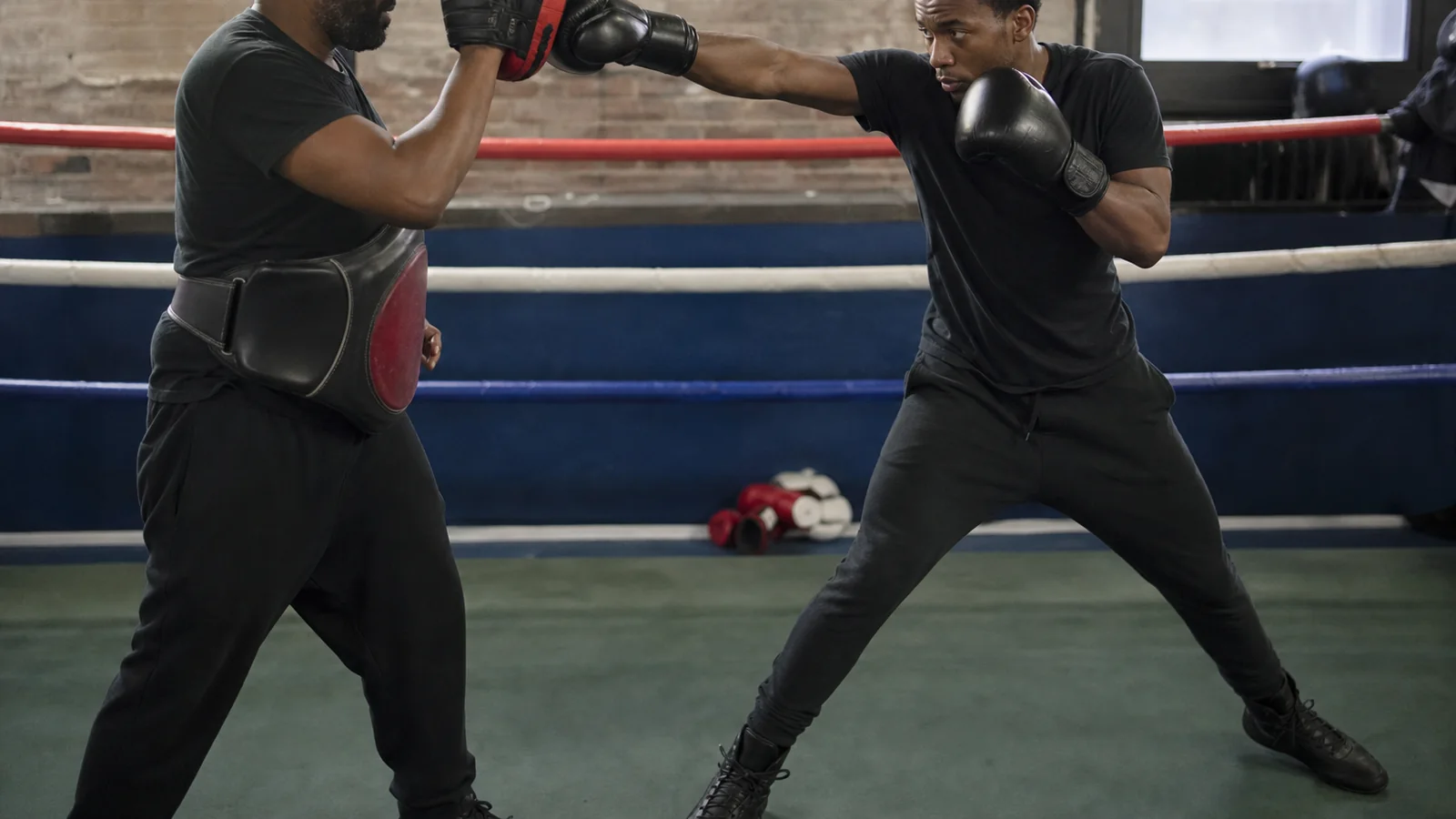
A good test is whether you can punch and then defend without moving your feet first.
Throw the cross. Can you catch the return jab? Can you roll under the hook? Can you step out without crossing yourself? If not, your set was too greedy.
The danger of being too floaty
The opposite mistake is prettier but just as bad.
Floaty boxers look good in shadow boxing. They move, bounce, switch rhythm and touch the bag. Then sparring exposes the missing base.
Their shots do not move the opponent. Their feet are late when pressure comes. Their head drifts over the front foot. They need three small bounces before every punch, which gives the opponent time to read them.
This is why coaches often stop a boxer and say, "Put your feet under you." It is not a fitness cue. It is a technical cue.
Watch this balance and footwork lesson with that in mind. The important detail is not only movement. It is the ability to throw combinations without losing the stance.
If you can move fast but cannot punch while balanced, you have movement. You do not yet have boxing footwork.
A simple drill: float, set, score, leave
Use the bag, pads or shadow boxing.
Round one: move around the target without punching. Stay light, but keep your feet wide enough that you could punch at any moment. No crossing. No feet together. No bouncing for show.
Round two: add a single jab. Move, set, jab, leave. The jab should land as the lead foot is organised, not while your body is falling.
Round three: add jab-cross. The cross must land from the rear foot and hip. If the rear foot spins without pressure, slow down. If the head falls forward, shorten the step.
Round four: add the exit. Jab-cross, catch or roll, then step out. Do not admire the work.
Round five: add a second entry. Leave, then come back with the jab from the new angle. This turns footwork into round control rather than a single attack.
The key is not speed. The key is repeatability. Can you do it late in the round when the calves are tired and the shoulders want to take over?
How this changes combinations
Once you understand setting your feet, combinations stop being random strings.
A jab-cross-hook-cross is not four arm actions. It is four weight transfers. The feet must support each one.
The first jab may step in. The cross turns from the rear foot. The hook catches the weight on the lead side. The final cross needs the rear foot to be available again. If your feet are too narrow after the hook, the last cross becomes an arm punch. If you are too square, the return hook is waiting.
That is why advanced boxing combinations only become advanced when the feet can carry them. More punches do not fix bad balance. They expose it.
The same point applies to conditioning. Many beginners think they gas because they lack fitness, but a lot of the fatigue comes from tension and inefficient movement. We cover that in why beginners gas out in boxing. Advanced boxers make the same mistake at a higher speed.
The standard to chase
You should be able to move lightly without looking busy for no reason. You should be able to plant without becoming a statue. You should be able to punch hard without falling in. You should be able to leave without needing to rebuild your stance from nothing.
That is the standard.
Move on your toes to stay alive. Set your feet to make the punch matter. Recover the stance so the exchange is still yours.
If you want that coached properly, train in a room where footwork is corrected before bad habits become your style. Honour and Glory runs competitive amateur boxing sessions and technical adult classes in Kidbrooke, with coaches who care about the feet as much as the hands.
H&G Team
Writer at Honour & Glory Boxing Club, a community boxing gym in Kidbrooke, South East London.
KEEP READING
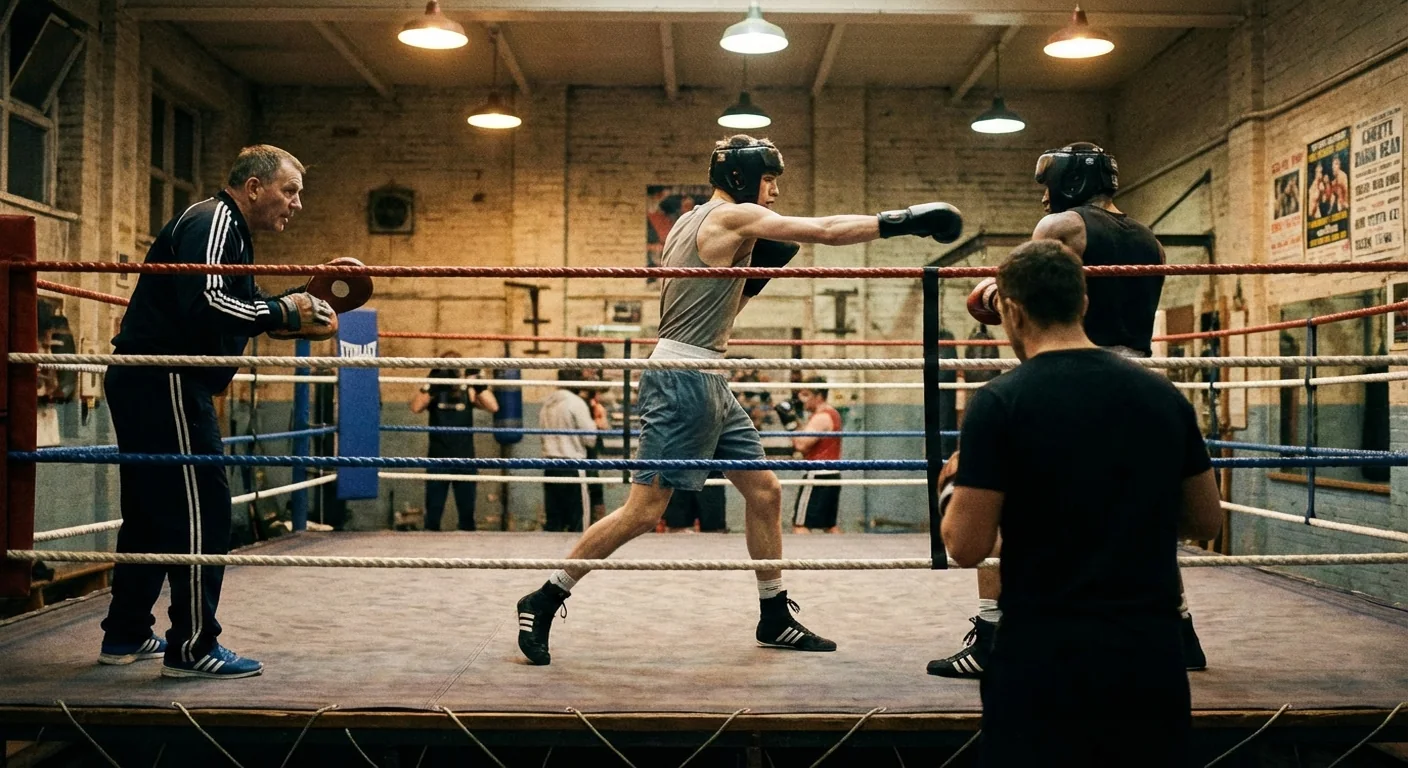
Soviet Boxing Style Explained
Why the Soviet school still shapes elite amateurs. Footwork, pendulum rhythm, volume, balance, and the conditioning demands that make it hard to copy well.
How to Get Your Boxing Licence in the UK
Want to compete in boxing? Here is the complete process for getting your boxing licence in the UK, whether amateur through Amateur Boxing Alliance or professional through the BBBofC.
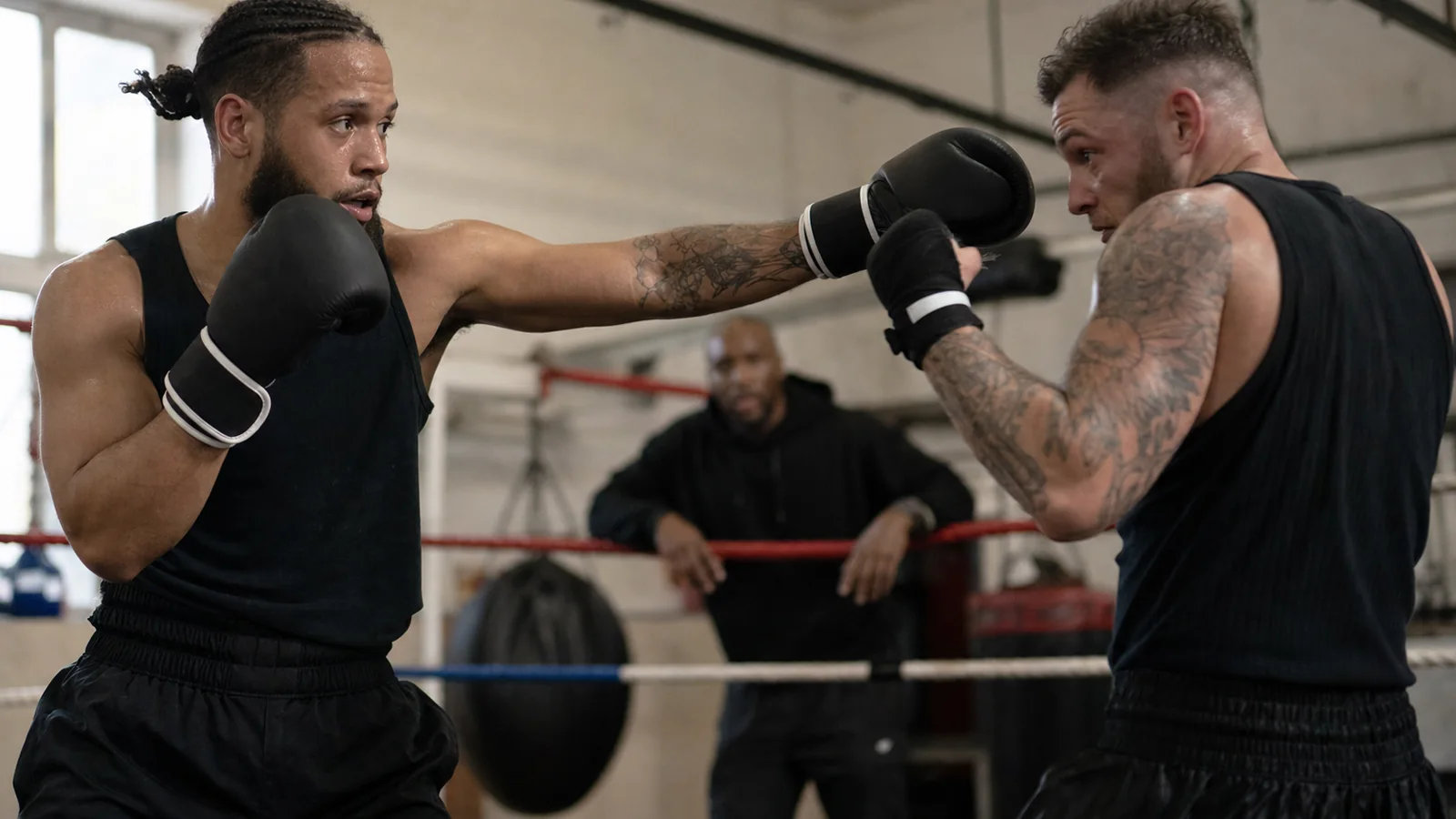
The Three Phases of a Boxing Exchange
Advanced amateur boxing is not just attack, defend, reset. Learn how entries, counters and counter-counters turn separate exchanges into one connected fight.
Was this page helpful?
It takes one tap, and it genuinely helps.
Choose your next step
Turn this article into the right action
Some readers are ready to book. Some need the class route first. Pick the route that matches what you actually want.