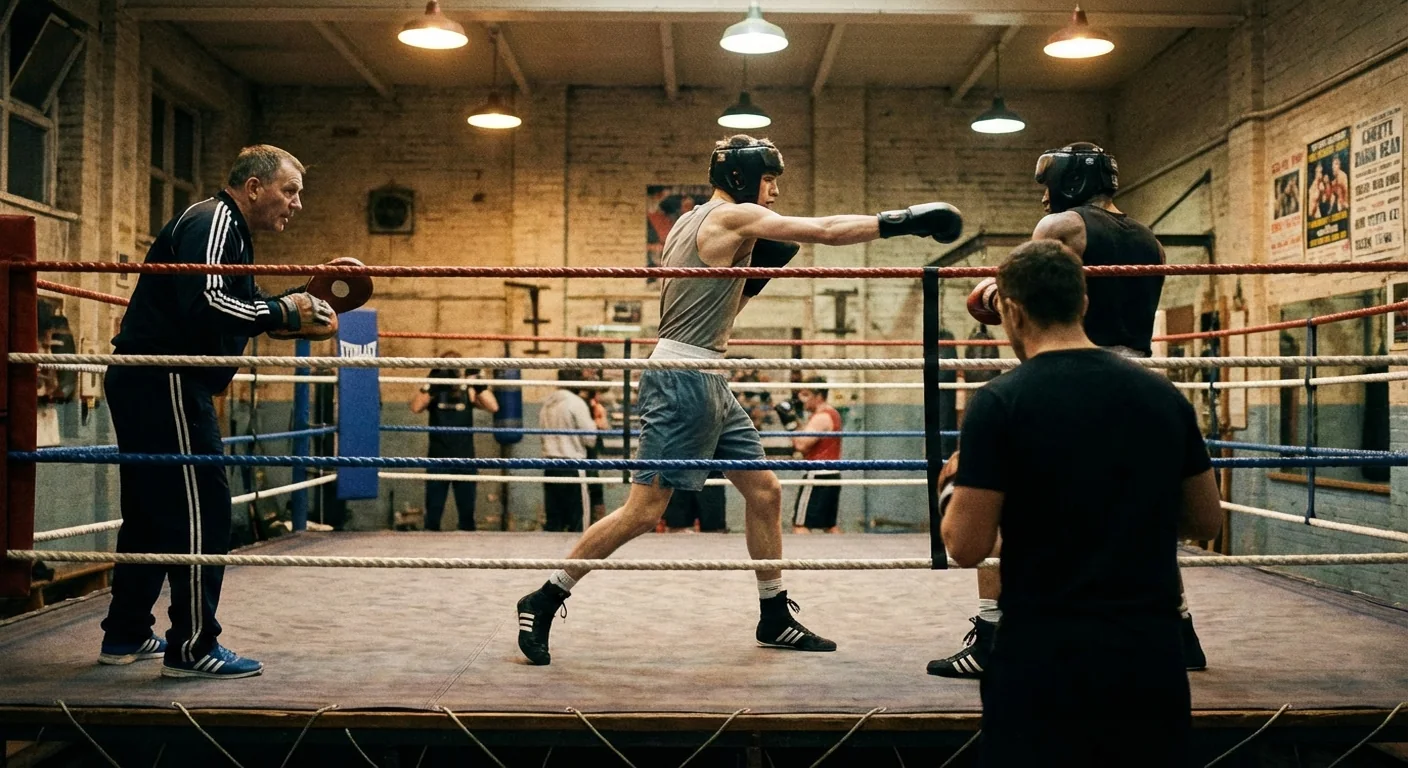
The Soviet boxing style gets described lazily all the time. People call it slick, amateurish, or point-scoring, as if that settles the matter. It does not. The Soviet school is one of the most influential systems the sport has produced, and if you watch modern amateur boxing properly you can still see its fingerprints everywhere.
At its best, Soviet boxing is about repeatable advantages. Better feet. Better balance. Better timing. More clean scoring punches. Fewer wasted actions. It is not built around one heroic punch. It is built around making the other boxer solve small problems for three rounds, then giving them bigger ones once they start chasing.
For club boxers, the appeal is obvious. It looks intelligent. It looks economical. It also looks easier than it is. This style demands a serious gas tank, disciplined footwork, and the ability to stay loose without ever losing your base.
Where the Soviet style came from
The clearest way to understand the style is to look at the coaching system behind it. Both the AIBA Coaches Manual and the USA Boxing Grassroots Training Manual treat the Russian or Soviet school as a distinct technical tradition built on fundamentals, balance, and systematic development.
That matters because the style did not emerge from one fighter's personality. It came from a coaching culture. Soviet boxing was drilled into athletes through repeated work on stance, distance, combination punching, and ring movement. The point was not flair for its own sake. The point was control.
That is why the style still travels well. If your coaching language is built around structure, rhythm, and scoring cleanly under pressure, Soviet ideas keep showing up.
What makes the style look different
The first thing most people notice is the movement. Soviet boxers tend to look alive in the feet at all times. They are not rooted in front of you waiting for exchanges. They bounce in and out, step off at angles, and use the jab as both a scoring shot and a steering wheel.
A good overview from Boxrope highlights the usual traits: footwork, distance control, sharp combinations, and attacking while moving. That last part is the key. Soviet boxing is not movement instead of punching. It is movement that creates the punching.
This is why the style often looks loose through the upper body. The shoulders are not rigid. The torso is not locked up. The hands can flow from the guard because the boxer is trying to stay rhythmical rather than tense. ExpertBoxing's piece on balance and relaxation makes the point well: too much tension takes you away from the ground and makes clean movement harder.
Loose does not mean sloppy, though. The feet still need to be underneath you. The ankles need to stay stable enough that when the punch lands, the force can travel up from the floor rather than leak sideways. Tony Jeffries' footwork guide is useful here because it keeps coming back to the same boring truth: balanced stance, weight under control, small steps, no crossing, no falling together.
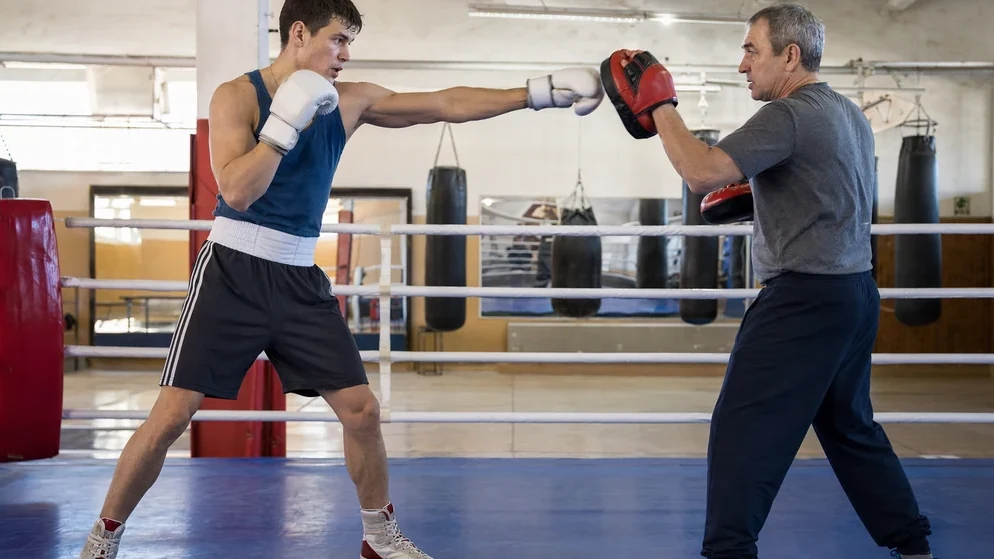
Locked ankles, loose rhythm, and why both matter
This is the part people copy badly.
When coaches talk about staying loose, some boxers hear that as an invitation to get floppy. They bounce too much, overreach with the jab, or let the feet drift underneath them until every shot lands with half the body missing.
That is not the Soviet style. Good Soviet-style boxing looks relaxed up top because the base is doing its job underneath. The ankles are not wobbling all over the place. The feet are active, but they are not casual. The boxer can step in, score, step out, then plant again quickly enough to punch without losing shape.
MyBoxingCoach's stance guide makes the practical coaching point well: knees relaxed, shoulders down, rear heel alive, stance balanced. That combination lets you move and hit. If your ankles collapse or your feet come together, you are no longer boxing in that style. You are just dancing badly.
At H&G this is one of the things that separates someone who looks tidy on the bag from someone who can actually box. Plenty of people can shadowbox beautifully in empty space. Far fewer can keep that same rhythm once another human is making them reset every three seconds.
Watch the pendulum before you try to copy it
The movement most people associate with the Soviet school is the pendulum step. It is not a decorative bounce. Used well, it keeps the boxer on the edge of range, gives the opponent a repeated rhythm to read, then breaks that rhythm at the moment of attack.
Watch the drill below with one question in mind: does the boxer stay fight-effective while moving? The stance should not narrow into a tightrope. The head should not float forward ahead of the feet. The jab should land as the body arrives, not after the boxer has fallen into range.
A useful way to train it is simple: in, out, angle, punch. Step in to make the opponent react. Step out without standing tall. Take a small angle while your weight is ready to move again. Then punch before they have fully reset to your new position.
That is the difference between rhythmic boxing and bouncing for show. One gives you options. The other just spends energy.
The jab is the steering system
The Soviet style is often described through the feet, but the jab is what connects the movement to the scoring. Without the jab, the footwork becomes evasive. With the jab, every entry and exit can ask the opponent a question.
A good Soviet-influenced jab does several jobs at once. It scores. It measures. It hides the next step. It makes the opponent blink before the right hand, the lead hook, or the exit angle arrives. Boxers such as Dmitry Bivol show this clearly: the lead hand is not just a punch, it is a way of owning the space between both fighters.
At club level, that is the part worth stealing first. Do not start by trying to look like an Olympian. Start by making your jab and your feet arrive together. If your foot lands, your jab lands. If your jab lands, your exit has already started.
Why the style needs a serious gas tank
This is the second thing casual observers miss. Soviet boxing can look so smooth that people assume it is low-effort. In reality, it is brutally demanding.
If you are bouncing, jabbing, changing angle, doubling up, and making an opponent miss, you are doing work every second. Not all of it is visible, but it is still work. Boxing Science's conditioning guide is helpful here because it shows how strongly boxing depends on aerobic capacity for sustaining output and recovering between bursts. That matters even more for a style built on repeated movement and punch volume.
A Soviet-style boxer does not just need lungs. They need composure when tired. The footwork has to remain clean in round three. The jab has to stay accurate once the legs start to burn. The upper body has to stay loose enough to flow, not tighten up into survival mode.
That is why the style suits disciplined athletes. If your fitness is average, Soviet boxing stops looking elegant very quickly.

Why it works so well in amateurs
Soviet boxing has always fitted amateur scoring logic beautifully. Clean touches. Clear control of distance. Sharp entries and exits. Enough volume to catch the judges' eye without loading up every shot.
That does not make it soft. It makes it rational.
In amateur boxing, the fighter who lands first, lands cleanly, and resets before the reply often wins the exchange. Soviet-style systems were built around stacking those exchanges repeatedly. If the other boxer has to chase, reach, and force the action, they often end up taking the worse shots while looking busier.
This is also why the style has influenced plenty of modern pros. Even if they are not full Soviet-school boxers, a lot of them borrow the jab discipline, angle changes, and habit of punching in balanced sequences rather than isolated swings.
The style is a rhythm trap
The clever part is not just moving in and out. It is making the opponent believe they have read your rhythm, then changing the count.
If you always bounce once in and once out, a half-decent opponent will step with you and meet you. If you can go two in, one out, pause, jab, angle, then go again, they have to keep recalculating. That recalculation is where the scoring shots live.
This is why Soviet-influenced boxers can look as if they are not doing much, then suddenly land three clean punches. The first action was not the attack. The first action was the rhythm that made the opponent commit their feet.
For an H&G boxer, the coaching cue is not "bounce more". It is "make them reset". If your movement forces the other person to move their feet before they can punch, you have bought time. If you buy time and throw first, you have started to control the round.
The weakness of the style
The biggest weakness is obvious: if you do not have the feet, the style falls apart.
A boxer with average footwork trying to imitate a Soviet mover often ends up hanging in range. They jab without authority, bounce without purpose, and retreat in straight lines. What looked smart in theory becomes a way to get pressured.
The second weakness is that some boxers become too polite with it. They score, move, score, move, and forget that they still have to hurt the opponent's confidence. The Soviet style works best when the clean boxing is backed by enough intent that the other person stops walking forward comfortably.
There is another trap: long-range movement can make body punching harder. If you spend the whole round on the edge of range, you may score neatly but never make the opponent physically pay. Good coaches watch for that. A boxer who only touches and escapes can lose authority in the fight. They still need moments where the punches have weight and the opponent feels discouraged from following.
That is why good coaches do not teach style as costume. They teach functions. Use your feet. Keep your base. Touch and turn. Finish the combination with a shot that means something. Then get back out.
What club boxers should steal from it
You do not need to become a Soviet-style purist to learn from the school.
Most adults at our Adult Competitive sessions would improve immediately if they took three things from it.
First, use the jab to organise the fight rather than just score a token point. Second, keep your feet alive without letting your stance collapse. Third, think in twos and threes instead of head-hunting with single shots.
A simple drill progression works well:
- Jab in, step out, reset the stance.
- Jab in, step out, lead hook as the opponent follows.
- Jab in, angle out, cross as they turn.
- Two light scoring shots, one firmer shot, then exit.
The aim is not to look pretty. The aim is to score while staying balanced enough to score again. If you can do that when tired and under pressure, you have taken something useful from the Soviet school.
If you want more on the tactical side of that, our guides to boxing stance and guard basics and ring generalship are worth reading alongside this one.
The Soviet school remains respected for a reason. It gives a boxer answers before the questions arrive. That is usually a sign the coaching system knew what it was doing.
H&G Team
Writer at Honour & Glory Boxing Club, a community boxing gym in Kidbrooke, South East London.
KEEP READING
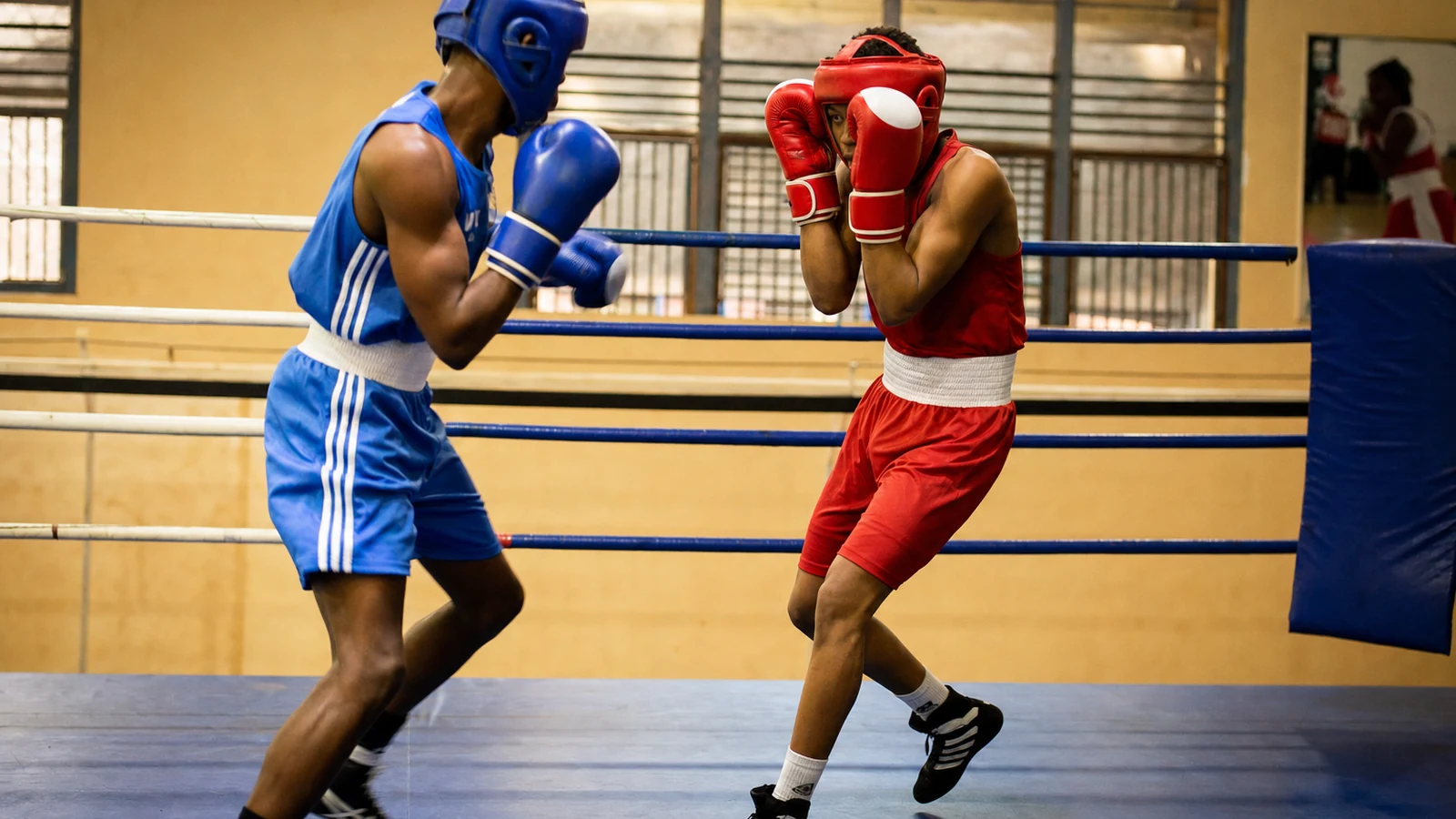
Cuban Boxing Style Explained
Why Cuban boxing still fascinates coaches. Rhythm, precision, defence, and the amateur habits that make the style so awkward to solve.
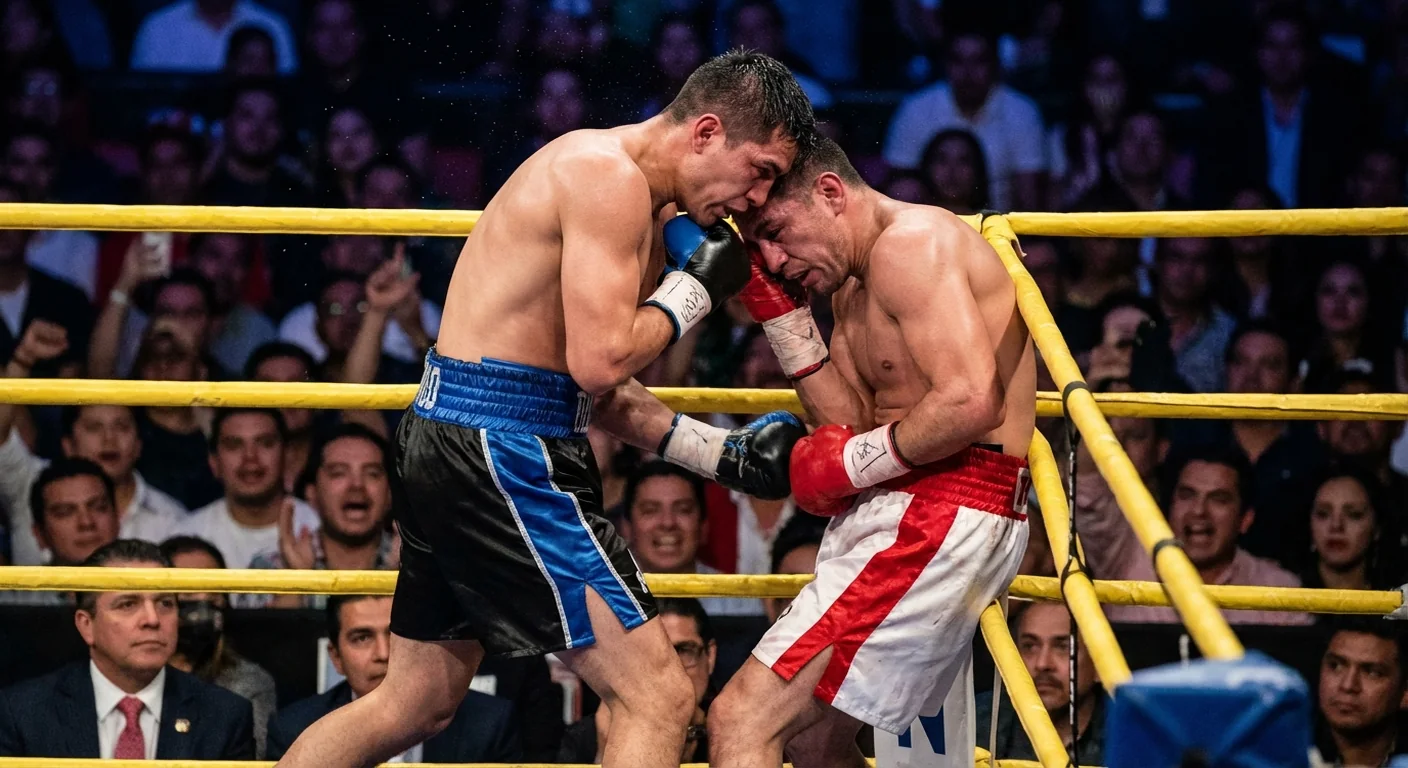
Mexican Boxing Style Explained
Pressure, body punching, and attrition. Why Mexican boxing is more technical than the caricature and still one of the sport's hardest styles to handle.
Setting Your Feet in Boxing
Good boxers move on their toes, but they do not punch from nowhere. Learn when to float, when to plant, and how to set your feet without becoming static.
Was this page helpful?
It takes one tap, and it genuinely helps.
Choose your next step
Turn this article into the right action
Some readers are ready to book. Some need the class route first. Pick the route that matches what you actually want.