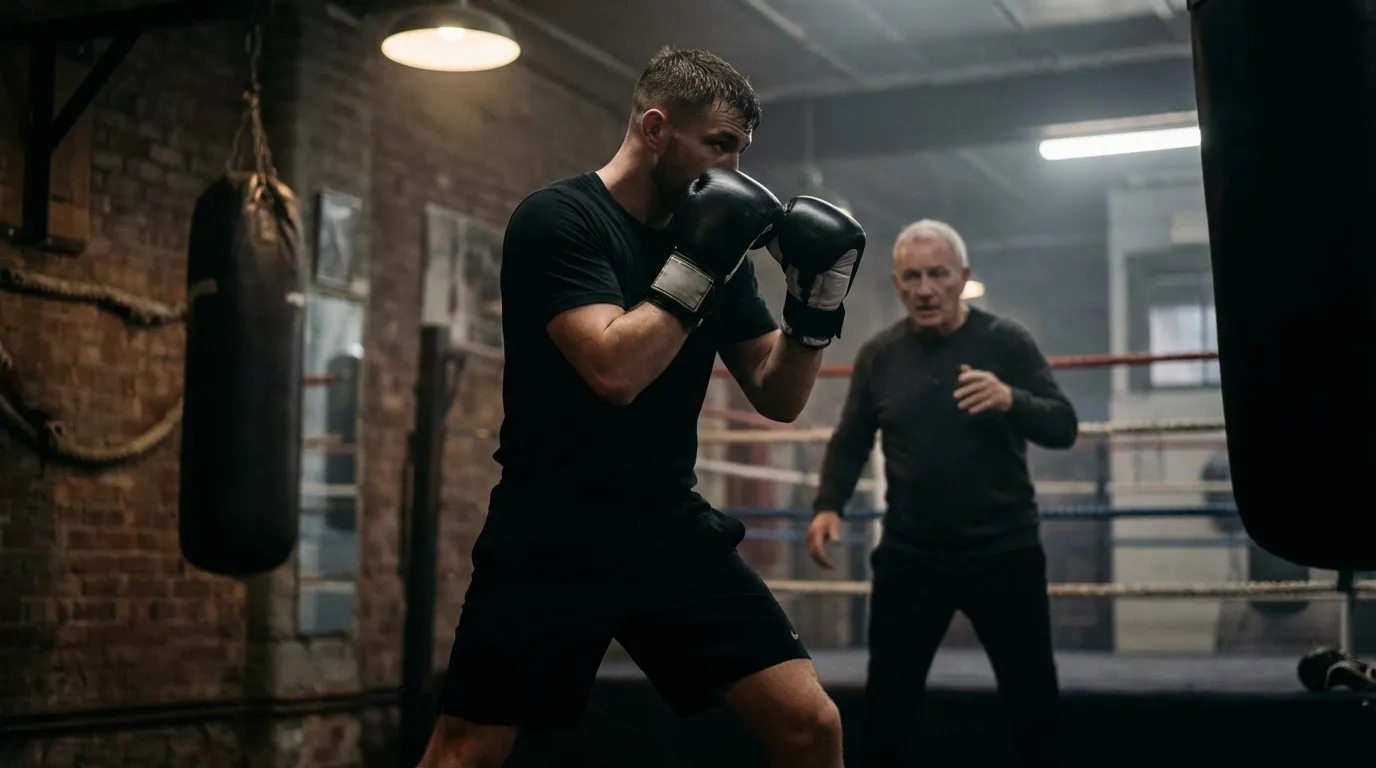
Biomechanical analysis of boxing stance shows that elite boxers maintain a significantly narrower base than novices, allowing faster weight transfer and more efficient hip rotation. England Boxing's coaching education defines correct stance as one of the five fundamental technical skills taught to all beginners.
Your boxing stance and guard are the foundation of everything else. Every punch you throw, every slip you make, every step you take starts from this position.
Get it right and boxing becomes much easier to learn. Get it wrong and you will struggle with everything built on top of it.
Let me break down the proper boxing stance for beginners and how to hold a solid guard.
Orthodox vs Southpaw: Which Are You?
Before learning the stance, you need to know which way you will stand.
- Orthodox stance. Left foot forward, right hand in the rear. This is the stance for right-handed people.
- Southpaw stance. Right foot forward, left hand in the rear. This is the stance for left-handed people.
The reasoning is simple: your stronger hand stays in the back where it has more distance to travel, generating more power on your cross.
If you are unsure which feels natural, try both for a few minutes. One will feel more balanced and comfortable. That is probably your stance.
About 90% of people are orthodox. The instructions below assume orthodox stance. Southpaws should mirror everything (source).
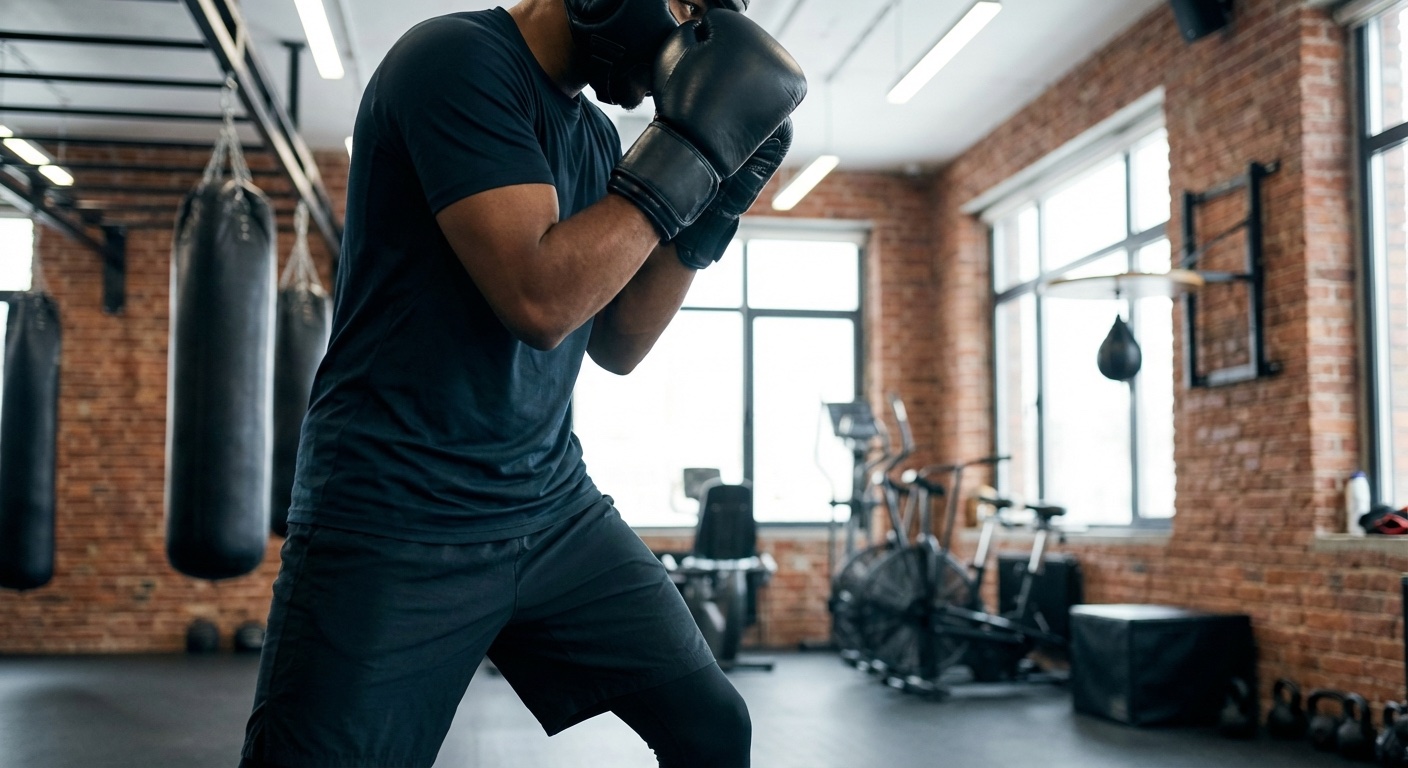
Your Feet: The Base
Everything starts with foot position.
- Shoulder width apart. Not too wide, not too narrow. Find a width where you feel balanced and mobile.
- Lead foot forward. Your left foot points toward your opponent at about a 45-degree angle, roughly toward one o'clock if twelve o'clock is straight ahead.
- Rear foot back and angled. Your right foot sits behind and to the side, angled at about 45-90 degrees from forward. The heel should be slightly raised, not flat on the ground.
- Weight distribution. Around 50-50 between both feet, maybe slightly more on the rear foot. You should be able to move in any direction quickly.
- Knees slightly bent. Not a full squat, just enough to stay loose and ready to move. Locked knees make you slow and easy to knock off balance.
The distance between your feet front to back should be roughly shoulder width as well. Too narrow and you are unstable. Too wide and you are slow.
Body Position
Once your feet are set, adjust your body:
- Turn sideways. Your body should present a smaller target by turning sideways to your opponent. Your left shoulder faces forward in orthodox stance.
- Slight forward lean. Not hunching, but a subtle inclination forward. This keeps your weight over your base and makes throwing punches easier.
- Chin down. Tuck your chin toward your chest. This protects your jaw - the prime knockout target.
- Shoulders relaxed but ready. Tension slows you down. Stay loose while maintaining position.
Think of drawing a line from your front toe through your body. That line should run roughly along your spine.
The Guard: Protecting Yourself
Your hands form your guard, the defensive barrier protecting your head and body.
- Hands up. Both hands come up beside your face. Your rear hand sits near your cheek, almost touching. Your lead hand sits slightly forward and out.
- Elbows tucked. Keep your elbows close to your ribcage. This protects your body and keeps your arms from waving around uselessly.
- Fists closed but not clenched. Make a proper fist with thumbs outside but do not squeeze hard. Constant clenching wastes energy and slows your punches.
- Eyes forward. Look straight ahead through your guard. Some beginners look down at their opponent's hands or chest. Look at their eyes or chin.
The classic image is hands framing your face like a phone, with your forearms protecting the path to your chin.
Why This Position Works
The boxing stance is not arbitrary. Each element serves a purpose:
Sideways body: Presents a smaller target. Your opponent sees less of you to hit.
Lead shoulder forward: Protects your chin when you jab. Your shoulder acts as a shield.
Chin down: The jaw is the knockout switch. Protecting it is paramount.
- Hands high. Blocks punches to the head, the most dangerous strikes.
- Elbows in. Blocks hooks to the body. Covers the liver and ribs.
- Rear heel raised. Allows quick weight transfer for power punching and fast movement.
- Knees bent. Enables explosive movement and helps absorb incoming force.
When you understand why each element exists, you are more likely to maintain proper position.
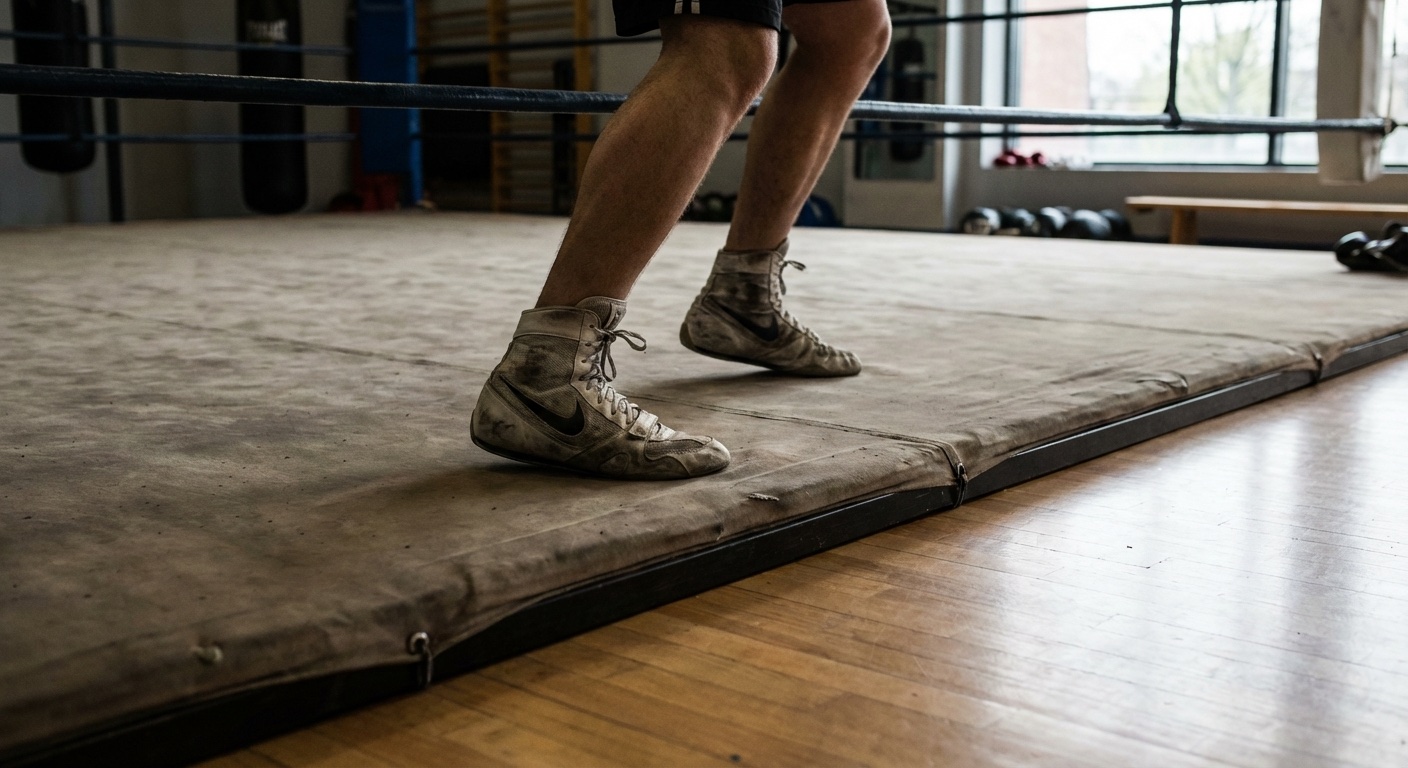
Common Stance Mistakes
Nearly every beginner makes these errors:
- Standing square. Facing your opponent directly with both shoulders forward. This makes you a bigger target and limits your jab range. Turn sideways.
- Feet too wide or narrow. Too wide and you cannot move quickly. Too narrow and you are easy to knock off balance. Find the sweet spot.
- Flat feet. Rear heel down means slower movement and less power. Stay on the ball of your rear foot.
- Leaning back. Some beginners lean away from imaginary punches. This puts your weight on the wrong foot and makes punching weak. Stay centred or slightly forward.
- Locked knees. Straight legs are slow legs. Keep a slight bend to stay mobile and ready.
Common Guard Mistakes
The guard drops constantly with beginners. Here is what goes wrong:
- Hands too low. Fatigue makes the hands drop. You will get hit with shots you could have blocked. Fight to keep them up.
- Elbows flared out. Wide elbows leave your ribs and liver exposed. Tuck them in.
- Hands too far from face. If your hands are six inches from your head, that is six inches a punch can travel before you can react. Keep them close.
- Rear hand dropping when jabbing. The most common mistake. When your left hand goes out, your right hand stays protecting your chin. Not negotiable.
- Looking down. Eyes on your opponent, not on their fists or your own. Peripheral vision handles the hands.
Building the Habit
Knowing the stance and guard is not enough. You need them to become automatic.
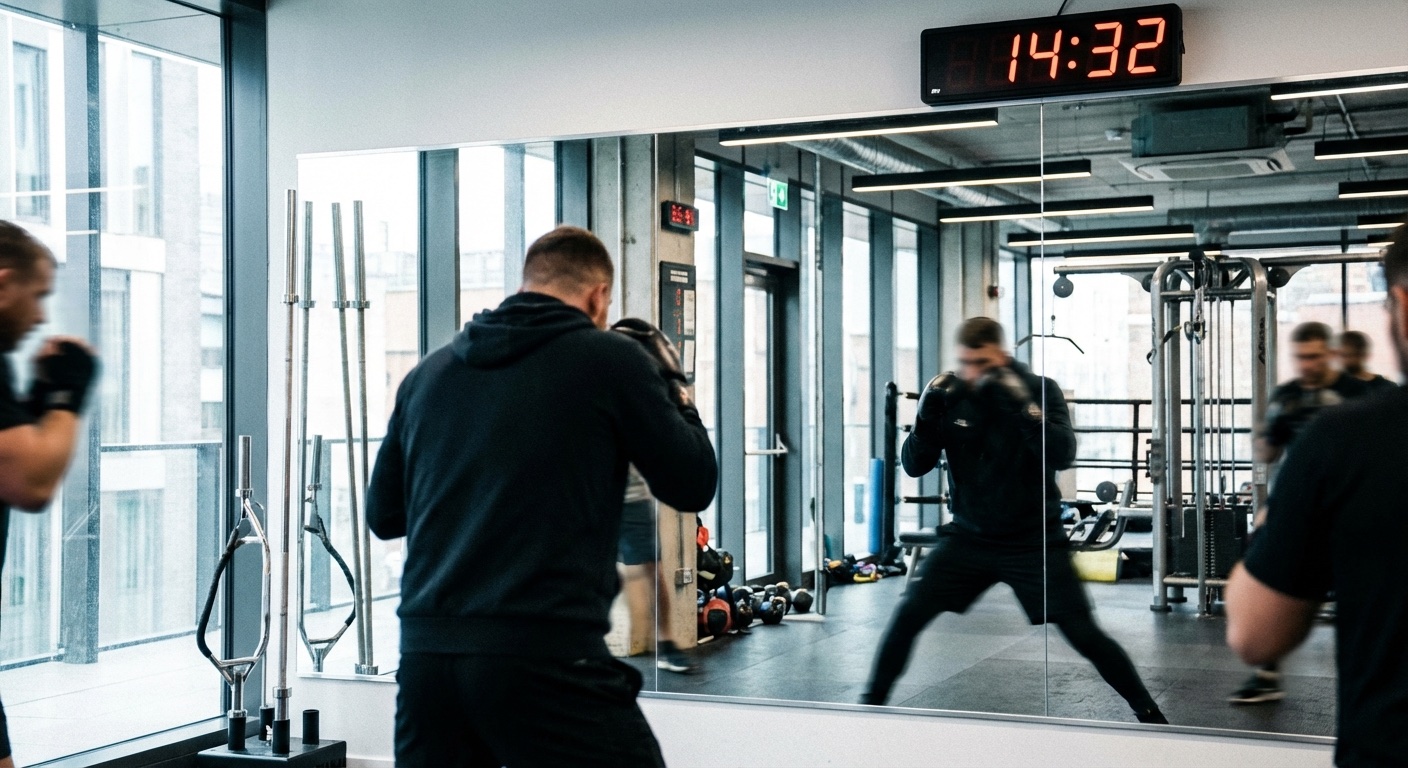
- Practice at home. Stand in front of a mirror and check your position. Correct anything that is off. Do this for a few minutes daily.
- Shadow box in stance. Move around while maintaining proper position. Do not let your hands drop or your feet get lazy.
- Film yourself. Camera phones make this easy. Record your shadow boxing and review it. You will spot issues you could not feel.
- Ask for feedback. Your coach sees your stance constantly. Ask what needs improvement.
Within a few weeks of conscious practice, the stance starts feeling natural. Within a few months, you will adopt it without thinking.
The Stance in Motion
Static stance is just the beginning. Real boxing involves constant movement while maintaining fundamentals.
Moving forward: Step with your lead foot first, then follow with the rear. Keep the same distance between feet.
Moving backward: Step with your rear foot first, then follow with the lead. Same distance between feet.
Moving laterally: Step with the foot closest to your direction of travel, then follow with the other.
After punching: Return to proper stance immediately. Punches should not leave you out of position.
Under pressure: Maintain stance even when tired or stressed. This is when bad habits creep in.
The goal is maintaining a solid base no matter what is happening. Your stance is your home. You leave it to punch, you return immediately.
Personalisation vs Fundamentals
Advanced boxers often modify their stances. You will see fighters with unusual guards, wider or narrower bases, and various head positions.
These work for them because they have mastered the fundamentals first. They know the rules well enough to break them effectively.
As a beginner, stick to textbook stance and guard. Once you have trained for years and understand why these positions work, you can start adjusting to your style.
Trying to be unique before understanding basics just means making errors and calling them style choices.
The Mental Side
Your stance affects your psychology as well as your physical readiness.
Standing correctly makes you feel more confident. You are ready. You are protected. You can handle whatever comes.
Standing poorly makes you feel vulnerable. And usually you are.
When you are nervous before sparring or competition, check your stance first. Often anxiety loosens your structure. Tightening it back up can settle your nerves.
Drills to Try
A few simple drills for developing your stance and guard:
Mirror work: 5 minutes daily in front of a mirror. Check every element. Correct constantly.
Movement drill: Move forward, backward, left, and right around your room while maintaining stance. Do not let your feet get lazy.
Shadow boxing with focus: Throw combinations but focus entirely on returning to perfect guard after each punch.
Video review: Film yourself training and watch specifically for stance and guard breakdown.
Pressure test: Have a partner gently push your shoulders while you maintain stance. Learn what makes you stable versus unstable.
Foundation First
It is tempting to jump ahead to the flashy stuff. Combinations, head movement, power punches. But everything comes back to stance and guard.
The fighter with solid fundamentals usually has the advantage over the fighter with flashy technique and a poor base.
Spend real time on your stance and guard. Return to them when things are not working. The basics never become irrelevant.
Learn With Proper Coaching
Reading about stance and guard gives you information. Practicing with a coach gives you skill.
At Honour & Glory, we start every beginner with these fundamentals. We watch your position constantly and correct the small errors before they become ingrained habits.
H&G Team
Writer at Honour & Glory Boxing Club, a community boxing gym in Kidbrooke, South East London.
KEEP READING
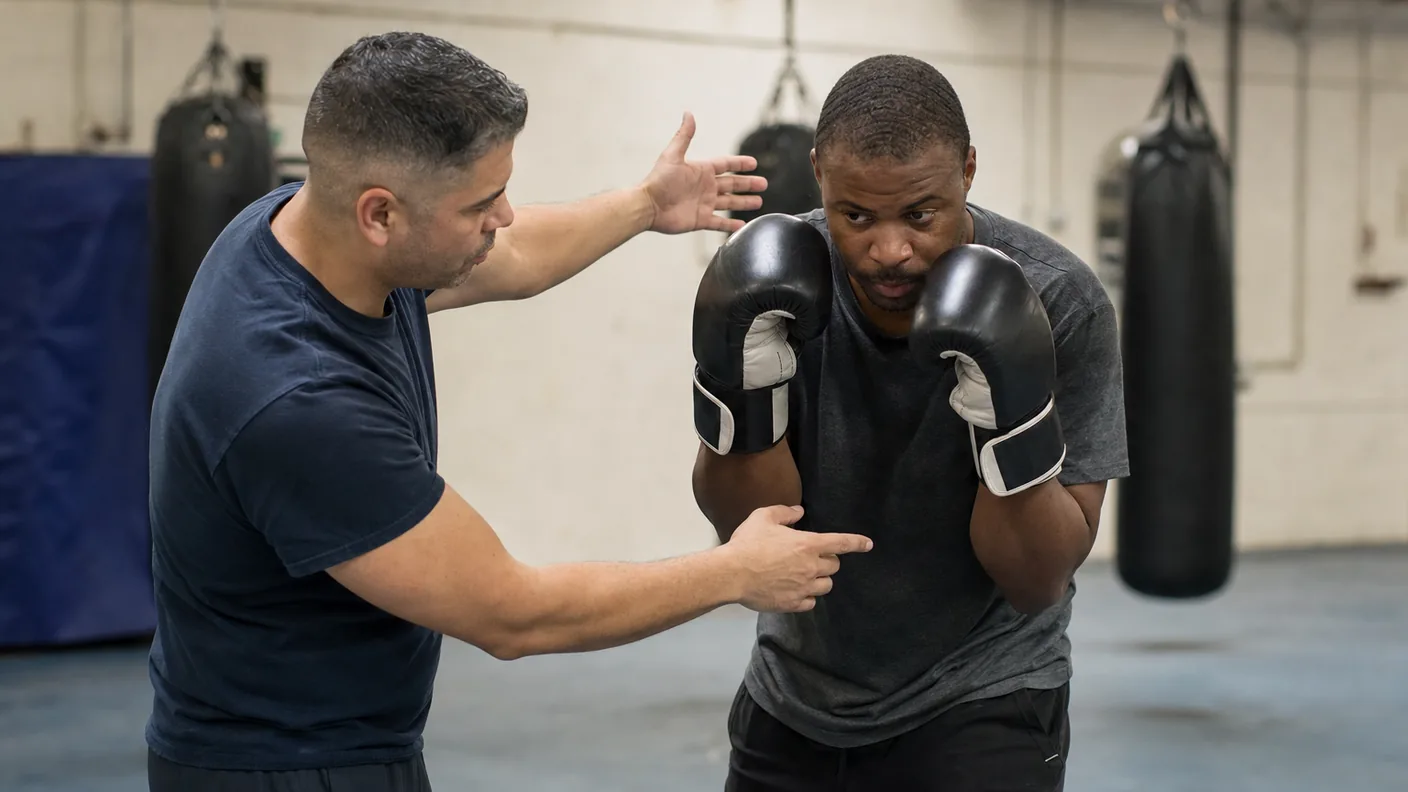
Boxing Guard Spacing: Fix Your Fist Position
A guard that is too narrow can spoil your jab, shoulder line and balance. Here is how to set your fists before you punch.
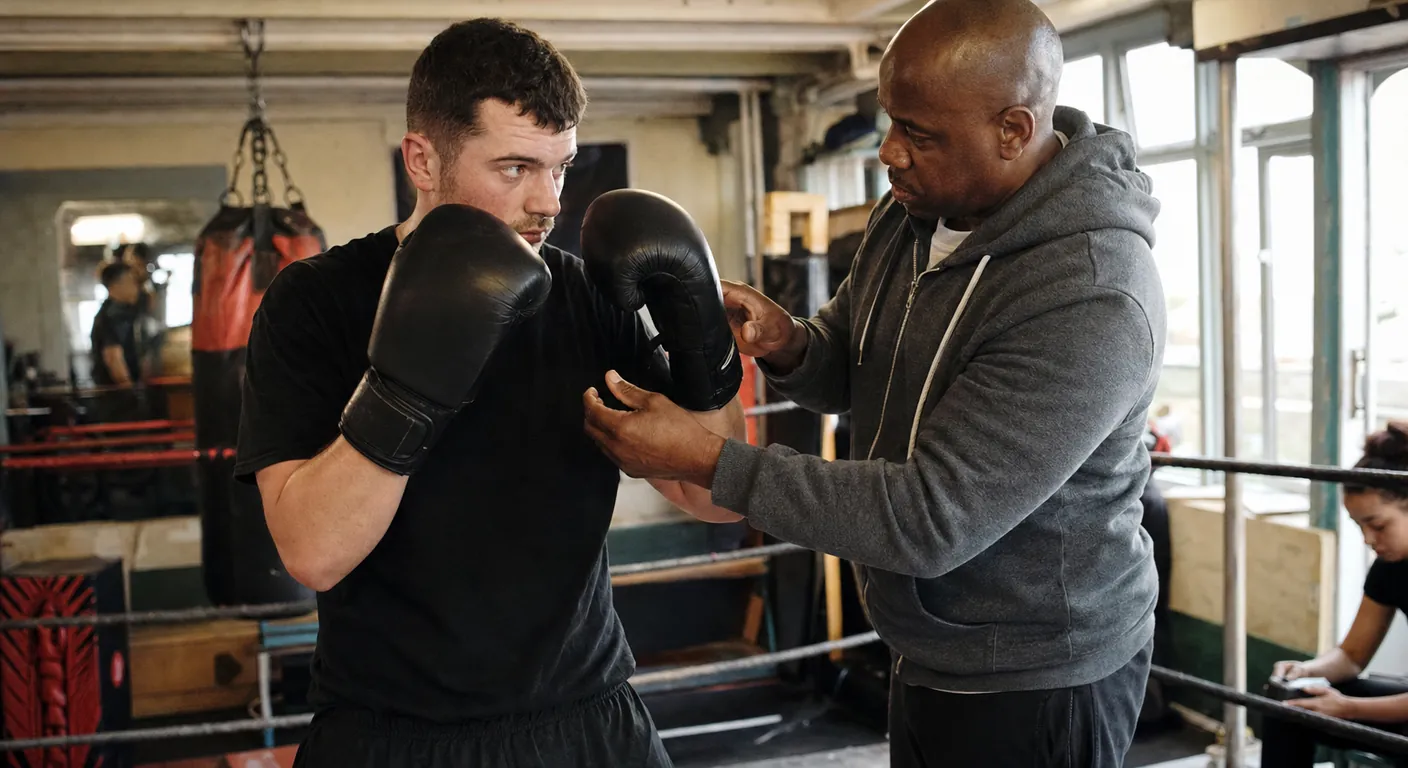
Boxing Guard: Do Not Squeeze Your Hands Together
A practical guard lesson for boxers who keep their gloves too narrow and lose shoulder position when they punch.
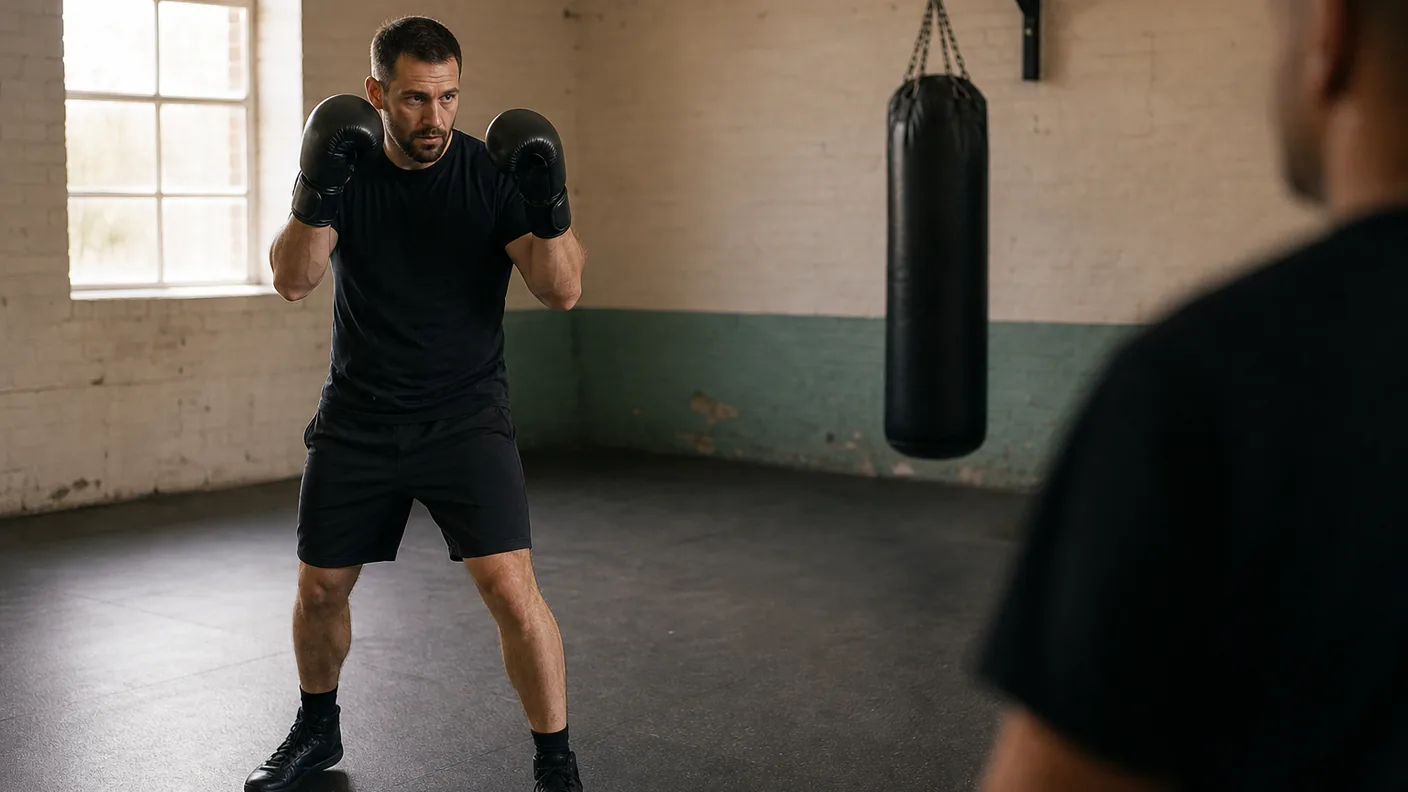
Why a Narrow Boxing Guard Spoils Straight Punches
A cramped boxing guard can turn the shoulders away from clean straight punches. Use this simple check to keep your stance useful.
Was this page helpful?
It takes one tap, and it genuinely helps.
Choose your next step
Turn this article into the right action
Some readers are ready to book. Some need the class route first. Pick the route that matches what you actually want.