Box Steps in Boxing: A Four-Direction Footwork Drill
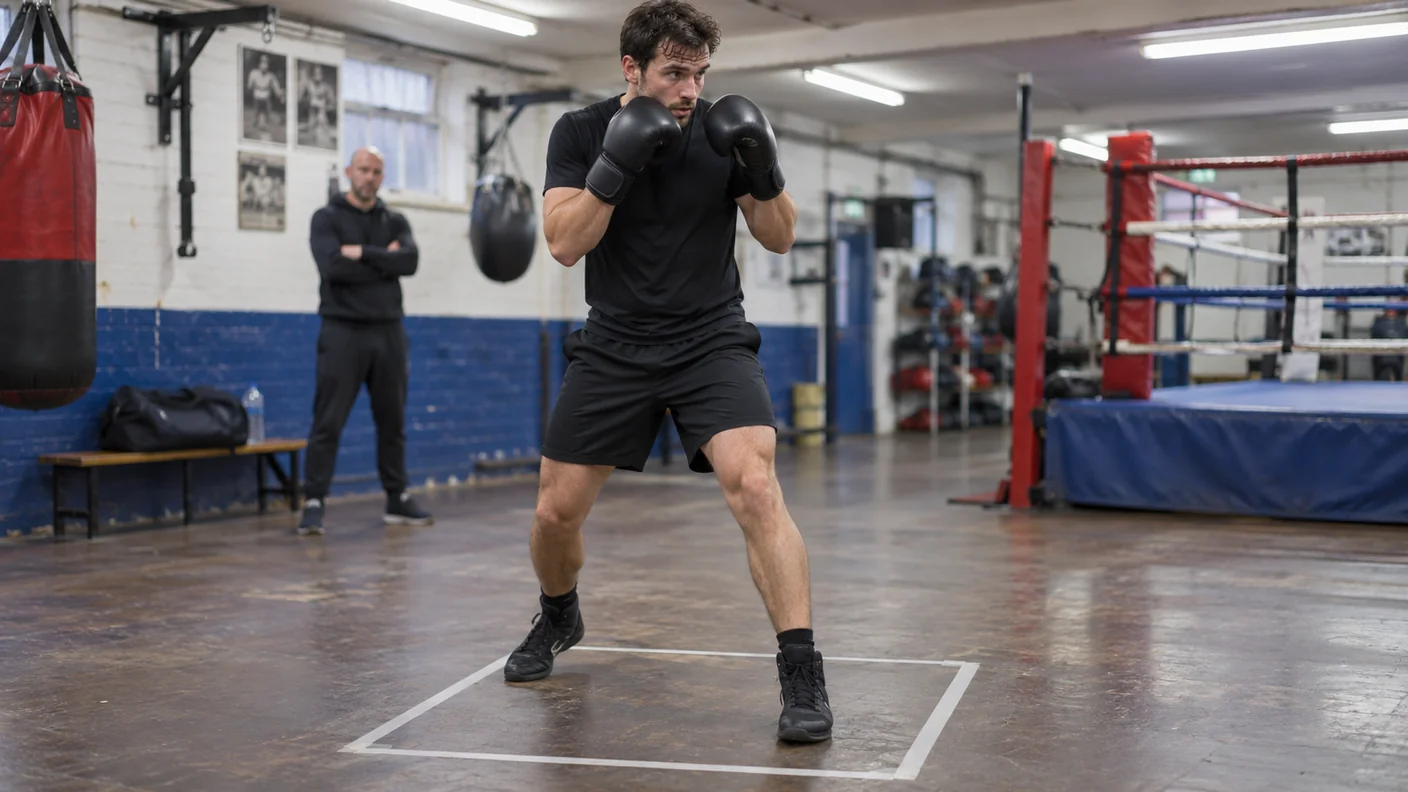
Many new boxers try to learn footwork by adding everything at once. A little bounce, a pivot, a slip, a long step, then a combination. The result is often busy feet with no stable stance underneath them.
Box steps give the feet one clear job. You move forward, to one side, back and across the other side in a small square. The pattern is deliberately plain. Its value is that every direction asks the same question: can you move, restore your stance and still have a guard that can work?
The drill is not ring movement by itself. It will not teach you how to cut off a partner or escape every exchange. It gives you a better base for those skills by making four basic movements feel calm and connected.
Watch the demonstration below once, then use the coaching points to make the steps small enough that your boxing shape survives every corner of the square.
What box steps are for
A box step is a four-direction footwork pattern. Starting in your normal stance, take one small step forward, one step to the side, one step back and one step across to where you started. Repeat it slowly in both directions.
The shape on the floor is useful because it removes the urge to drift. You are not trying to cover the whole gym. You are learning to arrive in a familiar stance after each short move.
For an orthodox boxer, the lead foot normally begins a forward or lead-side move. The rear foot normally begins a backward or rear-side move. A southpaw reverses the labels but keeps the same principle: the foot nearest the direction of travel moves first, then the other foot restores the stance.
Do not turn this into a march with your feet together. Each move should keep enough width between your feet that you could jab, cover or change direction again. If the second foot catches up so far that you are standing tall on a narrow line, make the step smaller.
The England Boxing coaching handbook treats basic technical skills, balance and movement as foundations for boxing development. That is the standard for this drill. A step is only useful if it leaves you ready for the next action rather than asking for a repair movement first.
Mark a small square before you add speed
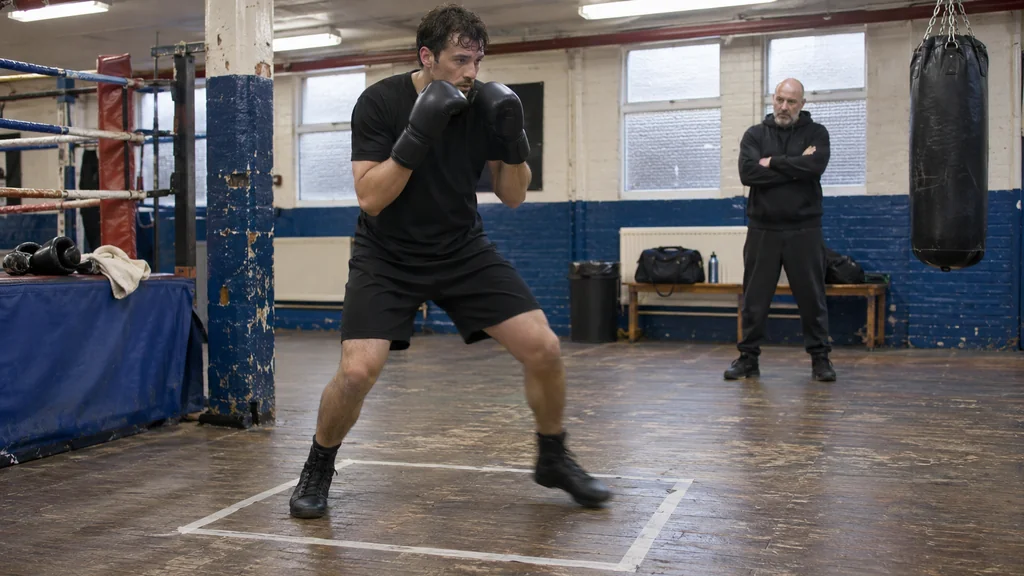
Use four strips of tape, four flat markers or the edges of floor mats to make a square about one short step wide. You do not need an agility ladder. The square gives the feet an honest boundary and makes it easier to spot when the stance has stretched too far.
Stand in the middle with the lead toe and rear heel on a sensible boxing line. Keep the knees soft, chin tucked and hands near the cheeks. Then take the first small step forward.
The second foot follows just far enough to rebuild your usual stance. Hold the finish for one count. If your shoulders have tipped forward, your rear hand has wandered or the feet have become parallel, do not continue round the square. Reset and reduce the first step.
The same check applies at every side. The point is not to race around the tape. The point is to make each corner feel like a place you could box from.
Keep the upper body quiet while the feet travel
A common mistake is letting the arms swing with the step. The lead glove drops as the lead foot moves, or the rear hand opens while the boxer tries to hurry sideways. That may look like movement, but it leaves the head unprotected just when the stance is changing.
Keep the gloves close to their ordinary working lanes. Your hands do not need to be glued to the face, but they should never need a large journey home after a basic step. Look forward rather than at the tape under your feet. The square is a guide, not the target.
A biomechanics study of boxing punches found that effective punching depends on coordinated contributions from the body segments rather than the arm alone. The practical lesson here is modest: footwork and punching cannot be trained as separate games. If the feet leave you leaning, narrow or square, the next punch will usually ask the shoulders to rescue a poor position.
Start without punches. When the stance is stable, add a light jab only after a forward step. The jab should arrive as the first foot settles, with the rear glove still near the cheek. Do not add a cross until you can move round the square without watching your feet or reaching with the lead hand.
Our guide to boxing side steps without losing your stance explains the left and right movements in more detail. Box steps give you a simple pattern for joining those side steps to forward and backward movement.
A three-round box-step drill
Use this after a warm-up, before hard bag rounds or controlled partner work. Start with one-minute rounds. The drill should feel measured enough that you can stop at any point without falling into the next step.
Round one: walk the square
Move forward, across, back and across again with no punches. Make one complete square, then reverse the direction for the next square.
Pause for one count at every corner. Check that your feet are still staggered, the knees are still soft and both hands are available. If your feet click together or cross, slow the drill down rather than trying to rescue the next corner.
Round two: add one jab
Keep the same square, but add one relaxed jab as you take the forward step. Return the hand to guard before the rear foot has finished restoring the stance.
Do not throw a jab on every side yet. You are learning that one punch can travel with a step without pulling the upper body beyond the front knee. If the jab makes you rush round the rest of the square, remove it and fix the feet first.
Round three: coach cue at the exit
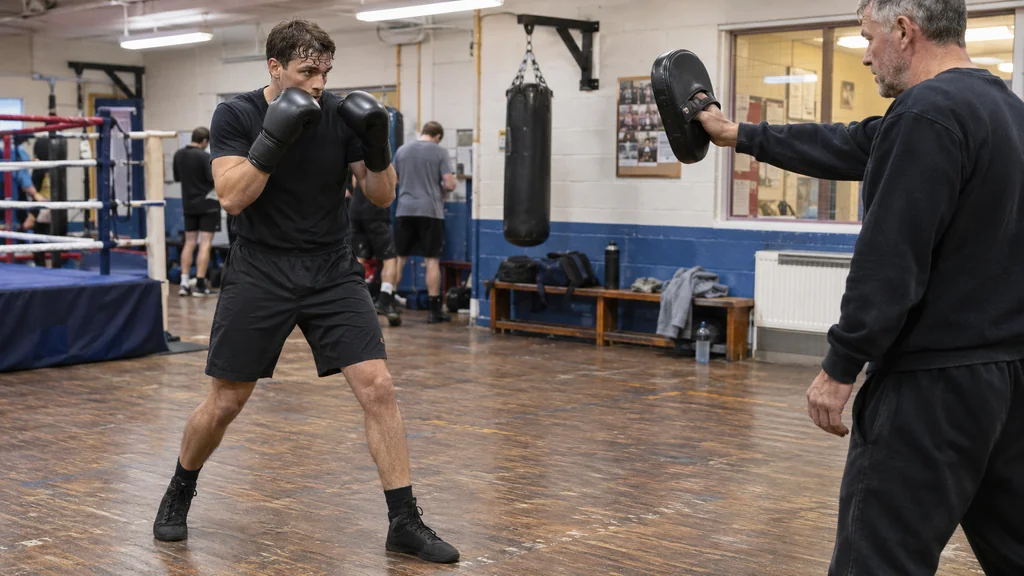
Complete three quiet sides of the square. At the fourth corner, a coach can show one of three clear cues: an open mitt at honest jab range, a raised glove for cover, or no target at all.
Touch the mitt with one measured jab only when it is there. Bring both gloves home for the cover cue. With no target, settle in your stance and begin another square. This final choice stops the drill becoming a dance. You are moving in a pattern, but you are still looking for a reason to use the next action.
Four mistakes that make the square useless
The first is taking steps that are too large. A large forward step can pull the head over the lead knee. A large sideways step can separate the feet until the next punch has no base. Keep the square smaller than you think at first.
The second is allowing the feet to cross. Crossed feet can make the movement look quick, but they delay your ability to defend or change direction. The foot nearest the route leads, then the other foot restores the normal space between them.
The third is looking down. A boxer who watches the tape cannot read a coach, mitt or partner. Use the floor markers to set the route, then keep your eyes at chest height.
The fourth is adding combinations too early. A simple jab is enough once the feet are settled. If a one-two turns the drill into a scramble, return to shadow boxing and let the stance become reliable before you make the task busier.
Put box steps into real boxing practice
A square on the floor is not an opponent. It cannot change distance or make you defend. Think of it as a rehearsal for the shape you need when those things happen.
On pads, a coach can move the mitt slightly at each corner and ask for one jab, one cover or a reset. In controlled partner work, the partner can take one light step after each square so you practise finding the same stable stance while the target changes. Keep the contact technical. The drill is about direction and balance, not winning an exchange.
Once the square feels natural, use the same discipline when you pivot without losing your stance or make a small exit after a punch. The route changes, but the standard does not: move with your feet under you, keep the hands useful and arrive ready to decide again.
For adults in Kidbrooke, Greenwich and nearby, our Recreational Adults boxing classes use pads, bag work and controlled drills to make footwork part of the punch rather than an afterthought.
The coaching cue is simple: small square, quiet guard, ready feet.
H&G Team
Writer at Honour & Glory Boxing Club, a community boxing gym in Kidbrooke, South East London.
KEEP READING
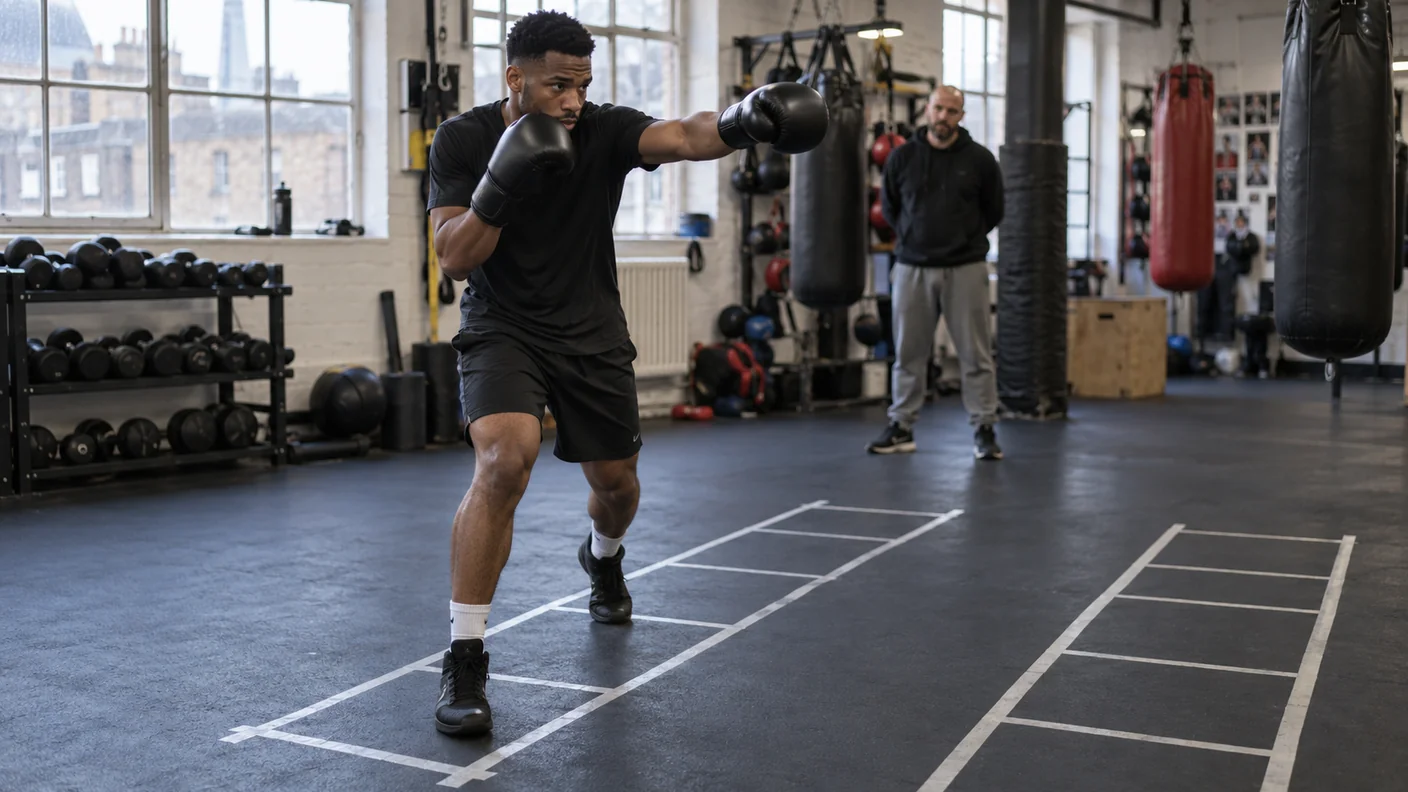
In, Out, Across: Boxing Footwork Drill
A three-direction boxing footwork drill for entering range, leaving safely and changing the line without losing your stance.
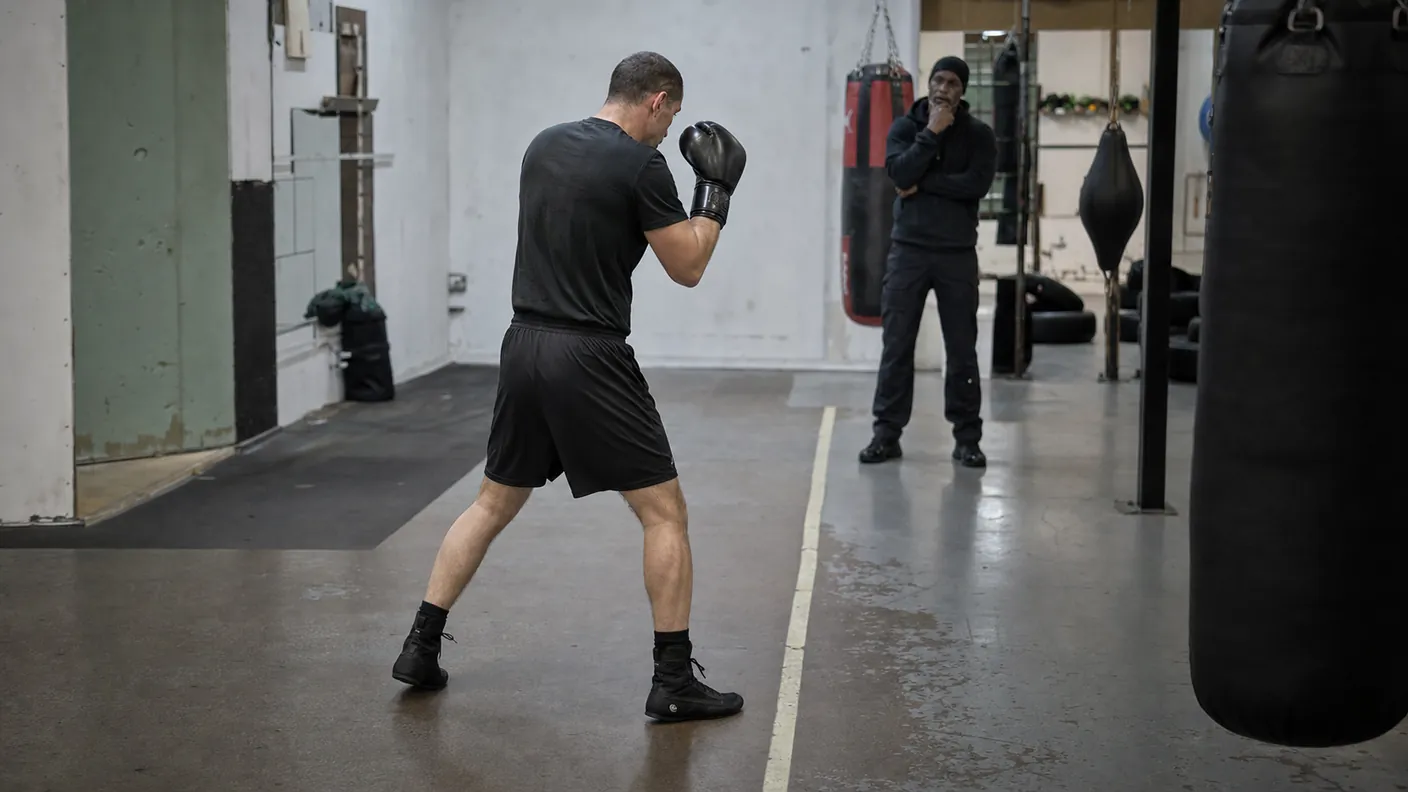
The Floor-Line Drill for a Better Boxing Stance
Use one line on the floor to build a boxing stance that stays balanced, mobile and ready to punch without standing square.
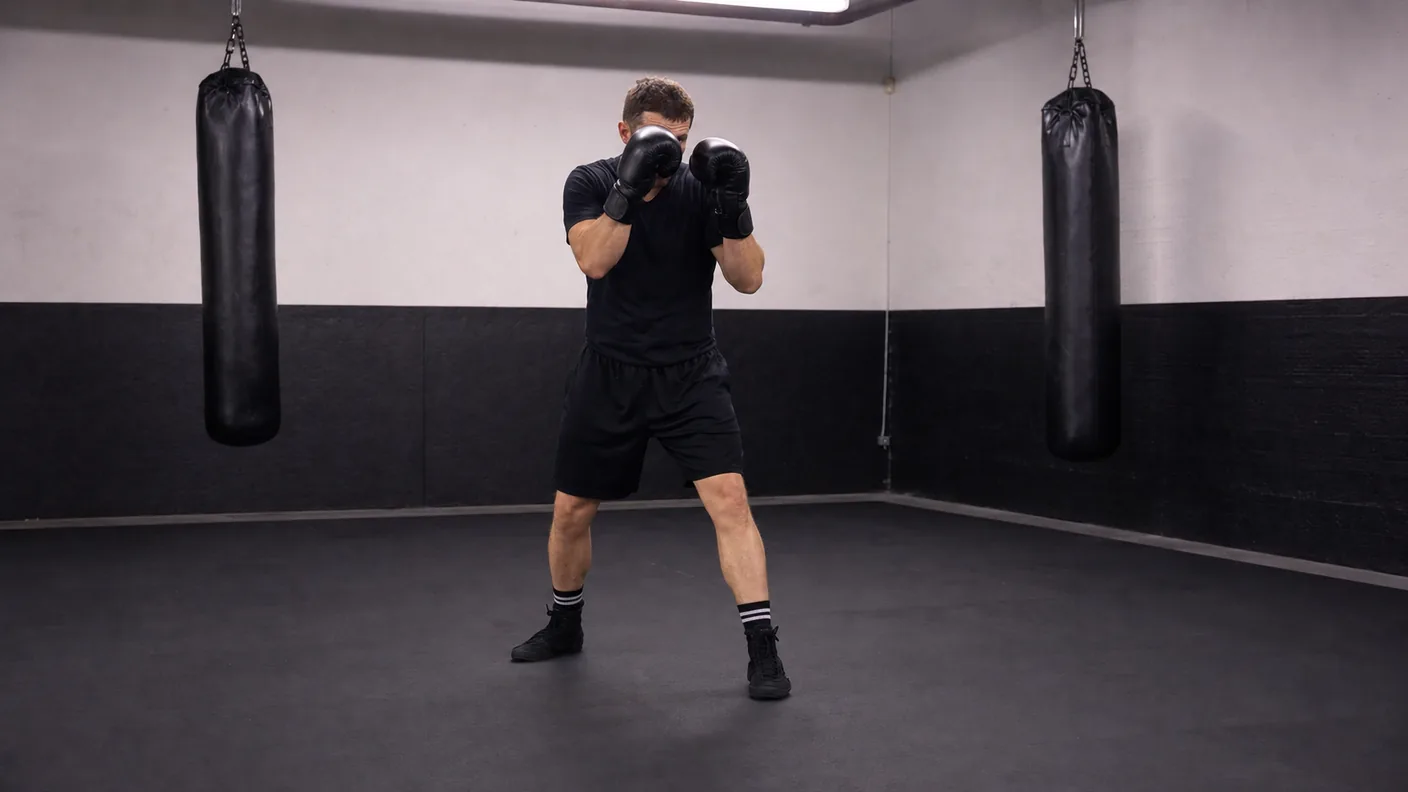
How Floor Grip Changes Your Boxing Footwork
A sticky or slippery surface can expose poor boxing footwork. Learn how to adjust steps, pivots and balance without forcing movement.
Was this page helpful?
It takes one tap, and it genuinely helps.
Choose your next step
Turn this article into the right action
Some readers are ready to book. Some need the class route first. Pick the route that matches what you actually want.