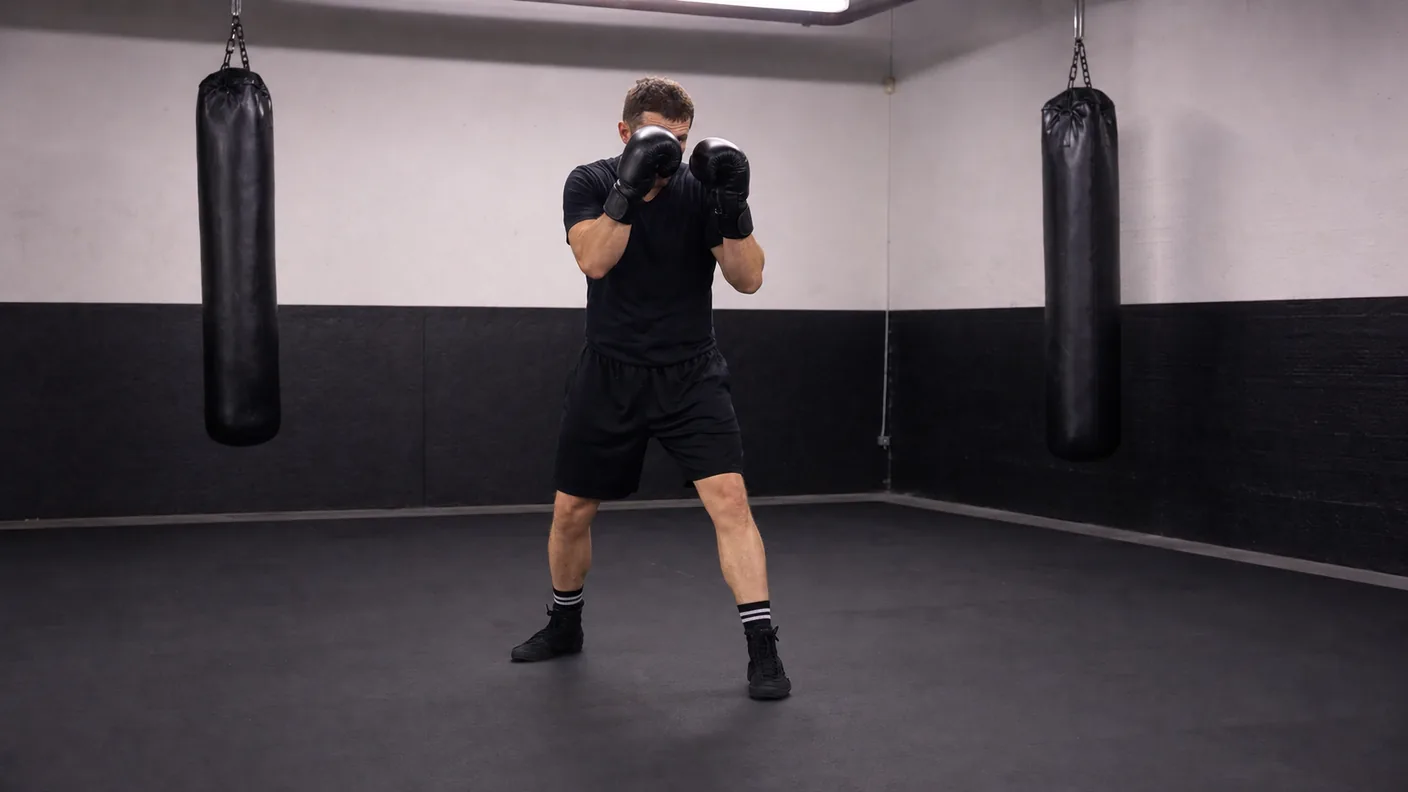
A good boxing stance should work on more than one floor. That does not mean every floor feels the same.
A firm canvas, a slightly sticky mat and a dusty wooden hall all give different feedback through the feet. If you train only by trying to look busy, you may miss the lesson. The floor can show you whether you are stepping with balance or dragging yourself into position.
The short clip below is worth watching for the feet rather than the hard punches. Notice how a springy surface can encourage a boxer to slide in and out. That can be useful, but it is not a licence to bounce without control.
Your feet need enough grip, not maximum grip
Boxing footwork needs a middle ground. You need enough contact with the floor to drive a small step, turn the hip and stop yourself after a punch. You also need enough freedom to pivot, adjust an angle and take the head off line without twisting the knee against a planted foot.
That is why a surface can change the way a movement feels without changing the movement itself. On a very sticky floor, a big pivot may feel jammed. On a slick surface, a long step may carry you farther than you expected. The answer is not to force your usual speed through either problem. Make the action smaller until you can finish in stance.
A technical review of boxing performance treats punching, distance and movement as connected rather than separate jobs. That is the useful starting point here. If a floor makes you lose your base, it will eventually affect the jab, the cross and your ability to defend after either one.
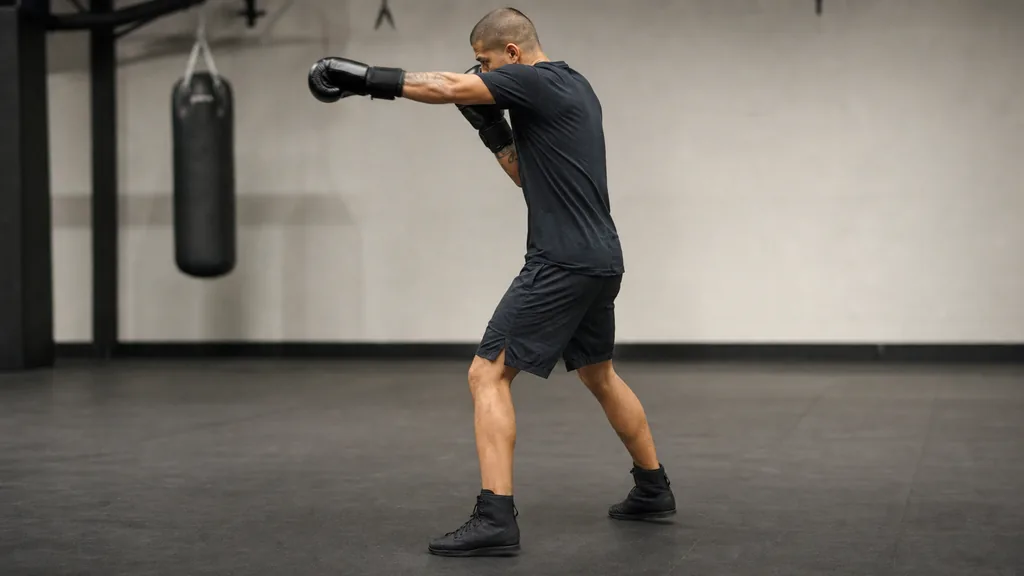
Test the surface before the round starts
Do not discover that the floor is unusually sticky when you are trying to throw a fast combination. Give yourself thirty quiet seconds first.
Start in stance. Take one small step forward, let the rear foot follow, then stop. Step back with the rear foot, let the lead foot follow, then stop. Turn each foot a few degrees in place. You are not trying to put on a show. You are checking whether the shoe releases cleanly and whether the floor is clean and safe enough to train on.
Then throw three light jabs without reaching. The front foot should arrive under you, not shoot far ahead of the hip. If it sticks, shorten the step. If it slides, reduce the push from the back leg and keep the weight closer to the middle. Your first job is to be able to stop where you intended.
This is a better test than bouncing on the spot. Bouncing can hide a poor base because momentum carries you through the mistake. A controlled stop tells you whether your feet are still underneath you.
Do not turn a pivot into a knee twist
The problem with a sticky floor is usually not that you cannot move. It is that you try to turn too much while the foot is still fixed. A boxer throws a cross, wants to leave on an angle, and drags the knee around a foot that has not released.
Keep the turn small. Let the heel lighten and let the whole foot turn with the hip. If the surface is holding you, take a short adjustment step instead of demanding a dramatic pivot. You have not failed the movement. You have chosen the version that lets the joints and stance work together.
That matters because a cross is not simply an arm action. A biomechanical analysis of straight punches found important differences in how trained boxers use the lower body and lead leg during a straight punch. In ordinary coaching language, the feet and hips need to be available. A glued-down foot cannot help you turn cleanly.
For a beginner, use this sequence on a bag or in shadow boxing: jab, cross, pause, small turn, rebuild the stance. Do not add the exit at full speed until the turn feels quiet. The pause is useful information. It tells you whether your foot position is doing the work or whether you are trying to wrench yourself around the floor.
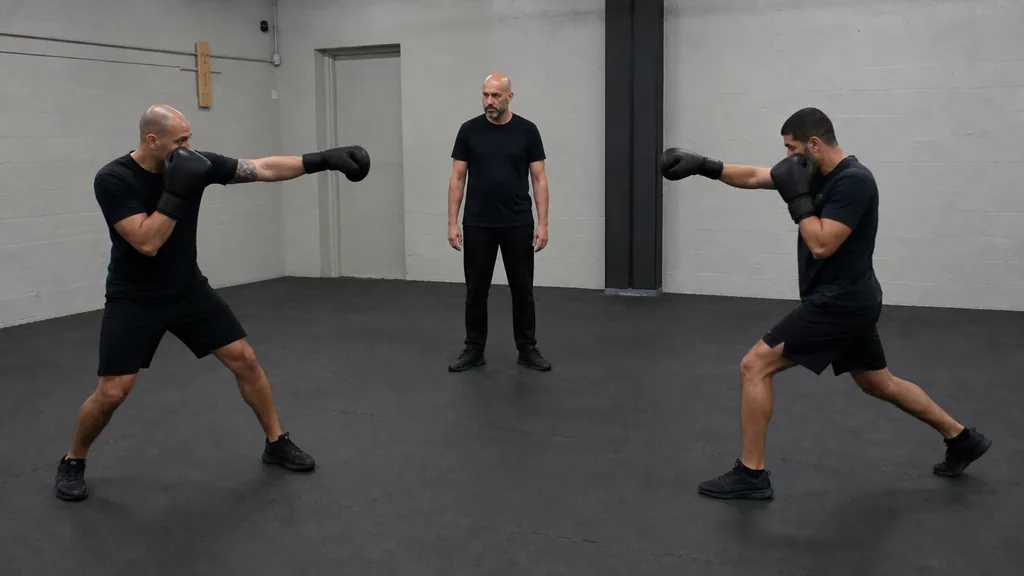
A slippery floor is a reason to get calmer
A slippery floor makes some people tense their shoulders and take tiny panicked steps. Others do the opposite and reach too far, hoping a long stride will make up for the lack of confidence. Both reactions make the feet harder to control.
Stay a little lower through the knees, but do not squat. Keep the steps short enough that the trailing foot can recover. Let the jab touch the air or bag before you commit to the cross. If the surface feels uncertain, a single clean action and a reset is better training than a fast combination that sends you square.
This is one reason that moving in and out without crossing your feet matters. The rule does not disappear when the floor changes. Lead foot first when moving forward, rear foot first when moving back, and the other foot follows to rebuild the stance. The only adjustment is scale. On a slick surface, make each step smaller and slower.
If the floor is visibly wet, loose or unsafe, do not try to prove that you can adapt to it. Tell the coach and use a safe area. Technical training needs controlled variation, not unnecessary risk.
The drill: step, punch, settle
Use three one-minute rounds at an easy pace. This is a footwork drill with punches added, not a conditioning test.
Round one: move and stop
Shadow box with no punches. Step forward twice, stop in stance. Step back twice, stop in stance. Add one small turn each way. Check that the feet have not crossed and that you could still jab or defend immediately.
Round two: jab on the entry
Add a jab as the lead foot takes its small step. Bring the hand back, let the rear foot settle and pause. If the jab makes you fall forward, the step is too large or the back leg has pushed too hard.
Round three: jab, cross, reset
Throw a light jab-cross, then take one exit step and rebuild the stance. Do not add a hook unless the feet are still settled after the cross. Finish every repetition in a position where you could block, move or throw again.
That drill fits alongside the floor-line stance drill. One teaches you where your feet belong. The other teaches you to respect the feedback coming up through them when the surface is not exactly what you expected.
Shoes help, but they do not replace footwork
Good boxing shoes make this easier. They are light, close to the floor and built to turn more naturally than a heavy running shoe. But a boot cannot repair a step that is too long, a stance that is too narrow or a pivot that starts with the knee.
If your footwear is fighting the floor, read our guide to choosing boxing boots as a beginner. Then bring the basic test back to the gym: step, stop, turn, jab, reset. A coach can see very quickly whether the issue is the shoe, the surface or the movement.
The useful standard is simple. You should be able to take a small step, land a balanced punch and leave with your feet under you. The floor may change how careful you need to be. It should not decide where your stance ends up.
If you want help making that sequence feel natural, our recreational adult boxing classes build stance, footwork and punching together. We train in Kidbrooke, South East London.
H&G Team
Writer at Honour & Glory Boxing Club, a community boxing gym in Kidbrooke, South East London.
KEEP READING
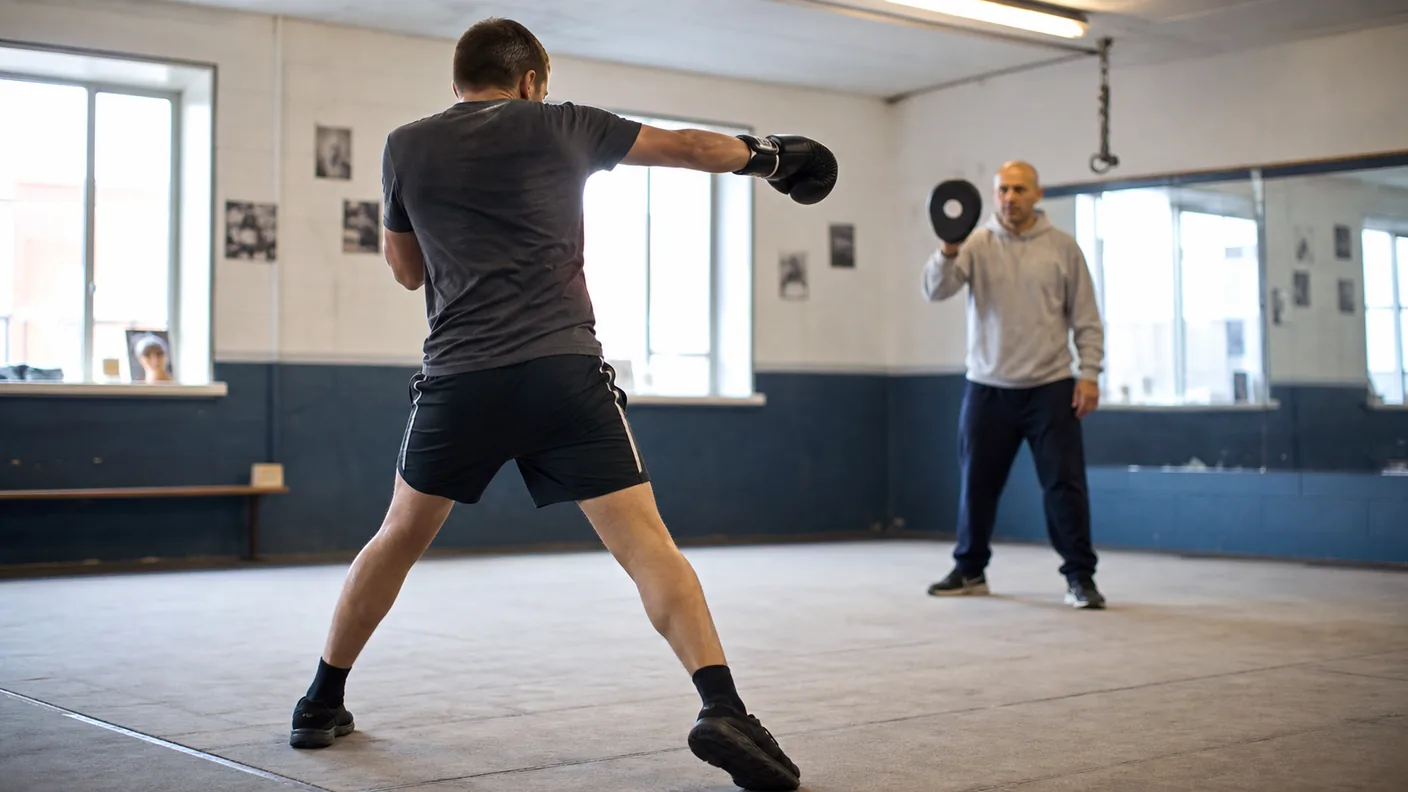
Boxing Pivot Drill: Turn Without Losing Your Stance
Build a useful boxing pivot with three simple drills that keep your feet under you, your guard ready and your next punch available.
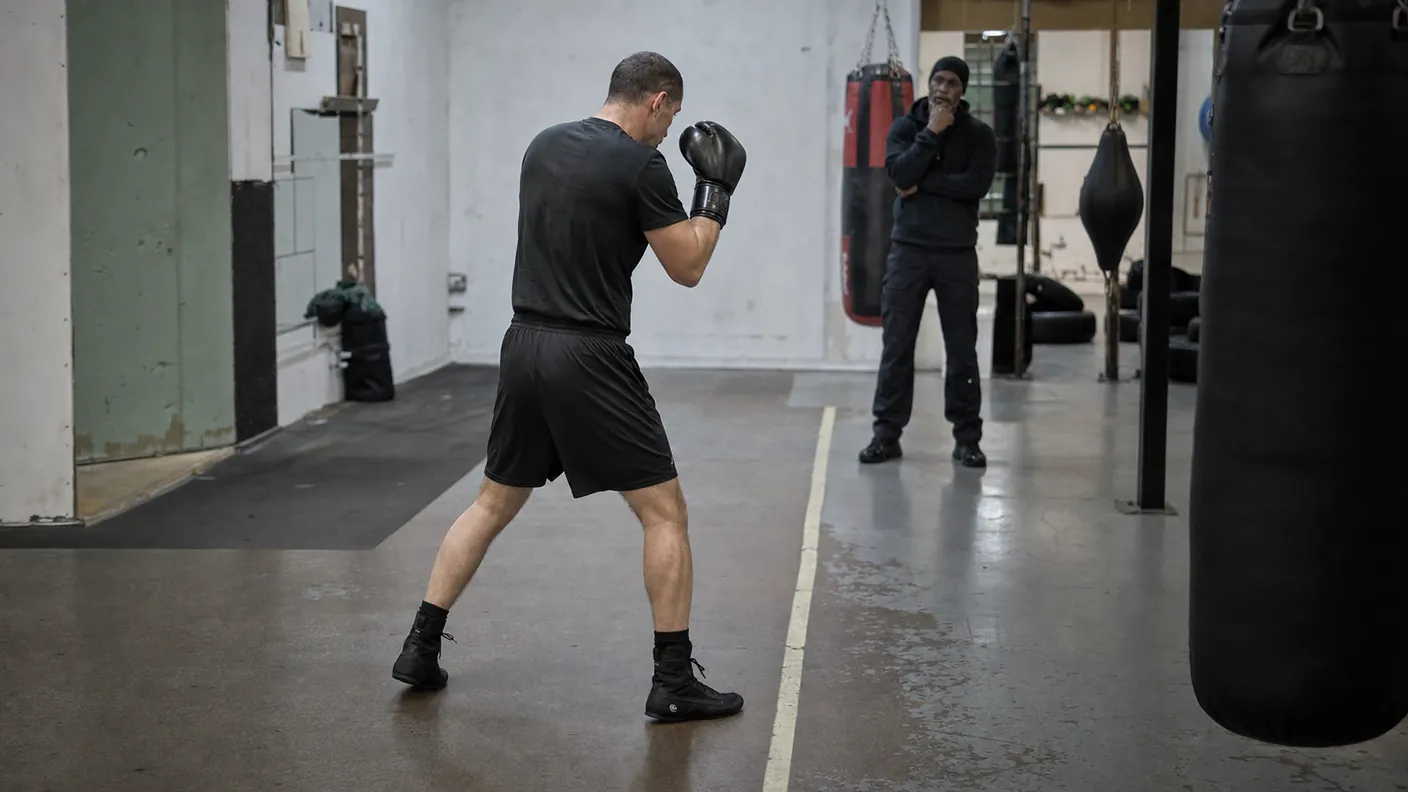
The Floor-Line Drill for a Better Boxing Stance
Use one line on the floor to build a boxing stance that stays balanced, mobile and ready to punch without standing square.
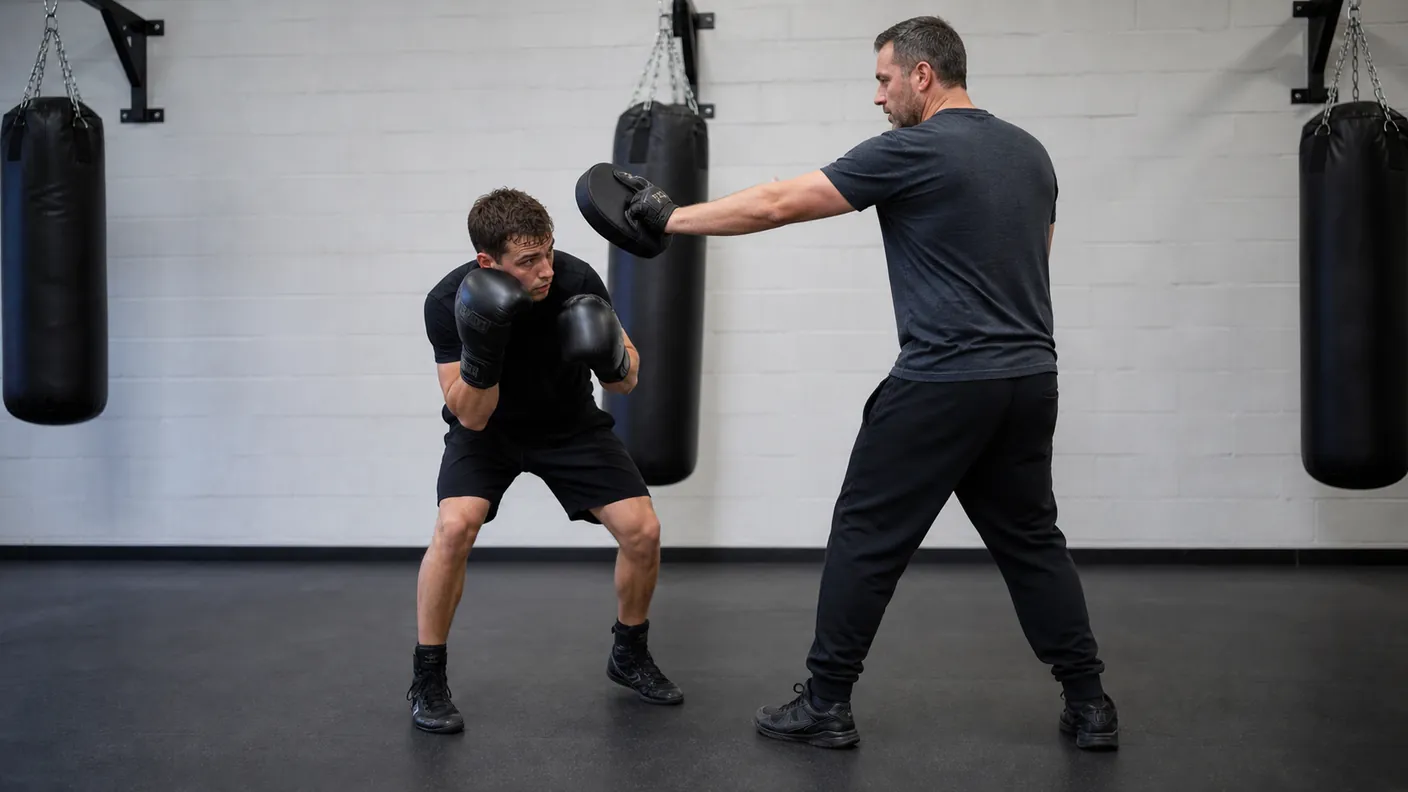
Rear Slip to Rear Pivot Boxing Drill
Use a compact rear slip and small pivot to leave the centre line without throwing yourself out of range or out of stance.
Was this page helpful?
It takes one tap, and it genuinely helps.
Choose your next step
Turn this article into the right action
Some readers are ready to book. Some need the class route first. Pick the route that matches what you actually want.