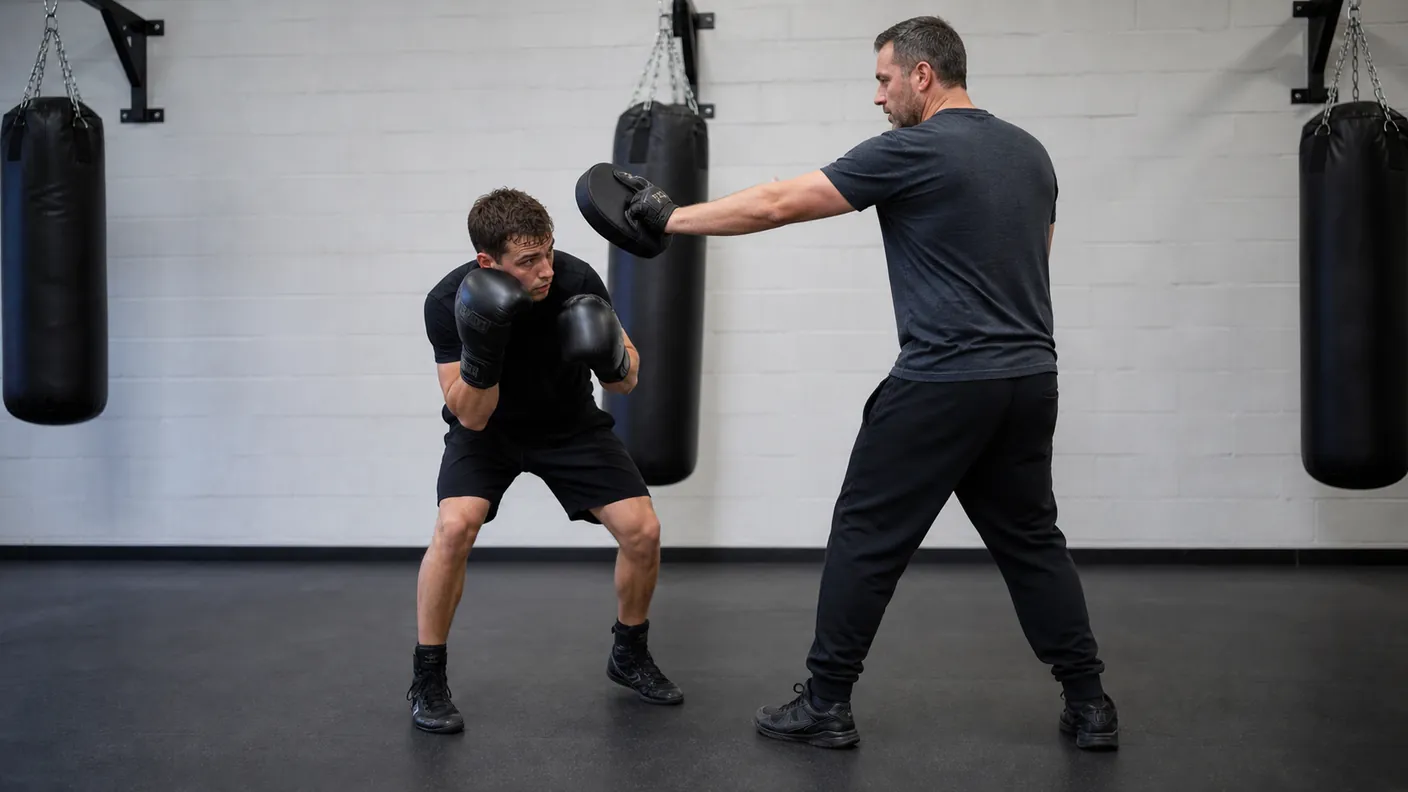
A rear slip can make a straight punch miss. A rear pivot can take you away from the next line. The useful part is learning not to turn those into two separate emergencies.
Many boxers slip, admire the space they have created, then leave the feet where they were. Others try to pivot before the head has moved and end up spinning square. The rear slip to rear pivot drill gives you a quieter option: move the head just off the line, let that shift organise the feet, then turn only far enough to find a stance you could still use.
This is not a sparring trick and it is not a licence to turn your back. It is a technical drill for noticing whether a defensive movement has left you ready to jab, cover or leave again.
Watch the short demonstration below, then use the coaching notes to keep the movement small and useful.
What the rear slip and rear pivot are trying to solve
Imagine an orthodox boxer facing another orthodox boxer. A rear slip moves the head a little towards the right side, away from a straight line coming down the middle. A southpaw reverses that picture. The important point is not which direction sounds clever. It is that the head moves a short distance while the stance remains underneath it.
The pivot comes after that movement. Rather than staying on the original track, you make a modest turn led by the rear side so you are no longer parked directly in front of the next punch. You are not trying to make a complete circle around someone. You are trying to make them turn while you keep your feet staggered.
A technical and tactical review of boxing performance describes punch mechanics, defensive action and footwork as connected parts of performance. That is exactly why this drill is useful. A slip without a stance can leave you stuck. A pivot without a defensive reason can waste distance. Joining them gives each movement a job.
Begin with the slip, not the turn
Start in a normal stance at a comfortable distance from a mirror, a coach-held glove or an imaginary centre line. Keep both knees soft, chin down and hands close enough to cover.
Move the head a few inches towards the rear side. The knees and hips should help it happen. Do not bend at the waist, lift the chin or drag the head so far that the front foot becomes empty. Hold the finish for a second.
Ask one question: could you take a small step, bring both gloves high or throw a measured jab from here? If not, the slip is already too large. The pivot will not repair a bad lean.
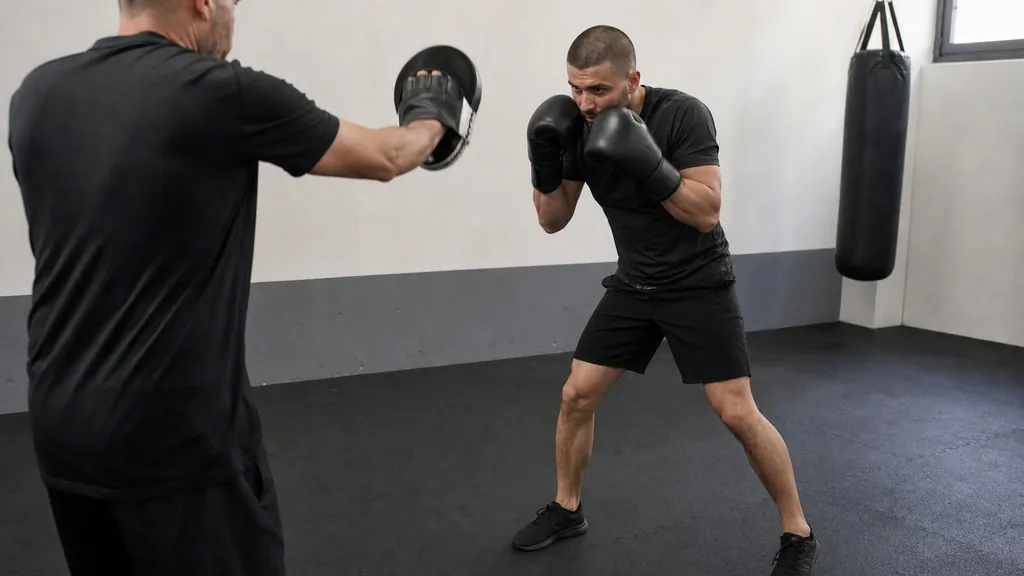
Our guide to moving, slipping and punching without losing shape starts with the same standard. The head only needs to travel far enough to leave the line. Bigger movement often feels defensive because it looks busy, but it usually makes the next decision slower.
Let the rear side start a small turn
Once the slip feels settled, add a pivot without a punch. From the rear-slip position, apply gentle pressure through the rear side and let the feet turn together by a small amount. The lead foot does not need to jump across the room. It follows enough to keep your stance recognisable.
Freeze again. Your feet should still be staggered. Your head should remain between them. Both gloves should be available. If you have ended facing a different wall, you have turned too far. If the feet have come together, you have tried to create an angle with enthusiasm rather than position.
England Boxing's coaching handbook puts balance, stance and controlled progressions at the centre of learning. That is a better test than whether the pivot feels fast. A small turn you can repeat under control is more useful than a dramatic escape that leaves the hips and guard behind.
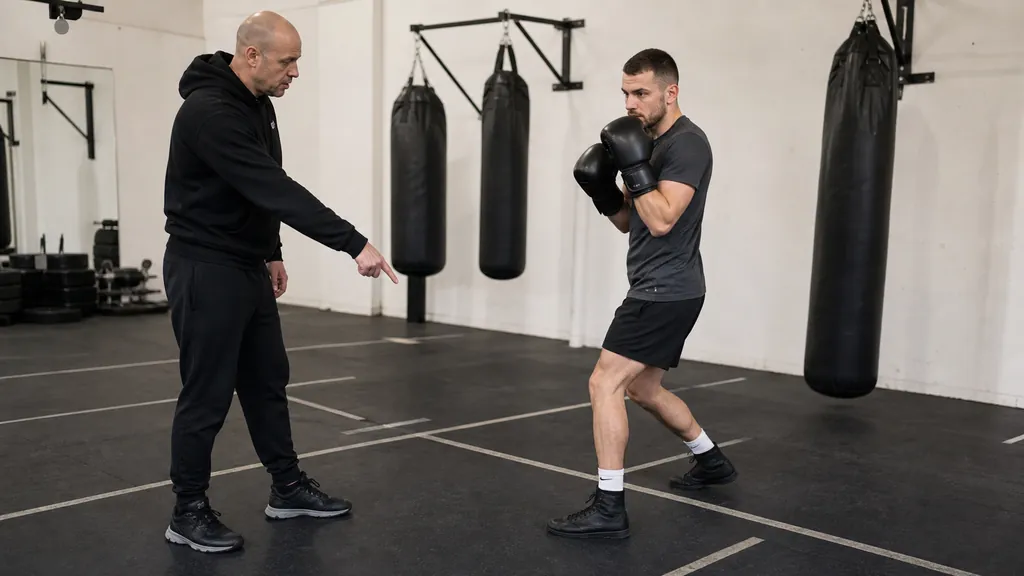
Build the drill in three short rounds
Keep this technical. Thirty to forty seconds is enough for an early round, followed by a reset. The quality of the stance matters more than the number of repetitions.
Round one: rear slip and hold
Use no target. Make one compact rear slip, keep your eyes forward and freeze for one second. Return to centre, reset the feet and repeat.
The coach should be able to see a calm stance at the end of every rep. If the rear heel flies up, the head falls behind the hips or the lead hand drifts down, make the slip smaller.
Round two: rear slip, pivot and check
Now add the modest turn. Slip, pivot a fraction and stop. Before you reset, show a high guard for one beat.
The high-guard check stops you from treating footwork as a dance move. If you cannot cover from the finished position, the movement has not left you safer. Slow it down until the guard and feet arrive together.
Round three: slip, pivot, jab and leave
Only after the first two rounds are tidy should you add one light jab to a mitt or the air. Slip, turn, place the jab from the new stance, bring it home, then take a small step away or reset.
Do not chase a target that has moved. The jab is a position check, not a reward for every pivot. If the range is wrong after the turn, the correct answer is to guard and begin again.
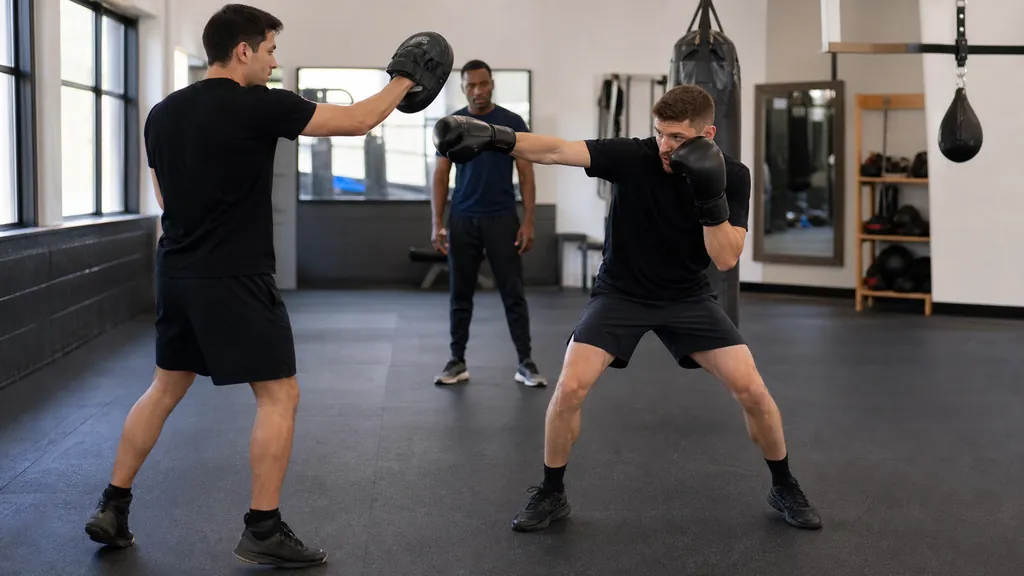
This connects with our guide to boxing side steps without drifting. The movement is different, but the rule is shared: get off the original line without leaving the stance behind.
Four mistakes that spoil the drill
The first is making the slip a backwards lean. A rear slip needs only enough movement to change the target. If the shoulders fall behind the rear knee, you are likely too far away to use the new position.
The second is pivoting on a locked knee. Keep a little bend in the legs so the feet can turn with the hips. Forcing a turn through a planted, stiff leg is not good boxing mechanics and can make the movement uncomfortable.
The third is looking at the floor. You need the floor through your feet, but the other boxer remains the thing you must read. Keep the gaze forward so a coach can see whether the head has travelled too far.
The fourth is adding a counter too soon. A pivot can create a chance, but it does not guarantee one. Start by leaving cleanly. Add a jab only when the distance is honest. Fast sequences belong later, after a coach has seen that you can make the simple movement without losing your shape.
Where this fits in training
Use the drill after a warm-up, before busy pad rounds or heavy bag work. It suits a boxer who already understands a basic stance and wants to stop standing on the centre line after every defensive movement. Beginners can work the first two rounds as shadow boxing, without any contact and without worrying about a counter.
If you are training with a partner, use a slow agreed cue rather than a live punch. No one needs to prove that a slip works by throwing harder. The useful detail is whether the boxer can see the cue, move a small amount and leave in a balanced position.
If you are near Kidbrooke, our Recreational Adults boxing classes use controlled pads, footwork and partner drills to make defensive movement feel like part of boxing, not a separate routine.
The coaching cue is simple: slip small, turn enough, leave balanced.
H&G Team
Writer at Honour & Glory Boxing Club, a community boxing gym in Kidbrooke, South East London.
KEEP READING
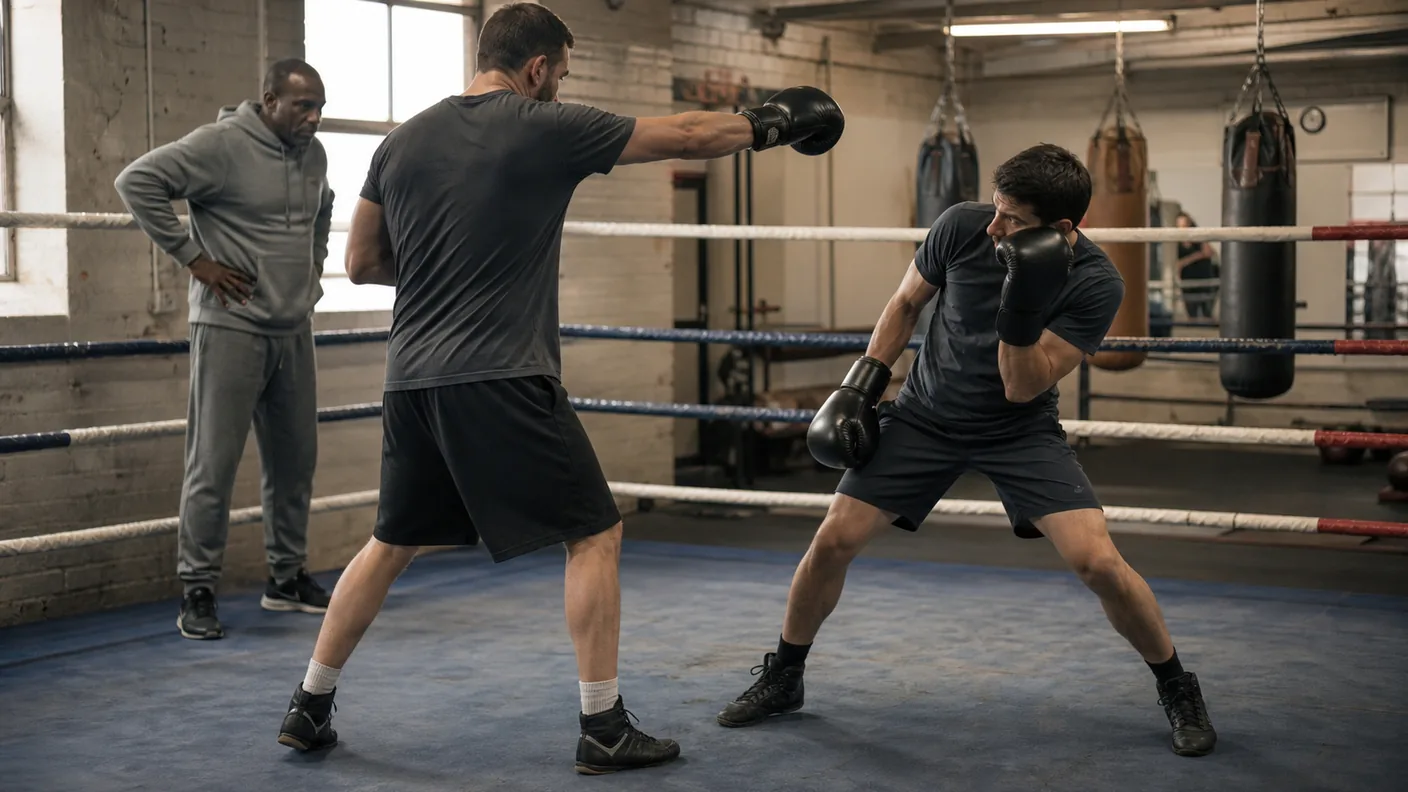
Slip Then Pivot: A Boxing Exit Drill
Use a compact slip and pivot to leave the jab line with balance, clear vision and a useful next position.
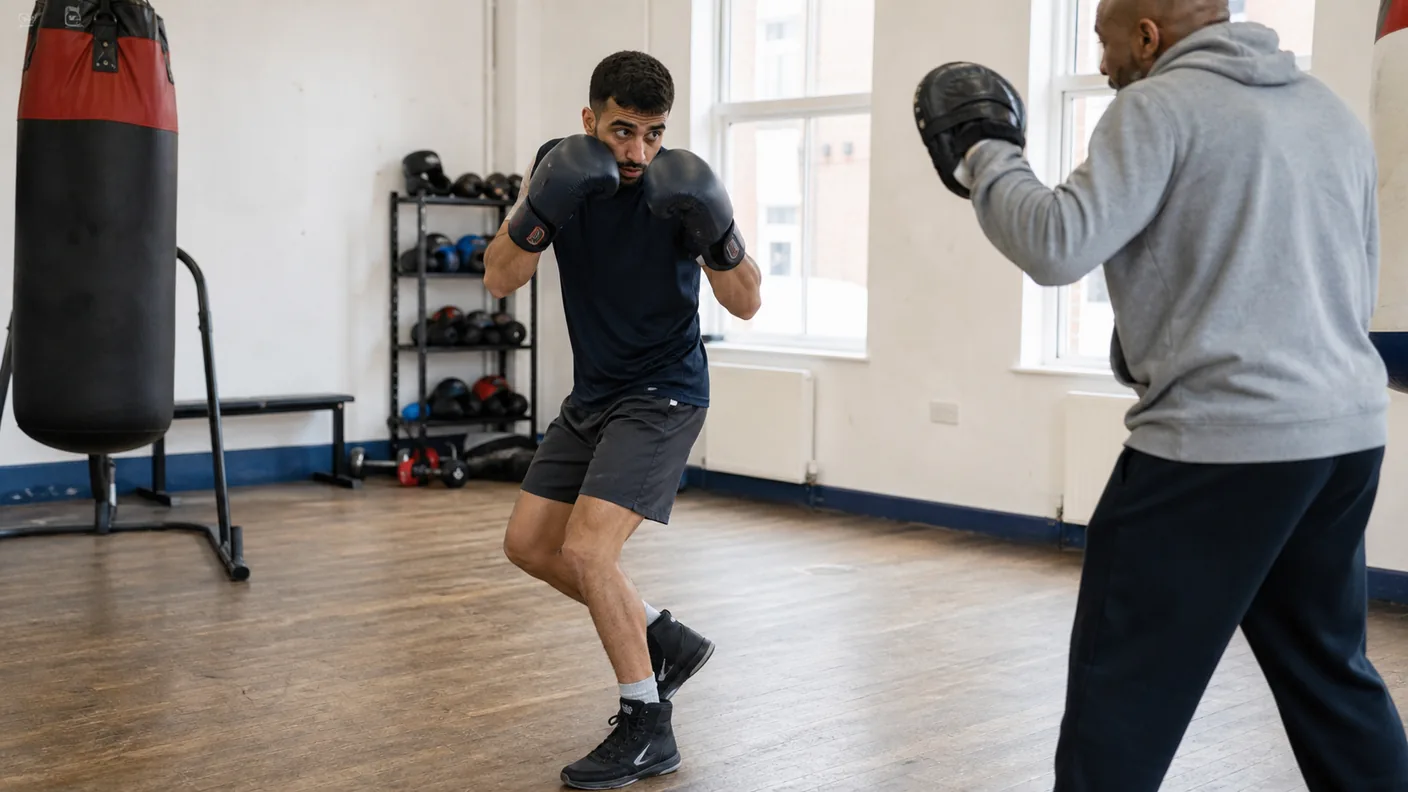
Rear-Foot Pivot and Tuck: A Safer Boxing Angle
Use a compact rear-foot pivot and tuck to leave a straight-punch line without losing your guard, balance or next step.
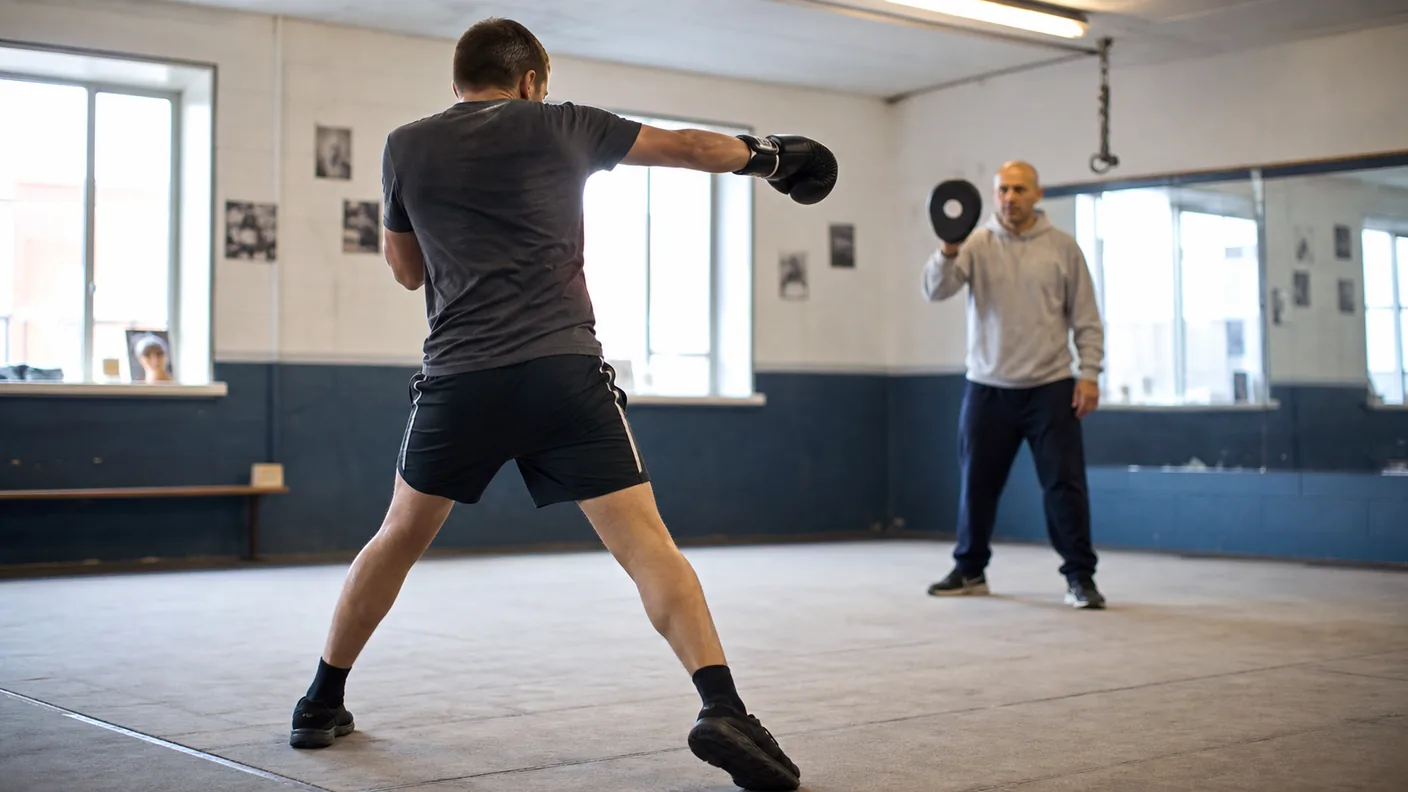
Boxing Pivot Drill: Turn Without Losing Your Stance
Build a useful boxing pivot with three simple drills that keep your feet under you, your guard ready and your next punch available.
Was this page helpful?
It takes one tap, and it genuinely helps.
Choose your next step
Turn this article into the right action
Some readers are ready to book. Some need the class route first. Pick the route that matches what you actually want.