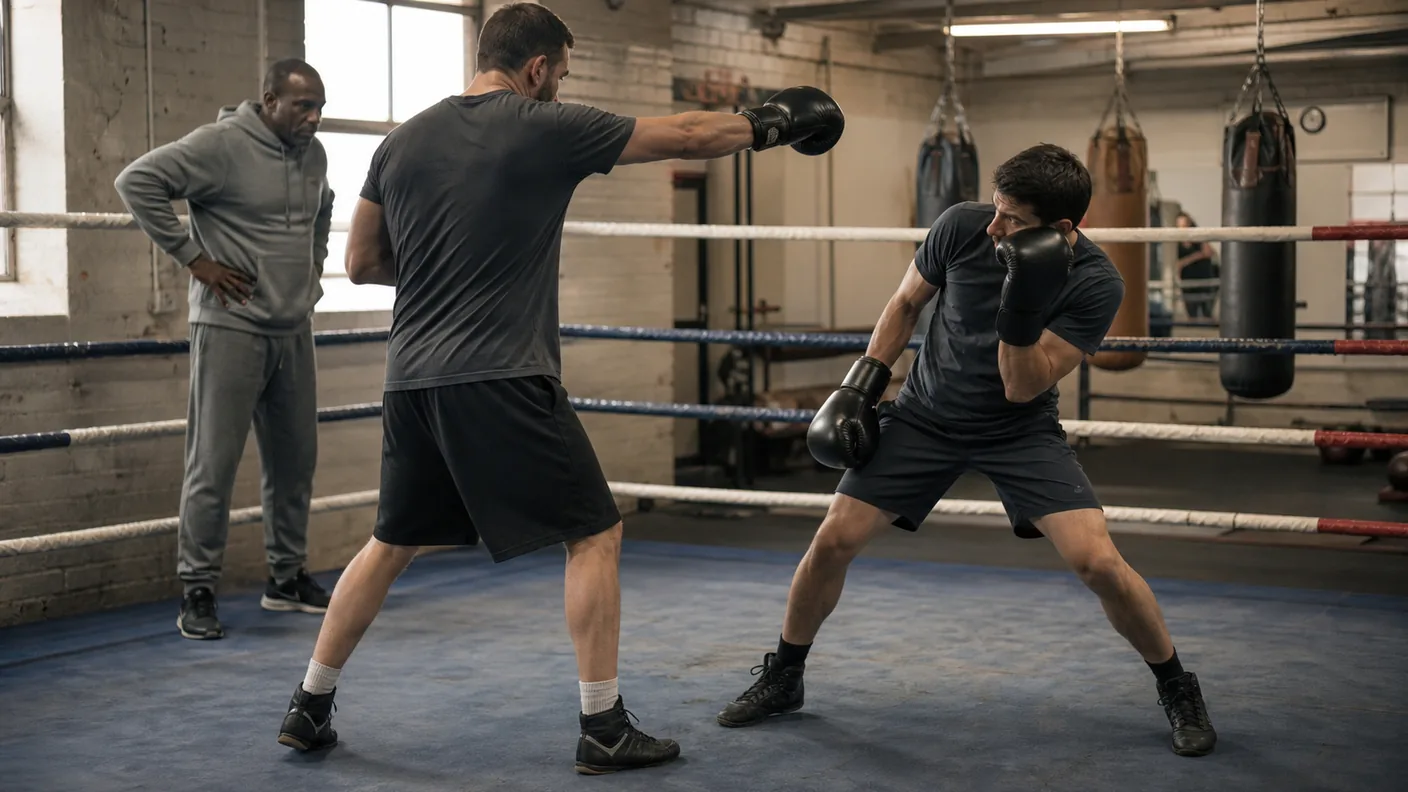
A slip gets your head away from a straight punch. A pivot changes where the exchange happens next.
Those are usually taught as separate skills. First you learn to move your head by a few inches. Later you learn to turn your feet. The useful connection comes when the slip has already placed your body in a position that makes the turn easier.
That matters when a jab keeps putting you on the same line. You can catch it, block it or step back, but a compact slip followed by a small pivot gives you another option: make the punch miss, leave the centre, and finish ready to see what follows.
Watch the demonstration below, then use the drill to make the movement small enough to keep under pressure.
The slip should leave your feet useful
A good slip is not a bend at the waist. It is a short movement through the knees, hips and upper body that takes the head away from a straight line while the feet remain in a boxing stance.
For an orthodox boxer, a lead-side slip moves the head towards the lead shoulder without tipping the whole body forward. For a southpaw, reverse the picture. The important point is not the label. It is whether the movement leaves your weight over both feet rather than hanging over one knee.
A biomechanical review of boxing punches describes effective striking as a linked movement through the lower body, trunk and upper body. The same standard helps with defence. The legs and hips should support the head movement, not trail behind it.
Why the pivot belongs after the slip
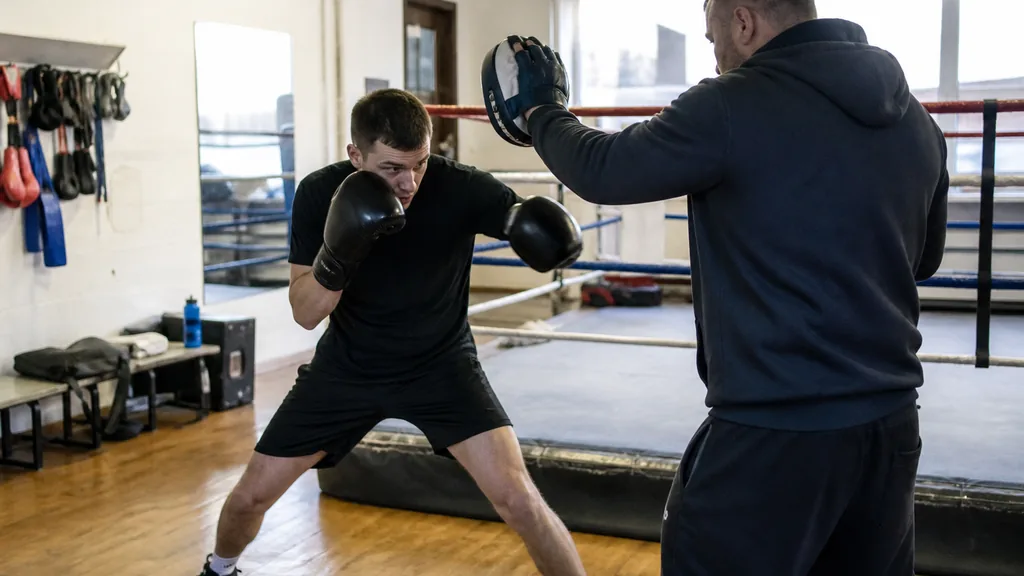
A pivot is not an escape trick. It is a short turn that changes the line while keeping you in a stance.
After a compact slip towards the lead side, the body is already organised for a turn towards that side. You do not need to force a dramatic spin. The lead side has settled, the rear foot can help you turn, and the pivot lets you move away from the straight route the other boxer expected.
Think of the order as slip, settle, turn. The turn comes from a position you already own.
England Boxing's coaching resources place the fundamentals of stance, balance and movement at the base of technical development. That is the test here. If the pivot leaves you able to put both gloves up, take another step or throw a measured jab, it is doing its job.
Build the movement without a partner first
Start in front of a mirror, a line on the floor or an empty section of the gym. Do not add speed until you can stop cleanly.
For an orthodox stance, picture a light jab coming down the middle. Make a small lead-side slip. Keep your eyes level and your rear hand near the cheek. From there, let the rear foot help the body turn slightly to the lead side. The lead foot is not glued to the floor, but it is the reference point that keeps the turn organised.
Freeze after the pivot. Check three things:
- Your feet still have enough width to move.
- Your rear glove is still protecting the cheek.
- Your head is between your feet, not pitched over the lead knee.
If the feet have come together, make the pivot smaller. If the rear hand has floated away, slow the slip down. If you have turned so far that you need three shuffles to jab again, you have made an exit that is too expensive.
Add a jab so the turn has a reason
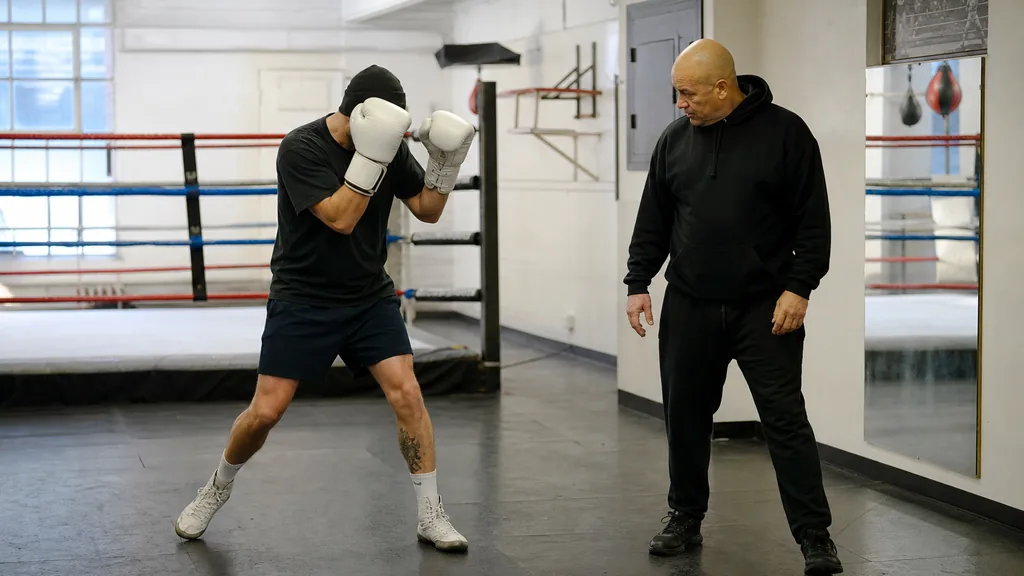
Once the footwork is tidy, add a light jab before the slip. The jab gives the other boxer something to see and gives the drill a more realistic rhythm.
Throw a relaxed jab at a mitt or into open space. Bring it home. Your partner then shows a slow return jab. Slip just outside the line, make the small pivot, and reset in guard. There is no counter yet.
This order teaches an important habit: the first jab is not the end of your work. You need to bring the hand home, read the answer and keep your feet ready for it.
Do not try to race the partner. The return jab should be slow enough that either person can stop the drill immediately. No contact to the head is needed. A glove, foam noodle or clearly shown mitt gives enough information to train the shape safely.
Our guide to defending the jab in boxing covers catching, carrying and slipping as separate answers. The slip-pivot is a narrower problem: how to use one defensive movement to make a better exit when the straight line is becoming predictable.
The three-round slip-pivot drill
Use three short technical rounds. One minute each is enough at first. Take a brief rest and correct the shape before trying to move faster.
Round one: slip and freeze
Shadow box at a low pace. Every few seconds, imagine a jab and make the compact lead-side slip. Pivot just far enough to change the line, then freeze for one count.
Keep the same stance throughout. You are not switching stance or trying to circle the whole room. You are teaching the legs that a head movement can finish in a balanced angle.
Round two: jab, slip, pivot
Work with one mitt or a partner's open lead glove. Throw a light jab, bring it home, then react to the slow return jab with the slip and pivot.
Keep the pivot small. The partner should still be in front of you, but no longer directly on the first line. Finish in guard and take one calm step away before resetting.
Round three: choose the finish
Now give yourself one choice after the pivot. You can re-jab from the new line, cover and reset, or take a small step out. Do not pre-write the same answer every time.
If the partner has followed your pivot, cover and leave. If the mitt is available at an honest range, a light jab can make sense. If you have lost your feet, reset. The drill has worked if you see the option, not if you force a punch.
Mistakes that turn the drill into a bad habit
The first mistake is slipping too far. A big lean makes the pivot feel dramatic, but it often leaves the boxer stuck over one leg. Keep the head movement tight enough that you could throw a sensible punch without standing up first.
The second is pivoting before the slip has finished. That usually produces a spin. Let the defensive movement settle for a fraction of a second, then turn from the floor.
The third is looking down. If you cannot see the partner's chest and shoulders, you cannot judge whether they have followed, stopped or changed their punch. Keep the chin down without dropping the eyes.
The fourth is treating the pivot as compulsory. Sometimes the clean answer to a jab is a catch, a small step, a jab back or nothing at all. Use the pivot when it changes a line that needs changing.
Our boxing pivot drill is the right companion if the feet are the weak point. Build the turn in isolation first, then return to this drill when the slip and pivot can stay connected.
Where this fits in a session
Use the slip-pivot drill after a warm-up and before harder bag rounds or controlled sparring. It is a technical block, not a conditioning test. Two or three focused rounds will teach more than ten rushed minutes.
For beginners, pads or light partner cues are enough. More experienced boxers can add a measured jab from the new line, but only when the feet and guard are still in place. The moment the turn makes you square or pulls the rear hand down, return to the slower version.
If you are near Kidbrooke, Greenwich or Blackheath, our Recreational Adults boxing classes use controlled partner drills to connect defence, footwork and the next decision without turning every exchange into hard sparring.
The coaching cue is simple: slip small, turn calm, finish ready.
H&G Team
Writer at Honour & Glory Boxing Club, a community boxing gym in Kidbrooke, South East London.
KEEP READING
Rear Slip to Rear Pivot Boxing Drill
Use a compact rear slip and small pivot to leave the centre line without throwing yourself out of range or out of stance.
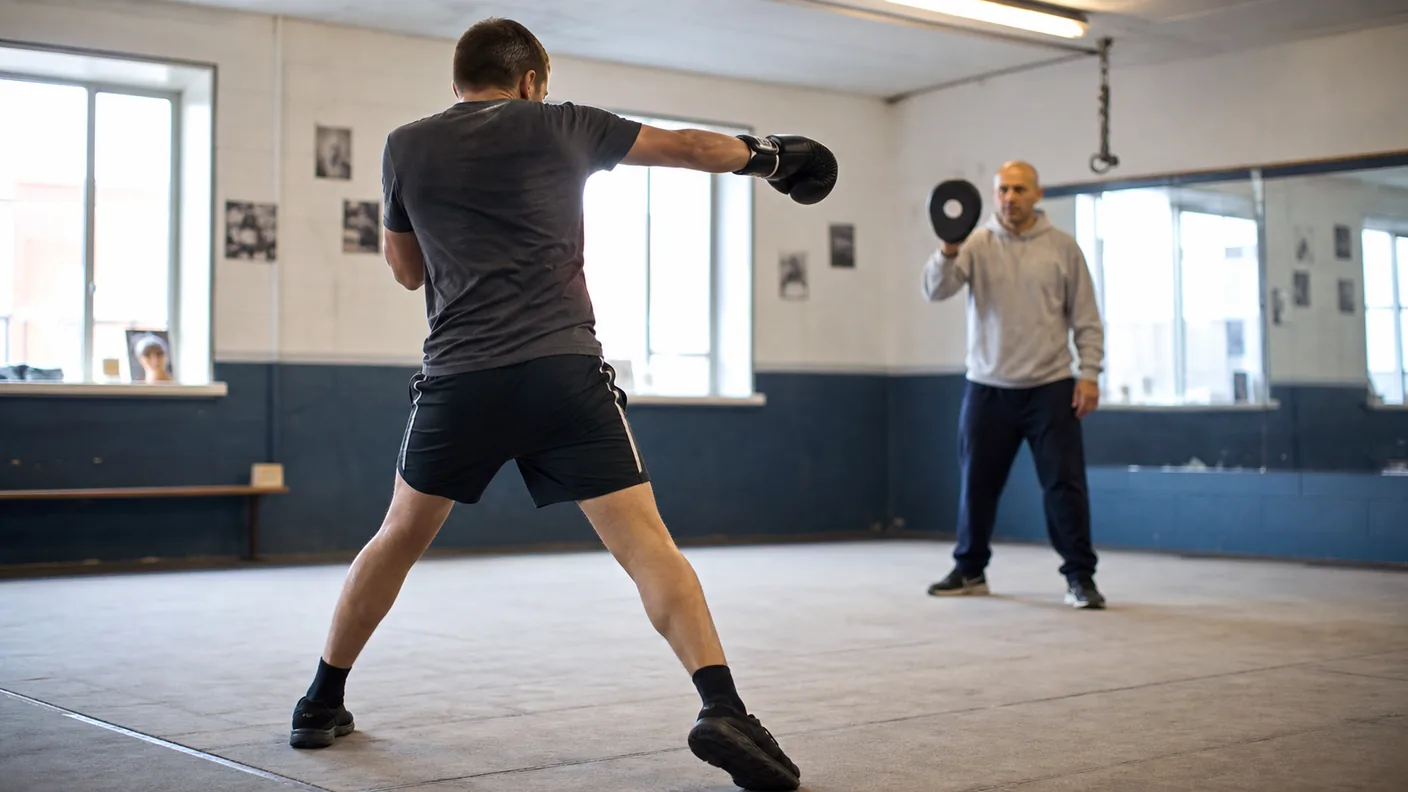
Boxing Pivot Drill: Turn Without Losing Your Stance
Build a useful boxing pivot with three simple drills that keep your feet under you, your guard ready and your next punch available.
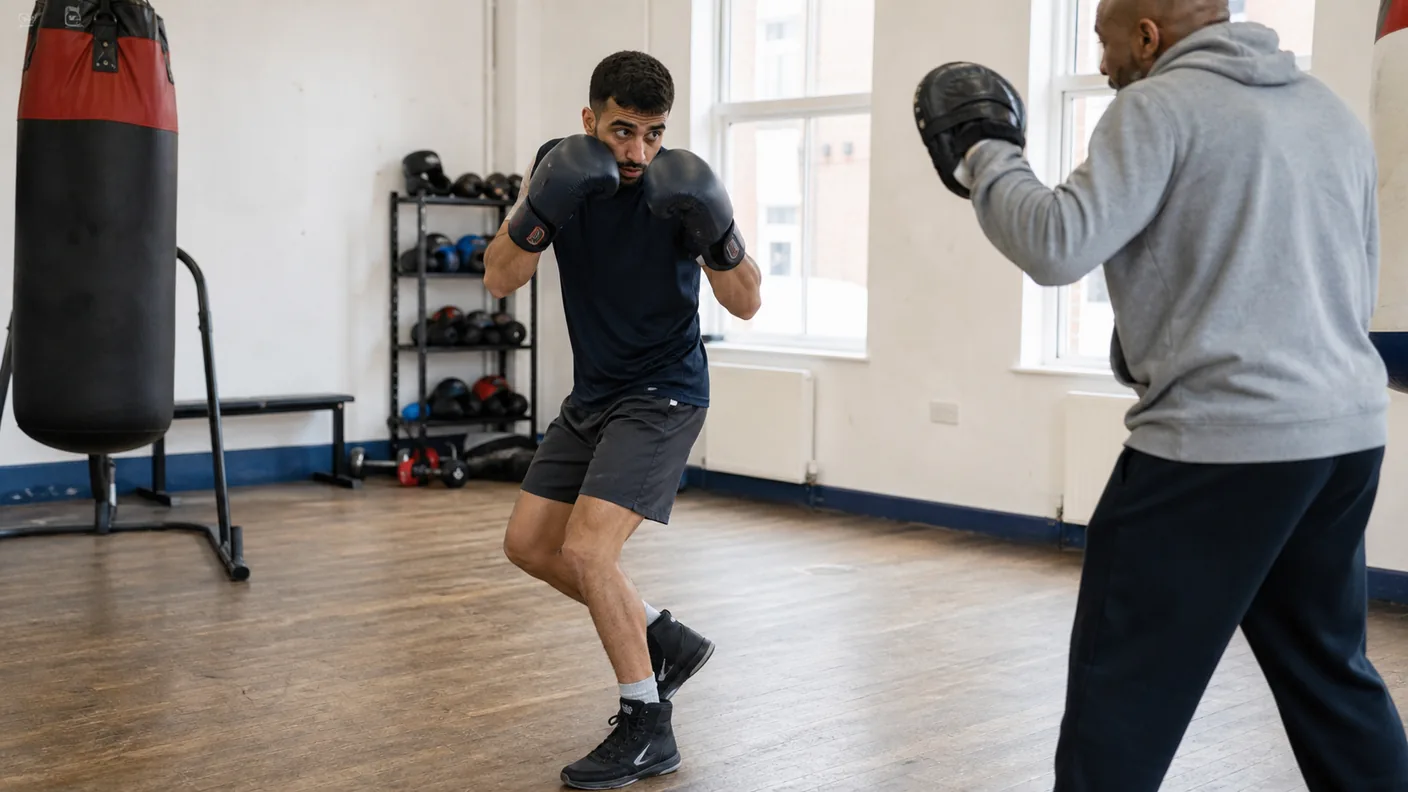
Rear-Foot Pivot and Tuck: A Safer Boxing Angle
Use a compact rear-foot pivot and tuck to leave a straight-punch line without losing your guard, balance or next step.
Was this page helpful?
It takes one tap, and it genuinely helps.
Choose your next step
Turn this article into the right action
Some readers are ready to book. Some need the class route first. Pick the route that matches what you actually want.