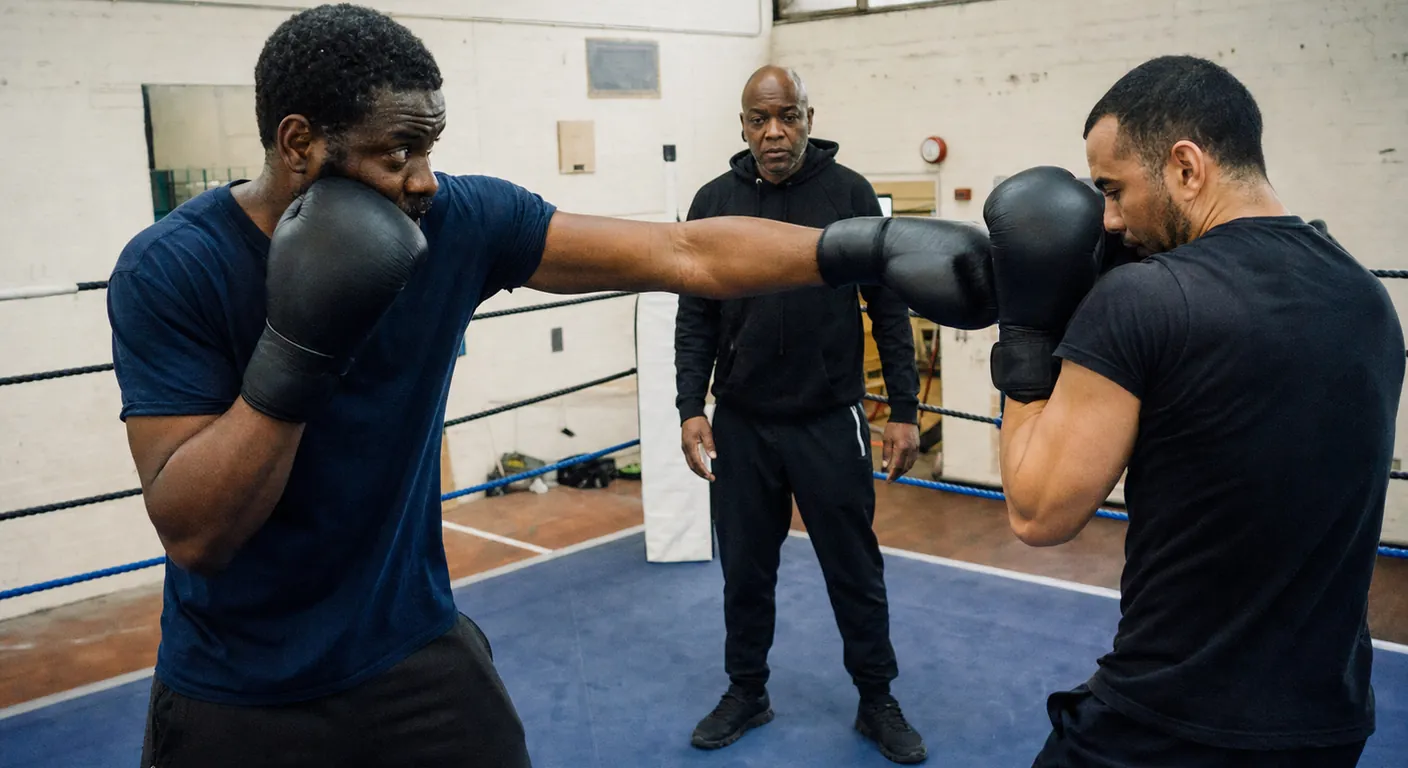
Most beginners get hit by the jab for a simple reason: they admire their own jab after throwing it.
They send the lead hand out, leave the head on the centre line, bring the hand back late, and stand there waiting. If the other boxer jabs at the same time, both heads snap back. It looks messy because it is messy. Good jab defence starts before the punch lands. It is built into your stance, your shoulder, your eyes and the way you finish your own jab.
The short clip below shows the basic choices clearly: deal with the jab at long range, slip it when you are in the pocket, or keep the guard tight when there is no time for anything clever.
This matters because boxing is not a turn-based sport. A combat sports anticipation review found that skilled fighters are better at reading early movement cues and responding with better accuracy. In plain gym language, they are not waiting until the glove is already on their face. They read the shape, make a small decision, and stay ready for the next part of the exchange.
Here is how to defend the jab without freezing.
The first rule: do not give the jab a free target
The easiest jab to land is the one thrown at a still head.
If your stance is tall, chin lifted, lead hand low and eyes blinking every time someone twitches, the opponent does not need a brilliant jab. They only need a straight one. Before we talk about catching, slipping or blocking, your starting position has to take away the obvious target.
Your chin should sit behind the lead shoulder. Your rear hand should stay close enough to your cheek that it can actually help. Your elbows should be close enough to protect the ribs without clamping the body shut. Your knees need a little bend so the head can move without the waist folding.
That last point is important. Many beginners defend by bending at the waist. They drop the head, look at the floor, and hope the punch goes over them. That is not defence. That is giving up your eyes. A proper jab defence keeps you looking at the opponent while the head moves just enough to make the jab miss.
If you are still building the punch itself, start with our guide to throwing a proper boxing jab. You defend the jab better once you understand what the attacking boxer is trying to do with it.
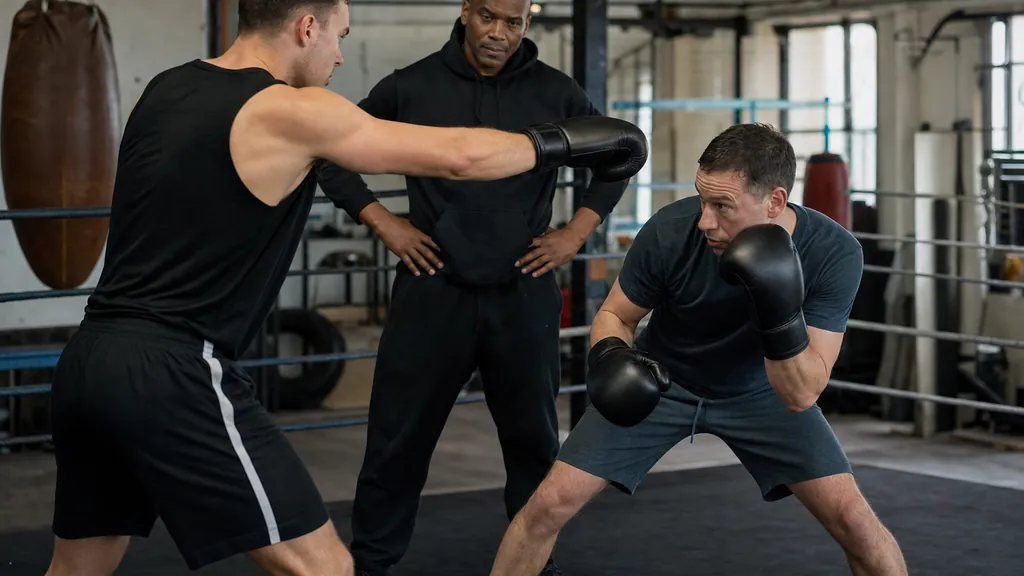
Long range: carry or catch the jab
At long range, the safest answer is often the smallest one.
You do not need a dramatic slip every time the jab comes. If the jab is reaching for you from the edge of range, use the rear hand to catch or carry it. The glove meets the jab lightly, turns it away from the face, and comes straight back home. Think of it as redirecting the punch, not swatting it across the room.
The common beginner mistake is reaching. They see the jab, chase it with the rear hand, and pull their own guard away from the chin. Now the jab may miss, but the right hand behind it has a clear road. A good catch is tight. The elbow stays close. The rear glove moves a few inches, not a foot.
Use this cue: catch the jab where your face was, not where the opponent's glove started.
That means you let the punch travel into your defensive space, then meet it late enough that your shape remains strong. If you are having to reach forward, you are probably too far away to need the catch in the first place.
A simple partner drill works well:
- Partner A throws a slow jab to the forehead line.
- Partner B catches with the rear glove and keeps the chin down.
- Partner B returns one jab immediately.
- Both reset and repeat for two minutes.
Keep the pace boring at first. The point is timing, not speed. When the catch is tidy, add footwork: catch, jab back, small step out. That turns defence into a full boxing action rather than a panic reaction.
Inside range: slip the jab without over-slipping
Once you are inside punching range, catching alone can make you too static. This is where the slip becomes useful.
A slip is not a big duck. It is a small movement that takes the head off the line of the jab while the feet stay ready. The shoulder turns slightly, the knees bend slightly, and the head moves outside the punch. You should still be close enough to answer.
Most beginners over-slip. They move six inches when two would do. They roll the whole torso, lift the back foot, or bend so far that their next punch has to start from the floor. That is why coaches repeat the same cue: make the jab miss by a little, not by a mile.
A useful way to feel it is to stand in front of a mirror with a tape line down the centre of your body. Slip so your nose moves off the line, but your chest does not disappear from the mirror. If your head drops below your opponent's chest height, you have gone too far.
The outside slip against a jab should leave you in position to punch. For an orthodox boxer facing orthodox, that usually means slipping to your right, outside their lead hand. From there, the return jab, right hand to the body, or right hand upstairs can all appear quickly. The exact punch depends on range, but the balance should already be there.
A technical and tactical review of boxing performance describes boxing performance as a mixture of punching, movement, defence, distance and tactics. That is a good way to view the slip. It is not a stand-alone trick. It only matters if it keeps you balanced enough to move, punch or defend again.
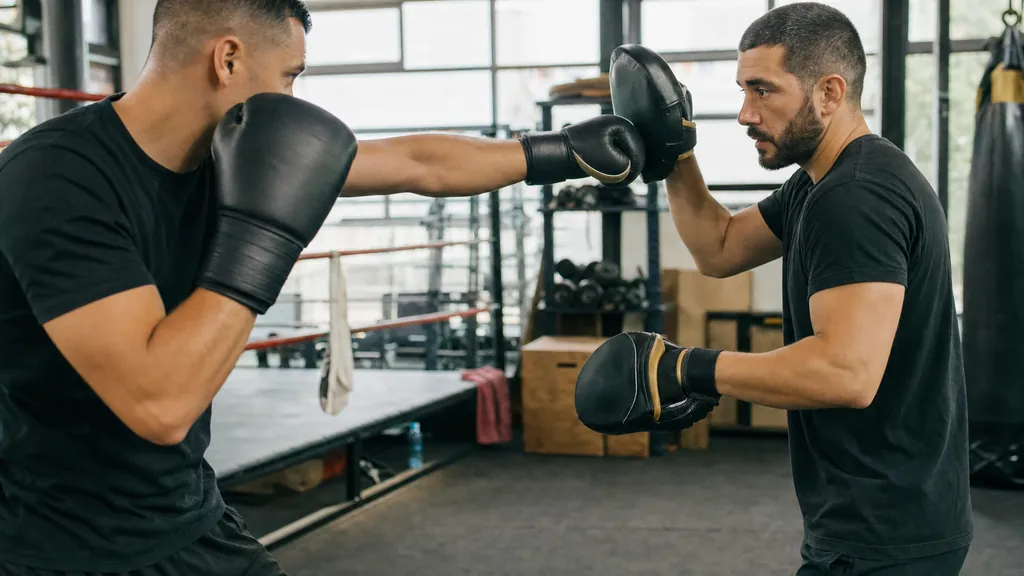
Close range: block first, think second
There are times when the jab is already on you.
Maybe you reacted late. Maybe you stepped in as the other boxer punched. Maybe the jab was hidden behind a feint. In those moments, do not try to be stylish. Get the guard up, brace properly, and block the shot.
A block is not hiding behind the gloves forever. It is an emergency answer that protects you long enough to reset or return. Bring the rear glove tight to the cheek, keep the lead hand honest, tuck the chin, and let the shoulder and glove take the sting out of the jab.
The key is what happens next. Beginners block and stay blocked. They freeze in a shell while the other boxer starts working. Better boxers block and answer. That answer can be simple: jab back, step out, pivot, or smother the next punch if you are already chest-to-chest.
Do not confuse blocking with bravery. If you are blocking three or four jabs in a row without moving your feet, you are being lined up. The block buys time. Use that time.
Defending while you jab
This is the part most beginners miss.
Jab defence is not only about what you do when the other boxer jabs first. It is also about how safe your own jab is. If your head stays in the same place every time you jab, you are inviting the other boxer to jab with you or fire the right hand over the top.
There are three simple fixes.
First, bring the jab back to your face. Not to your chest. Not halfway home. Back to the cheek. A lazy return is one of the easiest habits to punish.
Second, let the lead shoulder protect the chin as the jab extends. The shoulder does not need to cover your whole face, but it should make your chin harder to find.
Third, change the head position slightly on selected jabs. You can jab with a small step off line, jab with the head just outside centre, or jab and finish with a catch ready. Do not make every jab a lunge. Make some jabs safer by changing the target you present.
This links neatly with the three phases of a boxing exchange. Your jab is phase one. Their answer is phase two. Your defence and return are phase three. If you only train the first punch, the exchange is not finished.
The drill: jab, defend, answer, leave
Use this as a three-round class drill. Keep the first round slow enough that both boxers can learn without flinching.
Round 1: catch and return
Partner A throws a slow jab. Partner B catches it with the rear glove and returns a jab. After each return, both boxers reset. The coach should watch the rear hand. If it reaches forward or drops after the catch, slow the drill down.
Round 2: slip and return
Partner A throws the same slow jab. Partner B slips outside and returns one clean shot. For beginners, make that return a jab. For more advanced boxers, make it a right hand or right hand to the body. The slip must be small enough that the return comes without a pause.
Round 3: choose the answer
Now Partner A can vary the jab slightly. Partner B chooses catch, slip or block. The rule is simple: every defence needs an answer and an exit. Catch, jab, step out. Slip, right hand, pivot. Block, jab back, reset.
This round teaches the real skill. You are not collecting techniques. You are choosing the right one at the right range.
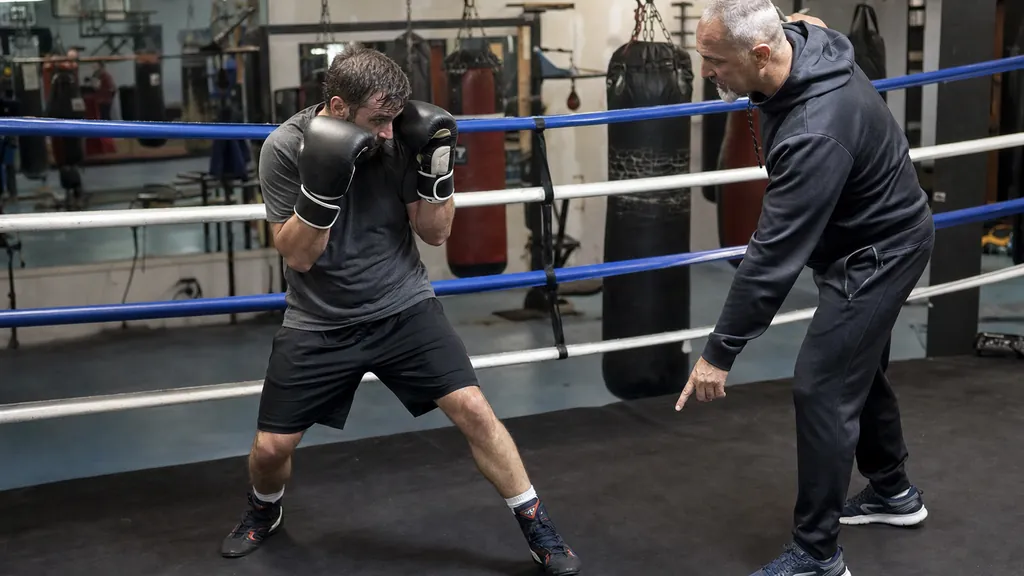
Common mistakes that make jab defence worse
The first mistake is reaching for the jab. Reaching opens the guard and leaves you available for the next punch.
The second is slipping with the eyes down. If you cannot see the opponent, you cannot read the next shot.
The third is moving the head without moving the feet when the exchange is finished. You may avoid the jab, but if you stay in front, the next punch is coming through the same door.
The fourth is treating every jab the same. A lazy jab at long range can be caught. A sharp jab in the pocket may need a slip. A jab you see late may need a block. The range decides.
The fifth is forgetting to punch back. Defence that never earns respect becomes survival. Defence that answers makes the opponent think twice before jabbing again.
The coaching cue
Defend the jab with the smallest answer that works.
At long range, catch it. In the pocket, slip it. When you are late, block it. After all three, answer or leave. That is the standard.
If you are in Kidbrooke, Greenwich or nearby, our Recreational Adults boxing classes teach jab defence through pad work, partner drills and controlled rounds. You learn to keep your shape, read the jab, and make the next decision without panic.
H&G Team
Writer at Honour & Glory Boxing Club, a community boxing gym in Kidbrooke, South East London.
KEEP READING
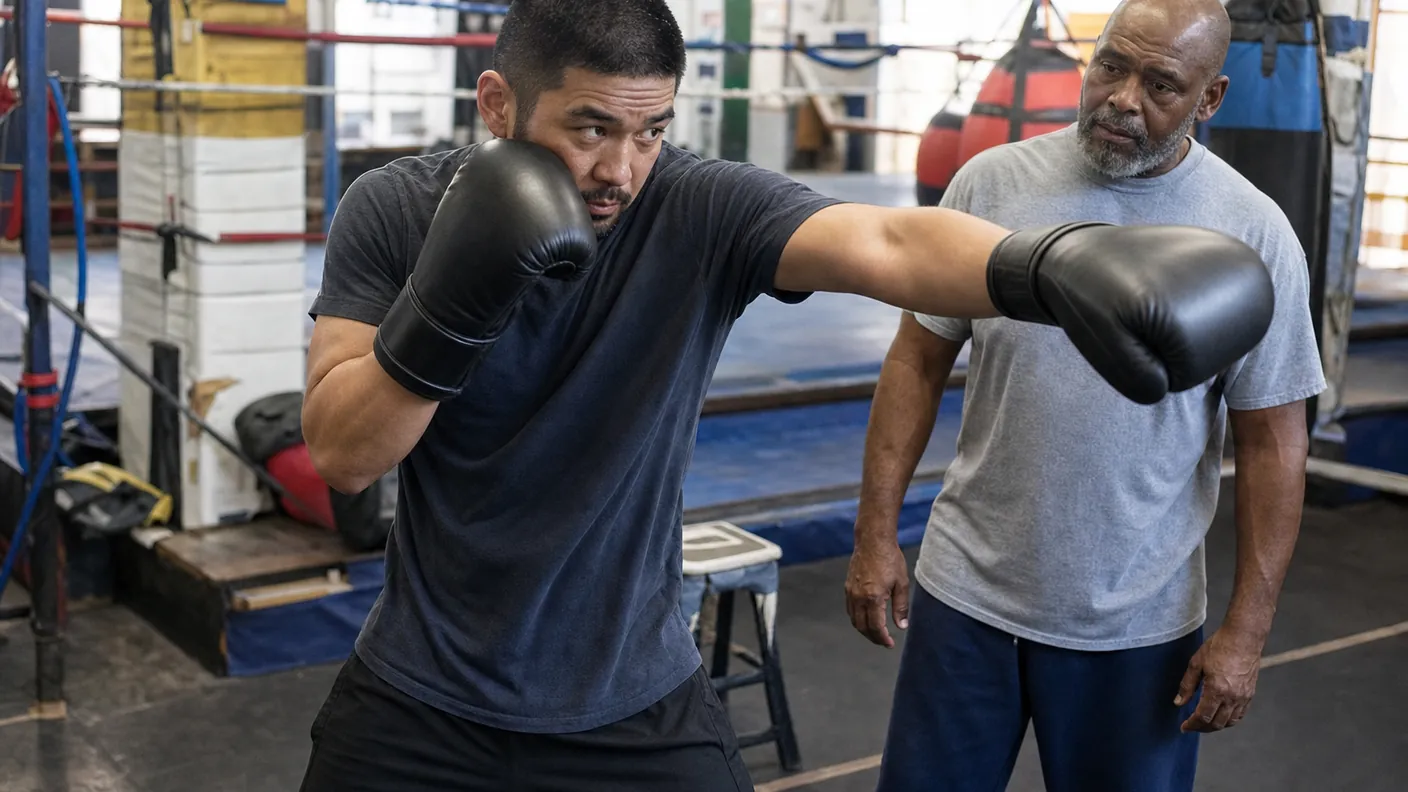
How to Jab Without Getting Jabbed Back
Learn the jab-block and off-line jab: two simple habits that stop beginners landing a jab and eating one straight back.
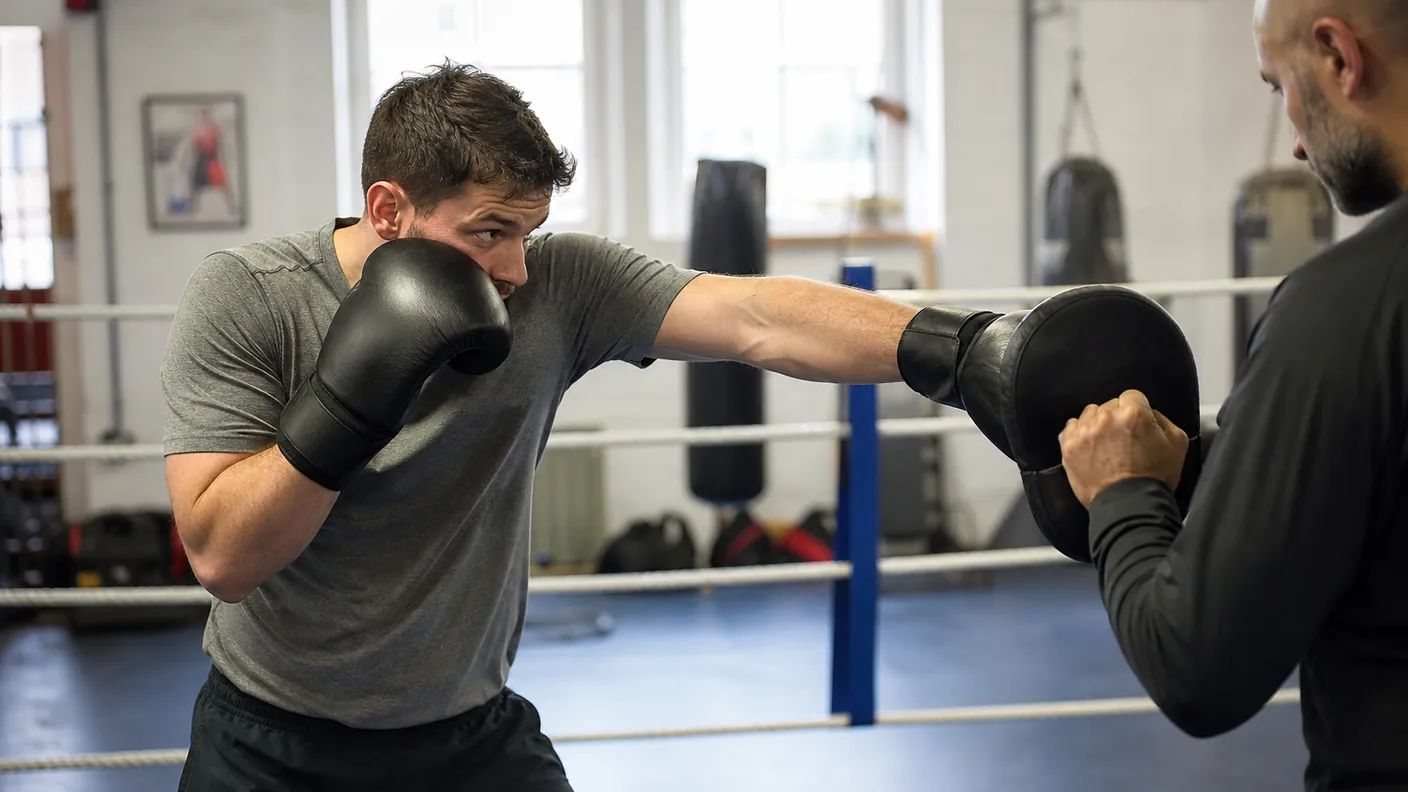
The Body Jab: A Safe Boxing Setup
Use a compact body jab to change the target, check range and set up the next decision without falling over your front foot.

How to Throw a Jab in Boxing
The jab is boxing's most underrated weapon. Learn how to throw a jab properly, why it matters more than power punches, and drills to make yours sharper.
Was this page helpful?
It takes one tap, and it genuinely helps.
Choose your next step
Turn this article into the right action
Some readers are ready to book. Some need the class route first. Pick the route that matches what you actually want.