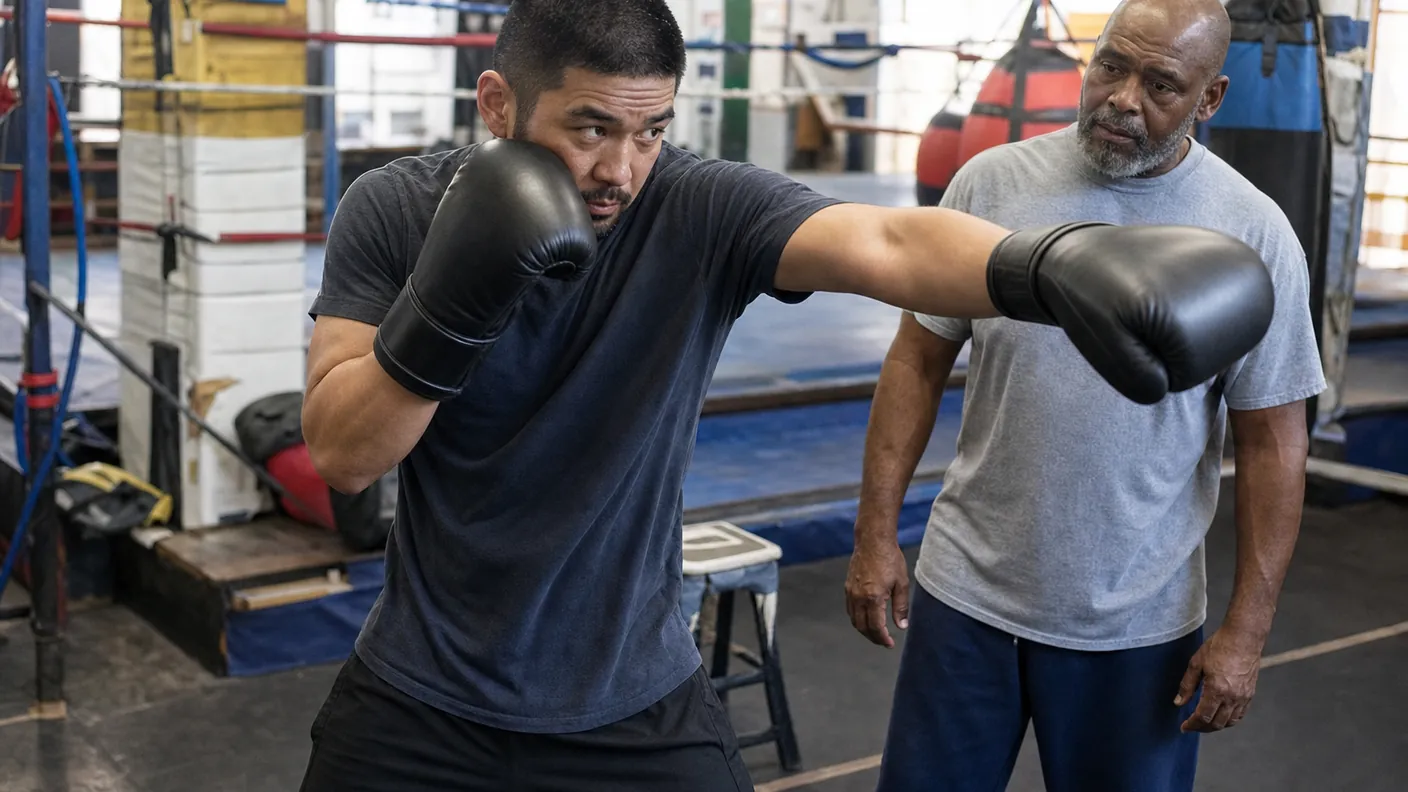
Most beginners learn the jab as if nothing comes back.
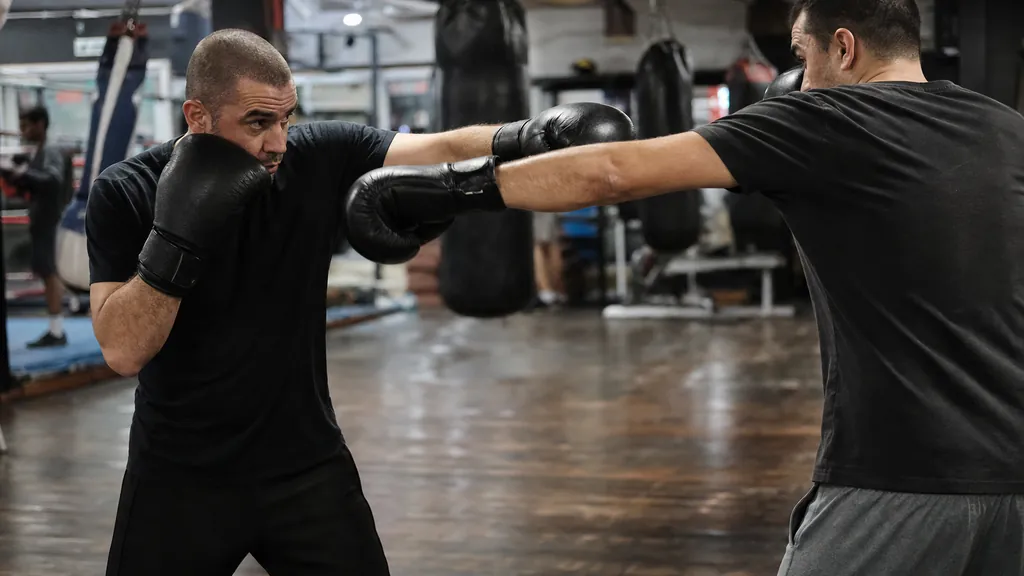
They stand in front of the bag, throw the lead hand, snap it back, and feel tidy. Then they spar someone at the same level and both boxers jab at the same time. Two heads stay on the same line. Two lead hands land. Both people look surprised.
That is the problem this article fixes. The jab is not just a scoring punch. It is a moment where you are exposed if your head, rear hand and feet do nothing useful. A good jab should touch and protect at the same time.
Watch the short clip below for the basic idea, then use the coaching notes after it to make the habit usable in a real round.
A 2024 study on amateur boxers and visual ability found links between punching performance and reaction time, eye-hand coordination, depth perception and decision-making. In gym language, that means the jab is not only about the arm. You have to see the reply, judge the distance and stay organised while the other person is moving too.
The mistake: landing the jab and eating the same jab back
The common beginner exchange is ugly but useful to notice.
Both boxers step in. Both throw the jab. Both keep the head in the same place. Both rear hands drift because they are thinking about landing, not defending. The jabs meet the target at roughly the same time and neither boxer has learned much except that sparring feels chaotic.
The fix is not to stop jabbing. The fix is to make the jab less naked.
There are two simple ways to do it:
- jab with the rear hand ready to block
- jab with the head slightly off the centre line
Neither is a magic trick. Both are small, coached habits. They should be practised slowly first, because if you rush them they become fake movement: the hand waves, the head leans, the feet freeze, and the jab gets worse.
Option one: jab and block at the same time
The jab-block is the simplest version for beginners.
As the lead hand goes out, the rear glove stays high and firm beside the cheek. Not floating. Not halfway down the chest. High enough that if the other boxer jabs at the same time, your glove and forearm can take the sting while your jab still works.
This is not a big theatrical block. You are not swatting their jab across the room. Think of it as closing the door on the return lane. Your rear glove protects your cheek, your elbow stays connected enough to keep the ribs safe, and your chin sits behind the lead shoulder.
Start with this on pads or with a partner holding a glove as the target:
- Set your normal stance.
- Throw a light jab to the target.
- Keep the rear glove firm against the cheek as the jab leaves.
- Bring the jab straight back.
- Reset before the next rep.
The coach should be able to tap your rear glove while you jab and feel a solid shape. If the glove collapses, drops or drifts away from the face, slow down.
This is where a lot of people misunderstand defence. Defence is not something you add after the attack has gone wrong. In boxing, attack and defence overlap. Our guide to boxing defence techniques for beginners covers the bigger family of blocks, slips, parries and footwork, but this habit is the smallest practical version: jab without abandoning your own face.
Option two: jab with your head off the centre line
The second version is more active: move your head slightly as you jab.
Slightly matters. Beginners hear "head off the line" and throw the whole body sideways. That is not good boxing. It turns the jab into a reach, pulls the feet out of stance and makes the next punch late.
A better cue is simple: your jab goes down the middle, your head does not stay exactly where it started.
For an orthodox boxer, that might mean a small shift to the lead side as the jab lands. For a southpaw, reverse the idea. The movement should come from the knees, hip and shoulder line, not from bending at the waist like you are picking something up off the floor.
Try this in shadow boxing first:
- Stand in front of a mirror or blank wall.
- Jab to an imaginary target.
- Let the lead shoulder rise and the head move a few inches off the centre.
- Keep both feet under you.
- Recover to stance.
If your rear foot drags, your chin lifts or your eyes drop, the movement is too big. Reduce it until the jab still looks like a jab.
Why the off-line jab sets up the right hand
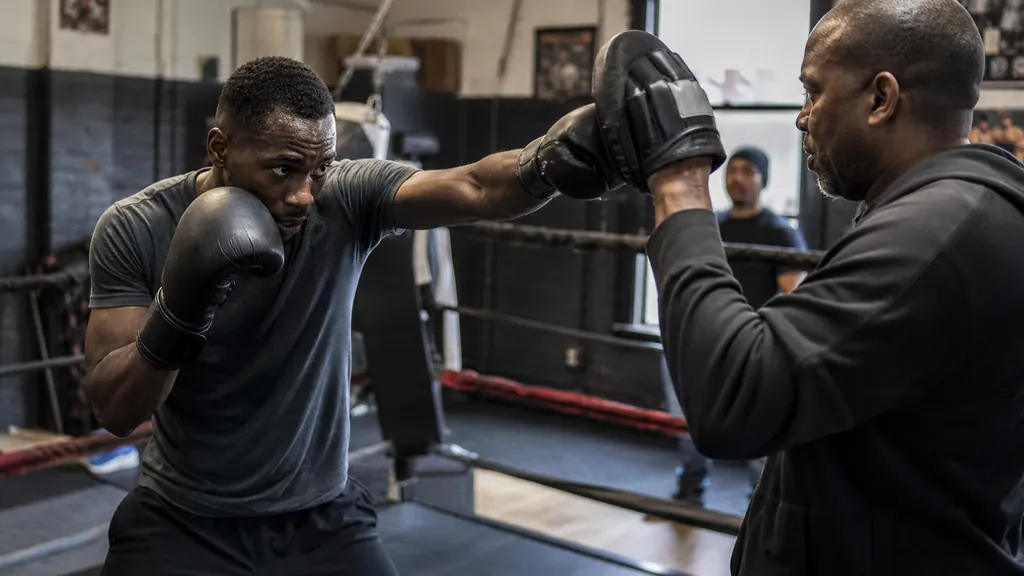
The off-line jab is not only defensive. It also opens the next punch.
When the head shifts slightly and the lead hand returns properly, the rear hand has a clearer path. That is why the basic pattern becomes jab, cross, jab, cross. The jab is no longer a straight trade. It is a way to make the other person miss or glance, then answer while you are still balanced.
A biomechanical study of boxing punches found clear differences between elite and junior boxers in force, velocity and how body segments contribute to punches. That study was not about this exact drill, but it supports the coaching point: good punching is whole-body organisation, not arm movement alone.
For this drill, the whole-body organisation is modest:
- the lead hand travels straight
- the rear hand protects while it waits
- the head is not parked on the same line
- the feet stay close enough to punch again
- the eyes stay on the opponent
If those five things are present, the cross can follow naturally. If one is missing, the combination turns into two hopeful punches.
The partner drill: safe pressure, not a scrap
Use this with controlled partner work before trying it in open sparring.
Partner A throws a light jab. Partner B also throws a light jab at the same time. The point is not to win the exchange. The point is to test whether Partner A can jab without giving away a free target.
Run it in three rounds:
Round 1: jab-block only
Both partners jab lightly. Partner A focuses on keeping the rear hand high and firm. Partner B gives honest but gentle pressure. After 10 reps, swap roles.
Round 2: off-line jab only
Partner A jabs while moving the head slightly off the centre line. Partner B jabs back at the same time. Keep the pace slow enough that Partner A can feel the difference between a small shift and a wild lean.
Round 3: choose the answer
Partner B can jab back or simply show the jab. Partner A chooses jab-block or off-line jab. This makes the drill closer to boxing because the answer is no longer automatic.
Keep the power low. If the drill turns into two beginners trying to score on each other, stop it and reset. Good technical sparring should teach calm choices. It should not reward panic.
Common mistakes to fix early
The first mistake is dropping the rear hand while trying to be quick. Speed does not excuse bad shape. A fast jab with the back hand low is an invitation.
The second mistake is blocking too wide. If your rear glove leaves your face to chase their jab, you have made a new gap. Keep the block compact.
The third mistake is leaning off the line instead of shifting. Leaning puts your head outside your base. A small bend in the knees and a small shoulder shift are enough.
The fourth mistake is pausing after the jab. The whole point of the drill is that boxing continues after the first touch. Jab, defend, recover. Or jab, move, cross. Do not jab and admire it.
The fifth mistake is doing it only on the bag. The bag will not jab back. Use the bag for shape, then use pads or partner drills for timing.
How to add it to your own training
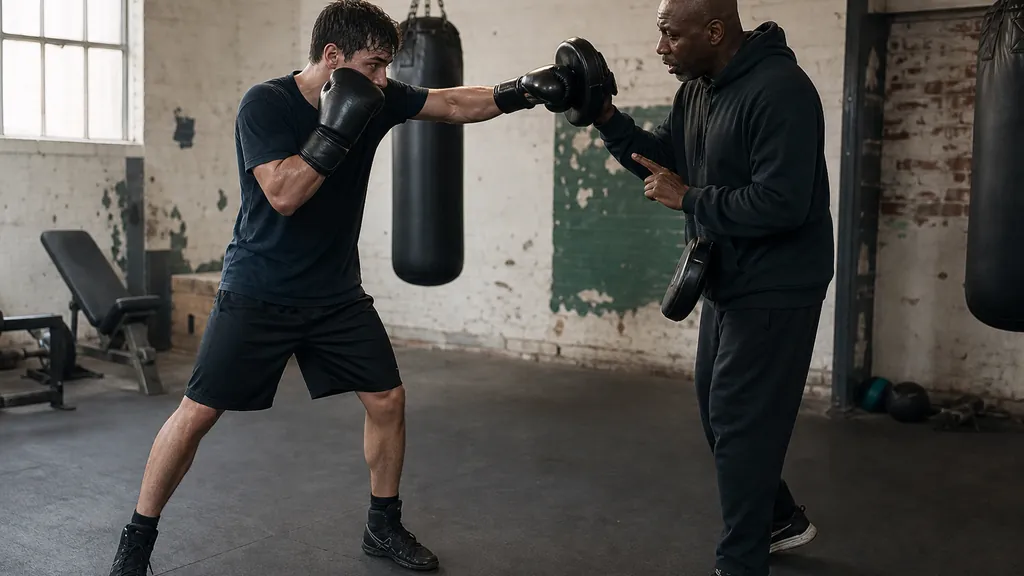
Put this drill near the start of a session, after the warm-up and before hard rounds.
Do one round of shadow boxing with only the jab-block. Do one round on pads where the coach taps the returning lane. Do one round with a partner jabbing back lightly. Then finish with one controlled sparring round where your only goal is to avoid trading naked jabs.
That is enough. You do not need 20 versions of the drill. You need one clear habit that survives a little pressure.
This also links back to the basic jab. If your jab is still looping, lazy on the return or thrown from a poor stance, fix that first. Our how to throw a jab in boxing guide covers the foundation. Then use this article to make the jab safer when another boxer is allowed to answer.
The coaching cue
Jab without donating your face.
That is the whole lesson. Land your lead hand, but do not leave your head and rear hand behind like you have forgotten the other boxer exists. Either close the return lane with the rear glove or move your head just enough that their jab does not get a free road.
If you are in Kidbrooke, Greenwich or nearby, our Recreational Adults boxing classes teach these habits slowly before they are tested in controlled partner work. Beginners learn to jab, protect, recover and think, not just throw their hand out and hope.
H&G Team
Writer at Honour & Glory Boxing Club, a community boxing gym in Kidbrooke, South East London.
KEEP READING
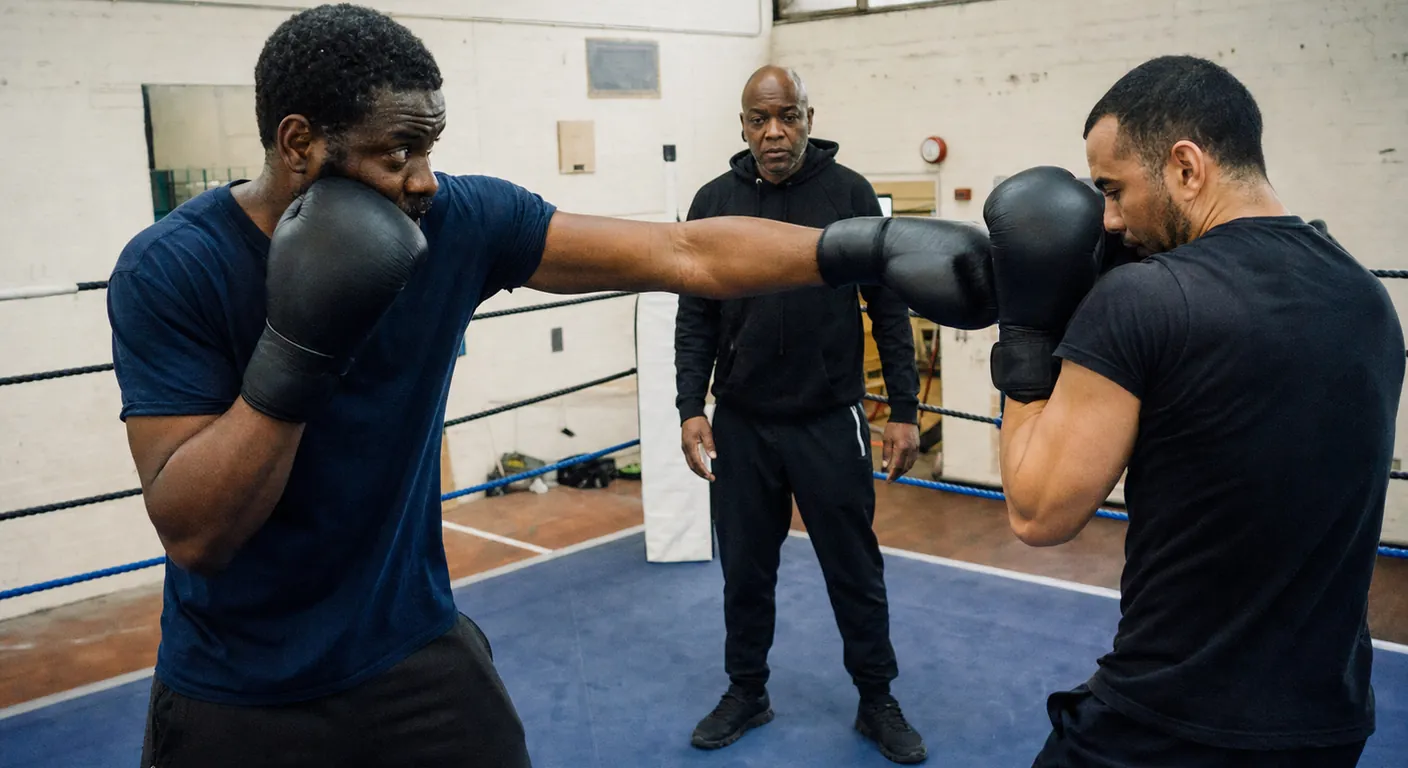
How to Defend the Jab in Boxing
Learn how to defend the jab with a catch, slip, block and exit without losing stance, balance or the chance to punch back.
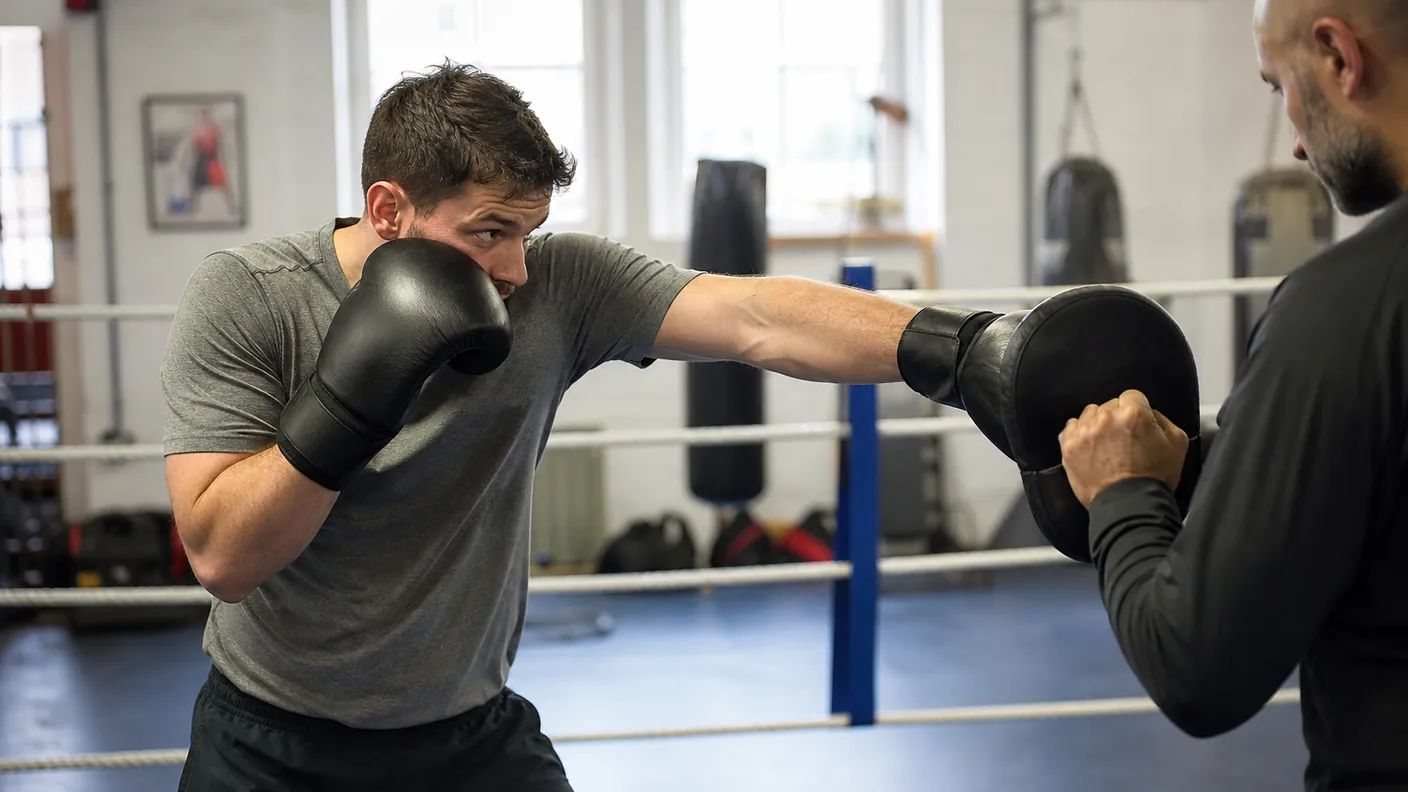
The Body Jab: A Safe Boxing Setup
Use a compact body jab to change the target, check range and set up the next decision without falling over your front foot.

How to Throw a Jab in Boxing
The jab is boxing's most underrated weapon. Learn how to throw a jab properly, why it matters more than power punches, and drills to make yours sharper.
Was this page helpful?
It takes one tap, and it genuinely helps.
Choose your next step
Turn this article into the right action
Some readers are ready to book. Some need the class route first. Pick the route that matches what you actually want.