
Biomechanical research on boxing punches found that elite boxers throw approximately 21 punches per minute in competition, with the jab making up the majority of punch output. Boxing Science's punch force analysis shows that the jab's effectiveness comes from speed and frequency rather than raw power.
If you only mastered one punch in boxing, it should be the jab. Not the big knockout right hand. Not the devastating hook. The jab.
That might sound boring. The jab is not flashy - it rarely ends fights and highlight reels do not feature it much. But ask any experienced boxer or coach what separates good fighters from average ones, and they will talk about the jab. It is the foundation that everything else is built on.
Why the Jab Matters So Much
The jab does things no other punch can do:
It measures distance. Before you can land a big shot, you need to know how far away your opponent is. The jab tells you. If it lands, you are in range. If it falls short, you need to step in.
It disrupts timing. Every time you jab, your opponent has to react. That split-second they spend dealing with your jab is a split-second they cannot use to attack you.
It sets up power punches. The classic 1-2 exists because the jab creates the opening for the cross. Jab to the head, your opponent raises their guard, now the body is open. Jab to the body, their hands come down, now the head is open.
It scores points. In amateur boxing especially, clean jabs score just like power punches. Many fights are won by the boxer who lands more jabs.
It keeps you safe. A good jab keeps your opponent at distance, where they cannot hurt you. It is offensive and defensive at the same time.
The Mechanics of a Good Jab
Let us break down how to throw a jab properly, step by step.
Starting Position
Stand in your boxing stance - feet shoulder-width apart, knees slightly bent, weight evenly distributed. Your lead hand is up by your cheek, elbow tucked against your body. Your rear hand guards your chin.
The Extension
Push your lead hand straight towards your target. Not in an arc, not looping down - straight like a piston. As your arm extends, rotate your fist so your palm faces the floor at full extension. Your shoulder should come up slightly to protect your chin.
The Snap
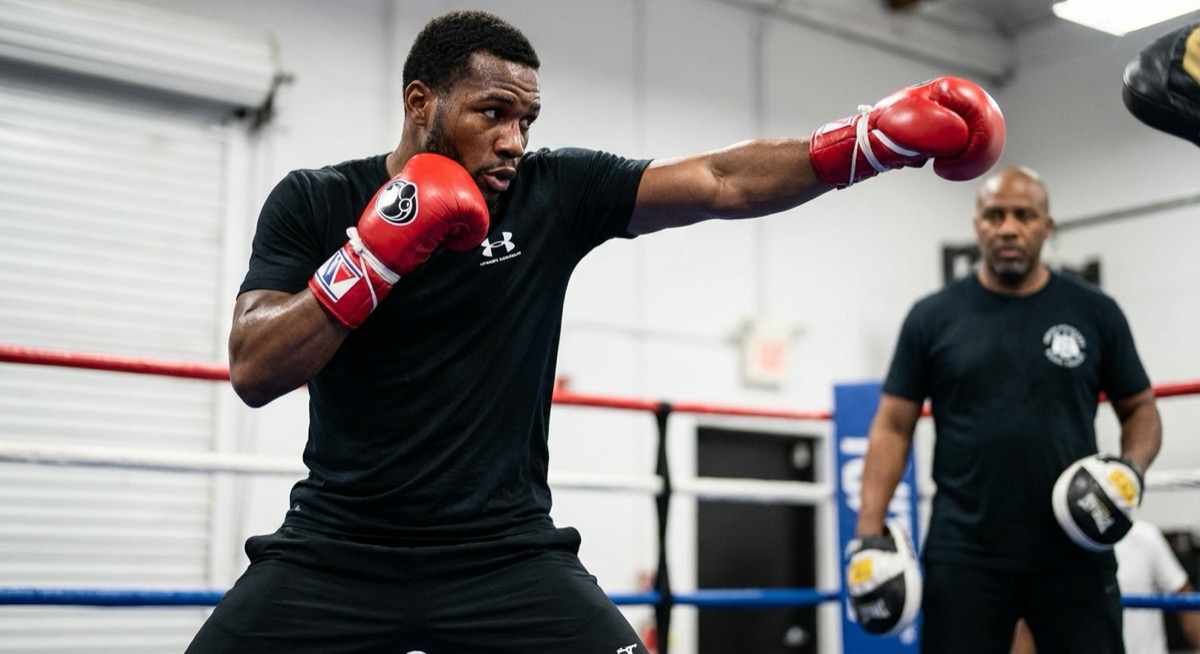
Here is what separates a good jab from a weak one: the snap back. The moment you reach full extension, pull your hand back to your face just as fast as it went out. Your jab should be out and back before your opponent can react.
Think of it like touching a hot stove. You touch and retract instantly. That is the speed you are looking for.
Body Position
Your body stays relatively still when you jab. No big wind-up, no obvious weight shift. Your feet stay planted (or you step with the jab - more on that later). The less movement there is before the punch, the harder it is to see coming.
Common Jab Mistakes
Dropping your hand before punching. This is telegraphing - your opponent sees the dip and knows what is coming. Keep your hand at face height and punch from there.
Leaving it out there. A slow jab is worse than no jab. If your hand hangs out after you punch, you are getting countered.
Punching with just your arm. Even though the jab is not a power punch, it needs some body behind it. A slight push from your rear foot gives it snap.
Forgetting your other hand. When you jab, your rear hand should be glued to your chin. Many beginners drop it or let it float away.
Leaning forward. Your jab should reach your target without you lunging. If you have to lean, you are out of range - step in instead.
Different Types of Jabs
The basic jab is just the starting point. As you improve, you will learn variations:
The Step Jab
You step forward with your lead foot as you throw the jab, covering distance and adding power. This is how you close the gap when your opponent is backing away.
The Power Jab
Sitting down on the jab a bit more, engaging your core and legs. Less about speed, more about making them respect the punch. Sonny Liston was famous for this - his jab hit like other people's crosses.
The Flicker Jab
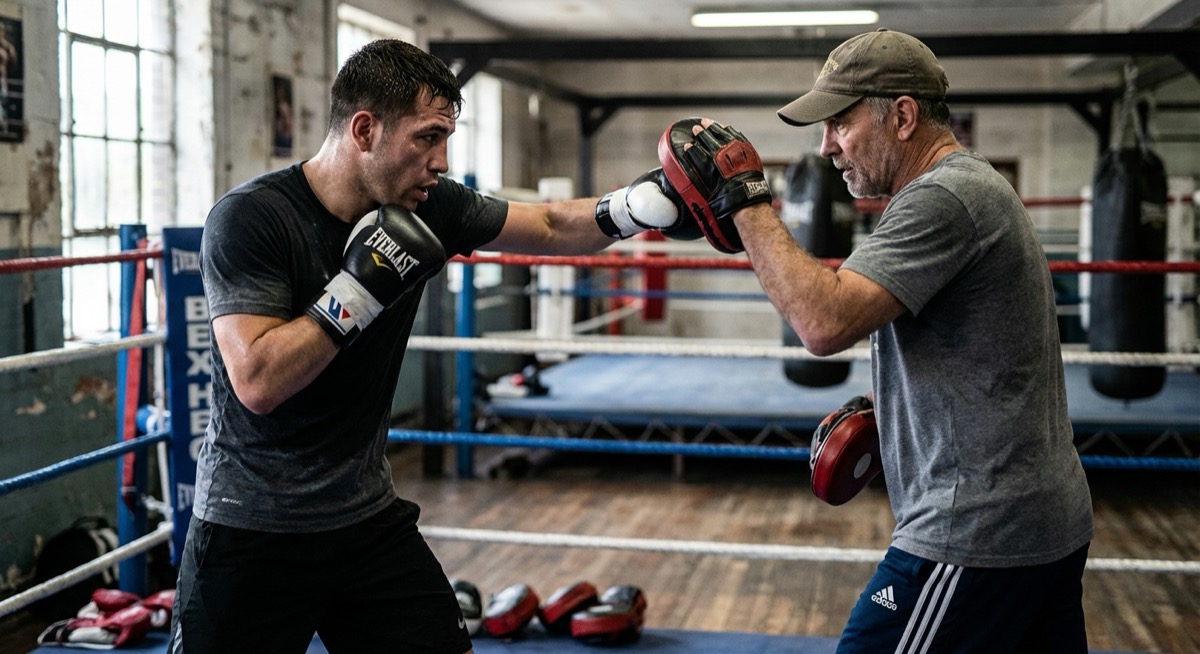
Fast and loose, thrown with very little power. Used to distract, annoy, and disrupt rhythm. Thomas Hearns used this brilliantly - it is more about frequency than force.
The Body Jab
Instead of going to the head, you dip slightly and jab straight to the body. Great for mixing up your attacks and setting up uppercuts. Once the real body jab is respected, you can use a body jab feint to open the head shot without lunging out of stance.
The Double Jab
Two jabs in quick succession. The first makes them react, the second lands while they are still dealing with the first. Simple but effective.
Drills to Improve Your Jab
Mirror Work
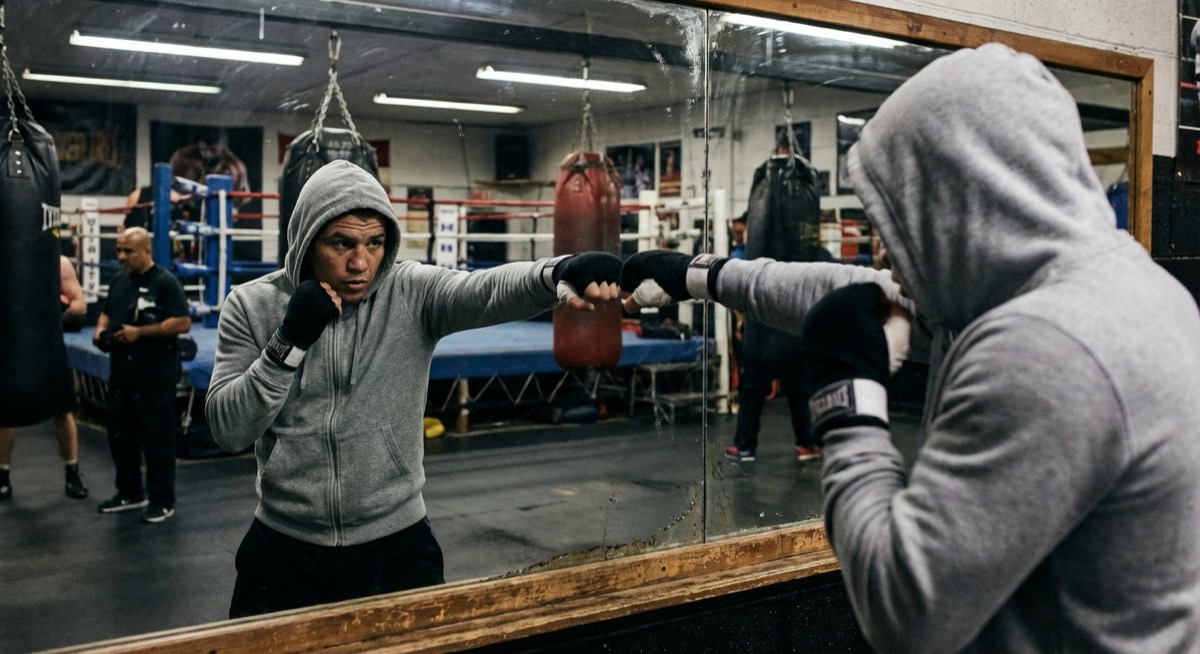
Stand in front of a mirror and jab. Watch your form. Is your shoulder coming up? Is your other hand staying put? Is the punch straight? Do this for 3 minutes and you will spot your own mistakes.
Wall Jab
Stand about arm's length from a wall. Jab towards the wall without touching it. This teaches you to extend fully and snap back without the feedback of hitting something.
Jab and Move
Shadow box with only jabs. No other punches allowed. Focus on jabbing and moving - jab, step back. Jab, pivot right. Double jab, circle left. This builds the habit of never standing still after you punch.
Jab Counting
Set a timer for 3 minutes. Count how many jabs you can throw. Next time, try to beat your number. This builds endurance and speed.
Partner Jab Drill
Have someone hold a focus mitt and move around. Your only job is to keep touching the mitt with your jab as they circle, advance, and retreat. This builds accuracy and timing against a moving target.
The Jab in Combination
The jab opens doors. Here is how it connects to other punches:
Jab-Cross (1-2): The most fundamental combination. Jab gets their attention, cross follows through the opening.
Jab-Jab-Cross (1-1-2): Double jab to break their rhythm, then the cross.
Jab-Cross-Hook (1-2-3): The jab starts it, the cross turns their head, the hook finishes it.
Jab to Body-Cross to Head: Low jab brings their hands down, high cross punishes them for it.
In all these combinations, the jab's job is to create the opportunity. Without it, the other punches are just wild swings.
Training the Jab
Your jab needs more attention than you think. Throw hundreds of them on the bag. Thousands over time. Work on speed drills where you throw as many jabs as possible in 10 seconds. Work on power drills where every jab has real intent behind it.
A good jab is not natural - it is trained. The people with the best jabs are the people who've practiced it the most.
What a Good Jab Looks Like
Watch footage of Larry Holmes, Lennox Lewis, or Gennady Golovkin. These fighters built their entire games around the jab. Notice how they use it constantly - not just to land, but to control distance and set up everything else.
You can tell a lot about a boxer by watching their jab. It reveals their skill level faster than any other punch.
Learn to Jab Properly
Reading about technique only goes so far. You need someone watching your form, adjusting your mechanics, and catching the bad habits before they stick.
At Honour & Glory, we spend serious time on fundamentals like the jab. It is not exciting, but it is what makes good boxers. In our classes, you will drill the jab on pads, on bags, and with partners until it becomes automatic.
H&G Team
Writer at Honour & Glory Boxing Club, a community boxing gym in Kidbrooke, South East London.
KEEP READING
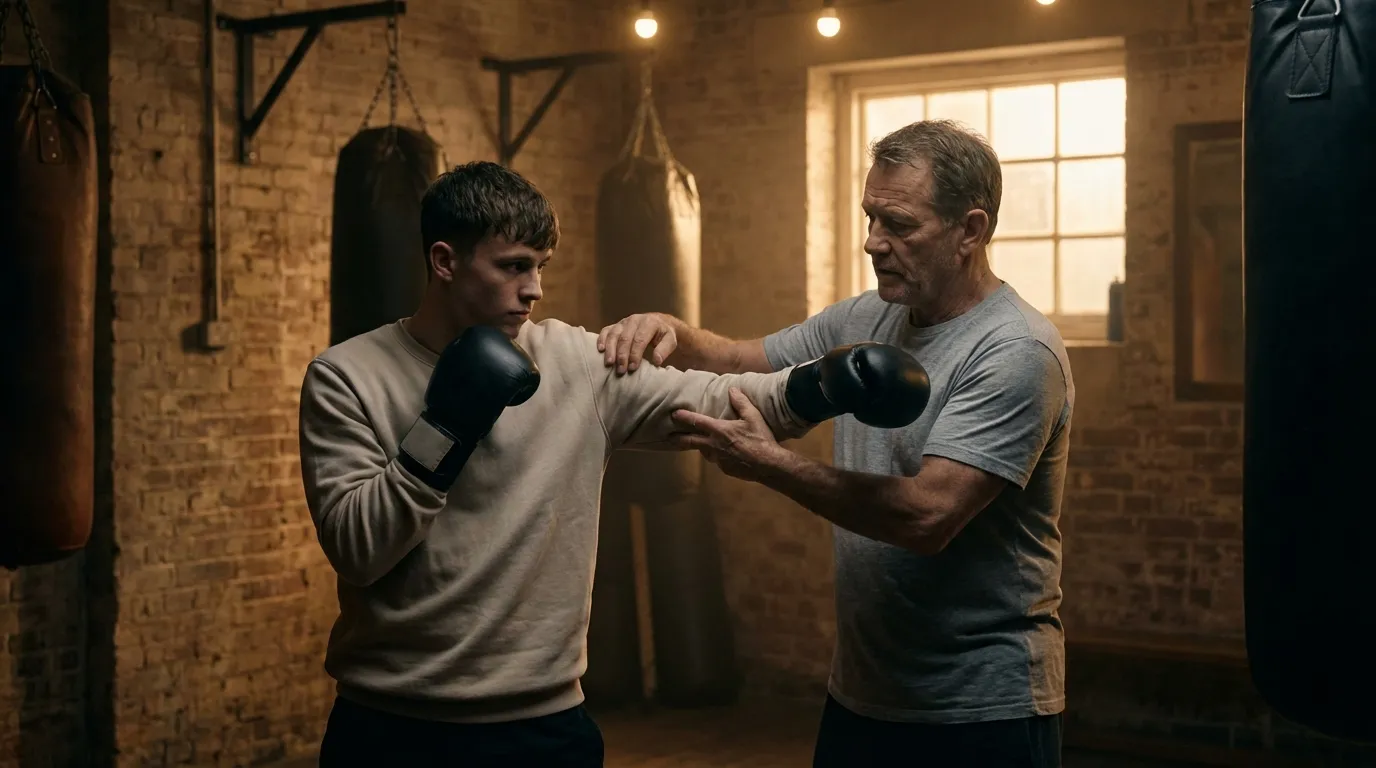
Basic Boxing Punches for Beginners
Learn the six basic boxing punches that form the foundation of every boxer's arsenal. From the jab to the uppercut, here is how to throw each one properly.
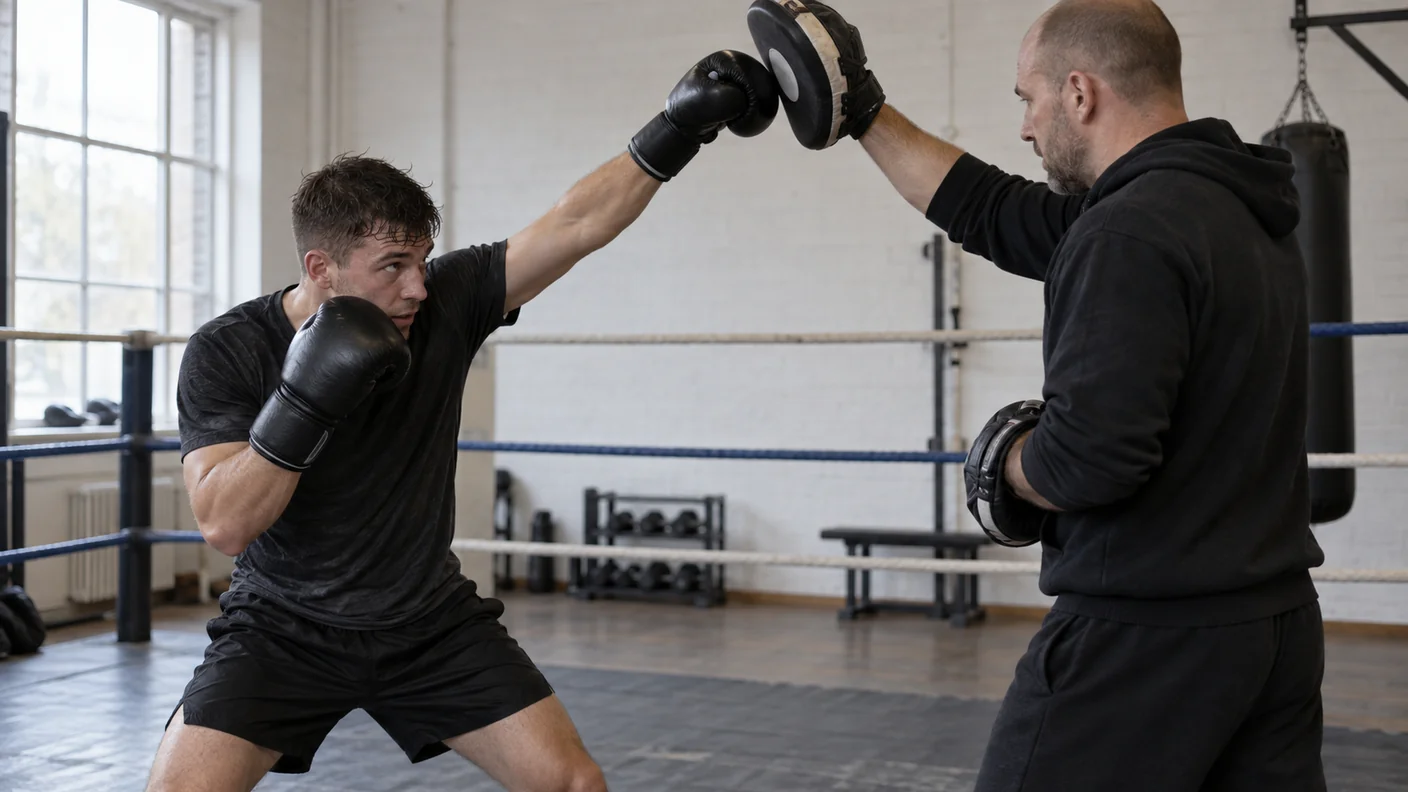
How to Use an Up Jab in Boxing
Use a compact up jab to change the line, test a high guard and keep your stance ready for the next decision.
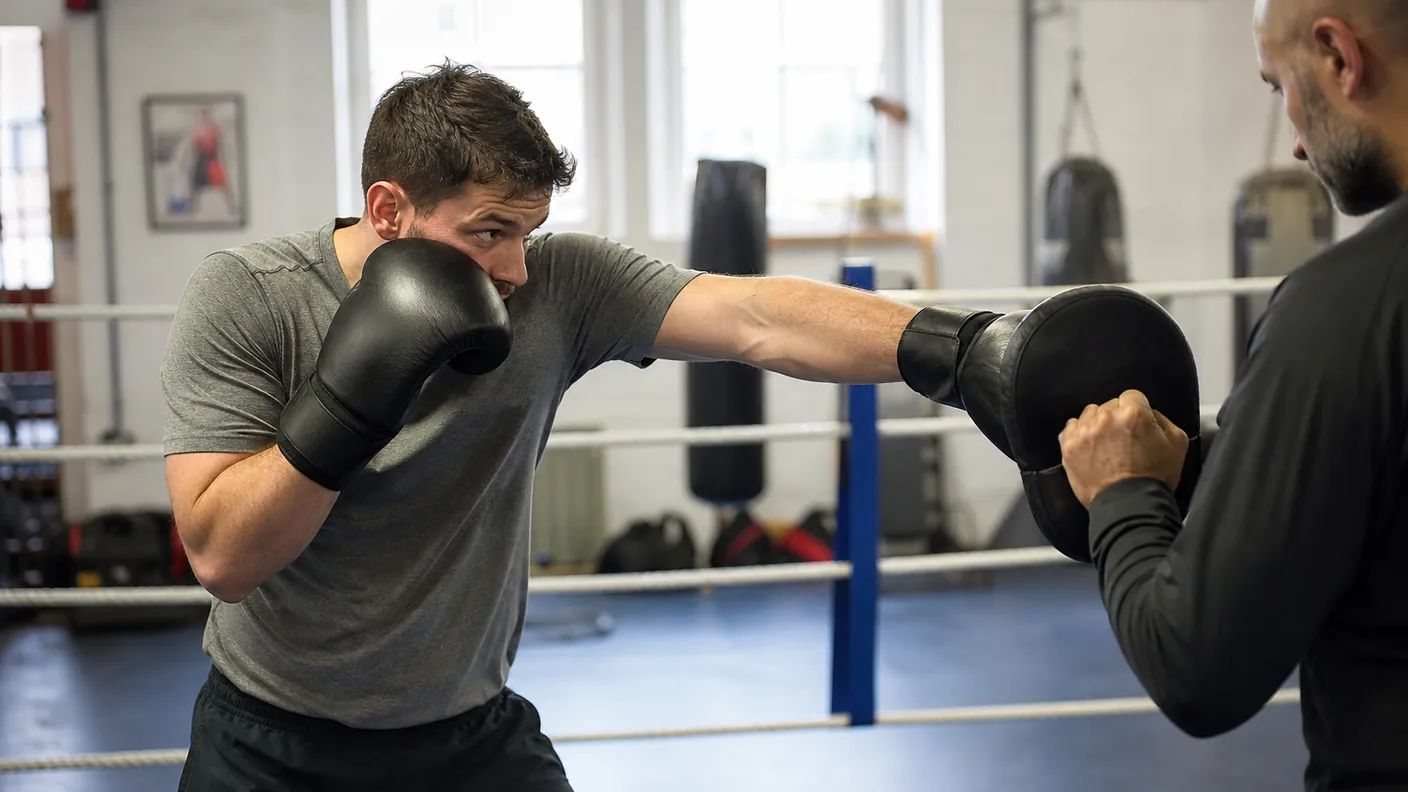
The Body Jab: A Safe Boxing Setup
Use a compact body jab to change the target, check range and set up the next decision without falling over your front foot.
Was this page helpful?
It takes one tap, and it genuinely helps.
Choose your next step
Turn this article into the right action
Some readers are ready to book. Some need the class route first. Pick the route that matches what you actually want.