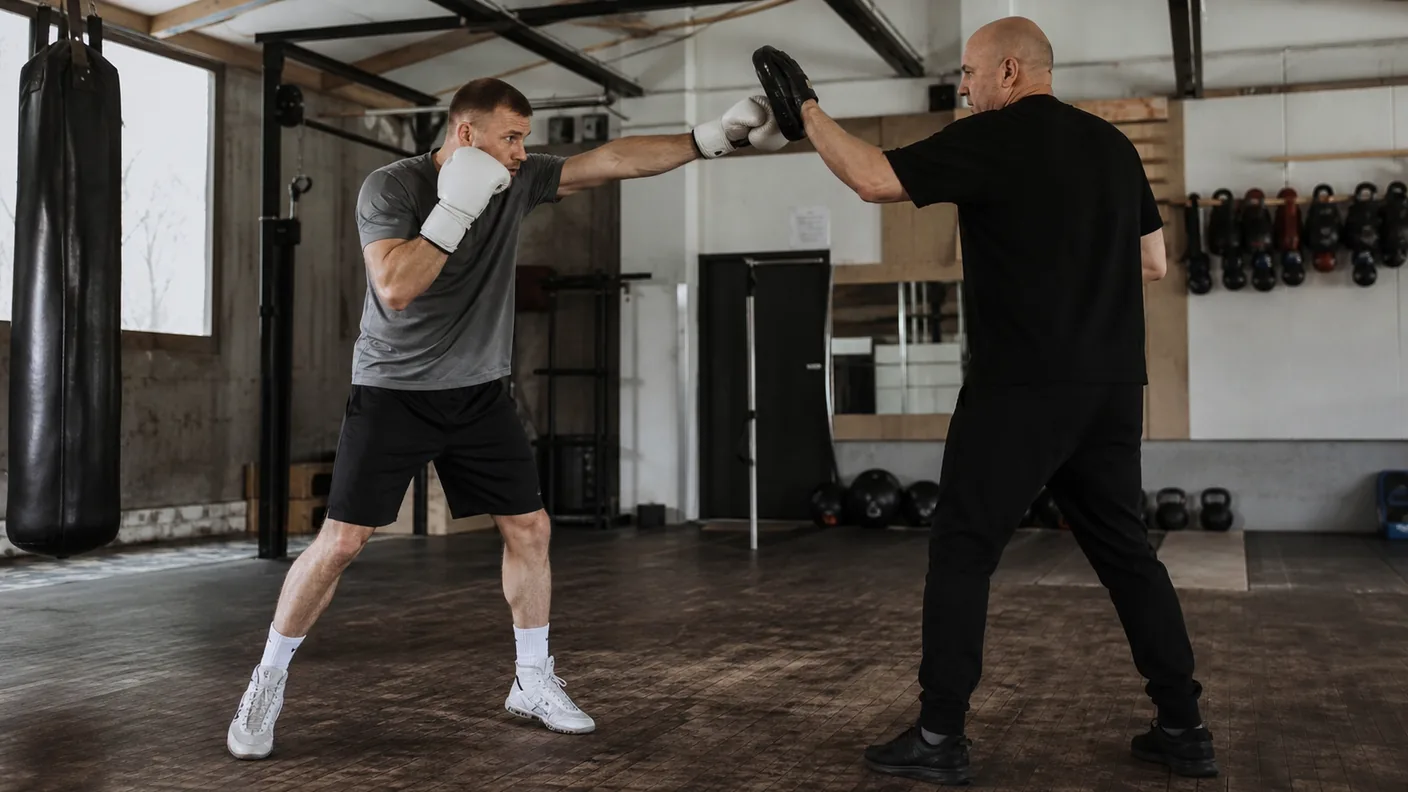
A one-two can look clean on pads and still fall apart the moment you need to move.
The usual problem is simple. A boxer steps forward, throws the jab while still travelling, then lets the cross go before the rear foot has caught up. The right hand may land, but the stance is long, the head is forward and there is no useful answer if a punch comes back.
There is a better order. The jab can travel with a small step. The cross needs a base. Move with the lead hand, let the rear foot settle, then throw the rear hand from a stance you could still defend from.
Watch the short demonstration below, then use the coaching notes to make the one-two more than two arms taking turns.
The jab can carry the first step
The jab is the best punch to connect to forward movement because it gives you something in front of the other boxer as you close distance.
For an orthodox boxer, the lead foot takes a small step towards the target as the jab starts. The rear foot follows just enough to restore the usual gap between the feet. Southpaws reverse the picture. The rule is the same: the front foot opens the distance and the back foot restores the stance.
Do not confuse that with a lunge. A lunge throws the head and front knee forward before the feet have earned the range. The jab reaches, but the boxer is now leaning after it. A useful step is smaller. Your head stays over the base, your rear hand stays close to the cheek and the lead shoulder still protects the chin as the jab goes out.
A study of novice boxing training used progressions that combined foot displacement with punching actions rather than treating them as unrelated skills. That is the useful lesson for ordinary gym work too: the feet and hands need to learn the same rhythm.
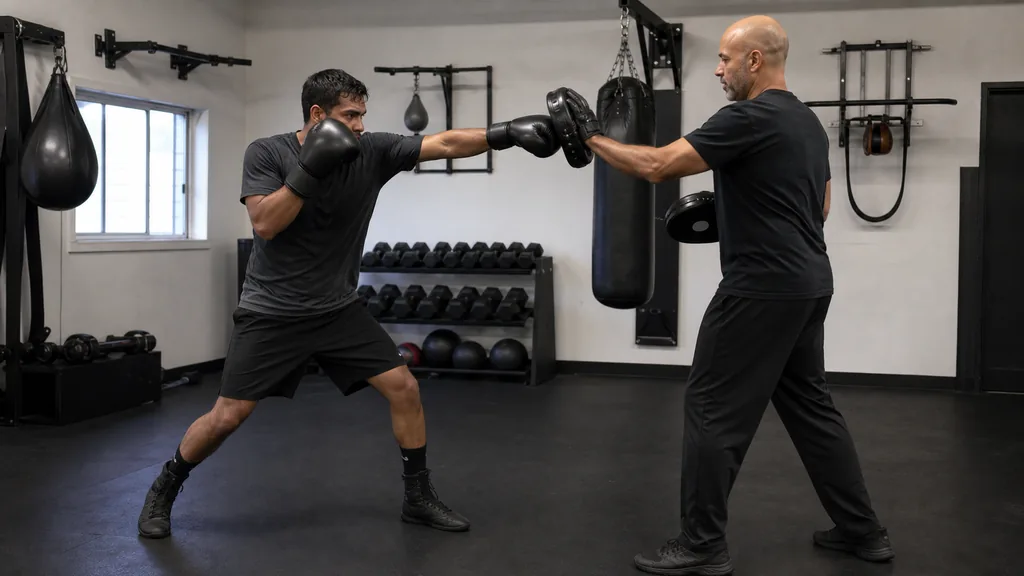
The cross needs the rear foot under you
The cross is where beginners often rush.
They feel the jab touch and throw the rear hand immediately, even though the rear foot is still behind them. The shoulder turns, the hand reaches and the body follows late. The punch can feel powerful on a pad because the pad catches it. Against a moving person, it is harder to land cleanly and much harder to recover from.
Let the rear foot settle before the cross. It does not need a dramatic stomp. It only needs to be back underneath you, with enough space between the feet to turn the rear hip and bring the hand home afterwards.
The sequence should feel like this:
- Lead foot makes a small step.
- Jab travels with that step and comes back.
- Rear foot catches the distance.
- Cross turns from the settled stance.
- Both hands return and you make the next decision.
A comparison of boxing punch mechanics describes competition boxing as continuous punching, footwork and defensive movement rather than isolated shots. That is why the base matters. The cross is not the end of the one-two. It changes your position for whatever follows.
Do not turn the one-two into a march
Stepping with the jab does not mean taking a step every time you throw it.
If you are already at honest range, the jab can stay in place. If the other boxer is moving away, a small step may be needed to keep the jab useful. If they are too far away, one huge step will not solve the problem. You may need to take ground first, reset, then punch.
This is where beginners get tangled. They see a target moving away and try to cover all the missing distance while throwing two punches. The result is a jab with the head attached to it, followed by a cross thrown from a stretched stance.
Use a simple question after every one-two: could you throw another jab, block a return or step out without rearranging your feet? If not, the entry was too big.
Our guide to moving in and out without crossing your feet covers the basic step-and-slide rule. This article gives that rule one job: make the jab carry you in, then give the cross a base.
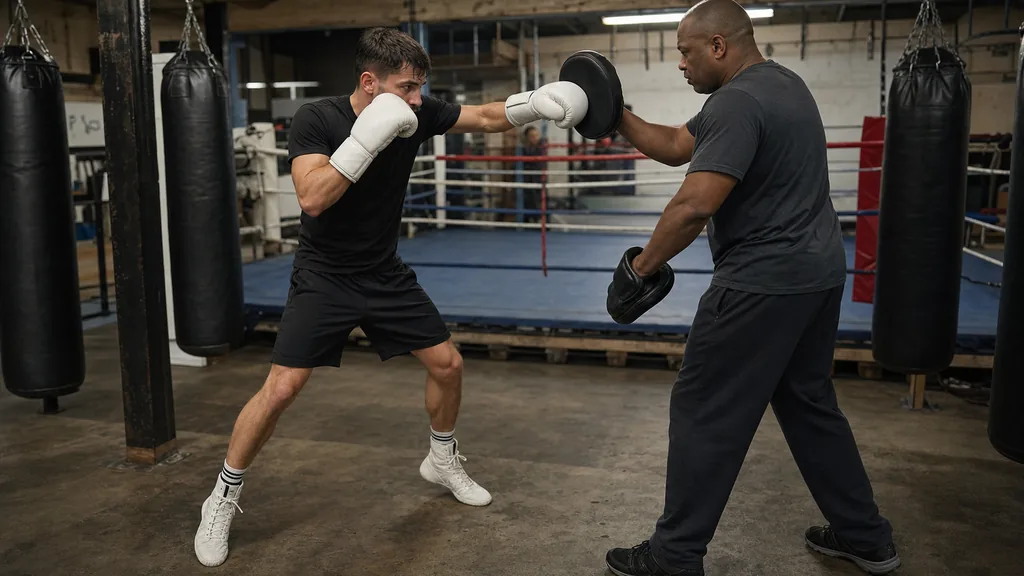
A three-round drill for the step and set
Keep this drill technical. It is not a race to throw the loudest one-two.
Round 1: step and jab only
Start just outside range of a coach's lead mitt or a line on the heavy bag. Take a small step with the lead foot and throw a single jab. Let the rear foot follow before you do anything else.
Freeze for one second after every repetition. Check that the feet are still staggered, the rear glove is near the cheek and the head is not hanging over the front knee. If you cannot freeze in a usable stance, make the step shorter.
Round 2: jab, set, cross
Use the same small step, but now allow the rear foot to settle before adding the cross. Keep both punches around half speed.
The pause is deliberate at first. It teaches the body that the cross comes from the settled stance, not from the panic of trying to catch the target. Once the position is tidy, reduce the pause until the one-two flows without becoming rushed.
Round 3: one-two and one exit
After the cross, choose one quiet finish for the full round: high guard and reset, a short step back, or a small turn away from the lead side.
Do not add three exits at once. You are teaching the body that landing a cross is not permission to stand still. The one-two should finish with you able to see, defend and continue.
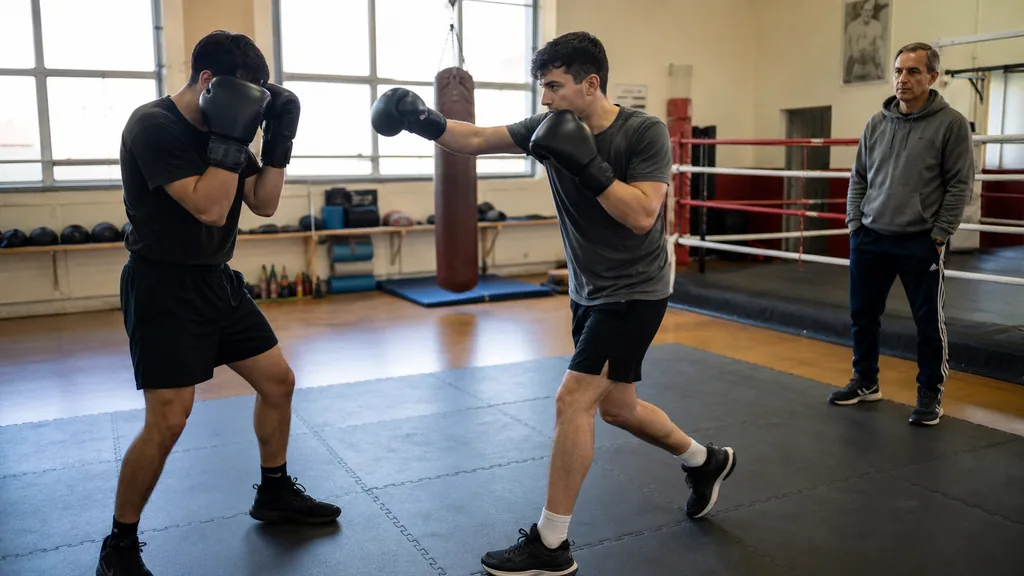
Use pads before trying it in partner work
Pads let a coach control the distance while you learn the order.
Ask the pad holder to start just beyond easy jab range. Step with the jab and let them give the mitt a little ground. Your job is to make the small entry without reaching. Once the rear foot has caught up, throw the cross to the second mitt and recover.
The pad holder should not rush the second target so quickly that you start flinging the cross from an unfinished step. Slow coaching is not easy coaching. It makes the mistake visible.
When the pad version is sound, use light partner work. One partner gives a calm step back with their guard high. The other boxer steps with the jab, sets the rear foot, then shows a controlled cross at a safe target. No hard contact and no race for points. The purpose is distance, not winning an exchange.
For a broader view of what the one-two is trying to do, read boxing combinations for beginners. The pattern is basic. The timing between the feet and hands is what makes it look like boxing.
Mistakes to catch early
The first mistake is stepping too far with the jab. If the rear foot cannot catch up without dragging, your step was too big.
The second is throwing the cross while the rear foot is still travelling. Slow the sequence down until you can feel the foot settle. The cross should turn from the floor, not reach from behind you.
The third is treating the jab as a shove. A step with the jab still needs a clean lead hand and shoulder cover. If the glove pushes and the chin follows, return to a shorter step.
The fourth is forgetting the rear hand during the jab. The jab is the moving punch, not an excuse to leave the other side of your face empty.
The fifth is admiring the cross. Bring the hand home. You may need to jab again, step out, cover or simply reset. The other boxer does not disappear because your two punches made a good sound.
The coaching cue
Step with the jab. Set for the cross.
That is enough. Let the lead hand help you enter, give the rear foot time to restore your stance, then throw the cross from a position you can still trust. It is a small change, but it turns the one-two from a reach into a sequence.
If you are in Kidbrooke, Greenwich or nearby, our Recreational Adults boxing classes teach the jab, cross and footwork as one joined skill. You build the stance first, then use it under pads and controlled partner drills.
H&G Team
Writer at Honour & Glory Boxing Club, a community boxing gym in Kidbrooke, South East London.
KEEP READING
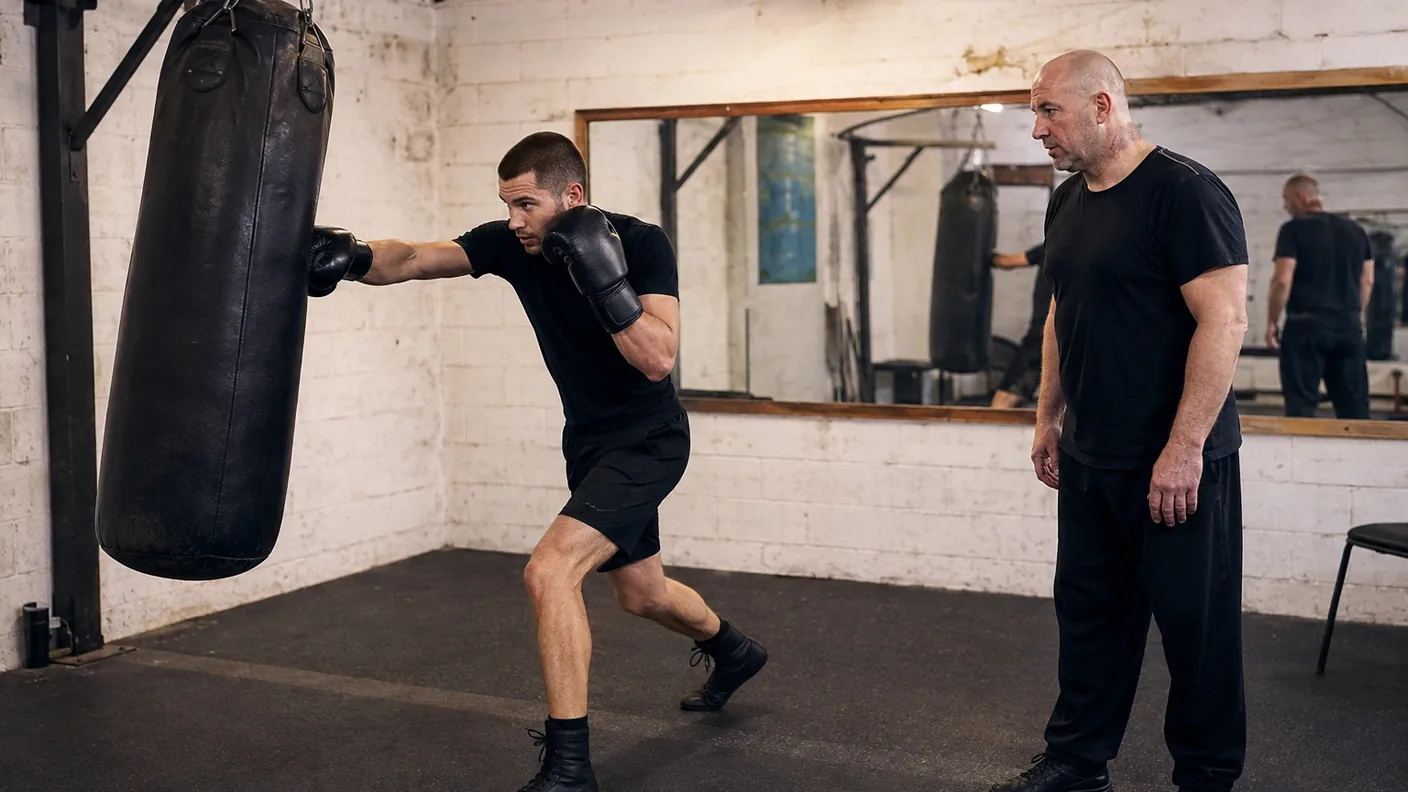
Jab Step-Across Cross: A Boxing Angle Drill
Use a compact jab step-across to open a rear-hand angle without crossing your feet, losing your guard or reaching for the cross.
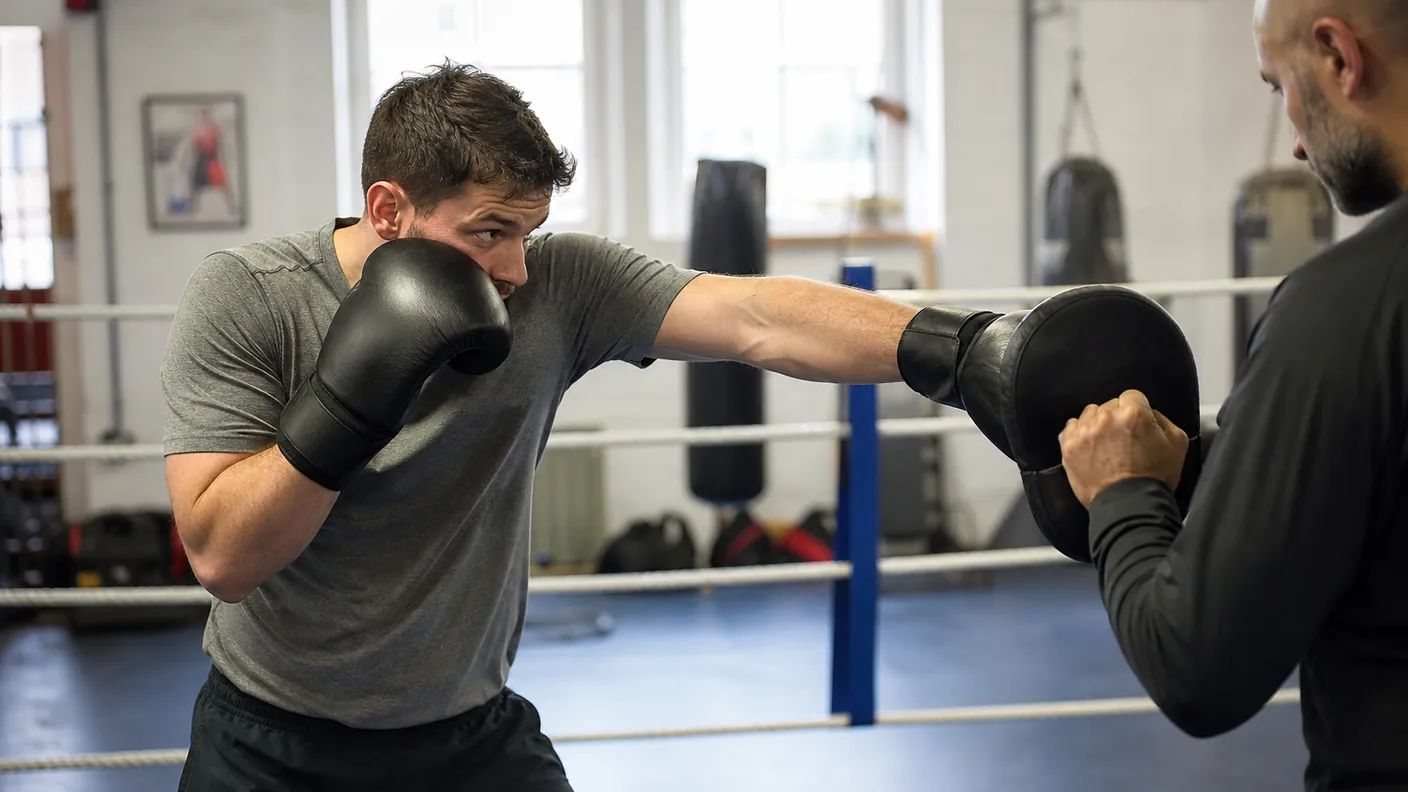
The Body Jab: A Safe Boxing Setup
Use a compact body jab to change the target, check range and set up the next decision without falling over your front foot.
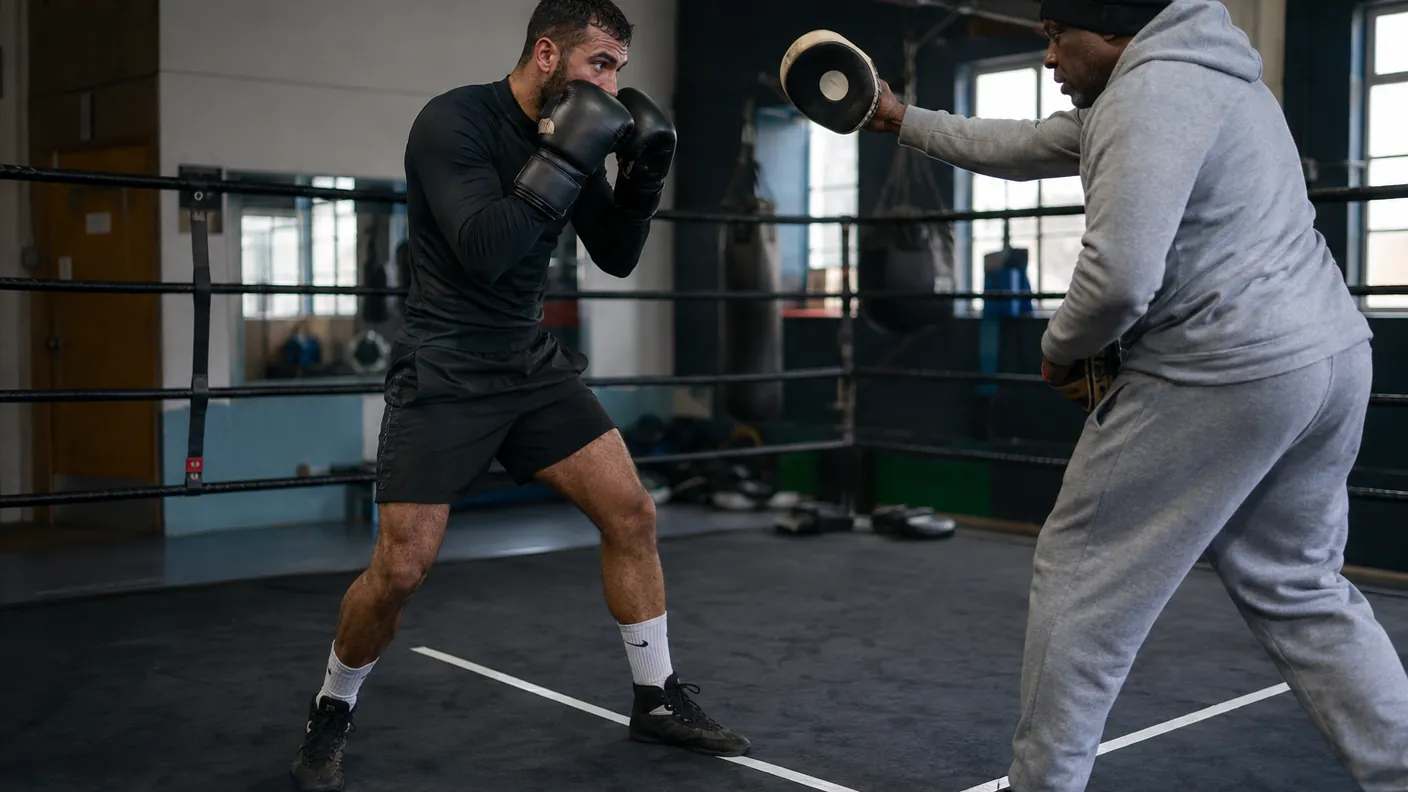
Step Across and Pivot After the Boxing Cross
Use a small lead-foot step across and pivot after the cross to change the line without crossing your feet or leaving your guard behind.
Was this page helpful?
It takes one tap, and it genuinely helps.
Choose your next step
Turn this article into the right action
Some readers are ready to book. Some need the class route first. Pick the route that matches what you actually want.