Move In and Out in Boxing Without Crossing Your Feet
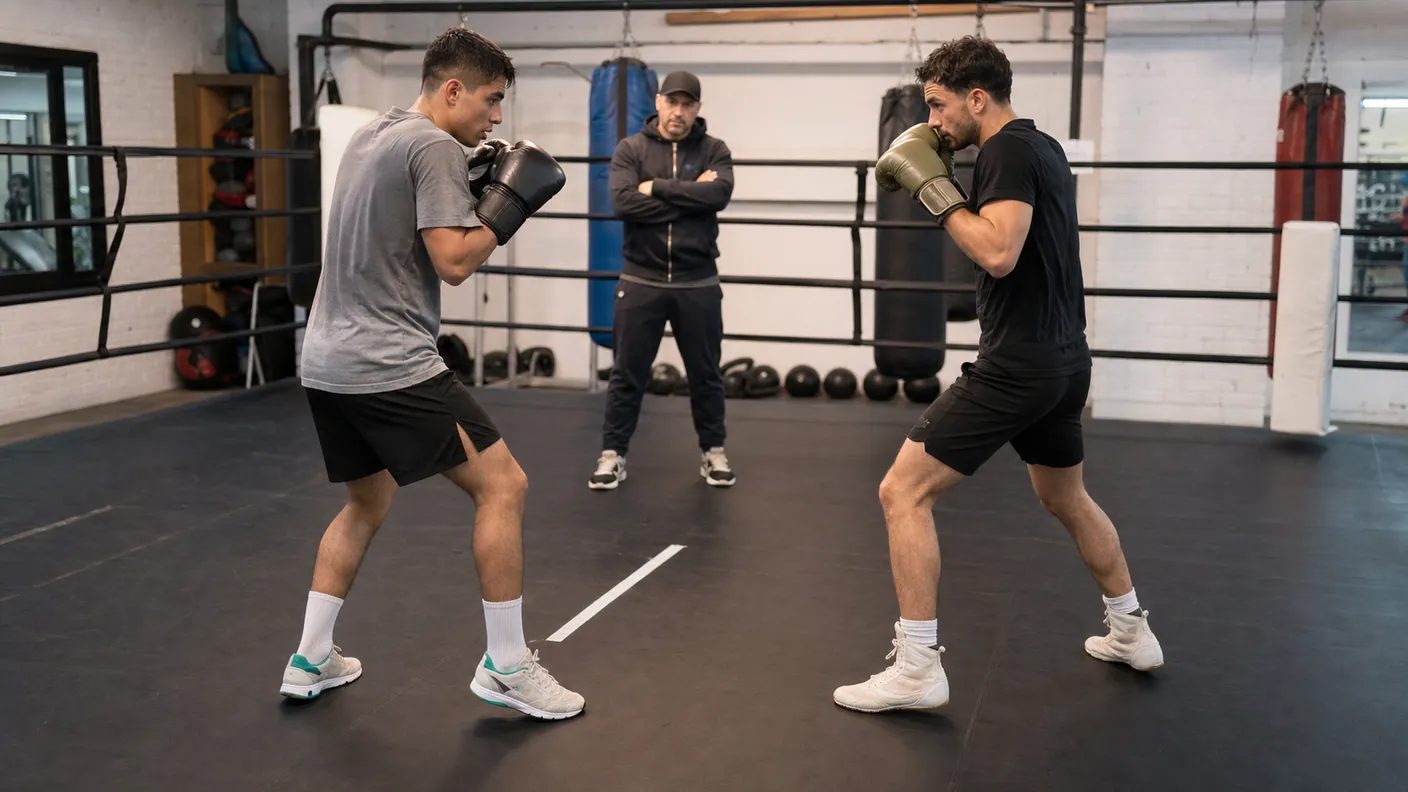
If your feet come together when you move, your boxing disappears for a moment.
That sounds severe, but it is the truth. A boxer who brings the feet together to chase someone forward is too square to punch properly. A boxer who crosses the feet while moving back may look quick until they need to stop, defend or throw back. Then the balance has gone and the hands are trying to solve a problem the feet created.
The rule is simple: the foot closest to the direction of travel moves first, then the other foot follows. Move forward with the lead foot first. Move back with the rear foot first. Keep the same rough gap between your feet throughout.
Watch the short demonstration below, then use the coaching notes to turn it into a habit that holds up when someone is moving towards you.
The England Boxing coaching handbook puts learning and safe, individual coaching at the centre of a boxer's development. That matters here. Good footwork is not a trick to copy at speed. It is a base that lets a coach see whether you are balanced, protected and ready for the next decision.
The step-and-slide rule in plain English
When you move towards your opponent, the lead foot goes first. It moves only as far as you can keep your stance. Then the rear foot follows and restores the gap.
When you move away, reverse the order. The rear foot moves first, then the lead foot follows. Again, the gap between the feet should finish close to where it began.
This is called step-and-slide because one foot opens the space and the other closes it. You are not hopping. You are not marching. You are not walking across a room with your gloves on.
A useful cue is: move, settle, ready. At the end of every small step, you should be able to jab, block, slip or step again. If you cannot do one of those things, the movement was too big or the feet have come too close together.
Why the feet need to stay apart
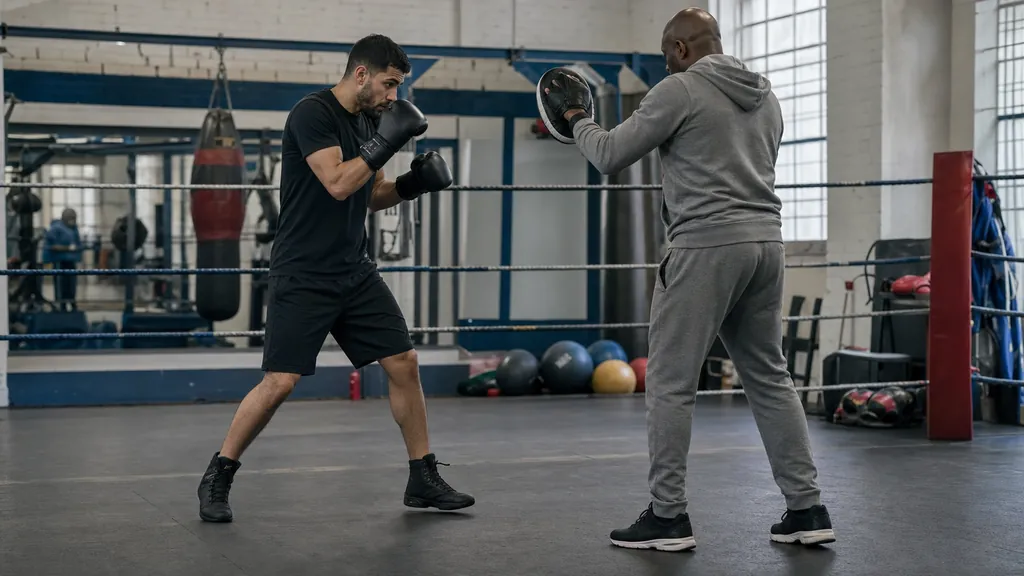
Your stance is a working position, not a pose for the mirror.
With the feet staggered, you can push, retreat, turn for a punch and keep your weight underneath you. Bring them together and those options shrink. Cross them and you must untangle them before you can answer cleanly.
A technical review of boxing performance describes punching as a linked whole-body action. Test it in the gym: a cross from crossed or narrow feet feels weak and late. Put the feet back underneath you and the punch has somewhere to start.
Moving forward without falling in
Closing distance is where many people abandon their stance.
They see the target drift away, reach with the lead foot, let the head follow and then throw the jab from a stretched position. The punch may touch, but the boxer is left leaning forward with no clean way to defend the return.
Instead, enter in small pieces. Let the lead foot make the first move. Let the rear foot follow. Only punch when you have arrived at an honest range.
Try this three-part drill on the bag or pads:
- Start just outside jab range.
- Step forward with the lead foot and let the rear foot follow.
- Jab only after your stance has settled, then bring the hand straight back to guard.
At first, pause between the step and jab so you can check the feet. Later, join the movement to the jab, but do not chase speed before the shape is reliable.
Our guide to boxing range and choosing the right punch explains why this matters. If the glove lands only because your chin travels with it, you have not found range. You have reached for it.
Moving back without running away
Retreating has the same rule in reverse.
Move the rear foot first, then bring the lead foot with you. This keeps your hips and shoulders facing the opponent, your hands useful, and your lead foot ready to step back into range if the opponent overreaches.
The common mistake is pushing the lead foot back first, which pulls the feet together. Do not hop backwards with both feet at once either. It feels fast but leaves you unable to punch or stop properly.
Use a partner drill at low intensity:
- Partner A walks forward in stance with hands up, without throwing.
- Partner B takes one short step back: rear foot first, then lead foot.
- Partner B pauses in stance and checks that the guard is still in place.
- After three retreats, Partner B steps in with a light jab and both partners reset.
The small range drill that exposes bad footwork
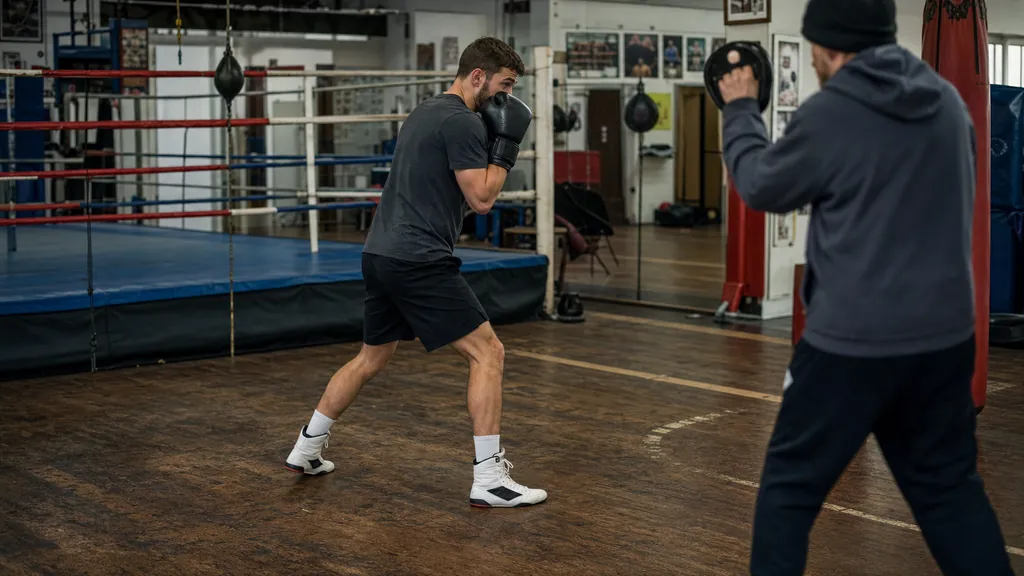
You do not need a ring to practise this properly. Put a strip of tape, a skipping rope or two cones on the floor as a simple reference line.
Start in stance with the lead foot close to the line. Step forward over it with the lead foot, bring the rear foot after it, then step back over it with the rear foot and bring the lead foot after it. Keep your hands at guard for the whole minute.
Run three one-minute rounds:
Round one: feet only
Move forward and back at walking pace. No punches. The only question is whether your feet keep their stagger and their gap.
Round two: add the jab
Step in, jab, step out. The jab should happen after the forward step has settled. Do not throw it as you fall through the line.
Round three: add a decision
A partner calls either "in" or "out" at random. Step in with the lead foot first or out with the rear foot first, then reset your guard. Keep it calm enough that the feet stay accurate.
If you trip, freeze or repeatedly touch your feet together, make the drill smaller. A one-foot movement done well is worth more than a dramatic three-foot movement that teaches panic.
Four mistakes to catch before they become habits
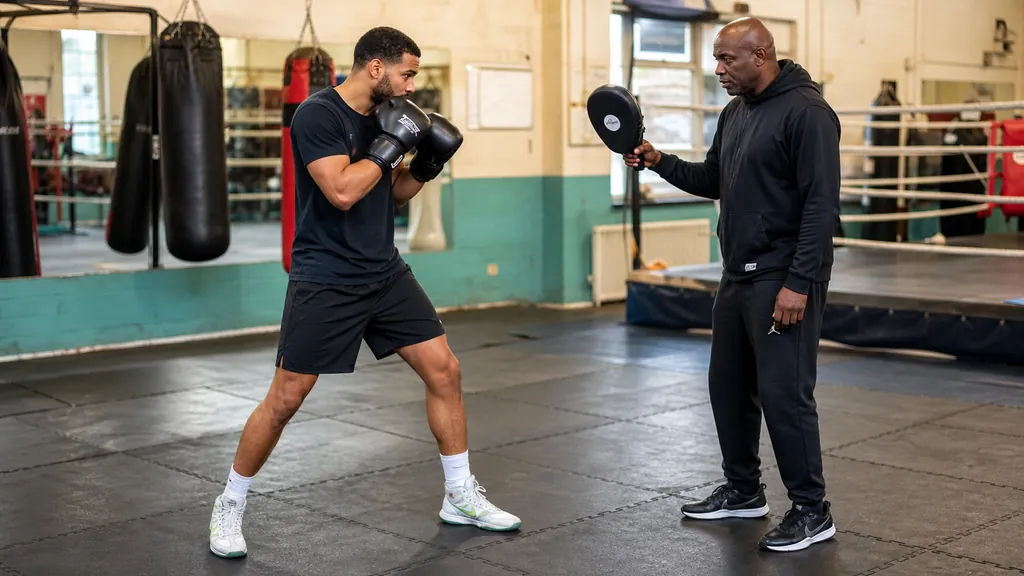
The first is letting the feet come together. This usually happens when you are trying to cover too much ground. Reduce the step and restore the gap.
The second is crossing the feet when you move backwards. You may get away with it against an empty bag. You will not enjoy it when a partner changes direction or throws as you are crossing. Rear foot first, then lead foot.
The third is reaching with the upper body. A long step followed by a long jab leaves the chin ahead of the knees. Keep the head over the base and let the feet earn the distance.
The fourth is moving without a purpose. Do not step in because you feel you should look busy. Step in to jab, to draw a reaction, to take space or to start a controlled exchange. Do not step out because you are frightened of range. Step out to make the other boxer miss, to reset or to make them overreach.
For the next layer, read our advanced boxing footwork drills. Pivots, lateral steps and angles all work better once the simple forward-and-back rule is solid.
Take the rule into partner work
The bag will let you get away with poor movement. Partner drills make the lesson honest.
Keep the first rounds non-contact. One person advances with their guard up. The other person steps back in stance, then takes one clean step in and touches the lead glove with a jab. Swap roles after a minute.
If you are in Kidbrooke, our Recreational Adults boxing classes teach footwork as part of every punch, defence and partner drill. You do not need to be quick on day one. You need a stance you can trust when the room gets busy.
H&G Team
Writer at Honour & Glory Boxing Club, a community boxing gym in Kidbrooke, South East London.
KEEP READING
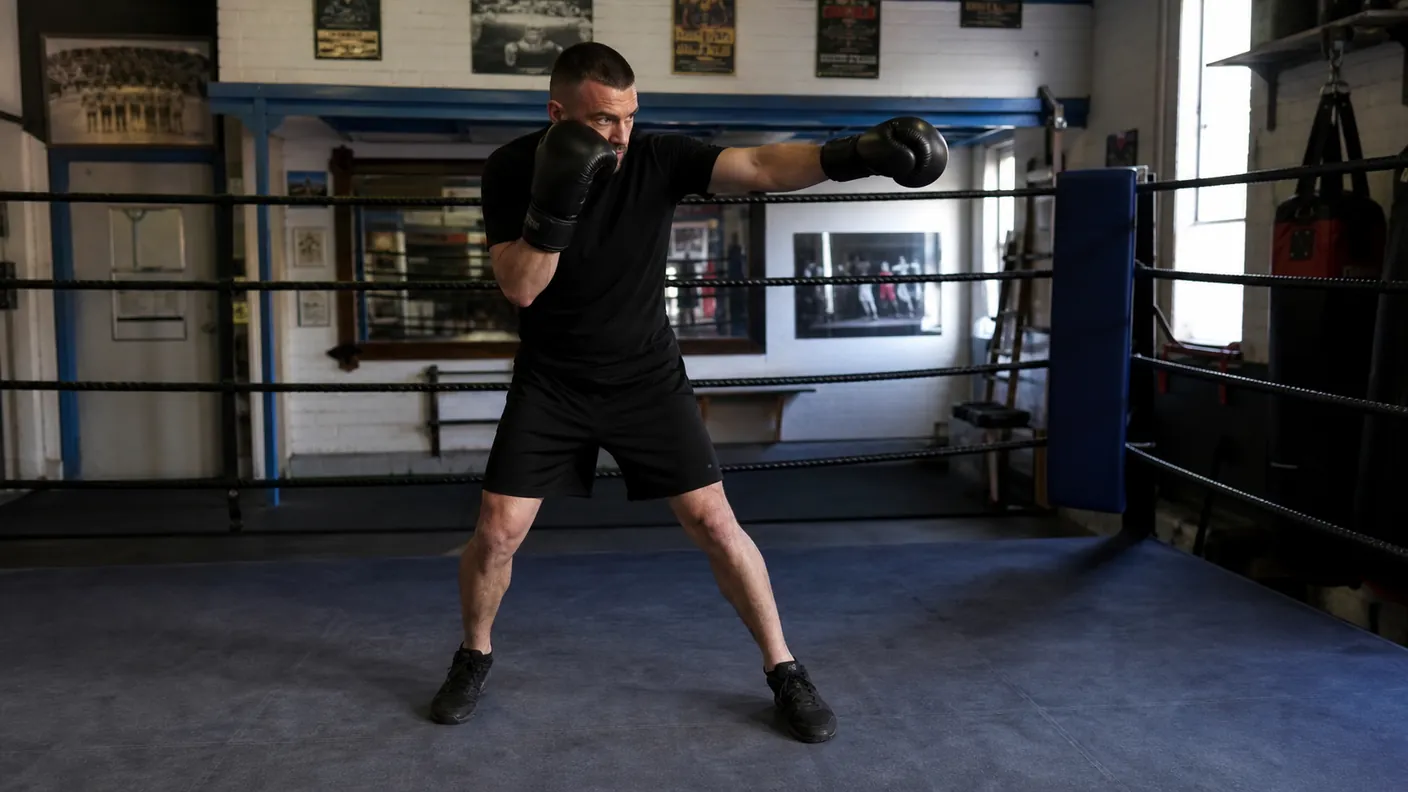
Boxing Side-Step Drill: Keep Your Stance While Moving
Use this boxing side-step drill to move across the floor, keep your stance and make the jab work without crossing your feet.
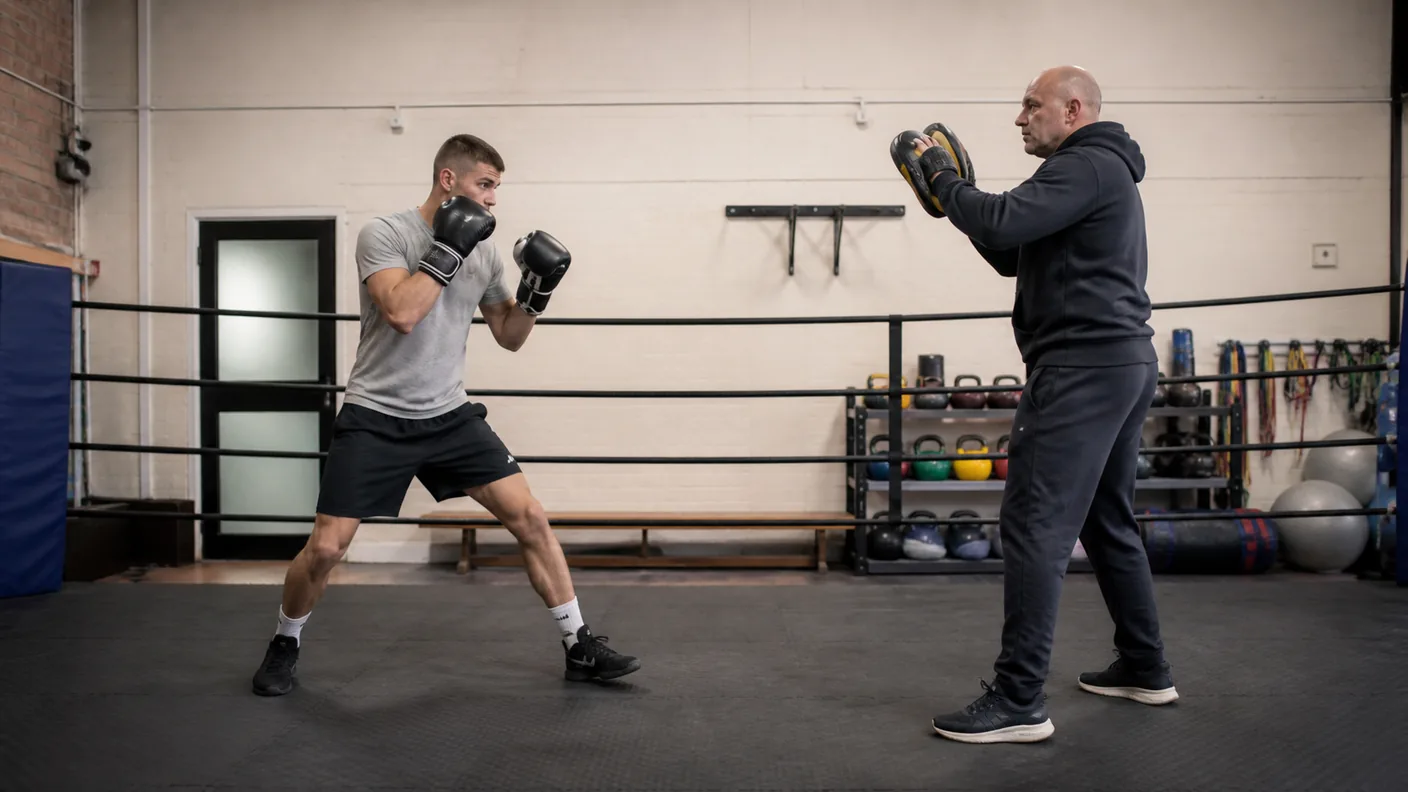
Boxing Side Steps: Move Without Drifting
Use a small boxing side step to leave the centre line without crossing your feet, wasting movement or losing the chance to punch back.
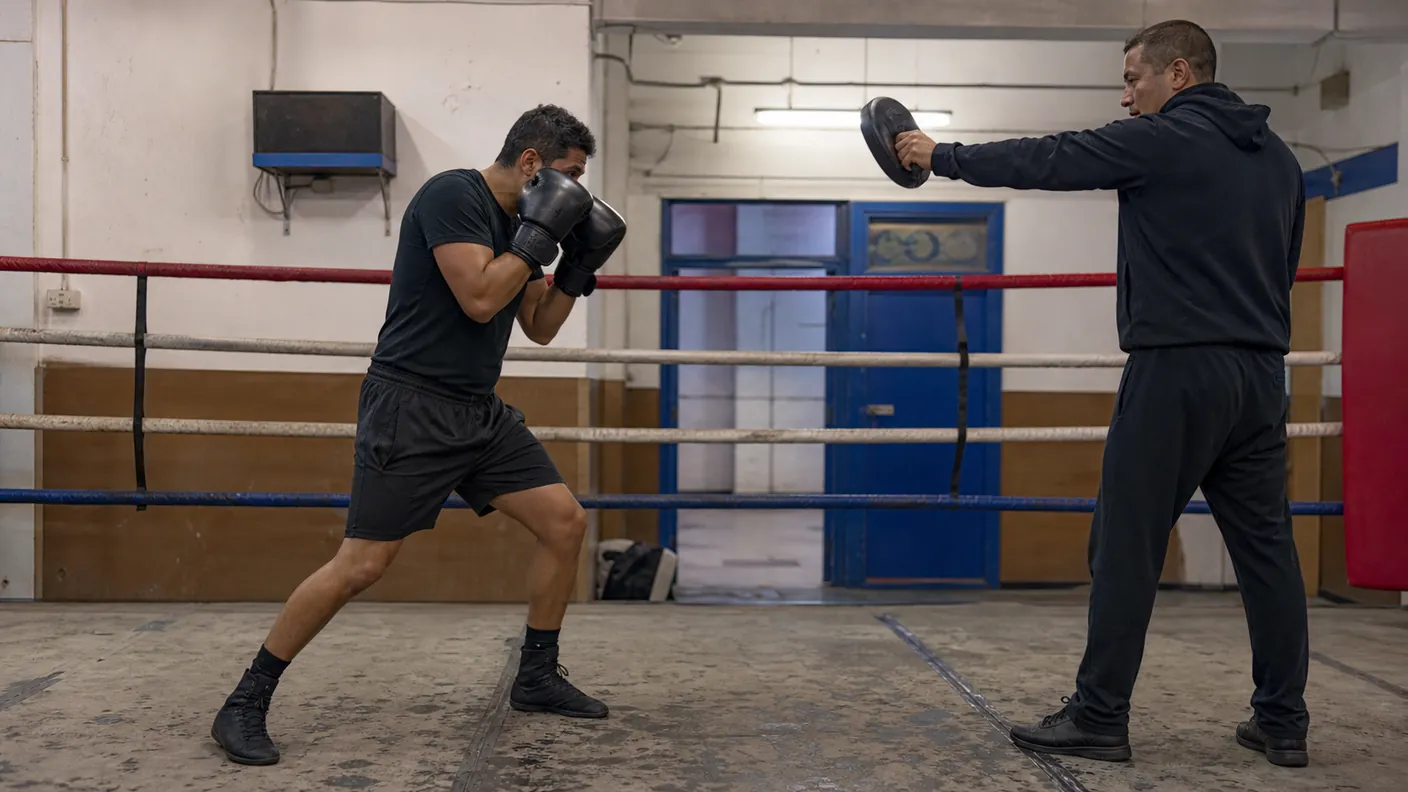
Pendulum Step Boxing Drill: Move Out and Back In
Use the pendulum step boxing drill to make a straight punch fall short, recover your range and return without crossing your feet.
Was this page helpful?
It takes one tap, and it genuinely helps.
Choose your next step
Turn this article into the right action
Some readers are ready to book. Some need the class route first. Pick the route that matches what you actually want.