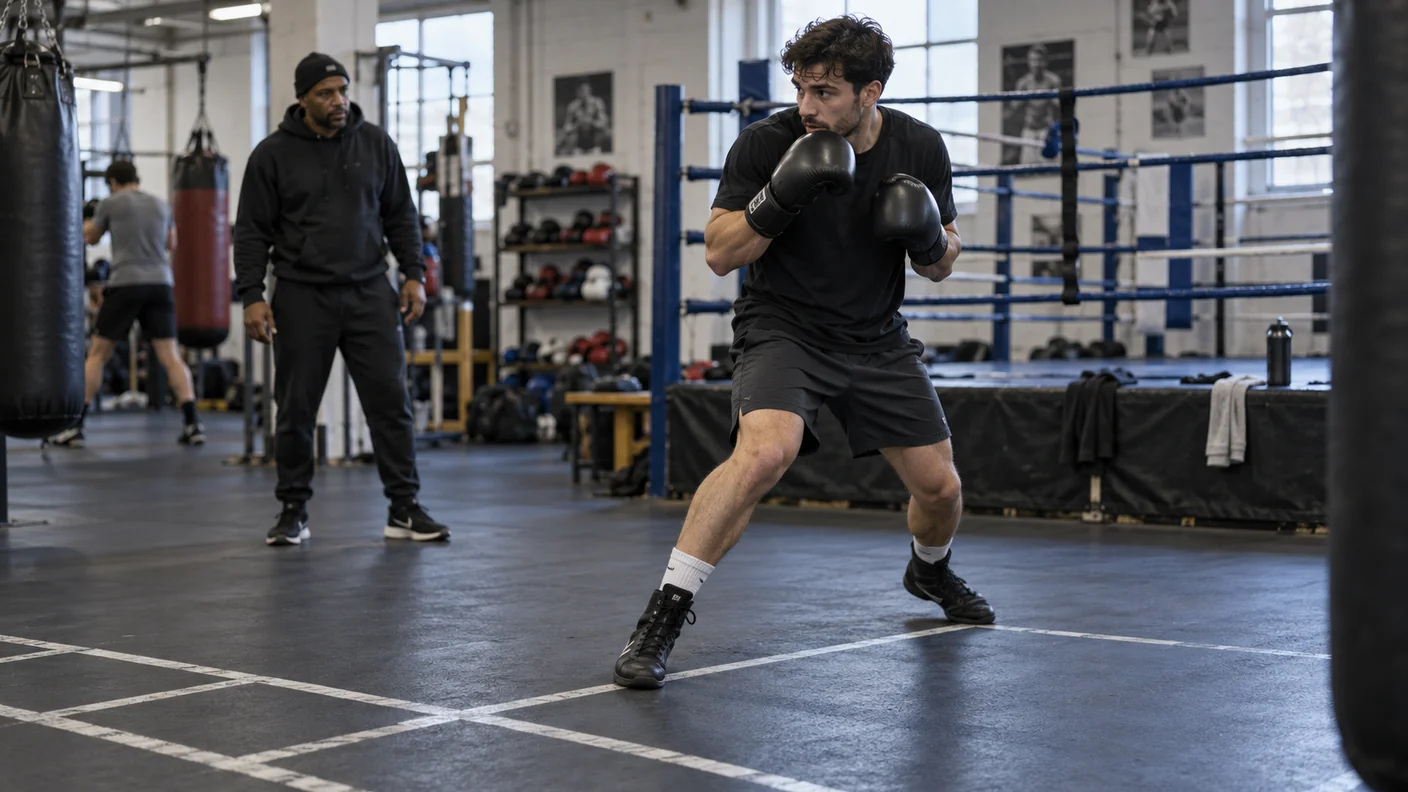
The L-step is useful when moving straight back would leave you on the same line for the next punch.
It combines two small jobs. You create space from the person in front of you, then move sideways enough that they have to turn before they can follow. The shape resembles an L on the floor, but the aim is not to trace a perfect letter. The aim is to leave pressure without crossing your feet, leaning away or running towards the ropes.
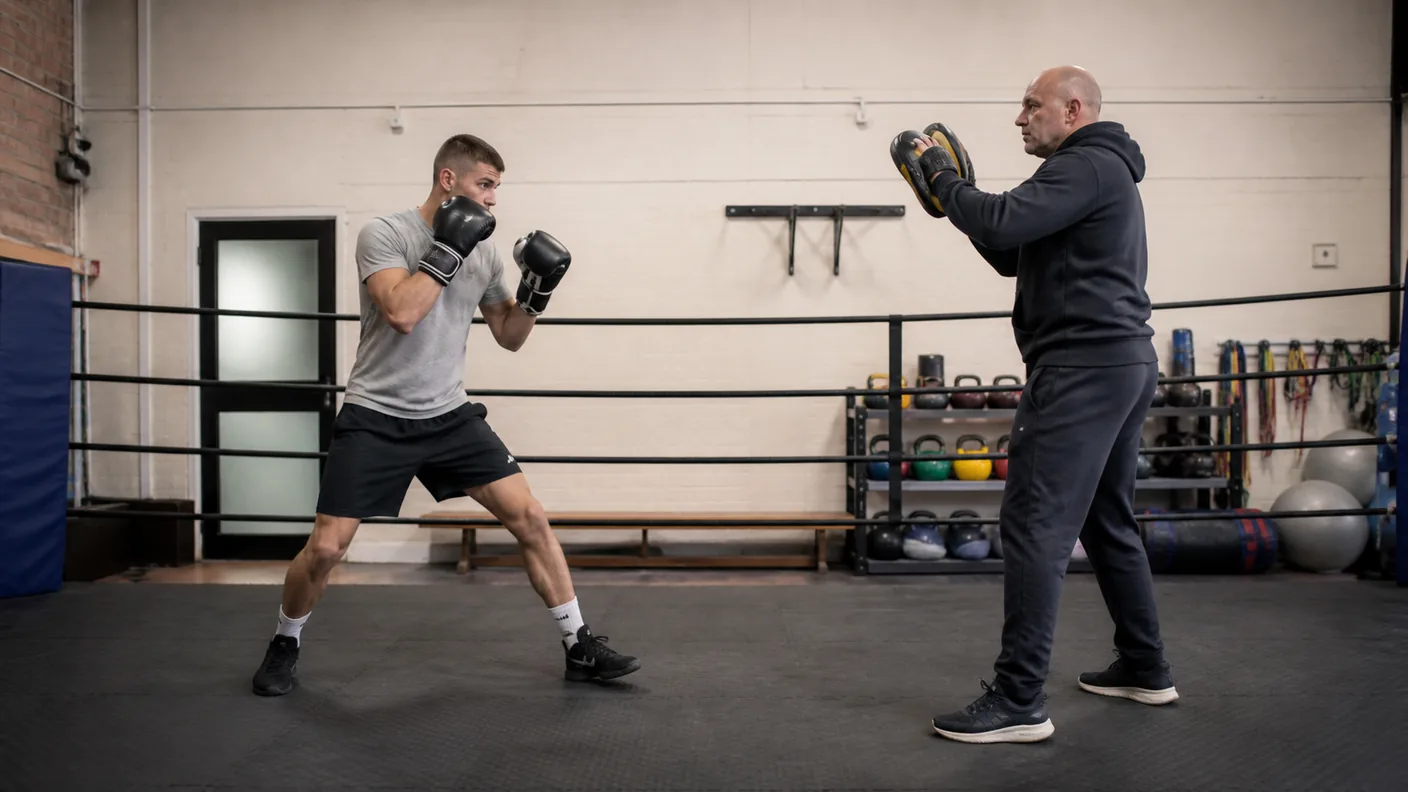
This is a footwork drill for controlled coaching, pads and shadow boxing. It is not an automatic answer to every jab or a trick to force into hard sparring. Watch the demonstration once for the exit path, then again for the stance at the finish.
The L-step moves back and off line
A normal step back creates distance. That can be enough when there is plenty of room and the other boxer has not followed strongly. The problem comes when the retreat is repeated on the same track. A patient opponent can take the centre, walk you down and keep finding your head with the lead hand.
The L-step changes that route. For an orthodox boxer, the lead foot begins a short retreat while the rear foot moves out to the rear-side angle. The lead foot then settles into the new stance. Southpaws reverse the picture, but the purpose stays the same: get out of range and away from the original line without tangling the feet.
Do not turn it into a leap. The movement needs only enough room to make the next punch miss and make the other boxer adjust. If you finish so far away that you cannot see the range, have to shuffle before you can jab, or end near the ropes, the exit was too large.
England Boxing puts balance, stance and controlled movement at the base of technical development in its coaching handbook. That is the standard for this drill. At the end of the movement, you should still be able to cover, jab or take another small step without rebuilding your feet.
Start with the rear foot, not a cross-over
The detail that makes the drill work is the rear-side step. When pressure arrives, it is tempting to throw that foot across the body and flee. That can move you quickly for one moment, but it closes the stance and leaves you unable to stop if the other boxer changes direction.
Instead, keep the feet apart. Move the rear foot out towards the available side as the lead foot makes a modest retreat. Then bring the lead foot into a normal staggered stance. The feet do not need to be parallel and they do not need to travel far. They need to finish in a position from which both hands still have a job.
Keep the knees soft and the head between the feet. Your upper body should not fall backwards as though the floor has moved underneath you. Let the feet create the distance. A long lean lifts the chin, makes the rear hand late and turns a small exit into a slow recovery.
Our guide to boxing side steps without drifting is useful preparation. The L-step uses a different route, but it shares the same rule: the feet move the body, rather than the head escaping first and the feet chasing after it.
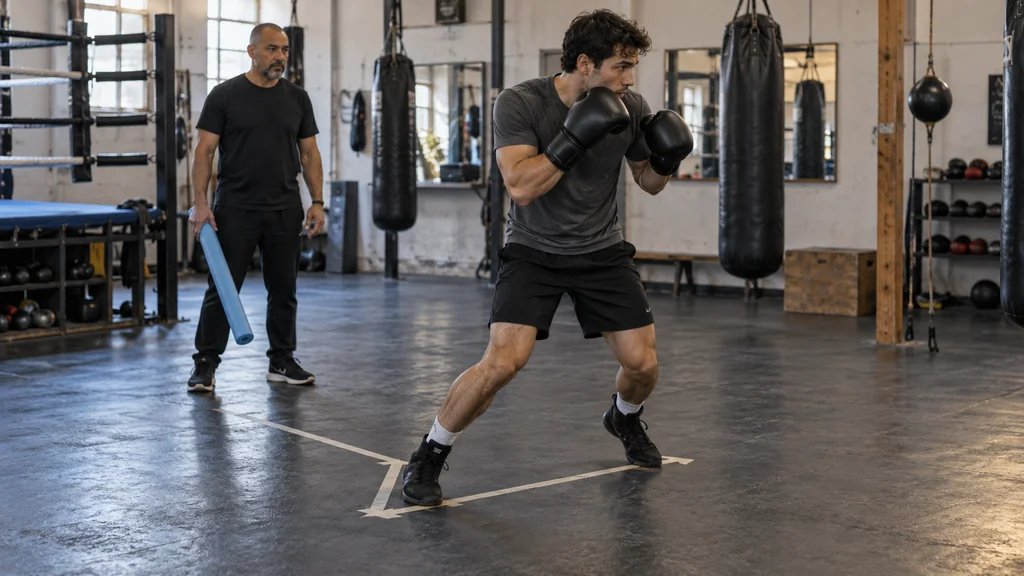
Use the L-step when there is room behind you
The L-step needs space. It works best when you are at the edge of range, you can see an advancing opponent and there is open floor behind and beside you.
It is a poor choice with your back already close to the ropes. It is also a poor choice when the other boxer is close enough to throw short hooks, or when you have not seen which way they are moving. In those positions, a compact guard, a small pivot, a clinch under a coach's instruction or a simpler reset may be safer.
A systematic review of anticipation in combat sports found that more skilled performers make better use of early visual information. In gym terms, notice the step and shoulder movement before the punch is close enough to make you rush. The L-step is a useful decision when it creates room early. Used late, it can become a scramble.
Do not choose the direction from habit. A coach can set a clear open side at first. Later, a partner can take one controlled step forward and show either an open lane, a second line that asks for a cover, or no follow-up at all. You are learning to see whether an exit exists, not memorising a dance.
A three-round L-step drill
Use floor tape, cones or two quiet points on the gym floor. Start without punches. One minute per round is enough while you are learning the foot order.
Round one: mark the path
Stand in your normal stance with a strip of tape marking the original line. Take a small lead-foot retreat, move the rear foot out to the side, then settle the lead foot into stance.
Freeze for one count. Check that the feet have not crossed, your stance still has width and both gloves remain near the cheeks. Repeat in the opposite direction only if a coach has shown you the matching foot order. The goal is not symmetry. It is a usable finish on both sides.
Round two: add a slow forward cue
Ask a coach or partner to take one walking-speed step forward. There are no punches yet. As they enter, take the L-step towards the agreed open side and finish in guard.
The partner should stay at a safe distance and stop after one step. This round teaches the timing of the exit. If you wait until their chest is on top of you, the L-step will be rushed. Start when the distance is still yours to manage.
Round three: add one choice at the finish
Now the coach can show one of three clear pictures after the exit: a mitt at honest jab range, a raised glove line that asks for a compact cover, or no target.
On the mitt, place one light jab and bring it home. On the glove line, cover and take another small movement only if space remains. With no target, simply reset. Do not force a rear hand because the footwork looked tidy. The exit has worked if it left you able to choose, not if it ends with a predetermined punch.
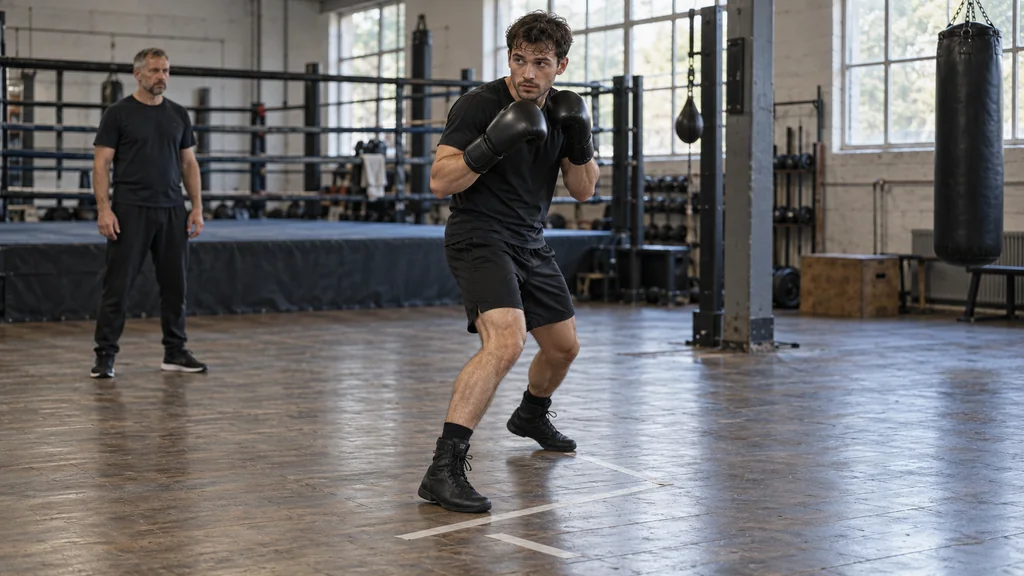
Four mistakes that turn an exit into a problem
The first is travelling too far backwards. A large retreat gives up ground and often puts your back near the ropes. Take only the distance needed to make the other boxer adjust.
The second is crossing the rear foot behind or in front of the lead foot. That may feel quick until you need to stop. Keep enough width between the feet that you could jab, cover or change direction at once.
The third is dropping the hands during the move. Footwork is not a break from defence. Keep the rear glove close to the cheek and let the lead hand return to a useful guard as the feet settle.
The fourth is choosing the L-step after every forward movement. A boxer who notices the same exit every time can step across, cut the ring or wait for the end of the route. Mix it with an ordinary step back, a small pivot or a compact guard. The other boxer should still have to read you.
For a different answer when the straight line is the main problem, our slip-then-pivot boxing exit drill joins a small head movement to a turn. The L-step is simpler when there is space, but both drills ask the same final question: have you left the exchange in a stance that still works?
Where this fits in training
Use the L-step after a warm-up and before fast bag rounds or technical partner work. It suits boxers who can already step back, side step and hold a basic guard. Beginners can practise it with floor tape and no partner. More experienced boxers can add clear, slow cues once a coach is happy with the finish.
Keep the partner work calm. No hard shots, no surprise swings and no race to land after the exit. The useful lesson is that you can move away from pressure without becoming a stationary target on a new line.
For adults in Kidbrooke, Greenwich and nearby, our Recreational Adults boxing classes use controlled pads, footwork and partner drills to build clean exits before pace and pressure increase.
The coaching cue is simple: make room, take the angle, finish in stance.
H&G Team
Writer at Honour & Glory Boxing Club, a community boxing gym in Kidbrooke, South East London.
KEEP READING
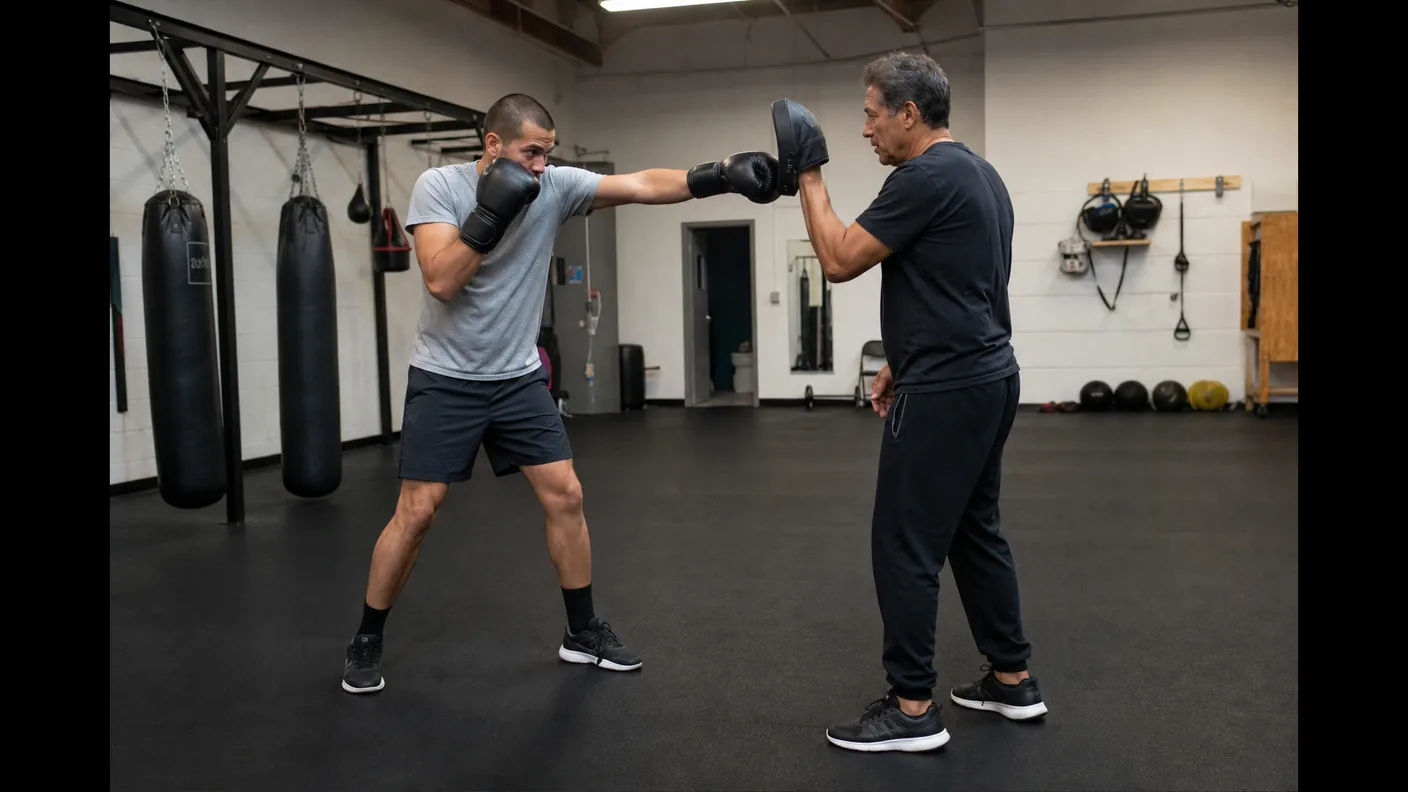
Angle Step Boxing Drill: Stay in Range
Use a compact angle step to keep your punches in range without crossing your feet or chasing a moving partner.
Boxing Side Steps: Move Without Drifting
Use a small boxing side step to leave the centre line without crossing your feet, wasting movement or losing the chance to punch back.

Step-Back Shield: Boxing Defence Without Running
Use a short step back with a compact lead-hand shield to create safer space against pressure without losing your stance.
Was this page helpful?
It takes one tap, and it genuinely helps.
Choose your next step
Turn this article into the right action
Some readers are ready to book. Some need the class route first. Pick the route that matches what you actually want.