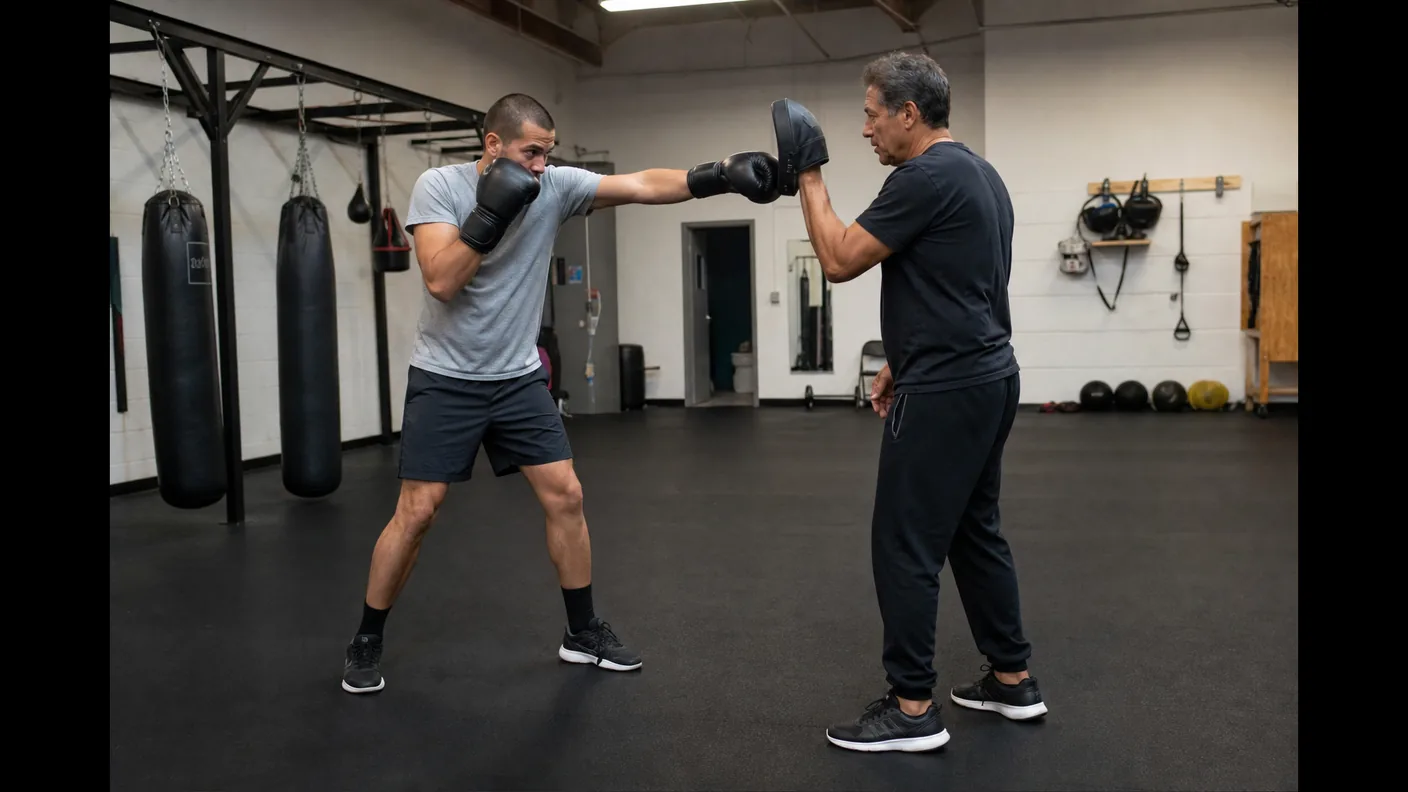
A side step can make a boxer safer, but it can also put them too far away to do anything useful. You move neatly, the other person is still in front of you, and your jab now falls short. That is not a winning position. It is just moving for the sake of moving.
The useful version is a compact angle step. You take a short step off the line, keep your stance underneath you, and remain close enough to punch. The goal is not to dance around a partner. It is to make them turn, then meet them with a balanced jab or one-two while they are still resetting.
The video below shows the basic movement. Watch the feet first, then use the drill after it to make the movement your own.
This is a small skill, but it changes how your boxing feels. You stop following a moving target in a straight line and start arriving where their guard has to catch up.
What the angle step is for
An angle step is a short diagonal adjustment made while you stay in stance. You are not trying to cross the room. You are changing the line just enough that the other boxer needs to turn before they can line you up again.
For an orthodox boxer moving left, the lead foot moves first, a short distance out and forward. The rear foot follows just enough to rebuild the stance. The opposite direction follows the same rule: the foot nearest the direction begins, then the other foot restores your base. Southpaws reverse the picture, not the principle.
The step matters when the other person gives ground, circles away or waits in front of you behind a tight guard. A straight chase lets them keep seeing the same attack. A small angle makes them find you again.
It is not a pivot. A pivot turns you sharply around the lead foot. It is not a lunge either. A lunge throws the head past the feet and leaves the rear foot behind. The angle step is quieter than both. It puts you in a slightly better lane while keeping both hands available.
Keep the opponent in your honest range
The whole point is to stay close enough for clean punches.
If you step too far sideways, your shoulders may still face the partner but your glove is no longer there. You have won a little space and lost the chance to use it. If you step too far forward, you are back to chasing, only at a different angle.
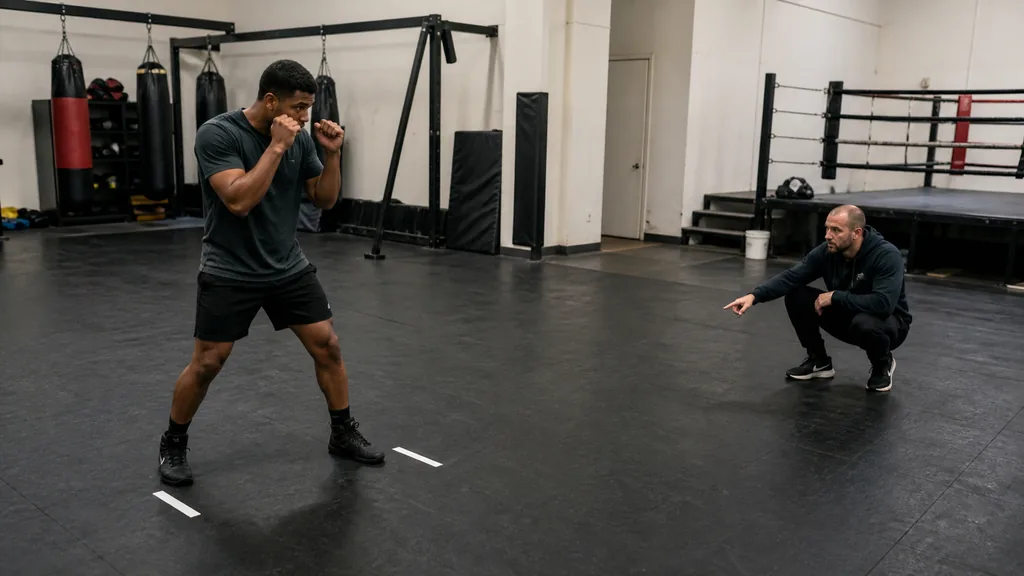
Start with an honest jab test. From your normal stance, extend the jab without leaning your chest over the front knee. That is your long range. Now make one short angle step and throw the jab again. If you have to reach for the mitt, the step was too large or too square. If your feet finish crossed, the step was not controlled enough to use under pressure.
Use a simple cue: move a shoe length, not a postcode. Most beginners make this harder by trying to create a dramatic angle. The useful gap is often small enough that a coach has to point it out. Your partner turns, their feet pause for a moment, and your straight shots still have a sensible route.
A study of novice boxing students found that technical practice progressed from static work into punches combined with displacement and partner drills. That order makes sense in a real gym too: get the stance right before you ask the feet and hands to work together.
The jab-angle-jab drill
This is the best place to start because it keeps the task simple. You are not trying to invent a clever combination. You are teaching the feet to move without the guard disappearing.
Set a partner or coach in front of you with one mitt at head height. Start at the edge of jab range.
- Touch the first jab lightly. It can land on the mitt or make the partner cover.
- Take one short angle step as the partner gives a small side step.
- Bring the trailing foot with you so you finish in stance.
- Throw the second jab from the new line.
- Freeze for one second and check your feet, chin and rear hand.
The first jab is there to occupy their eyes. The step changes where you are standing. The second jab tells you whether the movement kept you in range. If the second jab needs a stretch, reduce the step. If you finish close enough but square, bring the rear foot with you sooner.
Do this slowly for a round before adding any power. Good footwork needs accurate repetitions, not a high heart rate and a pile of poor ones.
Add the one-two only when the feet stay tidy
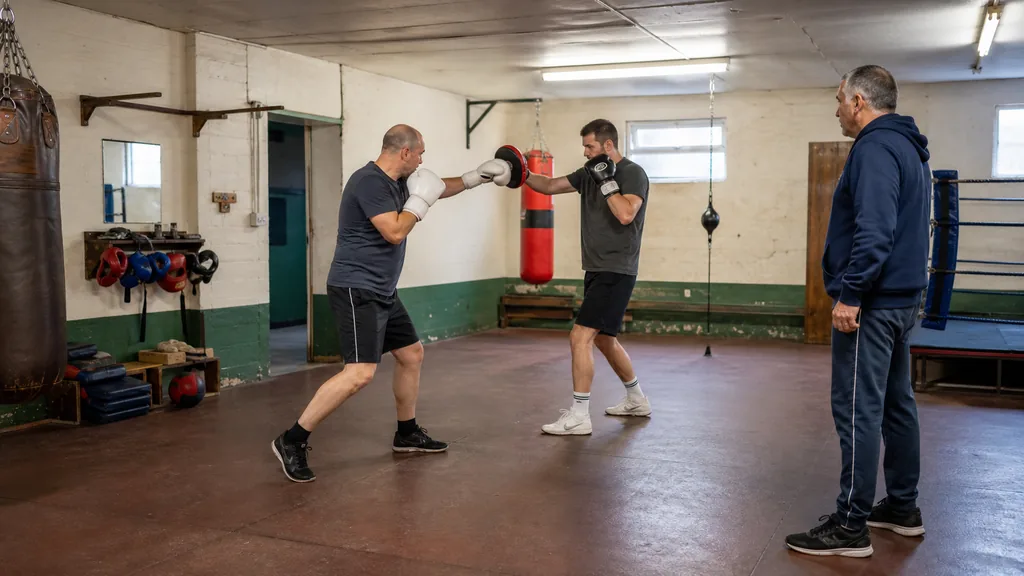
Once the jab-angle-jab drill feels ordinary, turn the second jab into a one-two. The first jab still fixes the partner in place. The step still gives you a new line. Then the jab-cross comes from a position where your hips and shoulders are connected to the floor.
Do not turn the cross into a reach. If the rear shoulder has to chase after your front foot, you have taken too much ground. The cross should feel like a normal cross, just delivered after a better step.
This is where many people rush. They want the movement to look quick, so they step hard, punch hard and end with their feet miles apart. Slow the drill down until the finish is boringly stable. A clean one-two after a small step will travel into sparring. A spectacular jump that leaves you square will not.
A systematic review of anticipation in combat sports found that more skilled athletes generally picked up early cues and responded faster than less experienced athletes. The lesson for this drill is practical. Do not wait until your partner has fully escaped. Notice the first turn or side step, make your own small adjustment, and arrive before the distance is gone.
Use the heavy bag to check the shape
The heavy bag cannot turn away, but it is still useful for checking whether your feet support the punch.
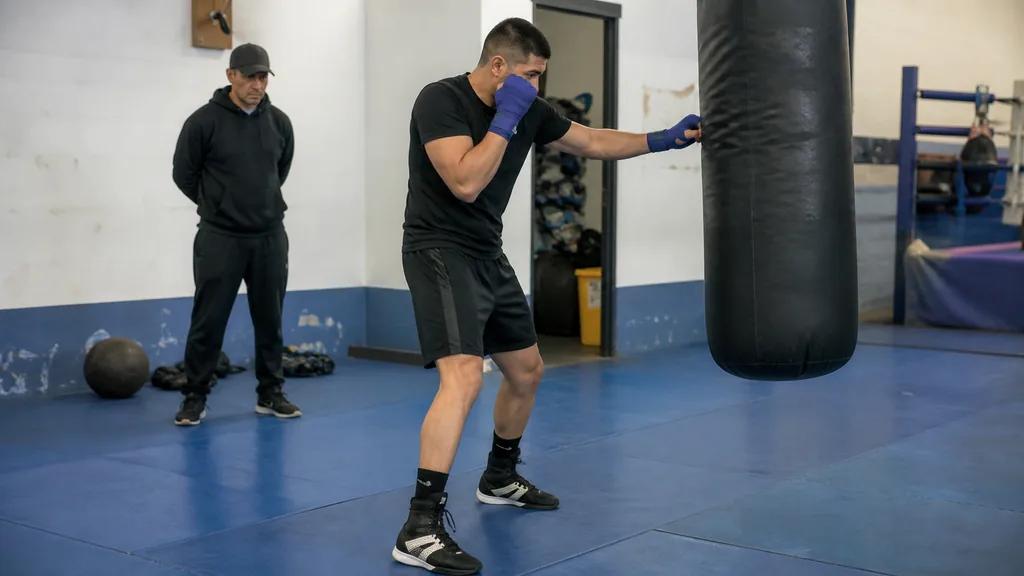
Stand at normal jab range. Jab, take one compact angle step, then jab-cross. After the cross, do not admire the combination. Look down briefly and ask two questions: are your feet still apart, and could you throw again without rearranging them?
If the answer is no, reset and make the step smaller. The bag is honest about this. A large side step often leaves you swinging across it instead of punching through it. A compact angle keeps the shoulder behind the fist and gives you a route out after the combination.
Try three two-minute rounds:
- Jab-angle-jab at low speed, with a full reset after every repetition.
- Jab-angle-jab-cross, keeping the same short step.
- Jab-angle-jab-cross, then leave on a second controlled step rather than standing in front of the bag.
The last round matters. Footwork is not finished when the punch lands. You still need enough balance to defend, move or start another exchange. Our guide to the three phases of a boxing exchange explains why entry, work and exit belong together.
Three mistakes that ruin the drill
The first mistake is stepping across your own stance. If your lead foot travels so far that the rear foot has to cross over to catch up, stop. You have changed direction but lost your base. Keep the step short enough that the rear foot can follow naturally.
The second is moving without the hands. A boxer who shuffles sideways with both gloves low is easy to read and easy to catch. The jab does not need to be hard, but it gives the step a job. It makes the partner see something while you take the new line.
The third is treating every side step as an escape. Sometimes you do need to leave range, cover up and reset. That is fine. This drill has a different job. You are moving just enough to stay dangerous.
For a wider look at movement, read our advanced boxing footwork drills. For entering from further away, pair this drill with how to close distance in boxing. The angle step sits between those two ideas: you have reached range, and now you need to stop the other person walking you onto a predictable line.
The coaching cue
Step small. Keep the stance. Punch from the new line.
Do not chase a dramatic angle. Take enough space to make the other boxer turn, then be ready before they have settled. It is a simple piece of movement, but it makes your jab more useful and your pressure less desperate.
If you train in Kidbrooke, Greenwich or nearby, our Recreational Adults boxing classes use pad rounds, bag work and controlled partner drills to make footwork useful rather than decorative.
H&G Team
Writer at Honour & Glory Boxing Club, a community boxing gym in Kidbrooke, South East London.
KEEP READING
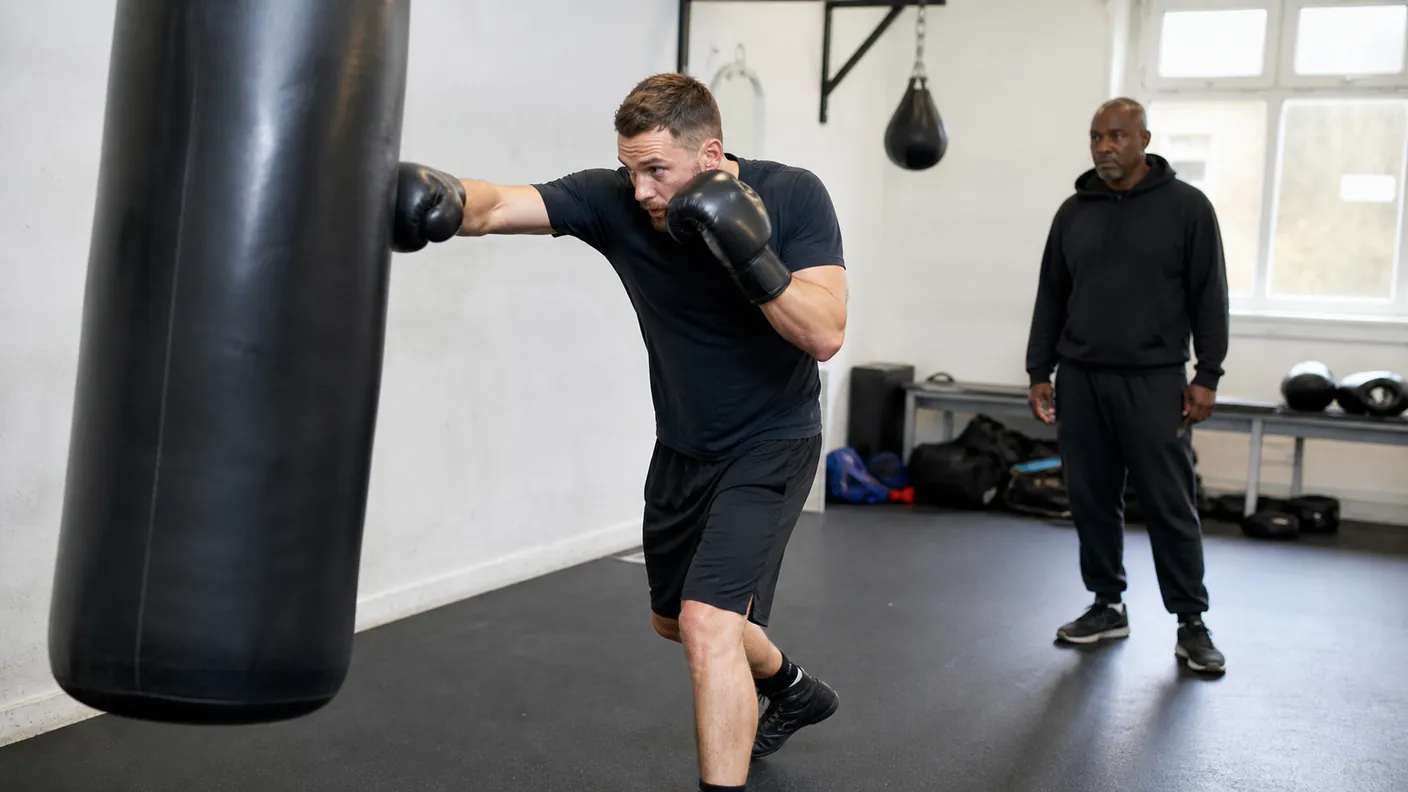
Angle Step to Rear Uppercut Boxing Drill
Use a small angle step after a lead hook to create room for a compact rear uppercut without losing your stance or chasing the target.
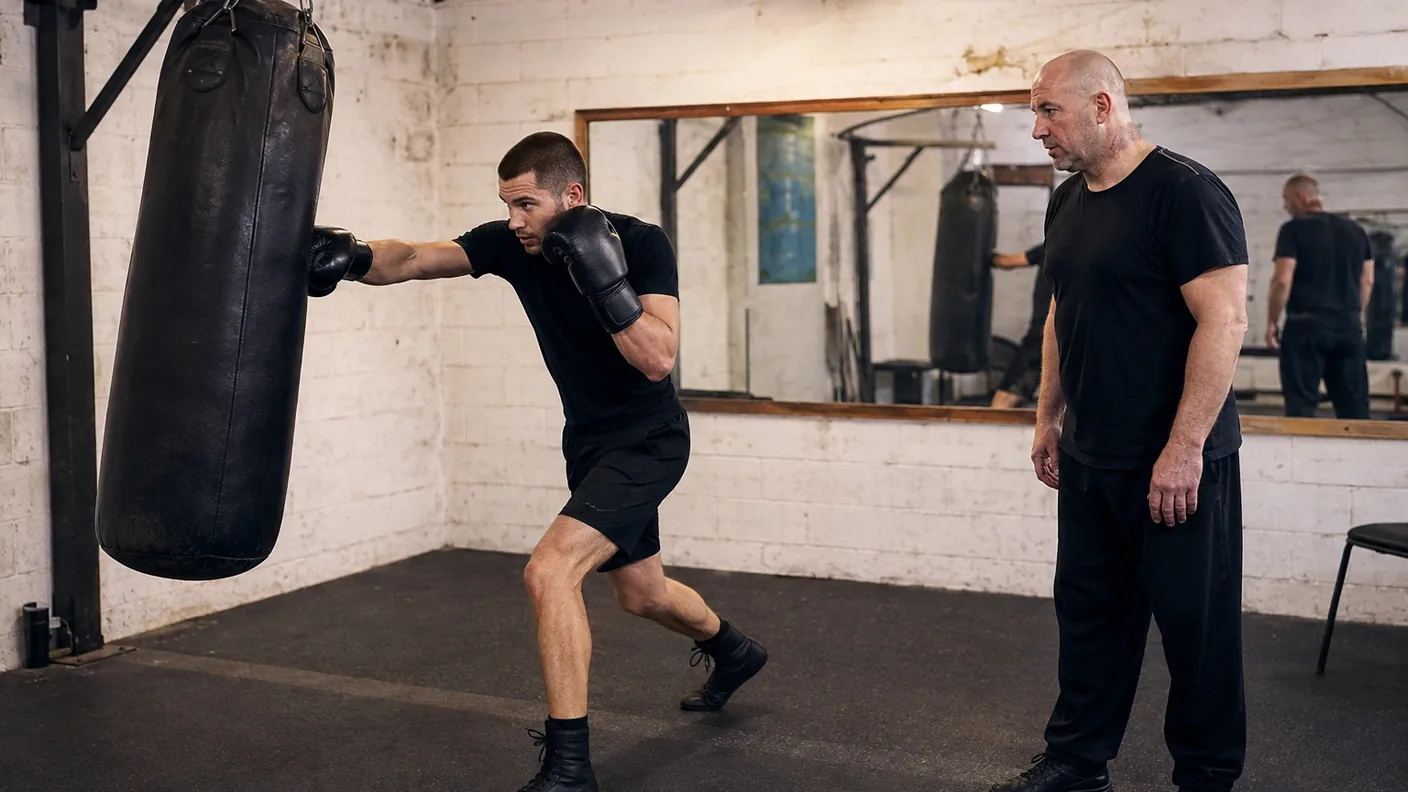
Jab Step-Across Cross: A Boxing Angle Drill
Use a compact jab step-across to open a rear-hand angle without crossing your feet, losing your guard or reaching for the cross.
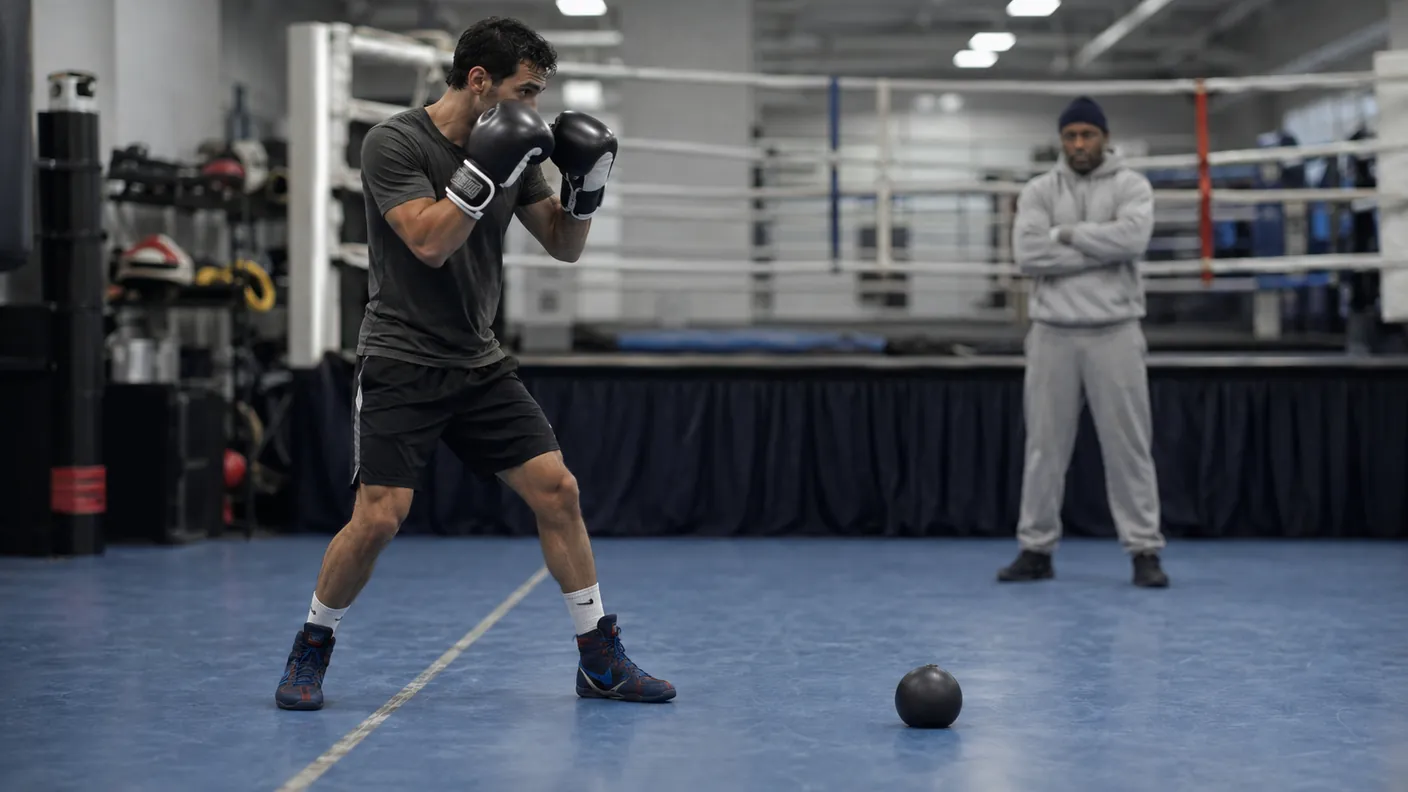
Boxing Footwork Ball Drill for Better Range
Use one small ball to practise stepping into range, seeing the distance and leaving without crossing your feet or reaching.
Was this page helpful?
It takes one tap, and it genuinely helps.
Choose your next step
Turn this article into the right action
Some readers are ready to book. Some need the class route first. Pick the route that matches what you actually want.