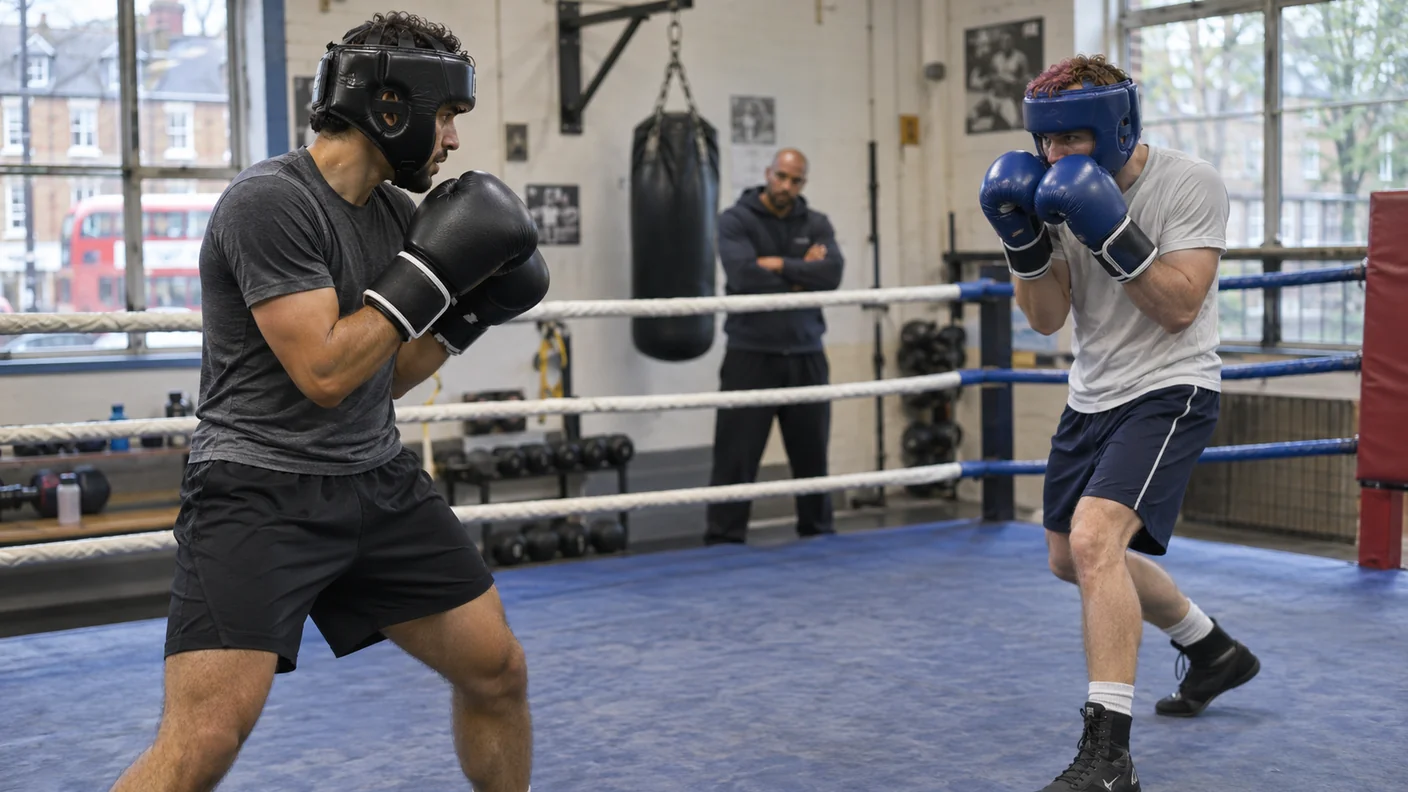
A step back can solve a problem for one beat. An angle can solve the next one.
That difference matters when someone is walking you down. Many newer boxers take two or three straight steps back, keep their guard closed and wait for the pressure to stop. It rarely does. The other boxer simply follows the same line, gets closer and eventually leaves you with less room behind you.
A more useful answer is compact: take one short step back to make the first entry miss or fall short, then turn out before the other boxer can build a second attack. This is not a flashy escape and it is not a counter every time. It is a way to leave the line while your stance is still alive.
Watch the short drill below once. Pay attention to the landing after the retreat. The important question is not whether you moved away. It is whether you finished somewhere you could still jab, cover or step again.
Why a straight retreat can make pressure worse
A straight retreat is not always wrong. If you need a little room, it can be the safest first move. The trouble starts when it becomes the only move.
A forward-moving boxer can read a repeated backward line. They do not need to throw a clever combination. They can take their next step, put a jab in front of you and make you retreat again. Your feet may be moving, but they are moving to their rhythm rather than yours.
The short step back changes the first distance. The angle changes the second picture. After you have made the initial shot fall short, step to a side where you are no longer directly in front of the other boxer. They now need to turn before they can attack cleanly again.
That is the real value of the drill. You are not trying to disappear across the gym. You are trying to make the other boxer reset while you stay balanced enough to make a calm choice.
The retreat needs to be small and complete
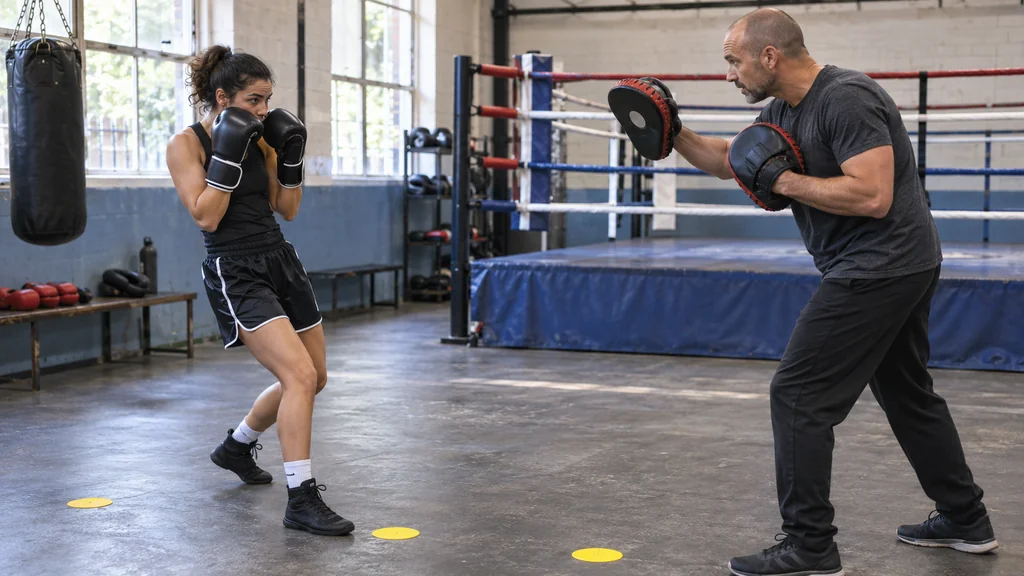
For an orthodox boxer, the rear foot moves first when you step back. The lead foot follows just enough to restore the usual distance between your feet. Southpaws reverse the picture.
Do not pull the chest away while the feet stay behind. Leaning can make your head feel farther from a punch, but it leaves your weight on the rear edge of the stance and makes the next movement slow. Let the legs create the room. Keep the head between the feet and keep your eyes on the person in front of you.
The best first repetition has no punch attached. A partner takes one slow step forward with a high guard. You step back once, bring the lead foot after it and freeze. If you cannot jab, cover a straight line or take a side step without rearranging your feet, reduce the distance of the retreat.
The England Boxing coaching handbook puts stance, balance and controlled progressions at the centre of skill development. That is the standard for this drill. A backward movement is only useful when it leaves you ready for the next job.
Take the angle after the feet have settled
The angle comes after the retreat, not during a panicked jump backwards.
Once the rear foot has moved and the lead foot has restored your stance, take a short step to either side. The direction depends on the range, the other boxer's lead hand and the cue your coach has given. At first, do not attach a complicated rule to it. Learn to leave the central line without crossing your feet or swinging your head past the stance.
Keep the turn modest. A large sideways jump can make you feel safe, but it often leaves the rear foot behind, the chin high and no clean route to punch. The useful angle is usually just enough to put your body out of the centre while keeping both gloves responsible.
If a partner has stepped into range with a straight line, the angle can make them turn to find you again. If they have already closed the space with hooks or body shots, cover and reset instead. You do not have to force a pivot because it was the plan before the round started.
Our slip then pivot boxing exit drill starts from a different defensive answer. The same principle applies here: the exit works because it leaves you able to see, guard and move, not because it looks busy.
Build the step-back and angle-out drill in three rounds
Use gloves and a coach, or a trusted partner who understands this is slow technical work. There is no score and no need for hard contact.
Round one: step back and freeze
Stand at the edge of jab range. Your partner takes one quiet step forward without throwing. You make one short step back, rear foot first, then bring the lead foot after it.
Freeze for a count of one. Check that the stance is staggered, your knees are soft and both gloves are near the face. If you have stepped far enough that the partner cannot reach you in two normal steps, the retreat is too large for this drill.
Repeat for one minute. Do not add a counter. The first round is about arriving in a useful position rather than proving that you can move quickly.
Round two: step back and turn out
Use the same slow forward cue. After the short retreat has finished, step a small distance to the lead side or rear side as your coach directs. Your partner holds position while you finish the angle and return to guard.
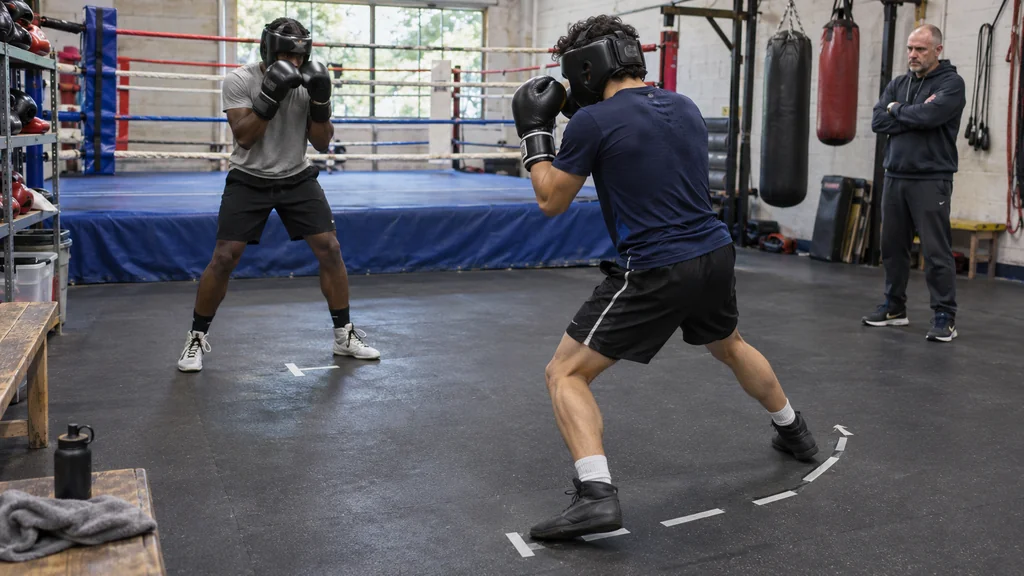
Floor tape can help at this stage. Put a short line behind your starting position for the retreat, then two small diagonal lines for the exits. The lines should not turn the drill into choreography. They simply show whether your feet are landing on their own lanes or crossing underneath you.
Keep the hands quiet. A wide arm swing can pull the torso back into the line you are trying to leave. The feet make the angle. The guard makes sure you are not exposed while doing it.
Round three: add one honest choice
Now the partner can show one of three clear cues after the first forward step: hold the high guard, show a single slow jab line, or stop outside range.
Against the high guard, step back, angle out and reset. Against the jab line, use the defensive answer your coach has taught before taking the exit. If the partner stops outside range, do not manufacture a counter. Hold your stance, use a measured jab only if the target is real, or start again.
A review of boxing performance describes punching, movement, defence and tactical decision-making as connected parts of the same task. That is why the final round needs choices. A sound exit is not one memorised route. It is a position that gives you more than one sensible answer.
Do not turn the exit into a race
The first common mistake is taking too much ground. If the rear foot flies back and the lead foot chases after it, you have escaped the immediate moment but given the other boxer a long lane to follow. Start with a step smaller than your instinct suggests.
The second is leaning away. Your upper body does not need to perform the retreat. Keep the chest over the stance and let the feet handle the distance. A lean makes the following angle slow and often lifts the chin.
The third is stepping across your own feet. A small crossing moment may happen in more advanced footwork, but it is not the aim here. Finish with a normal staggered stance. If you cannot throw a controlled jab from where you land, your exit needs simplifying.
The fourth is assuming an angle earns a punch. Sometimes it does. Often, the best result is making the other boxer turn while you take your own space back. Our backward one-two drill is useful when the range genuinely gives you a measured return. This drill comes first: leave the line before you decide whether the return is there.
Where this fits in ordinary training
Use this after your warm-up or as a short technical block before harder bag work. It suits adults who already know a basic stance, guard and step-back movement. It does not need open sparring to be useful.
On pads, a coach can walk forward with a mitt at a safe pace and call the exit side. With a partner, agree one forward cue and one speed before the round starts. The defender should be able to stop at any point, cover, and explain where their feet have landed.
For adults in Kidbrooke, Greenwich and nearby, our Recreational Adults boxing classes use pad work, bags and controlled partner drills to build this habit without throwing beginners into hard exchanges. The goal is simple: do not run in a straight line, and do not stay in front of someone who has already started walking you down.
The coaching cue is simple: make the first step miss, take the angle, finish in stance.
H&G Team
Writer at Honour & Glory Boxing Club, a community boxing gym in Kidbrooke, South East London.
KEEP READING
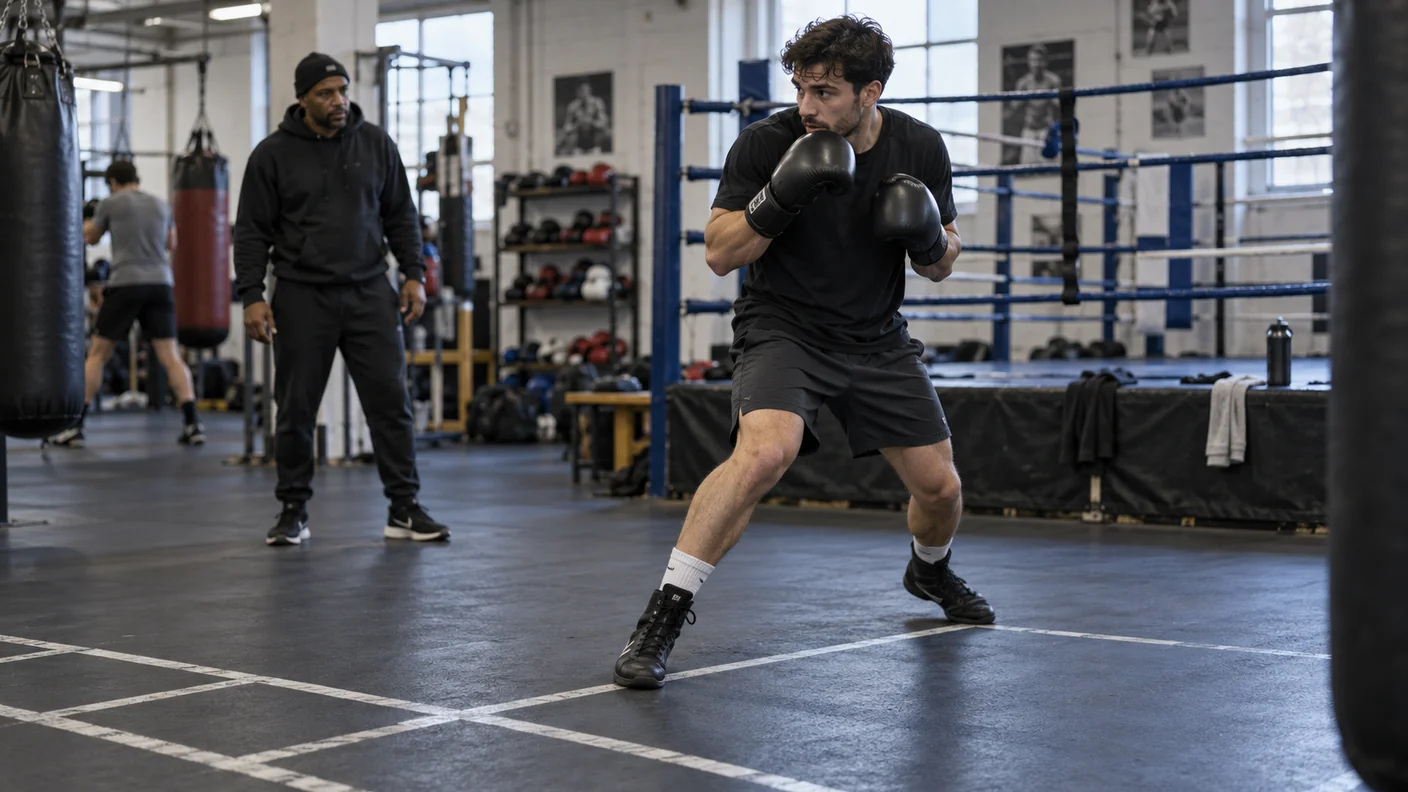
Boxing L-Step: A Calm Angled Exit
Use a compact boxing L-step to leave pressure at an angle, keep your stance and avoid running straight back.
Step-Back Shield: Boxing Defence Without Running
Use a short step back with a compact lead-hand shield to create safer space against pressure without losing your stance.
Angle Step Boxing Drill: Stay in Range
Use a compact angle step to keep your punches in range without crossing your feet or chasing a moving partner.
Was this page helpful?
It takes one tap, and it genuinely helps.
Choose your next step
Turn this article into the right action
Some readers are ready to book. Some need the class route first. Pick the route that matches what you actually want.