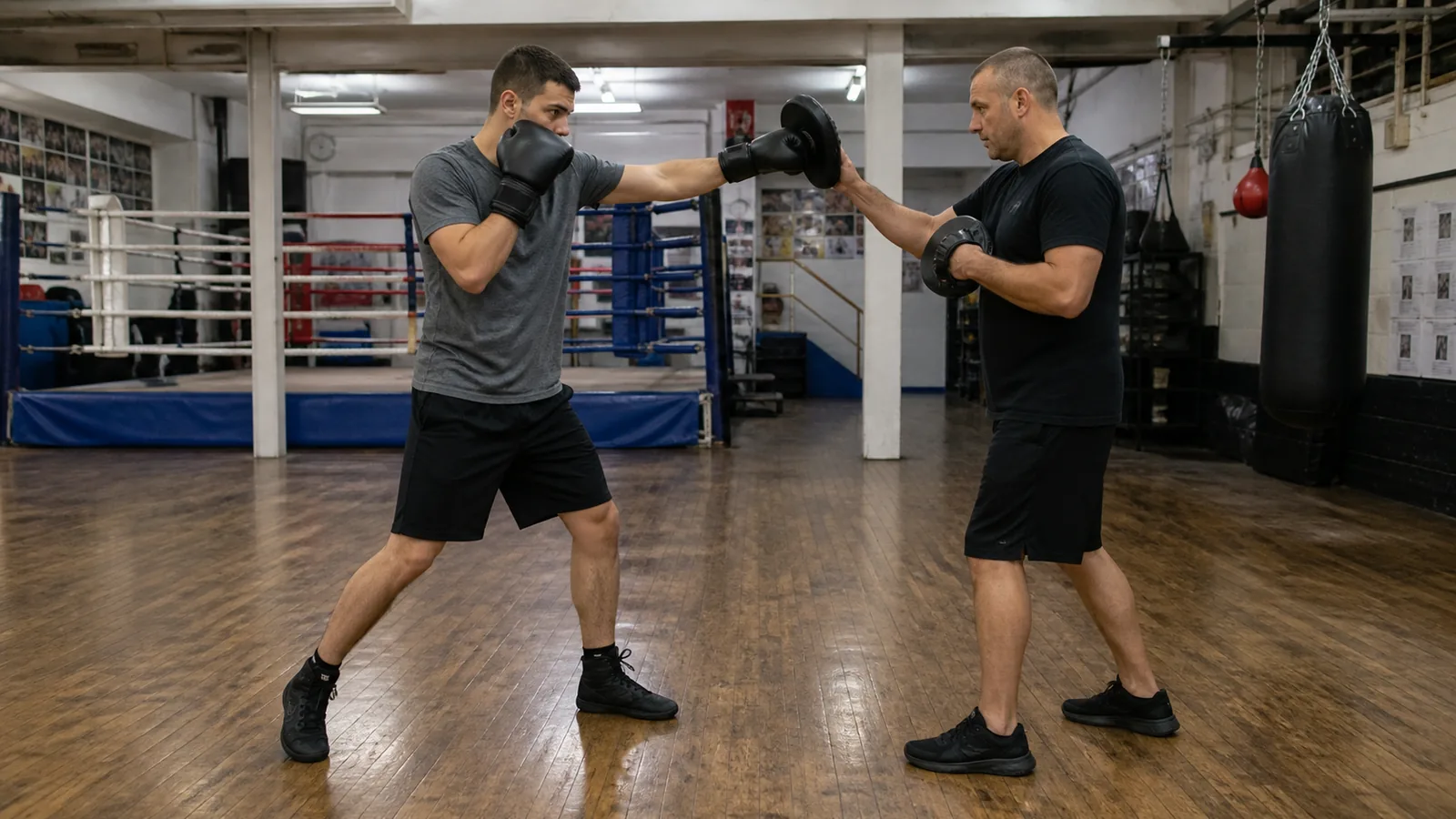
Giving ground does not have to mean running away.
A lot of beginners feel pressure, step backwards quickly and wait until there is room to punch again. The other boxer sees that hesitation, takes another step and the retreat becomes their rhythm. The opposite mistake is trying to throw a big right hand while the feet are still travelling. That turns the punch into a reach and leaves the stance behind.
A backward one-two gives you a calmer option. You take a small retreat with the rear foot, use the jab to put something in front of the other boxer, then bring the lead foot back under you before the cross. The point is not to score while fleeing. It is to stay organised enough that the other person cannot simply walk in for free.
Watch the short drill below, then use the coaching notes to build the pattern at a sensible pace.
The backward one-two is a retreat with a job
A normal one-two takes you forwards. The lead foot can travel with the jab, the rear foot catches up, then the cross turns from a settled base. Our guide to one-two footwork and the stepping jab covers that forward version.
Moving backwards reverses the feet, but not the need for order. The rear foot moves first to open a little space. The jab gives the opponent a line to consider. The lead foot follows to recover the stance. Only then does the rear hand have a reliable floor underneath it.
For an orthodox boxer, it feels like this: rear foot back, jab, lead foot back, cross. For a southpaw, reverse the picture but keep the same rule. The foot nearest the direction of travel opens the space. The other foot follows to rebuild your base.
A study of novice boxing training used a progression from static technique into punches combined with displacement. That is the right order here. First learn the retreat without a punch. Then add a clean lead hand. Then add the rear hand only when the stance remains usable.
Do not throw the cross while the feet are arguing
The cross is the part most likely to go wrong.
When someone is coming forward, you feel pressure to answer immediately. That can make the rear hand leave before the lead foot has recovered. The shoulder turns, the head follows the punch and the body ends up leaning back or reaching across an empty gap.
Give the lead foot a moment to catch the retreat. The cross can then turn through the hip while the head stays between the feet and the lead hand returns towards guard.
Research on the lead straight punch has found differences in lower-limb force measures between trained boxers and comparison groups (lead straight-punch biomechanics study). That is not a reason to chase force figures in class. It is a reminder that a straight punch is not an arm acting on its own. The feet, hips, trunk and guard all have to arrive in a sensible order.
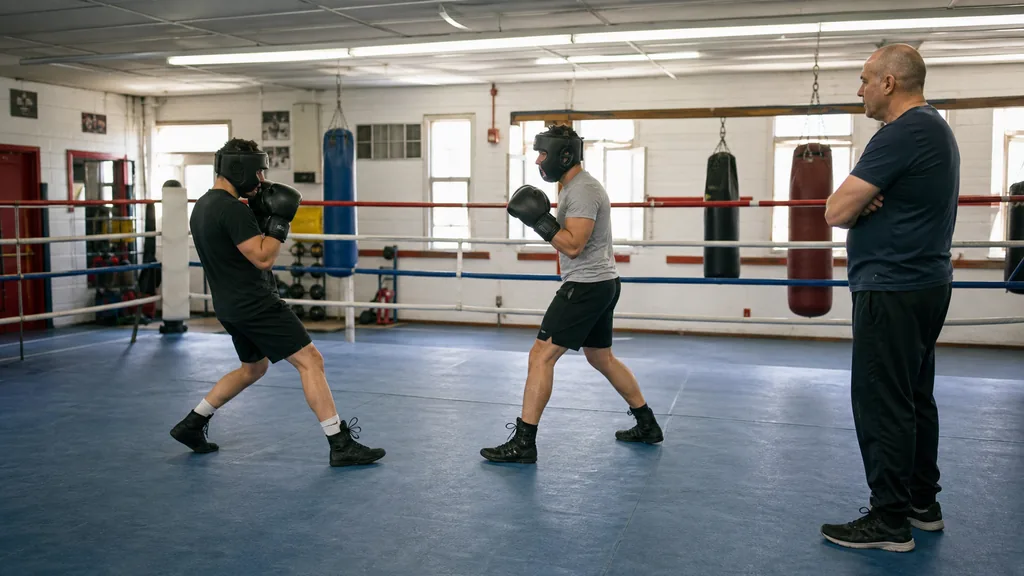
Start with a retreat, not a counter
The safest first version has no punches at all.
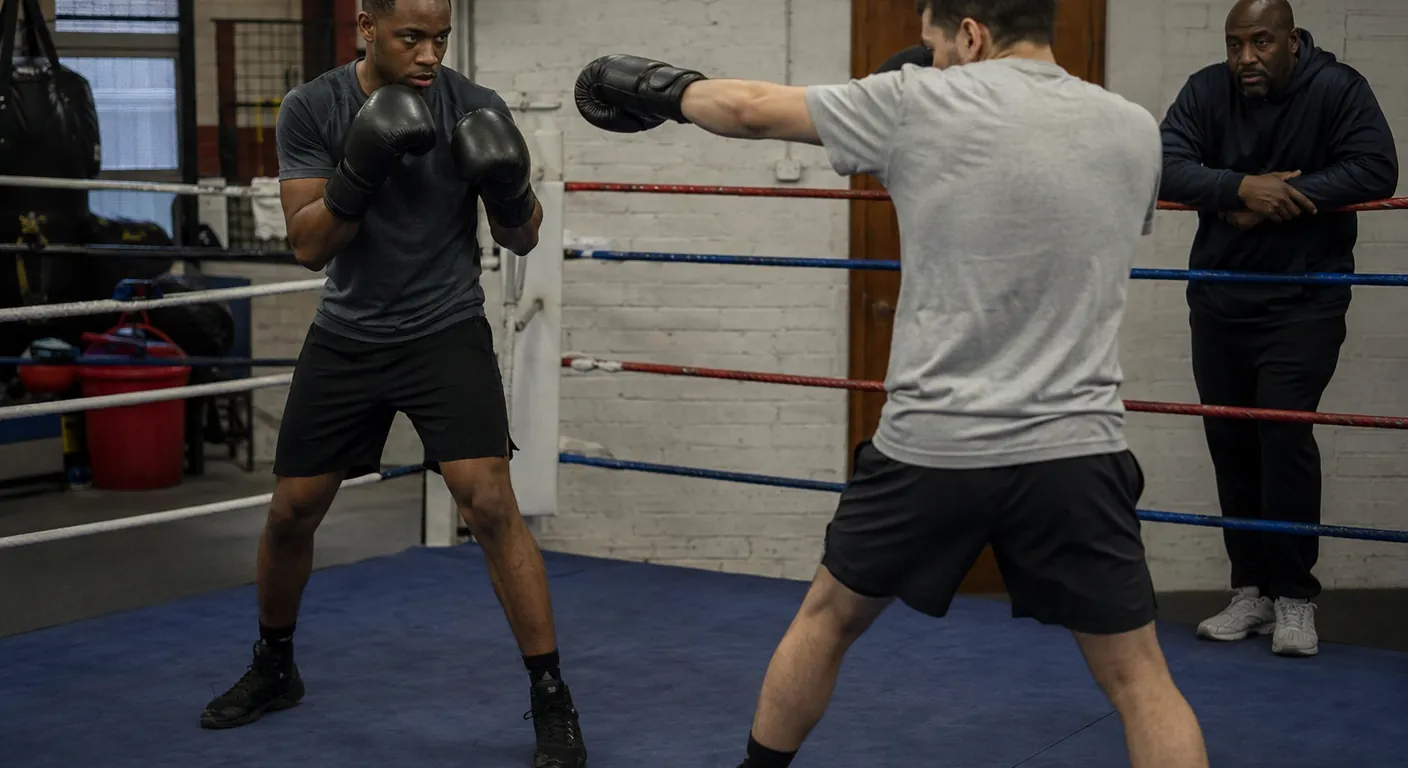
Ask a partner to walk forward slowly with their guard high. You take one short step back with the rear foot, then bring the lead foot after it. Freeze. Your partner stops as soon as they have taken their one step.
Check four things before adding a jab:
- Your feet are still staggered rather than side by side.
- Your head is roughly between the feet, not leaning away from the partner.
- Both gloves remain near the face.
- You could take another step, jab or cover without rebuilding your stance.
Once that is tidy, put a light jab into the retreat. The jab is not there to force a score. It gives the backward movement a purpose and makes the approaching partner see a glove before they take their next step. Bring the jab straight home as the lead foot follows.
Only then add the cross. Keep the partner on a pre-agreed, low-intensity forward step. They should not throw back while you are learning the shape.
Build the drill in three short rounds
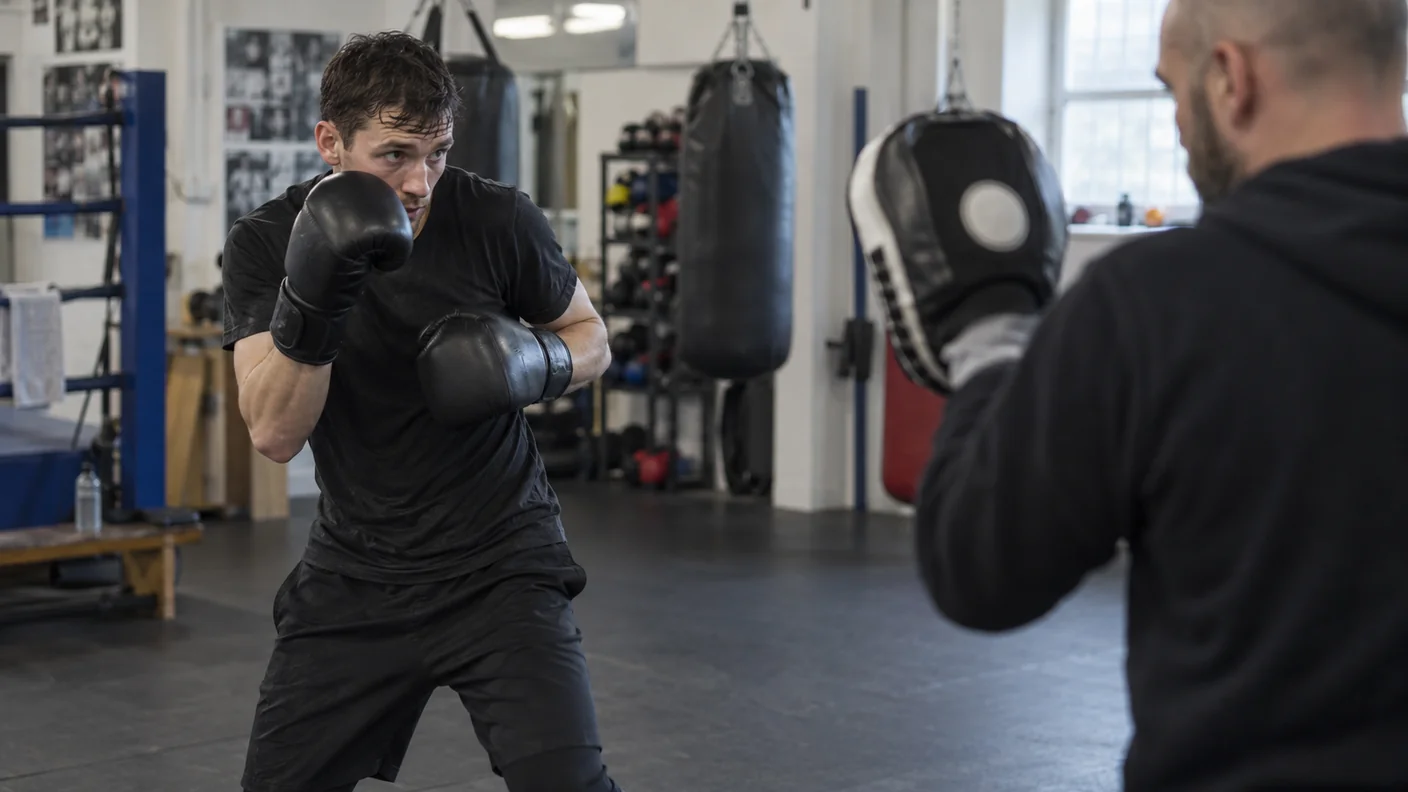
A coach, a pair of focus mitts or a heavy bag are all useful. Start with the version that lets you concentrate on the feet rather than trying to predict somebody else's next punch.
Round one: retreat and settle
Move backwards over a short line on the floor. Rear foot first, then lead foot. Keep a normal guard and stop for one second after each retreat. The line is useful because it makes a crossed or collapsed stance obvious without asking you to stare at the floor.
Do not cover the whole gym. One shoe length is enough. A small retreat that leaves you ready is better than a large retreat that leaves you stranded.
Round two: jab while you give ground
Use one backward step with a light jab. On mitts, the coach can bring the target forward slightly as you retreat. On a bag, imagine the bag entering your range and keep the jab short enough that the shoulder still covers the chin.
The lead foot follows as the jab returns. Pause and check the stance. If the jab is hanging out or the lead foot has not caught up, reduce the pace. You are trying to build a sequence, not make a noisy bag round.
Round three: jab, recover, cross
Add the cross only after the lead foot has restored the usual gap between the feet. On pads, the second mitt should appear after the first hand has returned, not while you are still falling backwards. On a heavy bag, let the cross be a measured touch rather than a shove.
Finish every repetition with both hands home. You may take another backward step, step off to a side, cover or reset at jab range. Do not stop in the middle and admire the combination. The other boxer is still there.
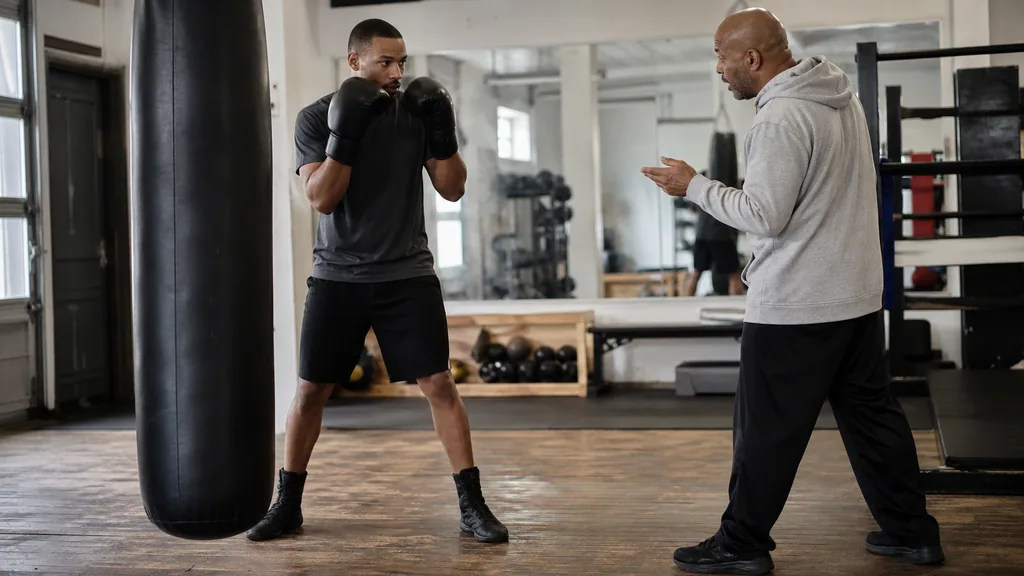
Three mistakes that turn the drill into running
The first is stepping too far. A big retreat is tempting because it feels safe, but it makes the jab fall short and gives the other boxer a clean run at you. Start smaller than you think you need.
The second is leaning the upper body away instead of moving the feet. Leaning can make the head feel farther away, but it takes the hips out of the punch and makes the next movement slow. Let the legs create the space. Keep the chest calm behind the guard.
The third is firing the cross before the lead foot has followed. This is the error that makes the pattern feel rushed. If the cross only works when you throw it wildly, take the punch away and rebuild the retreat and jab first.
For the wider movement rule, read how to move in and out without crossing your feet. The backward one-two adds a specific decision to that foundation: give ground, show the jab, recover the stance, then decide whether the cross is genuinely there.
Where it fits in ordinary training
This is a useful drill for adults who are starting to work with pressure but do not need hard sparring. It works on pads, the bag and slow partner drills where each person knows what is coming. The first aim is composure, not a dramatic counter.
If you train in Kidbrooke, Greenwich or nearby, our Recreational Adults boxing classes use this kind of progression: feet first, then the punch, then a controlled decision after it. You do not need to be fast on day one. You need to finish each movement able to box again.
The coaching cue is simple: give ground with the feet, not the body. Jab while you leave, recover the stance, then throw only what the position allows.
H&G Team
Writer at Honour & Glory Boxing Club, a community boxing gym in Kidbrooke, South East London.
KEEP READING
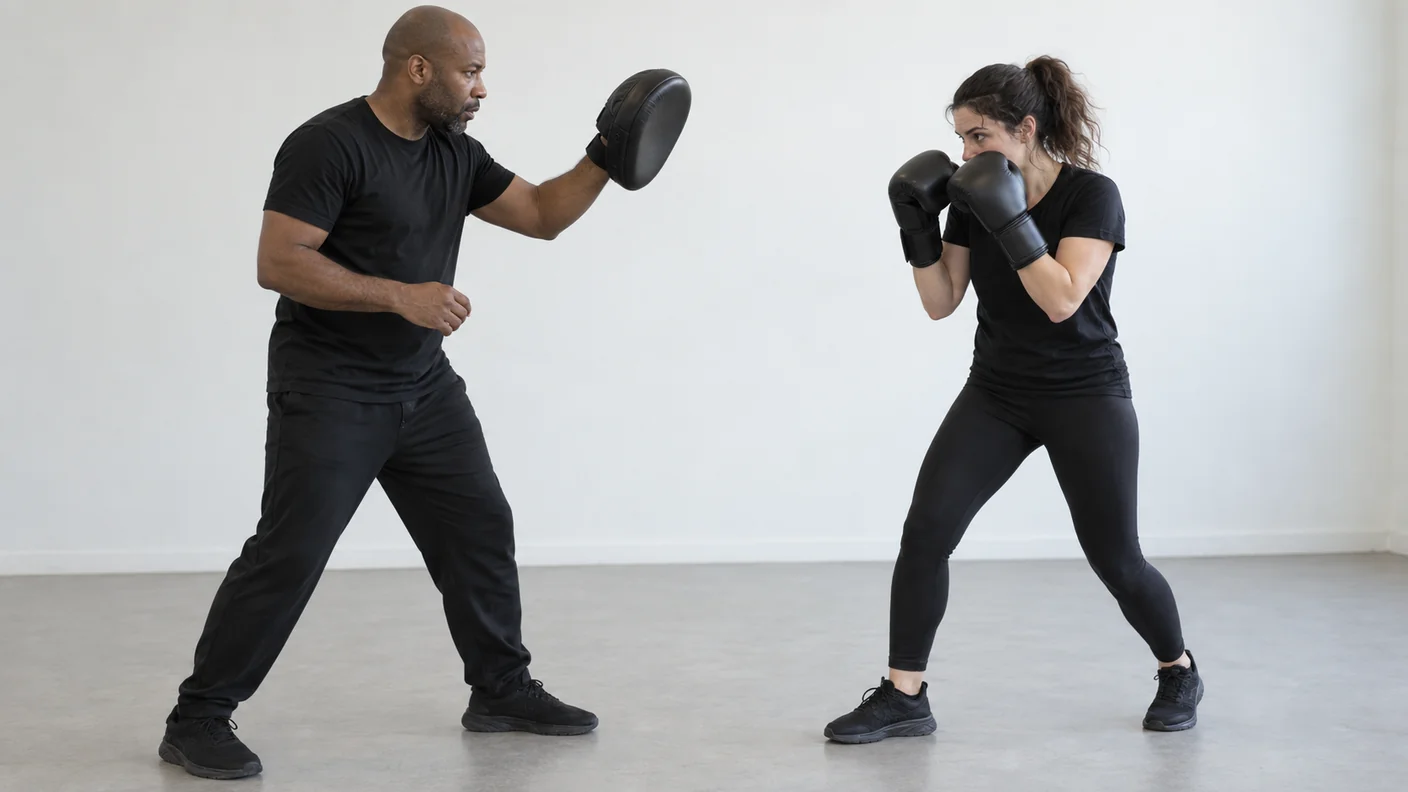
Backward Shift Boxing: A Controlled Exit Drill
Use a backward stance shift to create space only when you can land safely, protect the transition and work from either stance.
Step-Back Shield: Boxing Defence Without Running
Use a short step back with a compact lead-hand shield to create safer space against pressure without losing your stance.
Read Boxing Weight Shifts Before the Punch
Learn to spot small weight shifts in boxing, then choose a calm defence or counter without guessing at every movement.
Was this page helpful?
It takes one tap, and it genuinely helps.
Choose your next step
Turn this article into the right action
Some readers are ready to book. Some need the class route first. Pick the route that matches what you actually want.