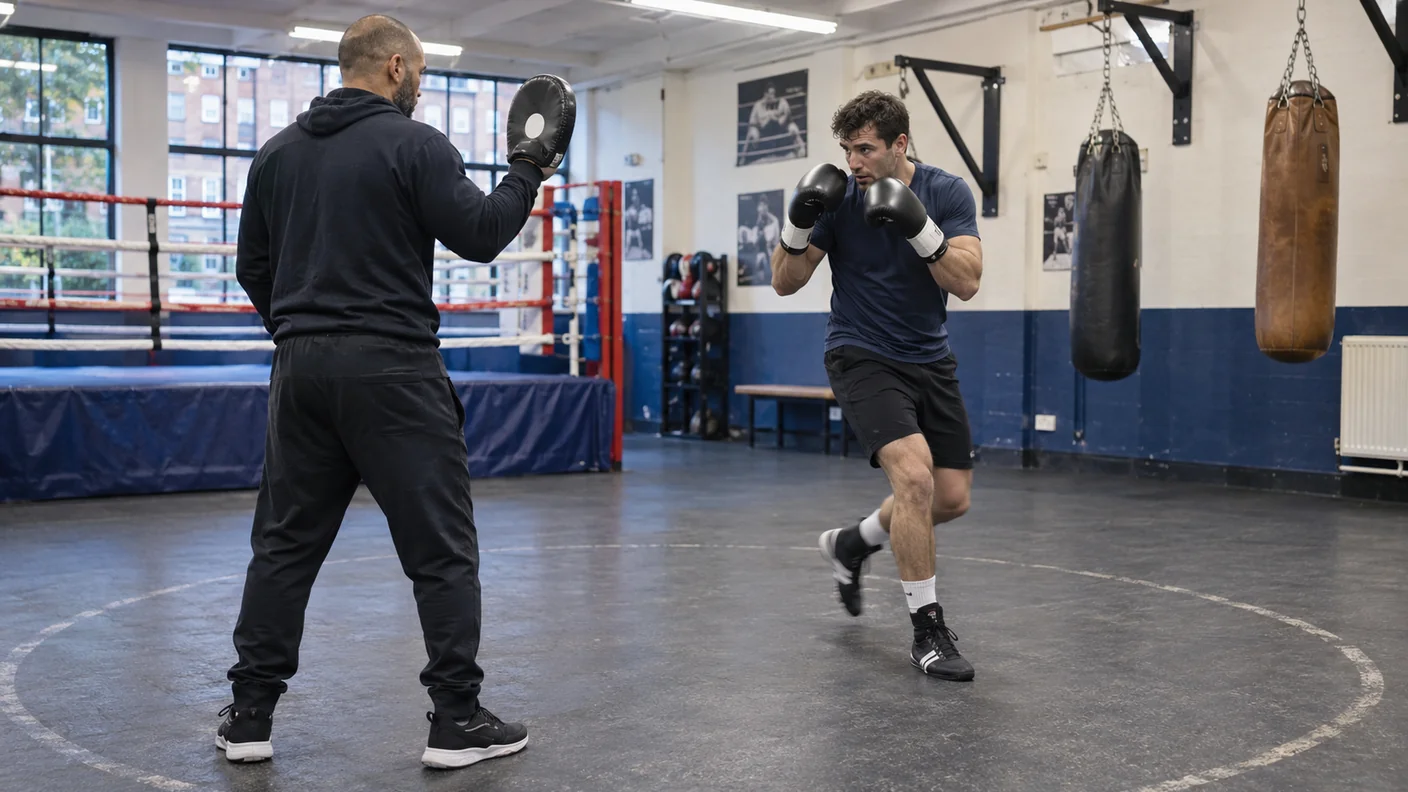
Circling is not running away. It is moving just enough that the other boxer has to turn, reset their feet and earn the next attack.
That distinction matters. Plenty of beginners hear that they should not stand in front of a puncher, then spend a round travelling backwards in a straight line. They have moved, but they have made the job easier. The pressure boxer only has to follow the same track, keep the jab coming and wait for their back to meet the ropes.
Useful circling keeps you in a working stance. Your hands stay available, your eyes stay up, and the other boxer has to keep finding you again. It is a way to manage range, not a way to avoid the round.
The video below is a useful visual reference. Watch the small steps rather than trying to copy every movement from an elite southpaw. The practical lesson is simpler: make the other boxer turn before they can set their feet.
Circling makes the other boxer solve a new problem
A puncher is most comfortable when they know where you will be. If you keep moving straight back, they can step after you, let their rear hand follow the line and throw with their feet underneath them.
A quiet circle changes that. One short step to the side is not enough on its own. The point is to keep taking a new position before the other boxer has planted, so they have to turn their shoulders, adjust the lead foot and choose whether to follow, jab or wait.
That gives you a better chance to see the entry coming. It also stops you treating defence as a last-second head movement. The feet have already made the straight route less simple.
A systematic review of anticipation in combat sports found that skilled performers use early visual information more effectively than novices. In a boxing gym, that means keeping your eyes on the chest, shoulders and lead side while you move. Circling should help you read those cues, not leave you staring at the floor while your feet race around the edge.
Move your feet in the right order
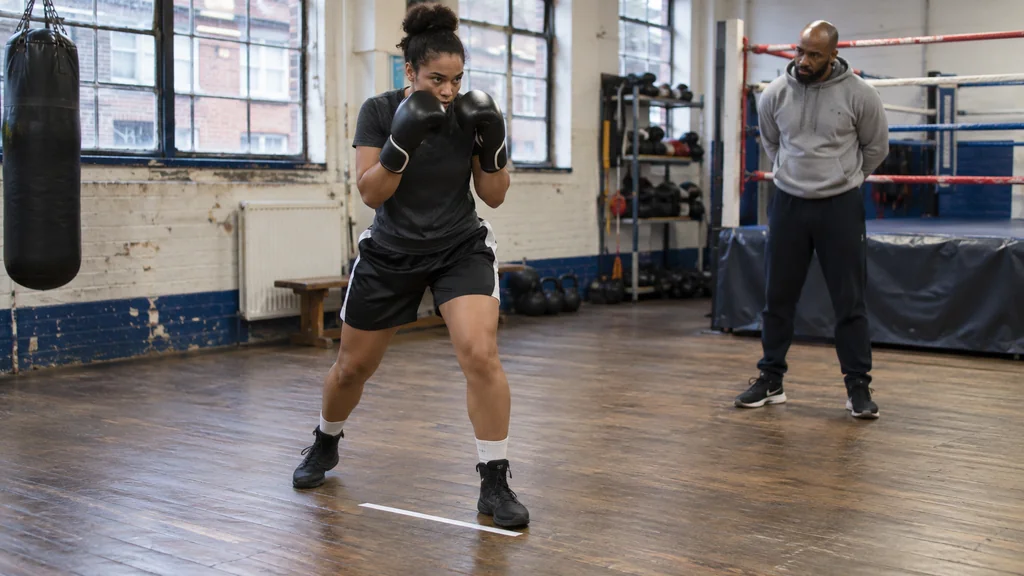
The rule remains the same whether you move forward, back or sideways: the foot nearest the direction of travel goes first, and the other foot restores your stance.
For an orthodox boxer moving to the left, the lead foot starts the move and the rear foot follows. Moving to the right, the rear foot starts and the lead foot follows. Southpaws reverse the picture. The steps are short because the job is to change the line, not to cover half the gym in one jump.
Do not let the feet click together. Do not cross them. Do not drag one foot so late that you finish square. Each step should leave enough space for a jab, a cover or a quick change of direction.
England Boxing places balance and a stable stance at the centre of effective movement, punching and defence in its coaching handbook. Use that as a simple test. After every side step, could you defend a straight shot or throw one calm jab without a repair shuffle? If not, the step was too large or the trailing foot arrived too late.
Do not circle with your chin leading
A common mistake is moving the shoulders first. The head drifts sideways, the feet scramble after it and the rear hand begins to fall because the boxer is busy trying not to lose balance.
Move from the floor. Push lightly from the leg away from the direction you want to travel, let the first foot land, then bring the other foot into a familiar stance. Your head moves with the body, not out in front of it.
Keep the chin behind the shoulder that is closest to the other boxer. Your guard does not become optional because you have chosen a side. A pressure boxer can jab while turning, and they can still throw the rear hand if you circle lazily into its path.
The aim is not to get completely out of range. If you take one huge jump, you may feel safe but you also give away any chance to touch with the jab, make the other boxer hesitate or take the centre again. Small, usable steps are harder to predict and easier to repeat.
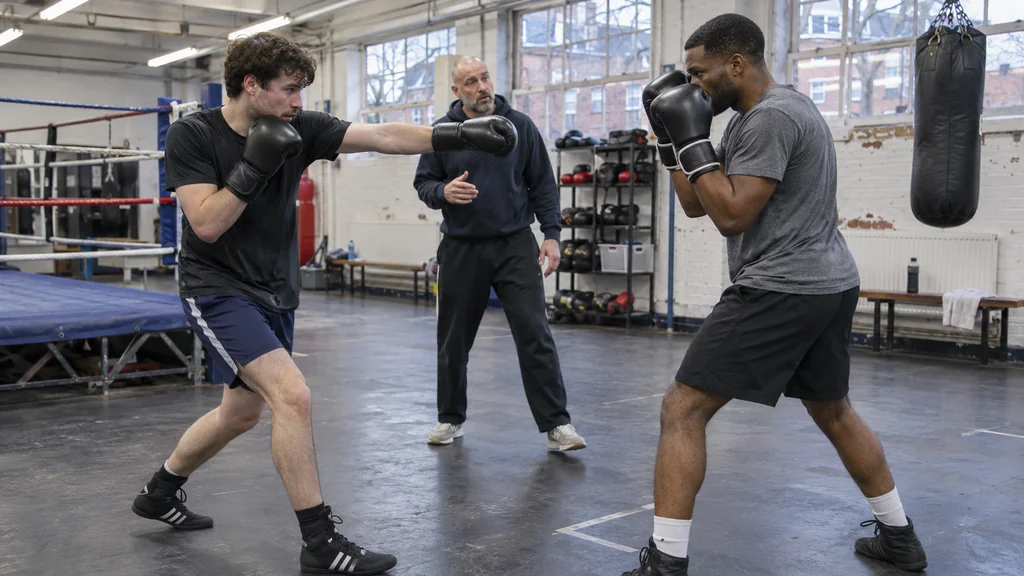
Circle with a reason, then make a choice
Do not make a full circle because the coach said to keep moving. Every turn needs a reason.
If the other boxer is pressing forward behind a jab, a small circle can make them reset their lead foot. If they are loading the rear hand, moving away from that side may make its line longer. If they have reached after a jab, an angle can leave them facing where you used to be.
But do not decide that one direction is always safe. A boxer who knows you always move left can walk you onto a hook. A southpaw and an orthodox boxer create different rear-hand lanes. The ropes can make a clever circle impossible. Look at the position in front of you, not a rule that ignores it.
That is why the jab belongs in this lesson. A light jab can give you a moment to move. A jab to the chest can interrupt the other boxer long enough for your feet to take their small step. Or you can circle first, see that they are not set, then jab from your new line. The order depends on the range.
Our side-step drill for keeping your stance is a useful starting point for the individual movement. When you are being pushed back, pair it with the ideas in our guide to getting off the ropes without panic. Both make the same point: get out of the direct lane without giving up your base.
A three-round circle-and-read drill
Use a coach, a trusted partner or an open patch of floor. There is no need for hard contact. This drill should make the feet and eyes calmer, not turn into a race.
Round one: circle and freeze
Put a small marker on the floor to represent the other boxer. Start just outside jab range. Take one short step around the marker, bring the trailing foot back under you and freeze.
Check your stance. The feet should still be staggered, the knees soft and the gloves ready. Work both directions. Do not speed up until you can stop without leaning or crossing your feet.
Round two: circle around a mitt
Ask a coach to hold one mitt and turn slowly to face you. Circle in short steps while staying at a range where you could touch the mitt with a jab.
The mitt does not need to be punched every time. Your first job is to keep the coach turning without drifting too close or too far away. When the mitt appears at a sensible distance, touch it with one light jab, bring the hand home and carry on moving.
Round three: read one answer
Now use a partner with a high guard. The partner can take one small step forward, hold position or show a slow jab line. Your job is to keep your stance while choosing a simple answer.
Against the step forward, circle away with both gloves home. Against a still guard, take your position and touch a coach-held target if it is there. Against the jab line, use the defence your coach has taught, then reset rather than forcing a counter from a poor angle.
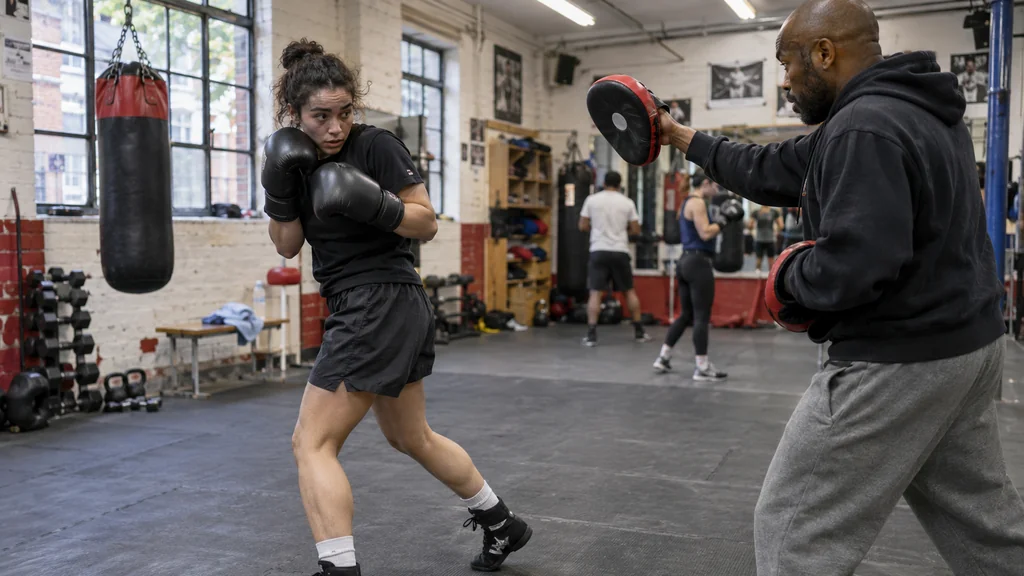
Four mistakes that turn circling into running
The first is moving too far. Big steps make you slow to change your mind. They also give a determined opponent space to follow you into the next position.
The second is always circling in the same direction. A route that works once can become an invitation if you repeat it. Mix a short circle with a pause, a jab, a small step back or a pivot when there is room.
The third is letting the back touch the ropes while you are still thinking about the next circle. Do not wait for the corner. Take an angle while you have room, then reclaim space with your feet rather than trying to slip sideways at the last second.
The fourth is turning your back or crossing the feet in a rush. If a movement leaves you unable to jab, cover or step again, it does not matter that you avoided one punch. You have only delayed the problem.
The coaching cue
Make them turn. Keep your base.
That is enough to begin. Circle in short, balanced steps. Watch the chest and shoulders. Use the jab only when the range is honest. Then make the other boxer start the next exchange from a new position.
If you are in Kidbrooke, Greenwich or nearby, our Recreational Adults boxing classes use coached pads, movement drills and controlled partner work to make footwork useful rather than decorative.
H&G Team
Writer at Honour & Glory Boxing Club, a community boxing gym in Kidbrooke, South East London.
KEEP READING
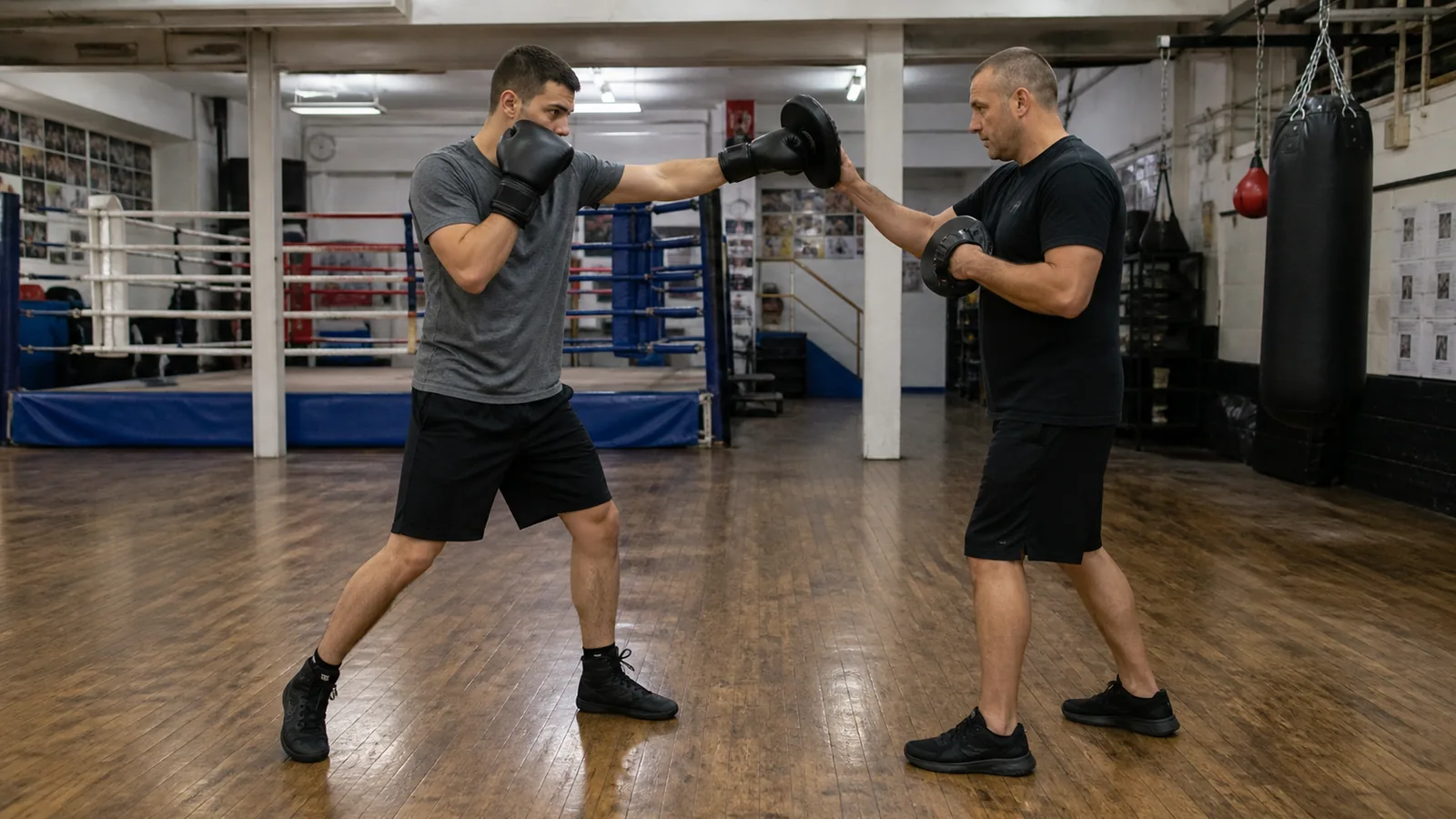
The Backward One-Two: Punch Without Running
Use a backward one-two to give ground without losing your stance, guard or chance to make a calm return.
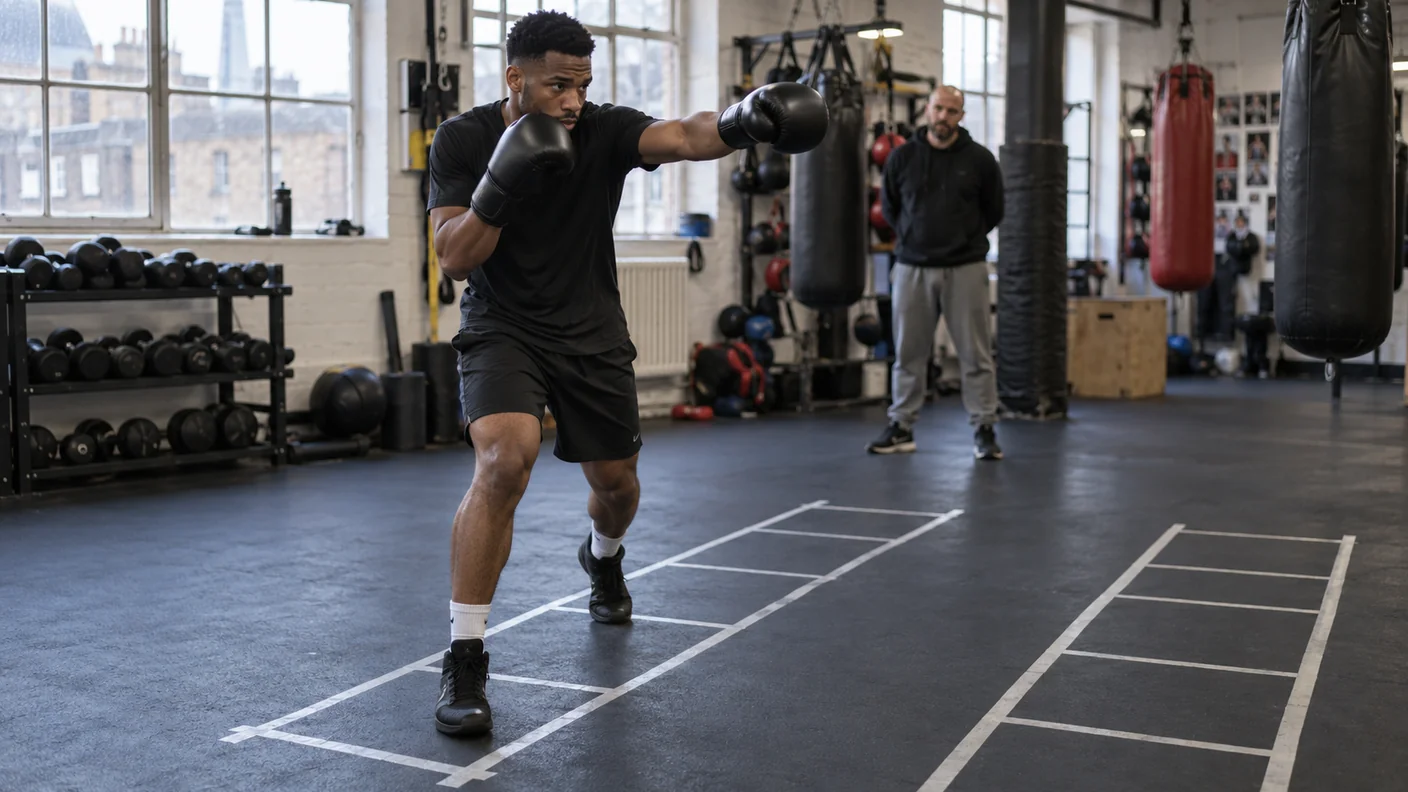
In, Out, Across: Boxing Footwork Drill
A three-direction boxing footwork drill for entering range, leaving safely and changing the line without losing your stance.
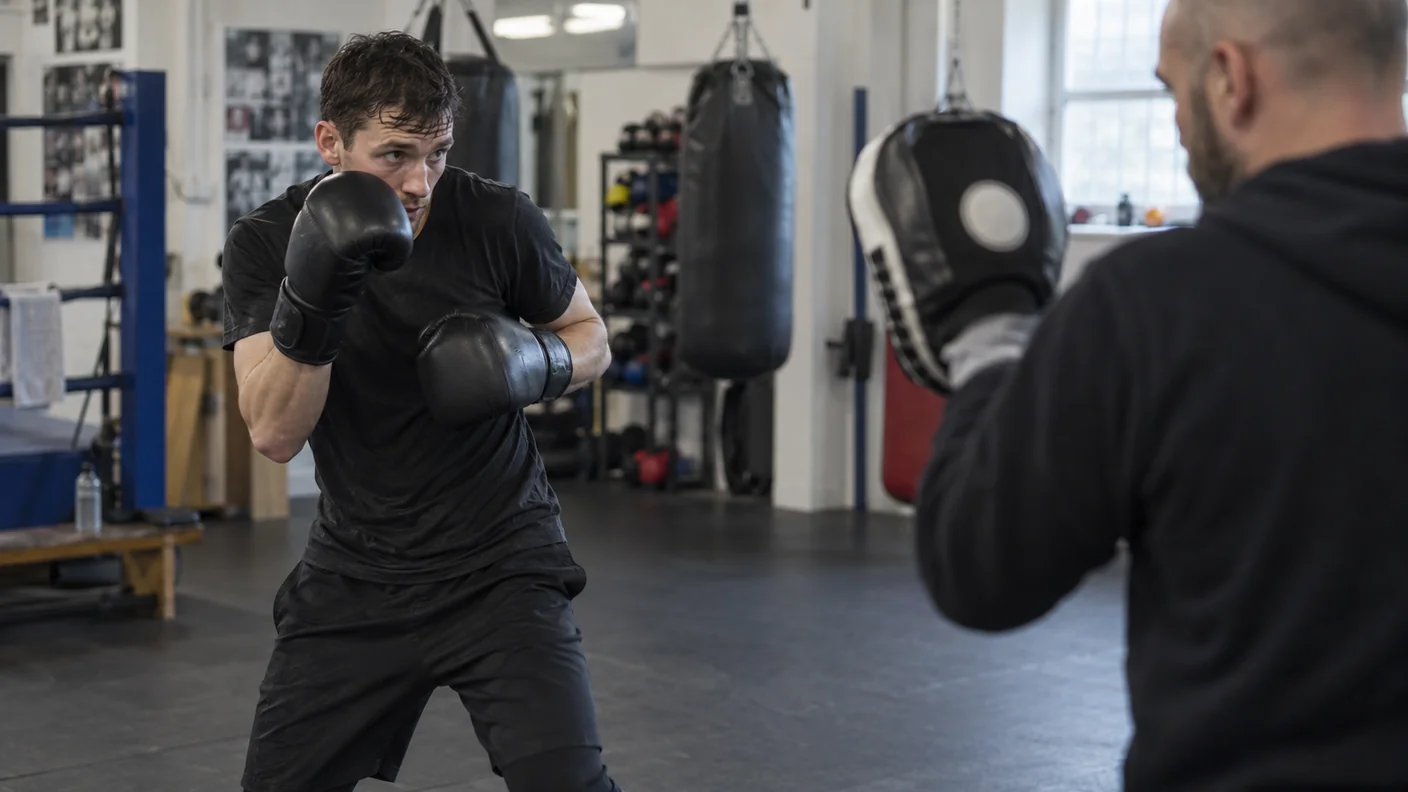
Step-Back Shield: Boxing Defence Without Running
Use a short step back with a compact lead-hand shield to create safer space against pressure without losing your stance.
Was this page helpful?
It takes one tap, and it genuinely helps.
Choose your next step
Turn this article into the right action
Some readers are ready to book. Some need the class route first. Pick the route that matches what you actually want.