Step-Back Shield: Boxing Defence Without Running
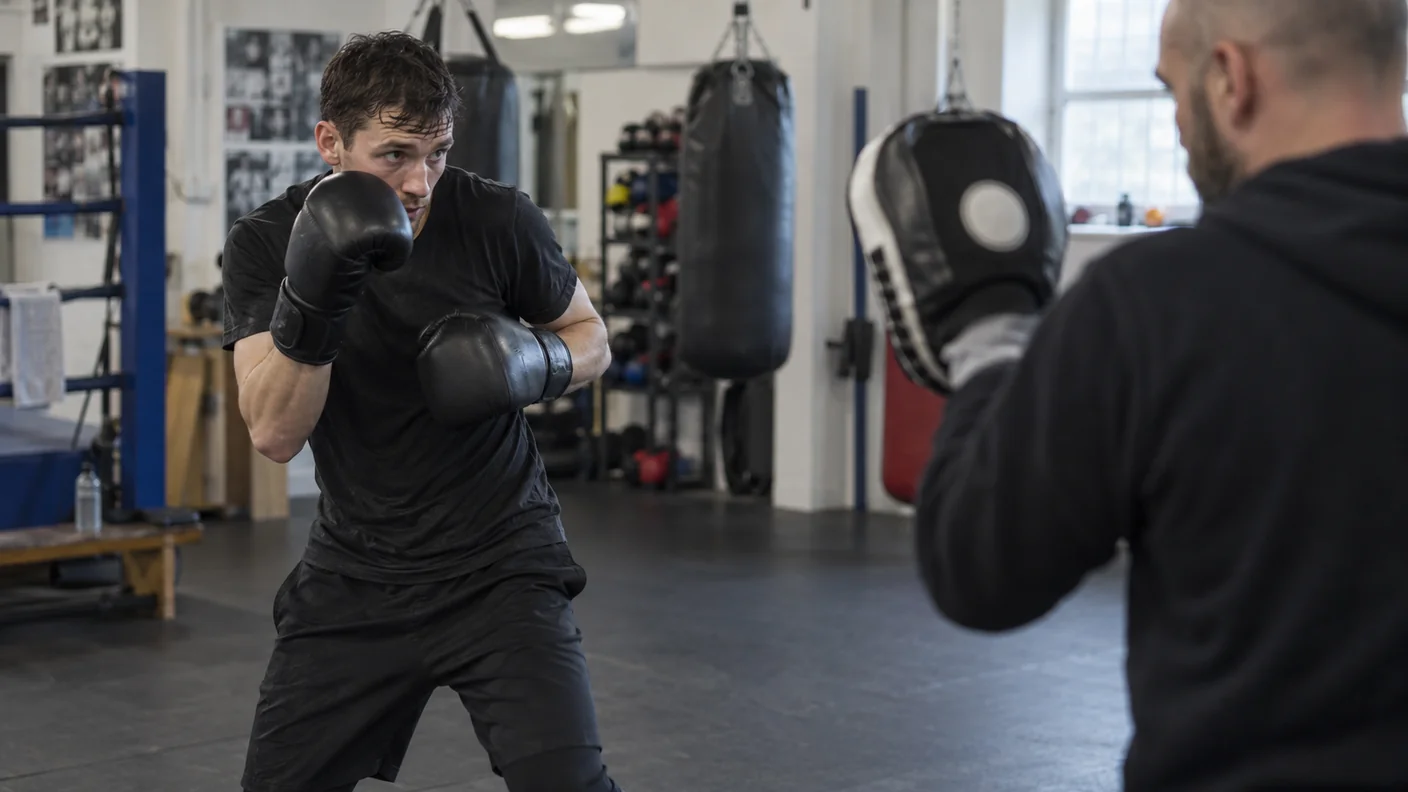
A step back can make space. It cannot do all the defensive work on its own.
When somebody walks forward behind a jab, many boxers concentrate so hard on moving their feet that the lead side of the face becomes available during the retreat. Others plant the lead hand far out in front of them and stop moving altogether. Both mistakes come from treating the feet and guard as separate jobs.
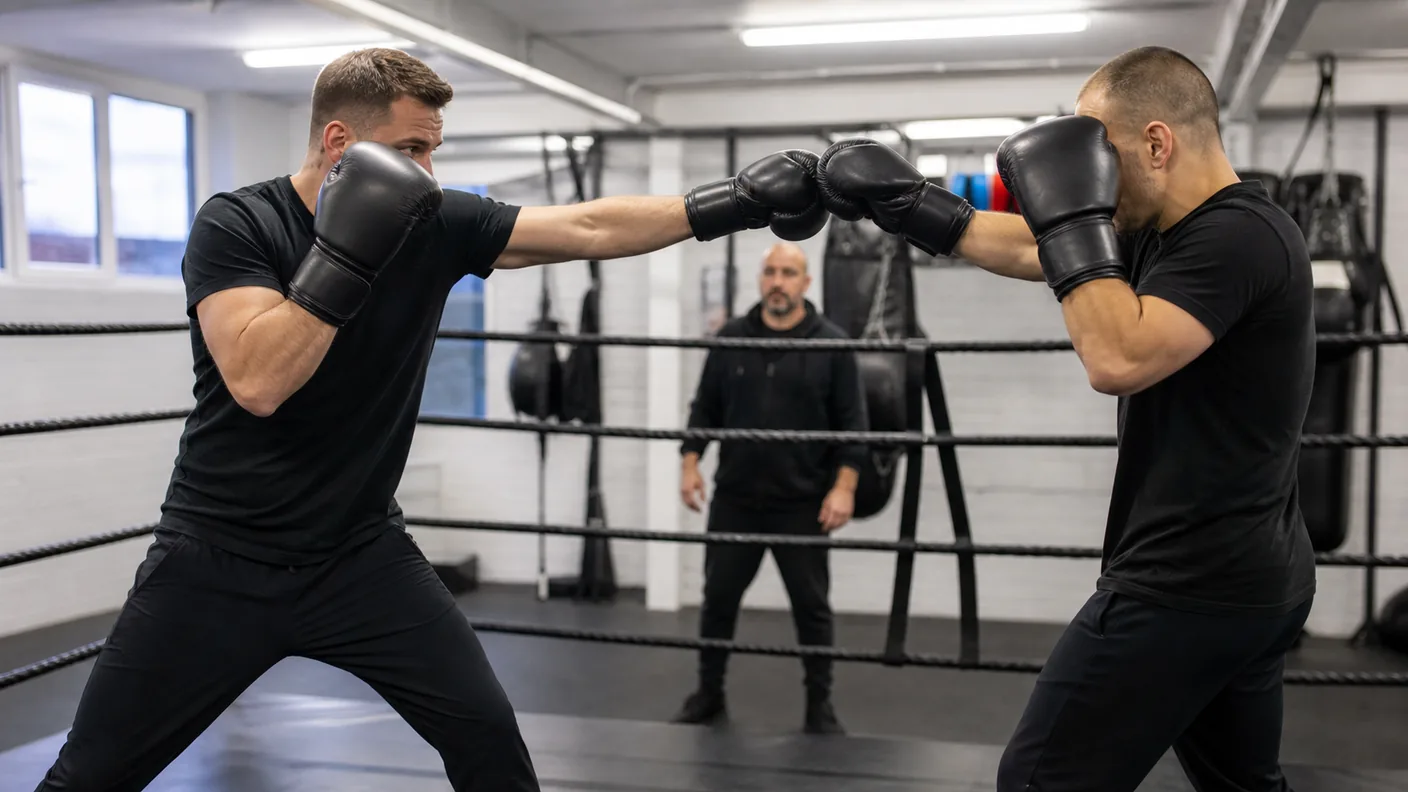
The step-back shield joins them. Take one short retreat in stance while the lead glove rises into a compact barrier near your own space. The glove is not reaching for the other boxer and it is not a shove. It gives the incoming line something to meet while your feet make enough room to see what is next.
Watch the demonstration once for the shape of the retreat, then again for the lead glove. The useful version is quiet: one small step, one guarded line, then a choice.
The shield protects the retreat, not the whole exchange
For an orthodox boxer moving backwards, the rear foot moves first and the lead foot follows to restore the stance. Southpaws reverse the feet, but the rule is identical: move away without crossing, narrowing or standing tall.
As that step begins, lift the lead glove just enough to cover the space in front of the lead shoulder. Keep the elbow bent and close enough that the glove can return to guard quickly. The rear glove stays by the cheek. You are not trying to catch a punch at arm's length. You are making the final part of the retreat less exposed.
That extra layer matters because pressure does not always arrive as one clean jab. A person stepping forward can shorten the distance while their hands are still active. A compact shield buys a fraction more safety than a bare retreat, but it must leave you able to cover, move again or reset.
England Boxing places balance, stance and controlled progression at the centre of technical development in its coaching handbook. That is the useful standard here. At the end of the step, you should be able to take another small movement without first untangling your feet.
Keep the lead hand close enough to come home
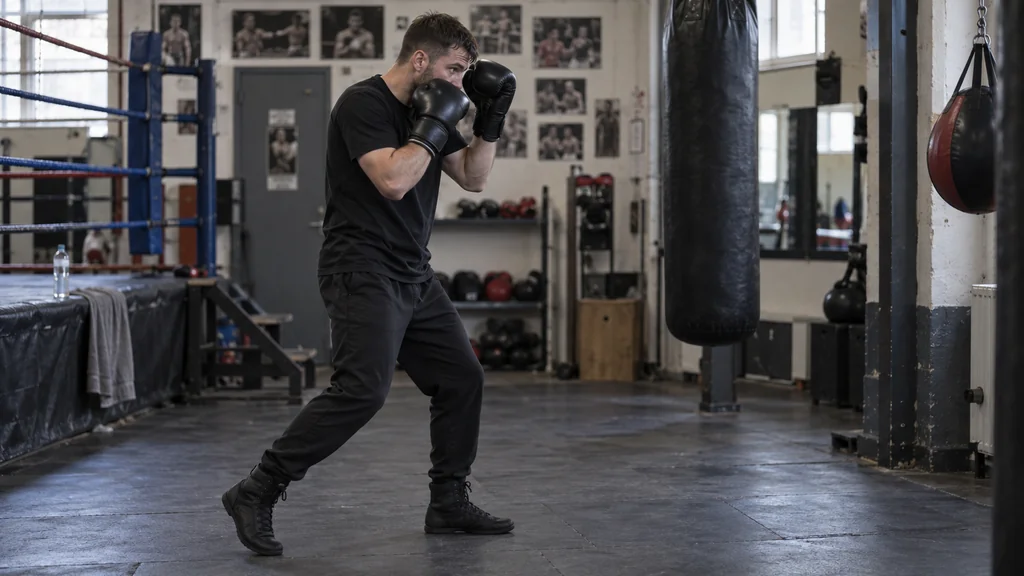
The lead glove should travel a short route. If it reaches far beyond your lead knee, it has stopped being a shield and become a target.
A long arm can be knocked aside, punched around or leave the centre open for the next shot. It also makes the step back slower because the shoulder and upper body start moving independently of the feet. The better position is nearer your own guard, with the knuckles roughly in front of the brow line and the elbow still soft.
Think of it as a brief moving cover rather than a frame. You are not holding the other boxer in place, feeling for their glove or trying to win a hand fight. The job is smaller: protect the line while you make a sensible retreat.
Our guide to lead-hand catcher-mitt jab defence is useful for the same reason. A lead-hand defensive action must stay close enough to return. If the glove cannot come home before the next decision, the movement is too large.
A review of boxing performance research describes punching and defence as connected actions involving the legs, trunk and upper body. In the gym, that means the shield has to agree with the step. A tidy glove cannot repair crossed feet, and a fast retreat cannot repair an open guard.
Use the step only when there is room behind you
The step-back shield is most useful at the edge of range, before your back is close to the ropes or a wall. It gives you enough space to make one retreat while staying organised.
It is a poor answer when you are already trapped, when the other boxer is close enough to throw short hooks, or when you are exhausted and the feet no longer move cleanly. In those moments, a compact high guard, a coached turn or a simple reset may be safer than trying to make room that is not there.
This is why the drill starts at a walking pace. You are learning to recognise the distance, not rehearsing a reflex that must happen against every punch. A systematic review of anticipation in combat sports found that experienced performers make better use of early movement information. For a boxer, that means noticing the forward step, shoulder lift and jab line early enough to choose a small response rather than reacting late with a large one.
A three-round step-back shield drill
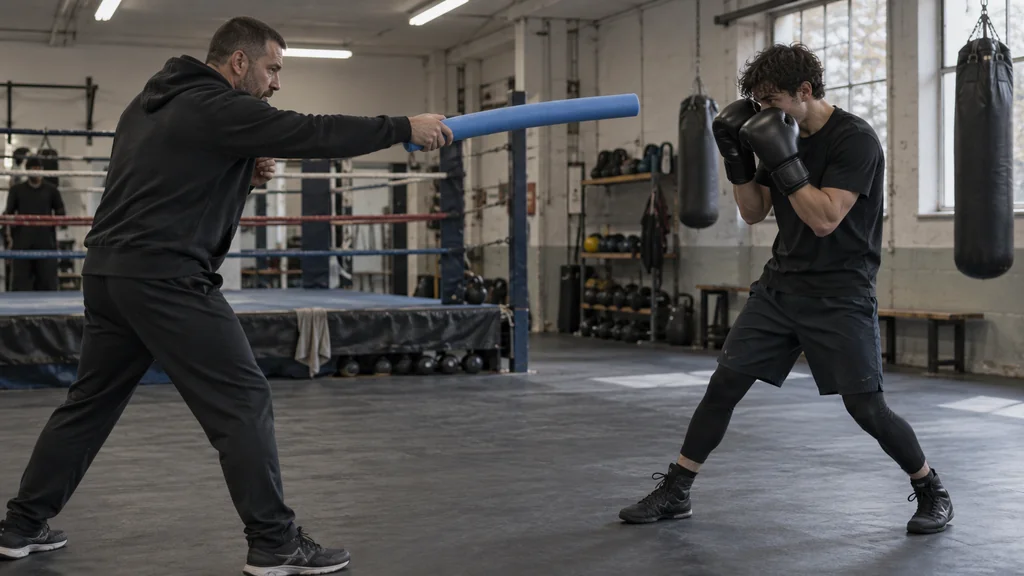
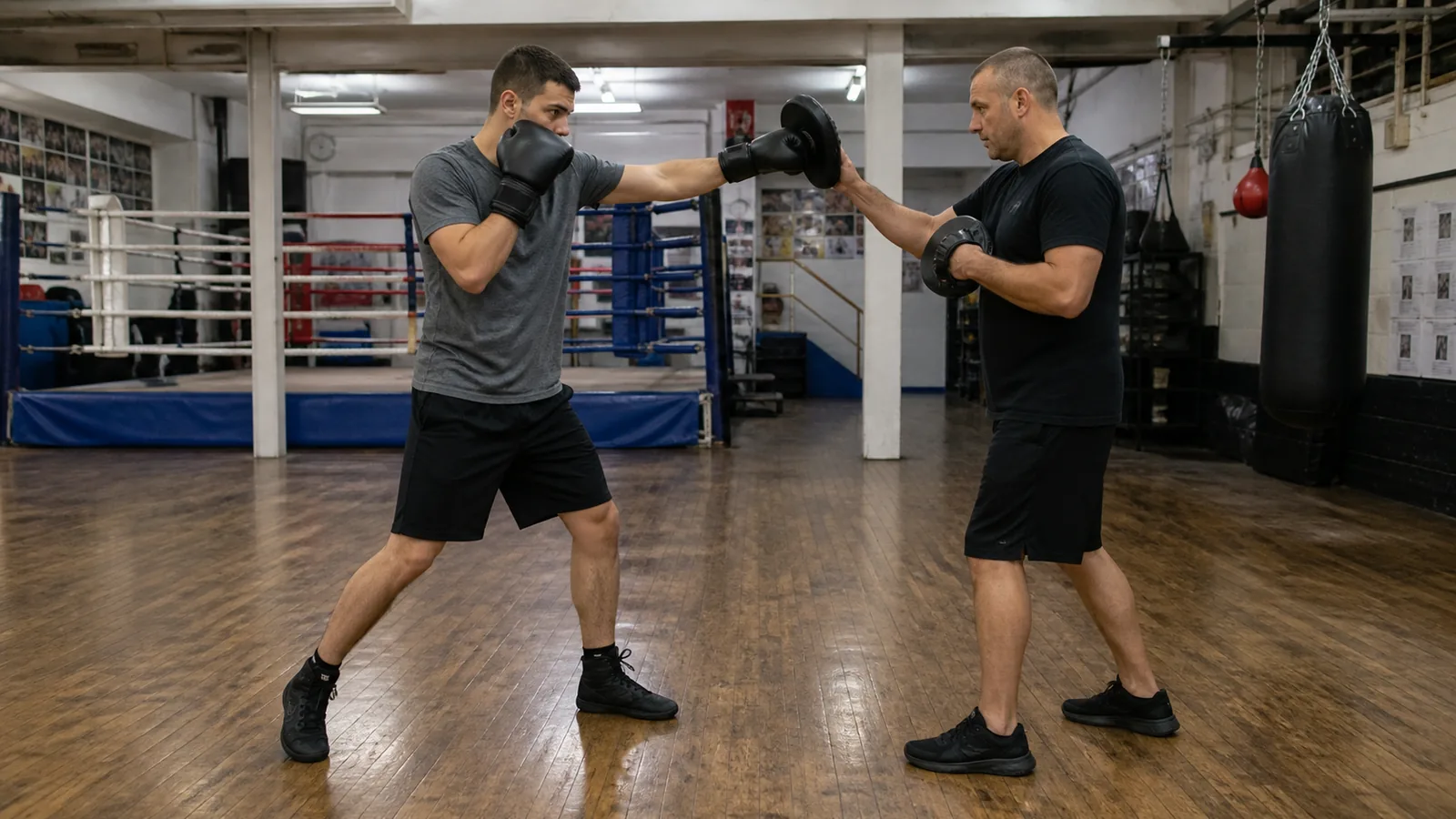
Use a coach, focus mitts or a trusted partner. Keep all feeds agreed and light. This is a distance and guard drill, not a sparring shortcut.
Round one: step and freeze
Start in normal jab range with no punches. Partner A takes one slow step forward. Partner B takes one short step back, rear foot first for an orthodox boxer, then brings the lead foot back into stance. The lead glove lifts into the compact shield as the feet move.
Freeze for one count. Check that the feet remain staggered, the knees are soft and both gloves are available. If the lead shoulder has lifted towards the ear or the rear hand has drifted down, reduce the speed before repeating.
Round two: shield one straight line
Partner A now gives one slow jab line with a glove, mitt or foam noodle. Partner B makes the same short retreat and lets the lead glove cover the line near the lead shoulder.
There is no counter in this round. The glove does not chase the jab. The feet do not sprint away. Step, shield, return to a usable guard and pause. Ten controlled repetitions are more useful than a frantic minute.
Round three: choose the finish
Now Partner A can show one of three pictures after the jab: hold the range, take another step forward, or stop and reset. Partner B chooses a safe finish.
If there is space, take another small retreat and maintain the guard. If the partner has stopped at honest range, a light jab to a coach-held mitt may be available. If the space has gone, cover and use the exit your coach has set. The shield does not promise a counter. It gives you time to make the right decision.
For the basic footwork beneath this drill, use moving in and out without crossing your feet. The feet create the route. The lead glove helps keep that route protected.
Four mistakes that spoil the movement
The first is making the step too large. A big retreat can leave you square, close to the ropes and too far away to answer. One short step is enough to test whether you can still box from the new distance.
The second is using the lead hand like a stop sign. A locked elbow is slow to recover and easy to pull out of position. Keep the elbow bent and the glove near your own guard.
The third is leaning back from the waist. The feet should make the space. If the chest falls away, the chin rises and the next movement becomes slow. Our boxing drop-step drill can help build the habit of arriving with the lower body settled rather than leaning away.
The fourth is adding a rear hand automatically. Sometimes the other boxer has stopped short. Sometimes they are still stepping in. Sometimes the range is wrong. Return the lead glove, see the position and choose from the space you actually have.
Where it belongs in training
Use the step-back shield after a warm-up and before faster bag or pad rounds. It is suitable for a boxer who has already learned an ordinary retreat, basic guard and controlled jab defence. It does not need hard sparring to make the point clear.
Start with a clear floor and one predictable cue. As the shape improves, a coach can vary the timing and follow-up. Keep the rule simple: the lead hand protects the route out, but the feet and judgement decide whether there is a route at all.
If you train in Kidbrooke, Greenwich or nearby, our Recreational Adults boxing classes use controlled pads and partner drills to connect footwork, guard and decision-making before the pace rises.
The coaching cue is simple: move back in stance, shield the line, then choose what the distance allows.
H&G Team
Writer at Honour & Glory Boxing Club, a community boxing gym in Kidbrooke, South East London.
KEEP READING
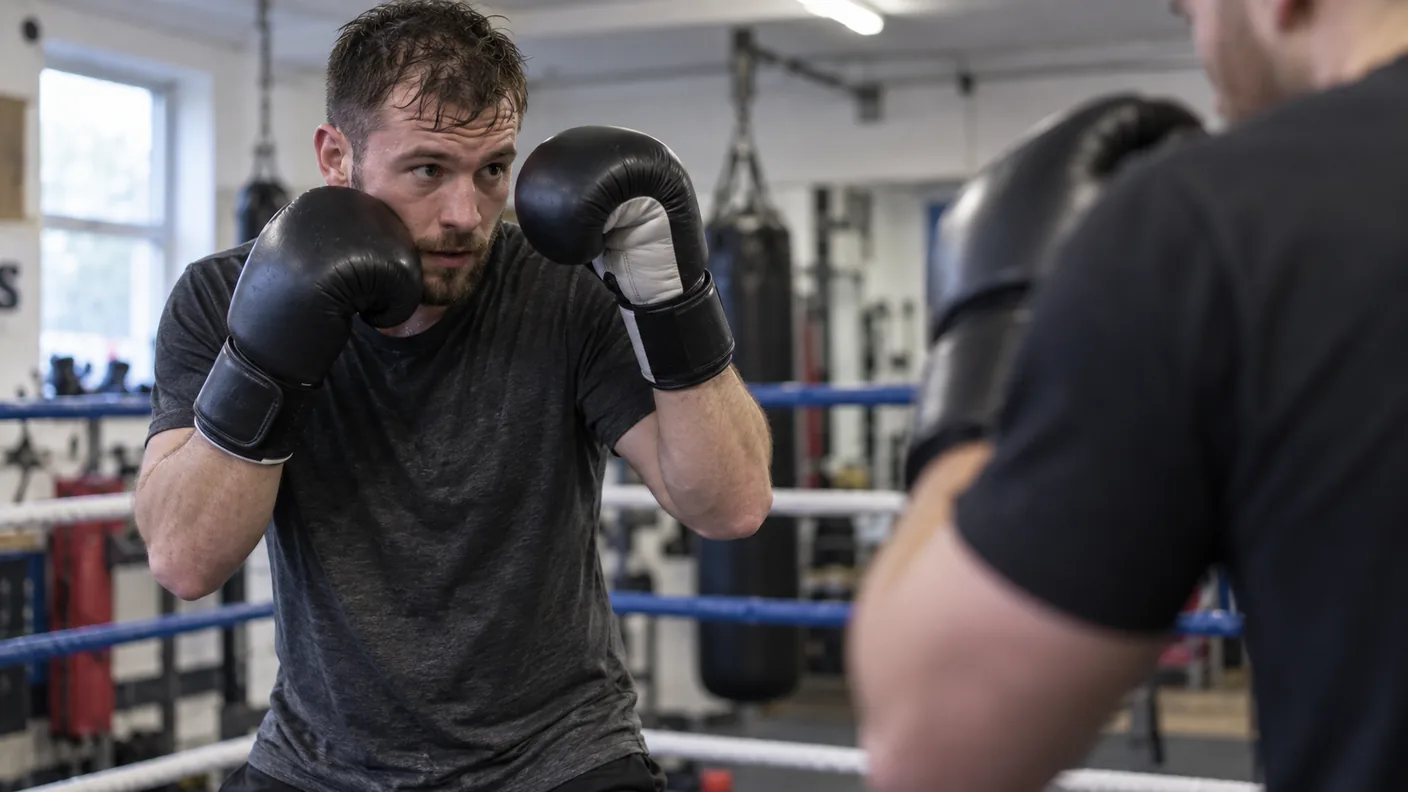
Lead-Hand Catcher Mitt: A Jab Defence Drill
Use a light lead-hand catch to manage the jab line, then return to guard before adding a calm counter or exit.
Lead Hand Control in Boxing Without Reaching
Use small lead-hand touches to disrupt the jab, manage range and create safer entries without turning boxing into an arm wrestle.
The Backward One-Two: Punch Without Running
Use a backward one-two to give ground without losing your stance, guard or chance to make a calm return.
Was this page helpful?
It takes one tap, and it genuinely helps.
Choose your next step
Turn this article into the right action
Some readers are ready to book. Some need the class route first. Pick the route that matches what you actually want.