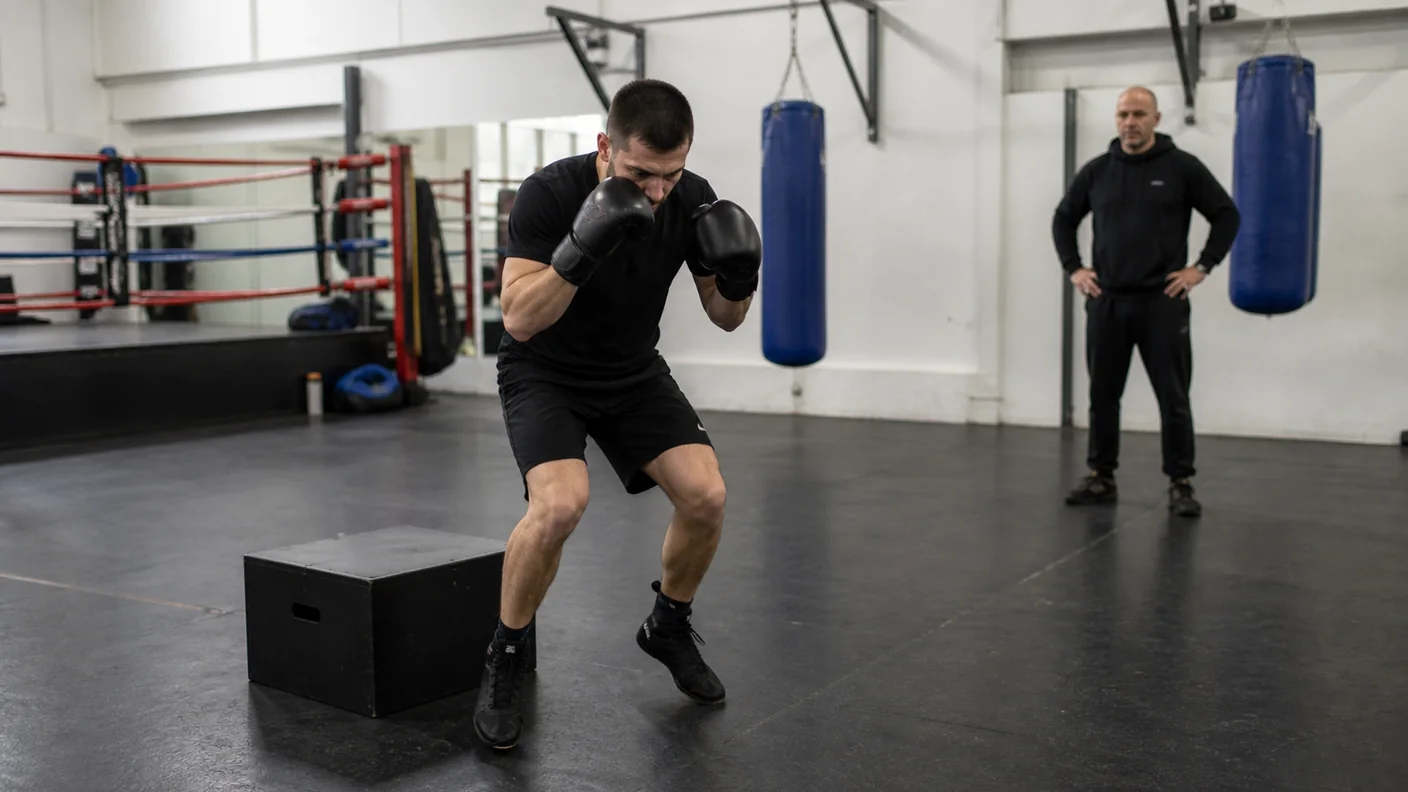
A boxer needs to arrive in stance before trying to punch from it.
That sounds too obvious to need a drill, until you watch what happens after a sudden step back, a missed shot or a hurried change of direction. The rear foot lands late, the knees lock, the head leans away and the right hand leaves before the body is ready. The glove may still hit a pad, but the punch has no proper floor underneath it.
A low drop-step drill gives the rear leg one clear job: accept a small change in height, settle the stance, then let the next boxing action start from balance. It is not a trick for harder punches. It is a way to notice whether your feet are supporting the next decision or merely chasing it.
Watch the short demonstration below, then use the coaching notes to keep the drill useful.
The landing matters more than the drop
Do not picture a dramatic jump from a high box. The useful version is low and quiet. You step off a small platform, or simply make a short backward step from the floor, and land in a recognisable boxing stance.
The rear foot should meet the floor with enough bend in the knee to absorb the movement. The lead foot stays available rather than becoming heavy and flat. Your chin remains behind the guard. Both gloves stay where they could still cover, catch or punch.
The first test is not whether you can explode back into a punch. Freeze for one second after the landing. Could you jab, step again or bring the rear hand into a compact guard without rearranging your feet? If the answer is no, the landing was too big, too stiff or too rushed.
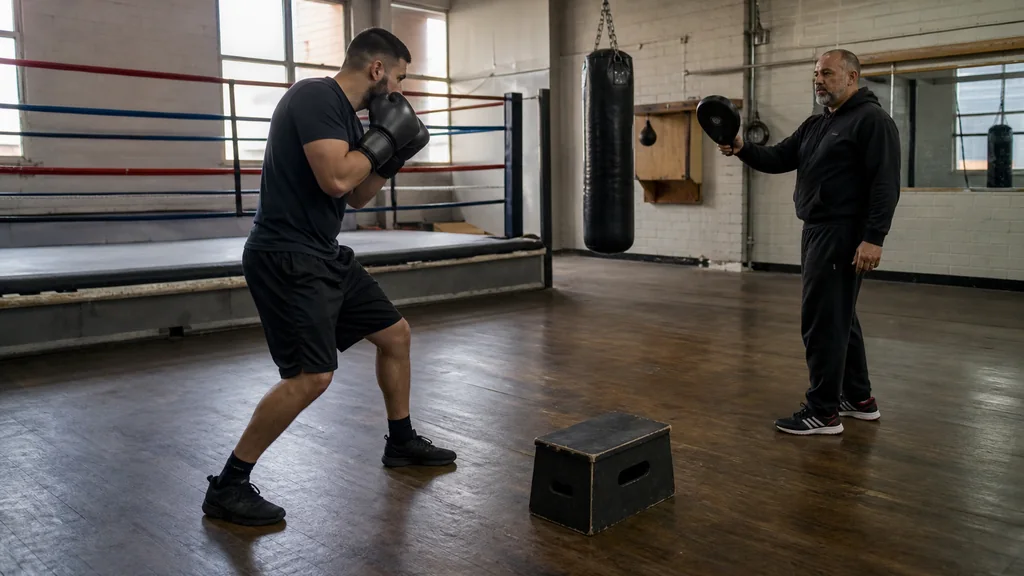
A review of strength and punch impact research found useful links between strength qualities and punch force, while also warning that the direct experimental evidence is limited. That is the sensible way to view this drill. Strong legs matter, but a low landing drill does not create a powerful punch by itself. It shows whether the lower body can give your technique a stable start.
Keep the stance before you add the rear hand
The temptation is to land and fire the cross immediately. That is usually where the shape disappears.
For an orthodox boxer, a small backward movement can place a little more weight on the right leg. That can become a useful position for a rear hand, but only after the feet have settled. For a southpaw, reverse the stance, not the principle. The rear side can help the punch only if the head remains between the feet and the lead hand comes back to protect the face.
Do not sink into the rear leg like you are sitting in a chair. The purpose is a loaded but mobile stance, not a deep squat. If the front foot has become light, the hips have drifted too far back or the chest is leaning away from the target, reduce the step.
England Boxing's coaching handbook puts stance, balance and controlled progressions at the base of skill learning. That is a better standard than the noise a punch makes on a mitt. A cross that starts from bad feet may look strong once. It will be hard to repeat when someone is moving in front of you.
Our guide to boxing weight shifts without punching in pieces covers the same idea inside a punching sequence. The drop-step version strips it back. First land. Then see whether the stance can support the next action.
Start with the floor version
You do not need a box to learn this.
Stand in a normal boxing stance with a clear line of space behind you. Take one small step back with the rear foot, then let the lead foot follow enough to restore the normal gap. Keep the guard in place and stop for a beat.
That floor version teaches the same order without asking the ankles and knees to deal with a drop. It is the right place to start for most beginners.
Use three quiet checks after each repetition:
- The feet are still staggered, not square or crossed.
- The knees are soft enough that you can move again.
- The head and hands have not travelled away from the stance.
If those checks hold, add a light jab while the rear foot moves back. Let the lead foot catch up as the jab returns. Only after that should you show a controlled rear hand to a mitt or heavy bag.
This connects with the backward one-two drill. The key is the same: a retreat is not an excuse to throw while the feet are still arguing. Give ground with the legs, restore the stance, then punch only when the floor is there.
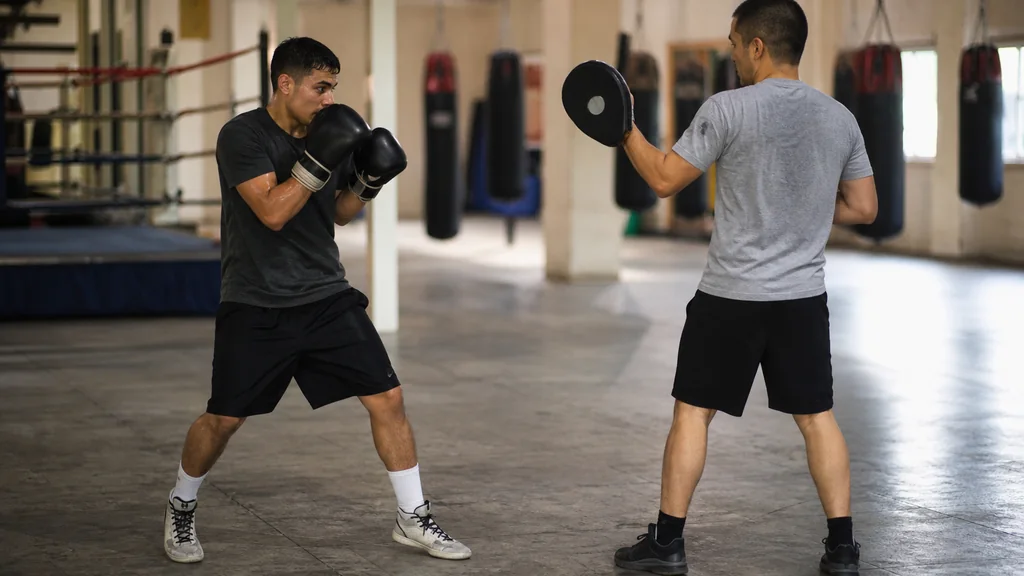
Add a low platform only when the floor version is tidy
A short platform can make the landing more obvious, but it also makes errors larger. Use a low, stable surface and step down rather than jumping out. One small drop is enough.
Land in stance with the guard already in place. Do not reach for the floor with the front foot and do not let the rear knee collapse inward. Hold the position long enough for a coach to see it. Then step away and reset before the next repetition.
A study of punch performance and lower-body strength found a meaningful relationship between lower-body strength and peak punch force in trained amateur boxers. The practical lesson is modest. The lower body is part of a punch. It does not mean every boxer needs high boxes, maximal jumps or exhausted legs before pad work.
Use the platform to improve the quality of a small landing, not to turn a technical block into a fatigue contest.
The three-round progression
Keep each round short. Twenty to thirty seconds of calm repetitions is enough at first. Rest, check the position and repeat.
Round one: step back and stick
Use the floor version only. Rear foot moves back, lead foot restores the gap, guard stays home. Freeze for one second after every step.
Your only target is a stance you could use. No punches yet.
Round two: step, settle, jab
Add one light jab as the rear foot moves. Bring the jab home while the lead foot catches up. Hold the stance after the glove returns.
The jab should not drag your head forward or turn the backward step into a long reach. If it does, shorten the step and slow the hand.
Round three: land, settle, rear hand
Now a coach can show one focus mitt after the landing and reset. The boxer gives a measured rear hand only when the mitt is at an honest range. If the body has landed too far away or too close, the correct answer is to guard and reset.
That last choice is important. A drill is not a promise that every movement earns a punch. In boxing, distance still decides what is available.
Four errors to catch early
The first is landing stiff. Locked knees make the body bounce, which makes the head and hands late. Land with enough bend to settle.
The second is leaning backwards. The rear leg can accept more weight without the chest falling away from the target. Keep the body organised over the base.
The third is throwing before the feet arrive. If the rear hand leaves as you are still travelling, you are guessing at the range. Let the stance finish first.
The fourth is adding height before control. A bigger box does not make the lesson better. If the small version does not leave you ready to jab, cover or move, the bigger version will only hide the same problem under more effort.
This is a technical-conditioning drill, not a substitute for boxing practice. Use it after a warm-up and before hard bag work or pads. If a landing gives you sharp joint pain, stop and ask a qualified coach or clinician before continuing.
The coaching cue
Land quiet. Set the feet. Punch only when the stance agrees.
That is the value of the drill. It gives you a simple way to check whether a backward movement has left you ready to box or merely looking busy. The better your base is, the easier it becomes to punch, defend and choose the next movement without panic.
If you are near Kidbrooke, our Recreational Adults boxing classes teach footwork, balance and punching as one connected skill. You do not need hard sparring to learn how a solid stance changes every shot.
H&G Team
Writer at Honour & Glory Boxing Club, a community boxing gym in Kidbrooke, South East London.
KEEP READING
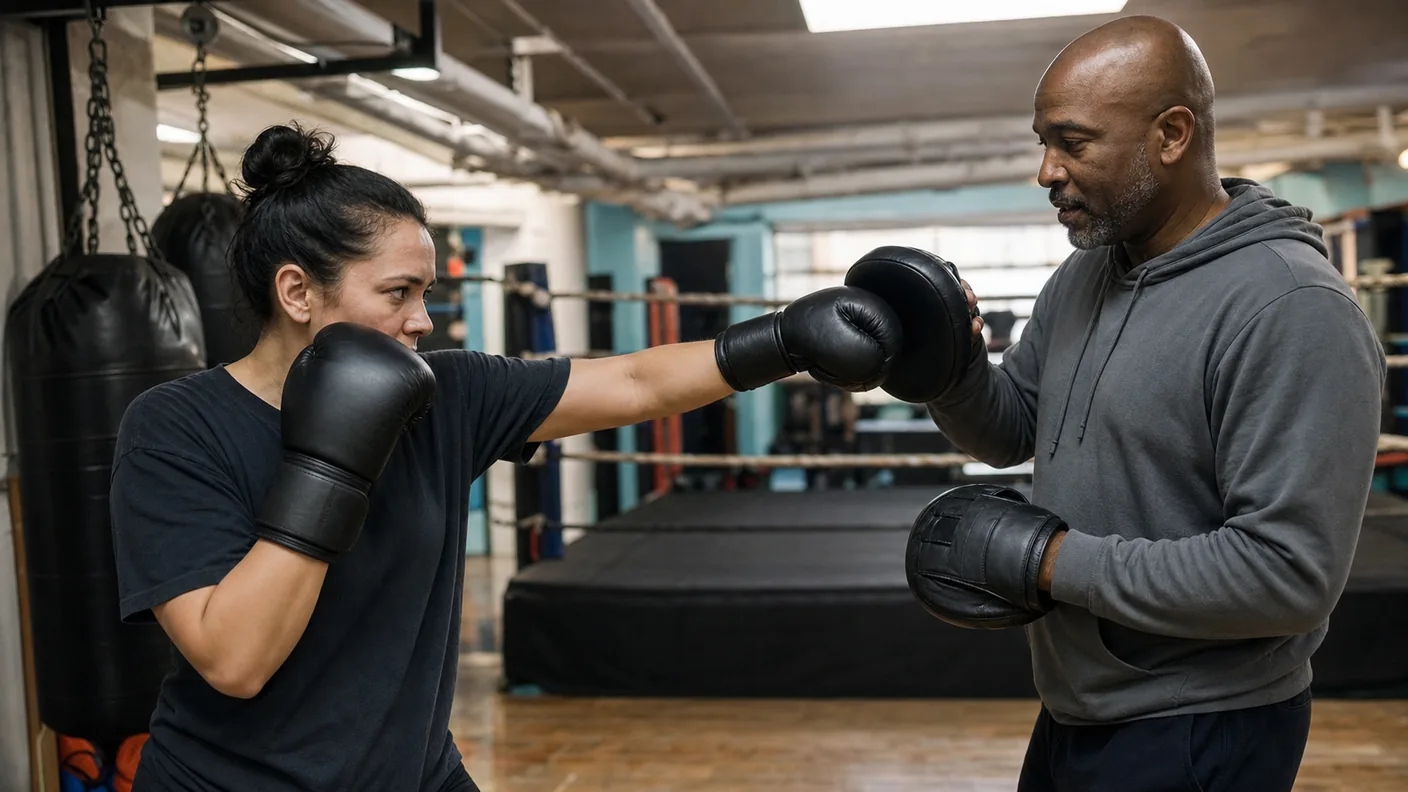
Why You Fall Forward When You Punch
Falling forward after a punch is a common boxing mistake. Learn why it happens and how to keep your balance, guard and next move.
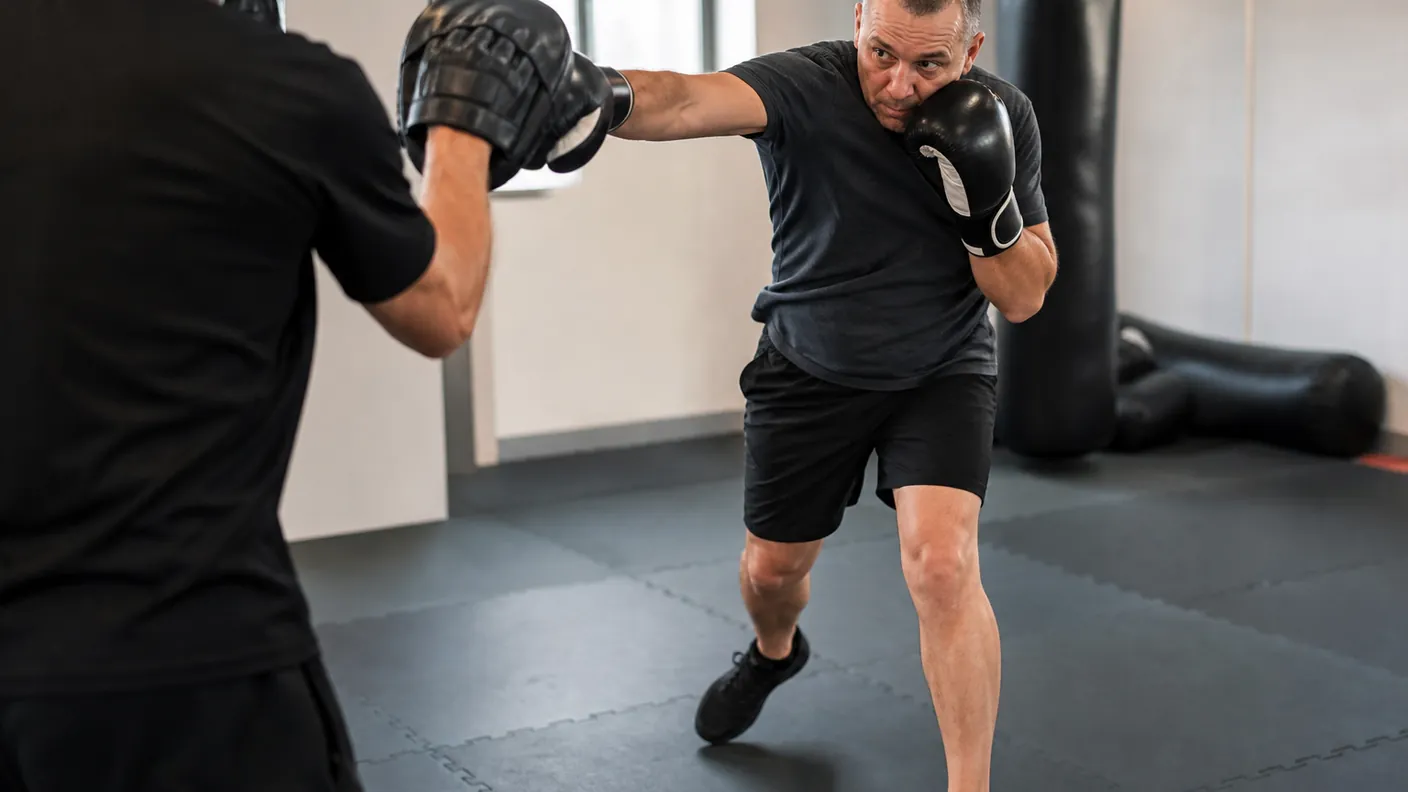
Two-Step Hook Drill for Boxing Balance
Use two small foot adjustments to find range for a compact hook without stretching, spinning or losing your guard.
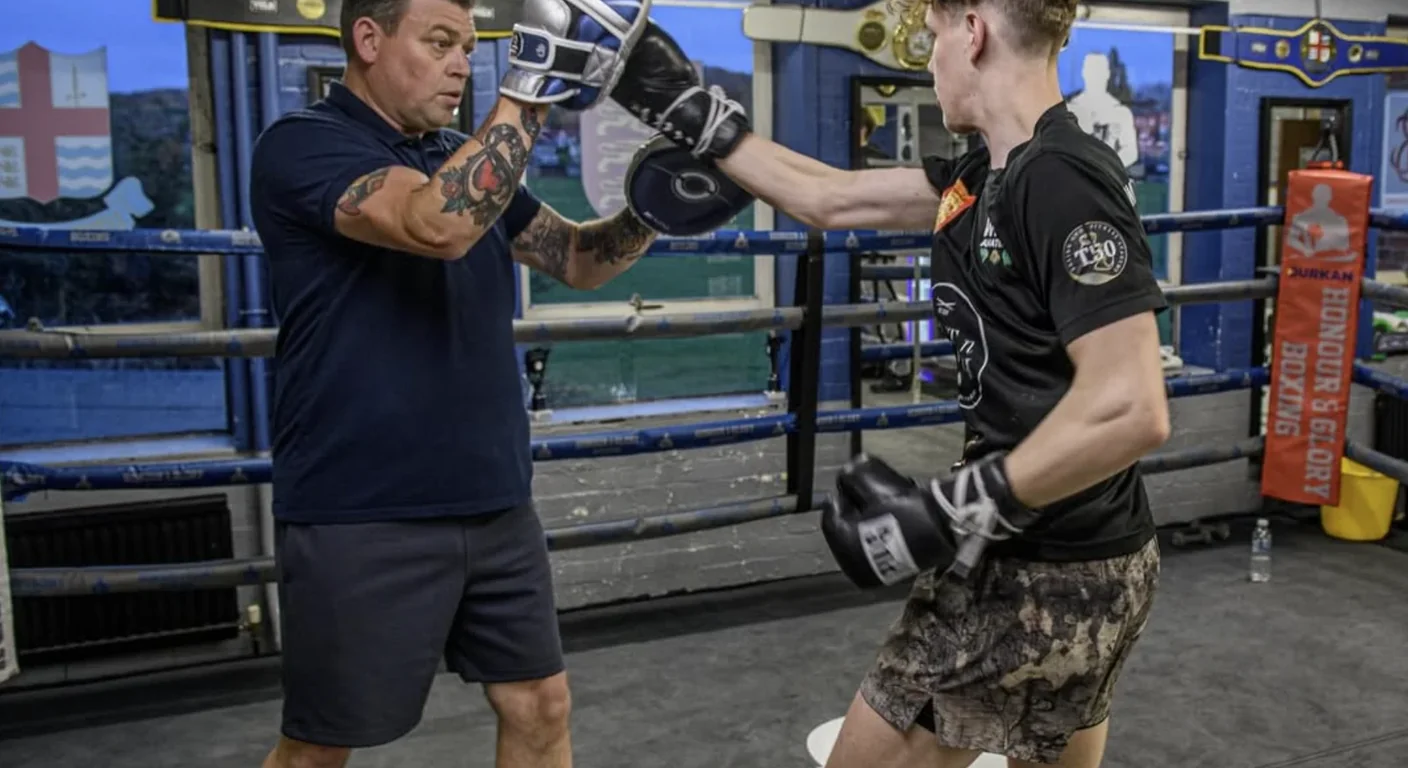
Stop Crossing Your Feet in Boxing
Crossed feet wreck balance, defence and punch recovery. Here is how beginners can fix the habit with simple boxing footwork drills.
Was this page helpful?
It takes one tap, and it genuinely helps.
Choose your next step
Turn this article into the right action
Some readers are ready to book. Some need the class route first. Pick the route that matches what you actually want.