Boxing Weight Shift Drill: Stop Punching in Pieces
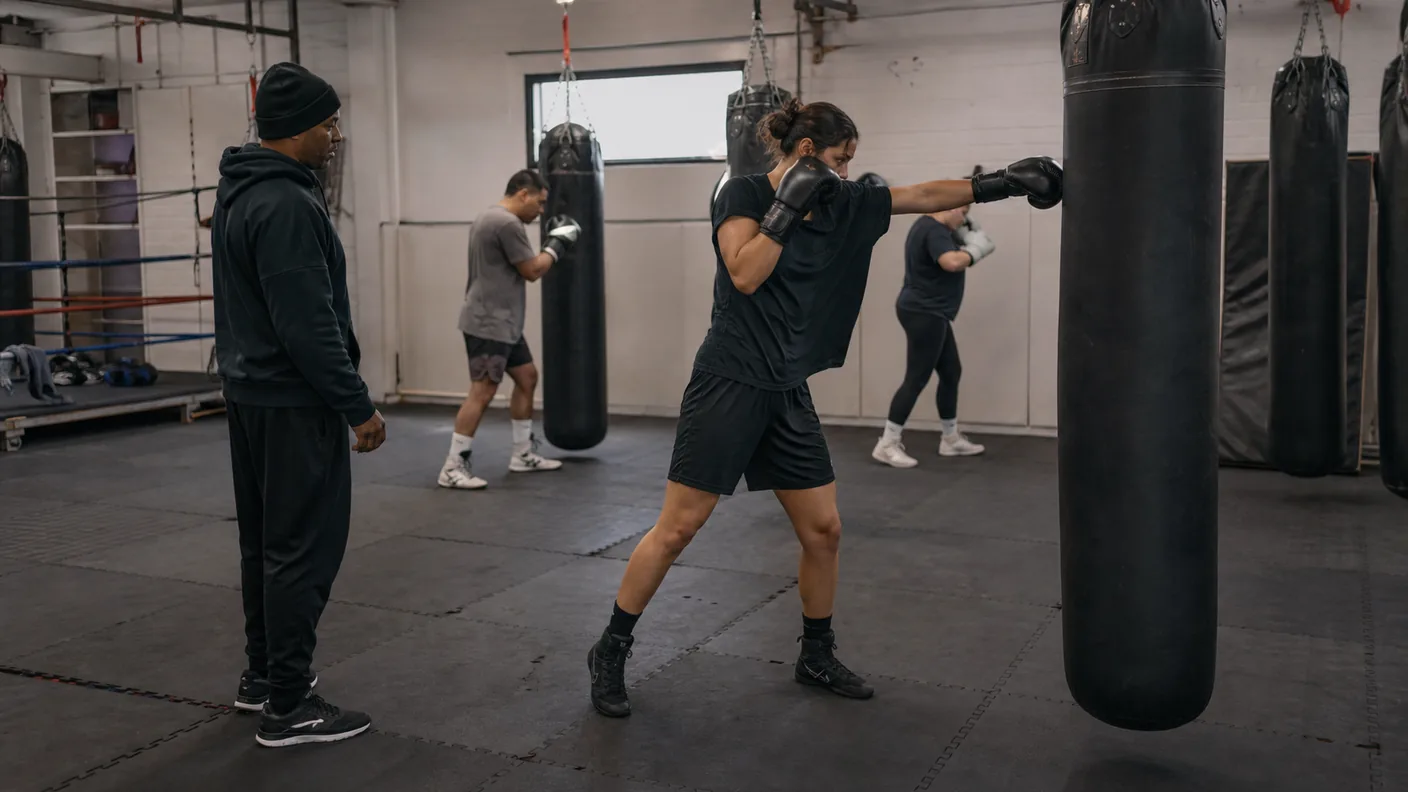
A lot of beginners can throw individual punches. The jab looks fine. The cross looks fine. The slip looks fine when it is practised alone.
Then the pieces meet. The jab ends, the feet pause, the boxer thinks about the cross, then the head movement arrives late. It feels like several separate jobs rather than one exchange.
A better way to practise is to notice where each movement leaves your weight. A clean action should leave you in a position that makes the next sensible action easier. It might load a punch, help you step out, or let you cover and reset. It should not leave you stranded over the front foot with your hands trying to rescue the rest of you.
The short demonstration below gives a good visual starting point. Watch the body rather than copying a sequence. Notice how a movement can become the preparation for the next one.
A punch should leave you somewhere useful
Boxing is not a row of arm actions. Your feet, hips, trunk, shoulders and hands all have to agree about what happens next.
Take a simple one-two. The jab is not merely a left hand travelling out. It brings the lead side into the action, helps judge range and gives the rear side a chance to turn through the cross. If the jab makes you lunge, the cross has no base. If the cross pulls you square, the next hook becomes a swing. If the hook leaves both feet narrow, a return shot or exit becomes slow.
That is why the right question after every movement is not "Did it look sharp?" Ask: "What can I do from here?"
A review of boxing biomechanics describes effective punching as a connected action involving the lower body, trunk and upper body rather than a glove-only movement. In a boxing gym, the simple test is whether you can still punch, defend or move when the first shot has finished.
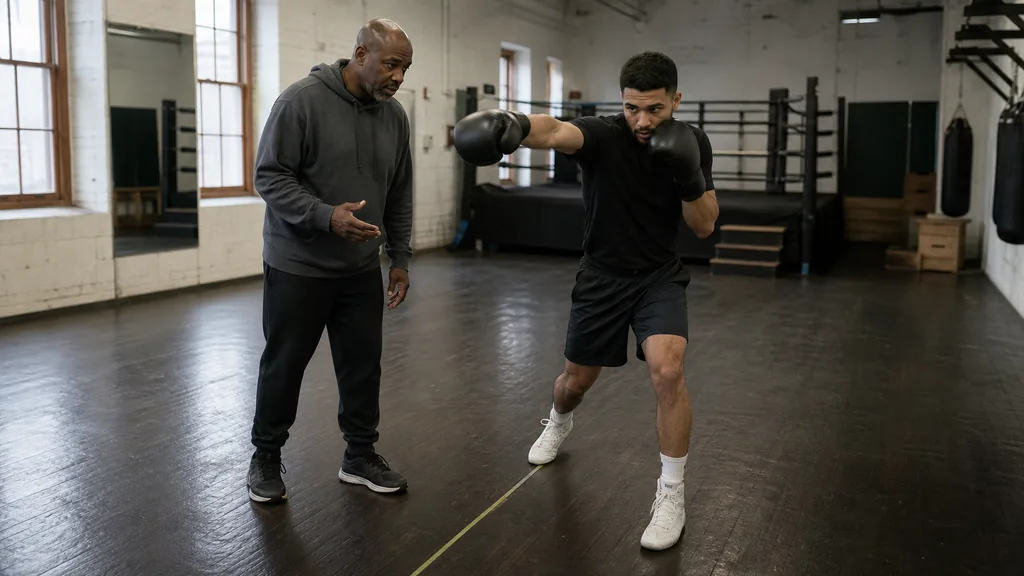
The lead side and rear side are not fixed places
Do not overthink this into a complicated science lesson. You are simply learning to feel which leg is carrying more of you, and whether that position suits the next job.
When you are settled in stance, neither foot should feel dead. You should be able to take a small step, jab, bring the rear hand into a catch, or shift your head without first reorganising your whole body. That is your neutral place.
From there, some actions naturally favour one side. A cross uses the rear side to drive and turn. A lead hook needs the lead side ready to receive and rotate. A small slip can put you in a better place for a return punch if your knees and feet stay underneath you.
The mistake is treating that as permission to throw every shot hard. It is the opposite. If you exaggerate the weight shift until your head flies past the front knee, you have lost the next action. The shift should create a base, not a fall.
England Boxing's coaching handbook puts balance, safe progression and sound technical positions at the centre of learning. That is the right standard for this drill. You are not trying to look fluid for a camera. You are trying to finish every repetition in a position a coach would be happy to see again.
The three-part weight shift drill
Use shadow boxing first. A heavy bag or pads can come later, but only after the shape is calm.
Part one: jab, settle, cross
Start in an ordinary boxing stance at a range where you do not need to reach. Throw one light jab and let it return properly. Feel the lead foot take the small adjustment, then let the rear side turn through a controlled cross.
Freeze for a beat after the cross. Your rear hand has just travelled. Is the lead hand home? Are the feet still apart? Is your head between them rather than hanging over the lead knee?
If the answer is no, reduce the step and slow down. The drill is not about a hard one-two. It is about seeing whether the jab has left you ready for the cross and whether the cross has left you able to continue.
Part two: cross, rear slip, cross
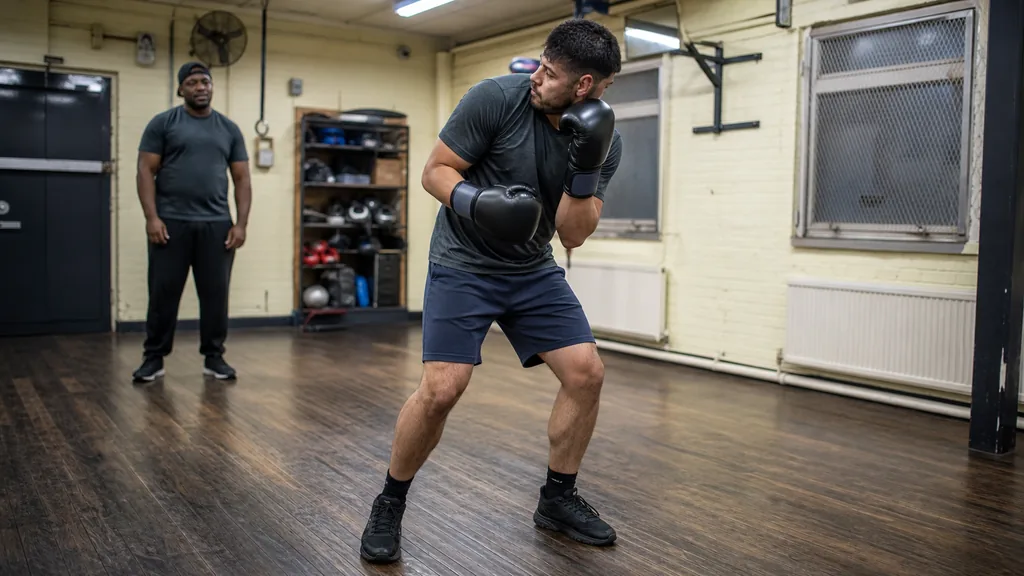
Now add one defensive beat. Throw the same light jab-cross, then make a compact rear slip as though a straight return is passing down the middle. Keep the eyes forward, bend through the knees and hips, and make the head move only enough to leave the line.
The rear slip should not be a dramatic lean. If your chest has folded away or your back foot has lifted, the next cross will be an arm punch. Keep the base under you and let the movement place some weight on the rear side.
From that position, throw a measured cross into the air, a focus mitt or a bag. Do not rush it. You are checking whether the defensive movement made the return feel more organised, not trying to prove how hard you can hit.
Part three: finish with a choice
Repeat jab-cross, rear slip, cross. This time, do not add a predetermined fourth punch. Make one sensible choice instead:
- Bring both gloves to guard and reset.
- Take a short step out behind the lead shoulder.
- Place a light lead hook only if your feet have stayed underneath you.
- Re-jab if you are still at a clean long range.
This final part matters. A drill can teach useful rhythm, but boxing is not a recitation exercise. The correct ending depends on distance, balance and what the other person has shown you. If the shape is gone, cover and reset. A coach would rather see that than another punch thrown from a poor position.
Why the freeze tells the truth
Fast repetitions can hide nearly everything.
Someone can make a bag move while falling forward. They can throw a busy combination while the rear hand drifts away. They can slip so far that the next punch looks impressive but starts from bad feet. Speed gives those mistakes a blur to hide behind.
A one-second freeze removes the excuse. After each sequence, look down briefly at the feet, then bring your eyes back up. Check whether the stance still has width. Check whether both hands can work. Check whether you could take one small step in either direction.
This connects with our guide to setting your feet in boxing. You do not need to stand still for power. You need to arrive in a balanced position, make the shot count, then recover before the other boxer gets a free answer.
It also connects with what to do after you punch in boxing. The moment after a punch is part of the technique. A good finish is not always another attack. Sometimes it is a guard, a step or a calm reset.
Four mistakes to avoid
The first is loading too early. If you pull the shoulder back or sink heavily onto one leg before the punch, you are announcing the movement and making yourself stiff. Start from a normal stance. Let the shift happen with the action.
The second is leaning instead of shifting. A small weight change through the legs and hips keeps the head inside the base. A lean sends the head away from the feet and makes the next decision slow.
The third is forcing the next punch. The drill should show you when a follow-up is available. It should not make every follow-up compulsory. If you have lost the range, use the guard and move.
The fourth is treating the bag as proof. A heavy bag does not counter, turn or change range. It is useful for feeling the rhythm, but partner drills and pads are where a coach can see whether the movement would still work against a real return shot.
Where to use it in a session
Use this as a short technical block after warming up. Two or three rounds of one minute are enough. Start with shadow boxing, then use a bag or pads only if your stance survives the first version.
For a partner version, agree on the return line in advance. One person gives a slow, clear straight-punch cue after the jab-cross. The other person makes the compact rear slip, gives one controlled return to a mitt, then resets. No surprise shots, no contest for speed and no hard contact.
That keeps the learning honest. The boxer has a decision to make, but enough time to make it well.
At Honour and Glory, our Recreational Adults boxing classes break movements down before adding pace or pressure. If you are near Kidbrooke, Greenwich or Blackheath, a coach can help you spot whether the problem is your stance, the range, the defensive movement or the punch that follows.
The cue is simple: finish every movement ready for the next sensible one.
H&G Team
Writer at Honour & Glory Boxing Club, a community boxing gym in Kidbrooke, South East London.
KEEP READING
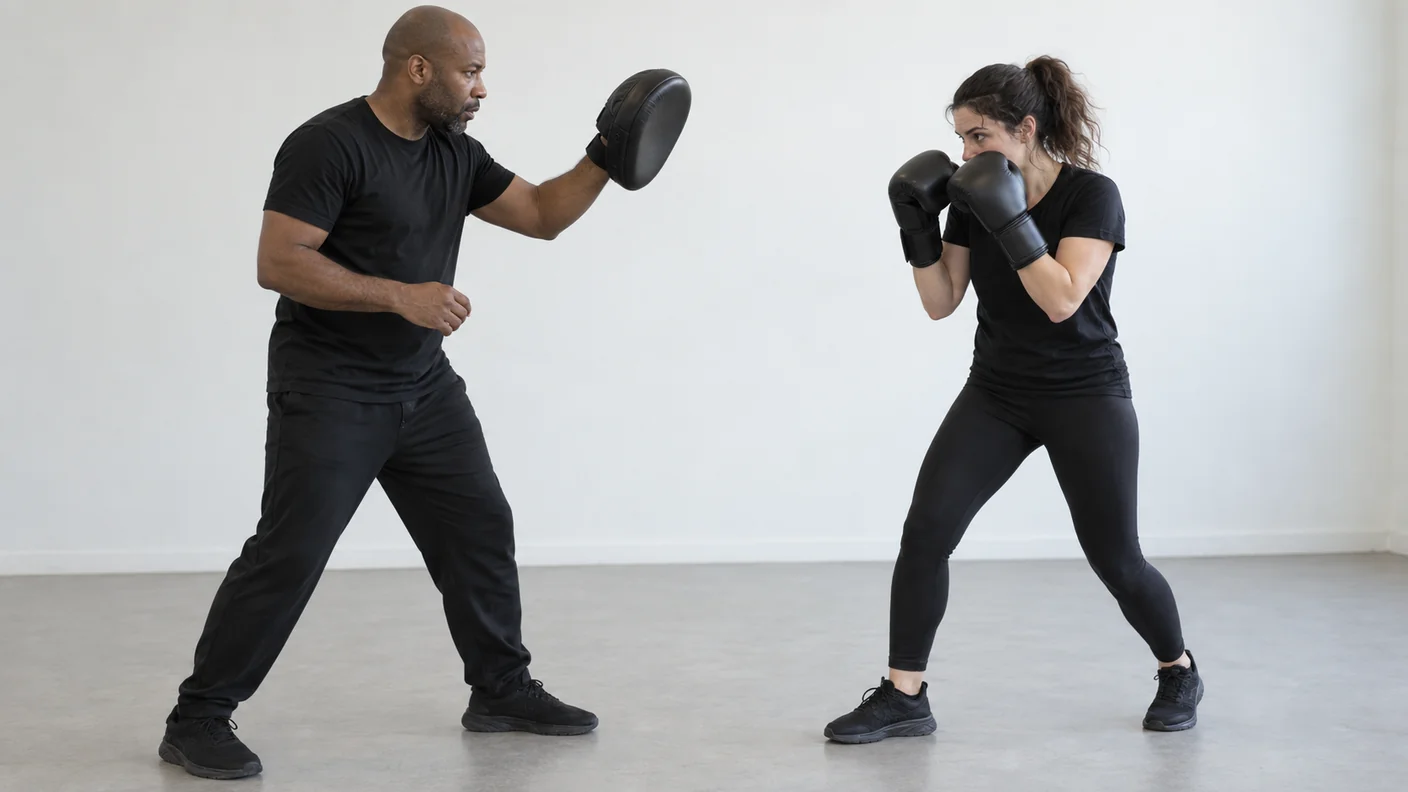
Backward Shift Boxing: A Controlled Exit Drill
Use a backward stance shift to create space only when you can land safely, protect the transition and work from either stance.
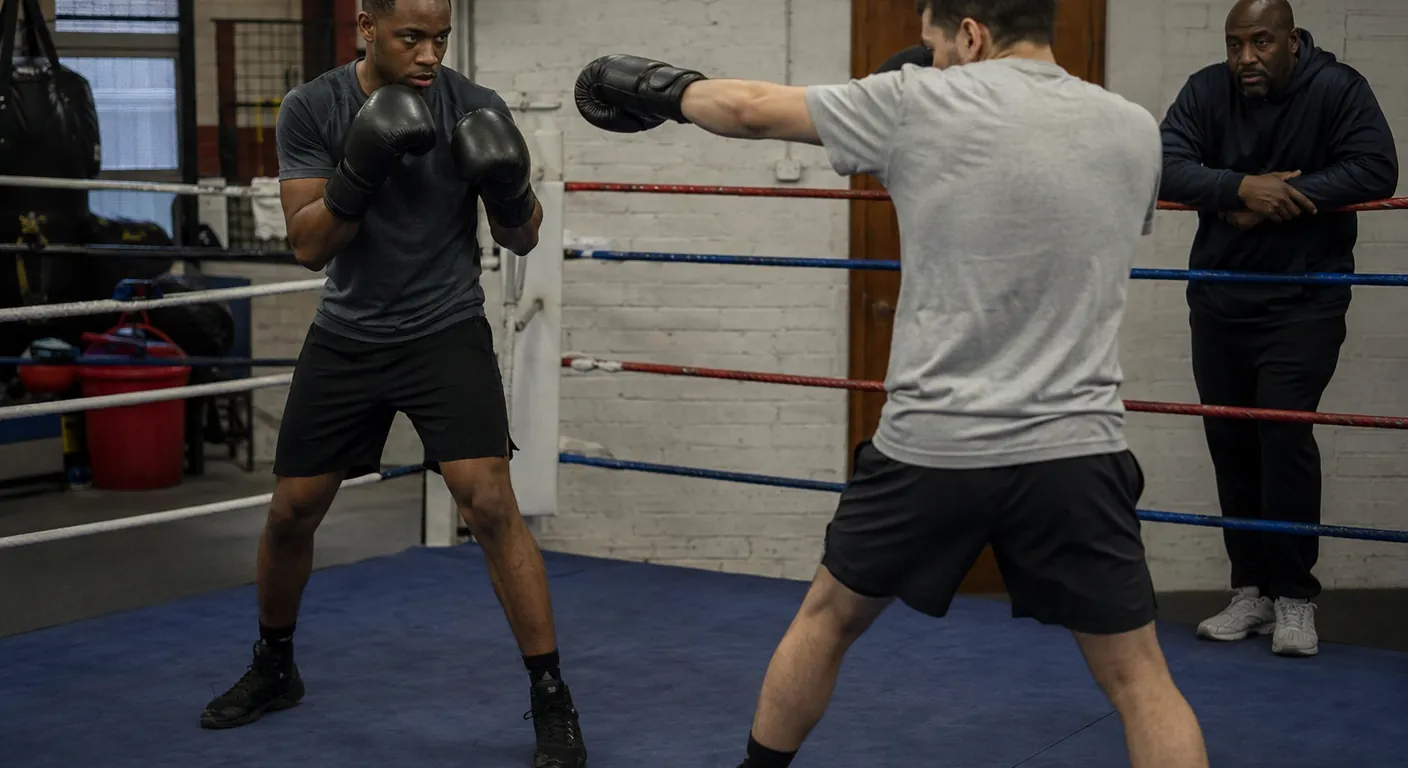
Read Boxing Weight Shifts Before the Punch
Learn to spot small weight shifts in boxing, then choose a calm defence or counter without guessing at every movement.
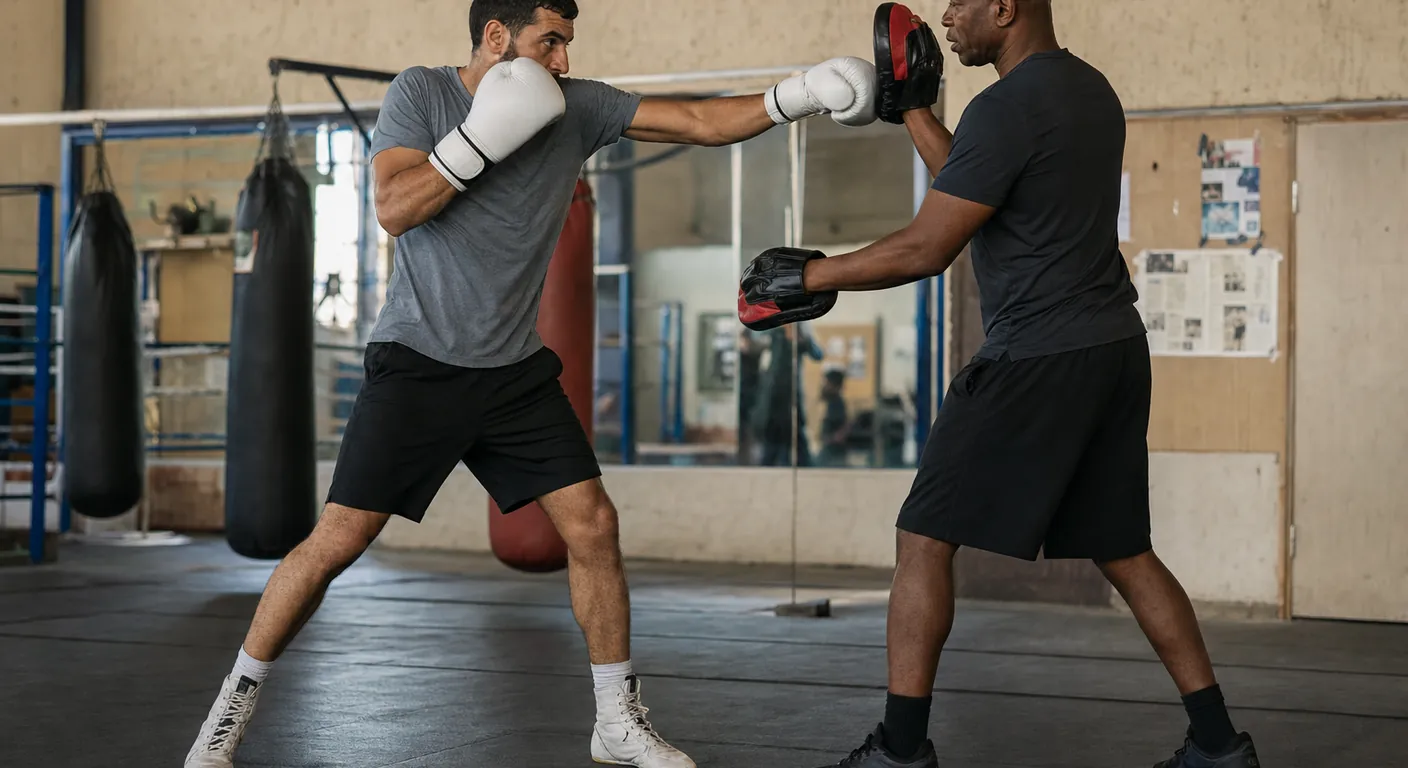
Shift Counter in Boxing: Punch as You Move
Learn the shift counter: a simple way to step off pressure and punch while you change angle, instead of backing up in panic.
Was this page helpful?
It takes one tap, and it genuinely helps.
Choose your next step
Turn this article into the right action
Some readers are ready to book. Some need the class route first. Pick the route that matches what you actually want.